
We have now reached the month of Dhul Hijjah, the twelfth lunar month. The triad rising moments of spiritual, emotional, and physical well-being surpass oneself as every person congregates and strives to seek forgiveness from the Almighty Allah.
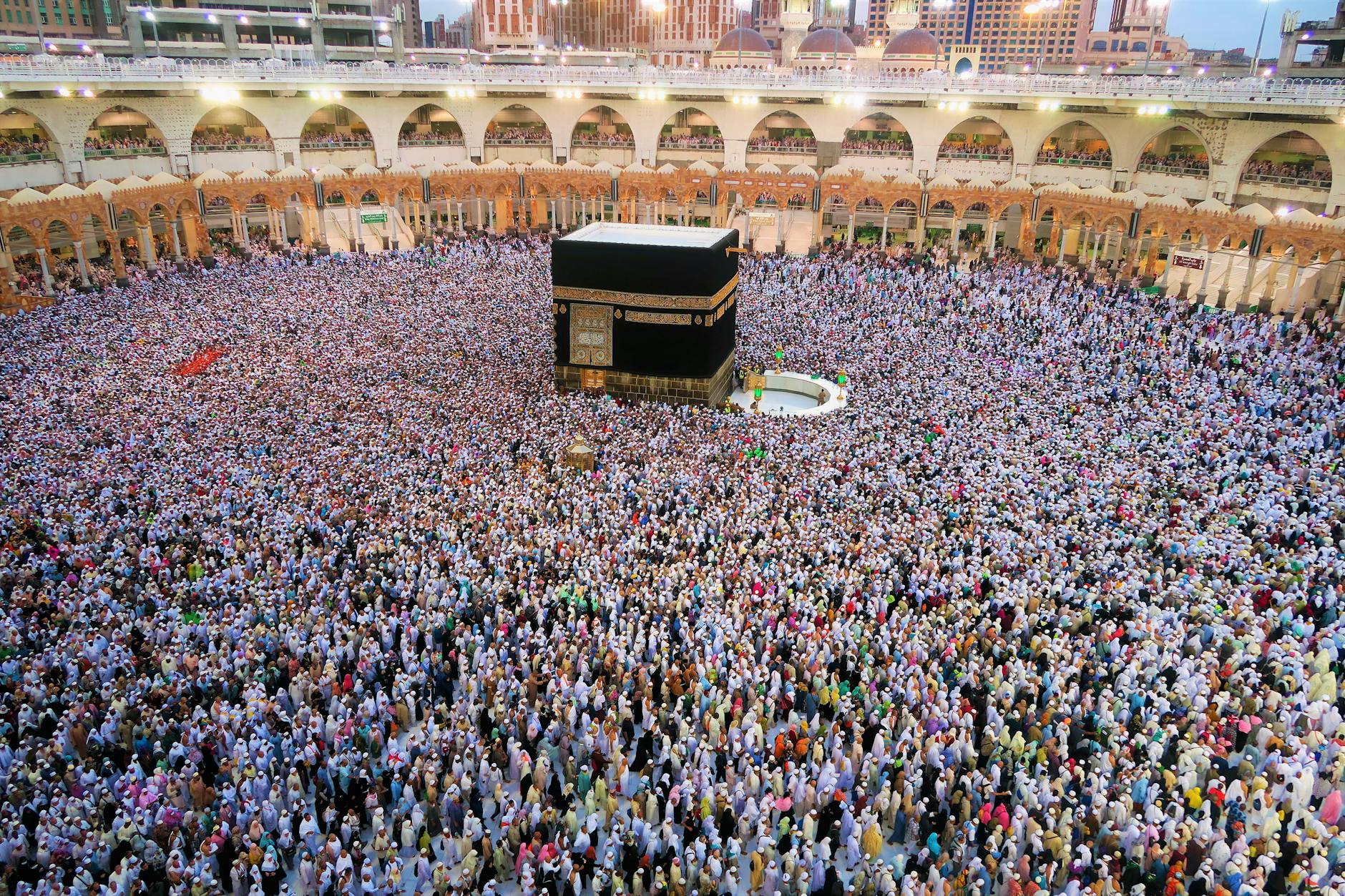
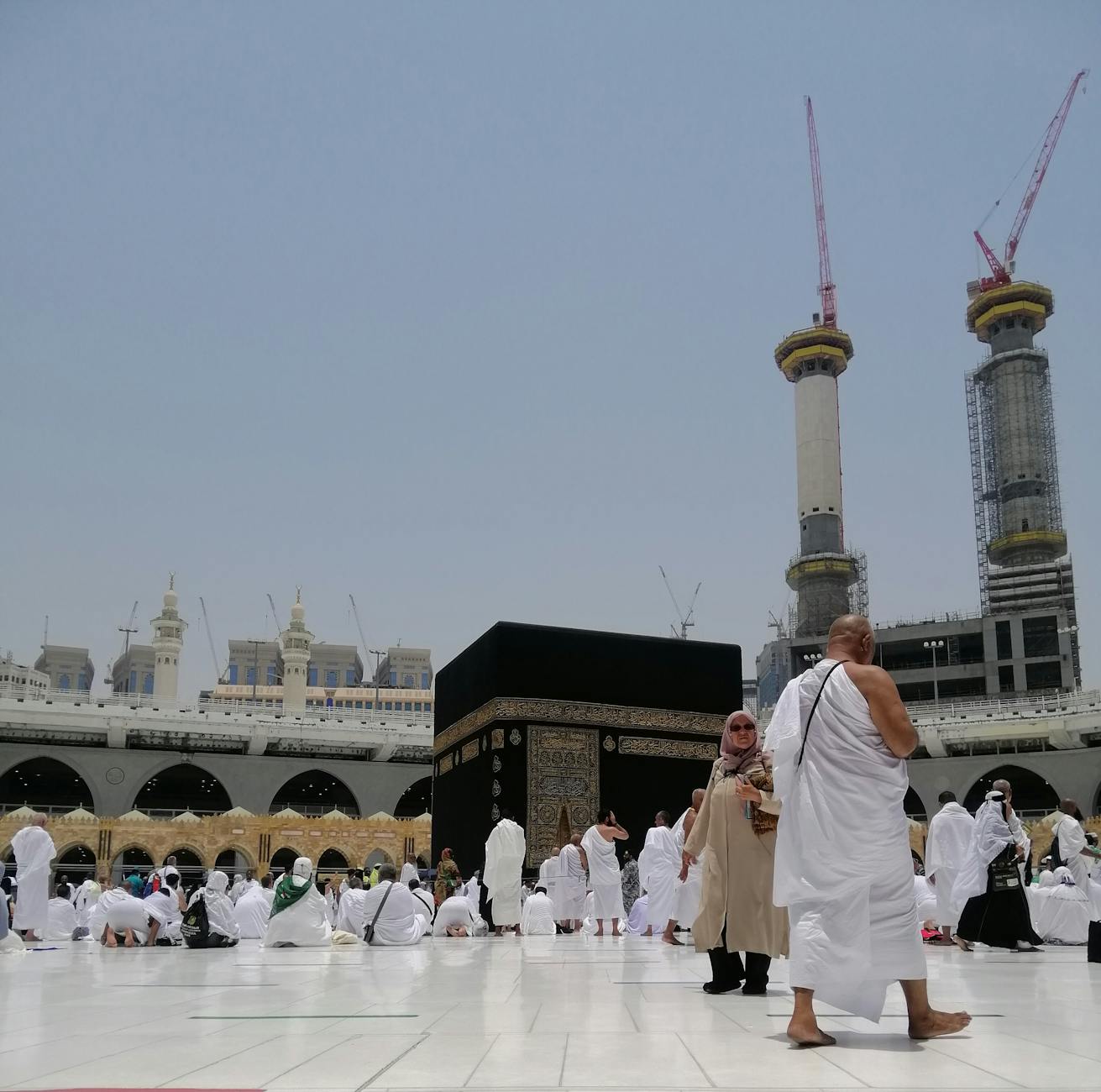
Please close your eyes and detach yourself from worldly matters. Imagine seeing multiple fences of bleached towels of different races, classes, and cultural backgrounds surrounding a cube-based historical structure clothed with silk that is purely black as coal and golden embroidery that glistens in the sun. The echoing of millions of pilgrims in His remembrance shakes the dead hearts, awakens the sleep, and guides the lost souls.
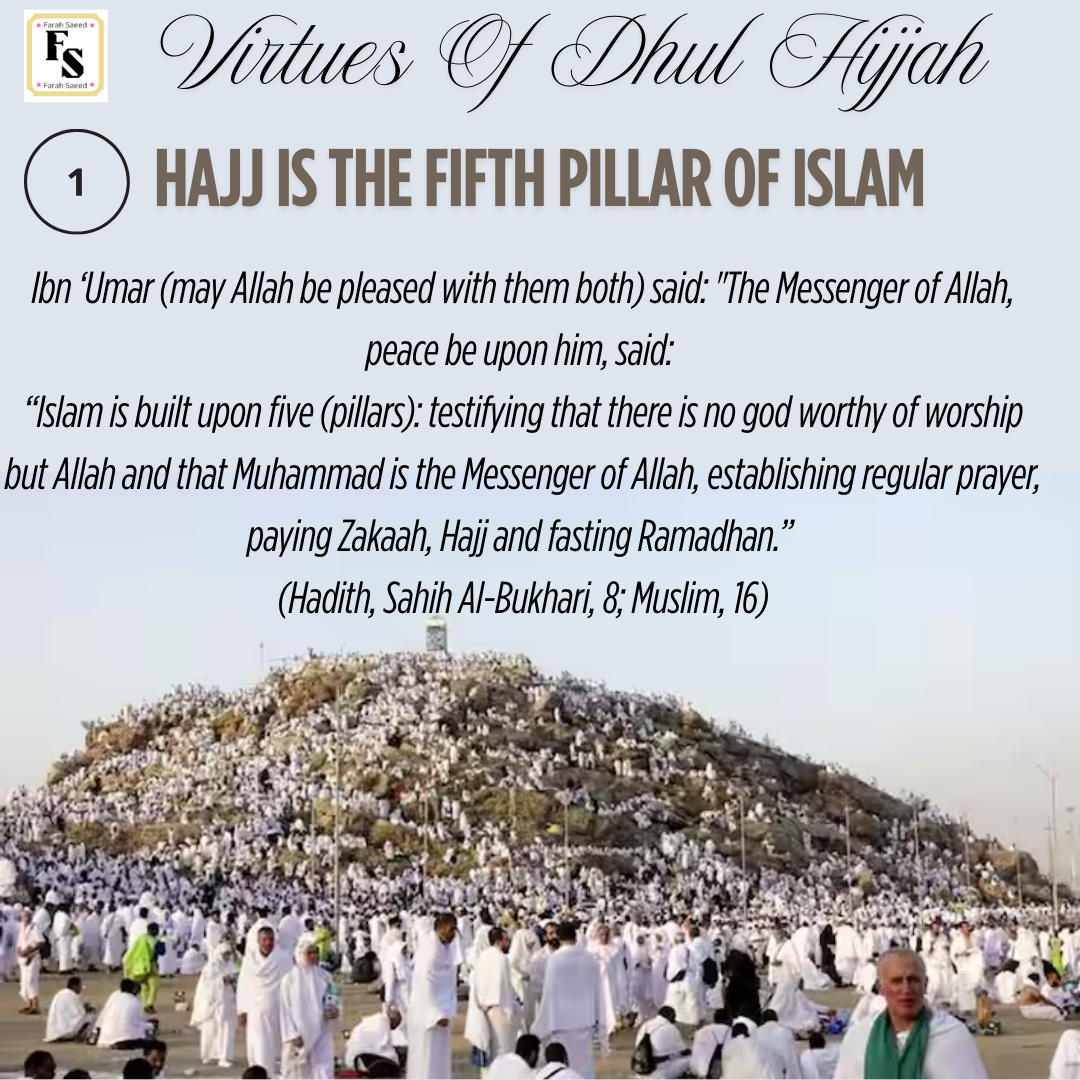
Hajj is the fifth pillar of Islam and was made obligatory in 9AH during the year of Delegations (Al-Wufood). Please see Figure 1. It is a comprehensive act of devotion that is advised to be done once in a lifetime for those who can afford it as mentioned in the following verse.
“In it are clear signs and the standing place of Abraham. Whoever enters it should be safe. Pilgrimage to this House is an obligation by Allah upon whoever is able among the people.1 And whoever disbelieves, then surely Allah is not in need of ˹any of His˺ creation.”
[The Glorious Quran, Surah Al-Imran (Family of Imran), 3:97]
Thus, Allah is the Most Gracious and Merciful.
Allah (The Most High) emphasized the importance of the first ten days of Dhul-Hijjah in the following verse:
“By the dawn, by the ten nights”
(The Glorious Quran, Surah Al-Fajr (The Dawn), 89:1-2]
This has been agreed upon by the respected scholars: Ibn Abbas, Ibn Zubair, Mujahid, and Ibn Kathir that this is about the first ten days of Dhul Hijjah.
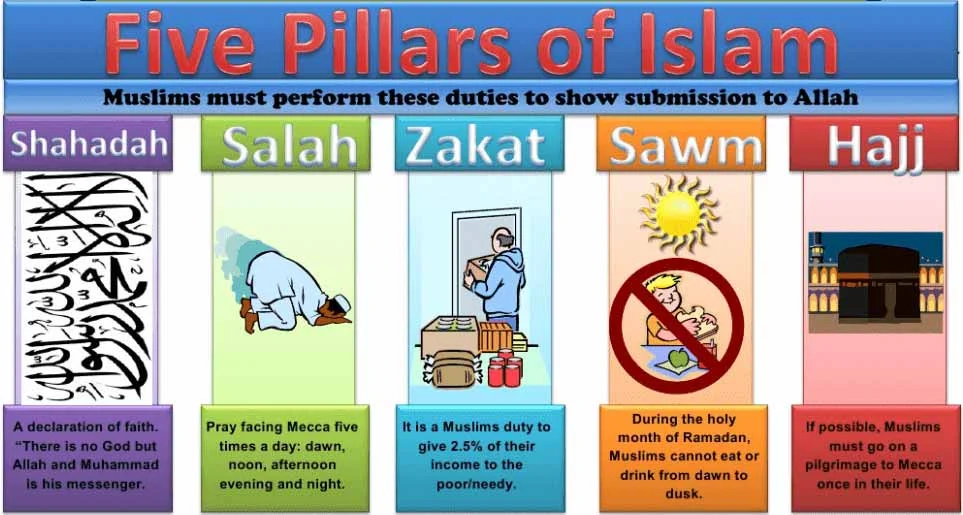
Hajj holds many virtues that fuel the heart with hope (amal), faith (iman), peace (salam), Ikhlas (sincerity), and purification of major and minor sins. The bond is strengthened as strong as super glue with the Almighty by performing Talbiyah, increasing his remembrance, circumambulating around the Kaabah (Tawaf), kissing the Black stone and running and reflecting between Mount As-Safaa and Al-Marwah (Sa’y) just like the courageous Hajar who came back and forth seven times saving her son Prophet Ismail (peace be upon him).
Can you think of anywhere where these devoted actions are implemented other than Hajj?
لَبَّيْكَ اَللَّهُمَّ لَبَّيْكَ – لَبَّيْكَ لَا شَرِيكَ لَكَ لَبَّيْكَ – إِنَّ الْحَمْدَ وَالنِّعْمَةَ لَكَ وَالْمُلْكَ – لَا شَرِيكَ لَكَ
Labbayka Llāhumma labbayk, labbayka lā sharīka laka labbayk, inna l-ḥamda wa n-ni’mata, laka wa l-mulk, lā sharīka lak.
At Your service, Allah, at Your service. At Your service, You have no partner. Truly all praise, favour, and sovereignty is Yours. You have no partner.
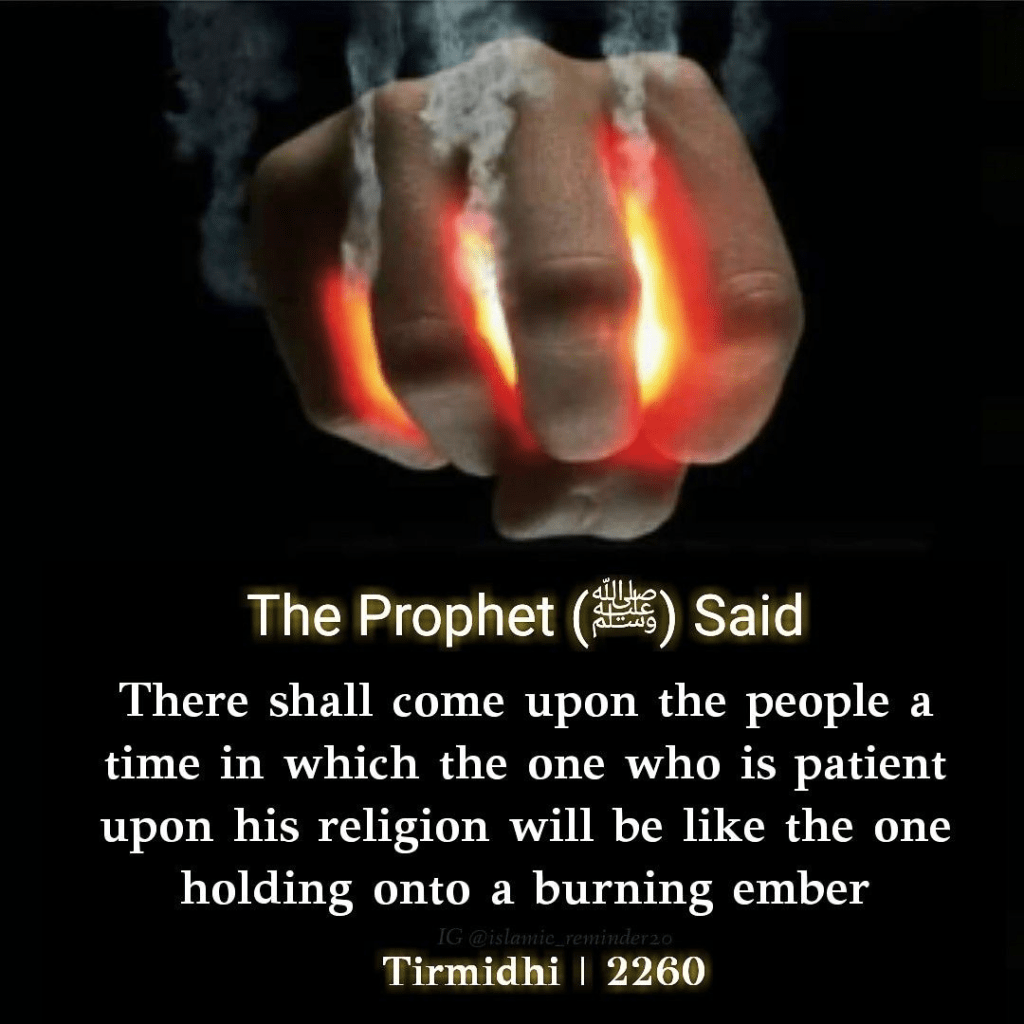
It is important to start that an accepted Hajj is not only performing all the rituals according to the Sunnah (teachings of the Prophet peace be upon him) but also has pre-requisites: the travel ticket and all-inclusive should be done using Halal (lawful money) i.e. interests (riba) and other examples). The immense state of individual should be away from showing off (riya), purely done for the sake of the Almighty, and kept away from all unjust and sinful acts during Hajj. For instance, swearing, sexual relations, smoking, disagreements, scented soaps or perfumes, and the need to wear modest clothes, shaving of hair, and cutting nails. A human soul that is submitted to the Lord. It is such as challenge – please see Figure 2. This has been advised by our Beloved Prophet Muhammad (peace be upon him)
Abu Hurairah (may Allah have mercy upon him) said
“I heard the Prophet (peace be upon him) said:
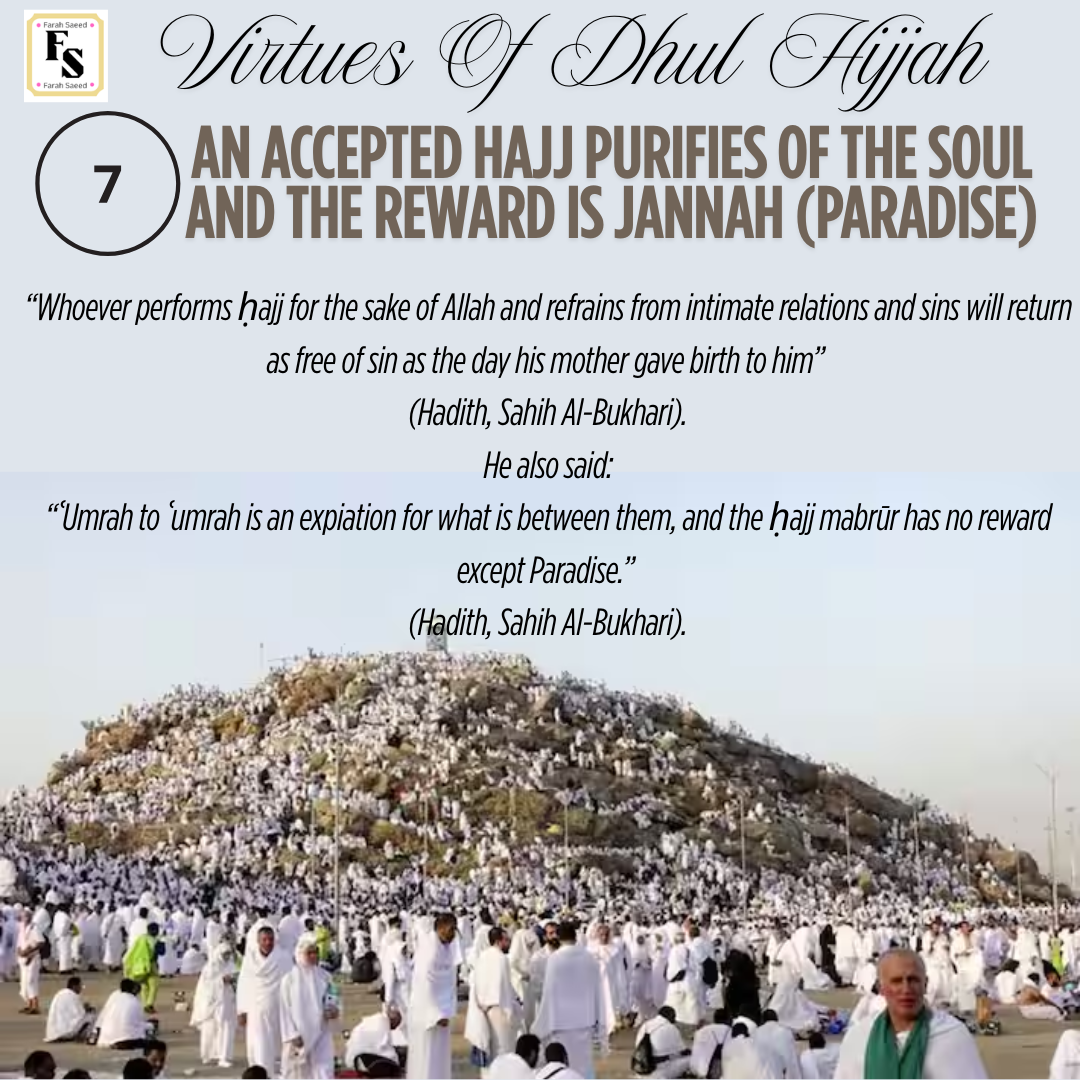
‘Whoever does Hajj for the sake of Allah and does not have sexual relations (with his wife), commit sin, or dispute unjustly during the Hajj, will come back like the day his mother gave birth to him.’”
[Hadith, Sahih Al-Bukhari, 1449; Muslim, 1350]
An overview of Hajj (Infographics)

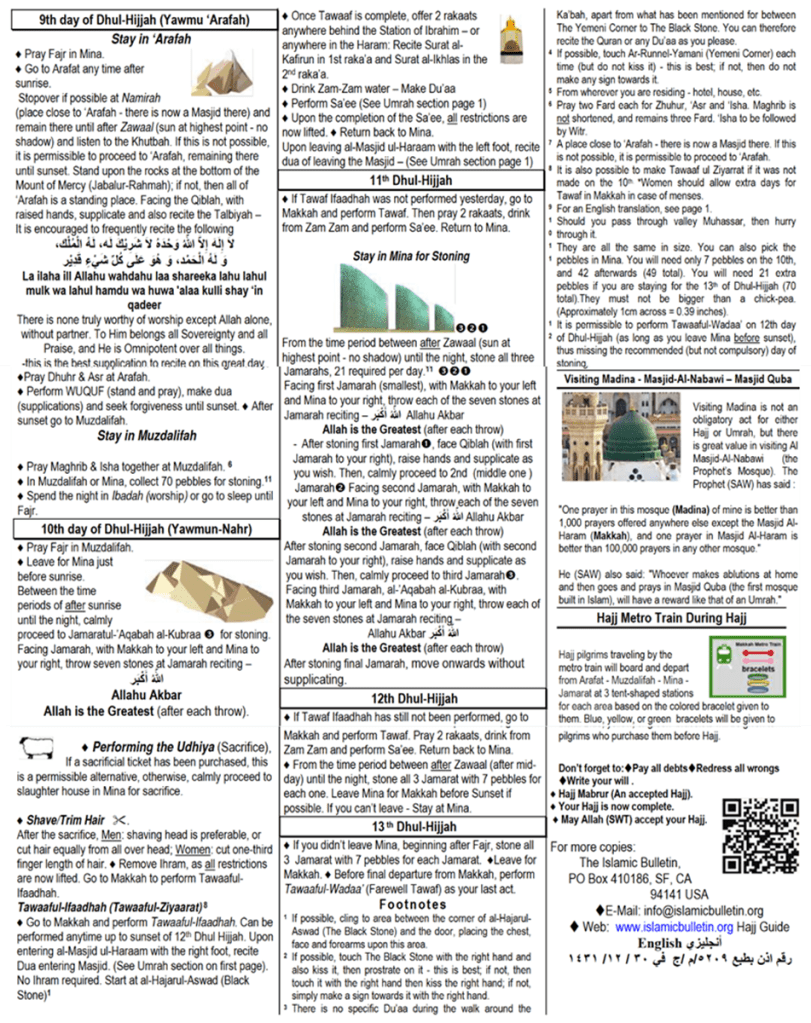
Please visit Islamic Relief’s Hajj step by step guide by Mufti Bilal Omarjee.
The wisdom behind some of the ritual practices of Hajj.
A series of steps involved in the rituals of Hajj holds wisdom, intellect, and understanding of the prescribed tasks illustrated in Figure 3. Every action requires preparation and intention (niyyah) within our hearts that is done solely for the sake of Allah (The Most High). As one enters the state of ritual purity (Ihram), men are wrapped with white toweled cloth around the shoulder and the waist whilst women are modestly dressed without face covering and wear trekking sandals for comfort in walking long distances on gravel and tarmac. The abstinence of any wrongful acts is also permitted.
At the arrival of Masjid Al Haram, the performance of Umrah (short pilgrimage) is required and consists of performing Tawaf Al Qudoom and Sa’y. The wisdom behind performing the seven complete circuits around the Kaabah in an anti-clockwise manner (Tawaf) each beginning and ending at the black stone. Please see Figure 4. It recalls Prophet Abraham (peace be upon him) who built the House of Allah with his son Prophet Ismail (peace be upon him) as a symbolic meaning of safety, compass or direction of prayer, sanctuary and meeting. There have been several Prophets who performed the pilgrimage, amongst them are the following: Prophet Musa (Moses), Yunus (Jonah), Isa (Jesus) and Prophet Muhammad peace be upon them all) who performed the pilgrimage.

The physical acts of running between Mount As-safaa and Al-Marwah seven times is to recall the spiritual and physical challenge endured by Hajar (may Allah have mercy upon her) who is the wife of Prophet Abraham (peace be upon him) and the mother of Prophet Ismail (peace be upon him) in search for water to save her little son at the time who was exhausted with thirst.
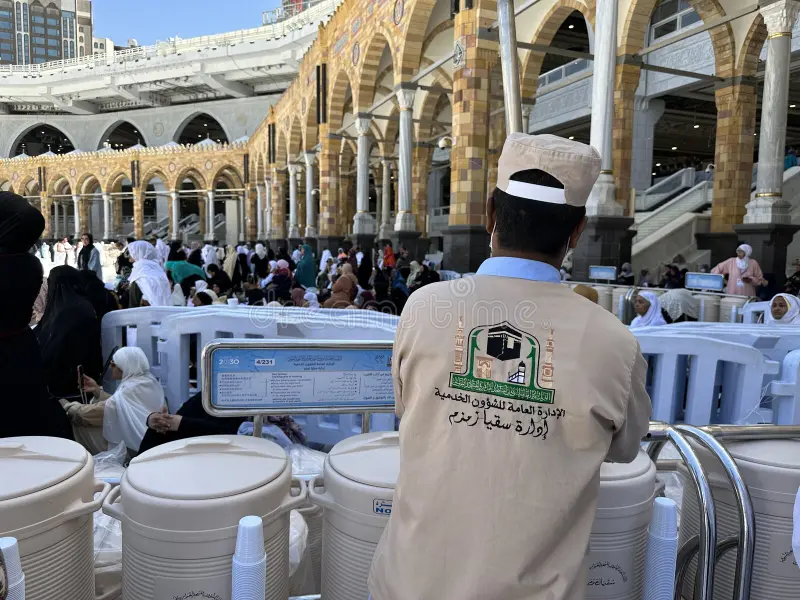
Finally, she was able to gain access to the Zamzam water bestowed upon mankind for centuries. It is encouraged to make dua when drinking it. Please see Figure 5. The Prophet Muhammad (peace be upon him said)
“The water of Zamzam is for whatever it is drunk for”
[Sahih Ibn Majah 3062, Ahmad, 14435)
The trial faced by Hajar teaches patience when facing adversity and the sacrifice a mother and wife undergo to support her child and family as a whole. The repetitive movements of seven times suggest that trials are temporary and there is nothing that Allah tests His servants more than what he can bear.
“And We will surely test you until We make evident those who strive among you [for the cause of Allah] and the patient, and We will test your affairs.”
[The Glorious Quran, Surah Muhammad, 47:31]
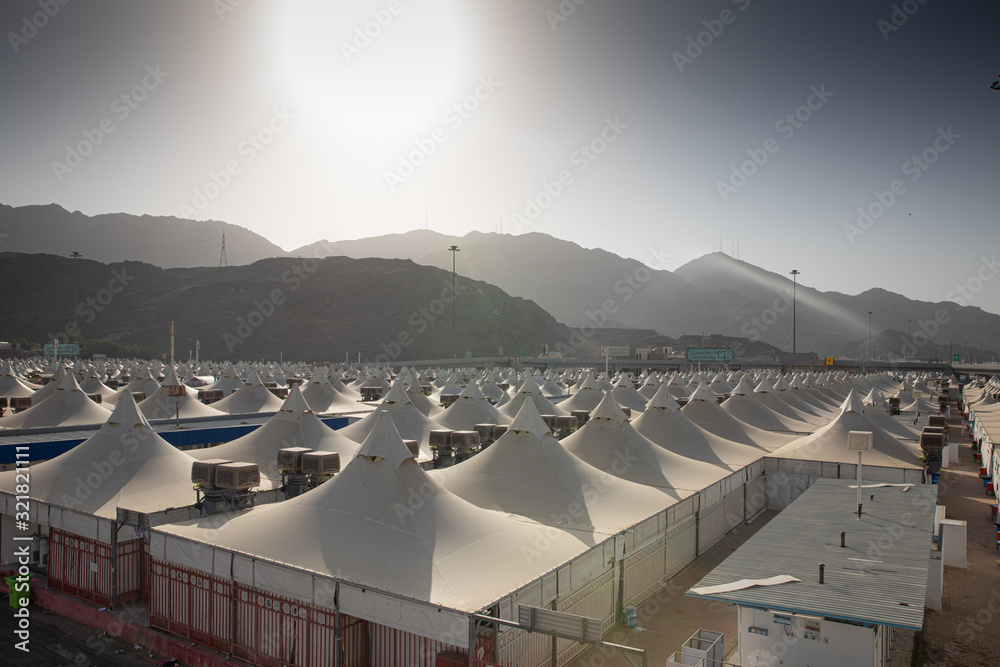
The wisdom behind traveling to the tent city of Mina is to increase our spiritual devotion through reading the Quran, prayer, and seeking His remembrance. Please see Figure 6. As one is in a state of ritual travel, shortening the obligatory prayer from four units to two units, for instance, Dhuhr, Asar, Maghrib, and Isha separately. There is evidence within the Quran and Sunnah:
“When you travel through the land, it is permissible for you to shorten the prayer—˹especially˺ if you fear an attack by the disbelievers. Indeed, the disbelievers are your sworn enemies.“
[The Glorious Quran, Surah Al-Nisa (The Women): 4:101]
Ibn ʿOmar (may Allah be pleased with him) said,
“I accompanied the Prophet (peace and blessings upon him) in travel, he never exceeded two units of prayer. Abū Bakr, ʿOmar and ʿOthmān (may Allah be pleased with them) also did the same.”
[Hadith, Sahih Al-Bukhari, Sahih Al-Muslim]
The wisdom behind slaughtering an animal (Hady) on the 10th, 11th, or 12th Dhul Hijjah is to reflect upon the spiritual and emotional challenge faced by Prophet Abraham (peace be upon him) where he had a dream and submitted to the command of Allah (The Most High) to sacrifice his son after he had grown up. His son, Ismail had a strong faith and supported him without question as stated in the following verse:
Then when the boy reached the age to work with him, Abraham said, “O my dear son! I have seen in a dream that I ˹must˺ sacrifice you. So tell me what you think.” He replied, “O my dear father! Do as you are commanded. Allah willing, you will find me steadfast.”
[The Glorious Quran, Surah Saffat (Drawn Up In Ranks), 37:102]
This highlights the immense spiritual gratitude that filled both the father and son. Thus, Qurbani is a practice and virtue performed on a goat, sheep, cow, lamb, bull, buffalo, or camel where intention for Thawab rather than to seek meat is paramount. A share is made between seven people (no one’s share less than one-seventh) if they wish to sacrifice a camel, bull, cow, or buffalo. One person can perform Qurbani using a sheep, goat, or ram. Sayiddinah Aisha (may Allah have mercy upon her) narrated that the Prophet Muhammad (peace be upon him said:
“On the 10th of Dhul Hijjah, no action can be performed which is more beloved to Allah (SWA) than the spilling of blood. The animal shall come on the Day of Judgement with its horns, hair, and hoofs. The blood of the animal, before even reaching the ground, is accepted by Allah (SWA). Thus, sacrifice your animal with an open, happy heart.”
[Hadith, Sahih Al-Tirmidhi]
According to the respected scholars, the age ranges are defined in the table below:
| Name of animal to sacrifice | Age (years) |
| Goat | One |
| Cow | Two |
| Bull | Two |
| Buffalo | Two |
| Camel | Five |
| Sheep | Between six months and one year |
Have you heard the excitement of these amazing animals as they approach the sacrificing moments?
Did you know that animals also seek in His remembrance?
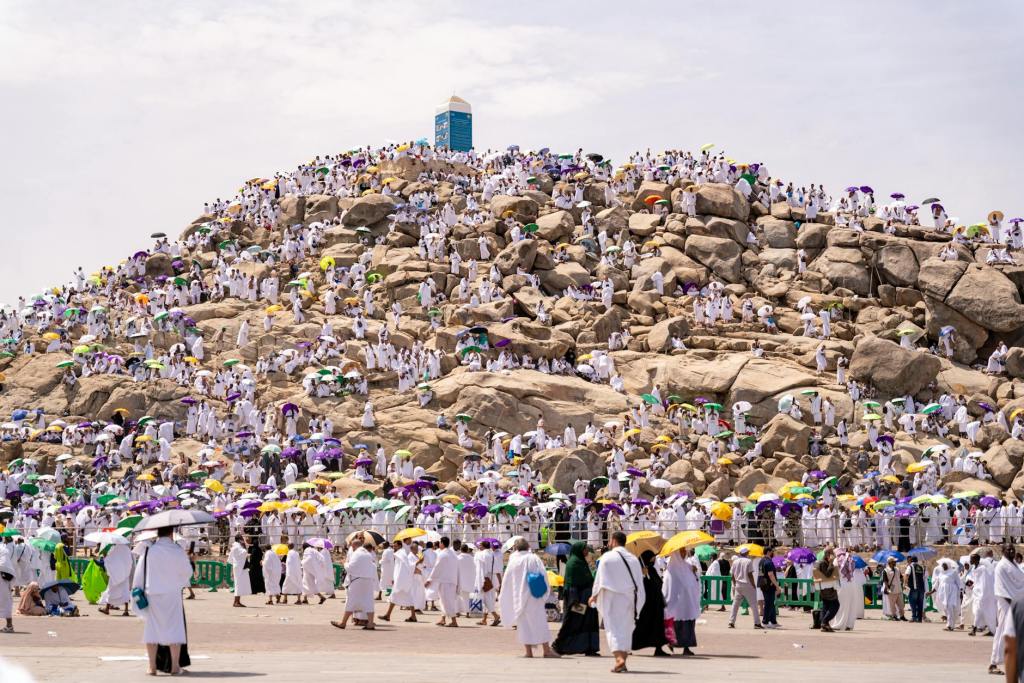
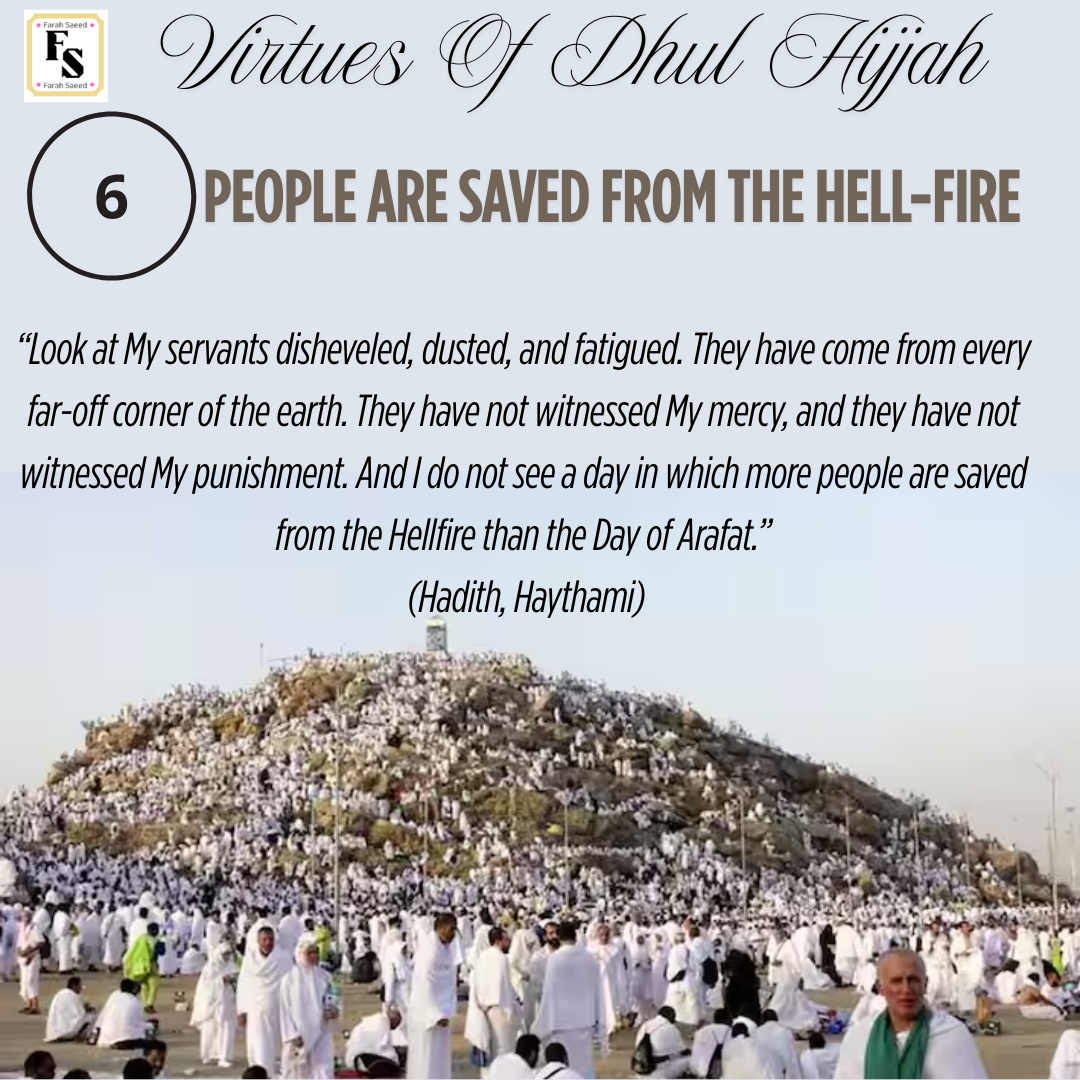
Moreover, the wisdom act in standing (wuqoof) on Mount Arafat is to remind us all of the Day when we gather on the Day of Reckoning where we will stand in crowds bare feet, uncircumcised for 50,000 years. Please see Figure 7. Imagine the tiredness faced, the sweats, our limited stamina, and the strength of our bones. It is also a day where it is recommended to fast to expiate all sins.
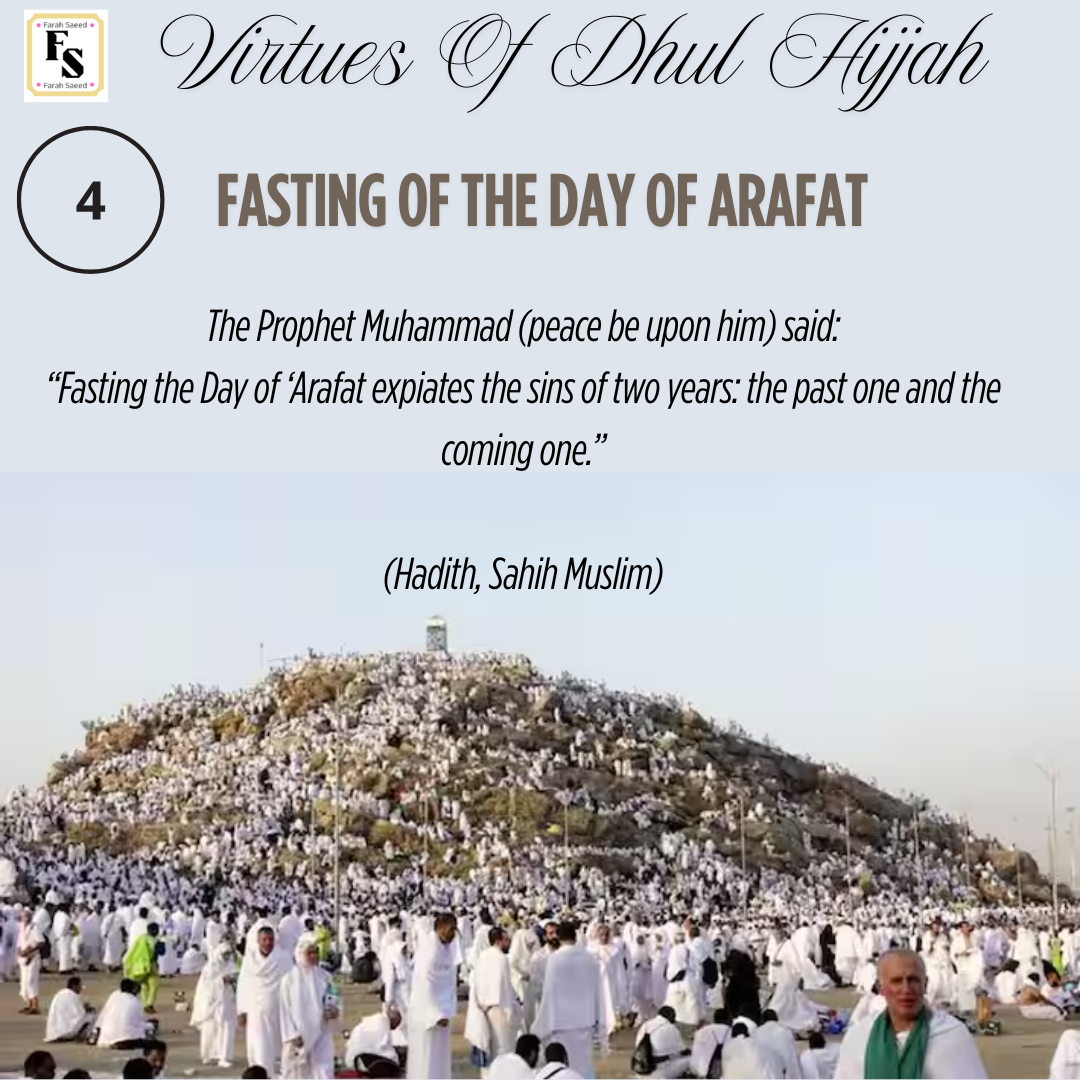
Abu Qatadah Al-Ansari (may Allah have mercy upon him) narrated, ‘The Messenger of Allah (peace be upon him) was asked about fasting on the day of Arafah (the 9th of the month of Dhul Hijjah). He replied,
“Fasting on the day of Arafah is an expiation for the preceding year and the following year.” He was also asked about fasting on the day of Ashura (the 10th month of Muharram). He replied, “Fasting on the day of Ashura is an expiation for the preceding year.” The Messenger of Allah (peace be upon him) was also asked about fasting on Monday, and he replied, “This is the day on which I was born and the day on which I was sent (with the Message of Islam) and the day on which I received revelation.”
[Hadith, Sahih Muslim]
Moreover, the wisdom behind throwing the pebbles at Jammarat is to train oneself to follow Allah’s commandments and understand the wisdom behind his ruling. It is advised to collect 49 pebbles the size of date seeds at Muzdalifah to stone the devil in the next three days. An additional 21 pebbles besides 49 are advised as a precautionary measure.
In addition, the wisdom behind coming out of Ihram (ritual purity) and returning to our respected families is about self-control and the aim is to avoid forbidden acts and consistently seek the sweetness of obedience with the hope that Allah forgives all past sins and also give us the ability to guide our spouses, children, family and friends to the better. Allah (The Most High states:
“Indeed, the losers are the ones who will lose themselves and their families on the Day of Resurrection. Unquestionably, that is the manifest loss.”
[The Glorious Quran, Surah Al-Zumar (The Crowds), 39:15]
Do you want to be amongst the winners or losers?
What is advised for people who are unable to perform Hajj?
The 6 Bullet Point Plan
- Increase Istighfar (Forgiveness of Allah) and make dua
Prophet Muhammad (peace be upon him) said on the Day of ’Arafah,
“In it, there is an hour in which no believing worshipper makes a supplication to Allah for good, except that Allah answers it for him, and he does not seek Allah’s protection from evil, except that He protects him from it.”
[Hadith, Sahih Al-Tirmidhi]
- Fast to the first nine days of Dhul Hijjah, especially on the Day of Arafah.
Prophet Muhammad (peace be upon him) said
“It (fasting on the Day of ‘Arafah) expiates the sins of the past year and the coming year (i.e. those sins will be forgiven).”
[Hadith, Sahih Muslim]
- Increase in His remembrance through Dhikr and Talbiyah
The Messenger of Allah (peace be upon him) said,
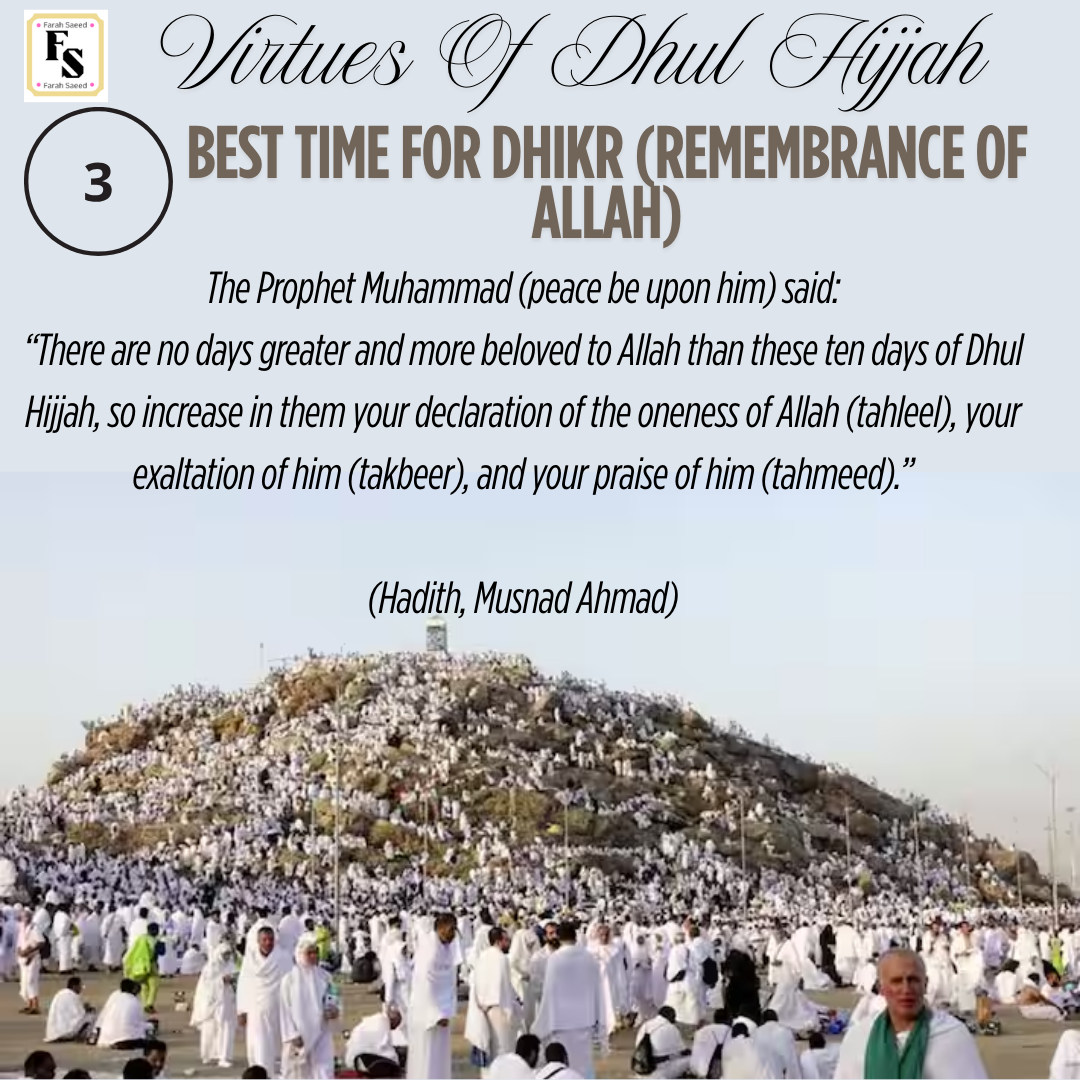
“There are no days greater and more beloved to Allah than these ten days of Dhul Hijjah, so increase in them your declaration of the ones of Allah (tahleel), your exaltation of him (takbeer), and your praise of him (tahmeed).”
[Hadith, Sahih Ahmed]
Tahleel (La ilaha illah Allah) (There is no God but Allah)
Takbeer (Allahu Akbar) (Allah is Great)
Tahmeed (Alhamdulilah) All Praise to Allah
Tasabeeh (Subhanallah) Glory be to Allah as many times, especially on Arafah Day.
Abd-Allah ibn ‘Amr ibn al-‘As (may Allah be pleased with him) narrated that the Prophet Muhammad (peace be upon him) said:
“The best of dua is dua on the day of ‘Arafah, and the best that I and the Prophets before me said is ‘La ilaha ill-Allah wahdahu la sharika lah, lahu’l-mulk wa lahu’l-hamd wa huwa ‘ala kulli shay’in qadir
(There is no god but Allah Alone, with no partner or associate; He is the dominion, to Him be praise, and He has power over all things).”
(Hadith, Sahih al-Tirmidhi)
- Perform Qurbani.
Abu Talhah (may Allah have mercy upon him) reported,
“The Prophet (PBUH) sacrificed for the one who could not sacrifice from his Ummah, one who bore witness to the Oneness of Allah and [his] Prophethood.”
(Hadith, Sahih Tabarani and Ahmad)
- Read Quran
- Perform charity
Hajj is a joyful spiritual experience that magnetizes people from the North and South Poles for a collective congregation of solitude, gratitude, forgiveness, and purification that attracts millions of viewers on when will they be able to perform this pilgrimage.
Infographic Posters On Key Virtues of Hajj





References
East London Mosque (2025) Dhul Hijjah FAQs Available at: https://www.eastlondonmosque.org.uk/blogs/from-the-imams-desk/dhul-hijjah-faqs (Accessed: 25th May 2025)
Miah, M.T. (2025) Virtues of Qurbani. Available at: https://islamqa.org/hanafi/daruliftaa-birmingham/20266/virtues-of-qurbani/ (Accessed: 24th May 2025(
Mufti Bilal Omarjee (2023) Hajj Guide: Step by step guide to performing Hajj. Available at: https://www.islamic-relief.org.uk/resources/knowledge-base/five-pillars-of-islam/hajj/step-by-step-hajj-guide/ (Accessed: 25th May 2025)
Sheikh Muhammed Salih-Al-Munajjid (2018) Hajj: Its Virtues and Benefits. Available at: https://m.islamqa.info/en/articles/77/hajj-its-virtues-and-benefits?traffic_source=main_islamqa (Accessed: 24th May 2025)
 The Farah Saeed Project
Leave a comment