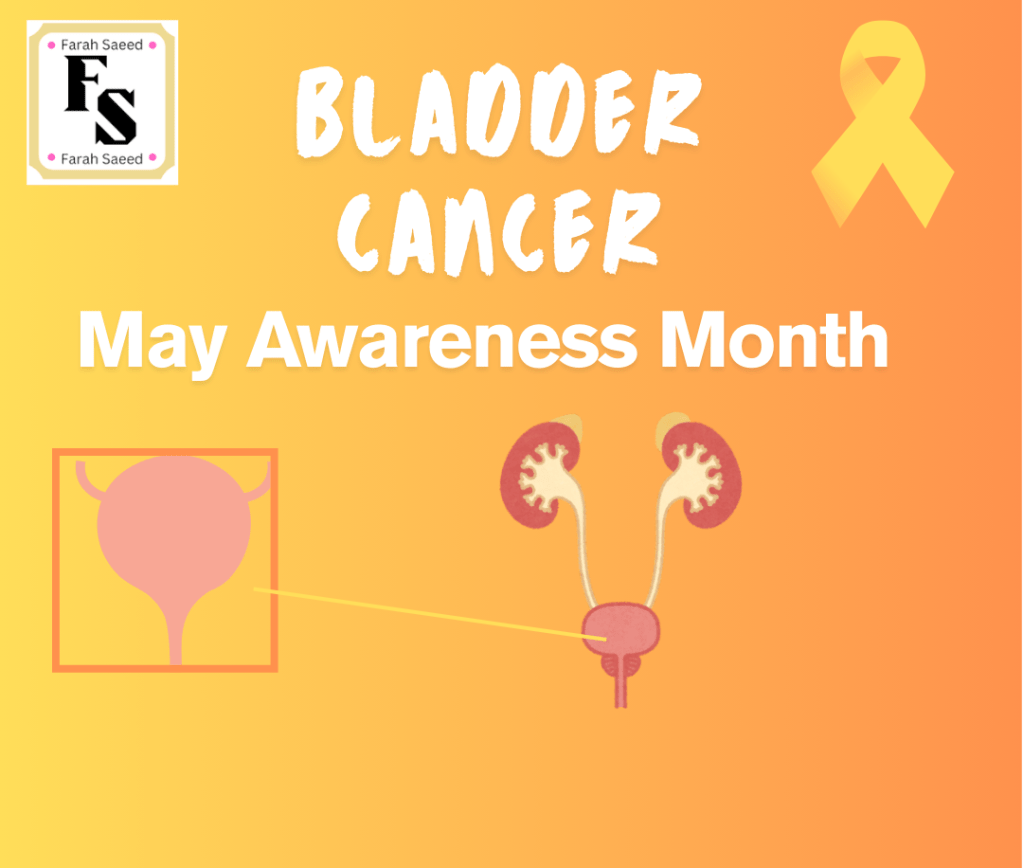
How Is Bladder Cancer Diagnosed?
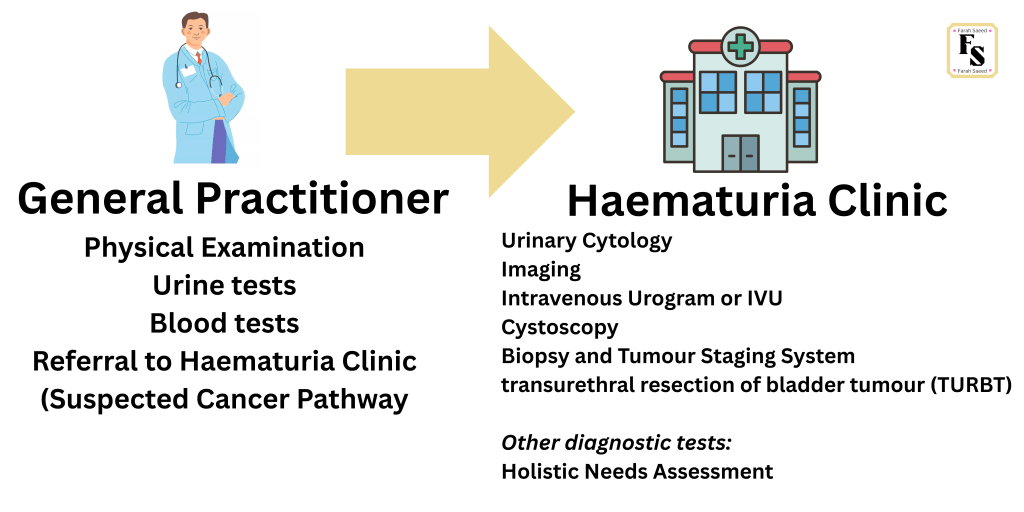
NHS Guidelines
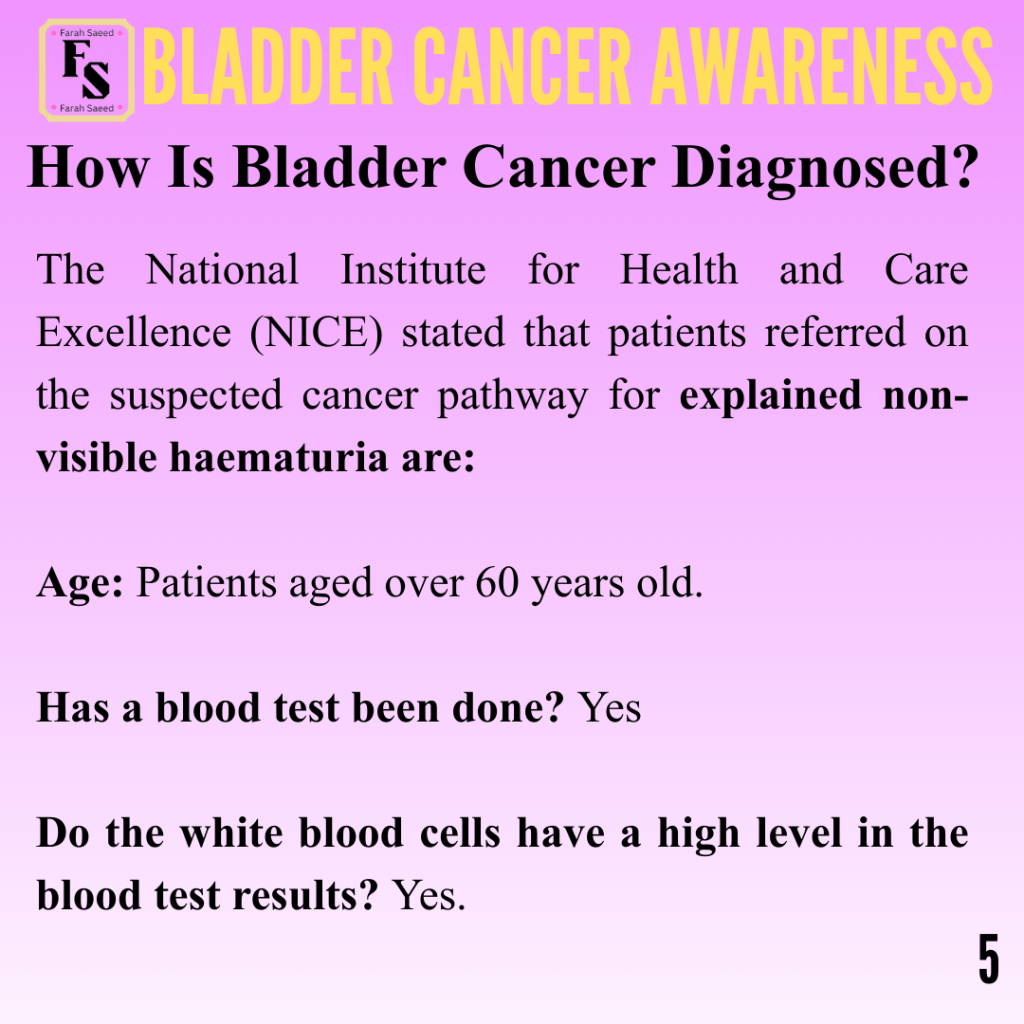
NICE Guidelines
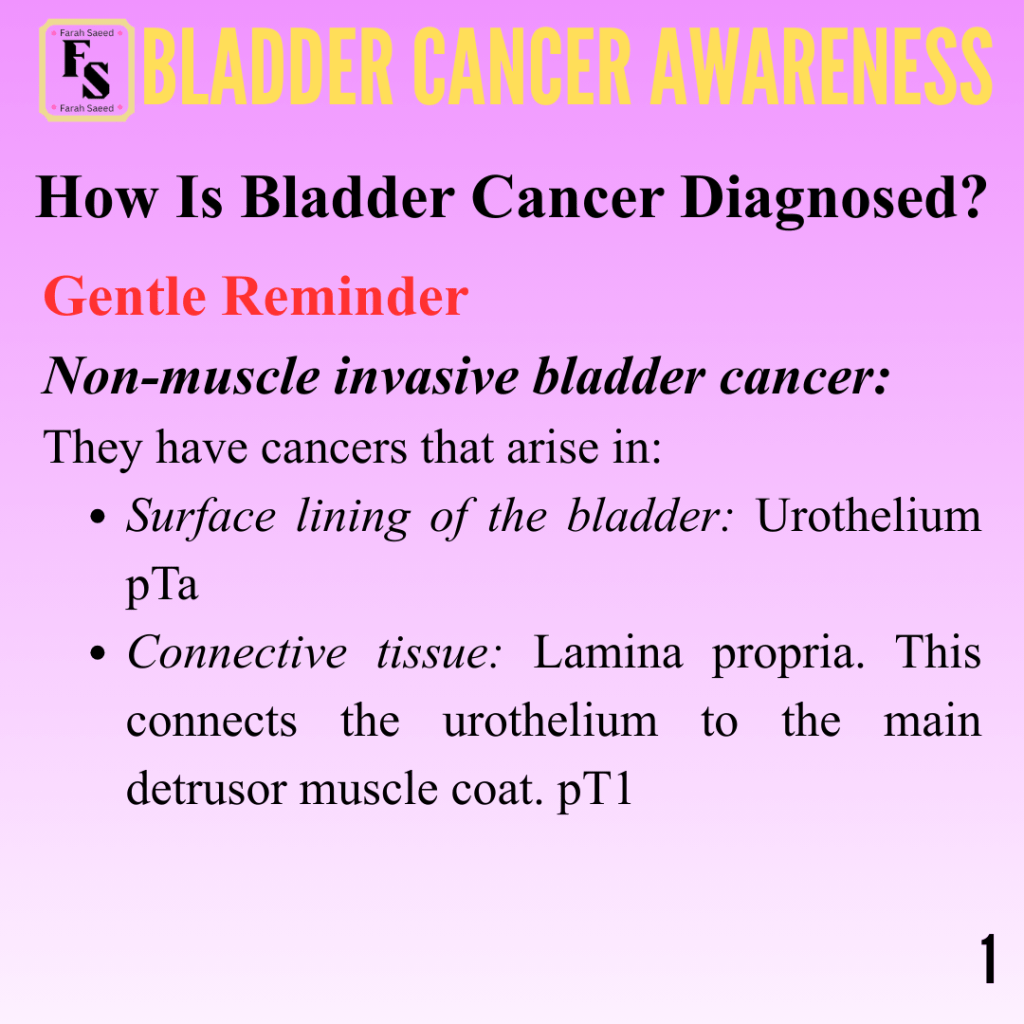
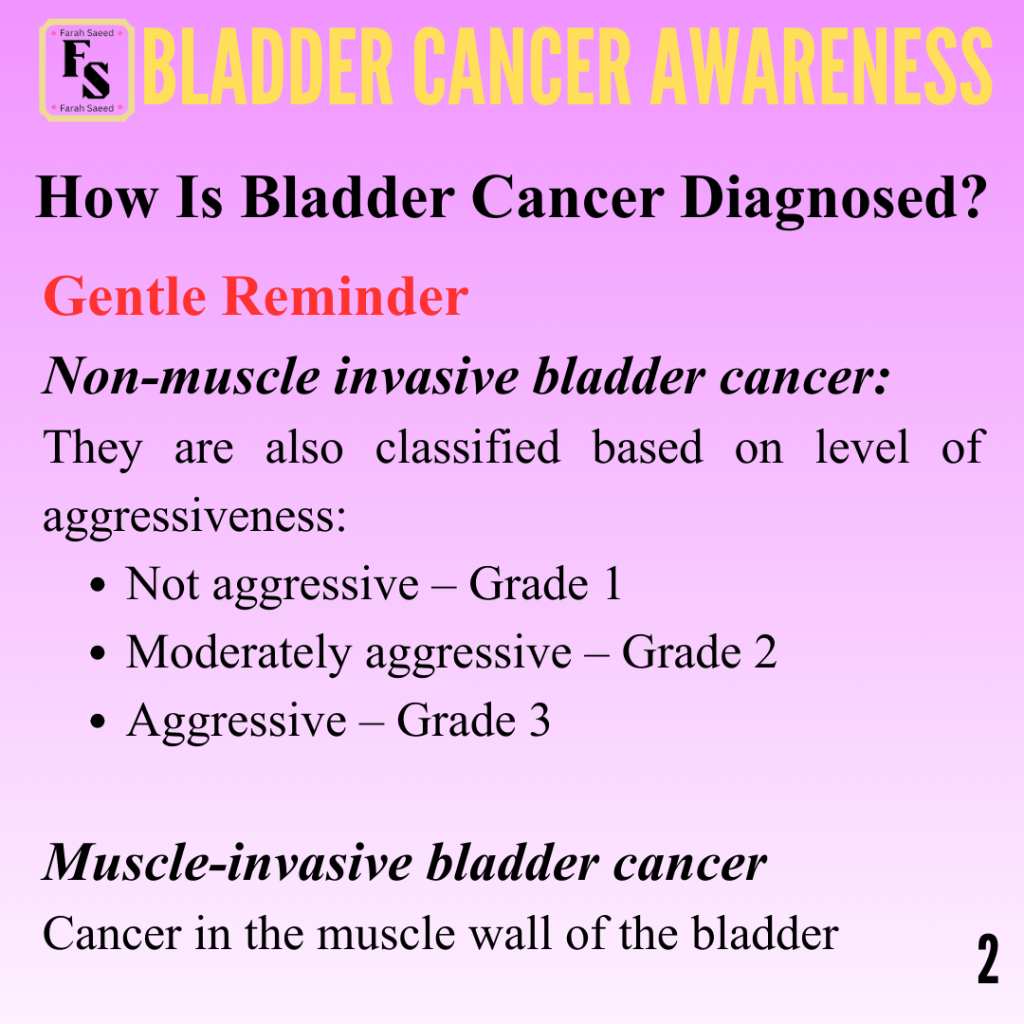
Gentle Reminder
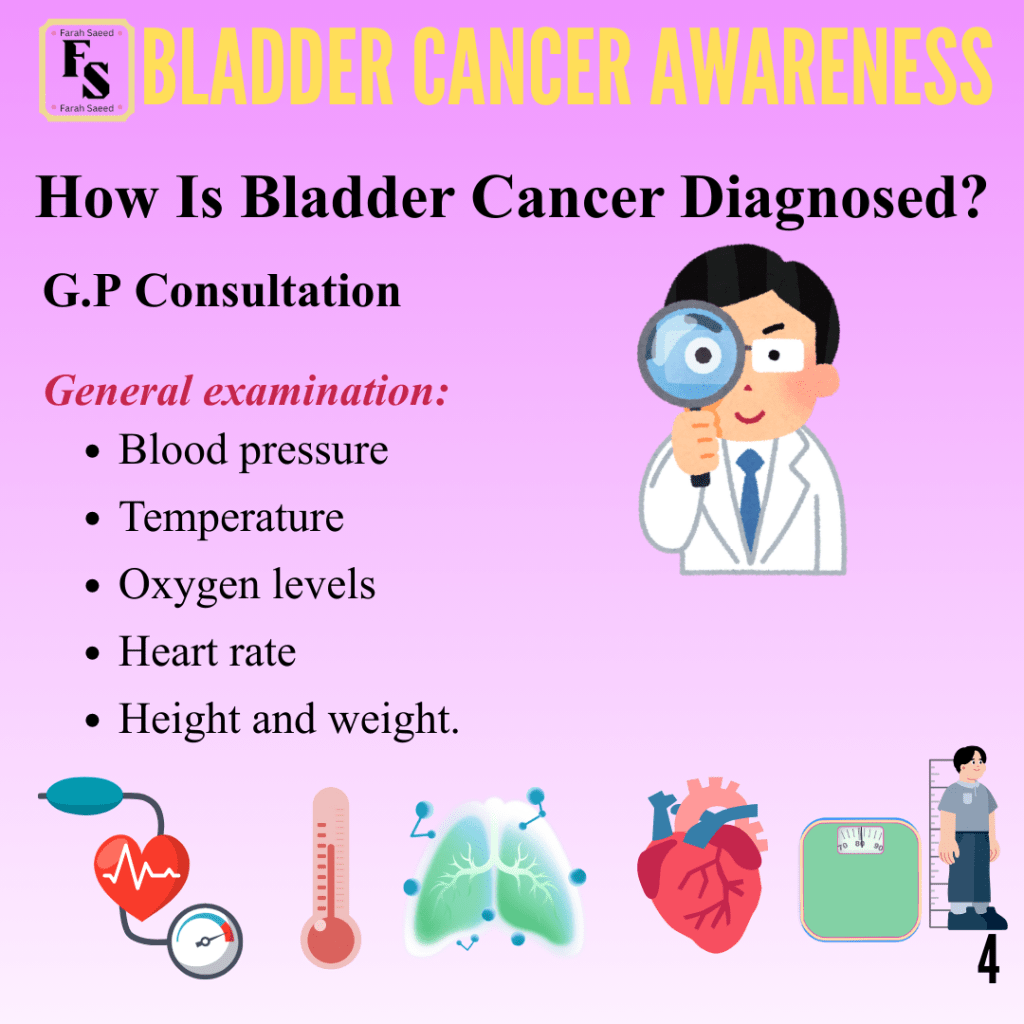
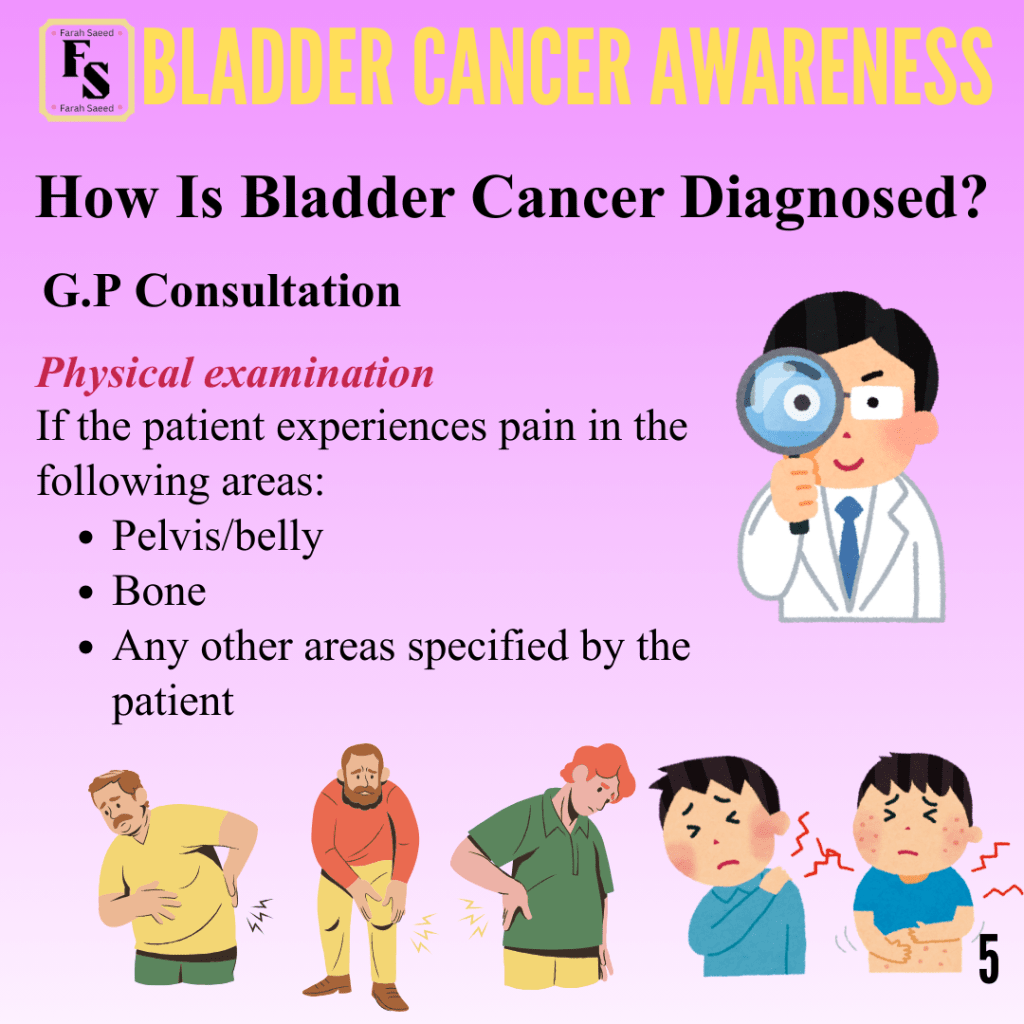
GP Consultation

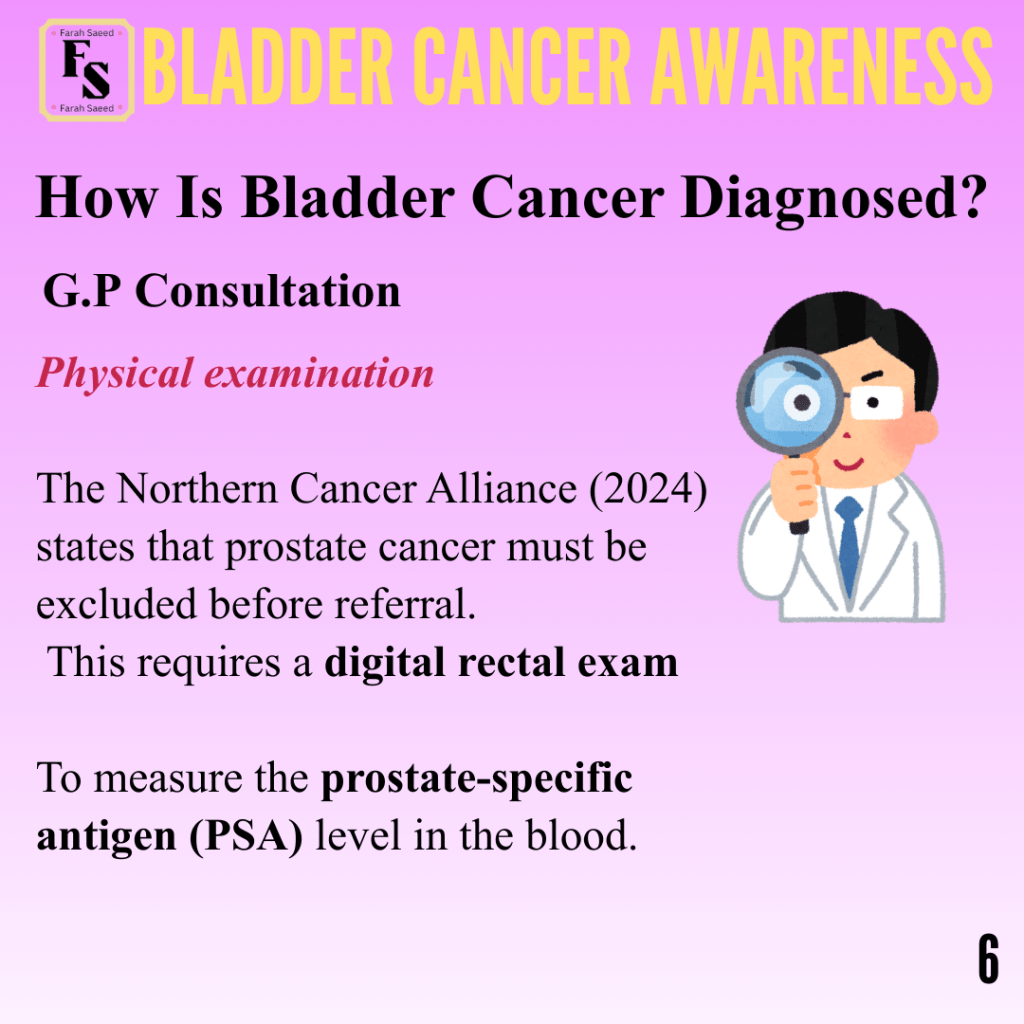
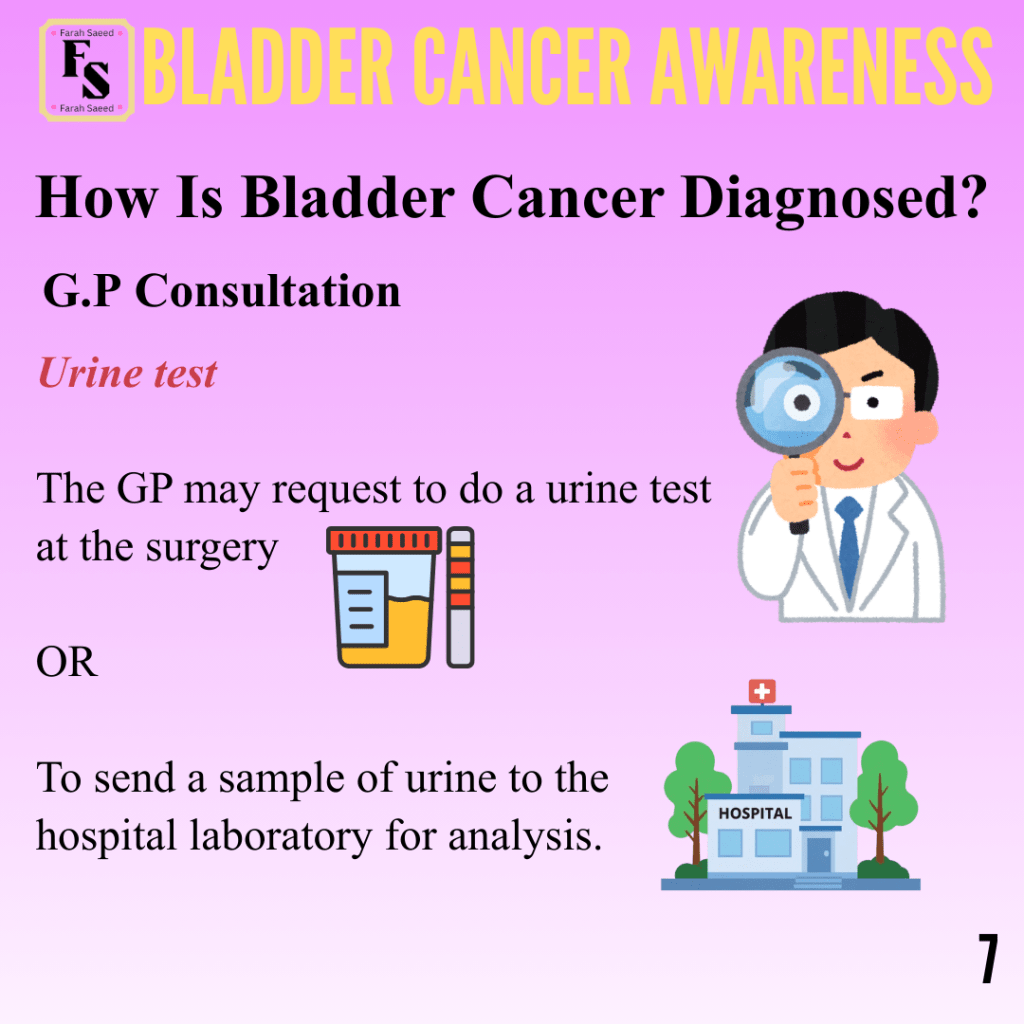
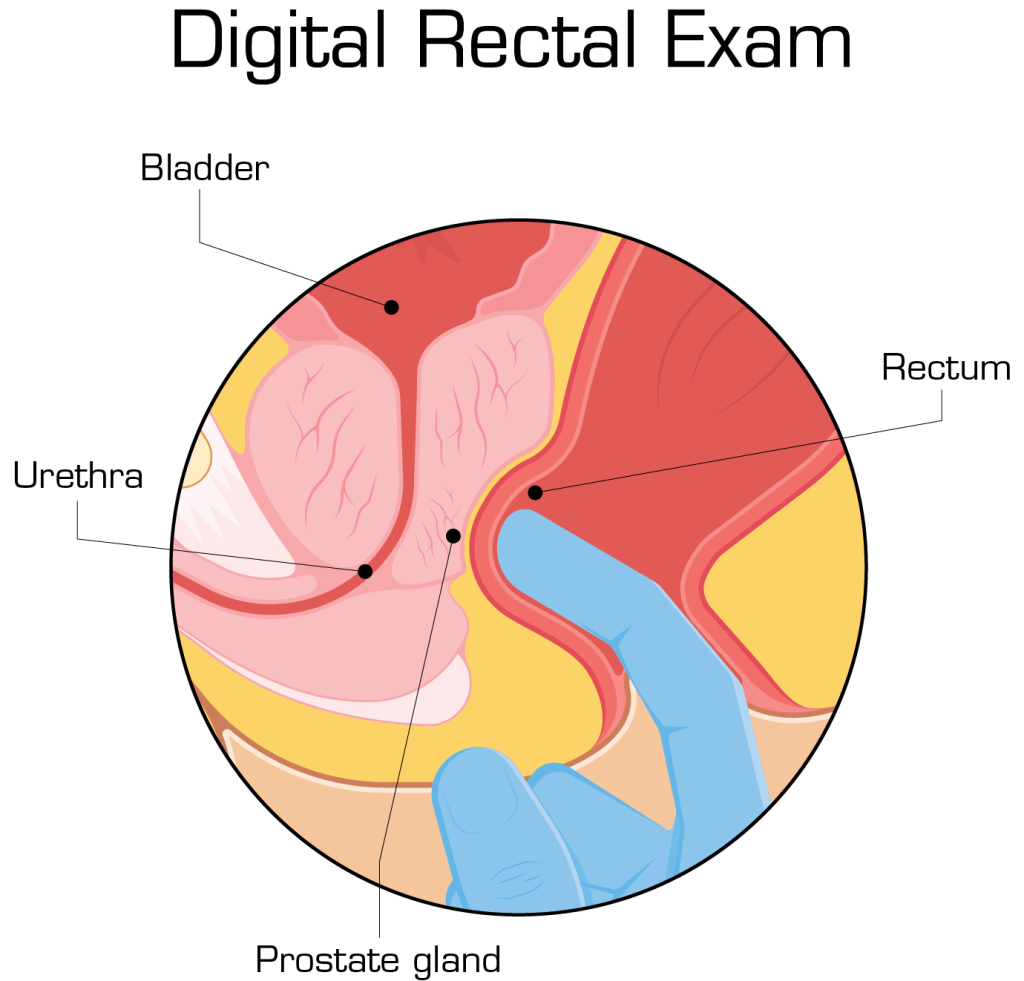
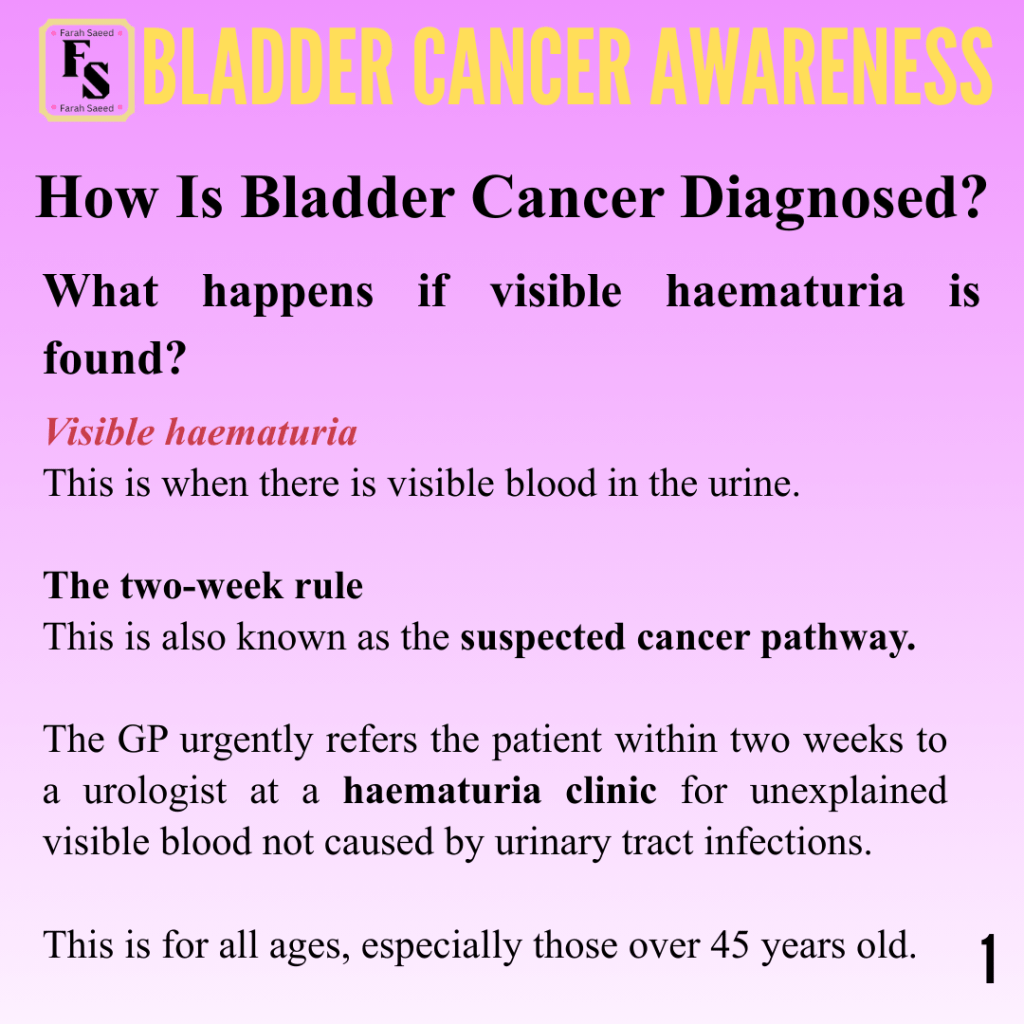
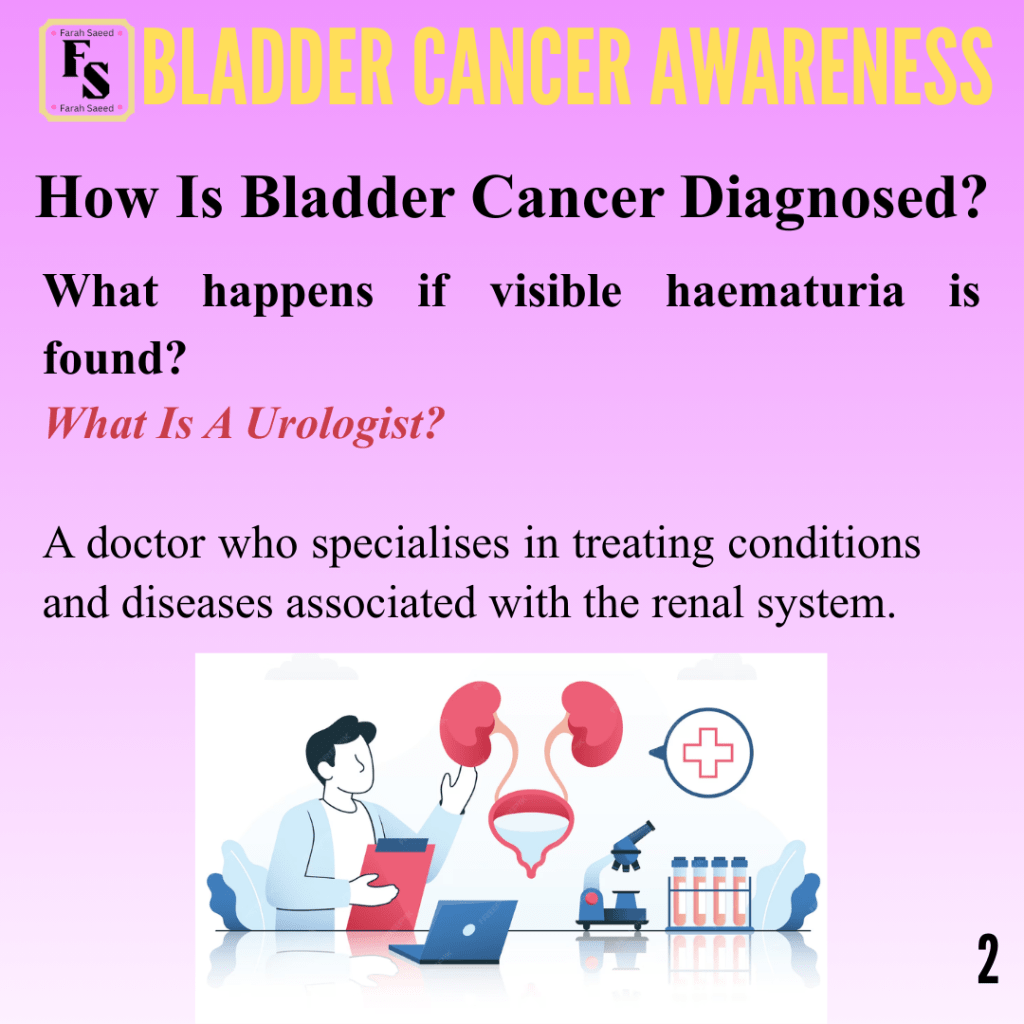
GP Consultation: What If It Is Haematuria?

GP Consultation: What If It Is Not Visible Haematuria?

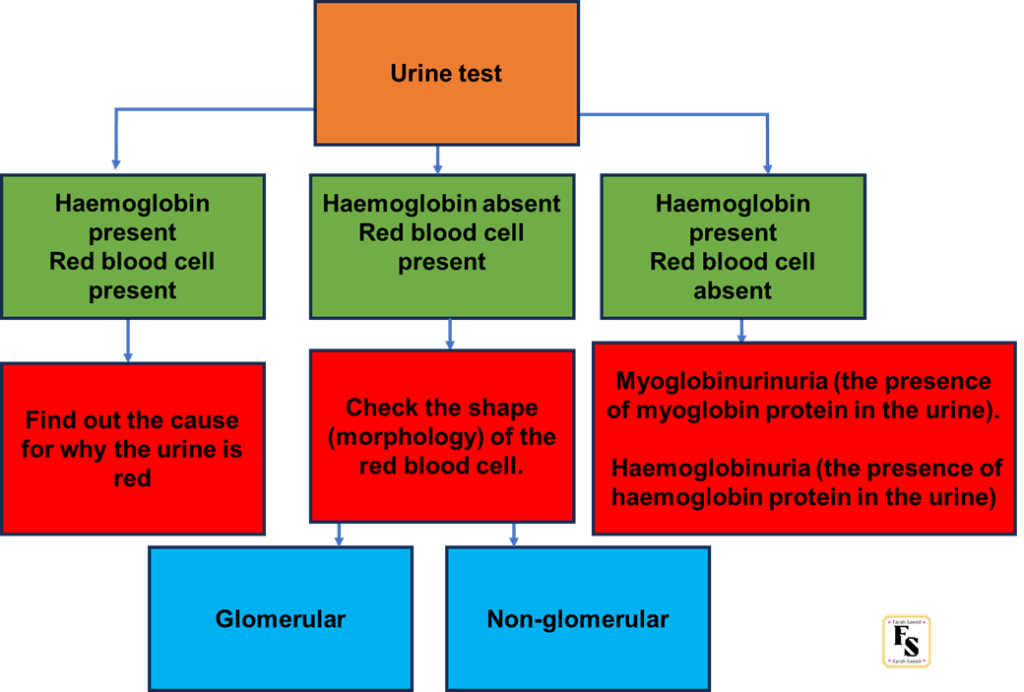
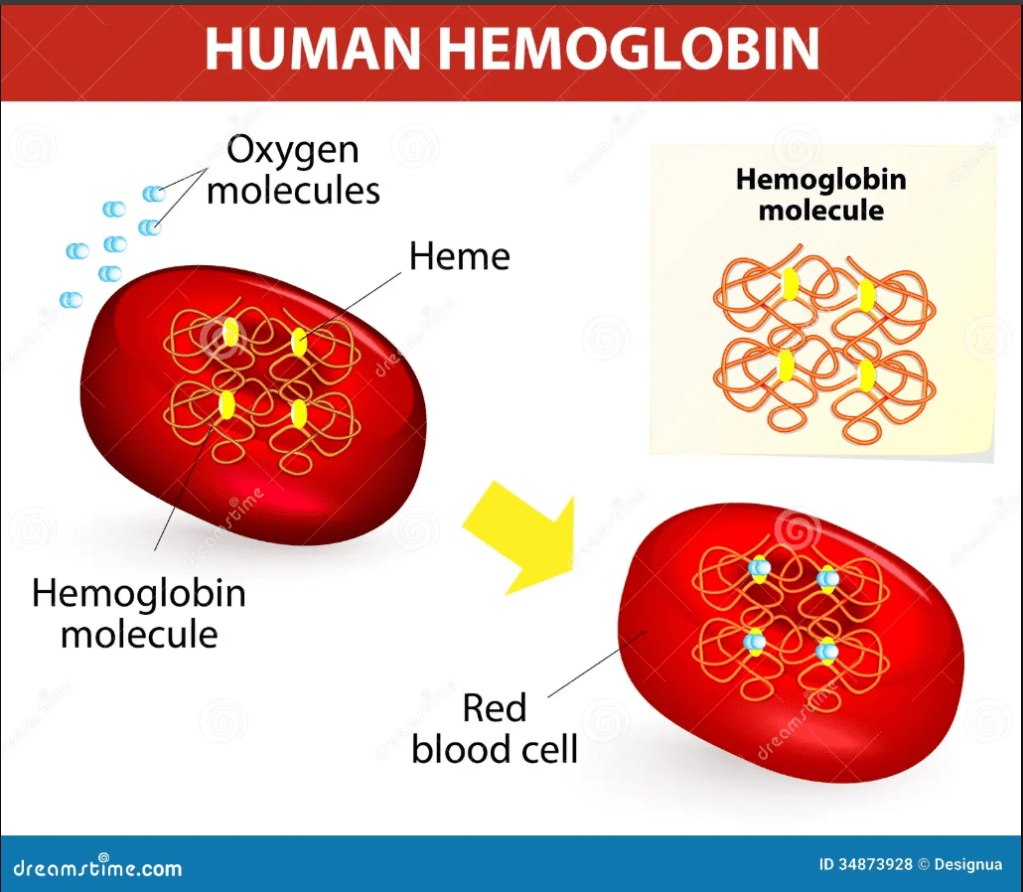
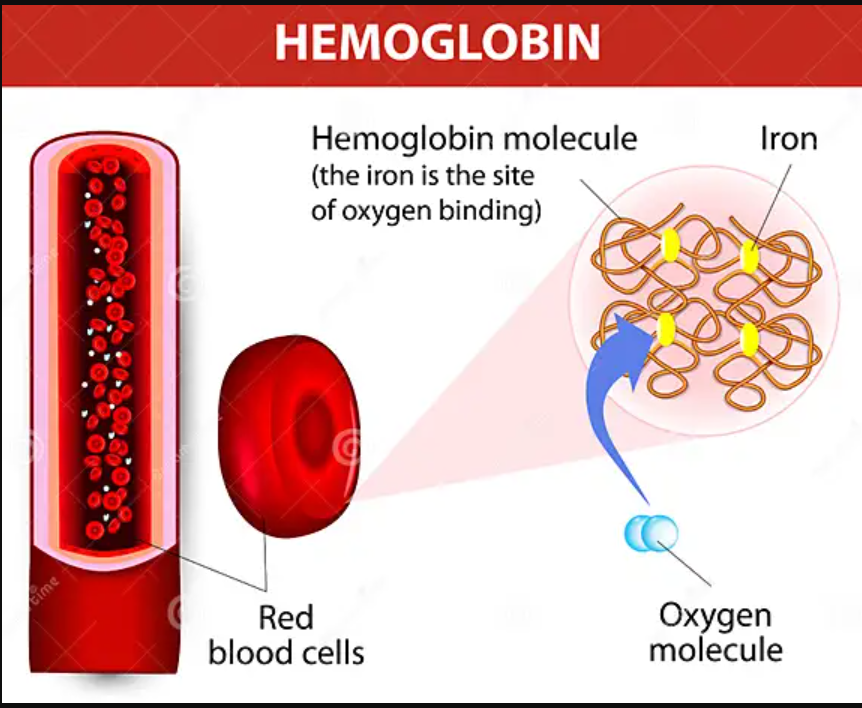
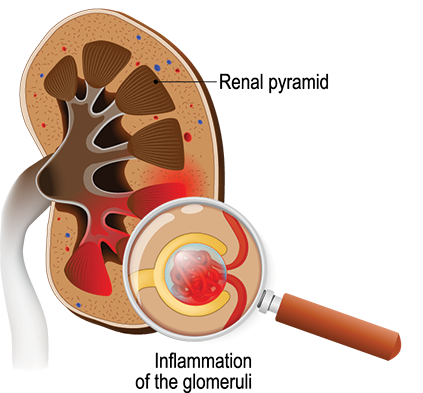
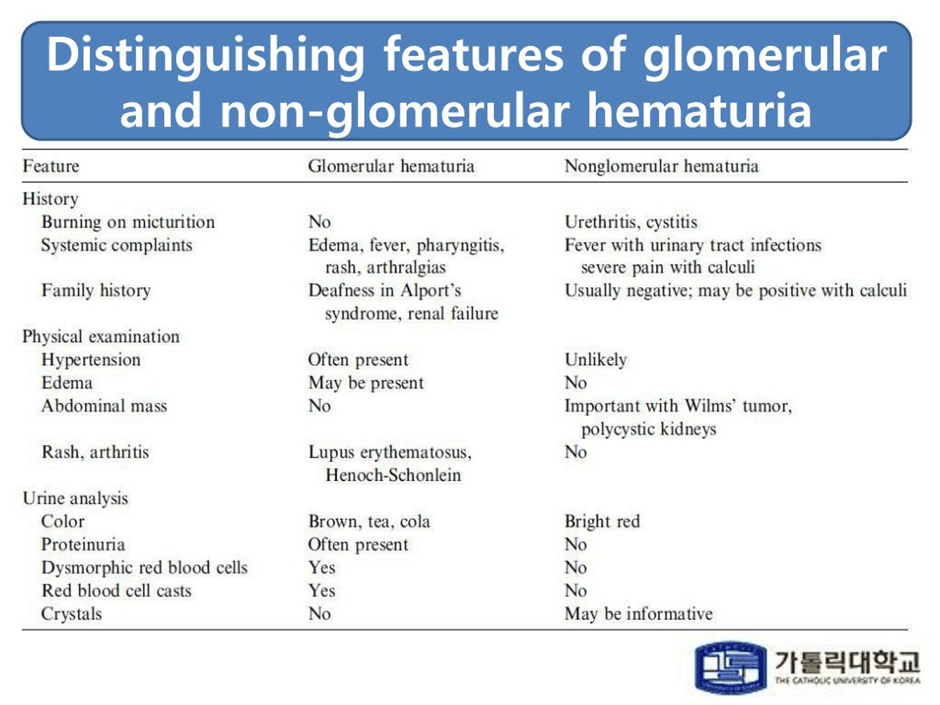
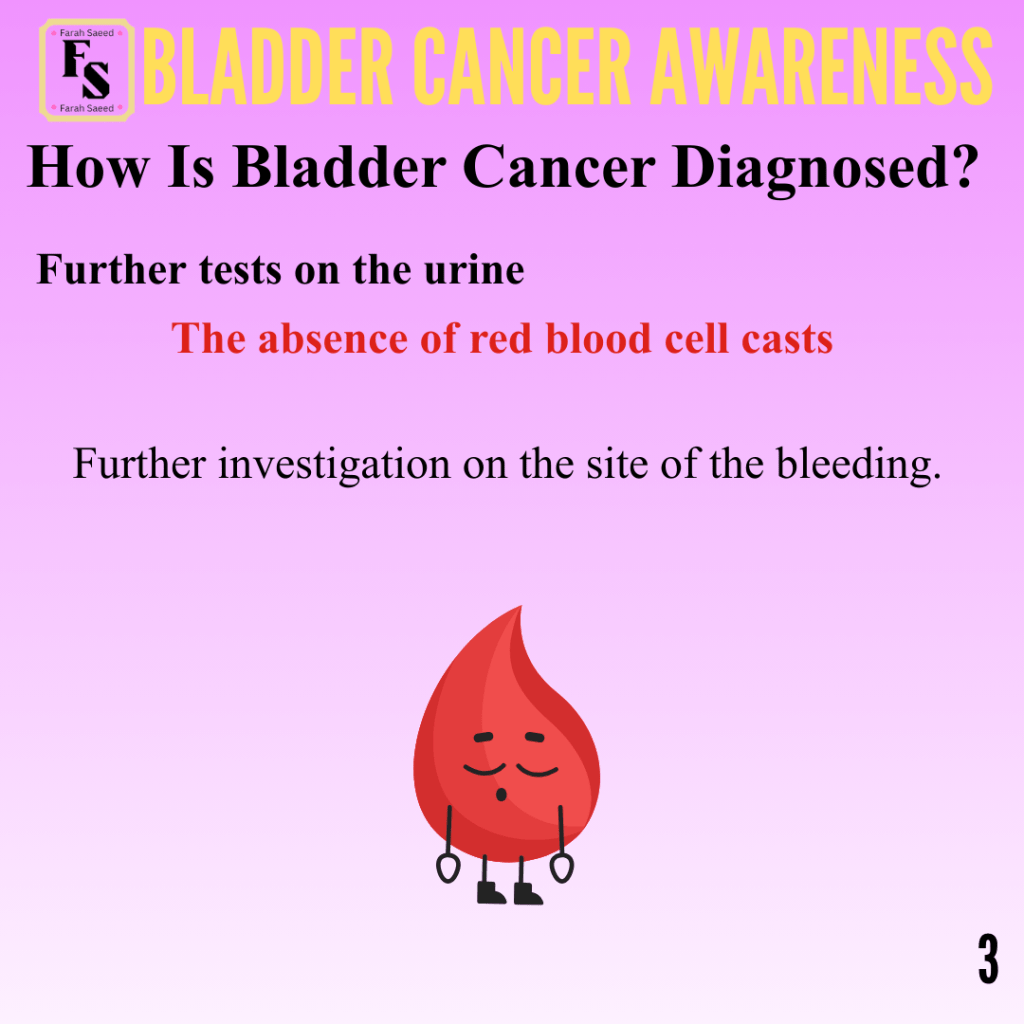
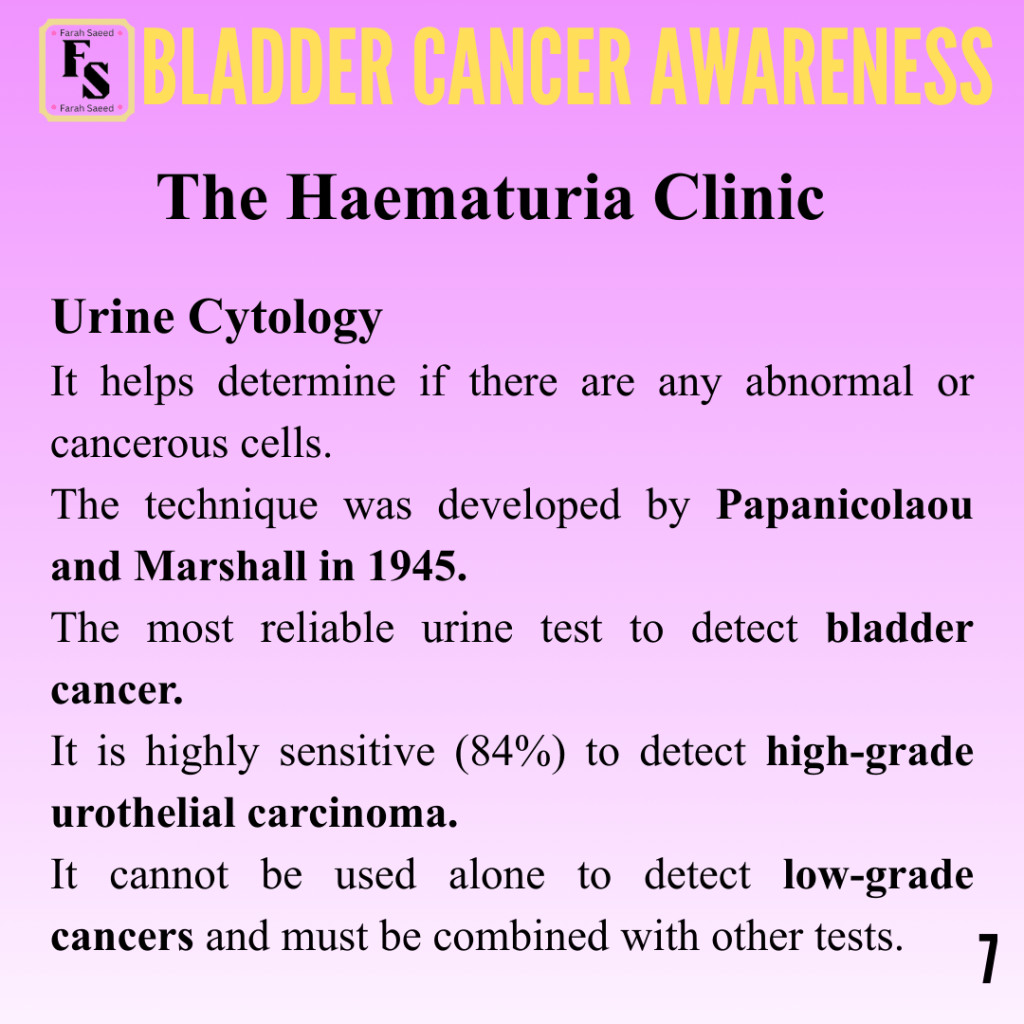
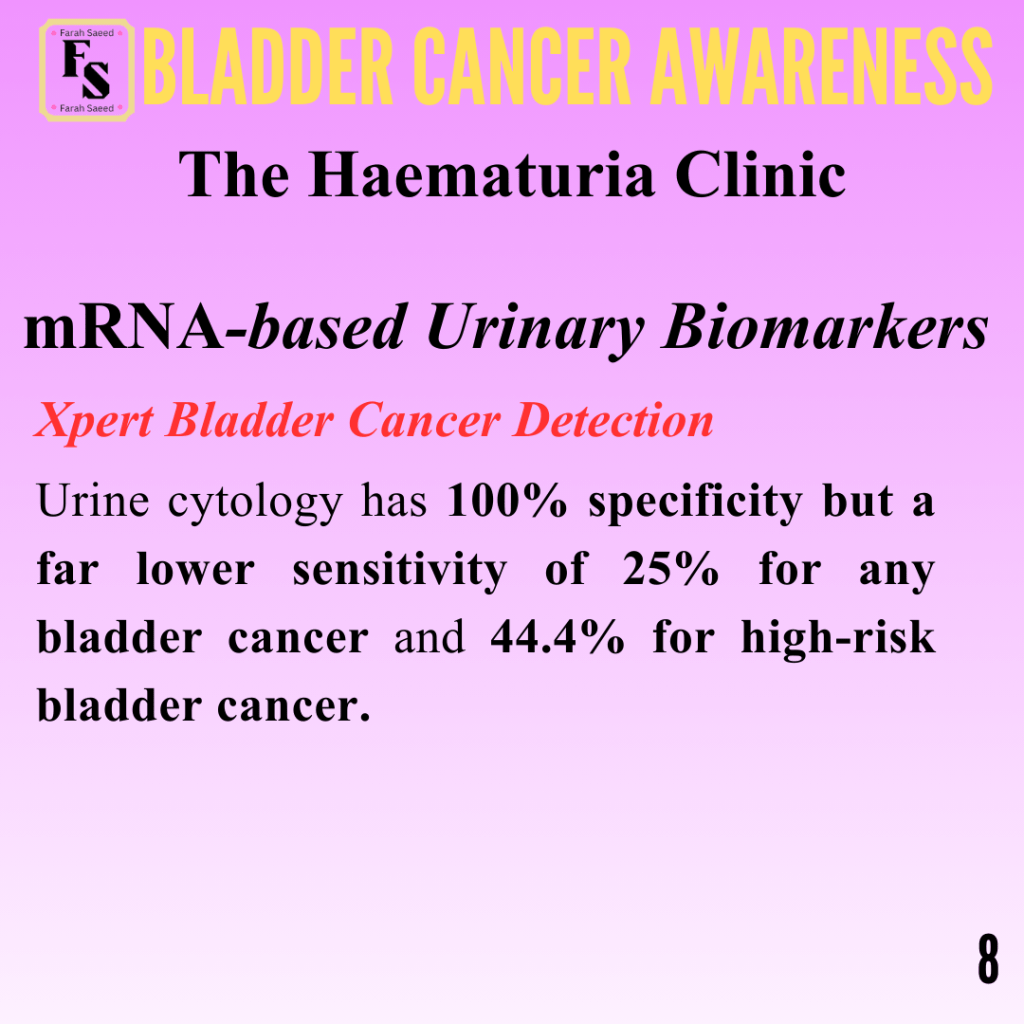
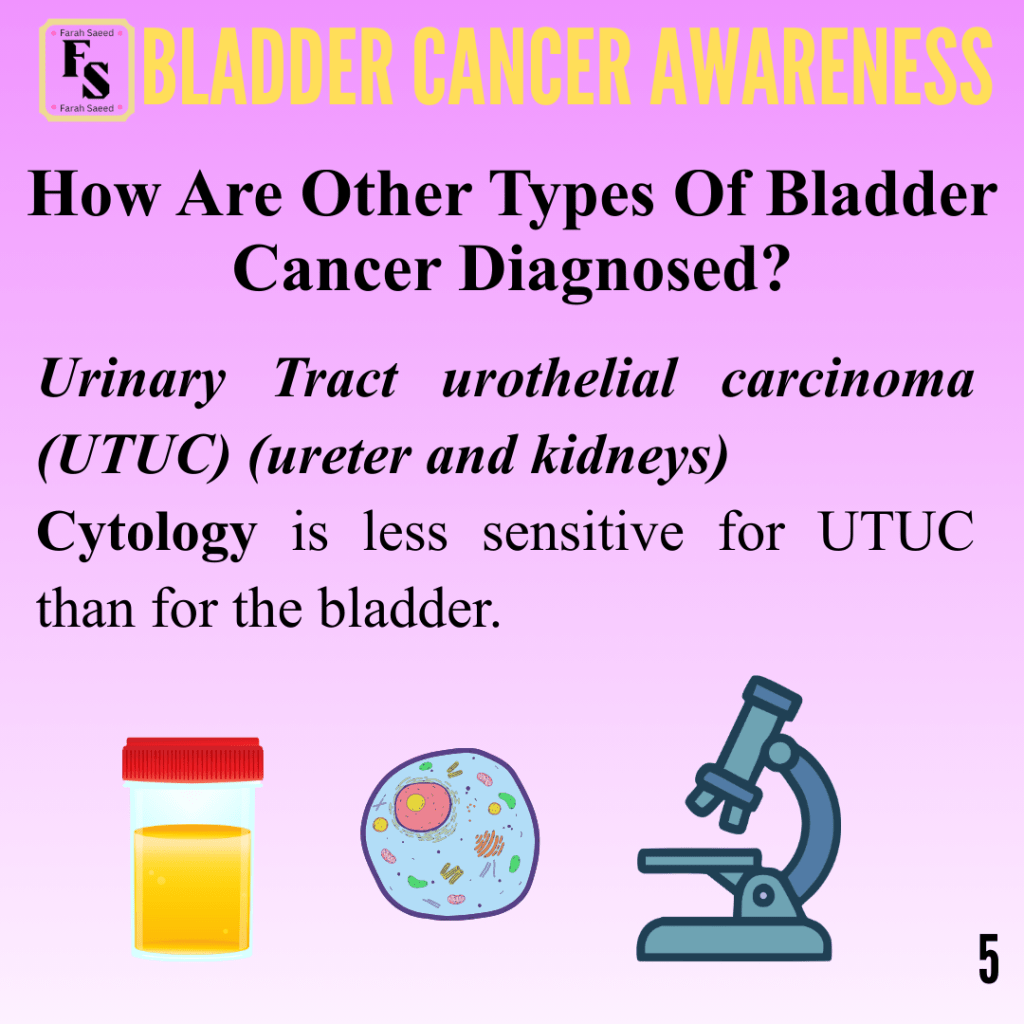
Further Urine Tests: Cytology
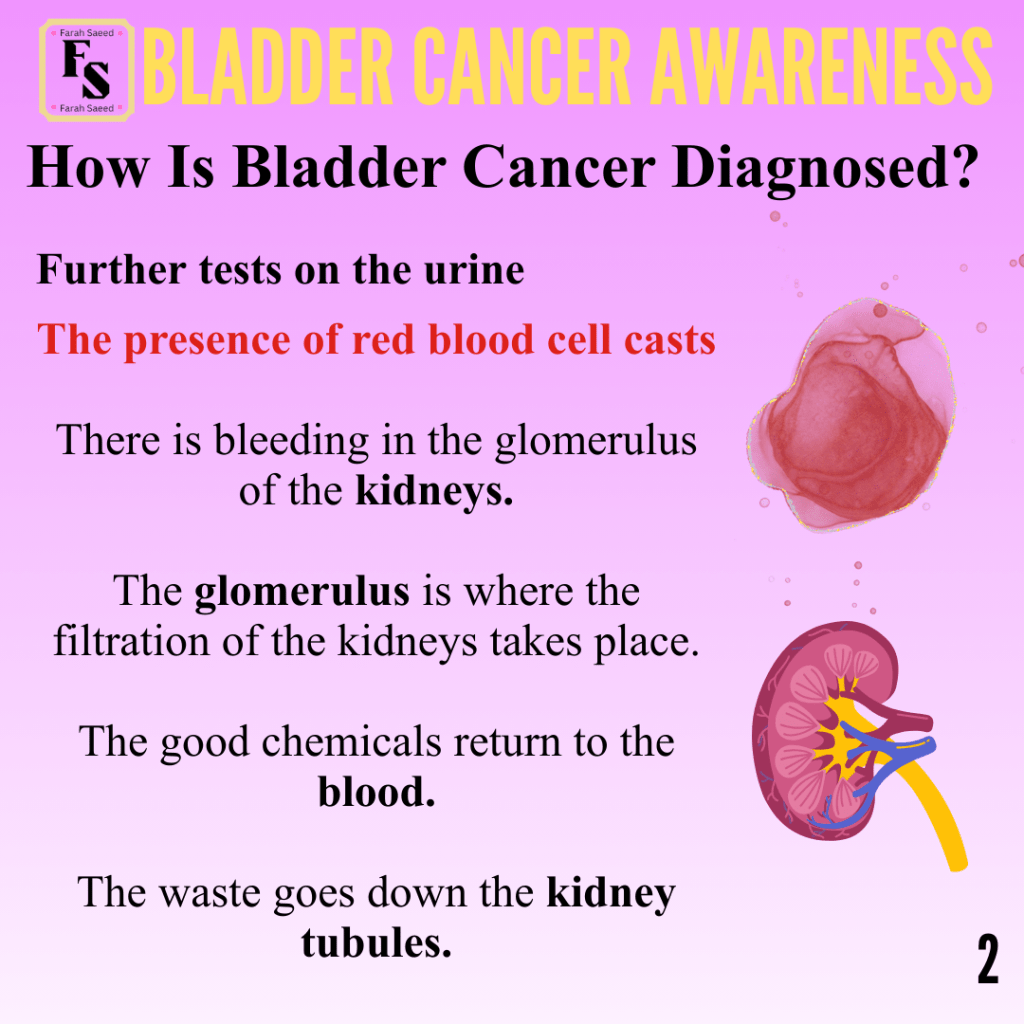
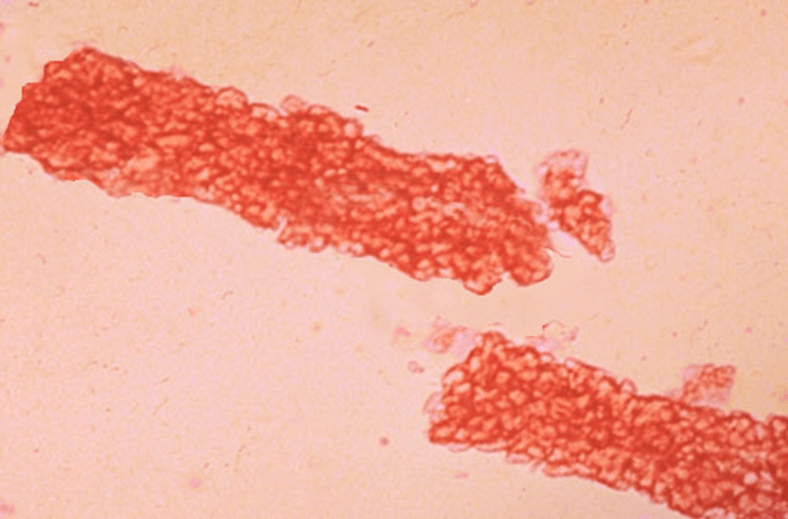
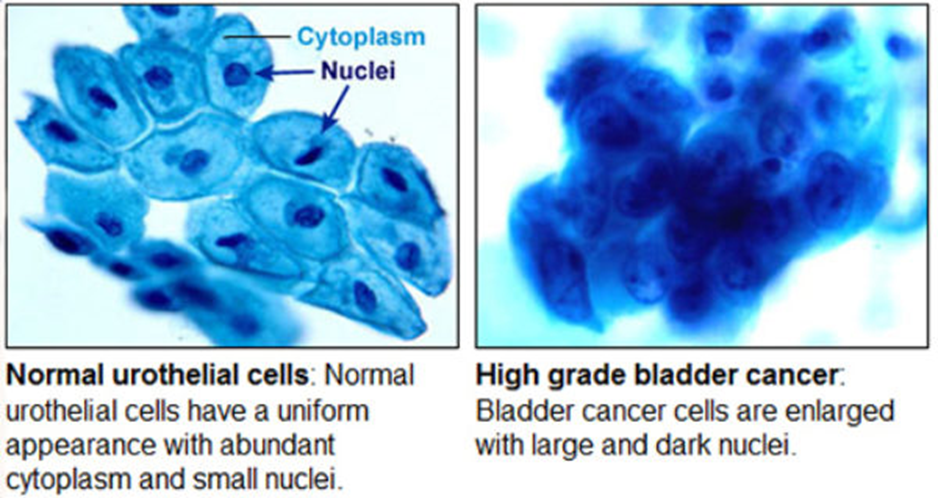
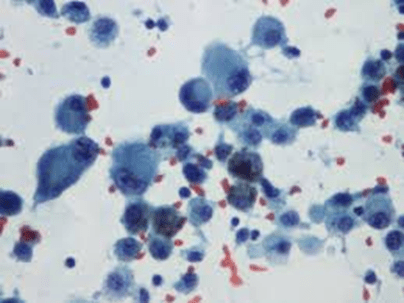
Below 50% detection rate. Additional tests needed to confirm whether there are cancerous cells (Min, 2026)
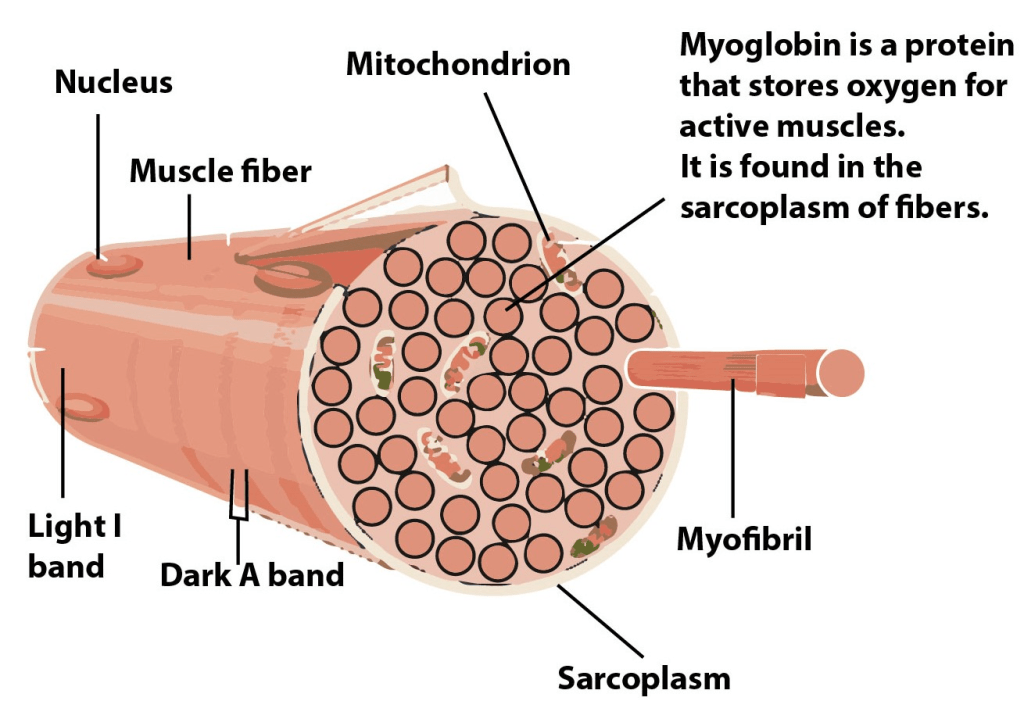
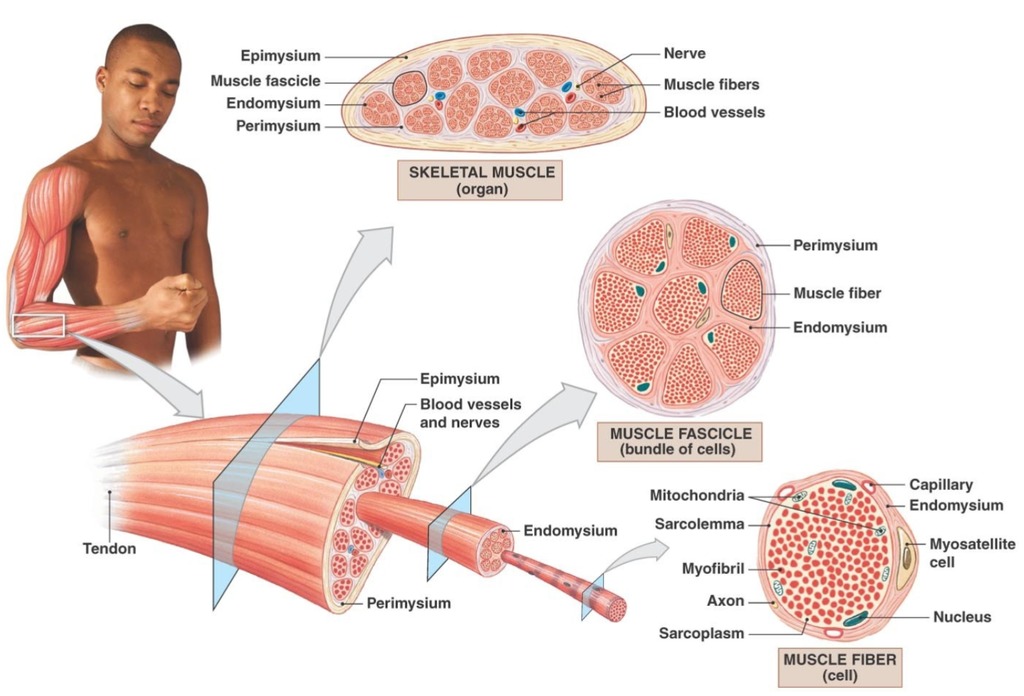
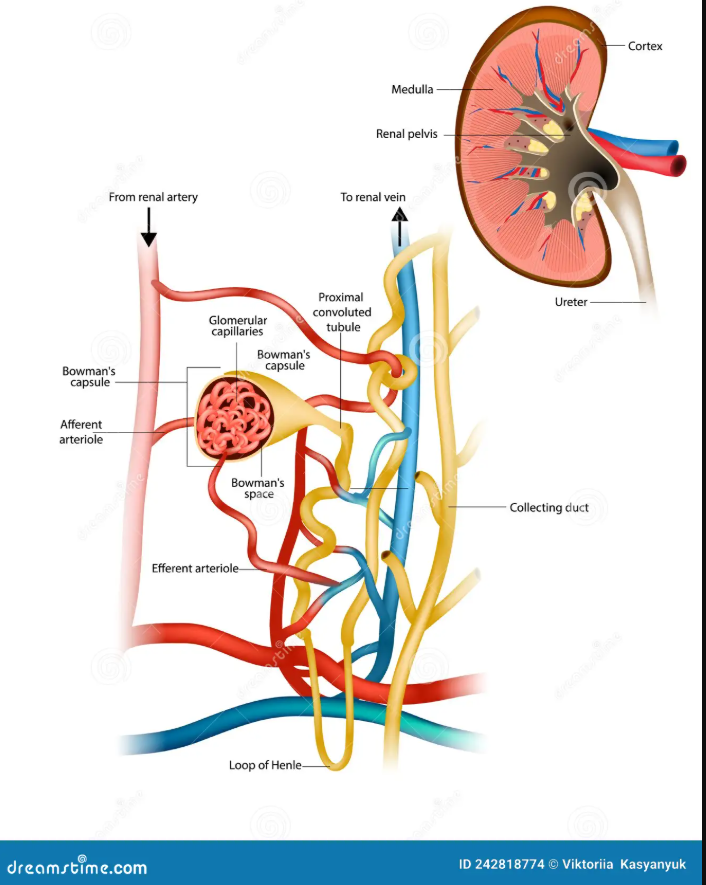
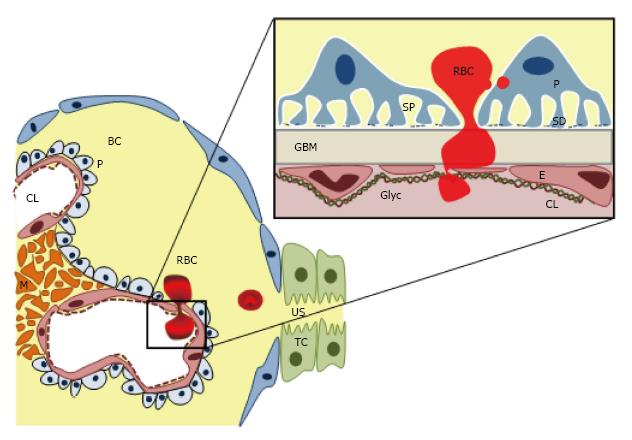
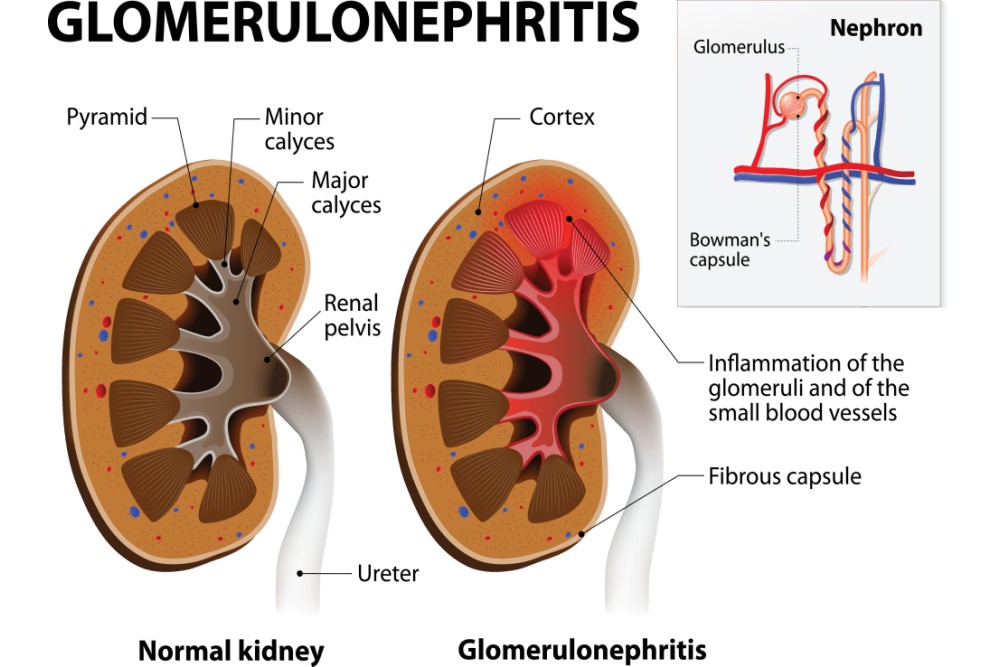
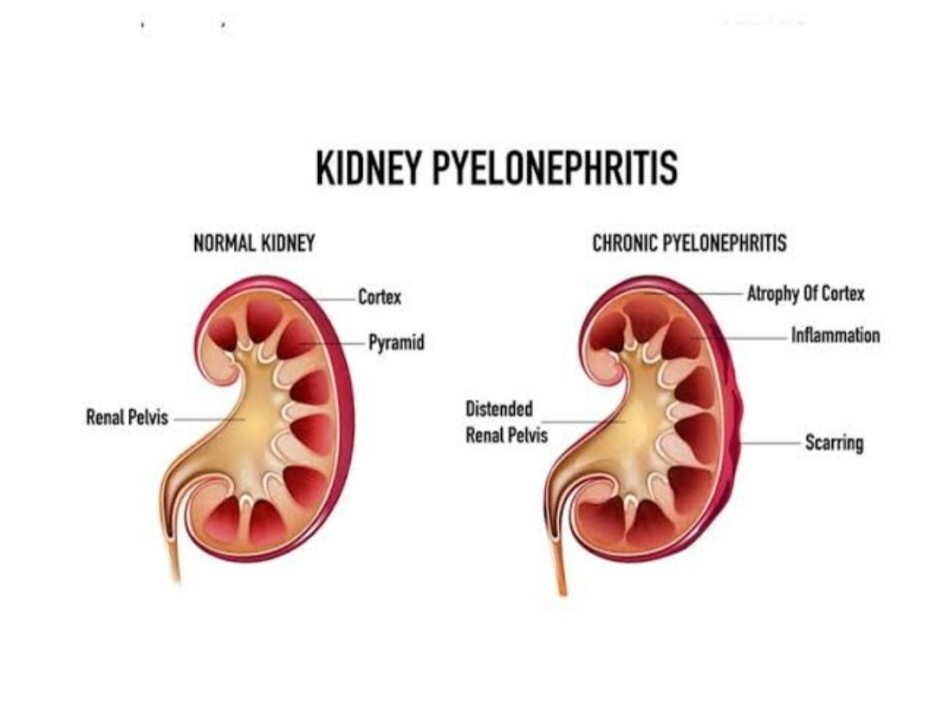
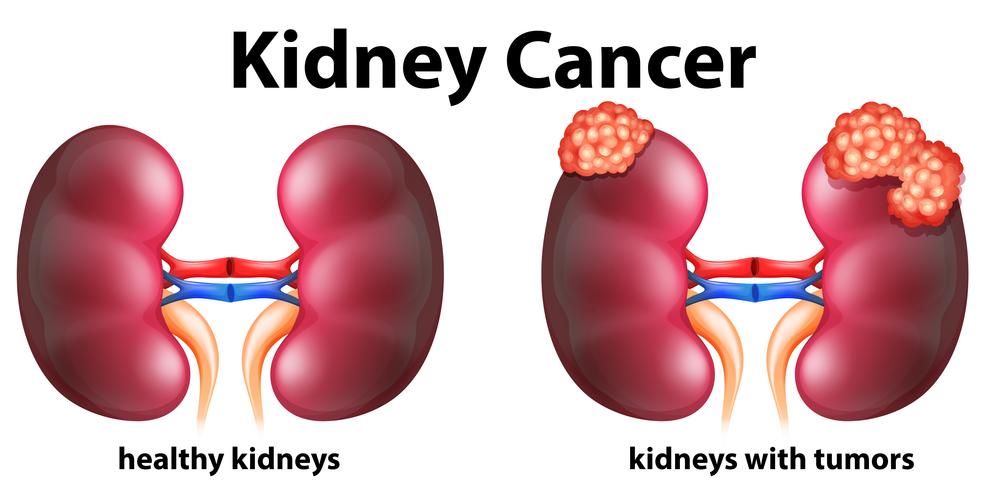
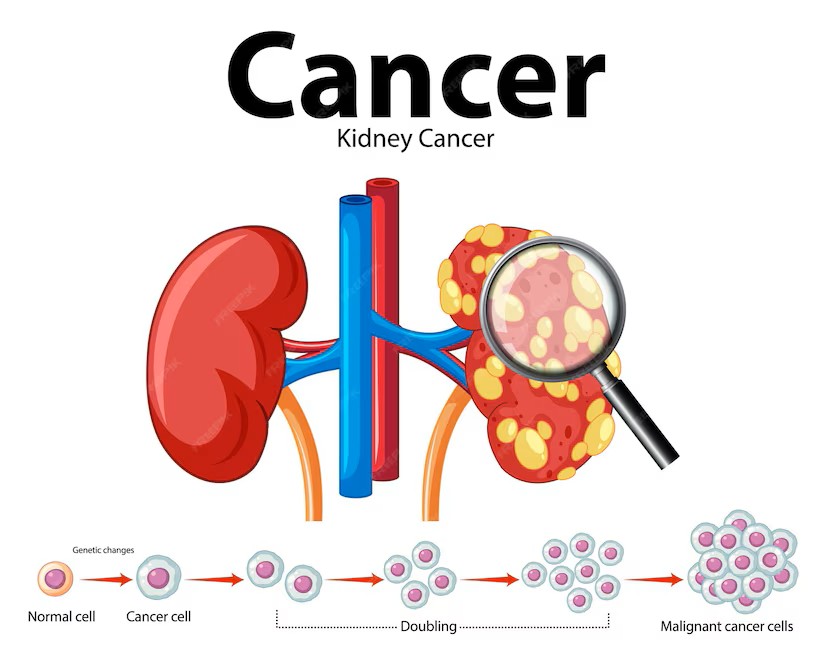
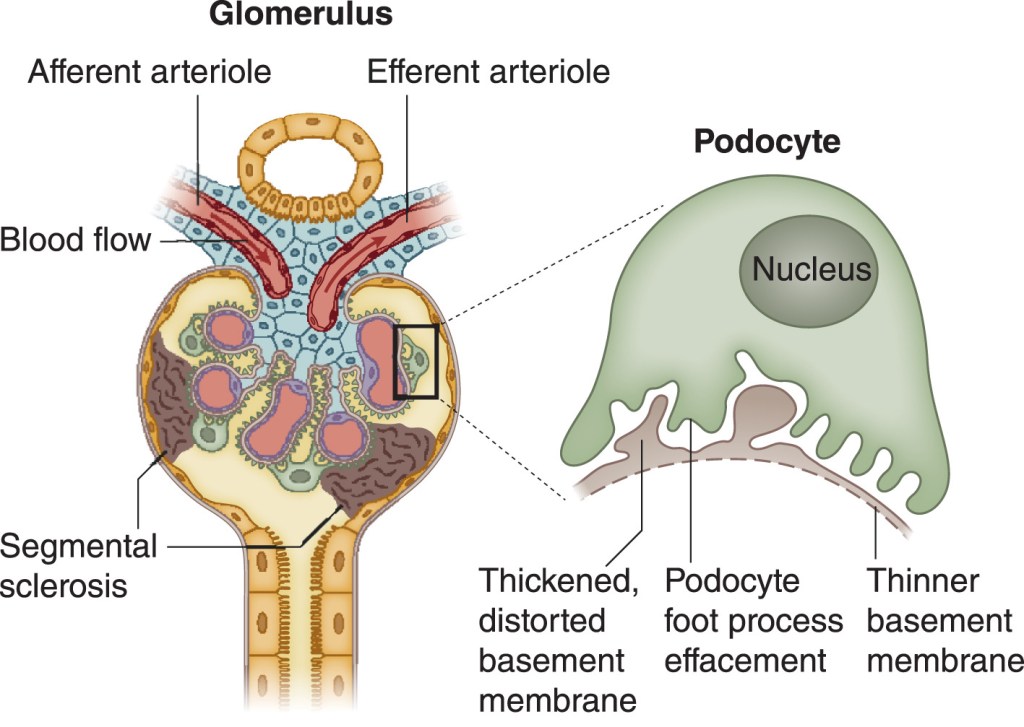
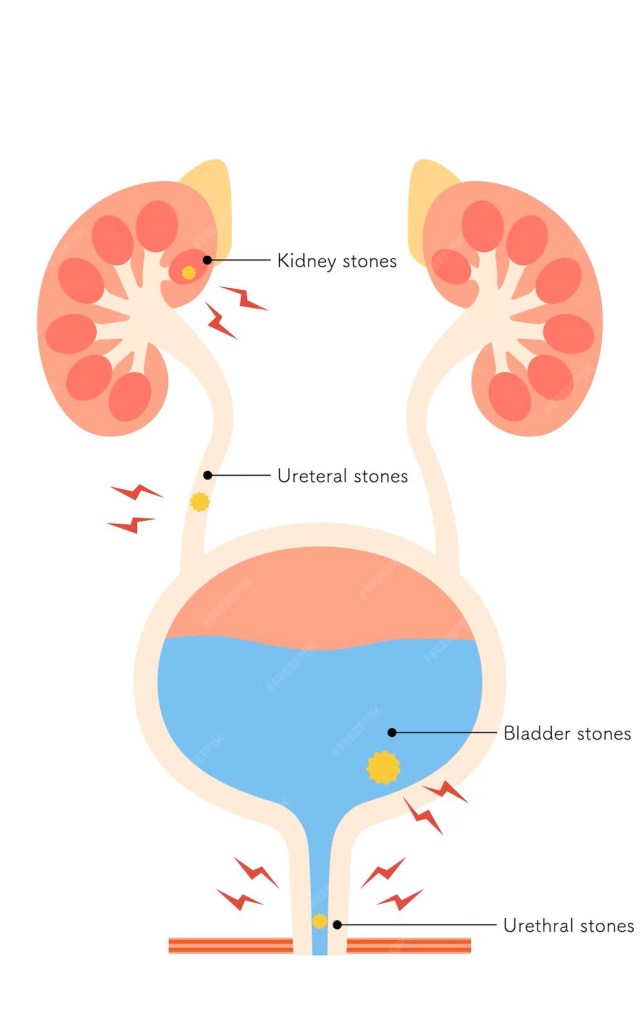
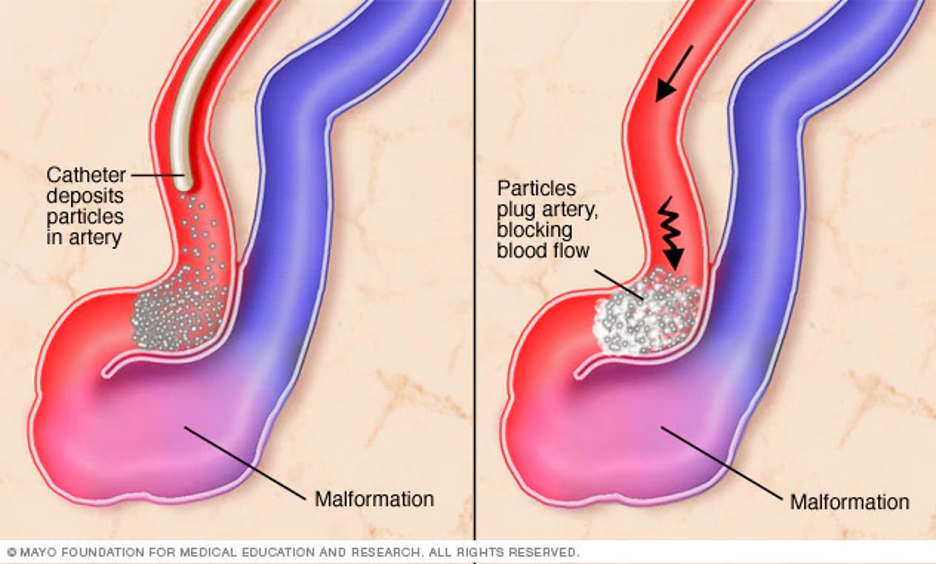
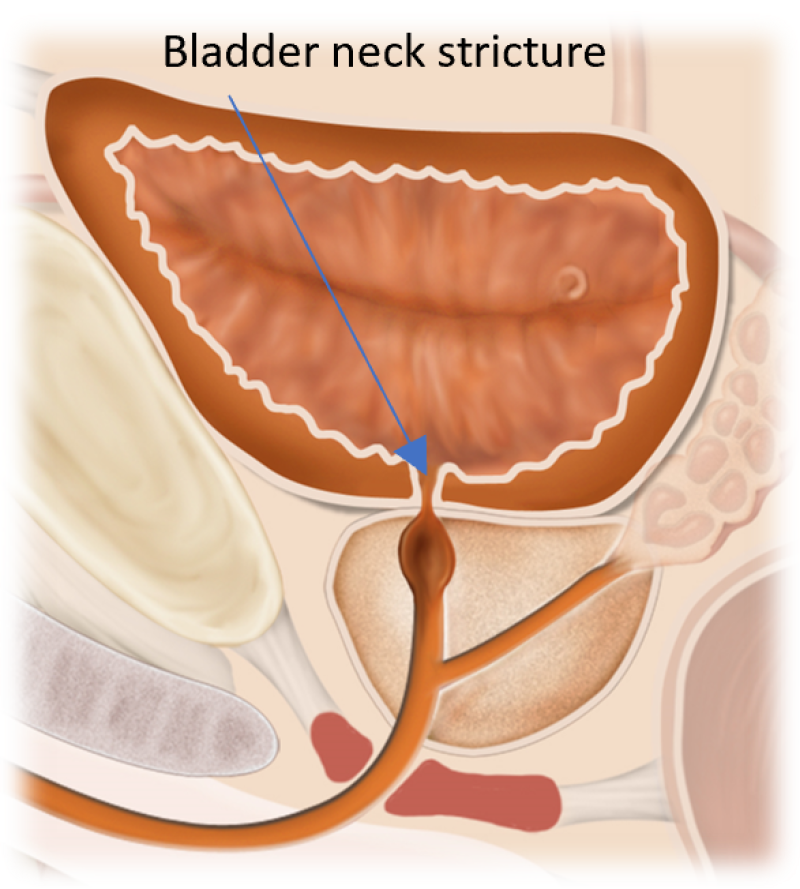
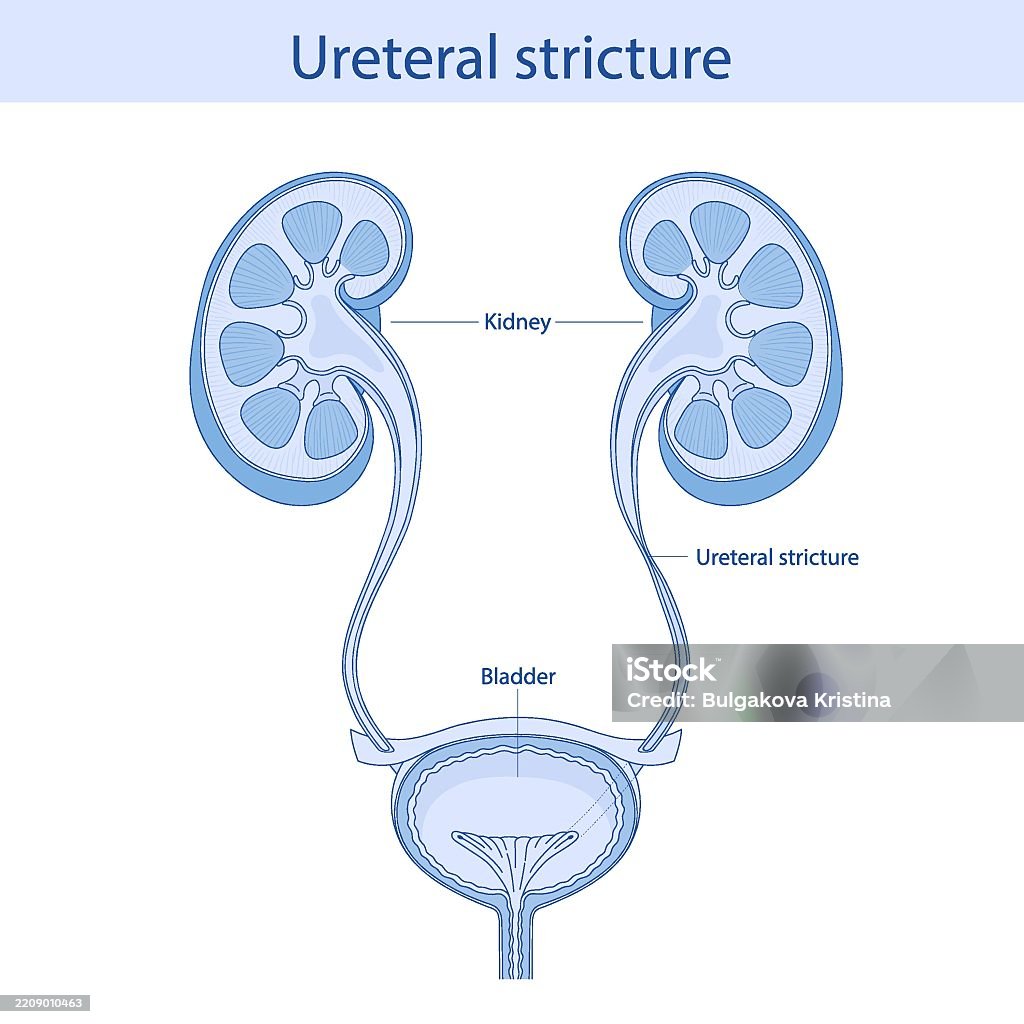
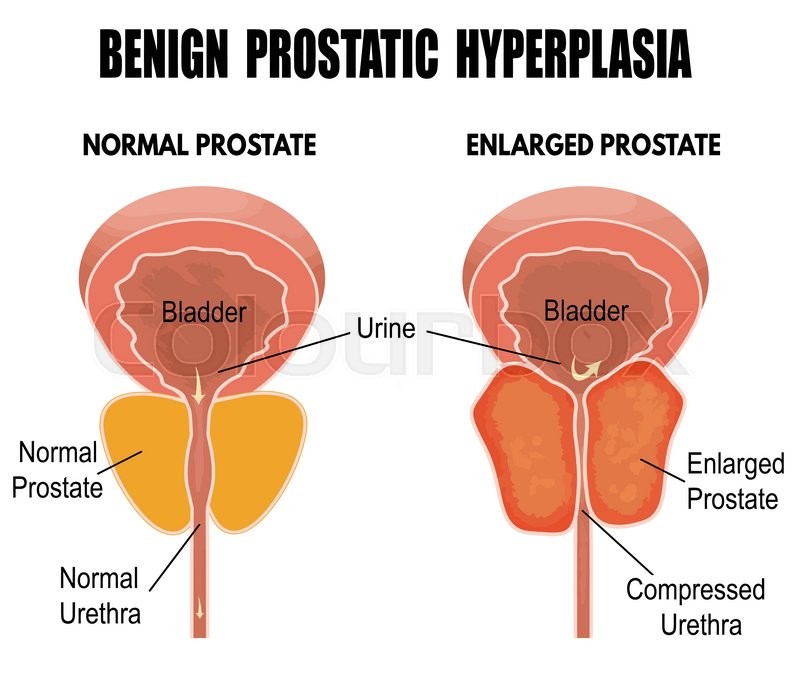
Other causes of haematuria other than the bladder
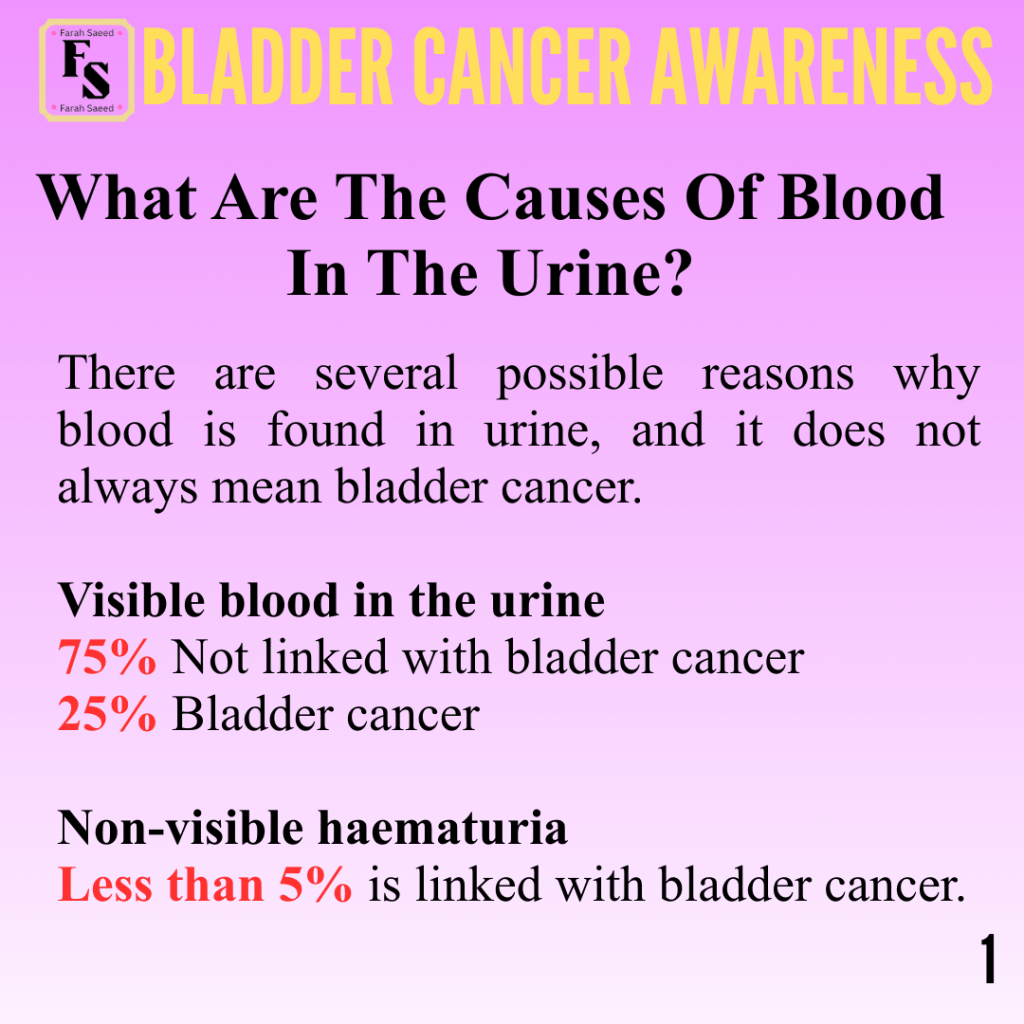
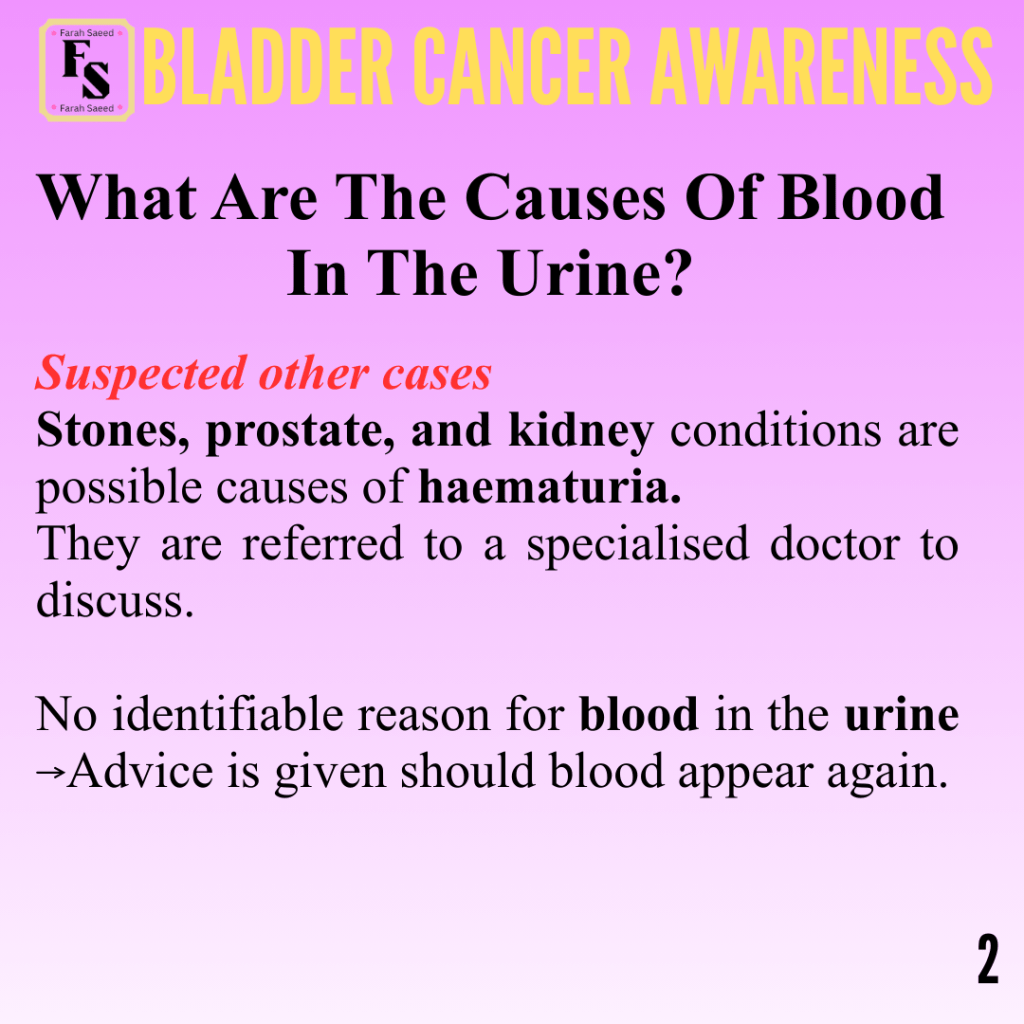

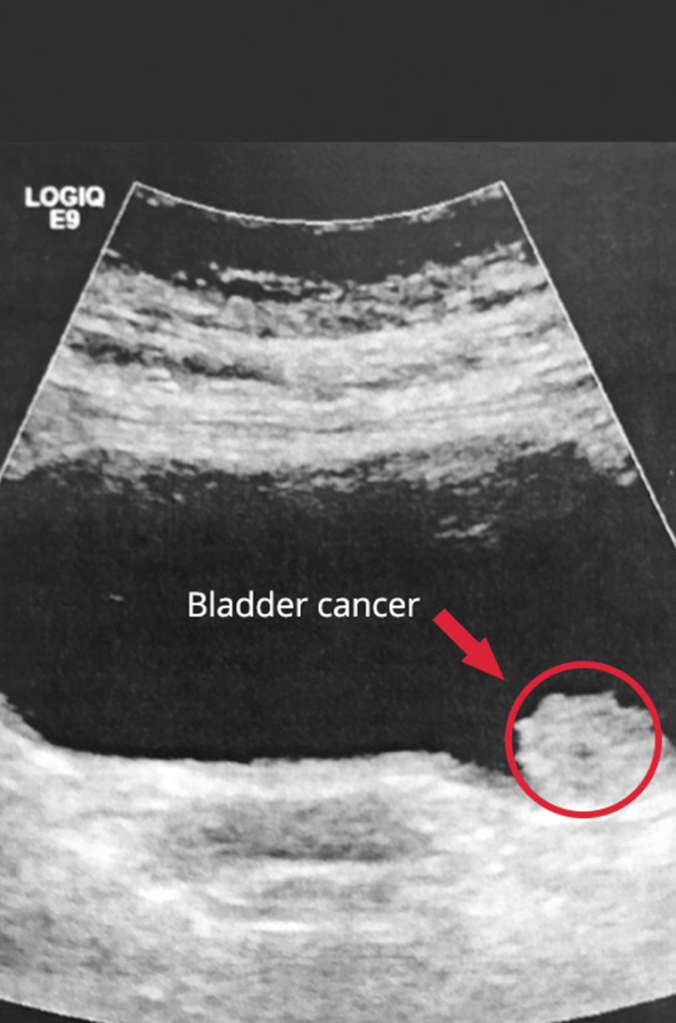
Images And Video Resources
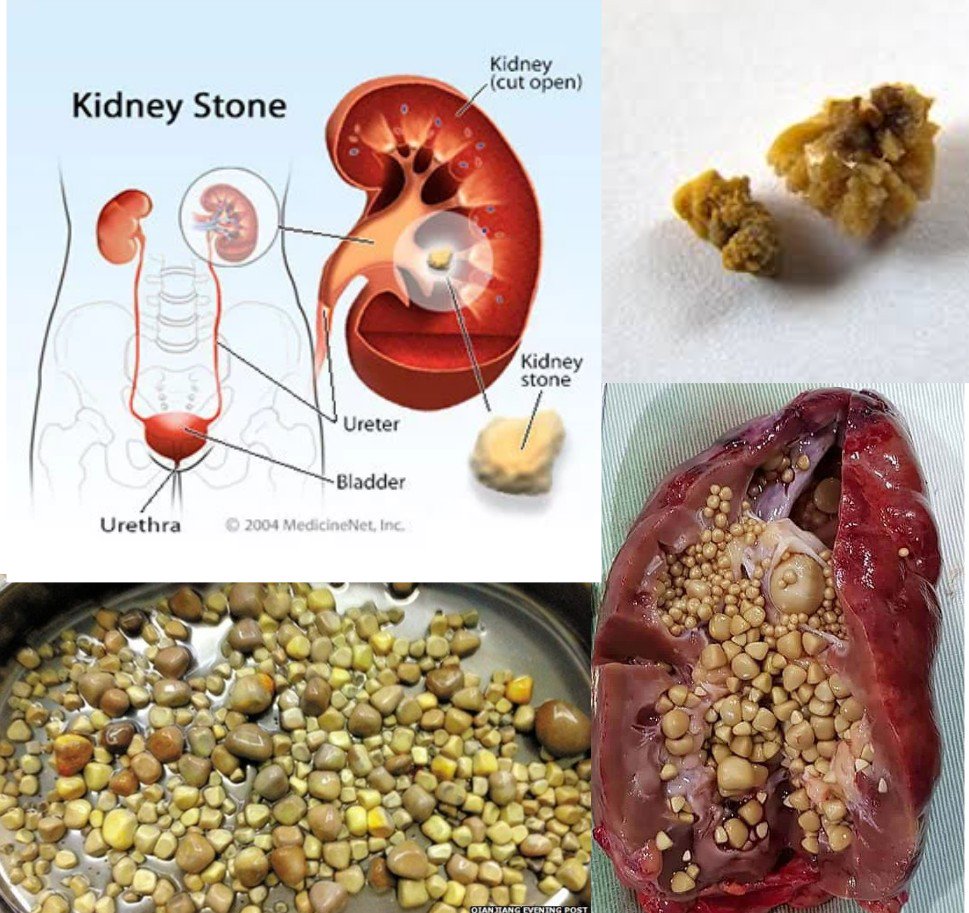
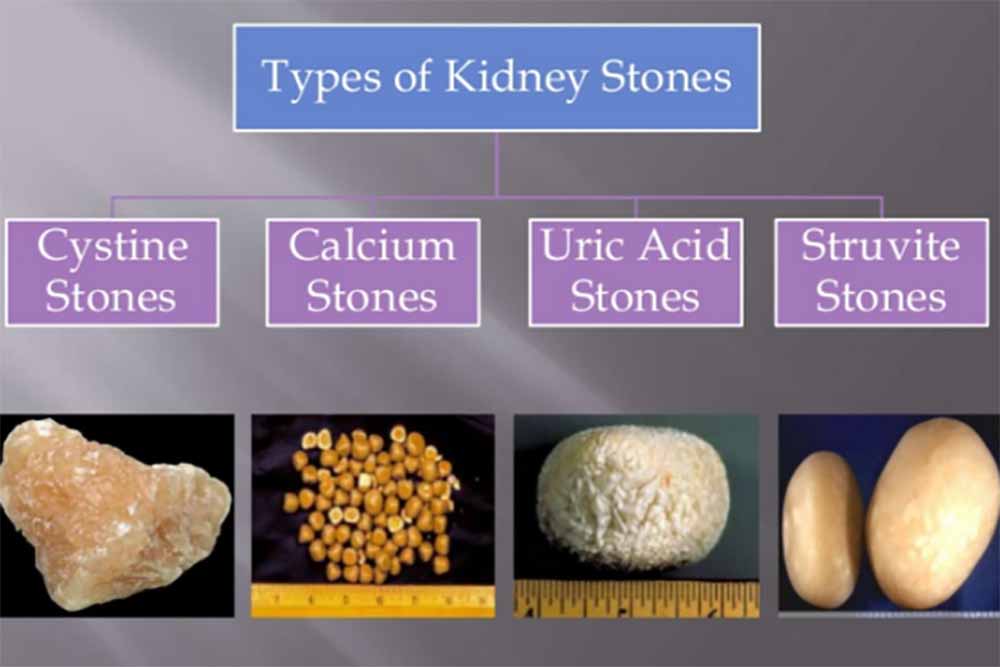
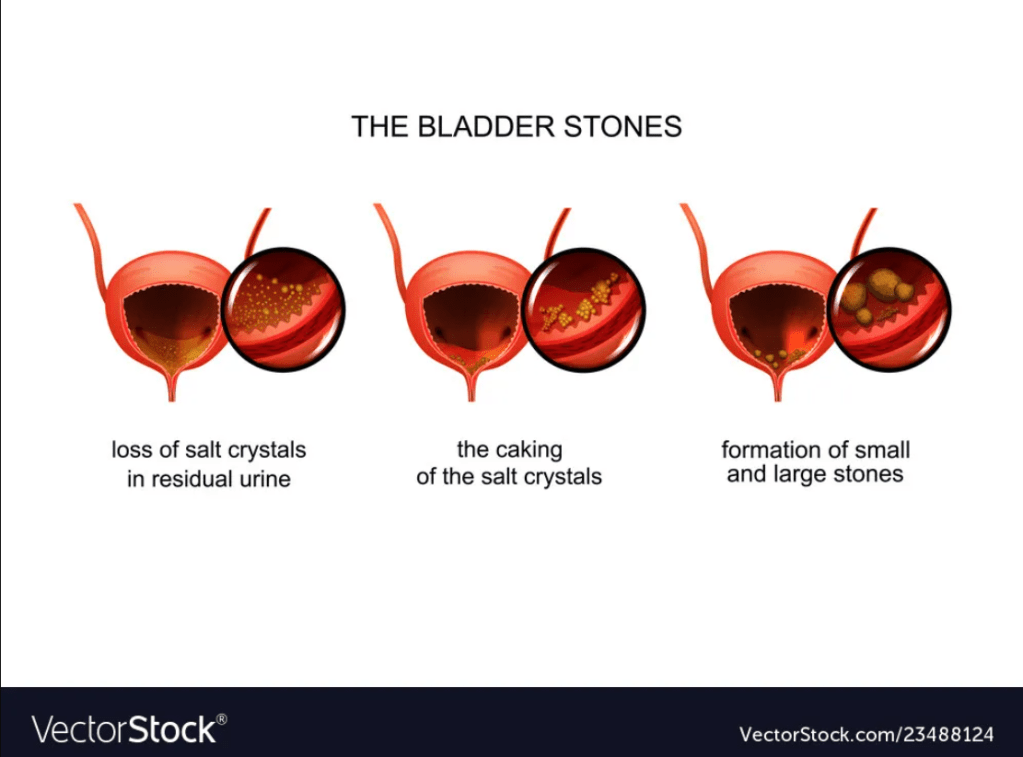
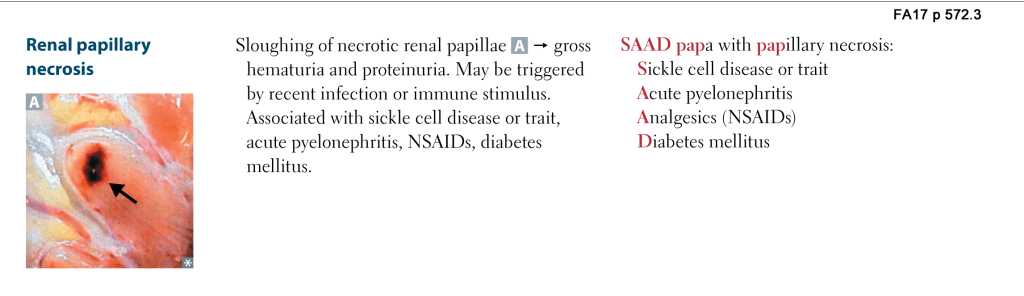
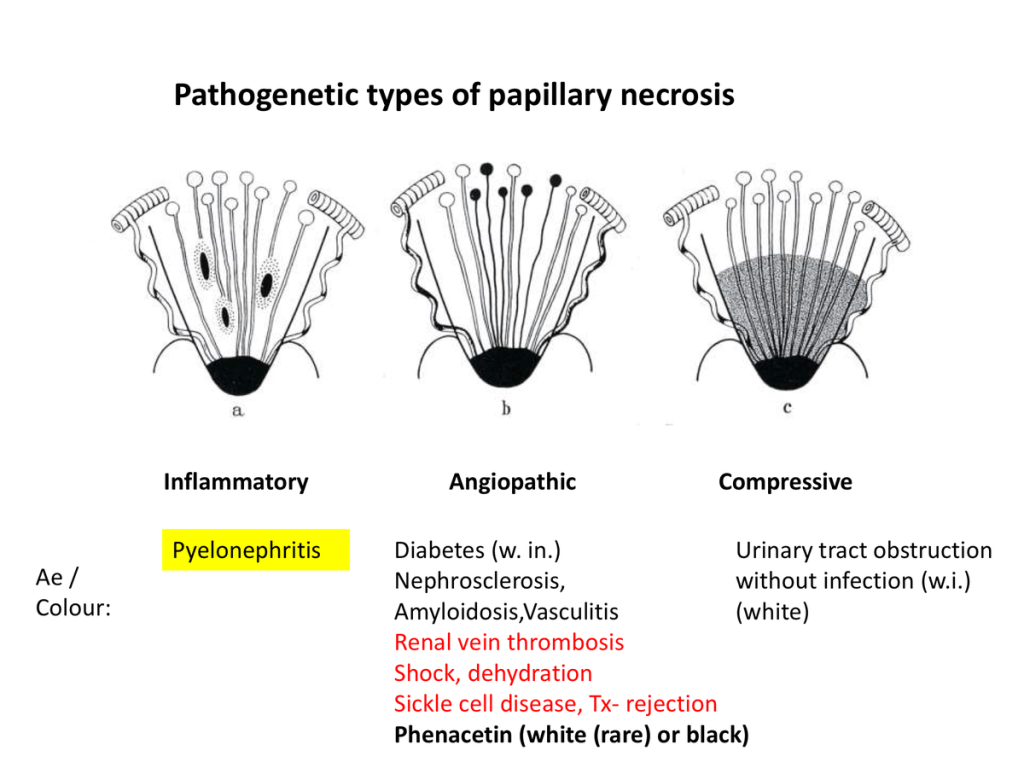
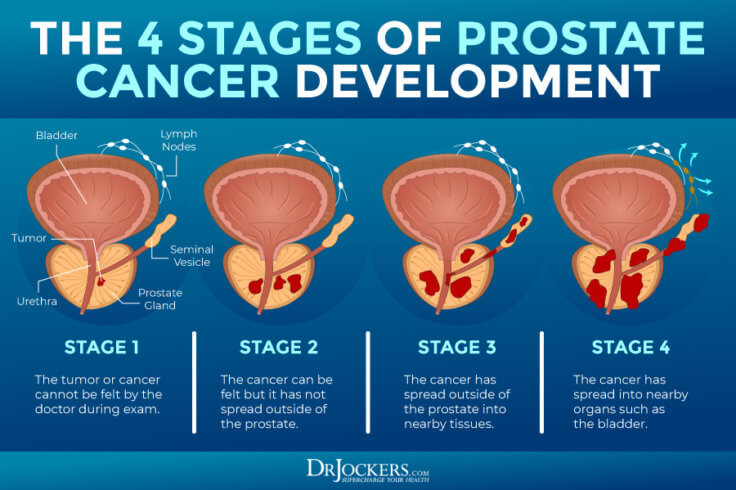
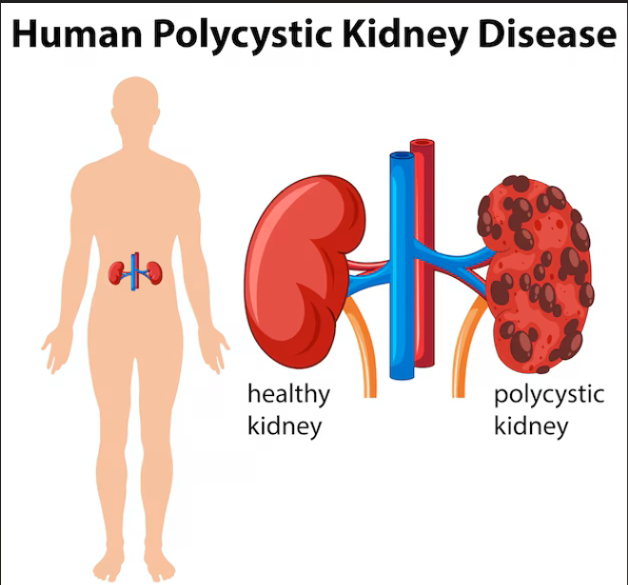
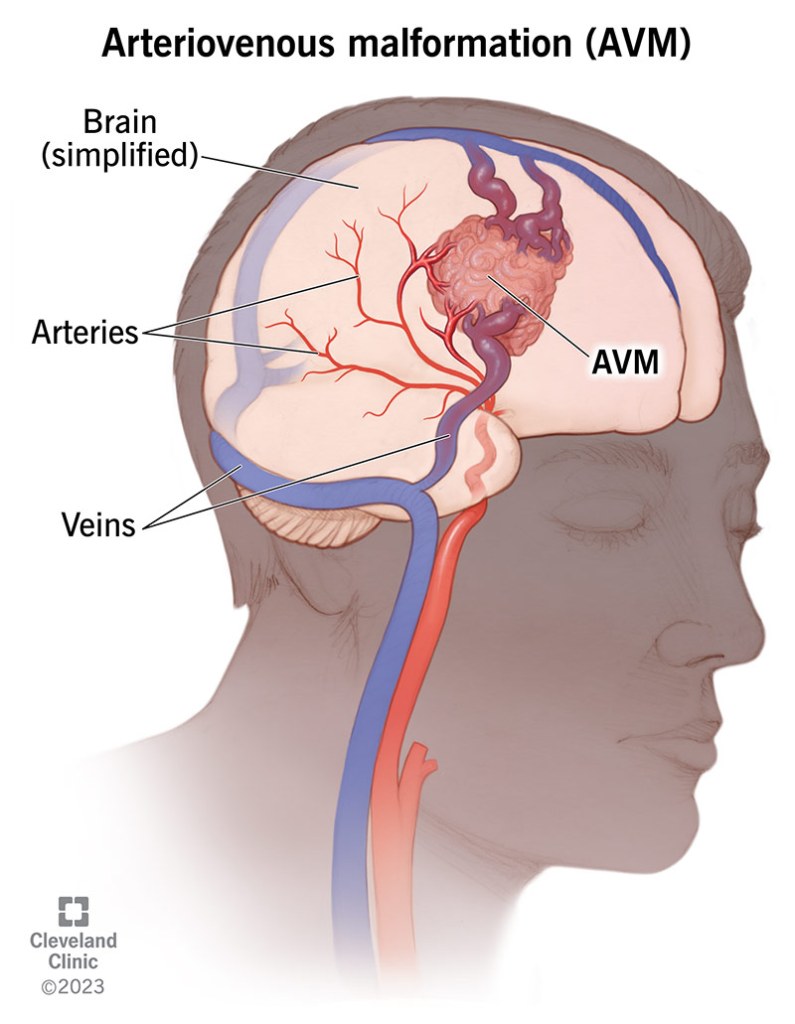
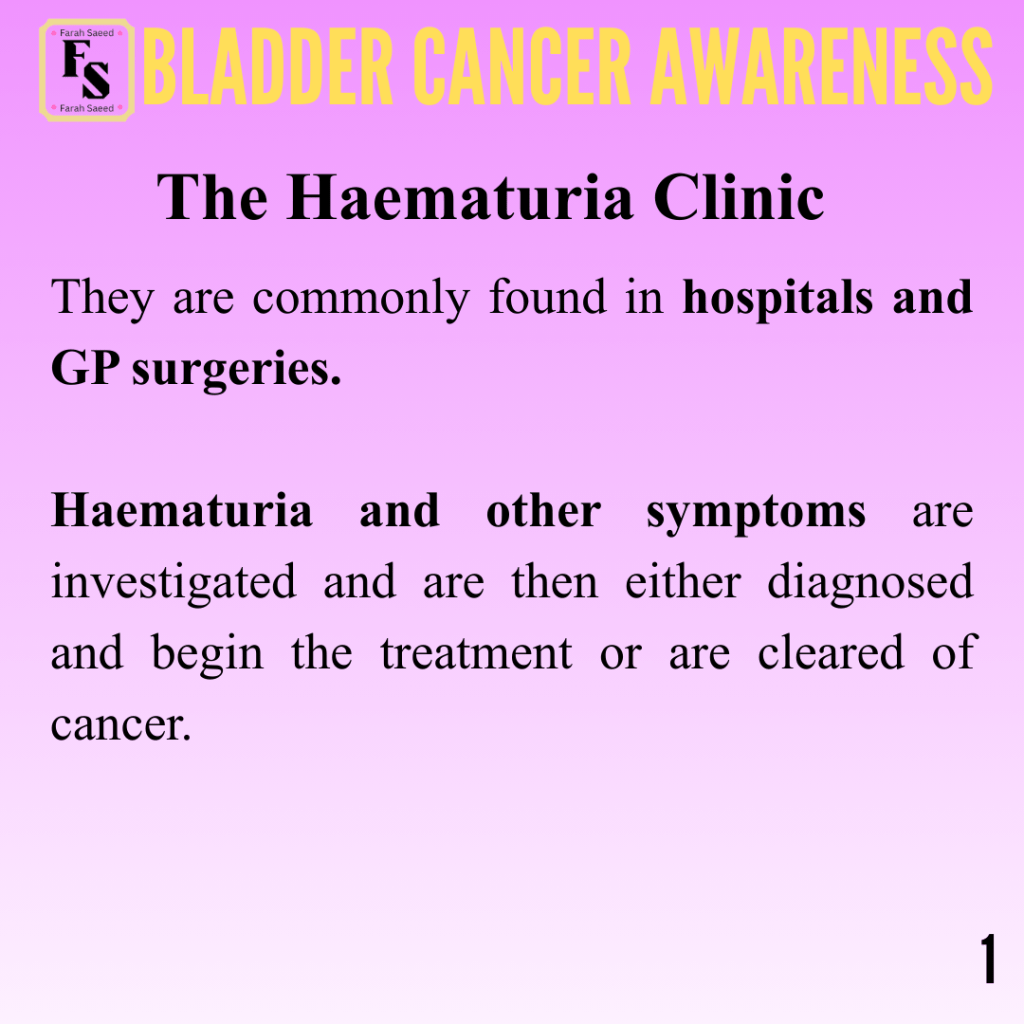
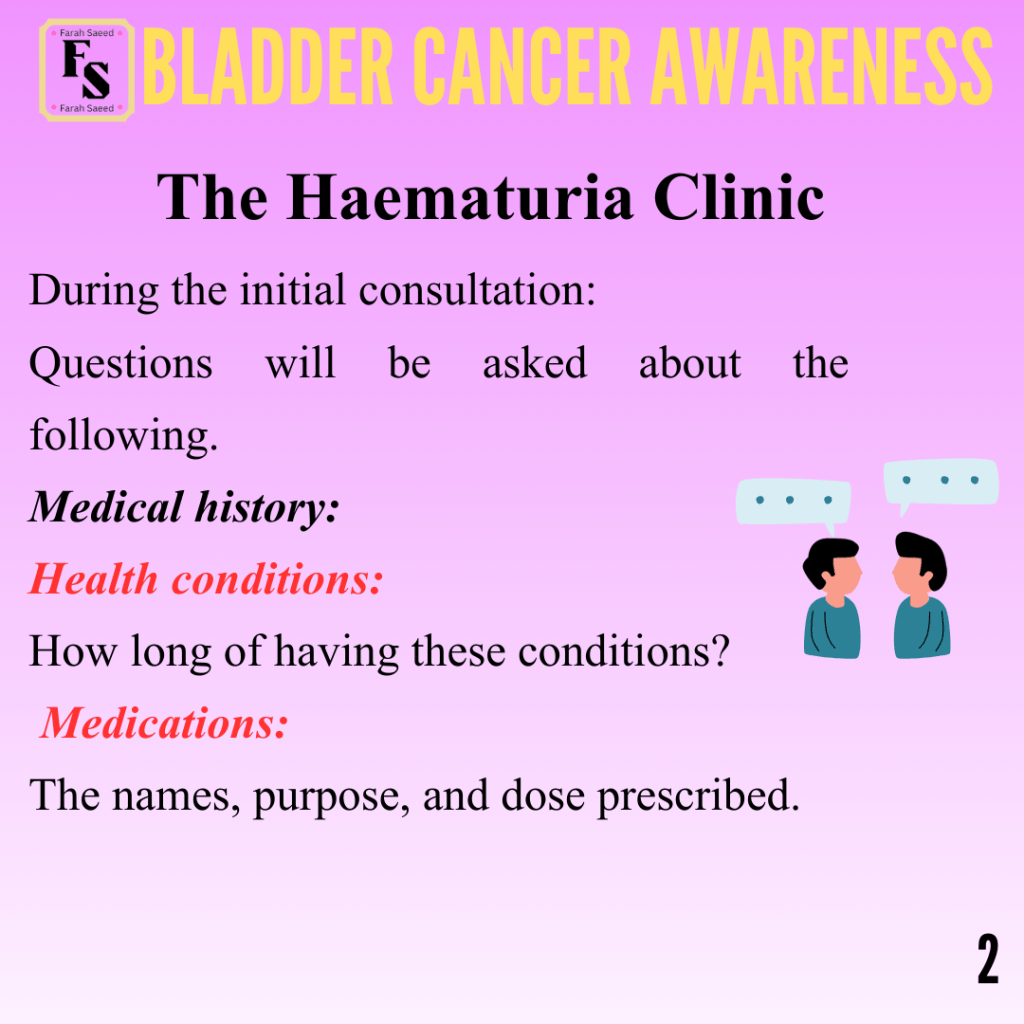
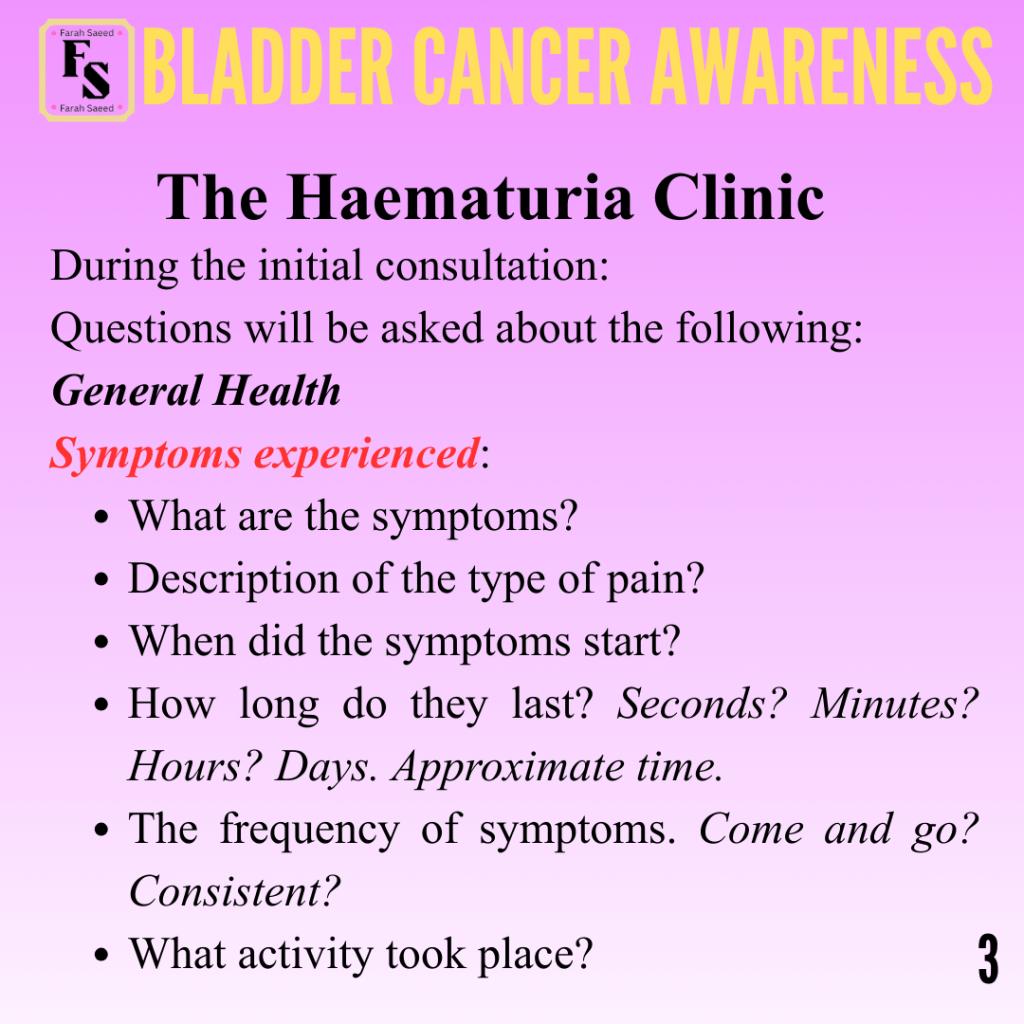
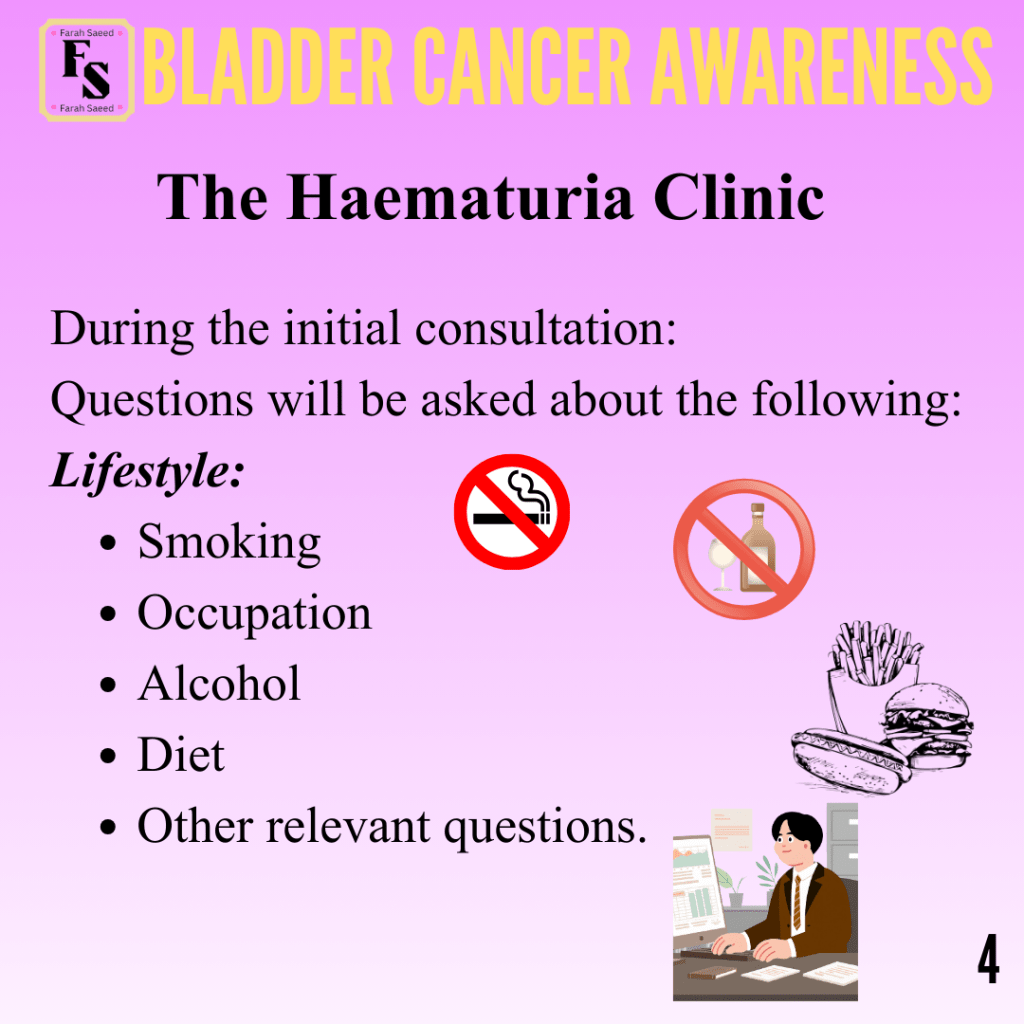
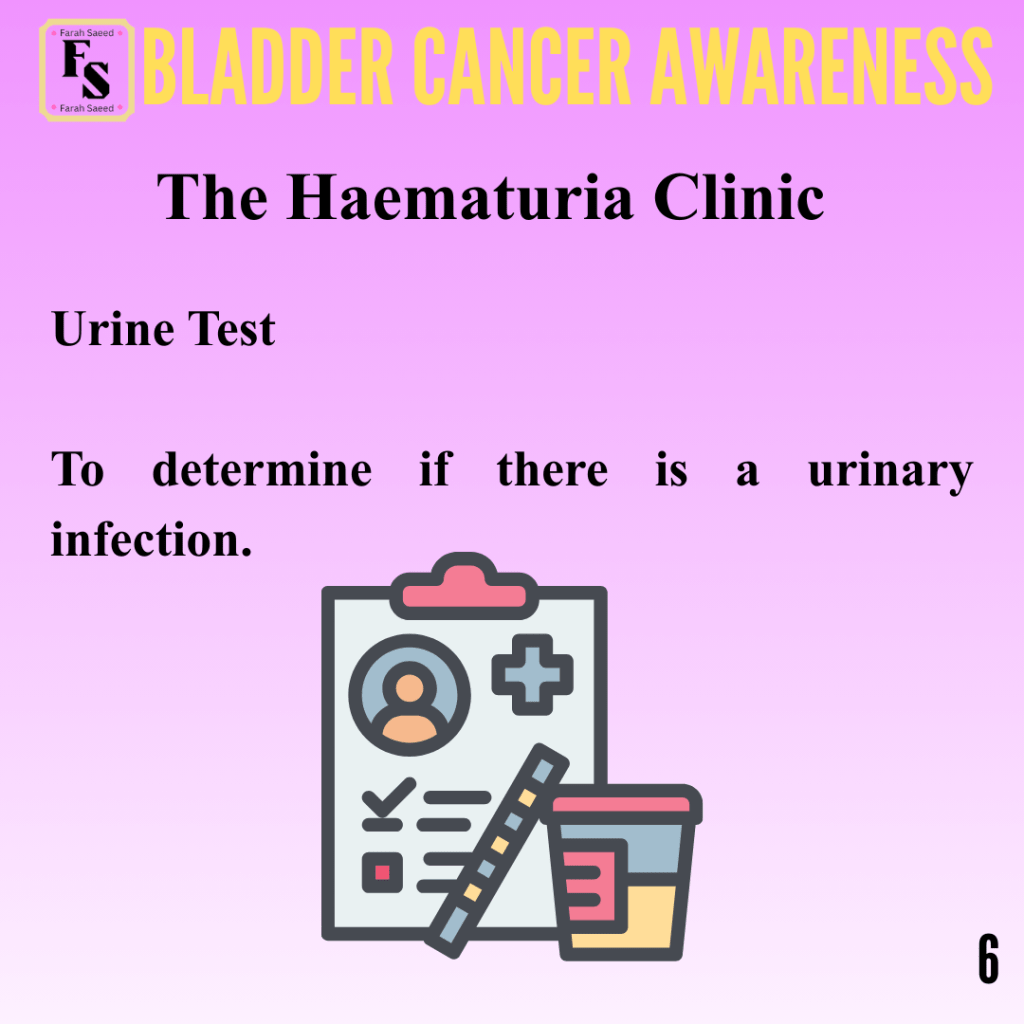
Haematuria Clinic: Initial Consultation and Investigations
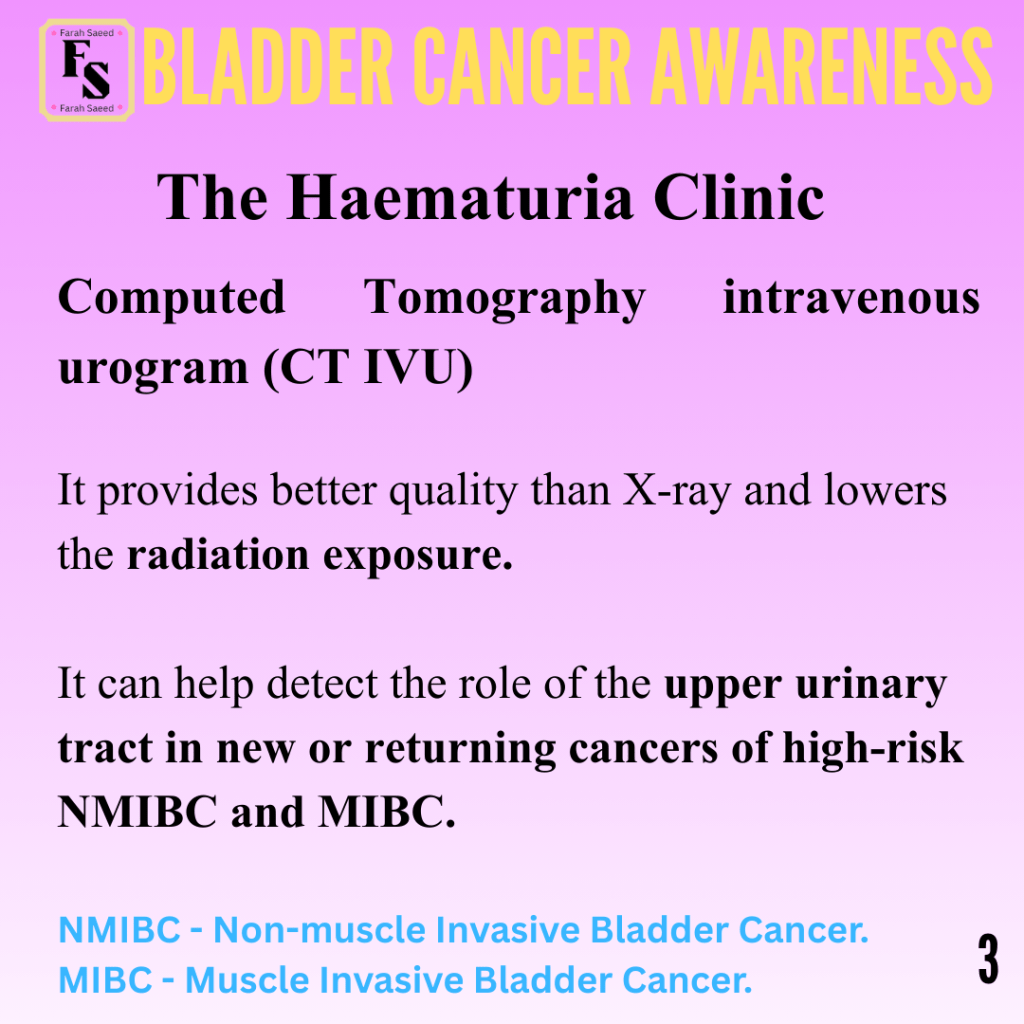
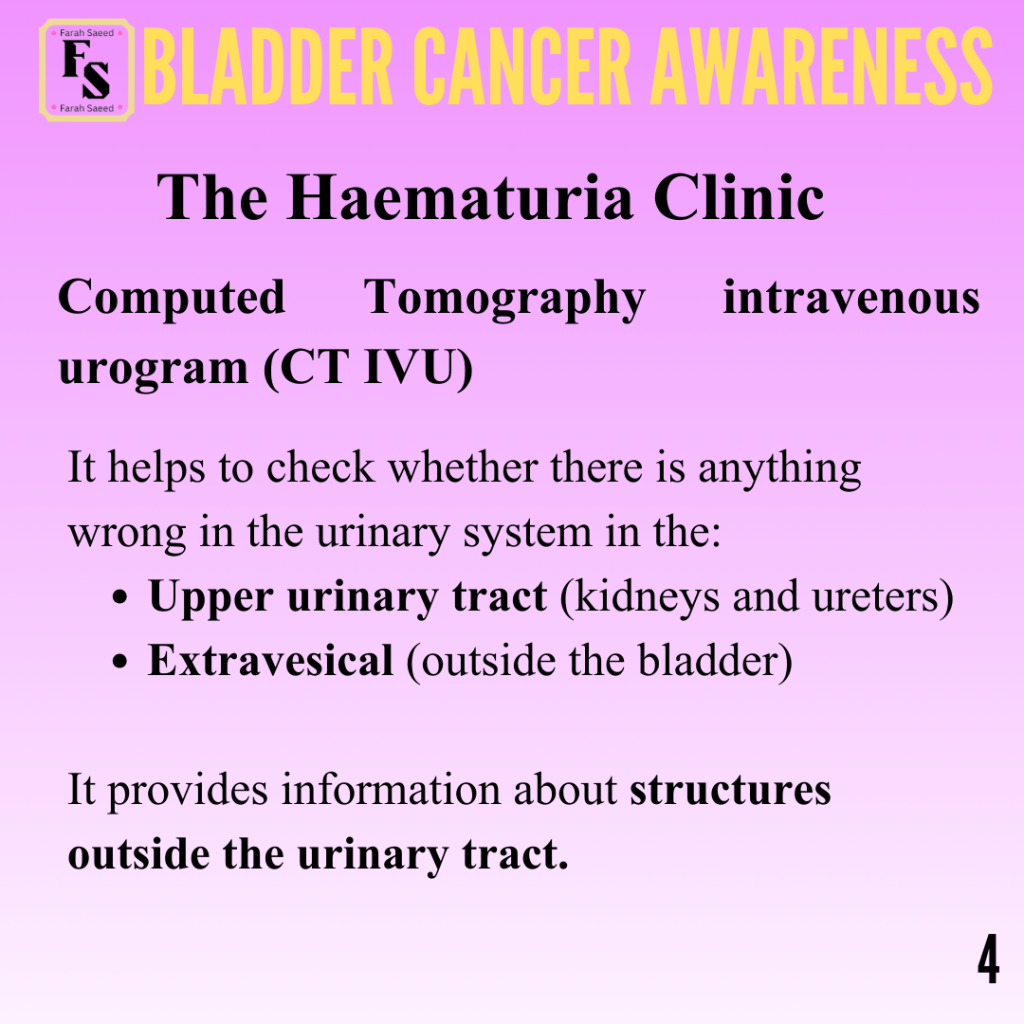
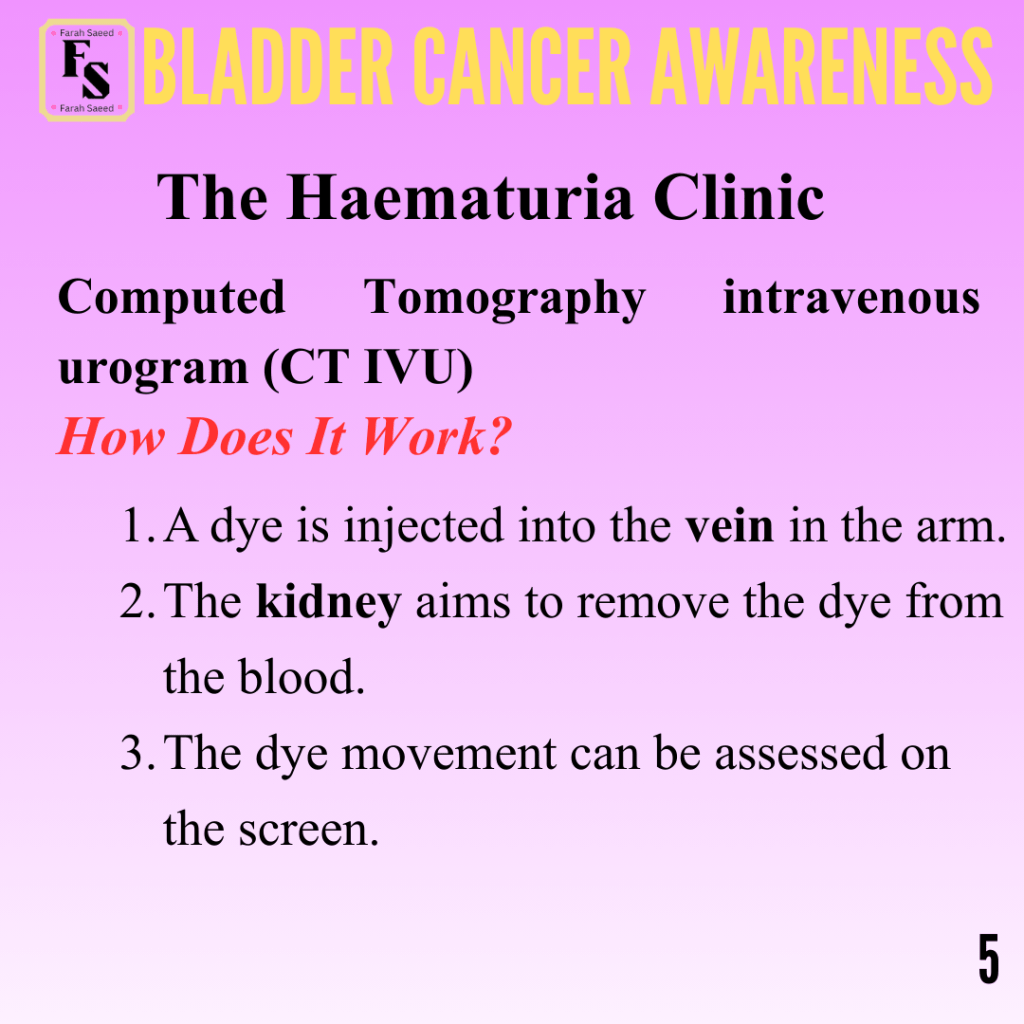
Haematuria Clinic: Intravenous Urography
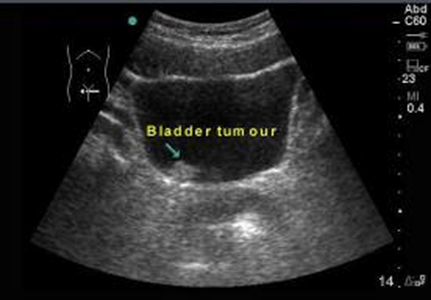
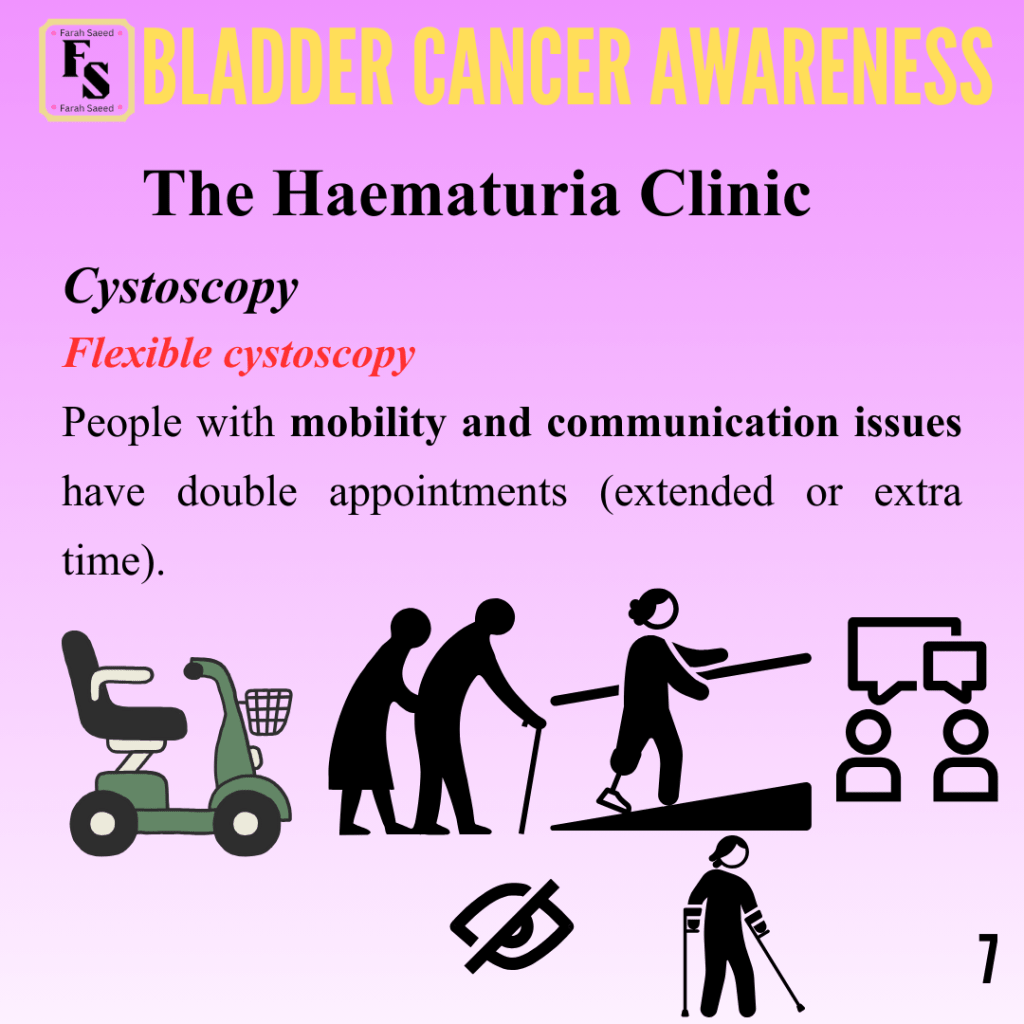
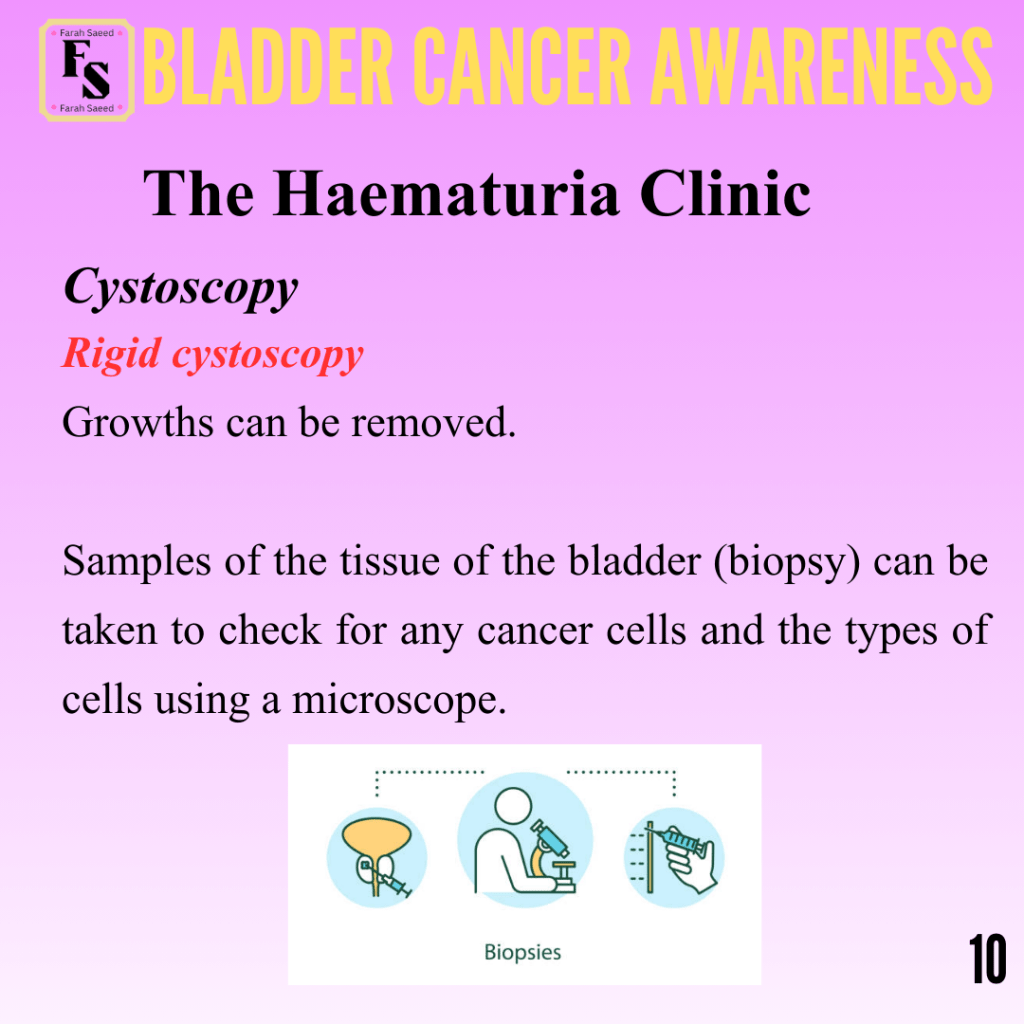
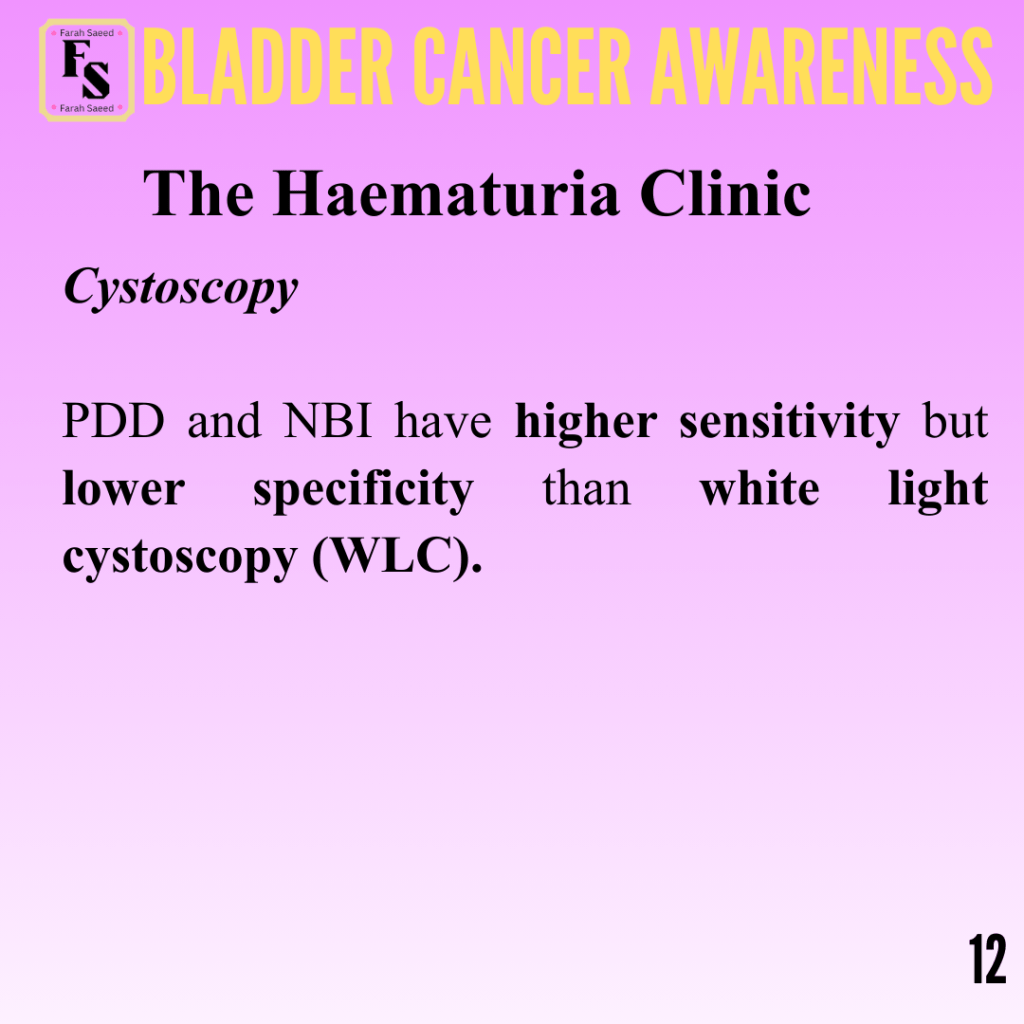
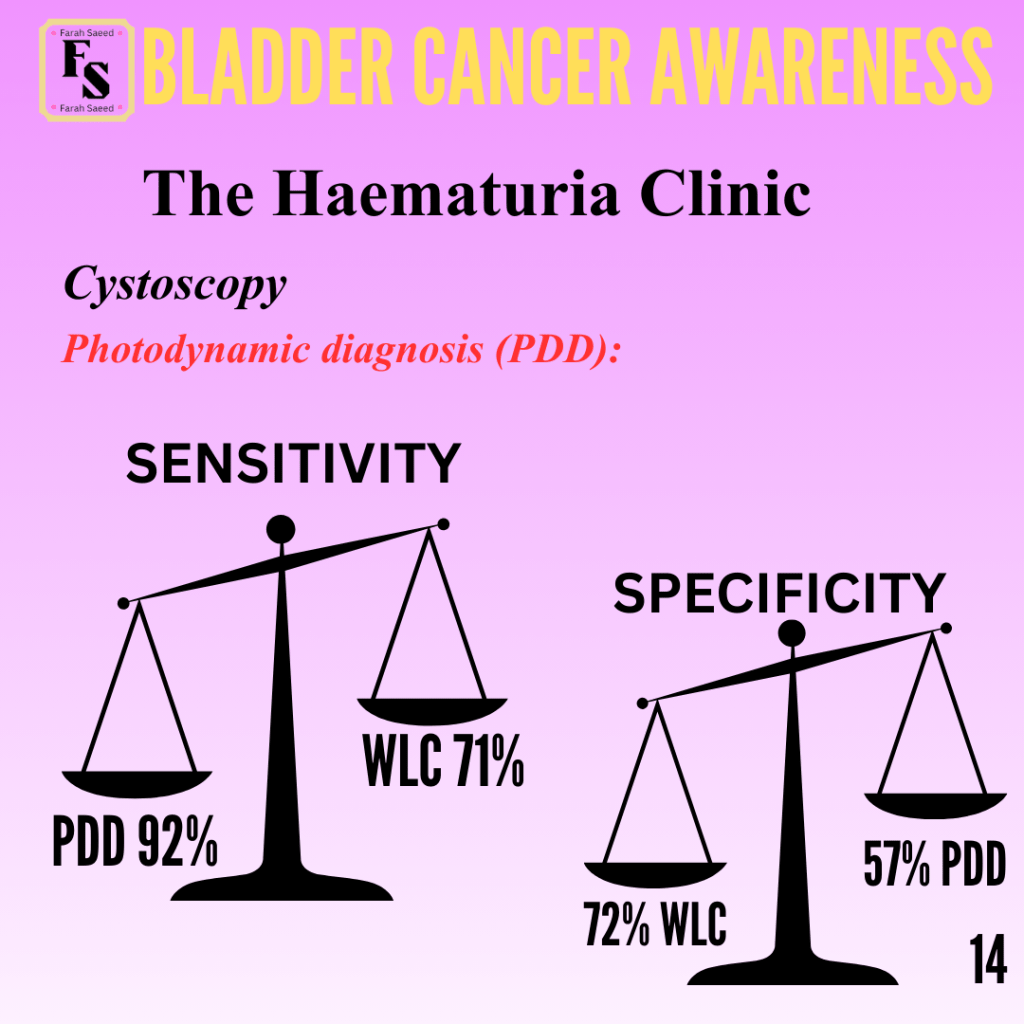
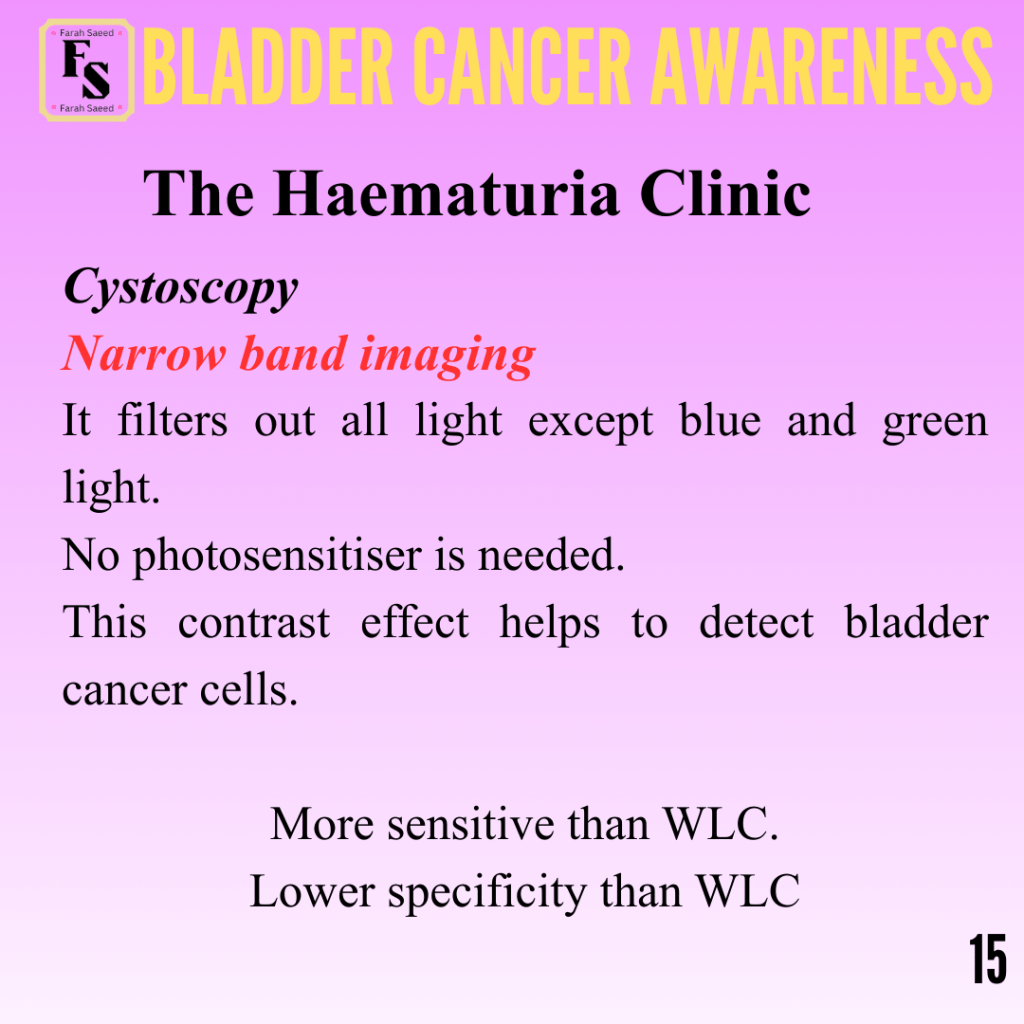
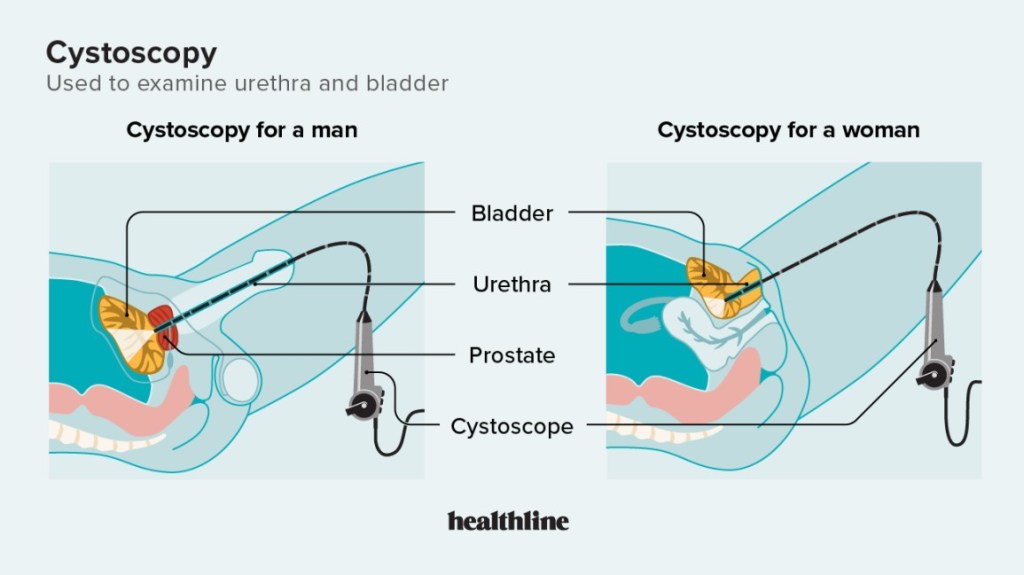
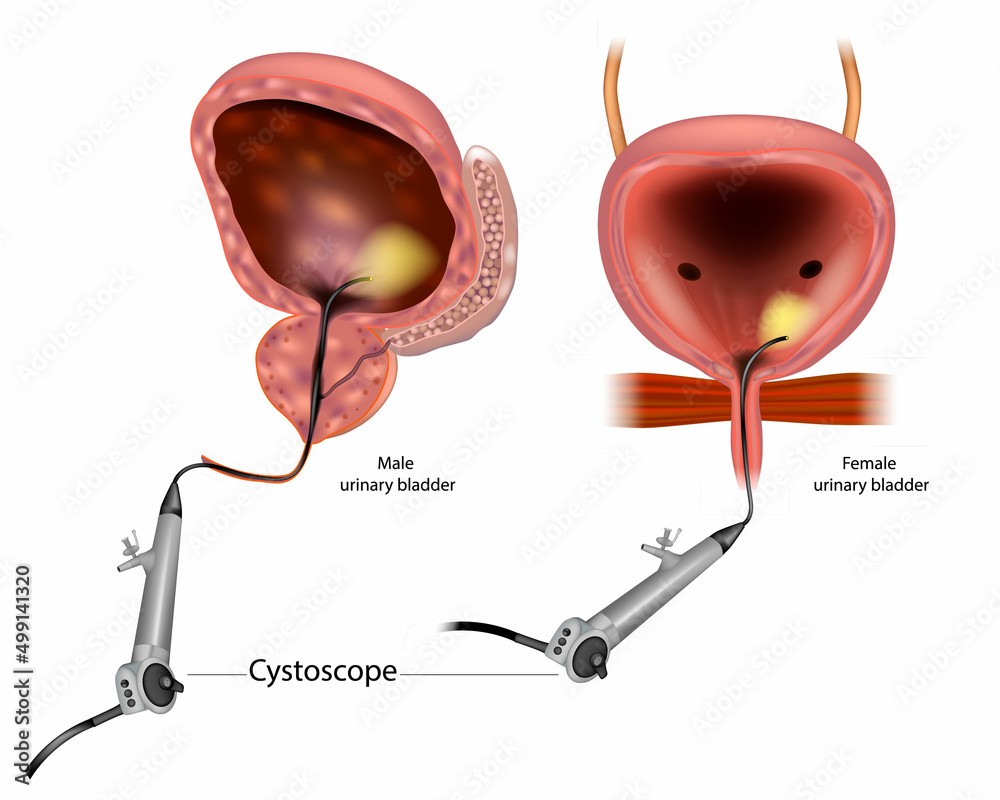
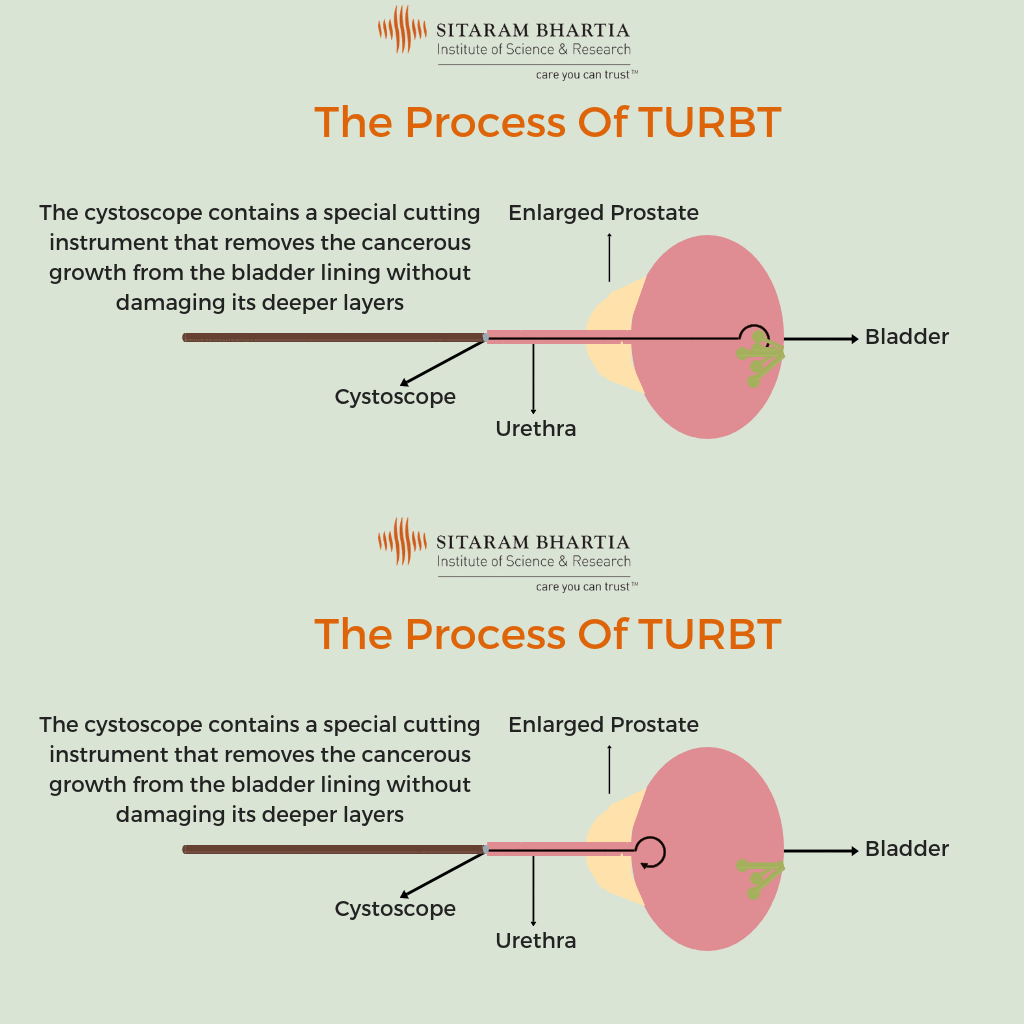
Haematuria Clinic: Cystoscopy
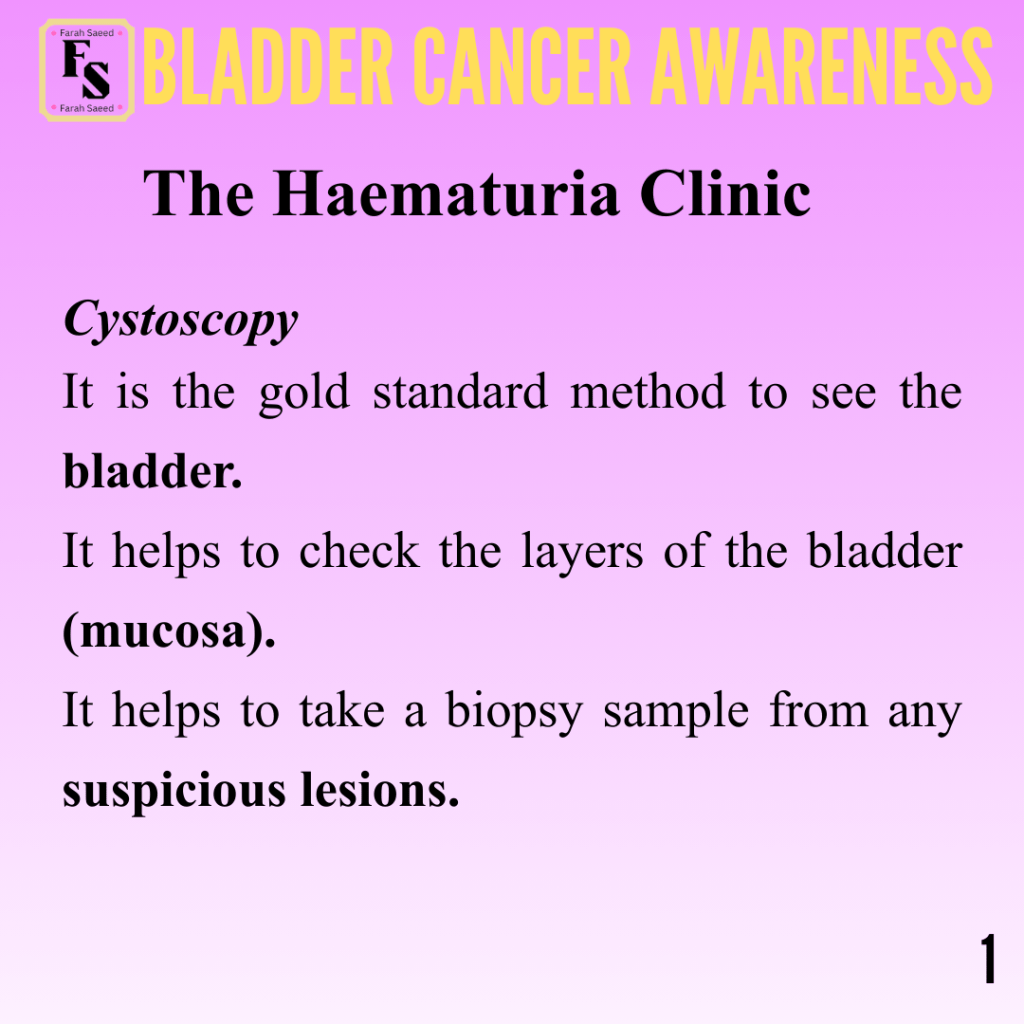
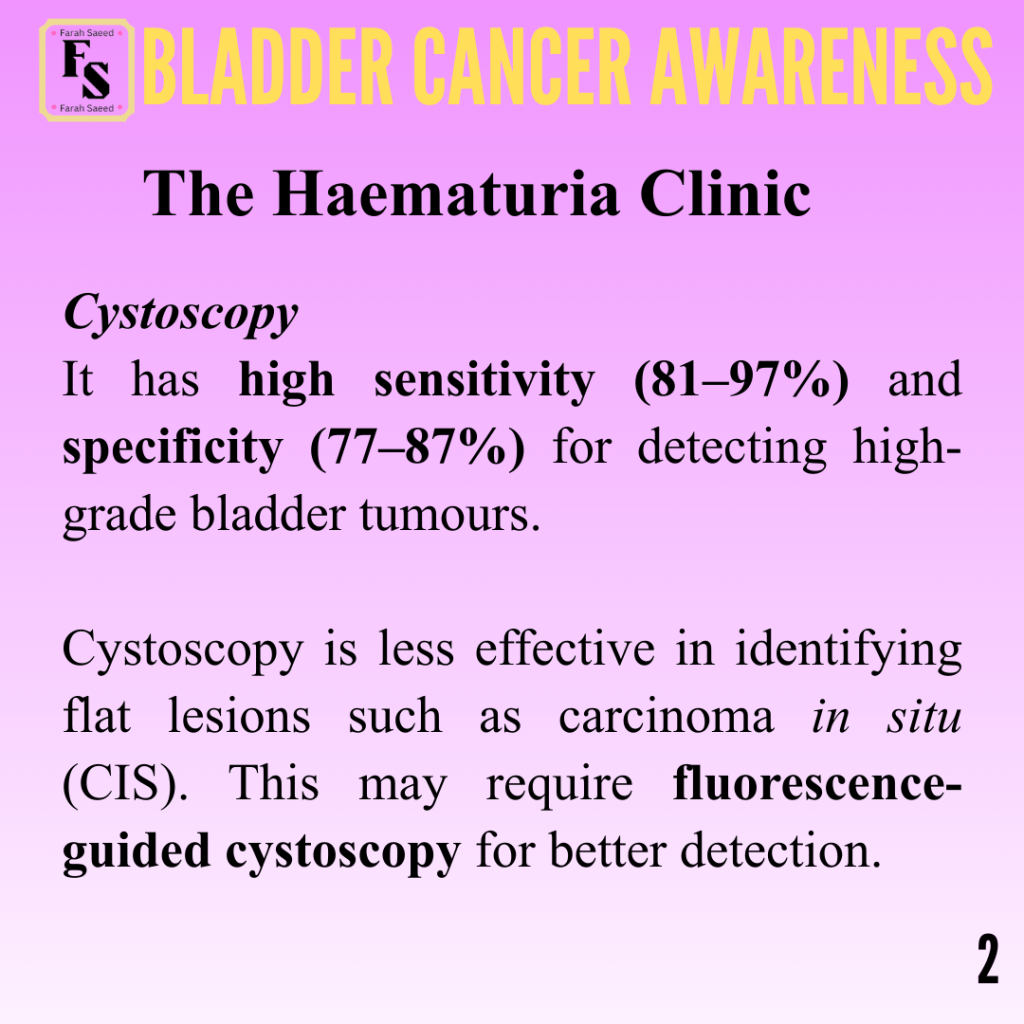
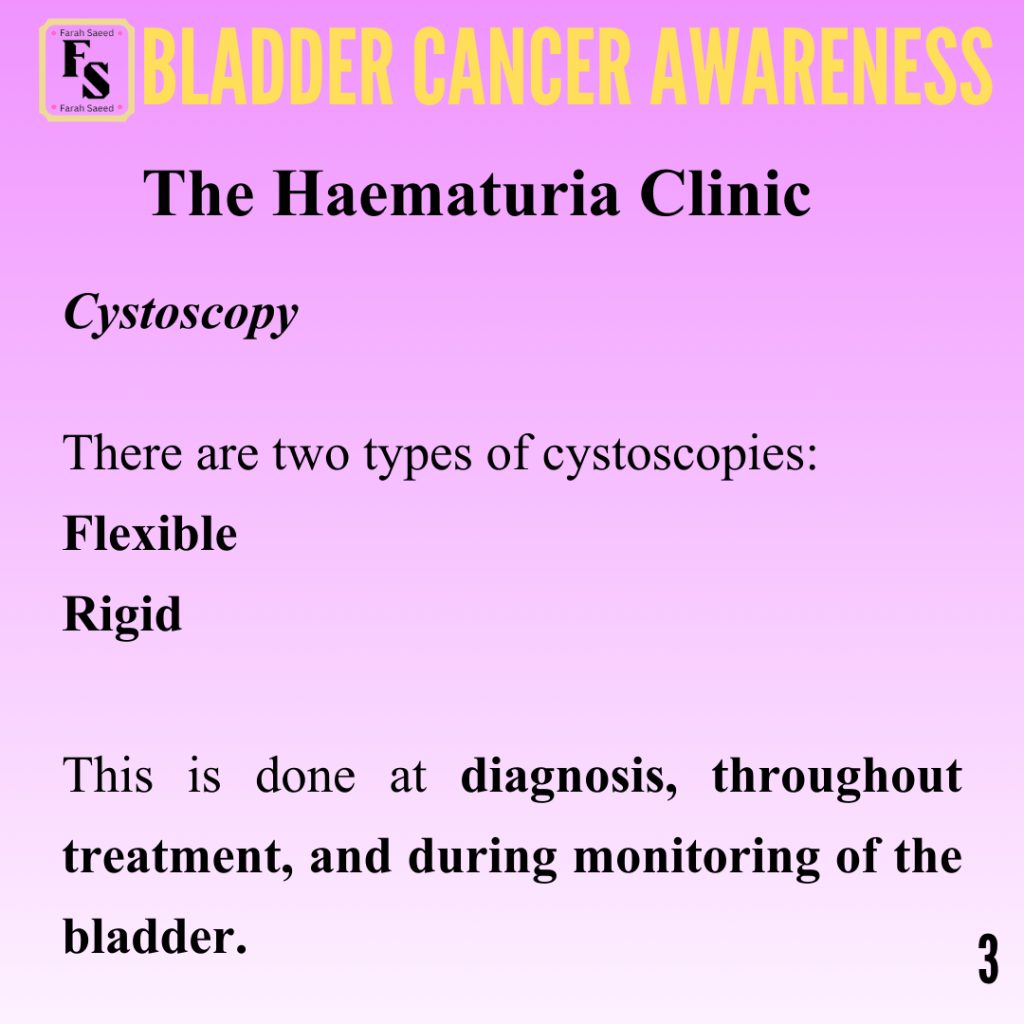

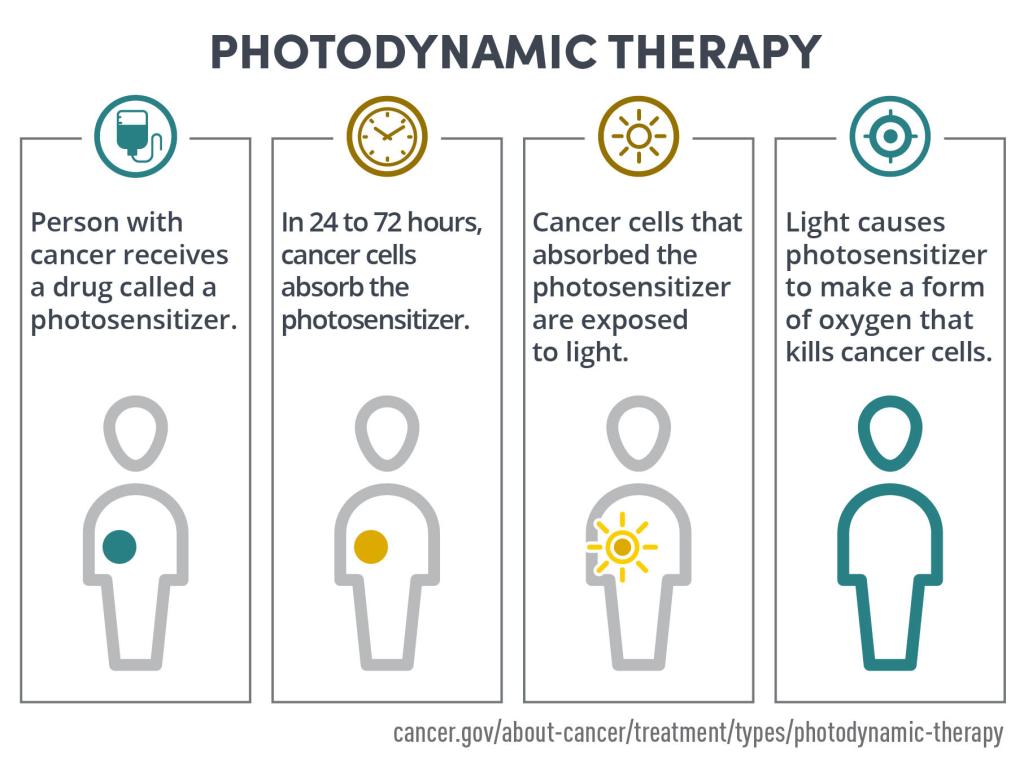
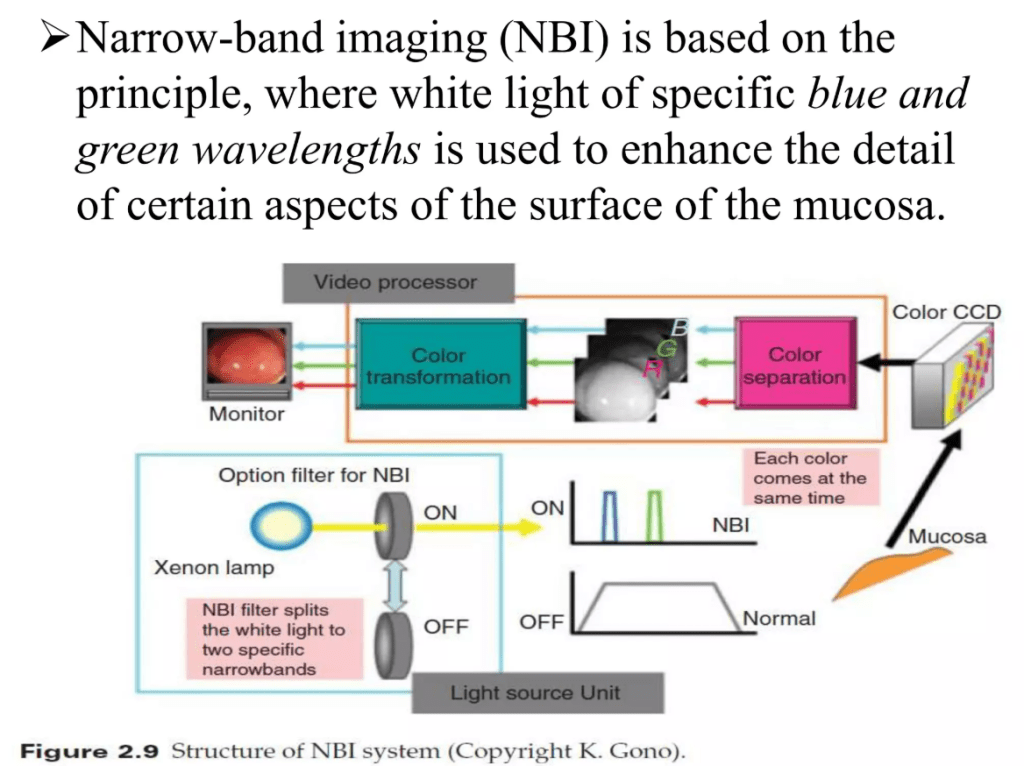
Haematuria Clinic: Urinary Biomarkers
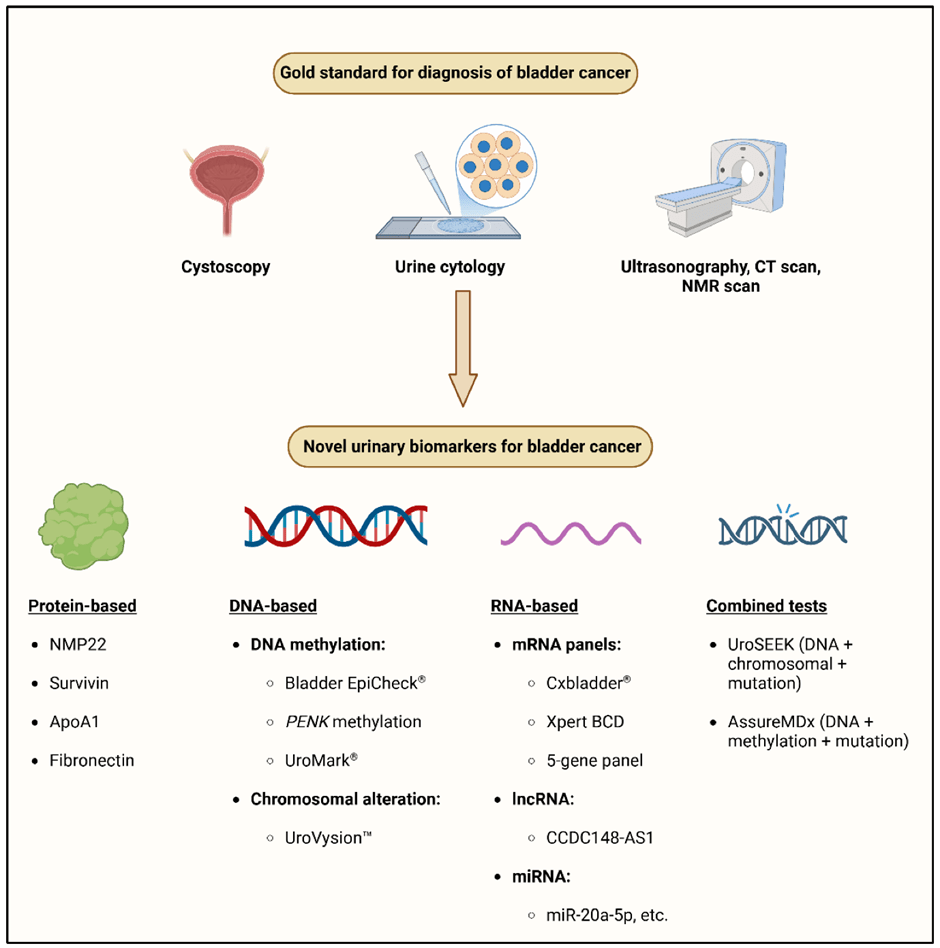
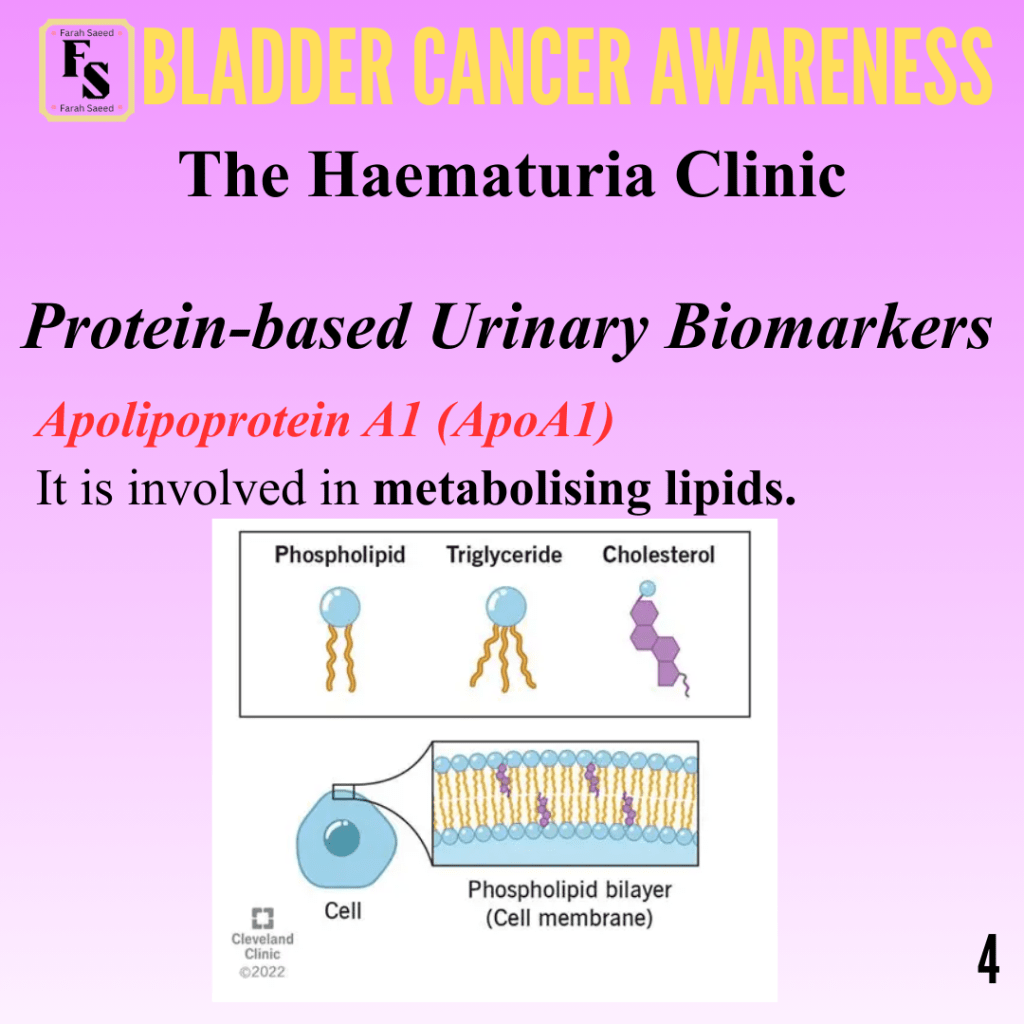
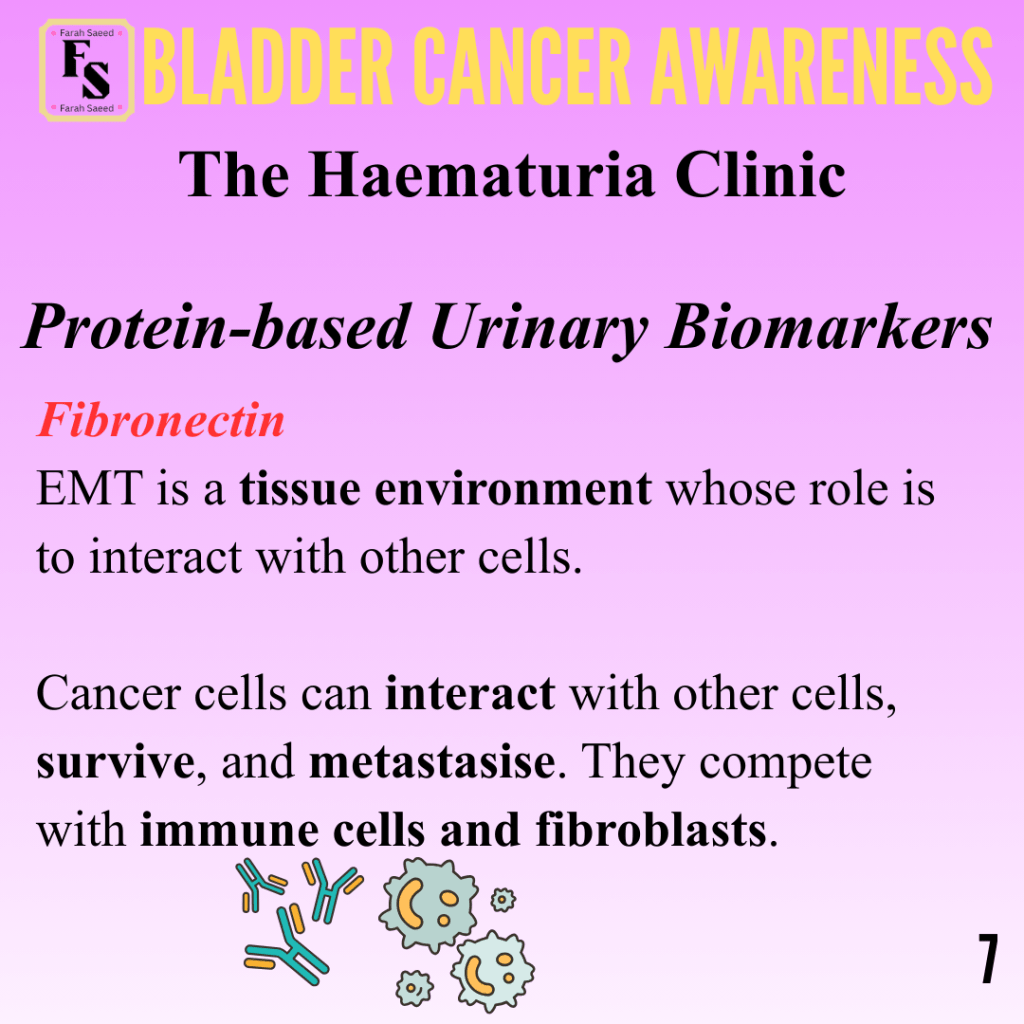
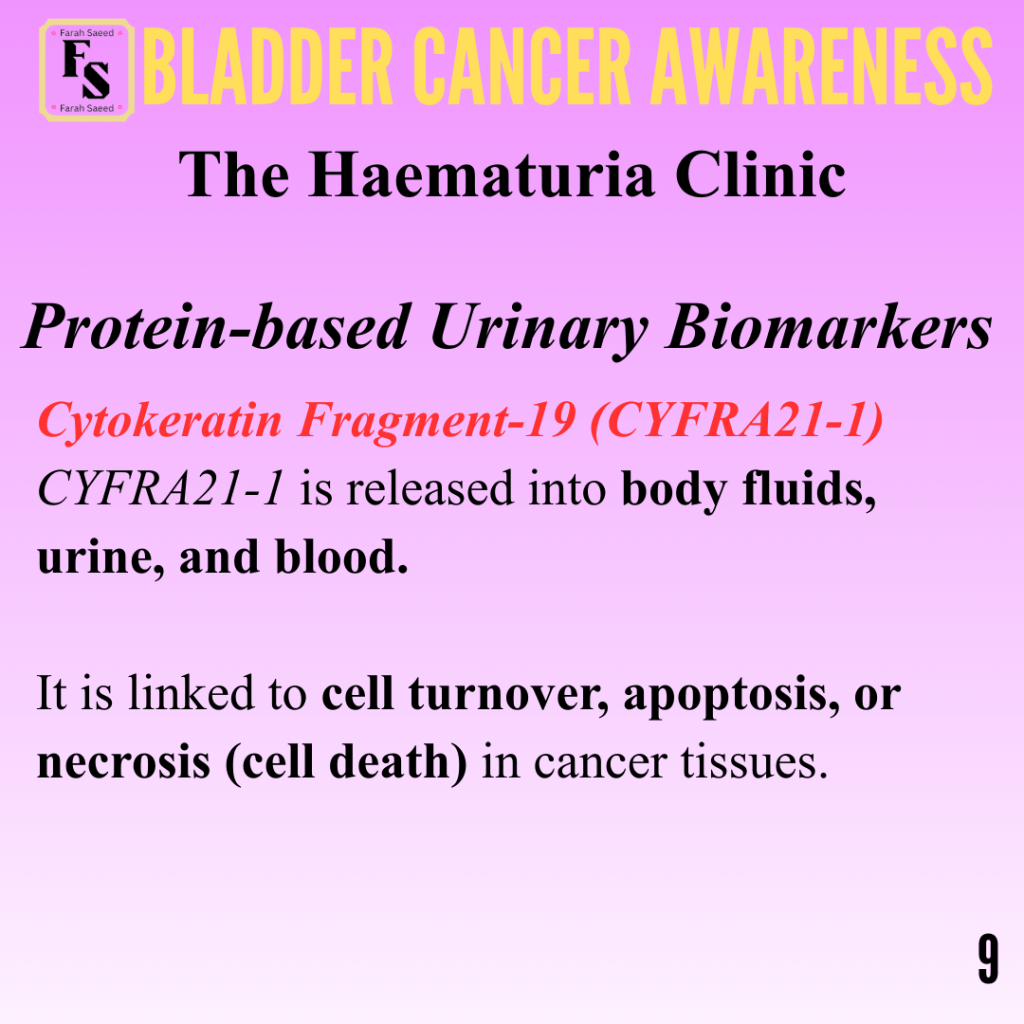
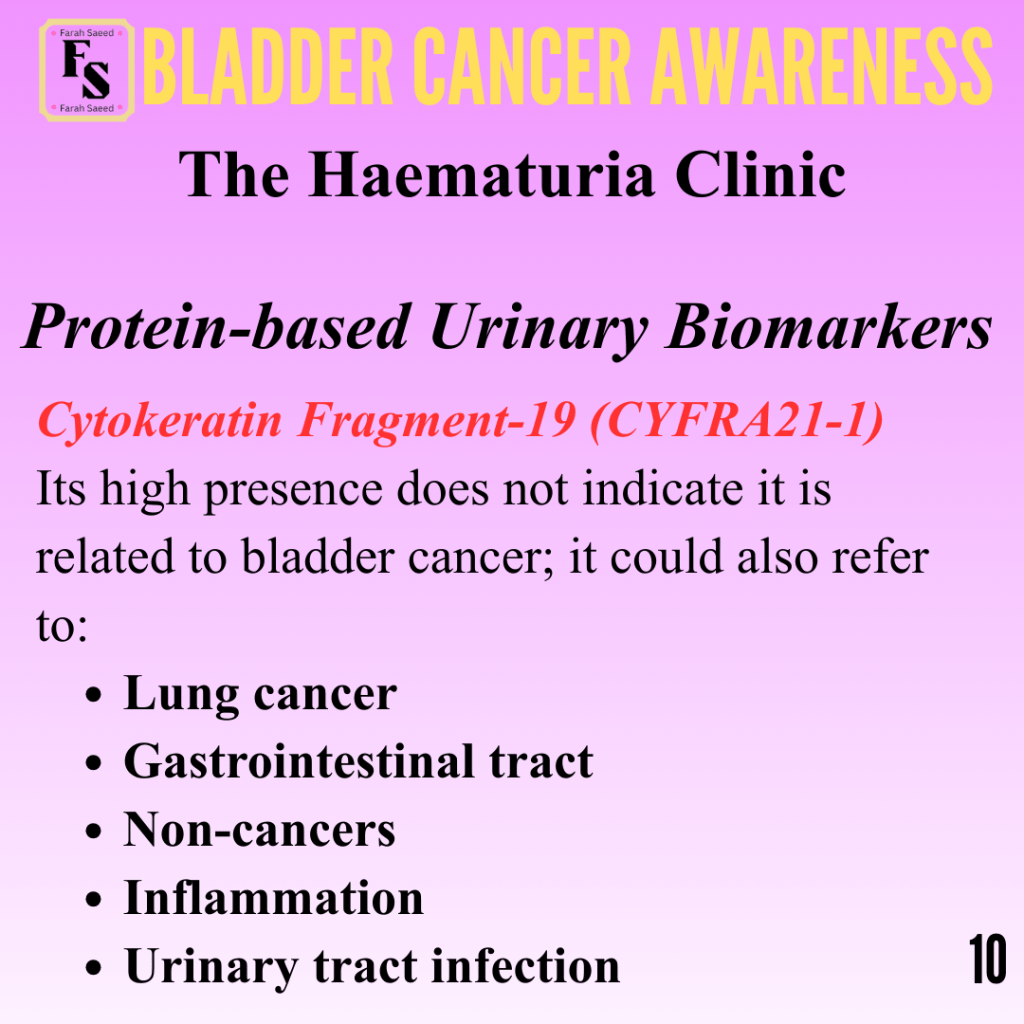
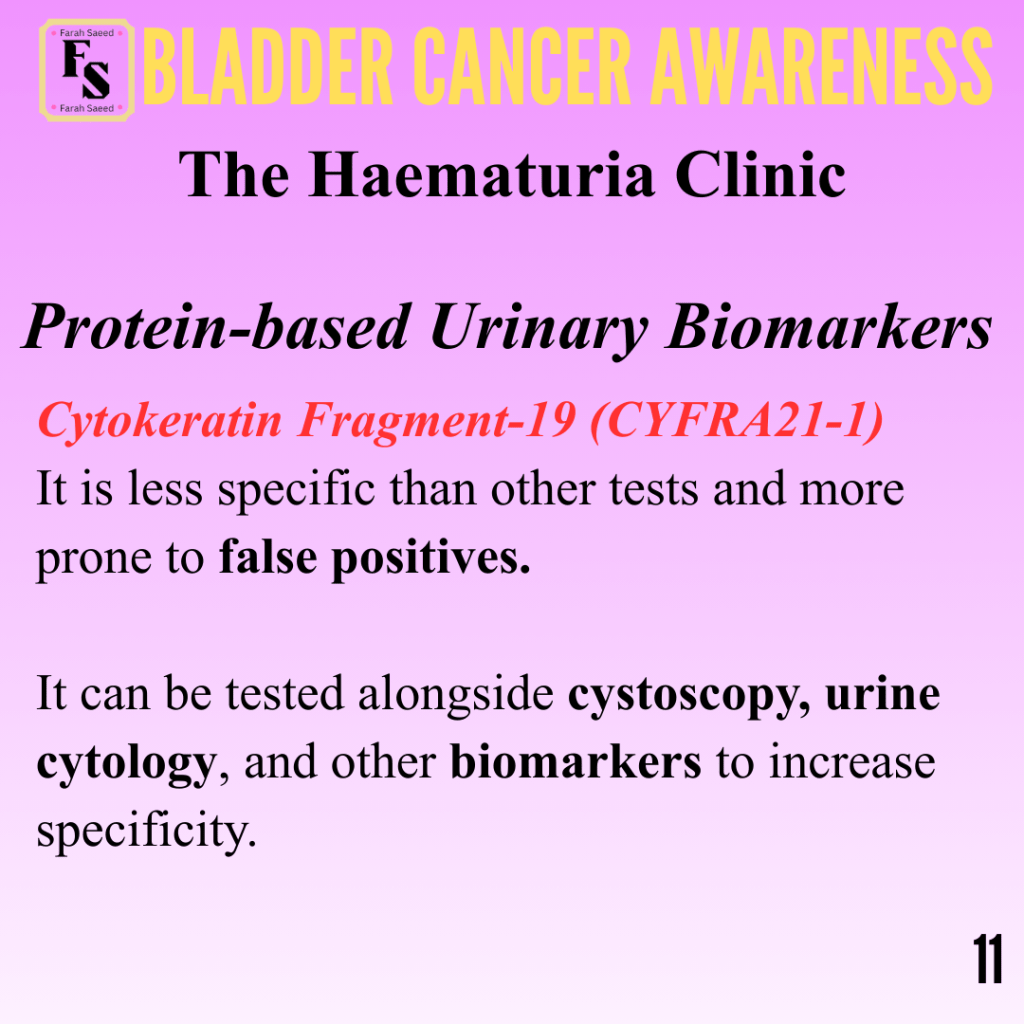
Protein-based Urinary Biomarkers
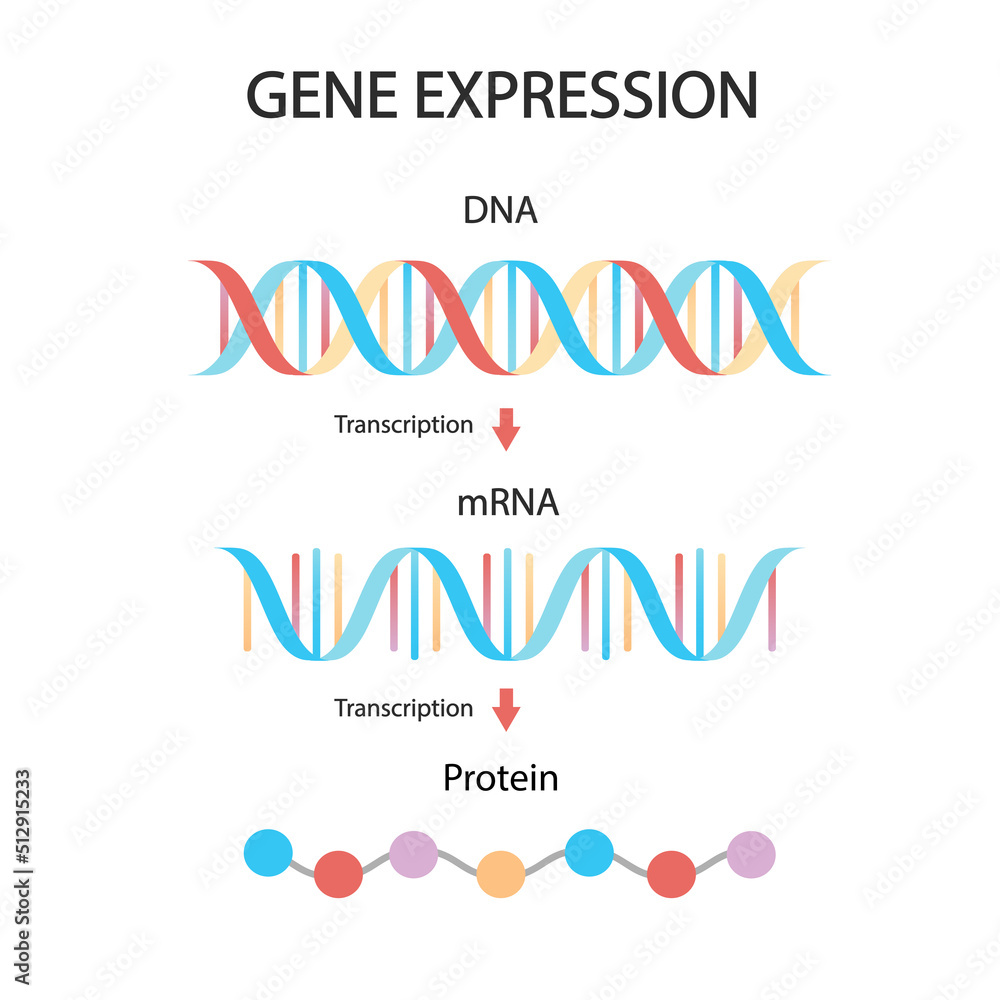

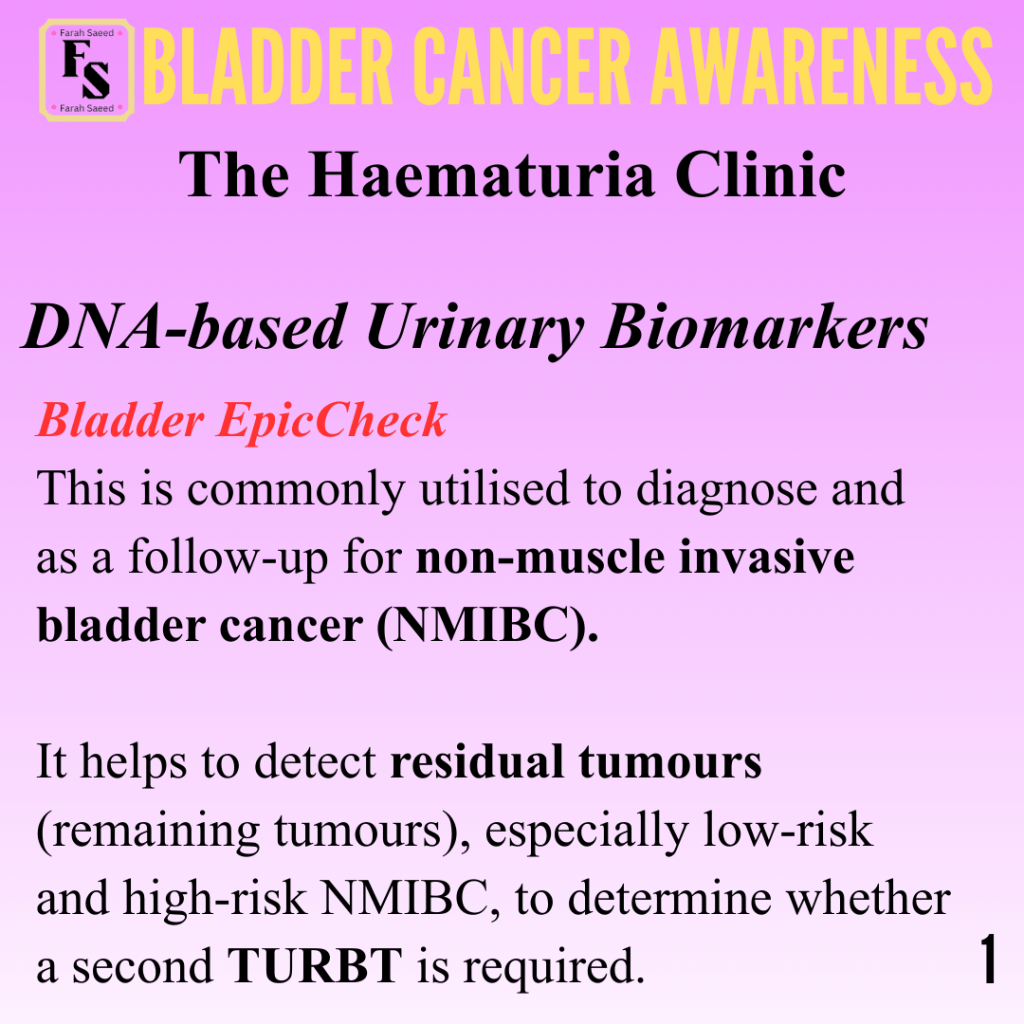
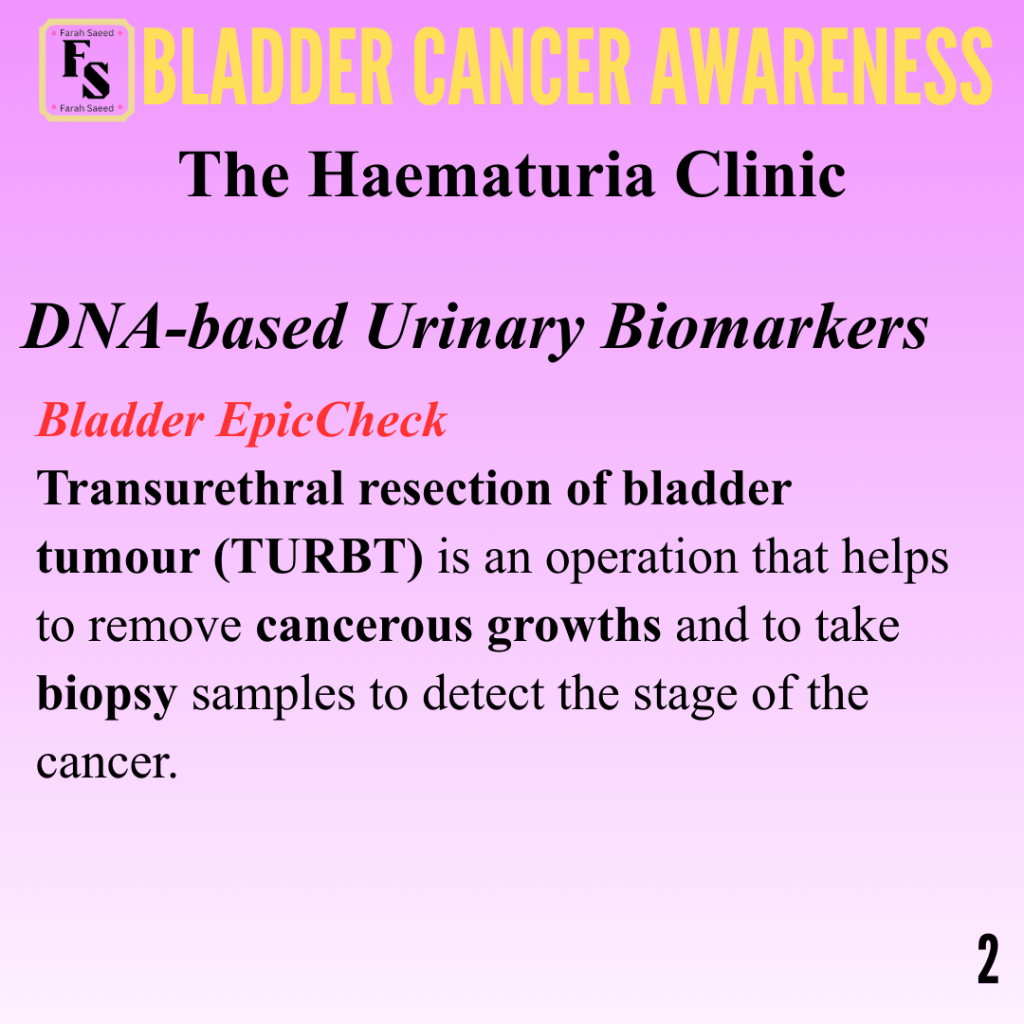
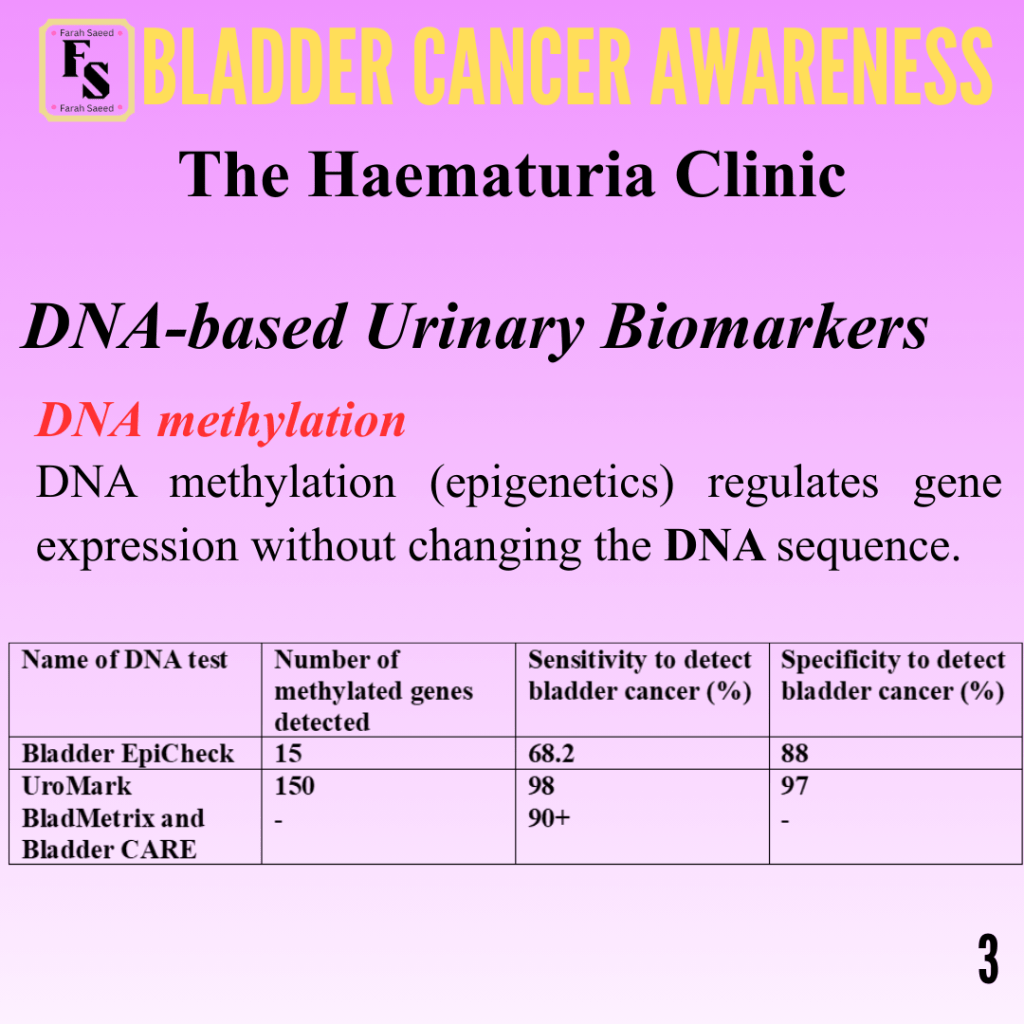
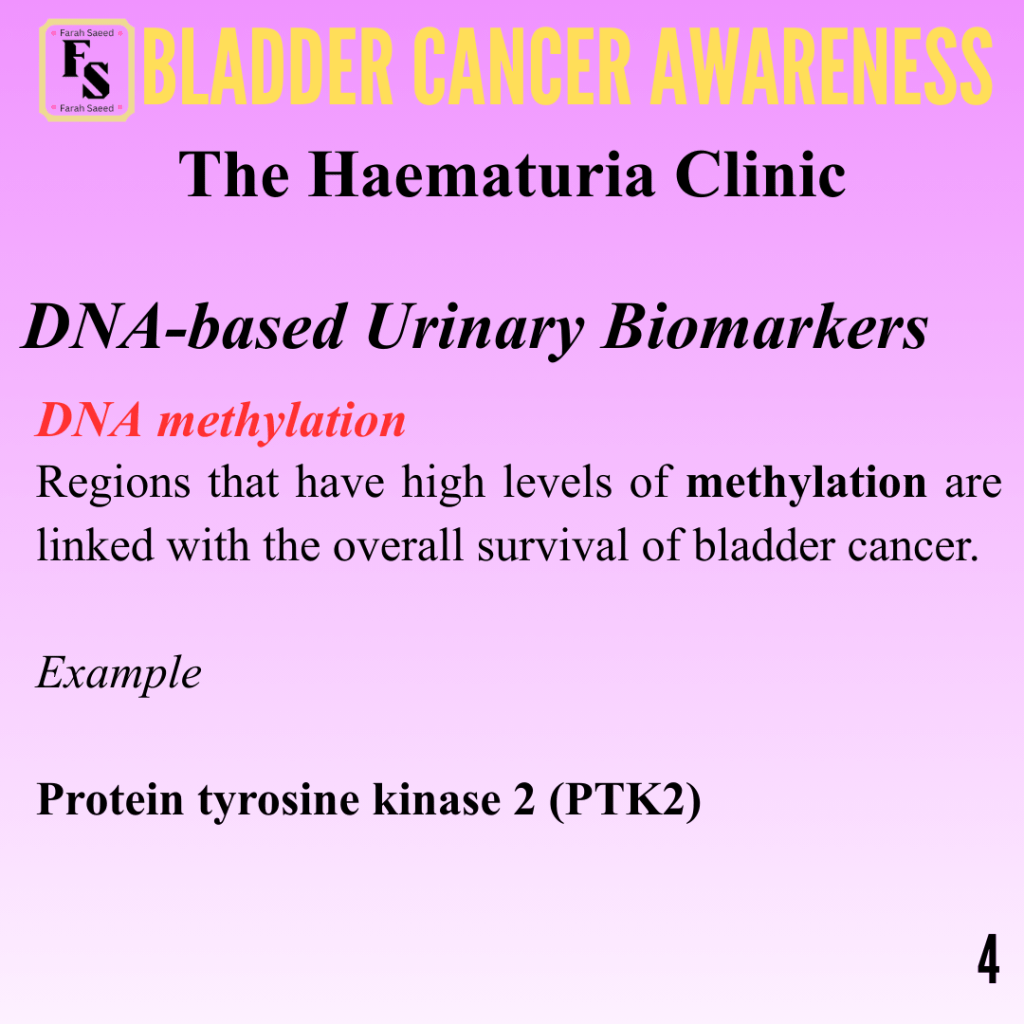
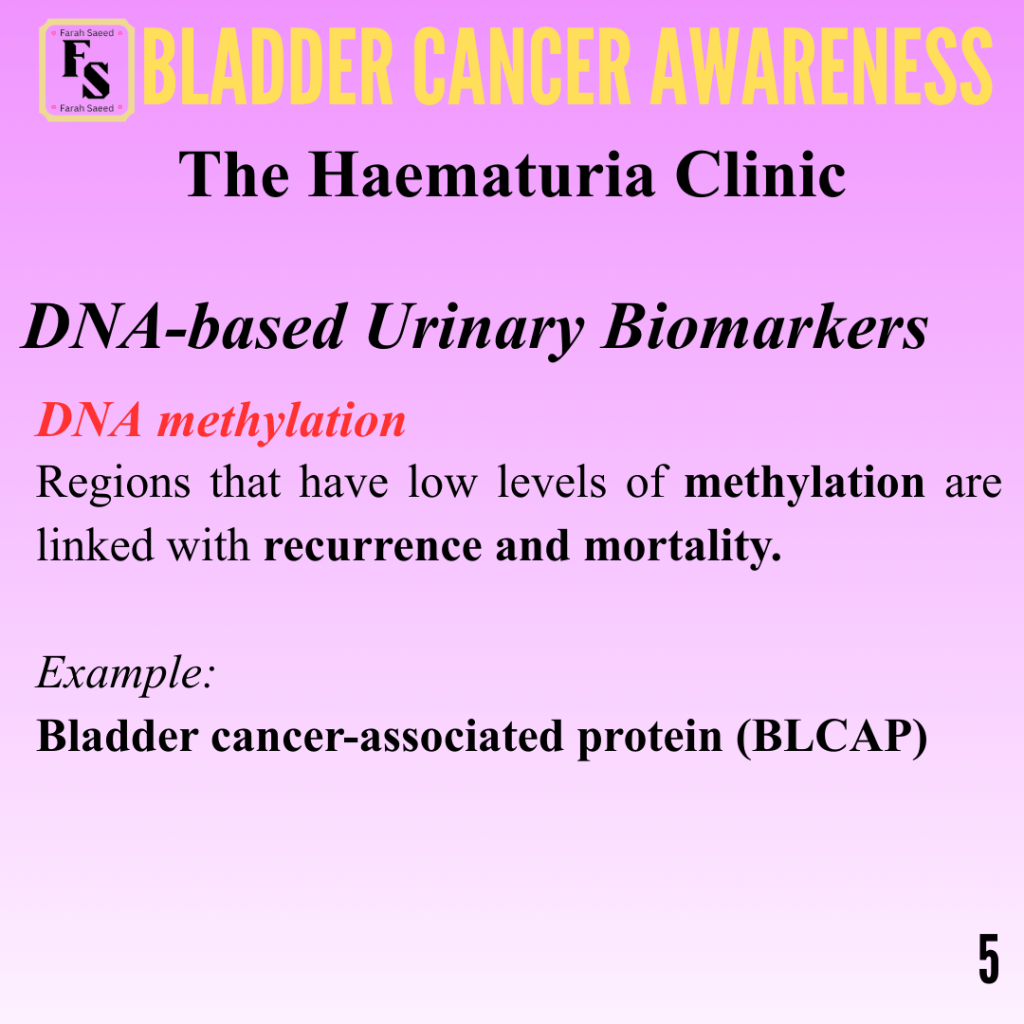
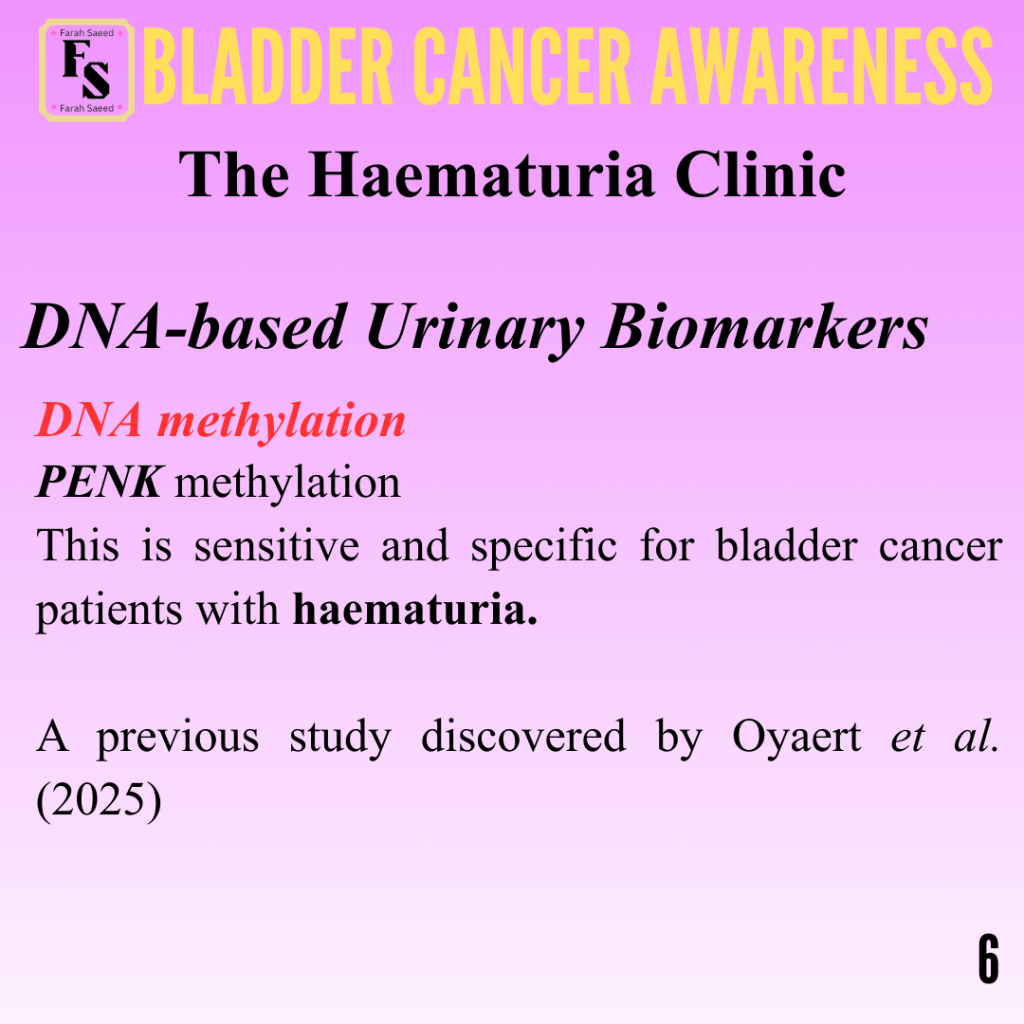
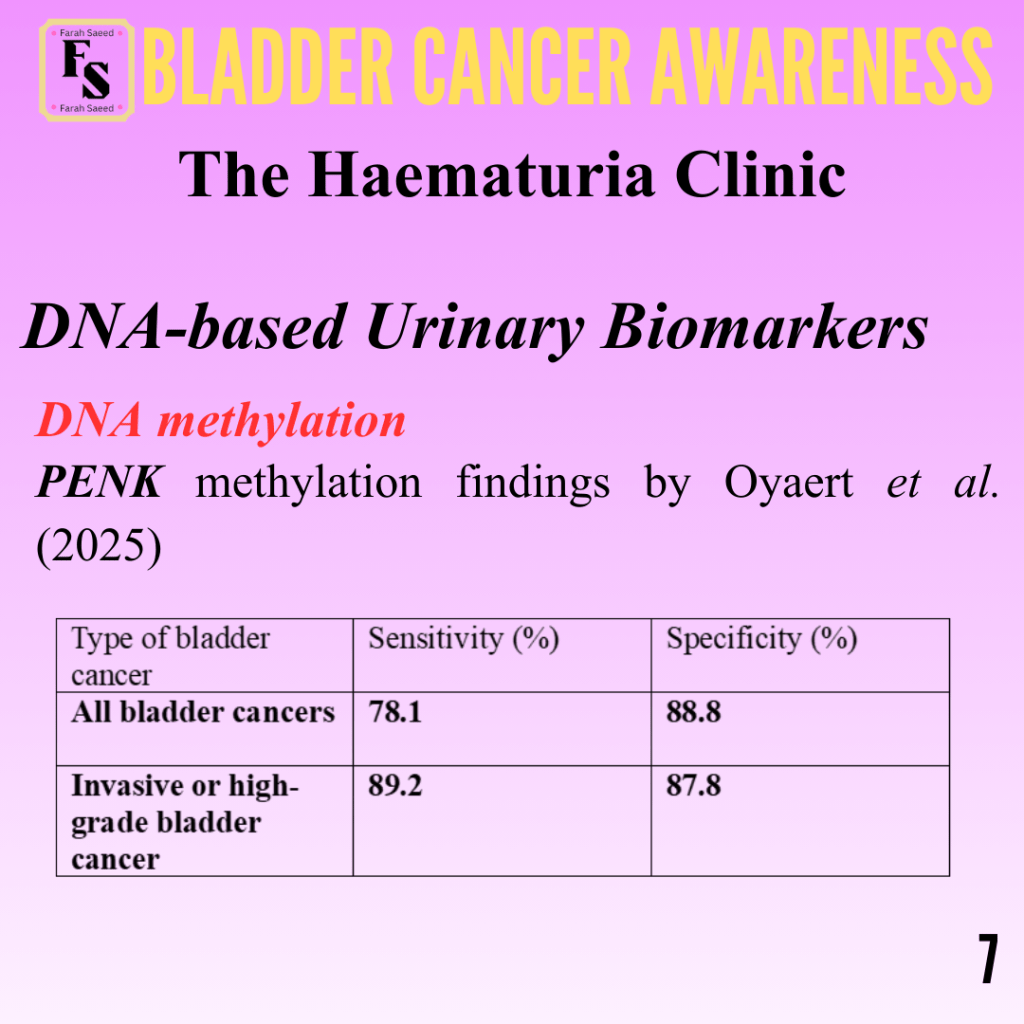
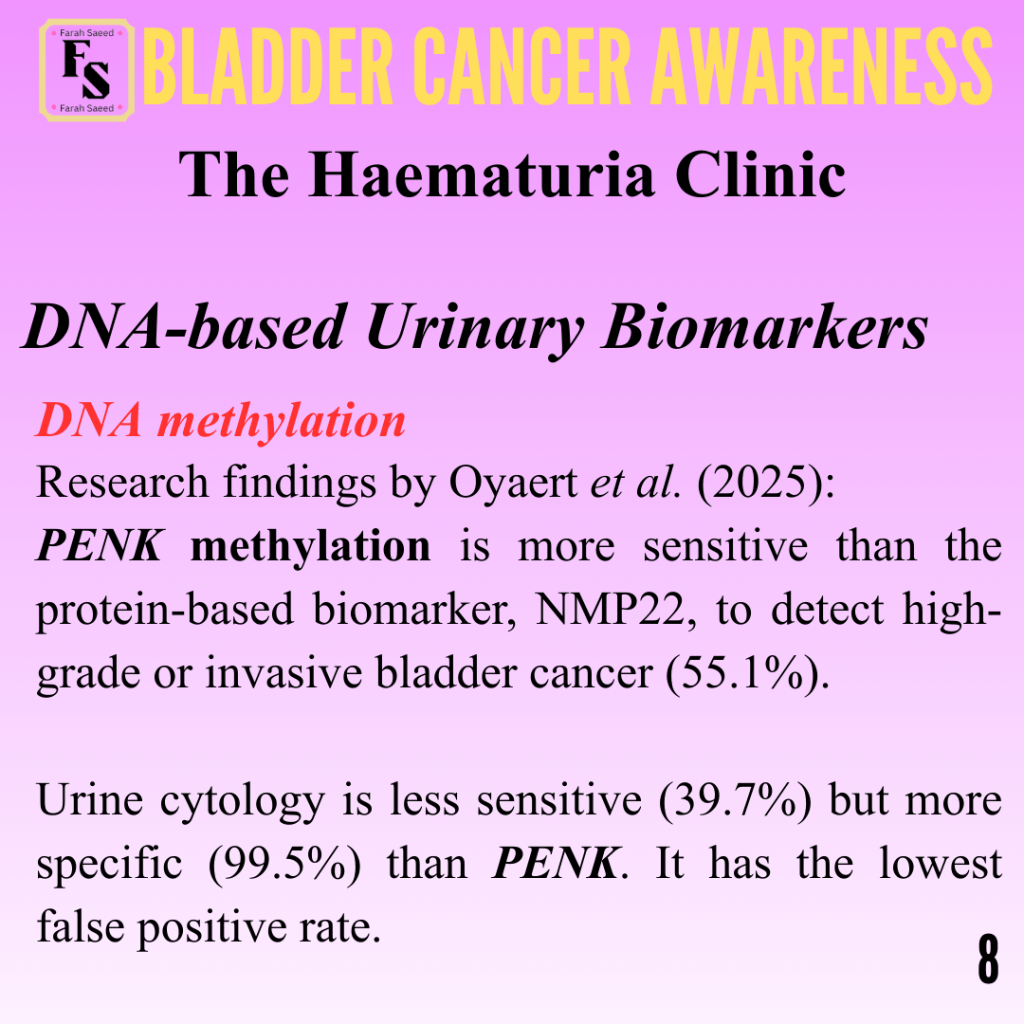
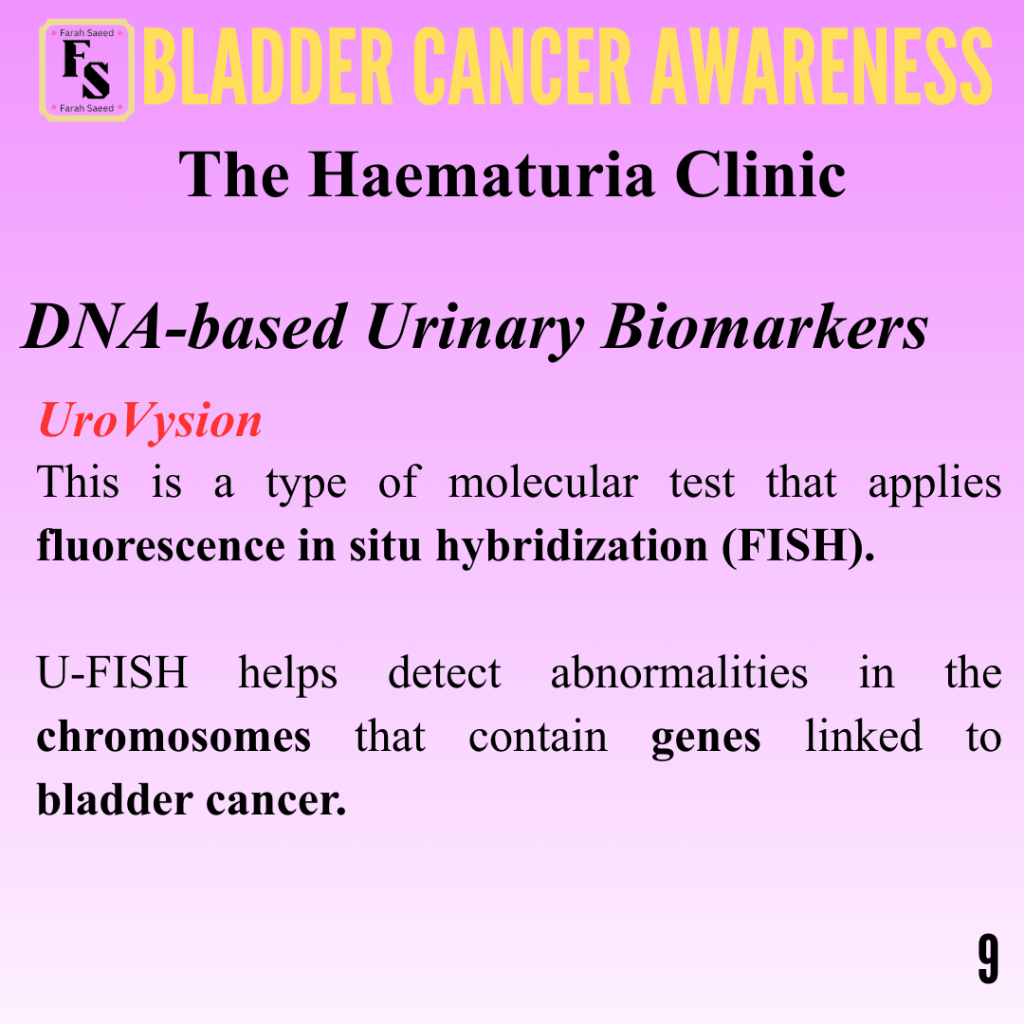
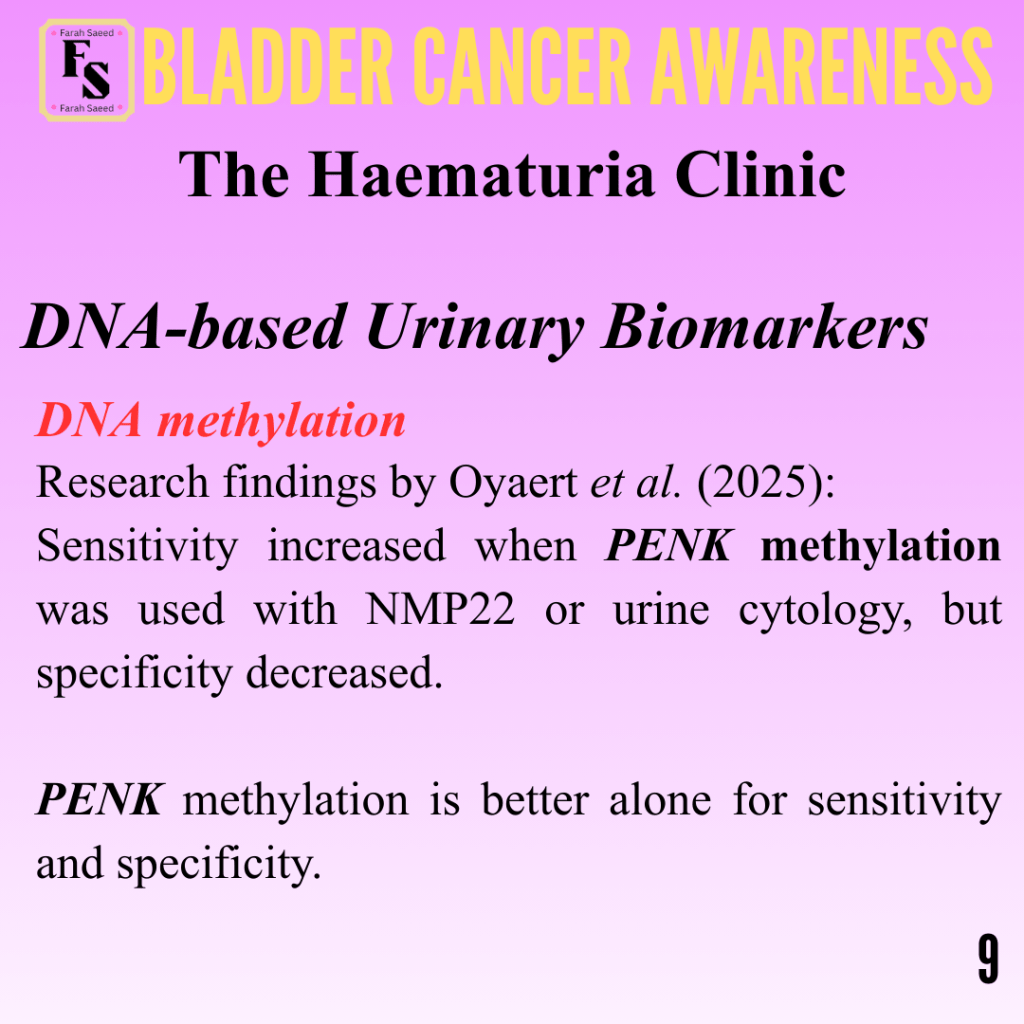
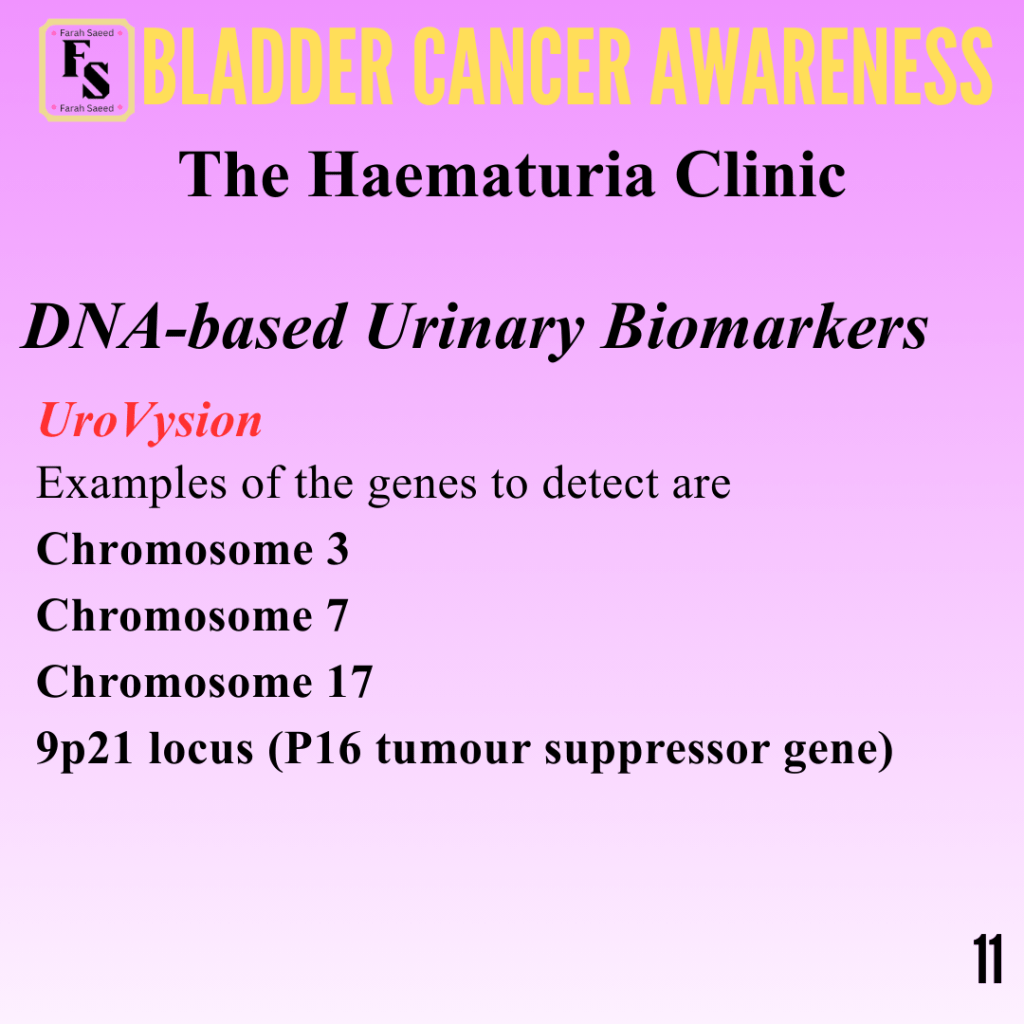
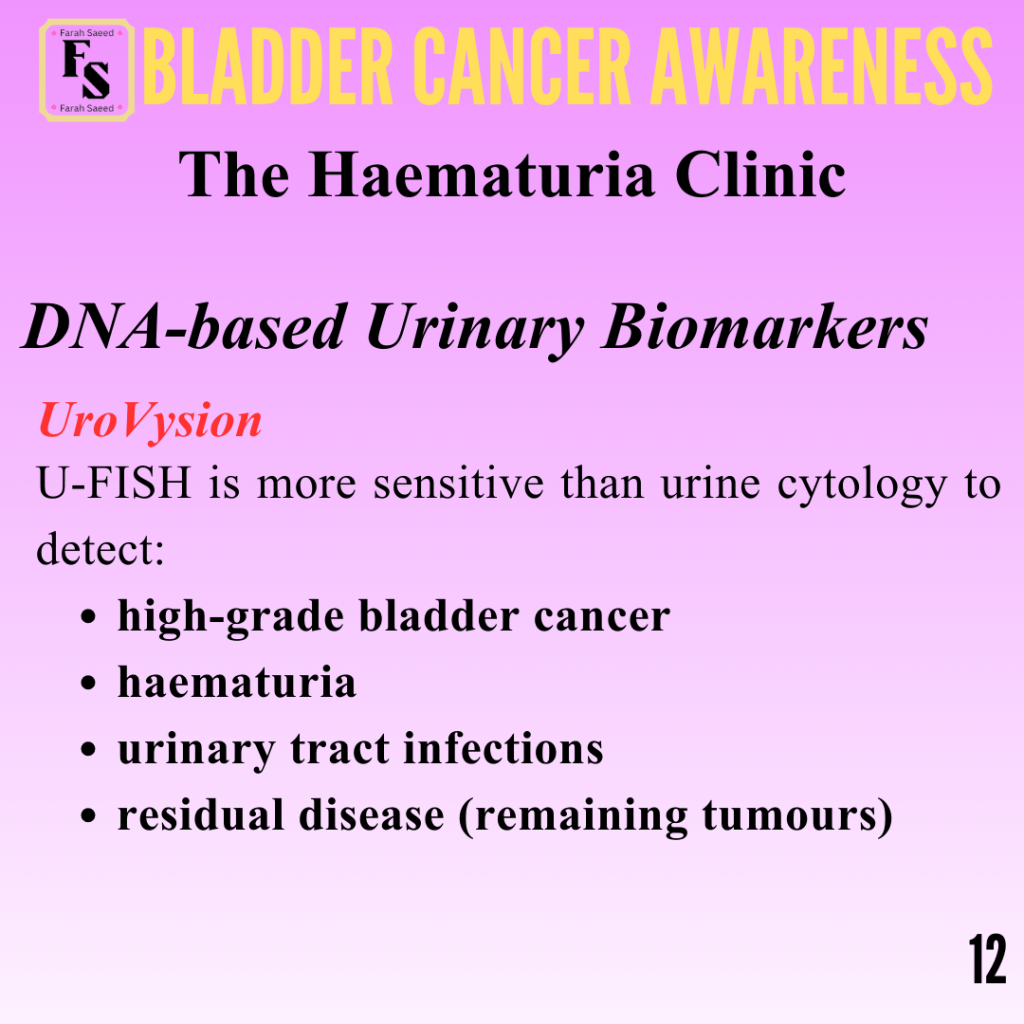
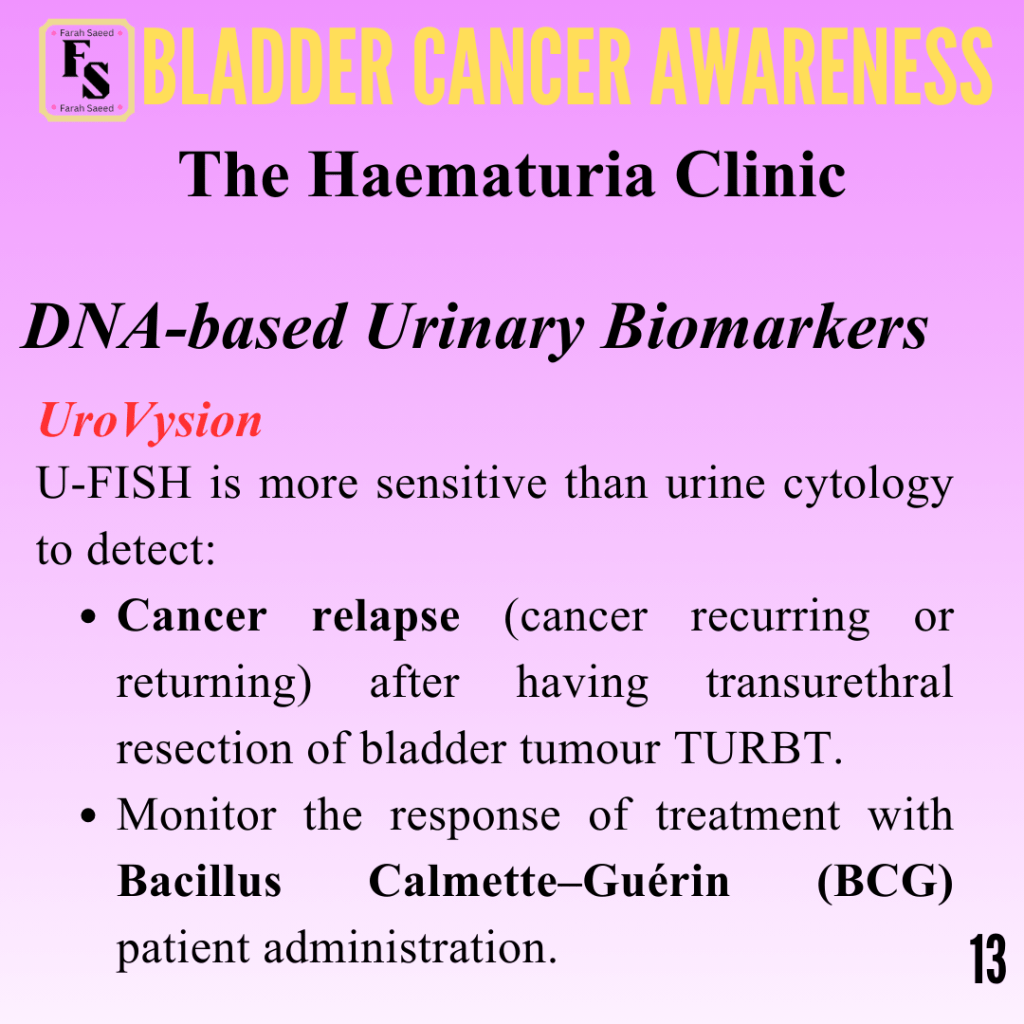
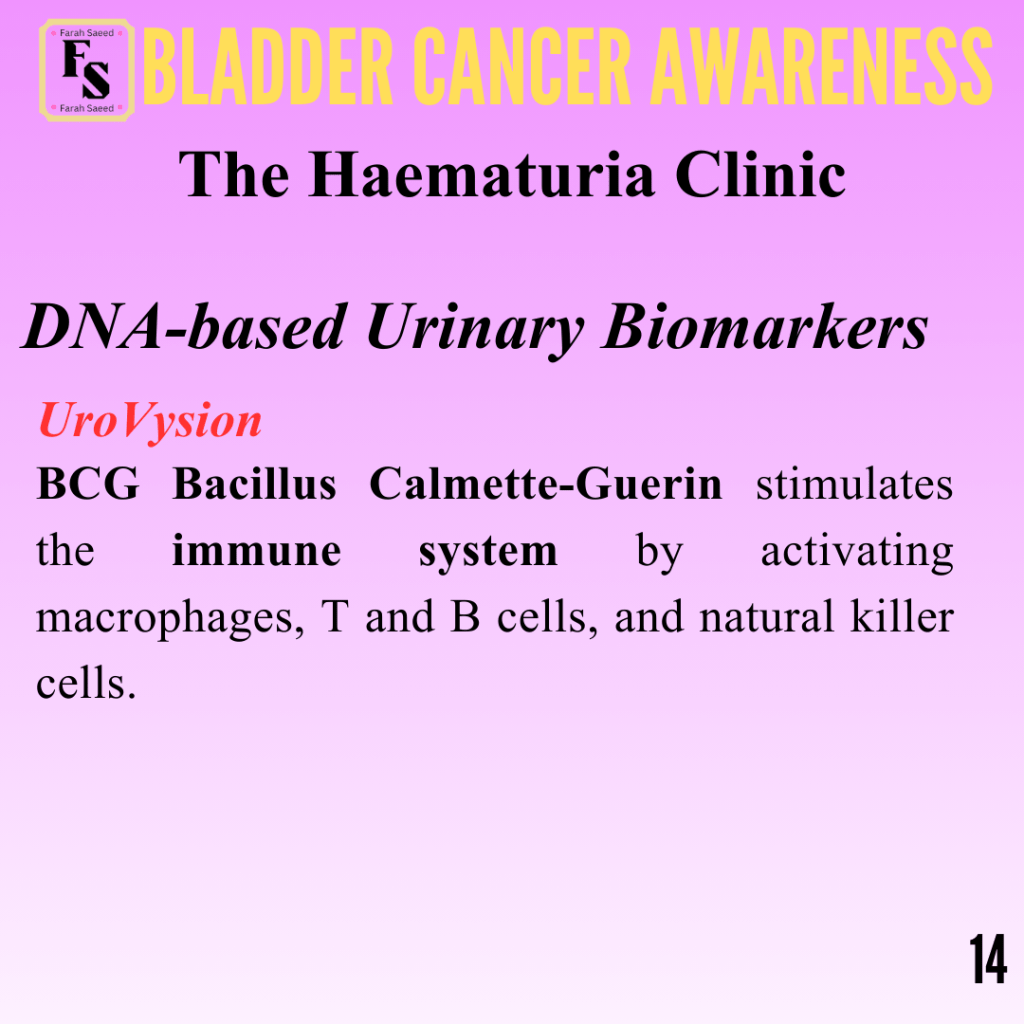
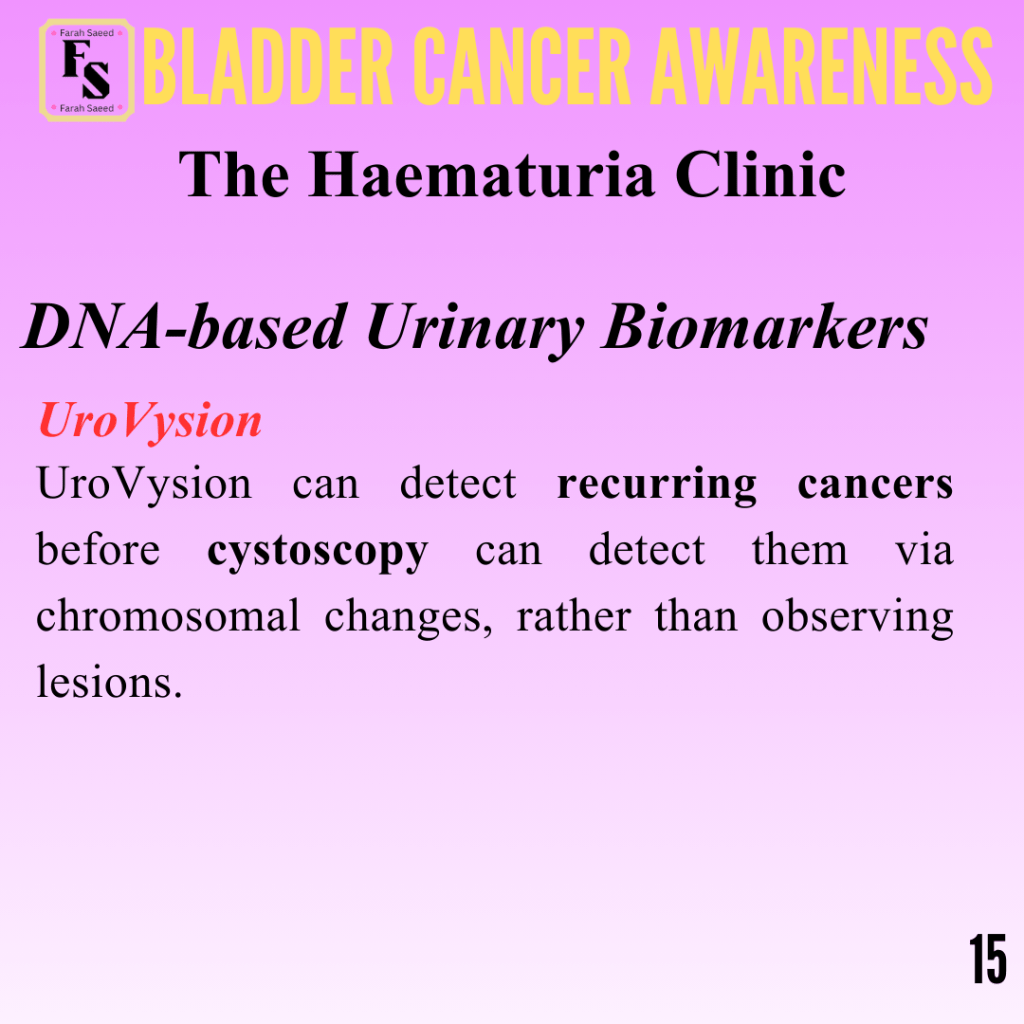
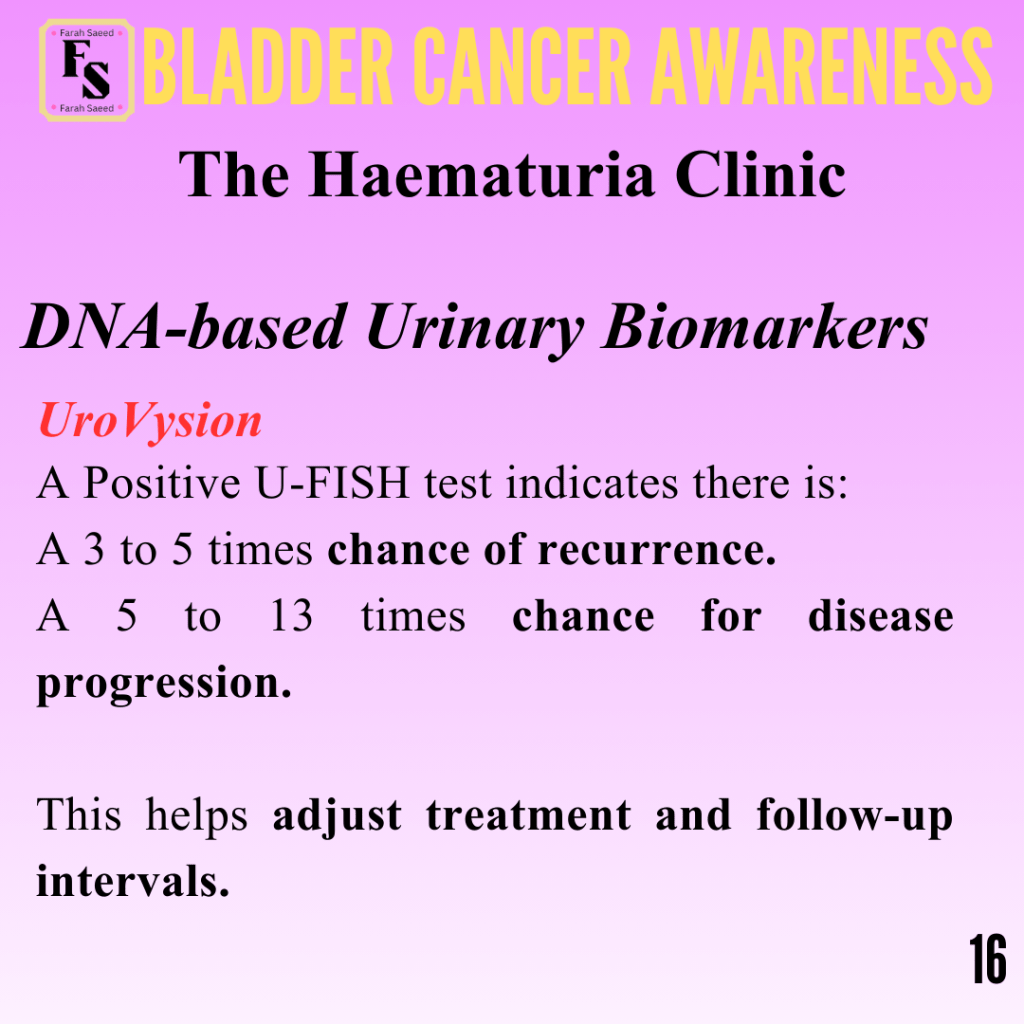
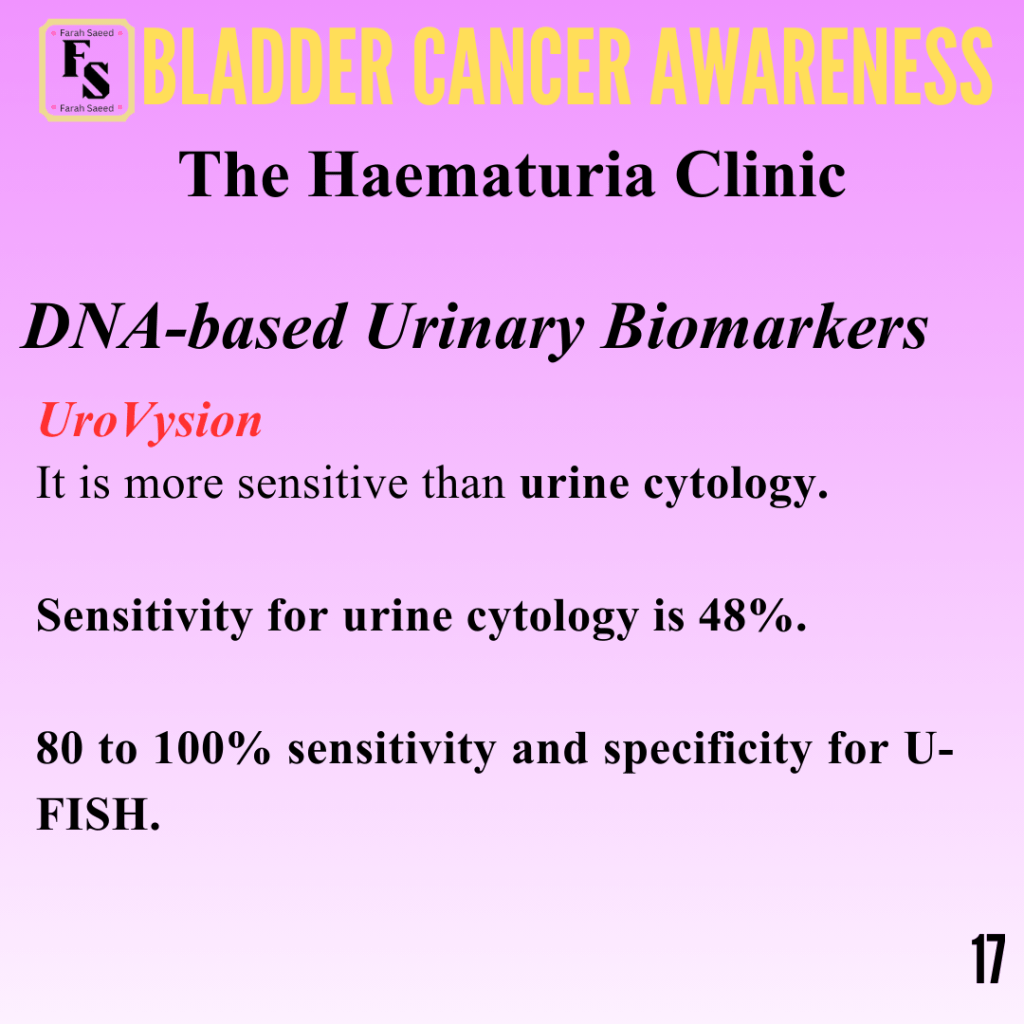
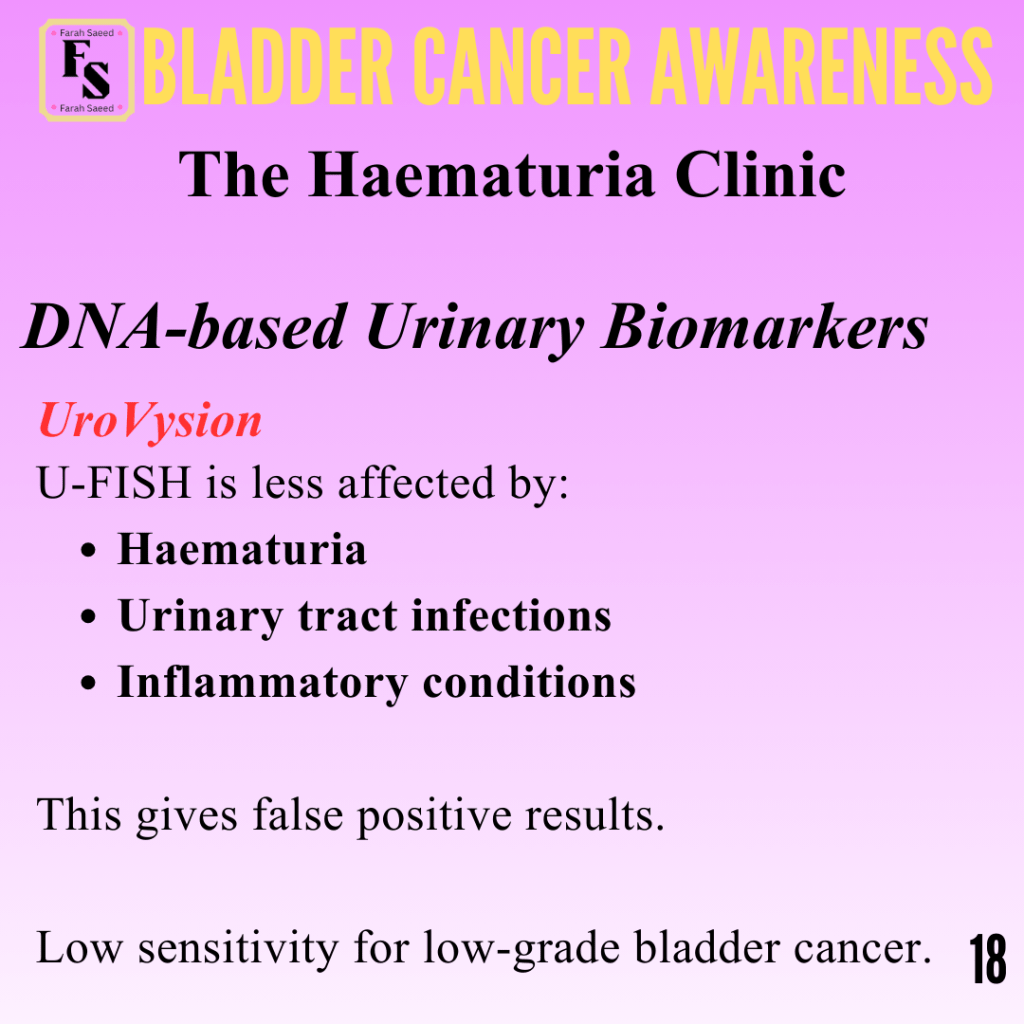
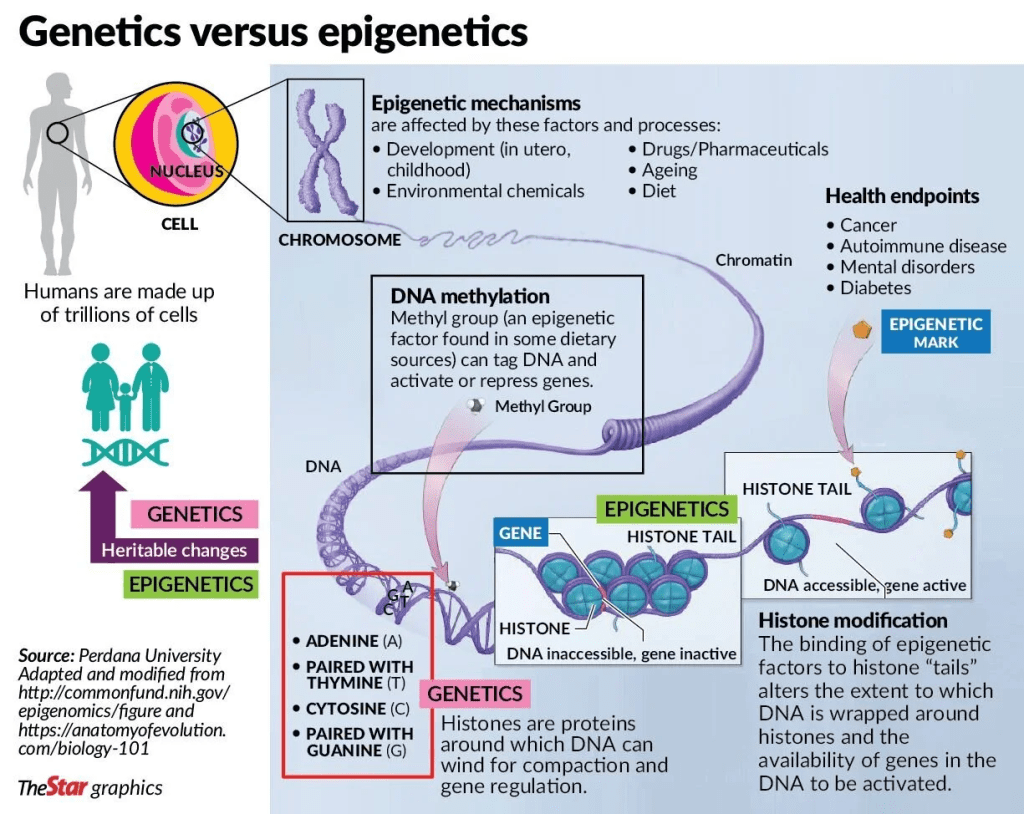
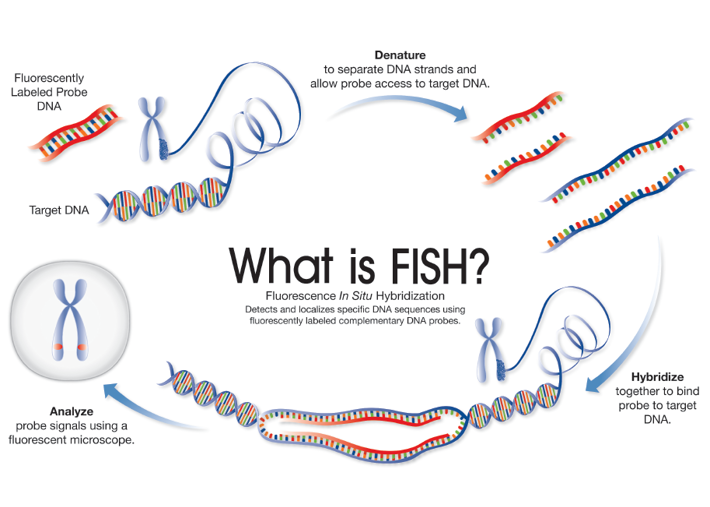
DNA-based Urinary Biomarkers

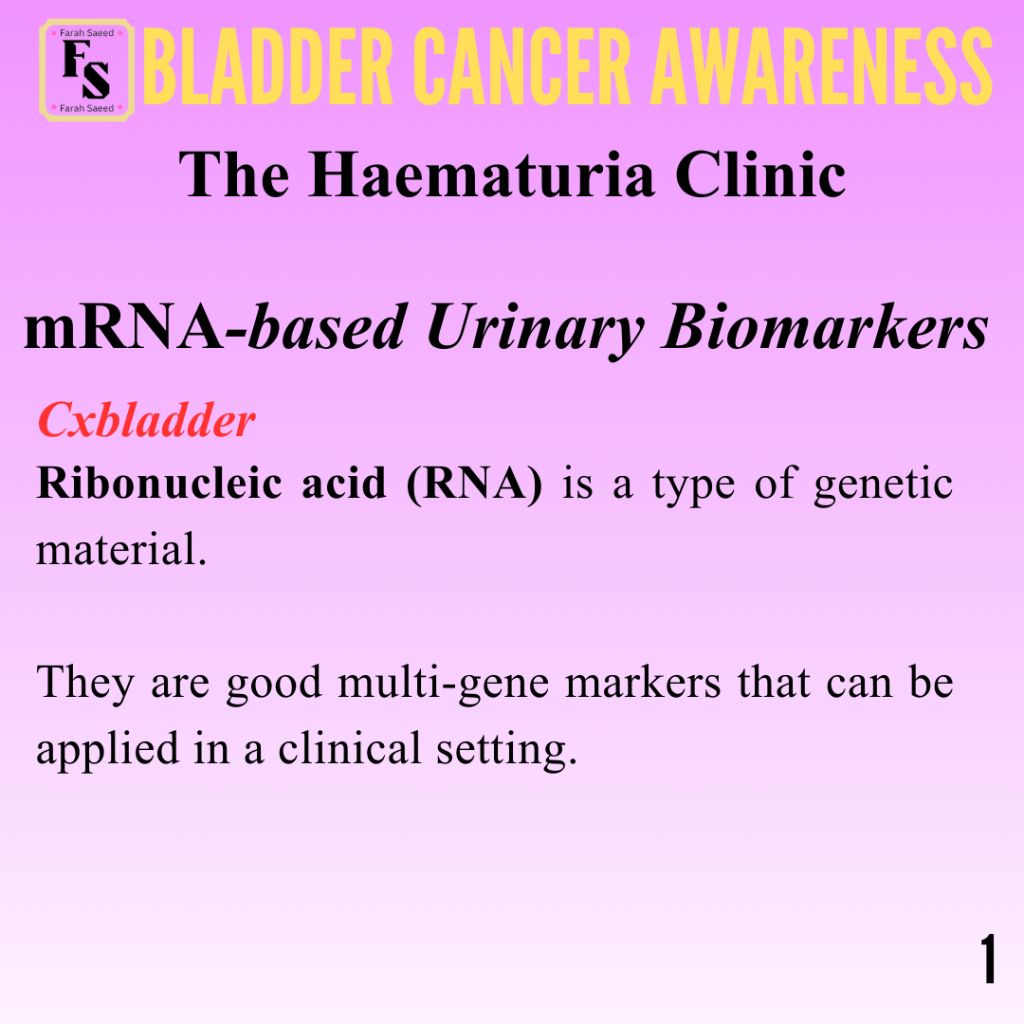
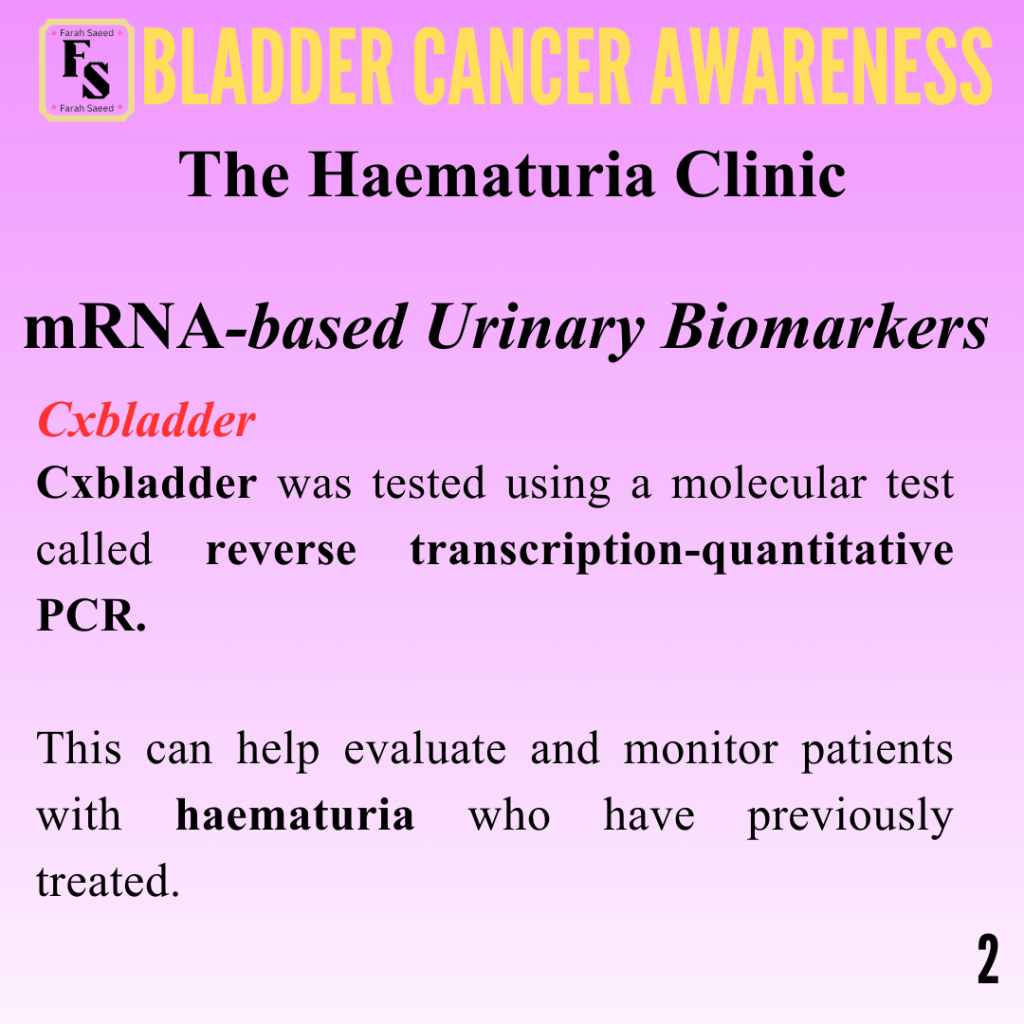
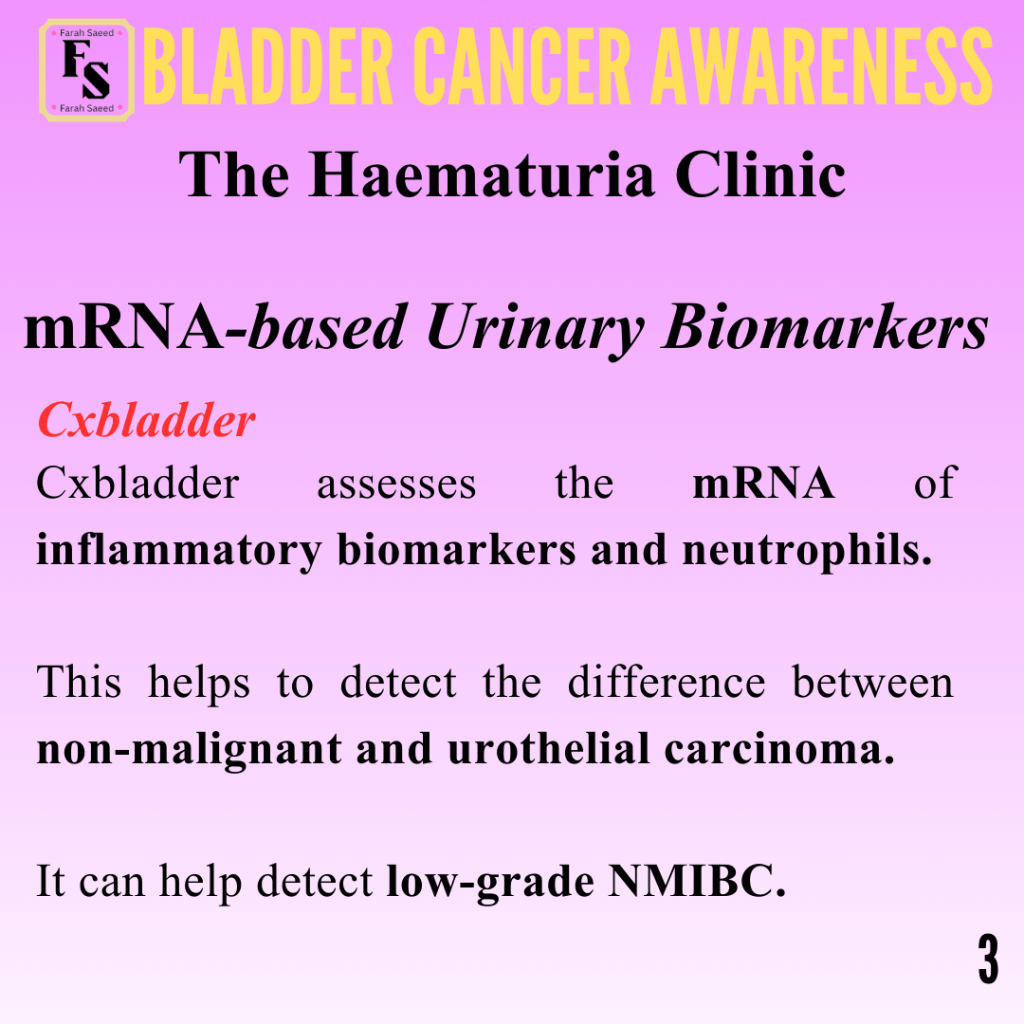
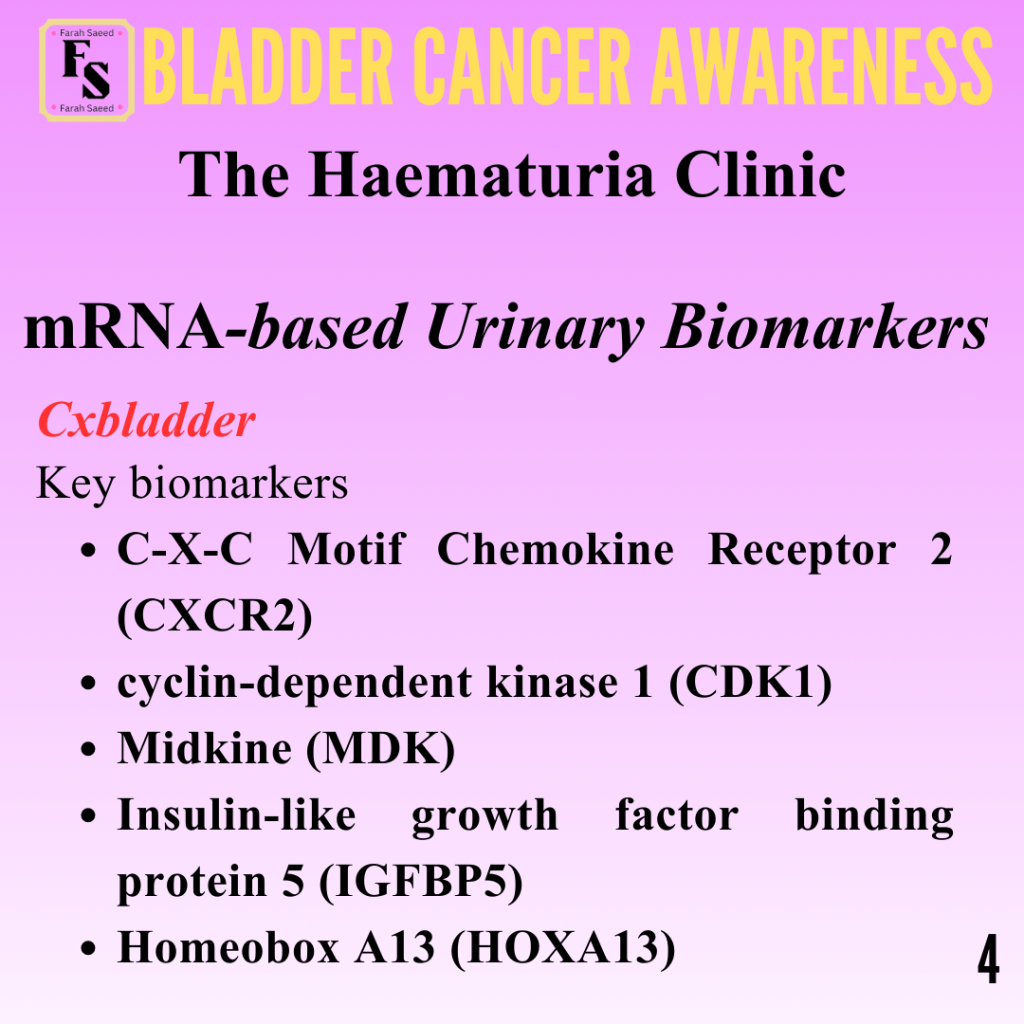
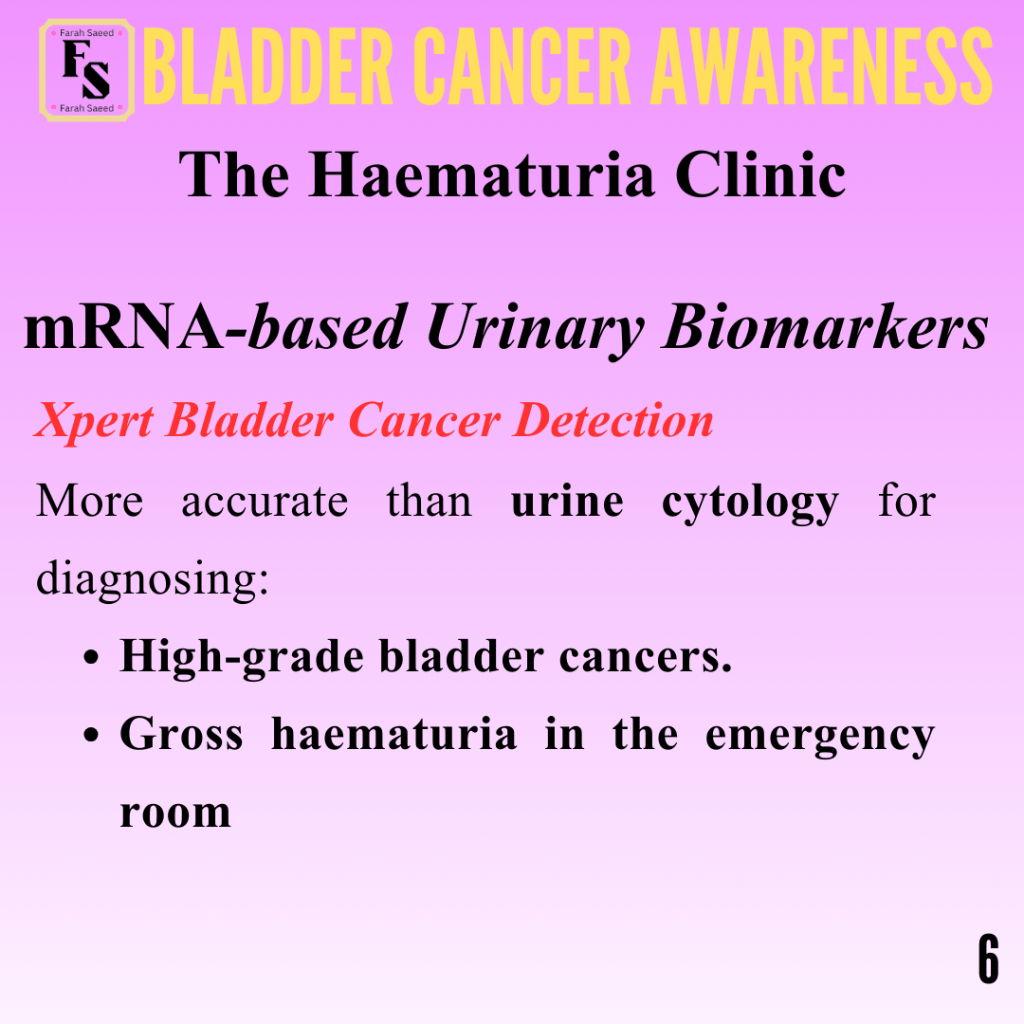
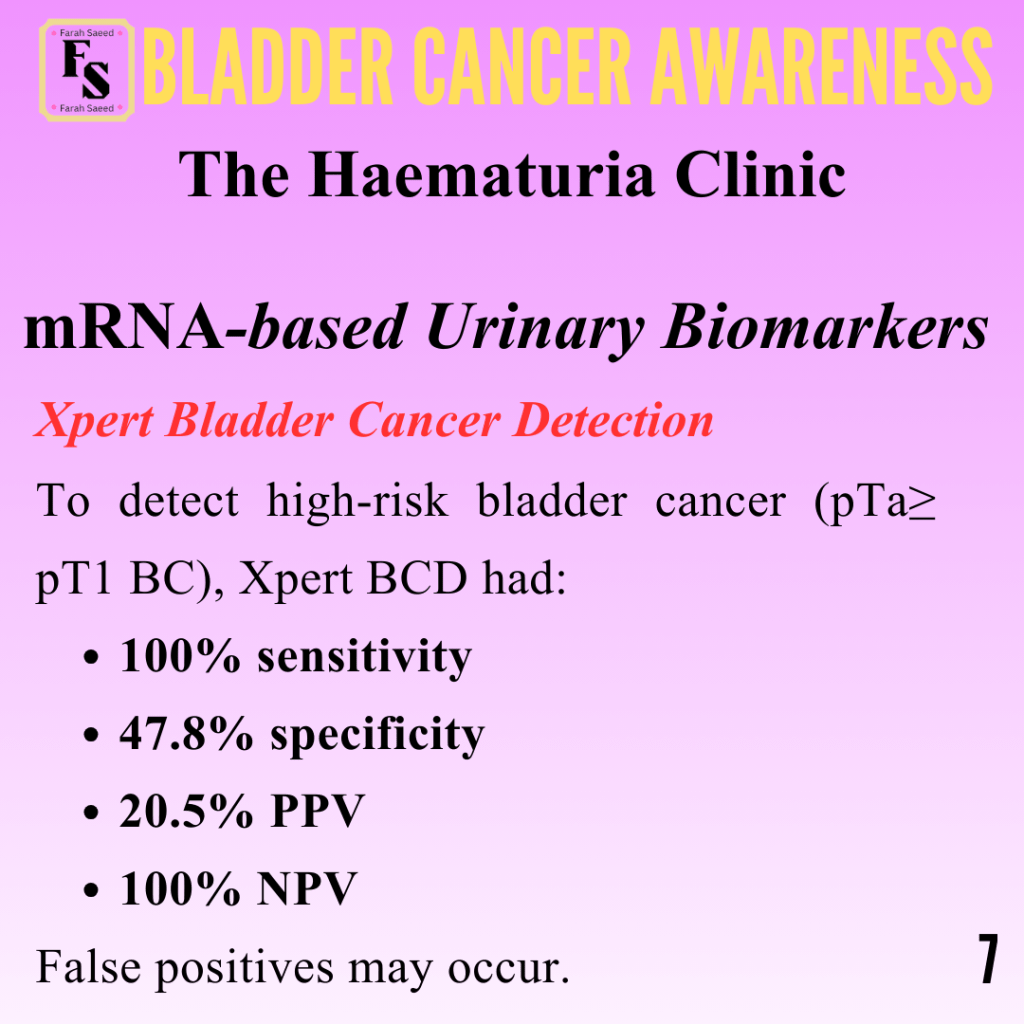
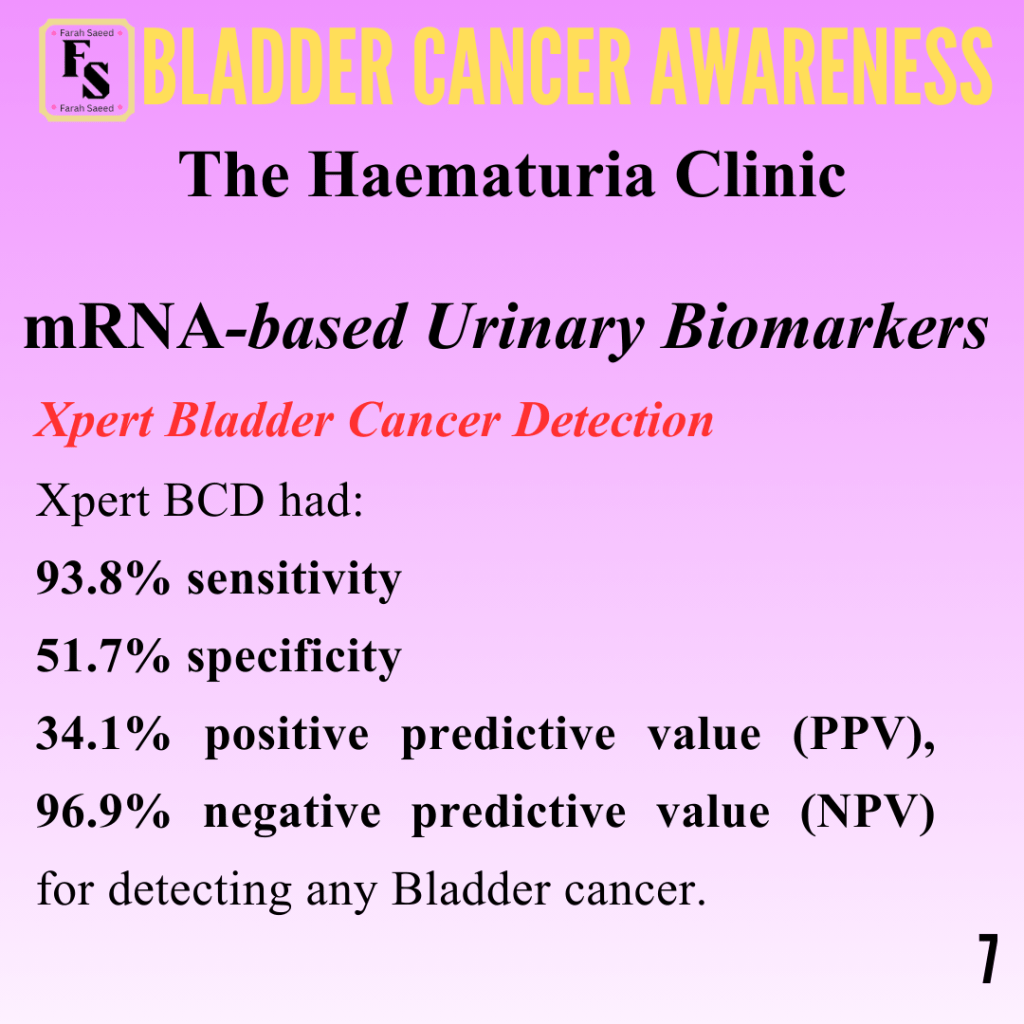
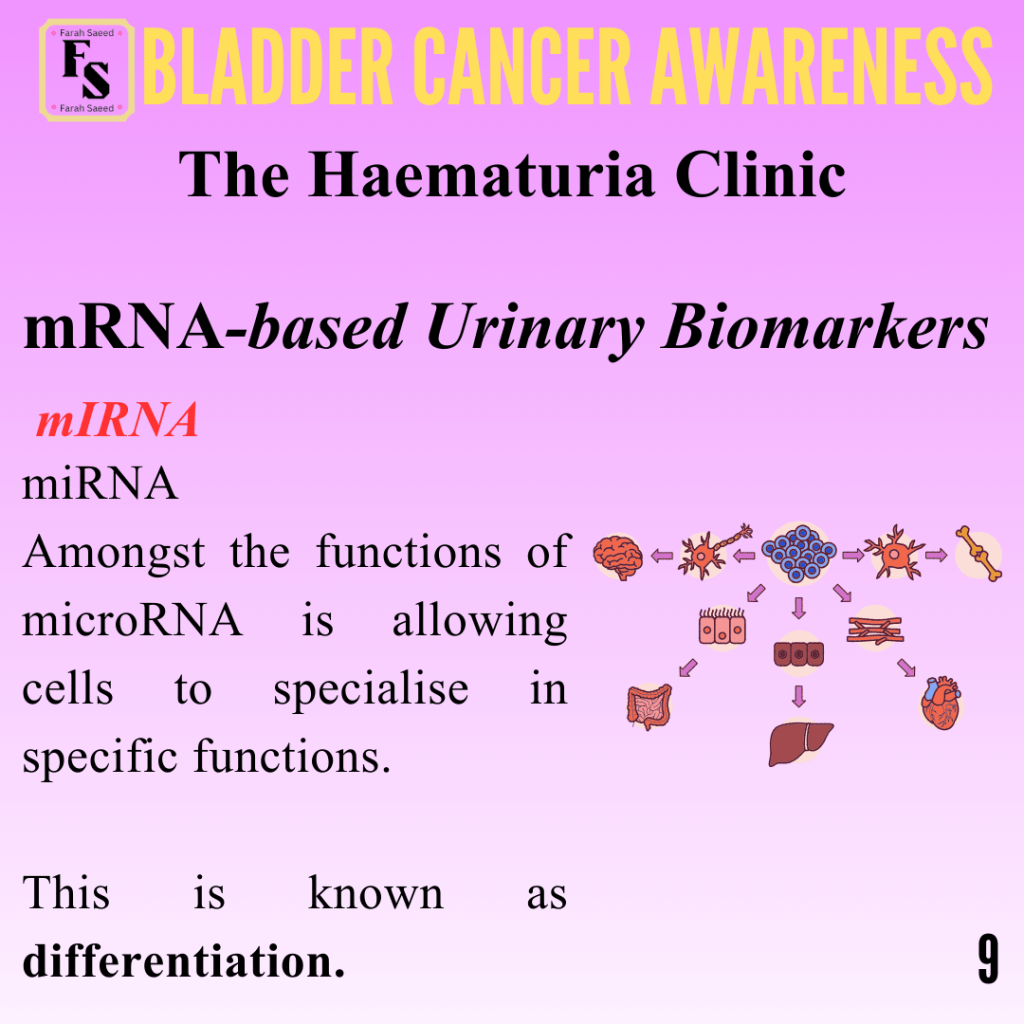
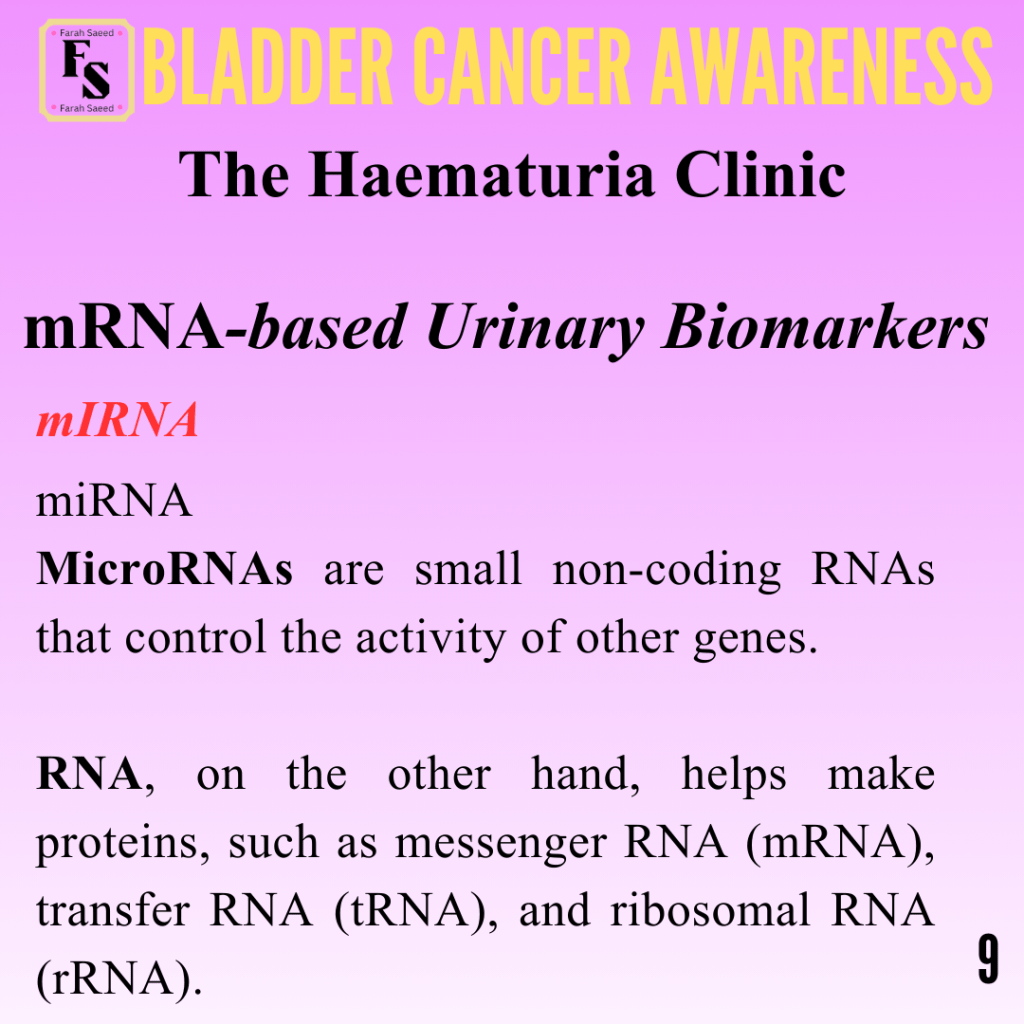
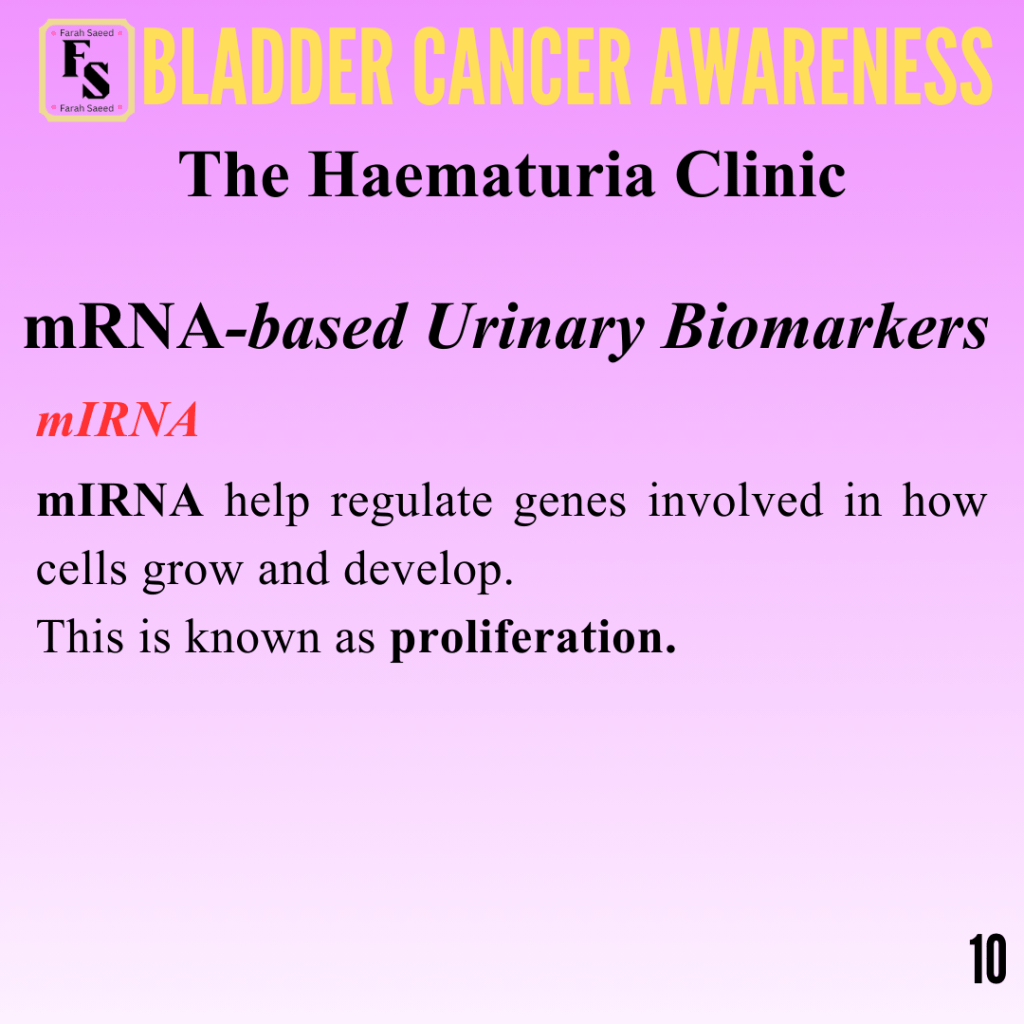
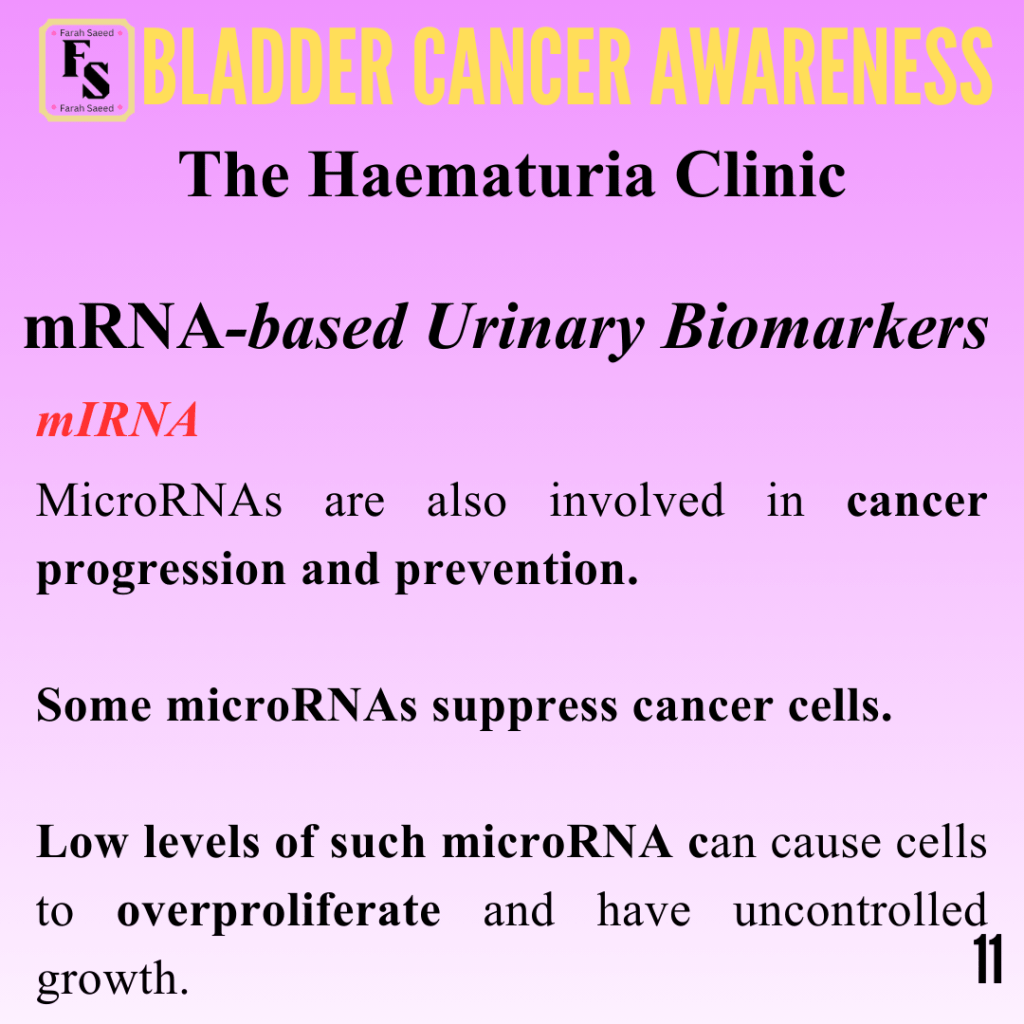
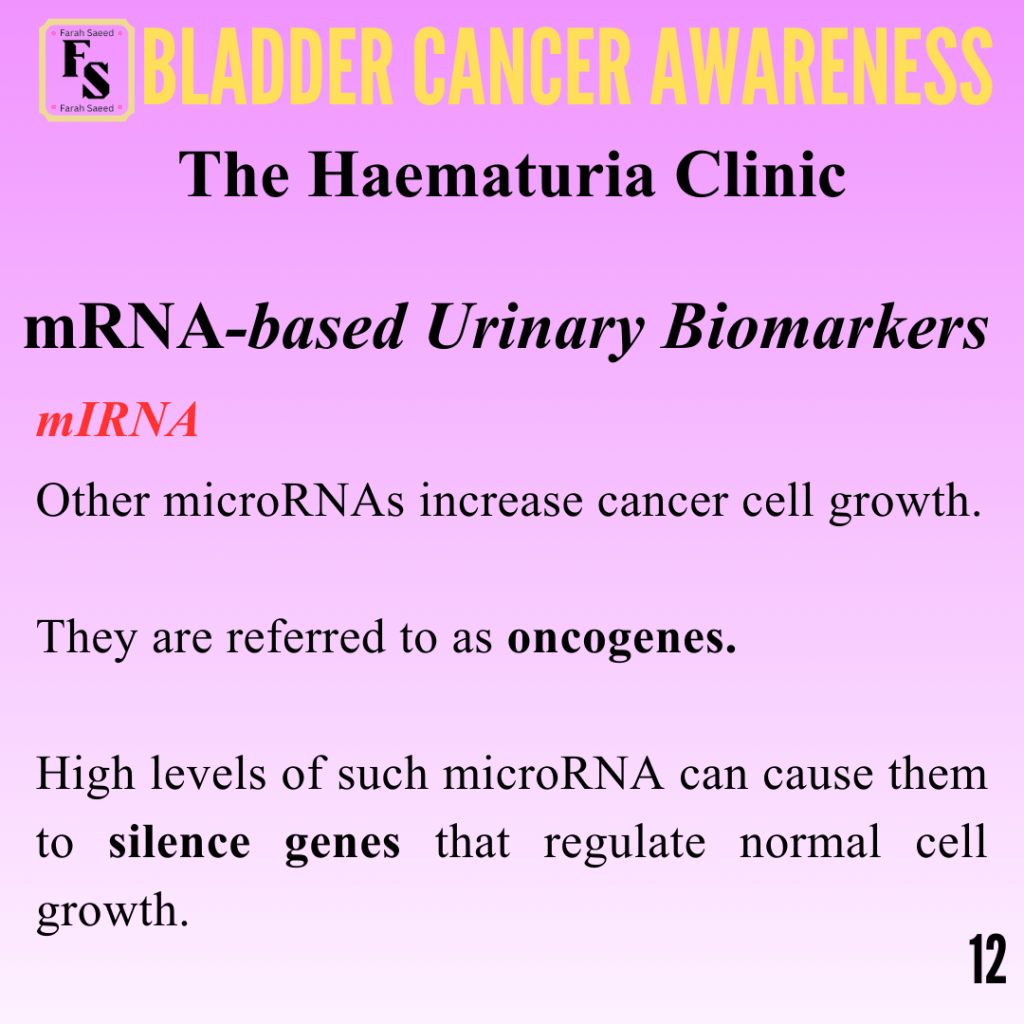
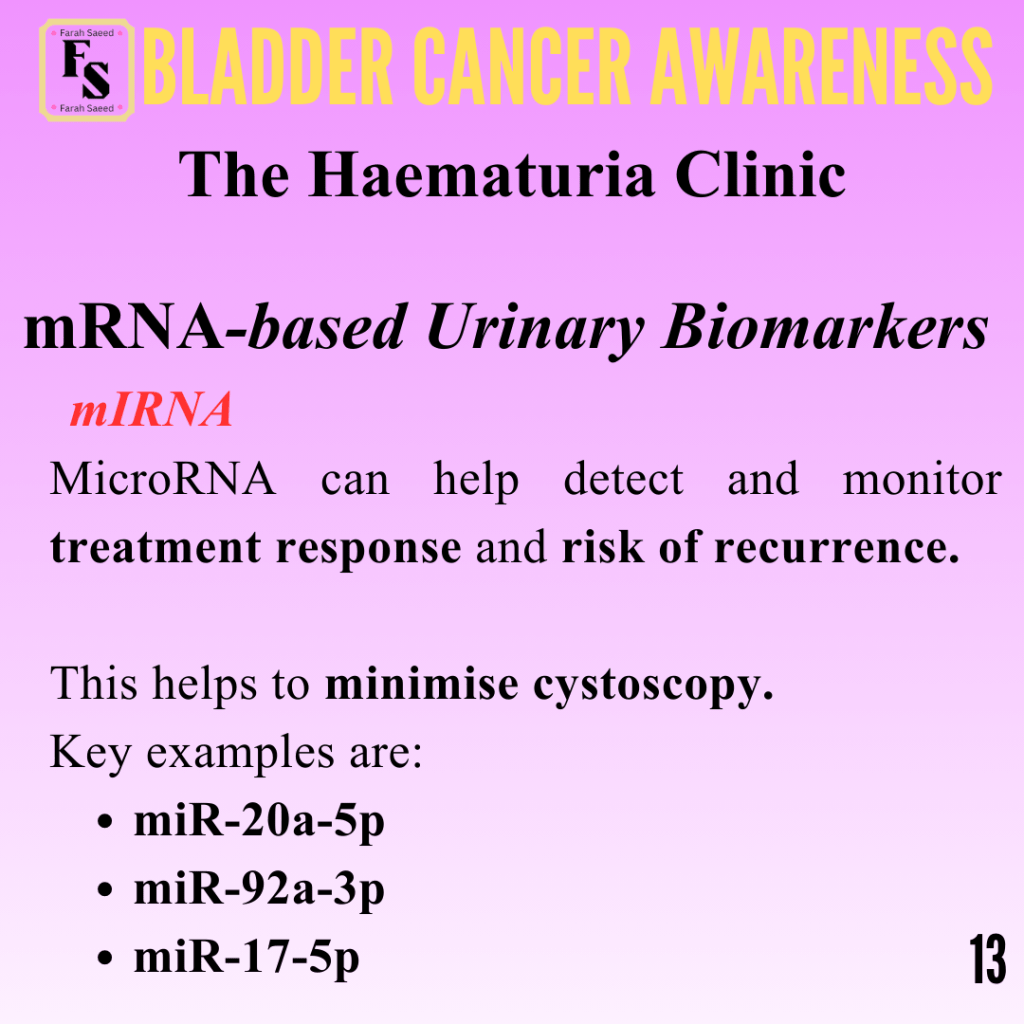
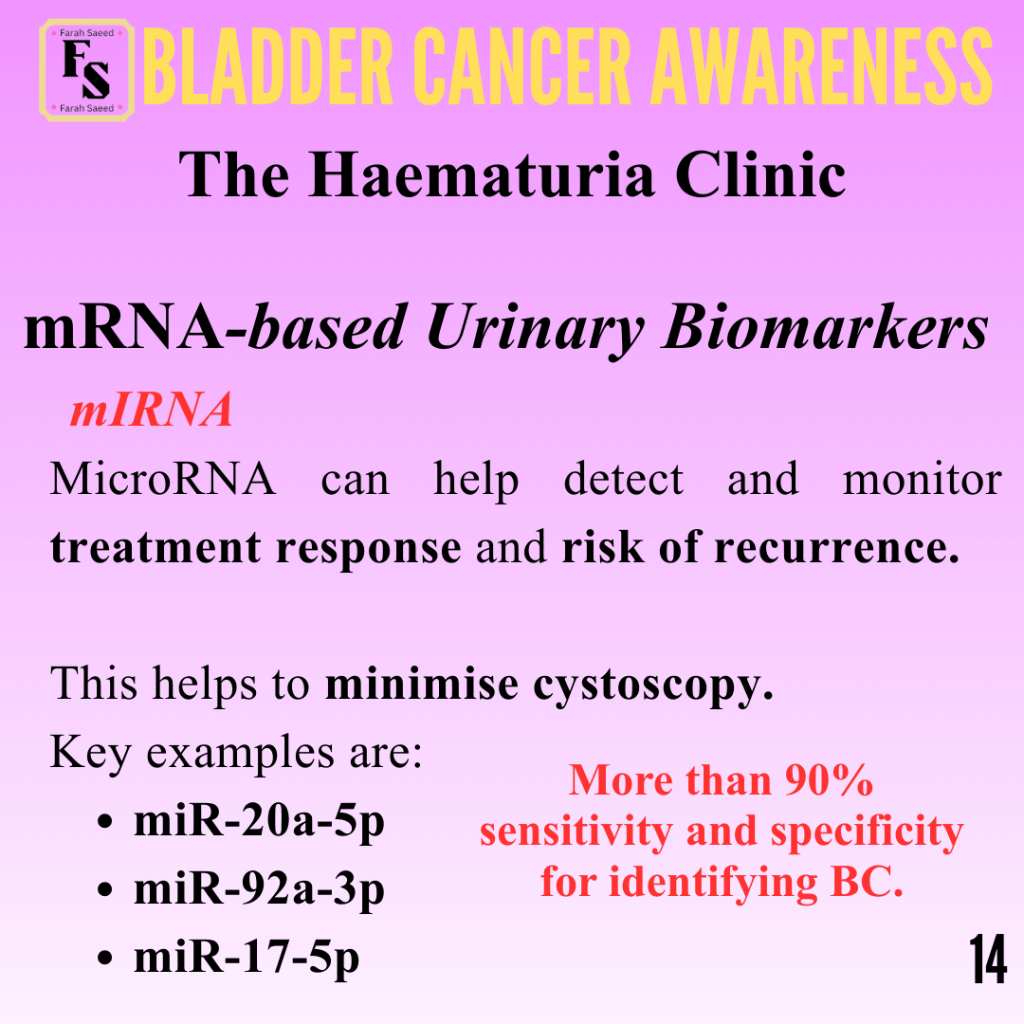
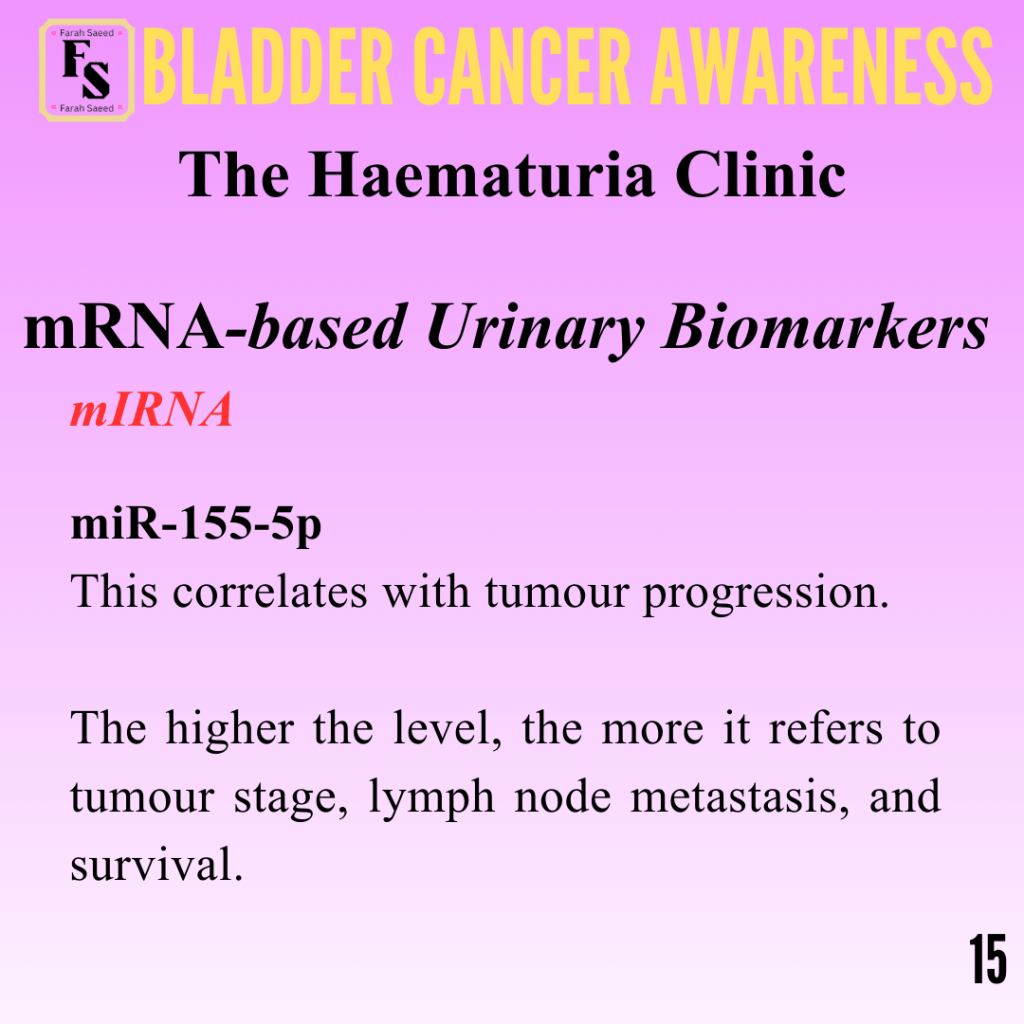
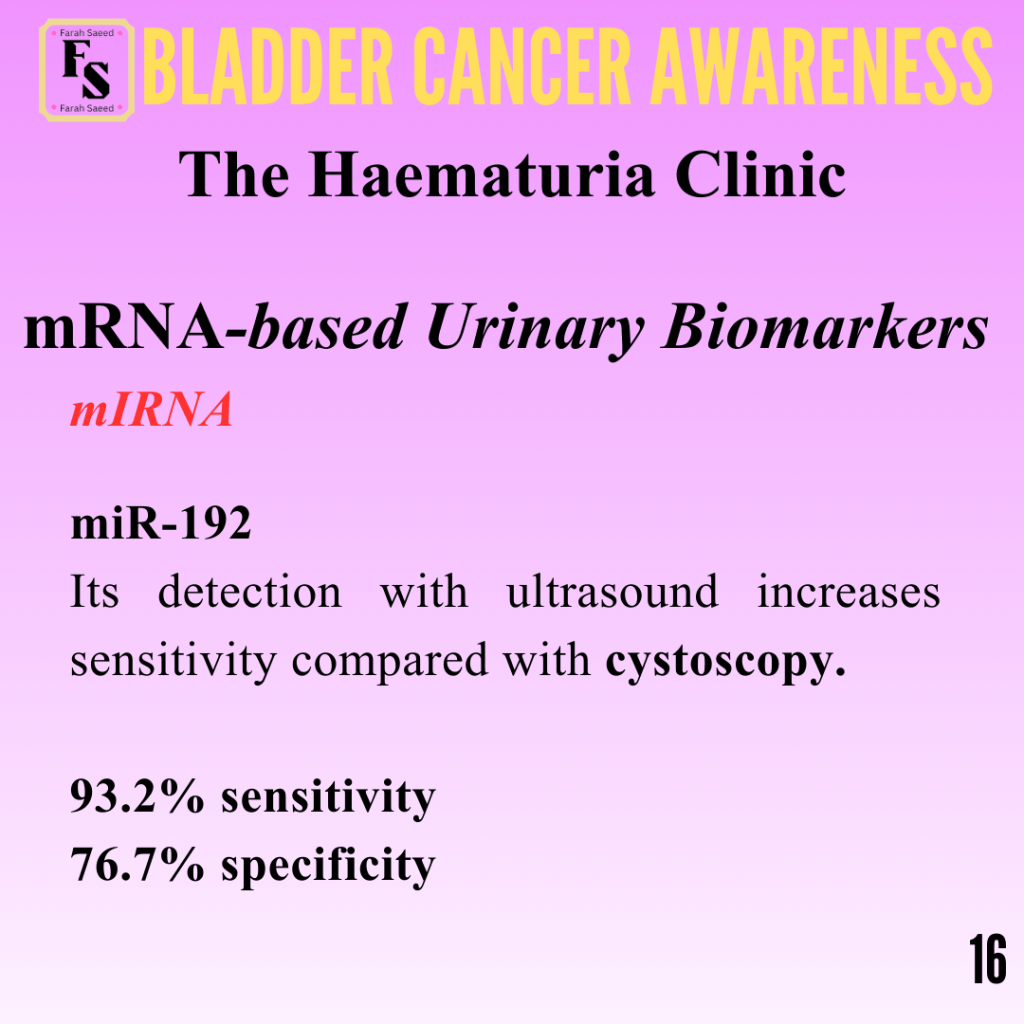
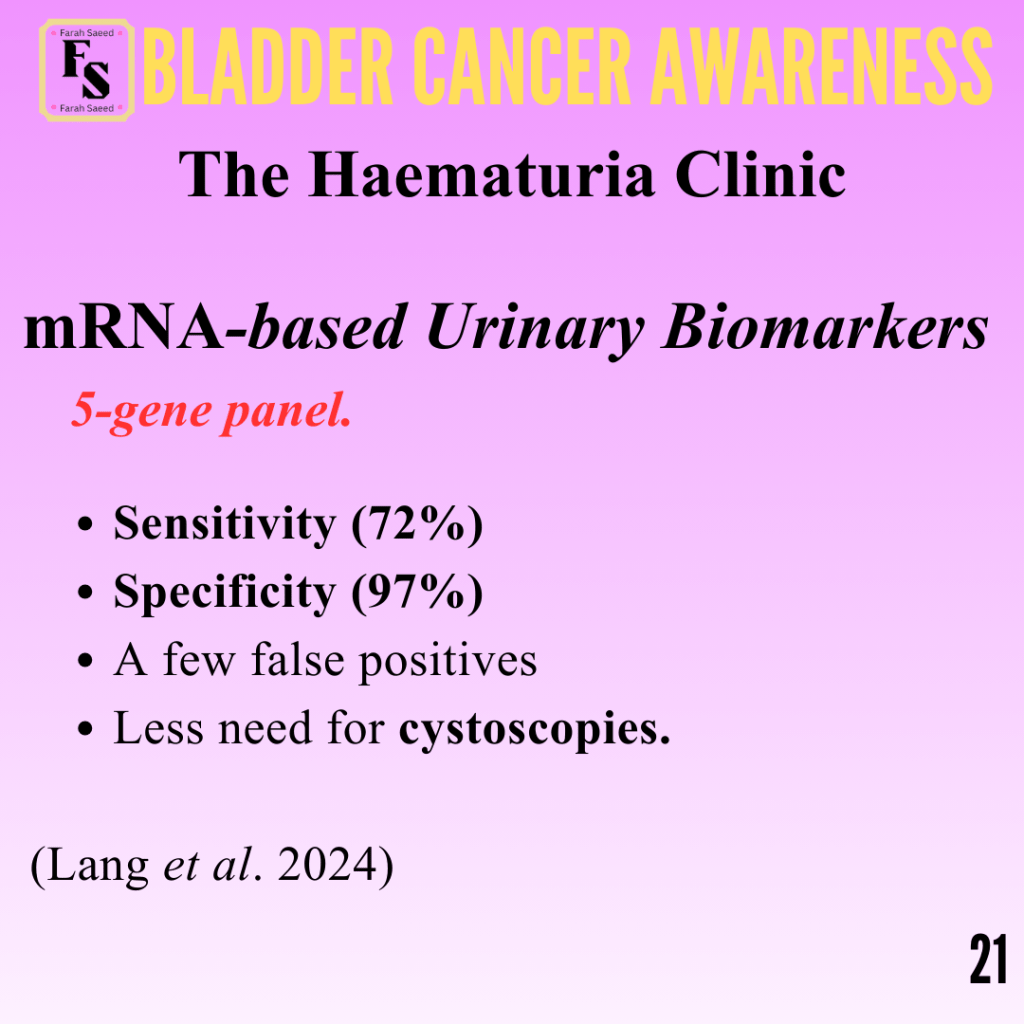
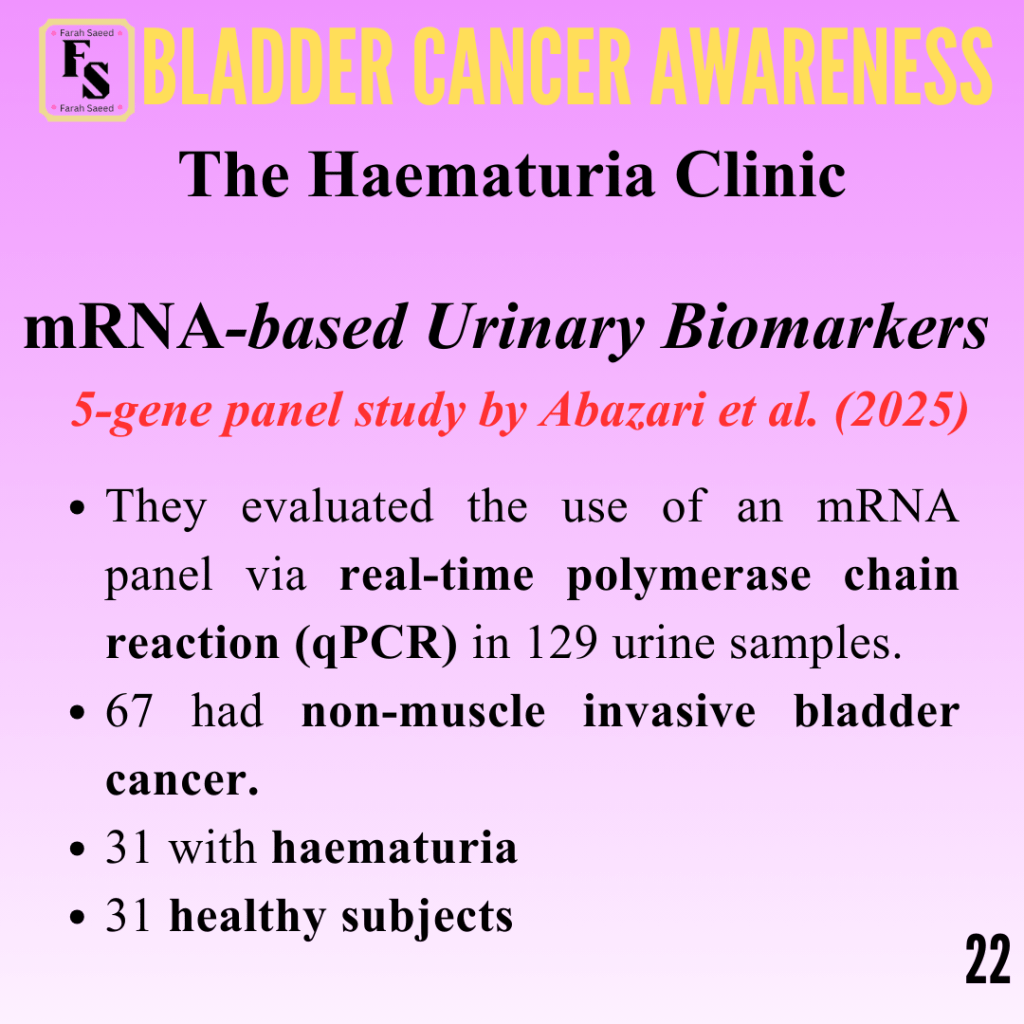
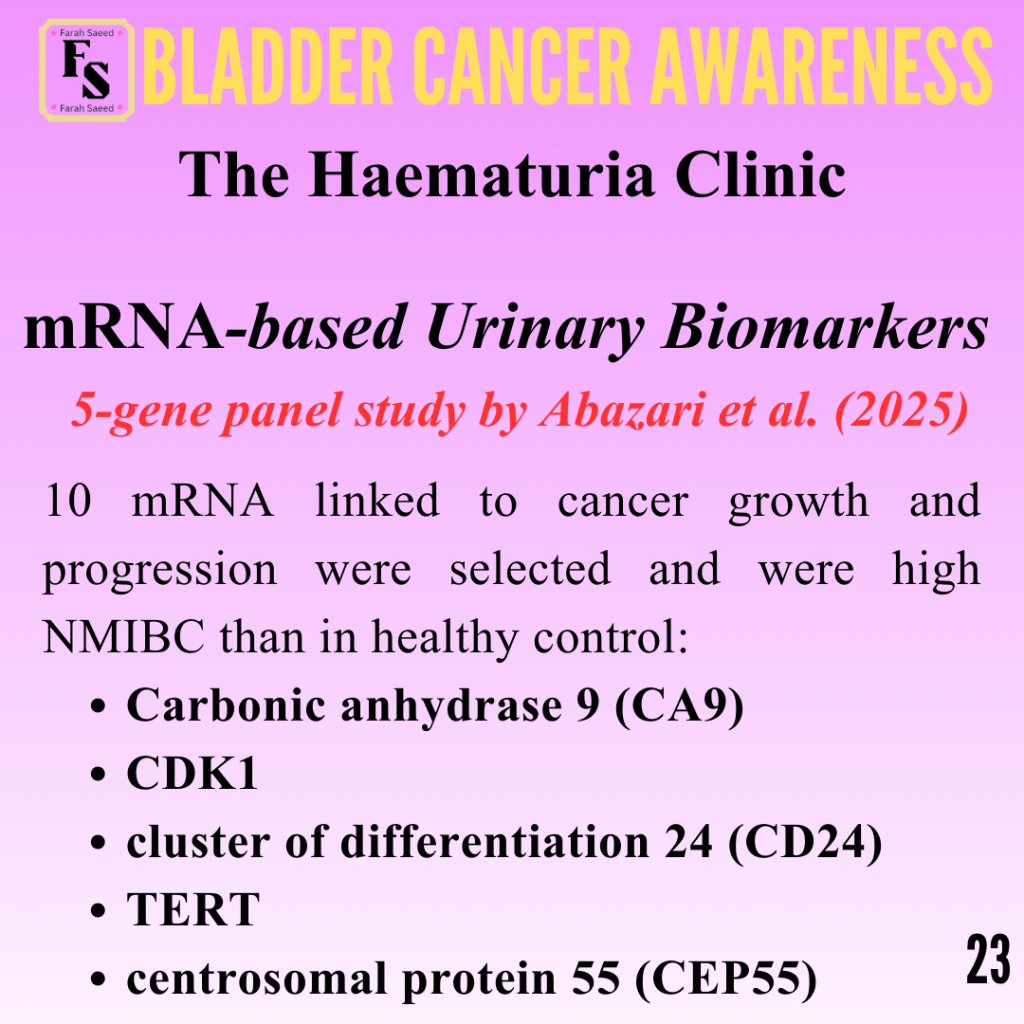
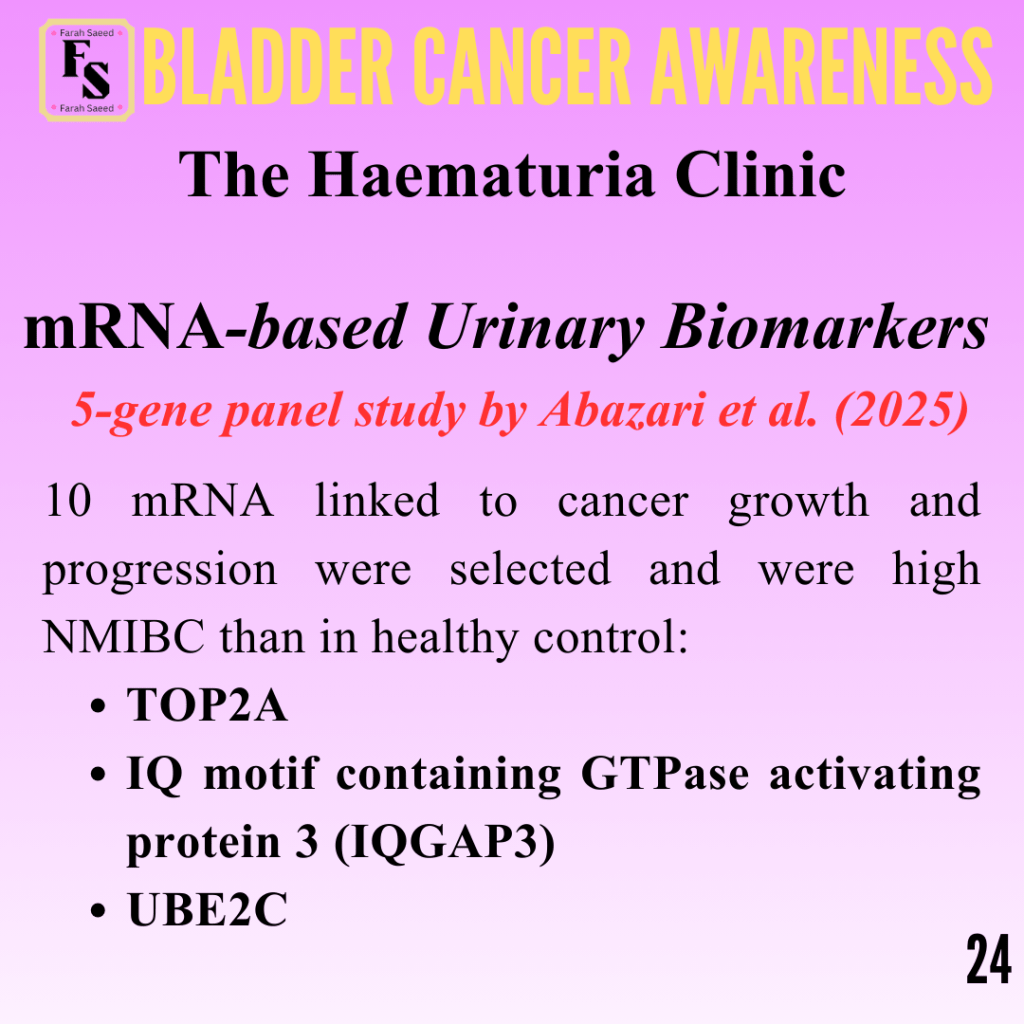
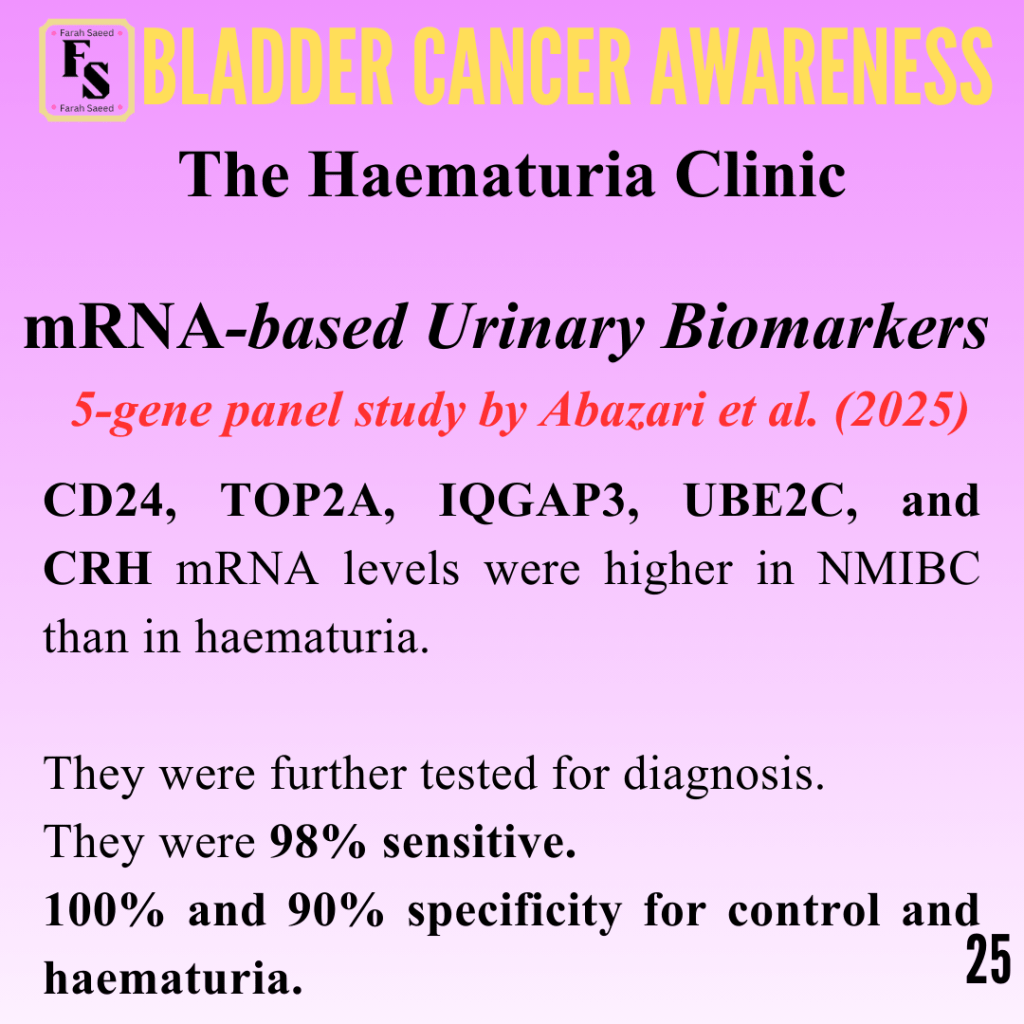
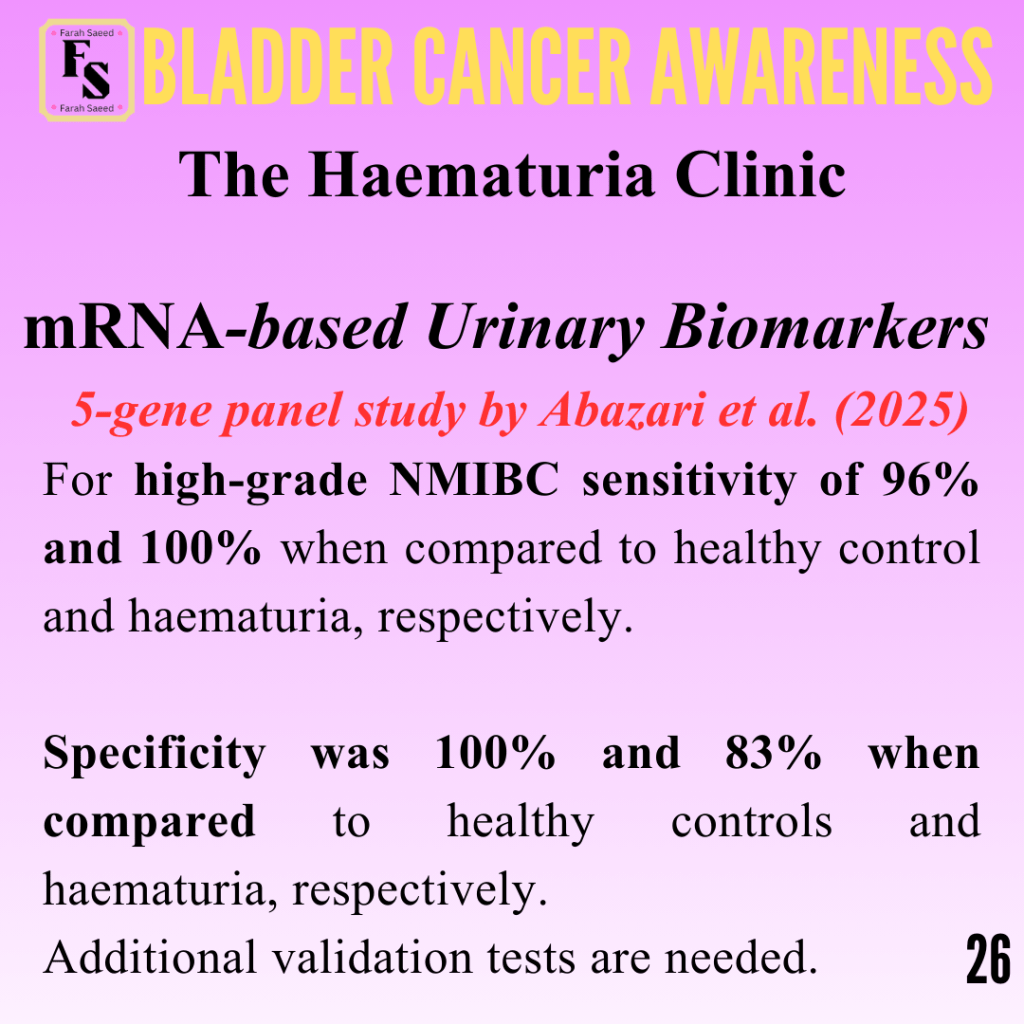
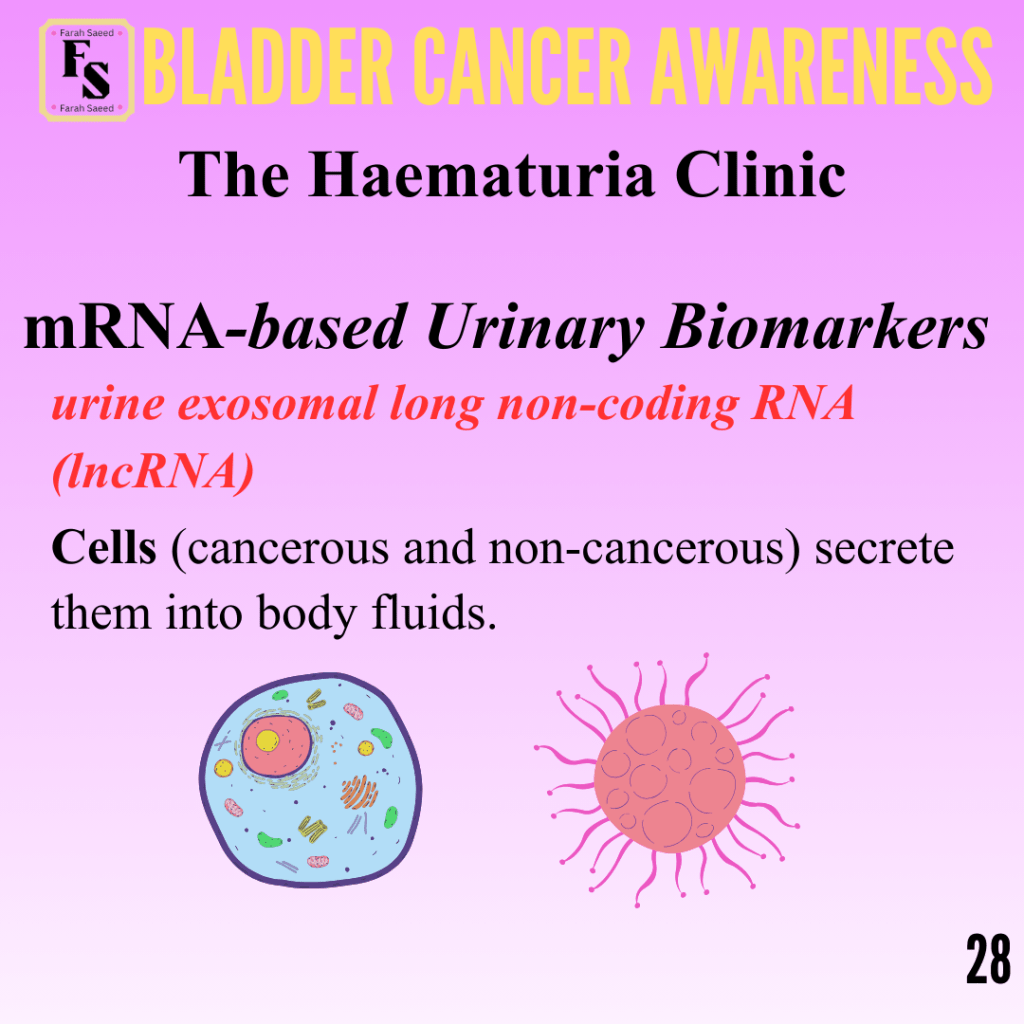
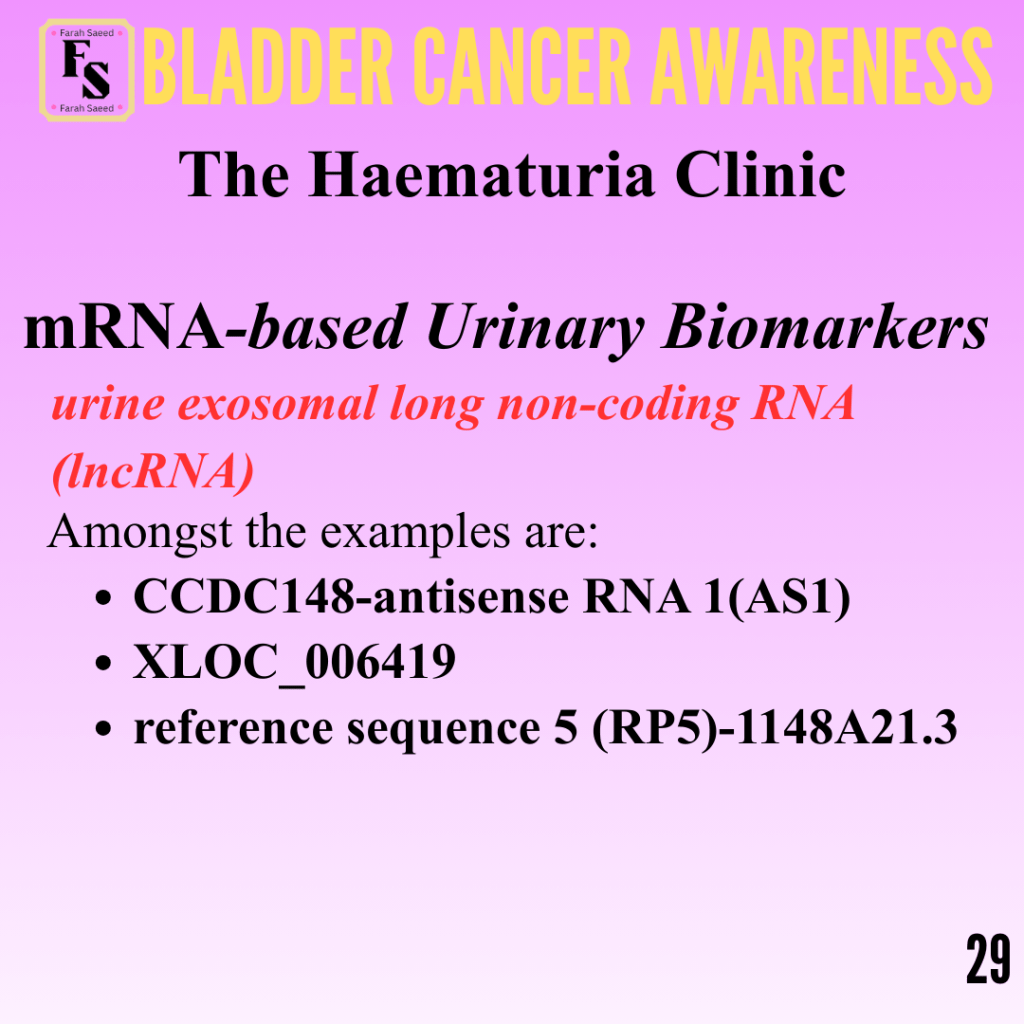
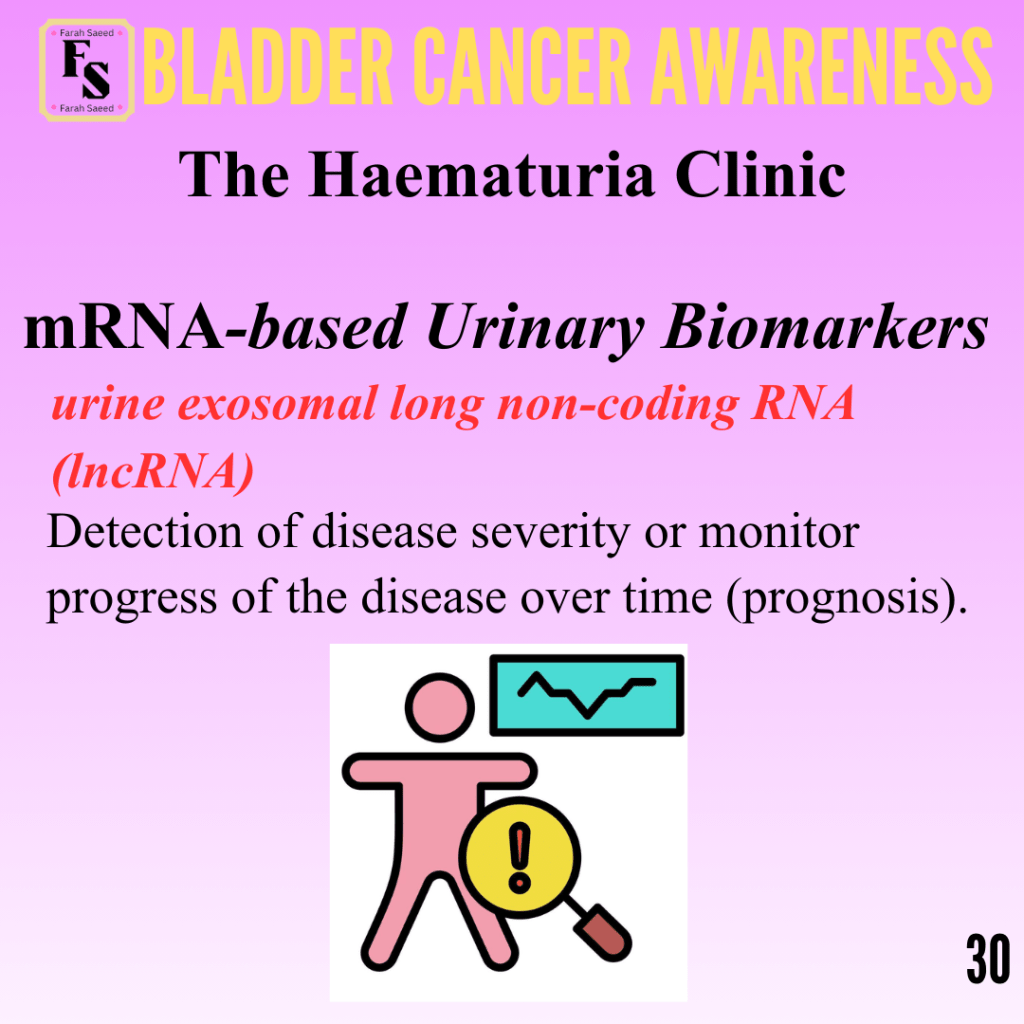
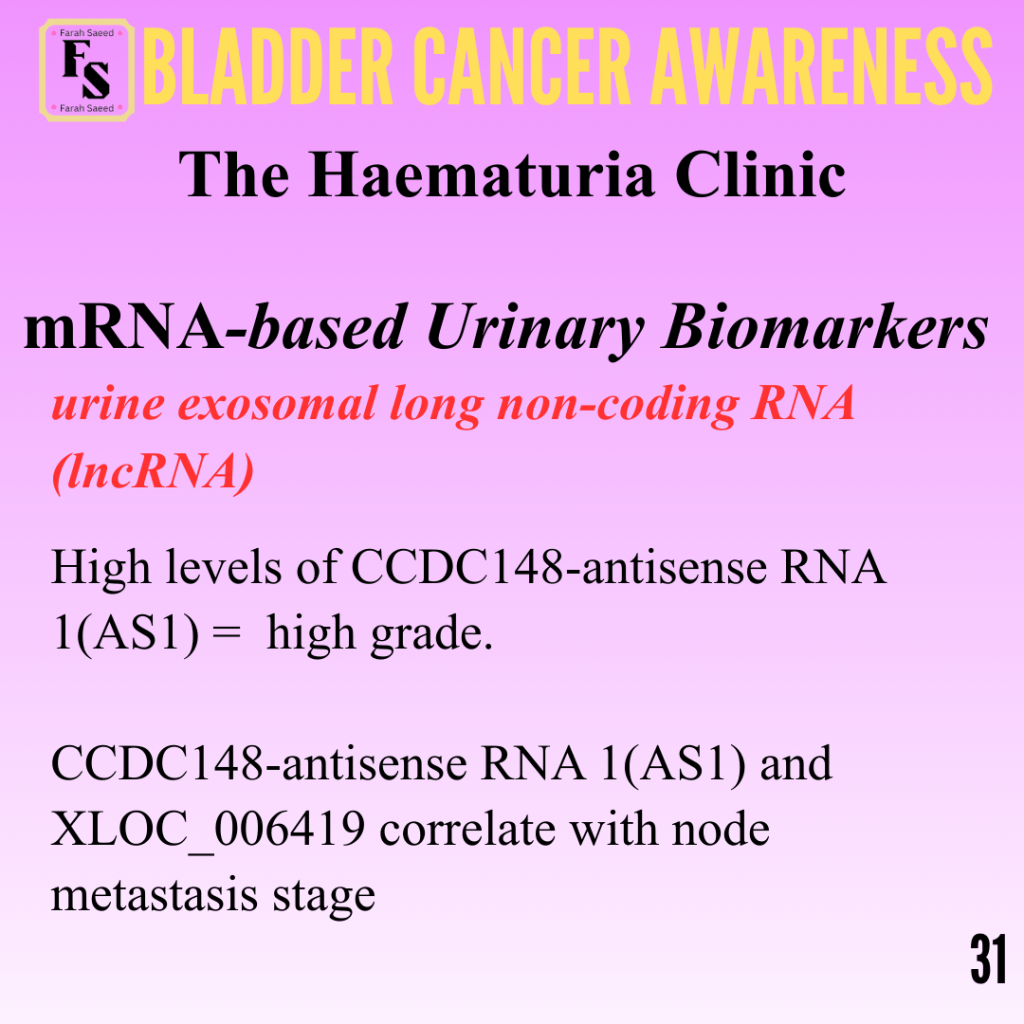
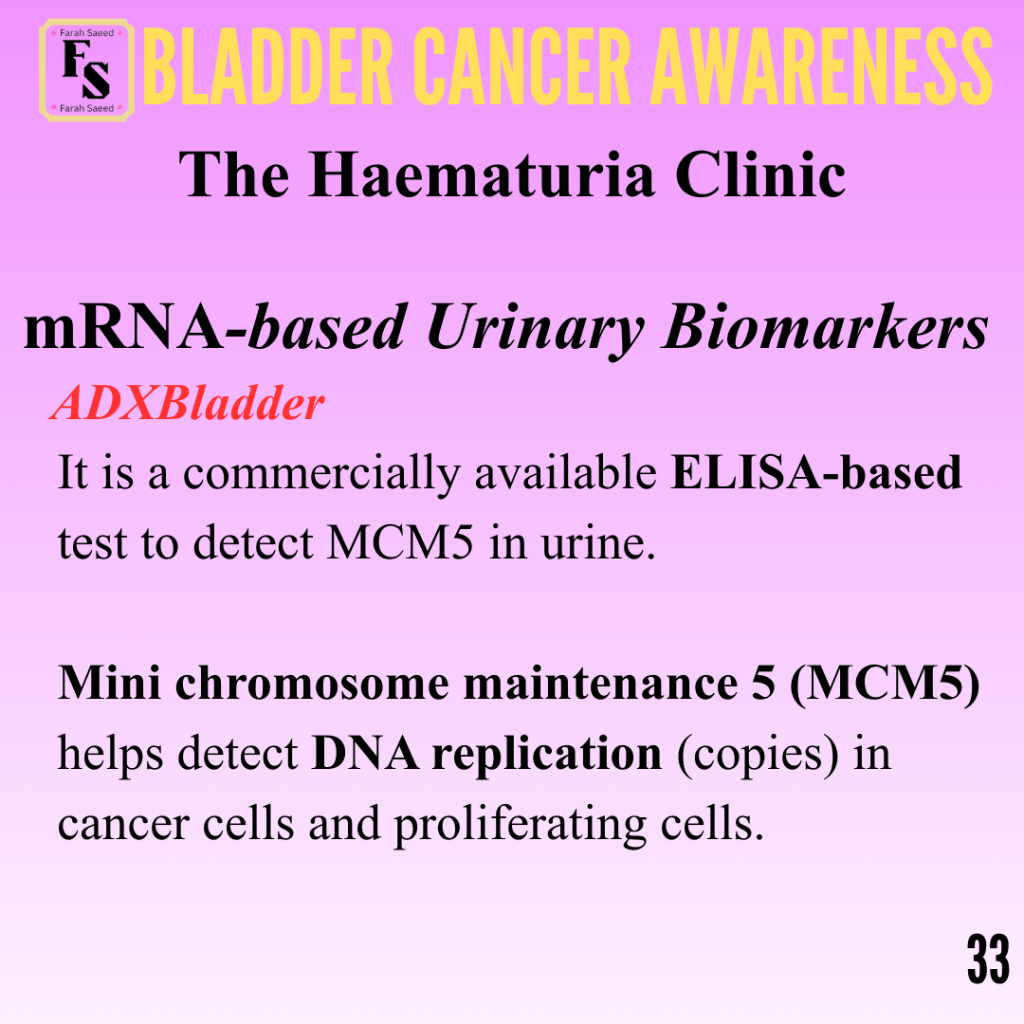
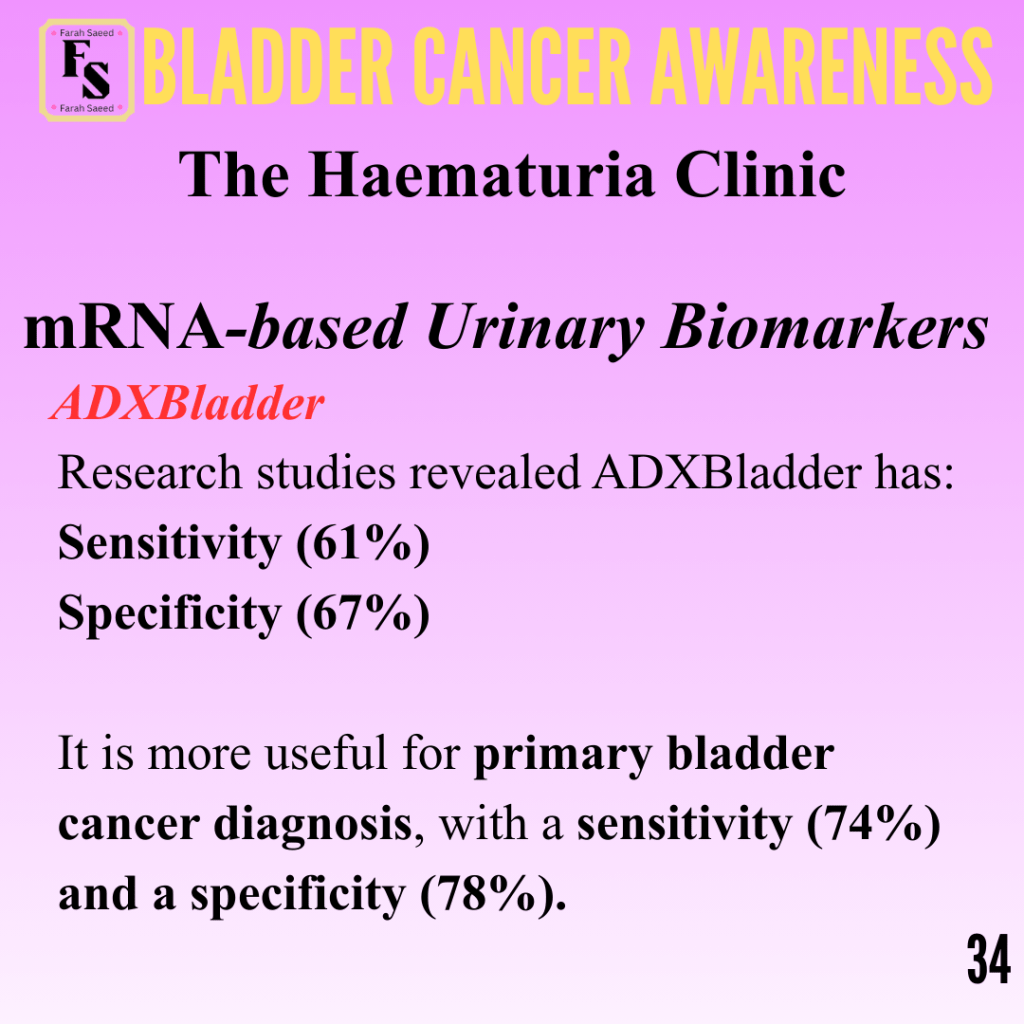
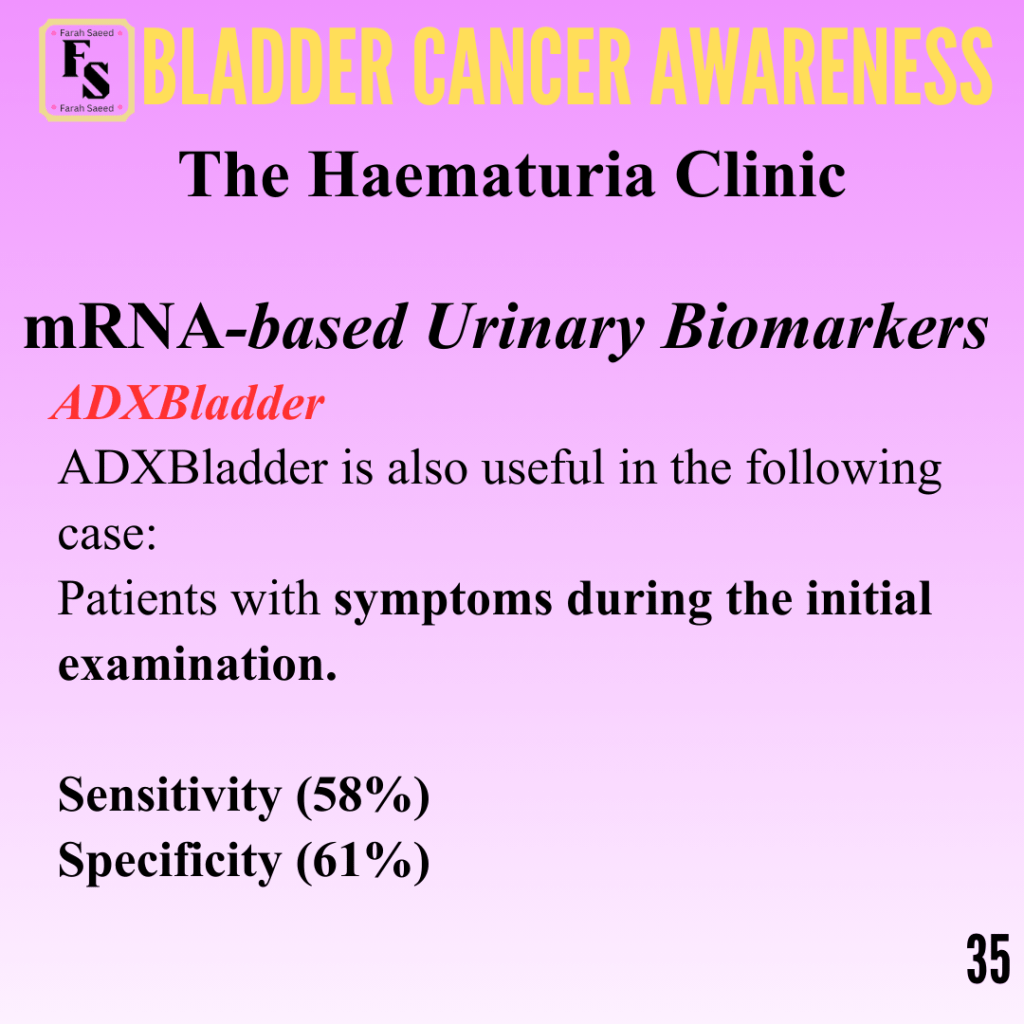
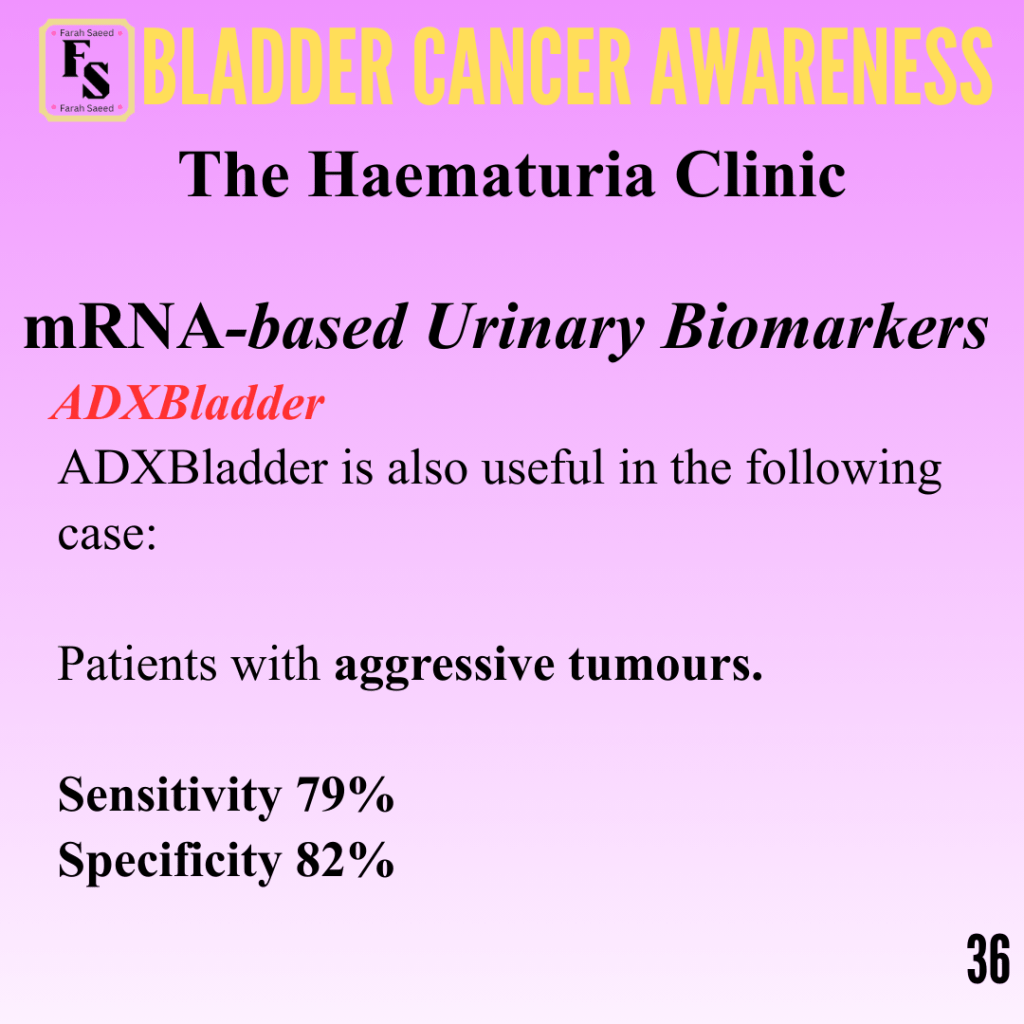
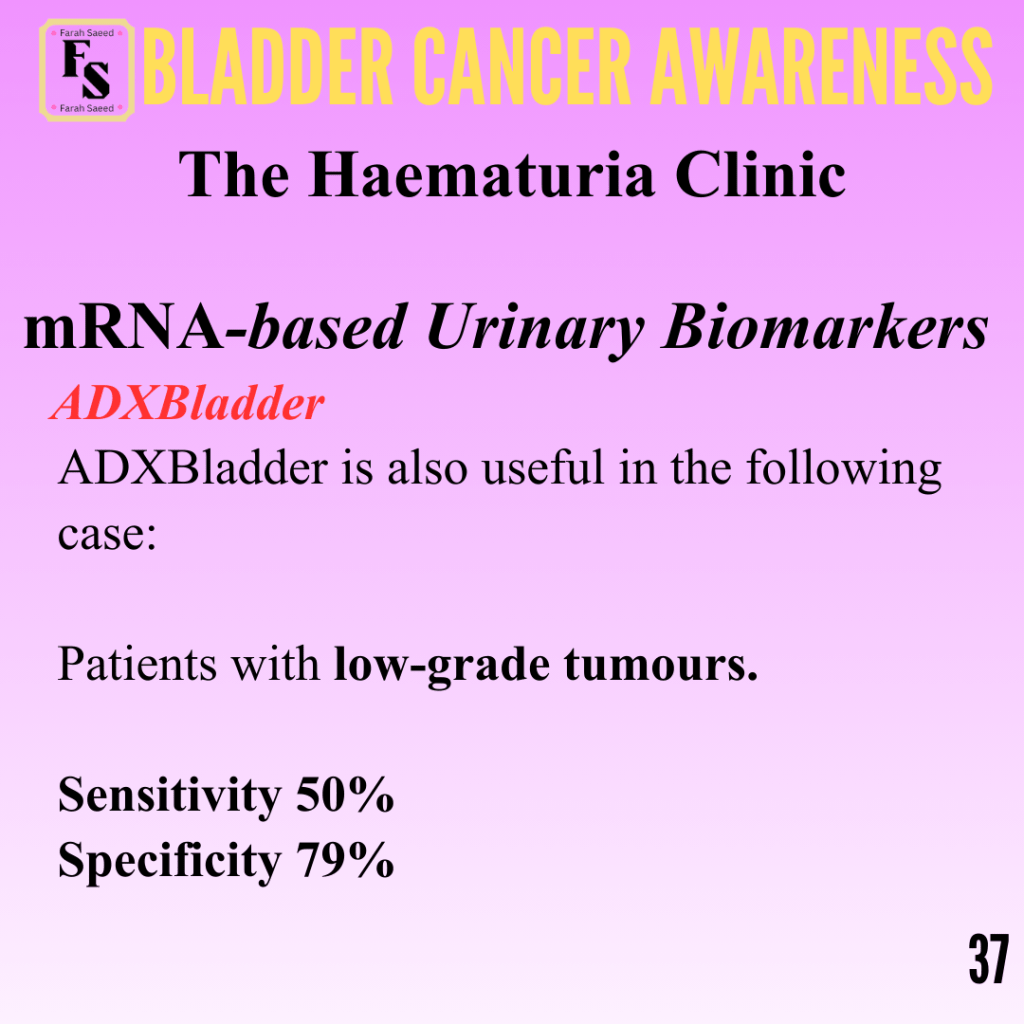
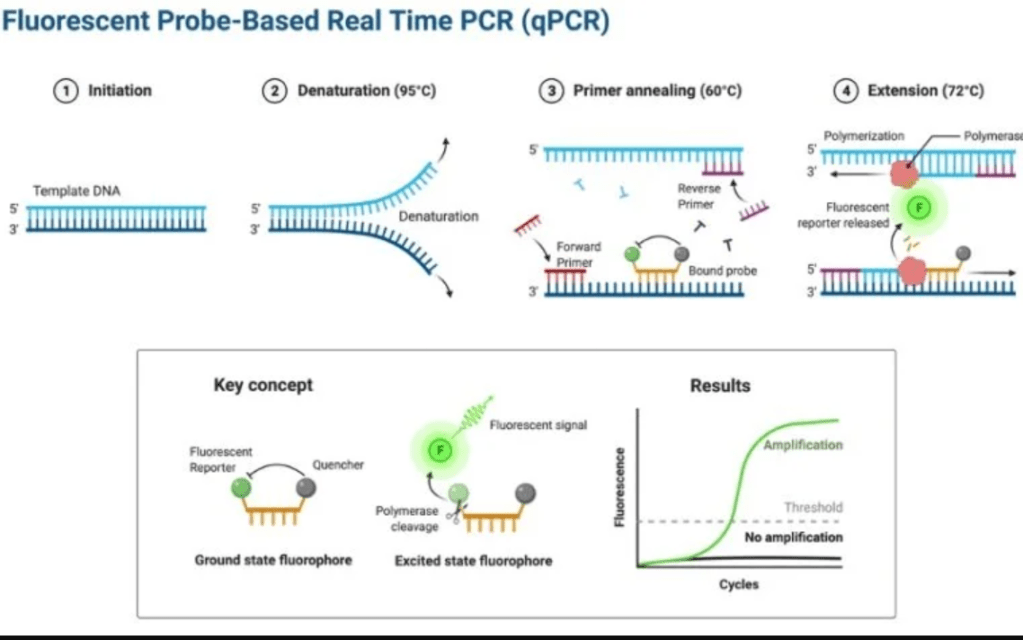
mRNA-based Urinary Biomarkers
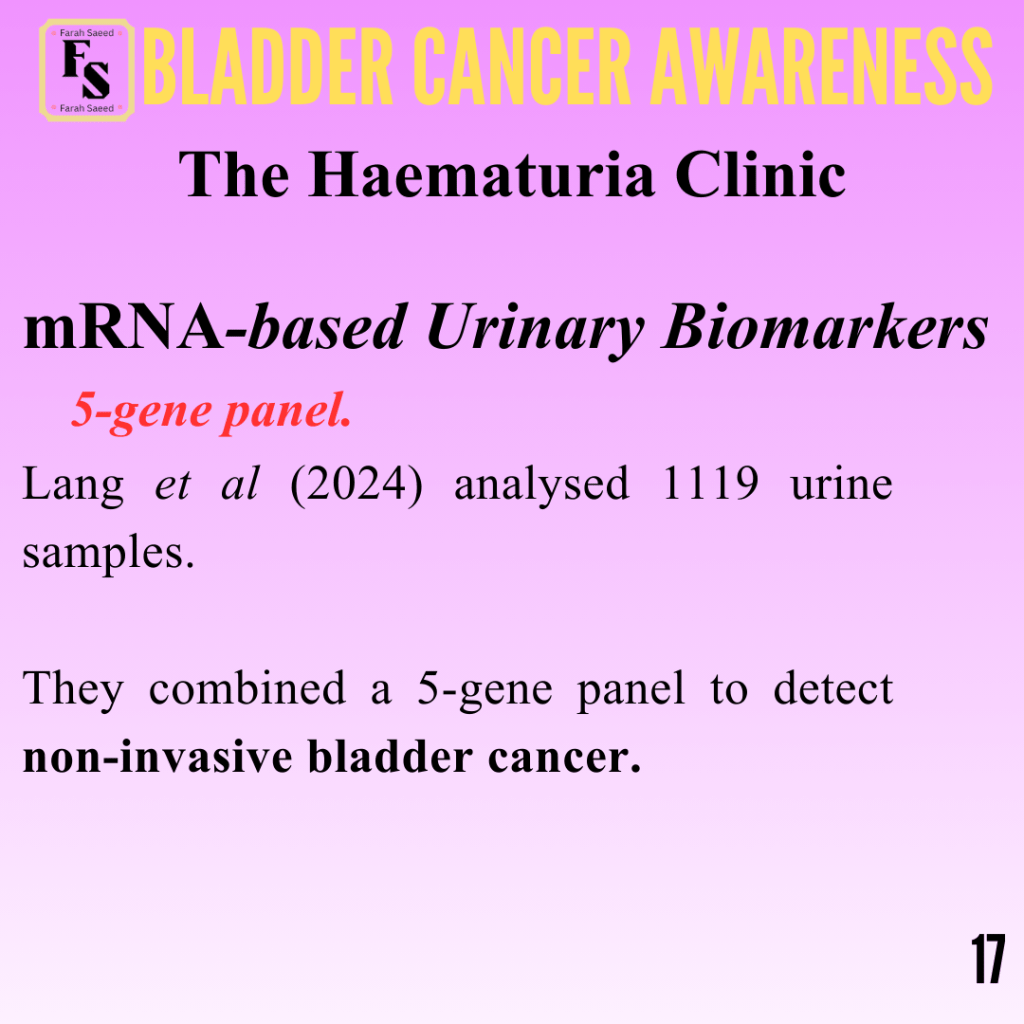
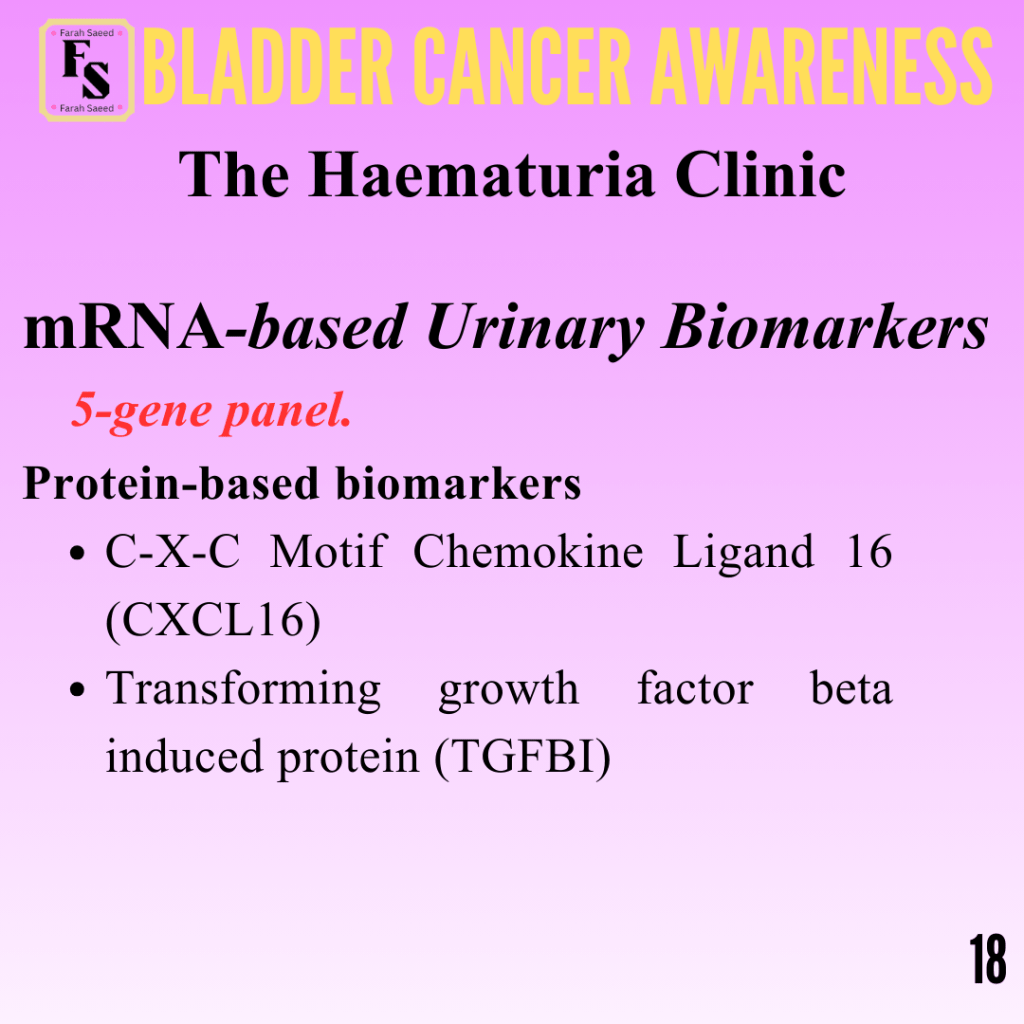
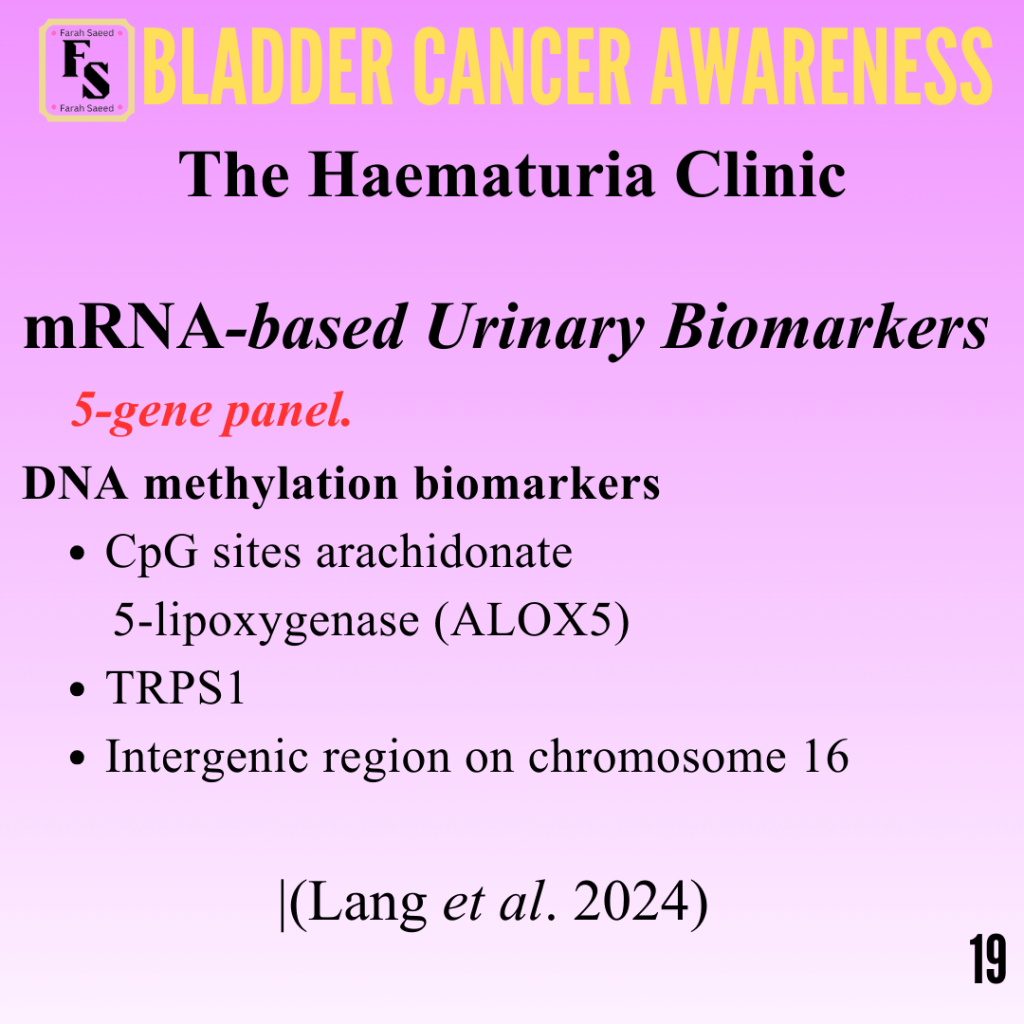
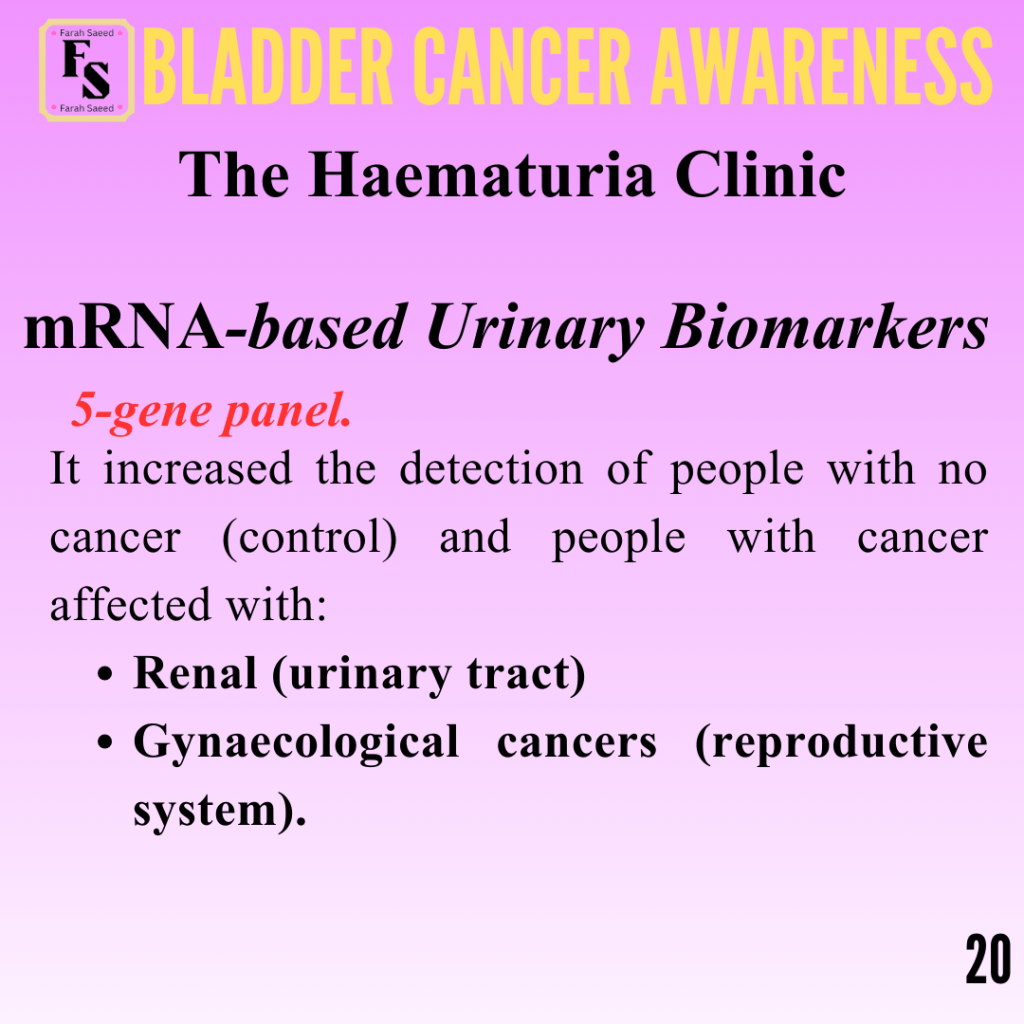
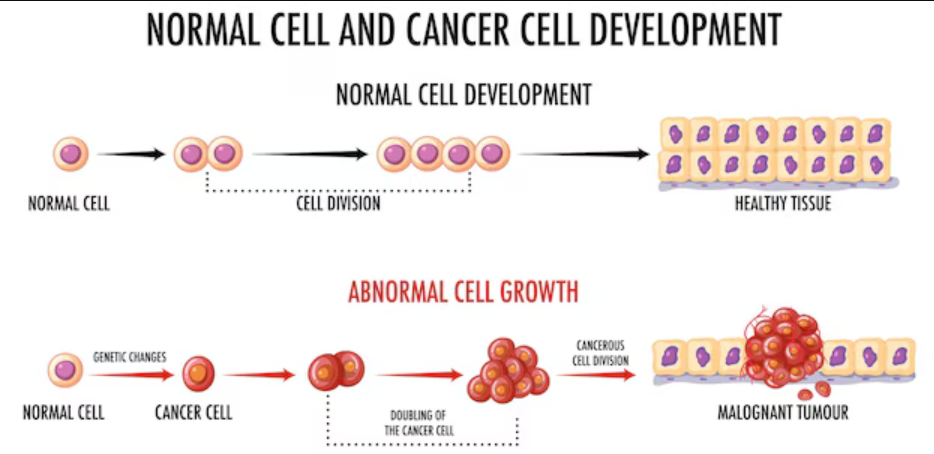
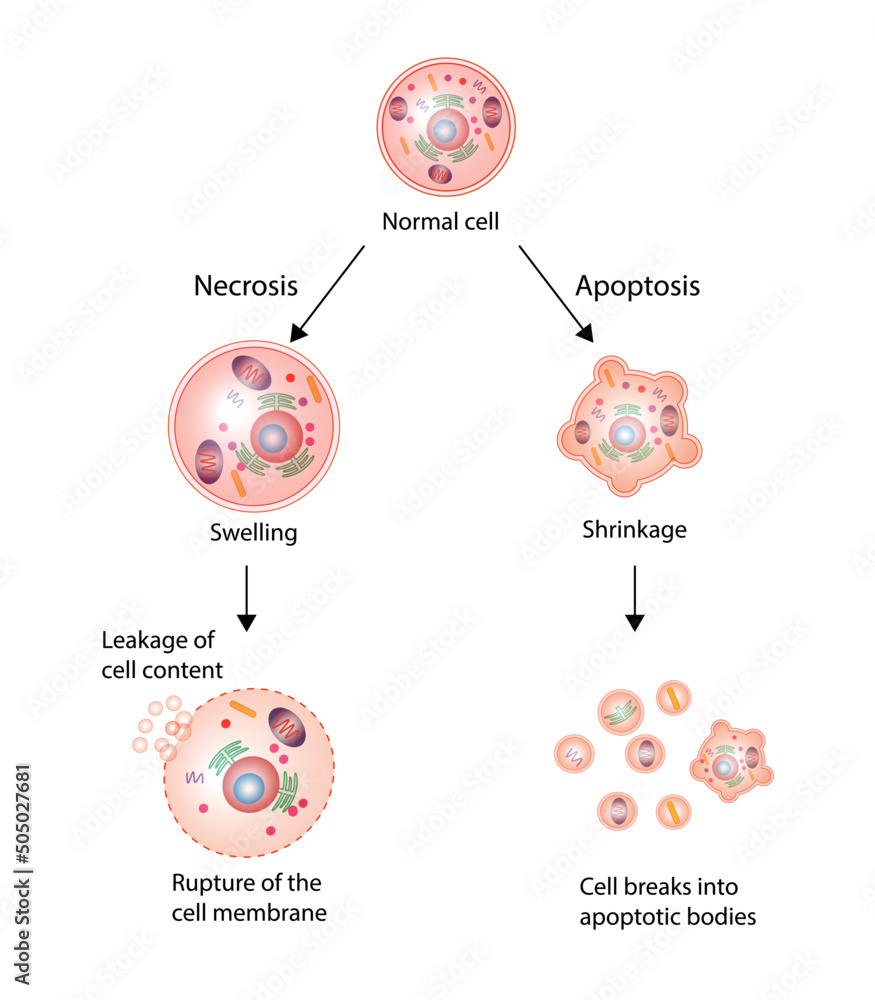
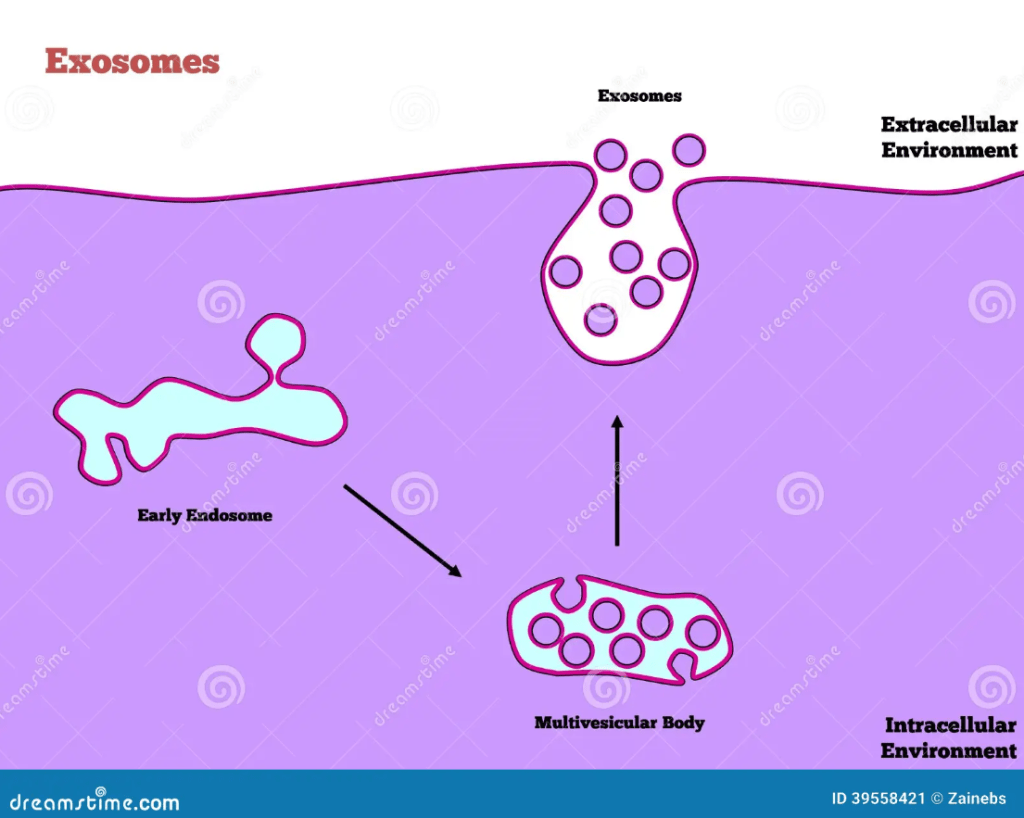
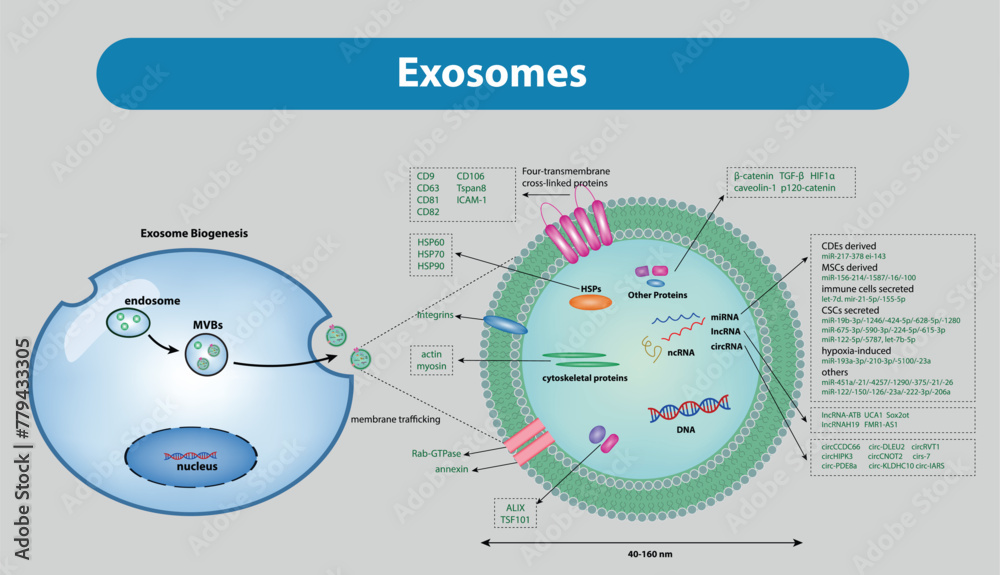
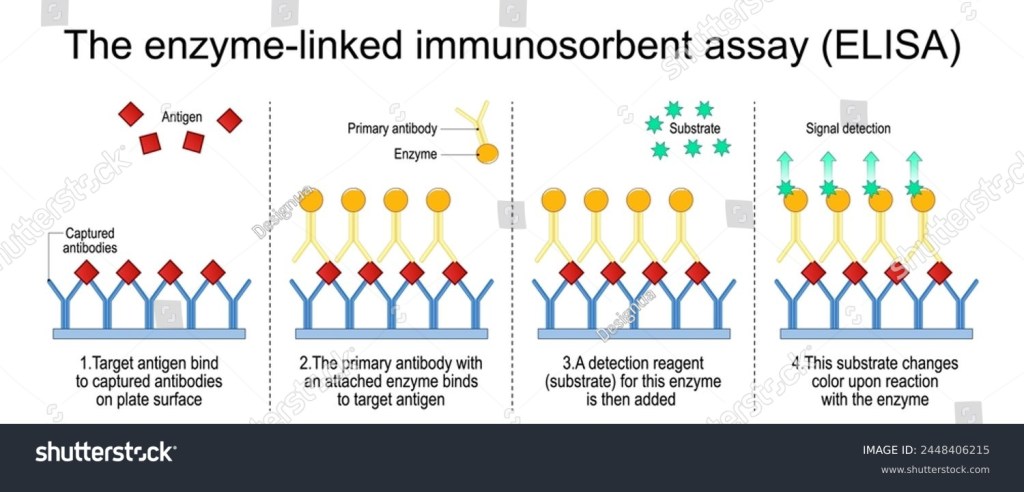
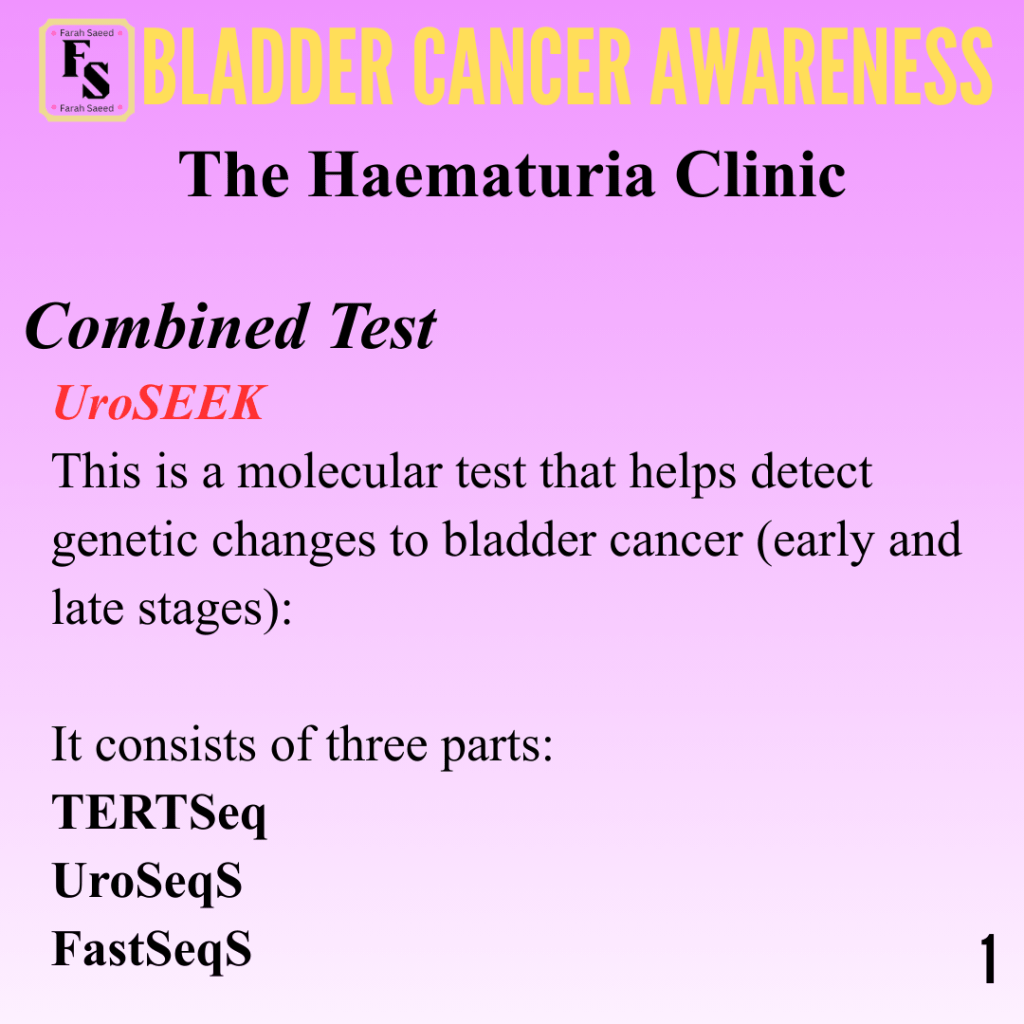
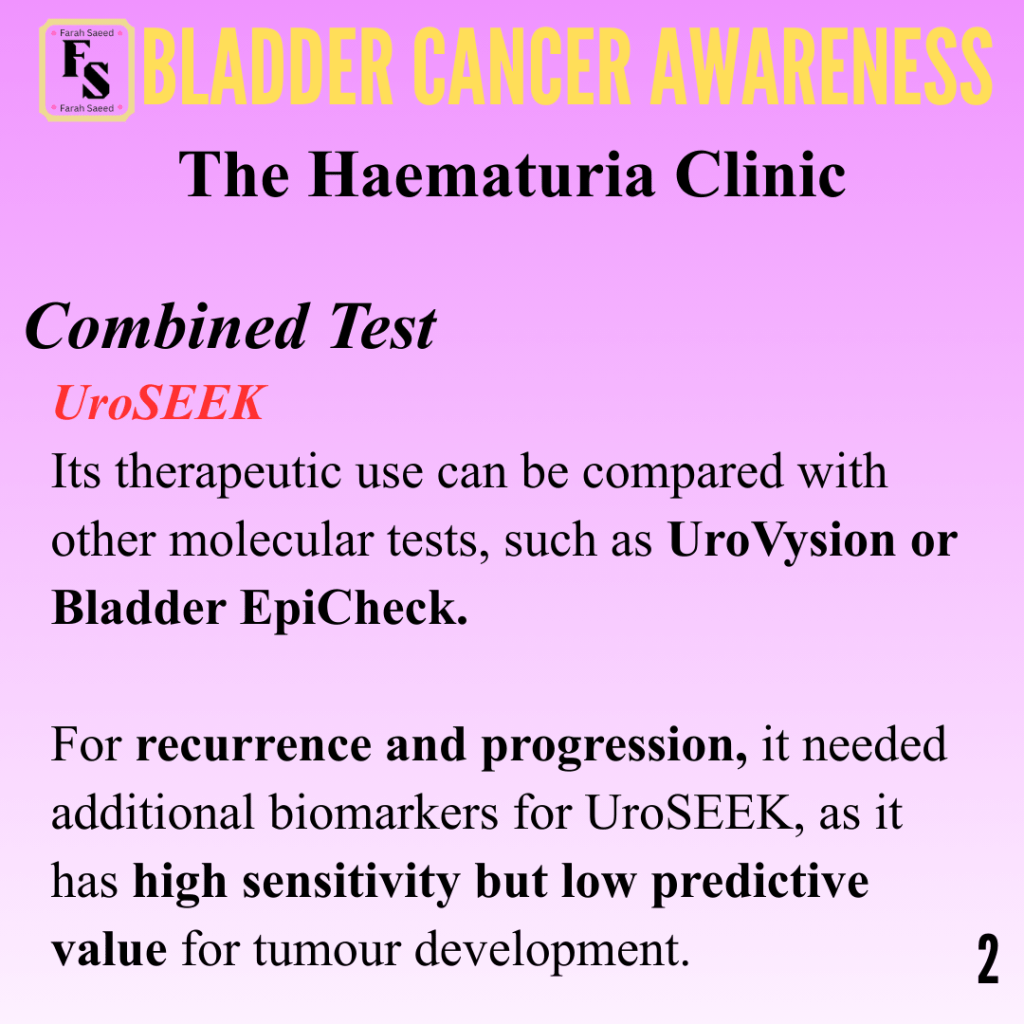
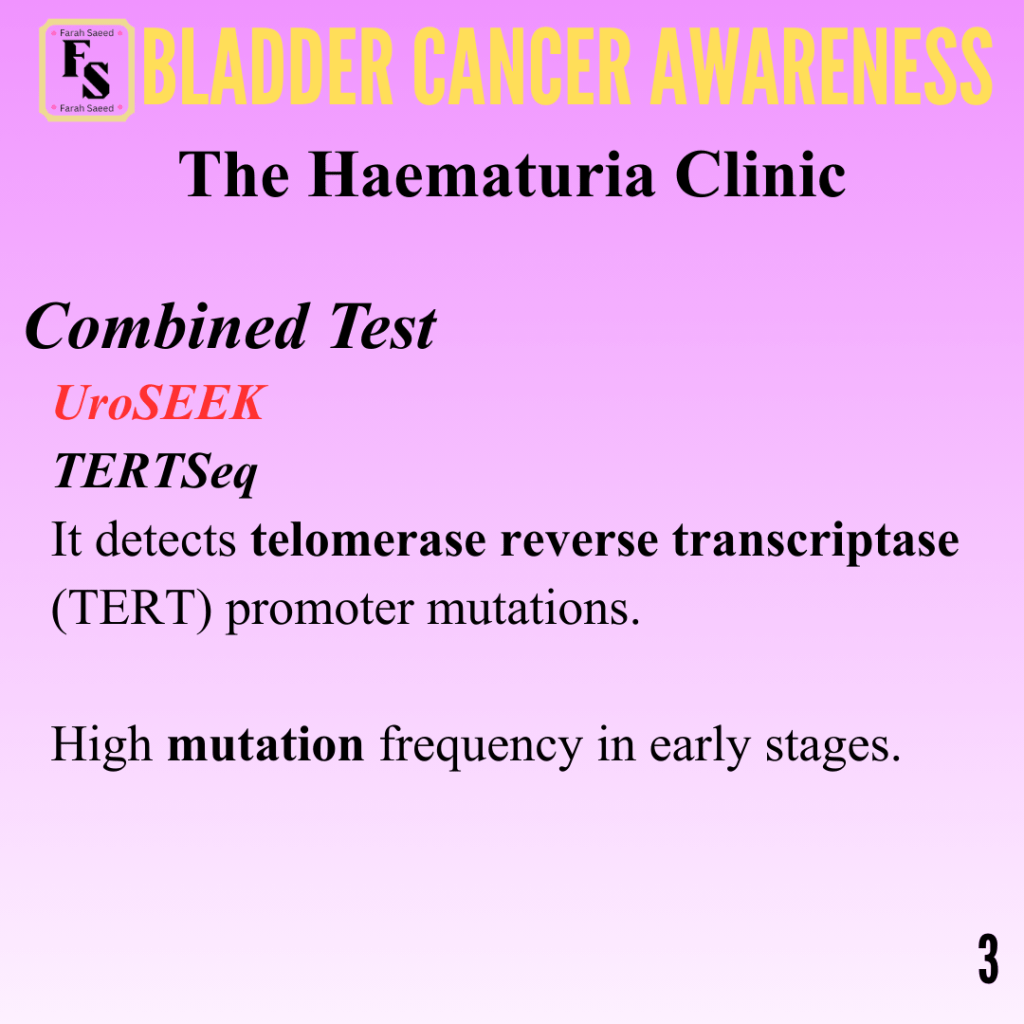
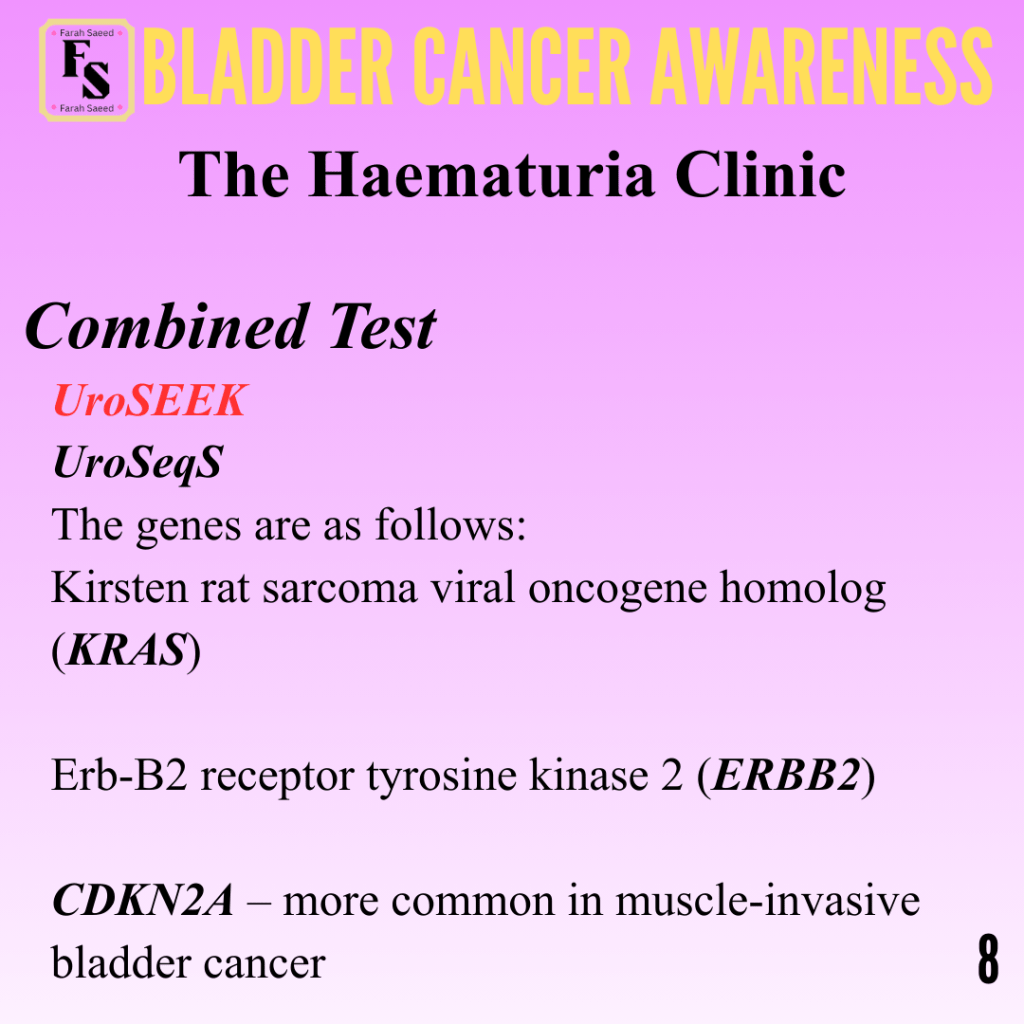
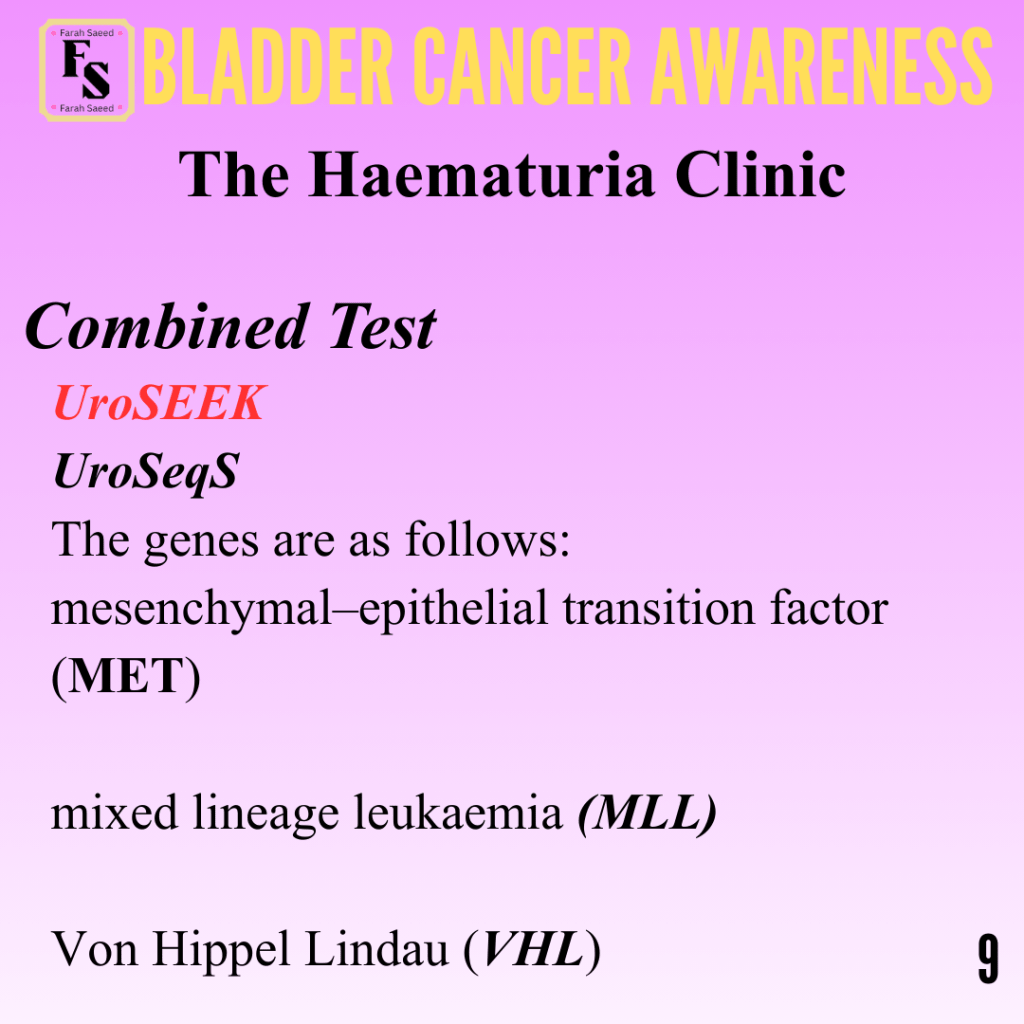
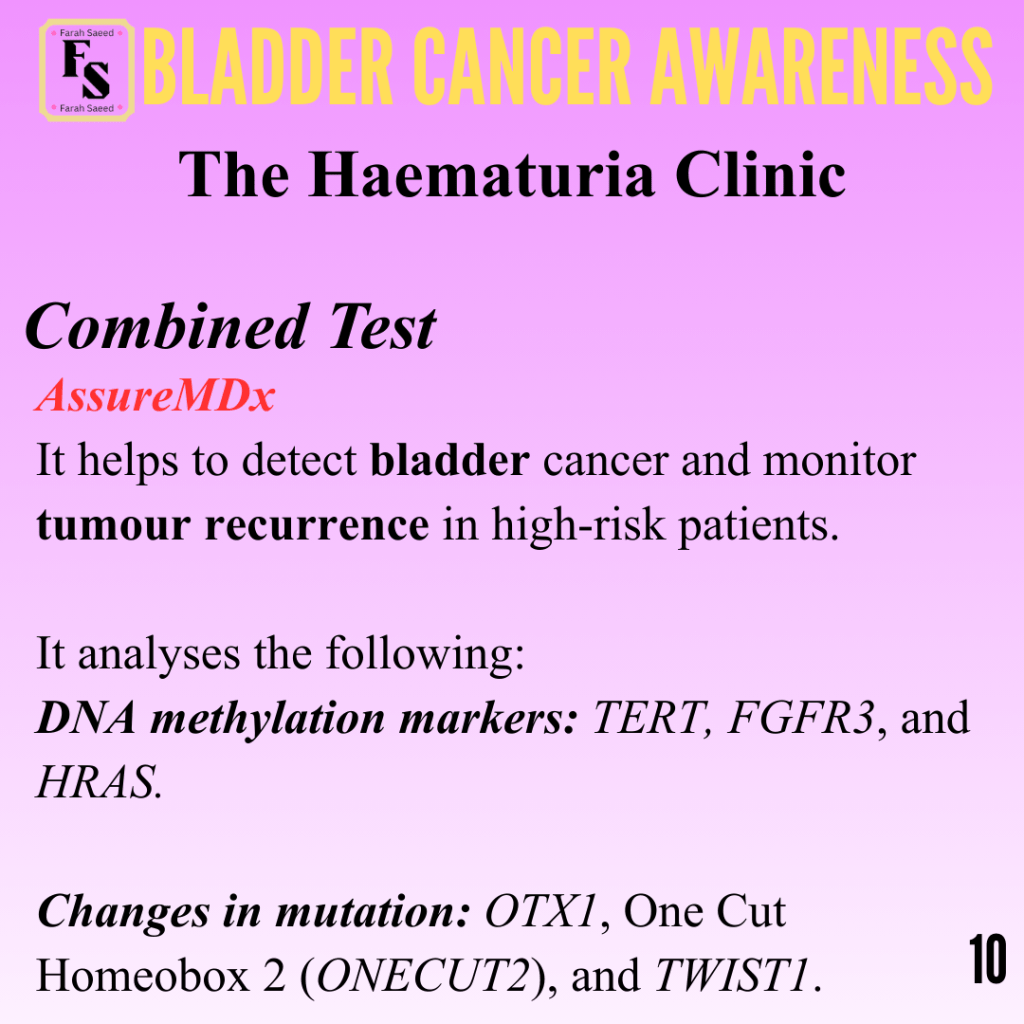
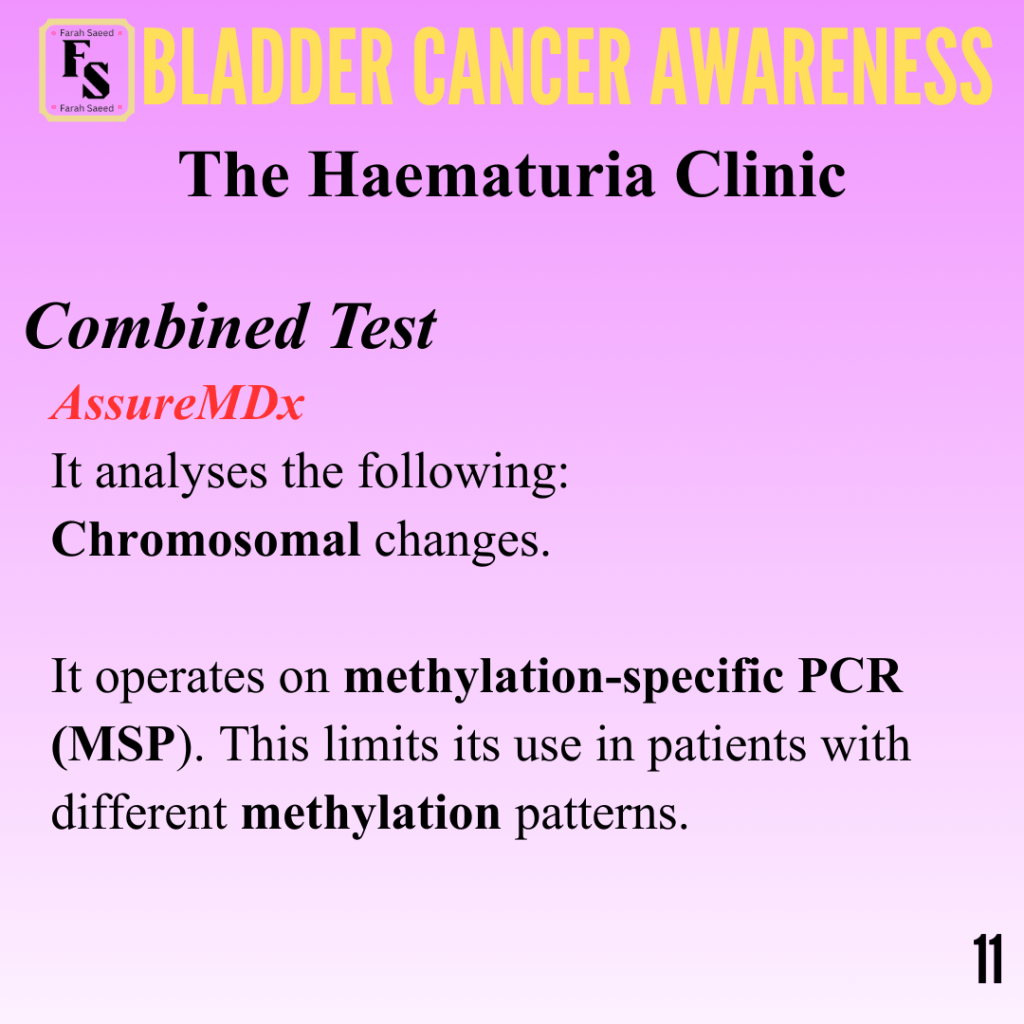
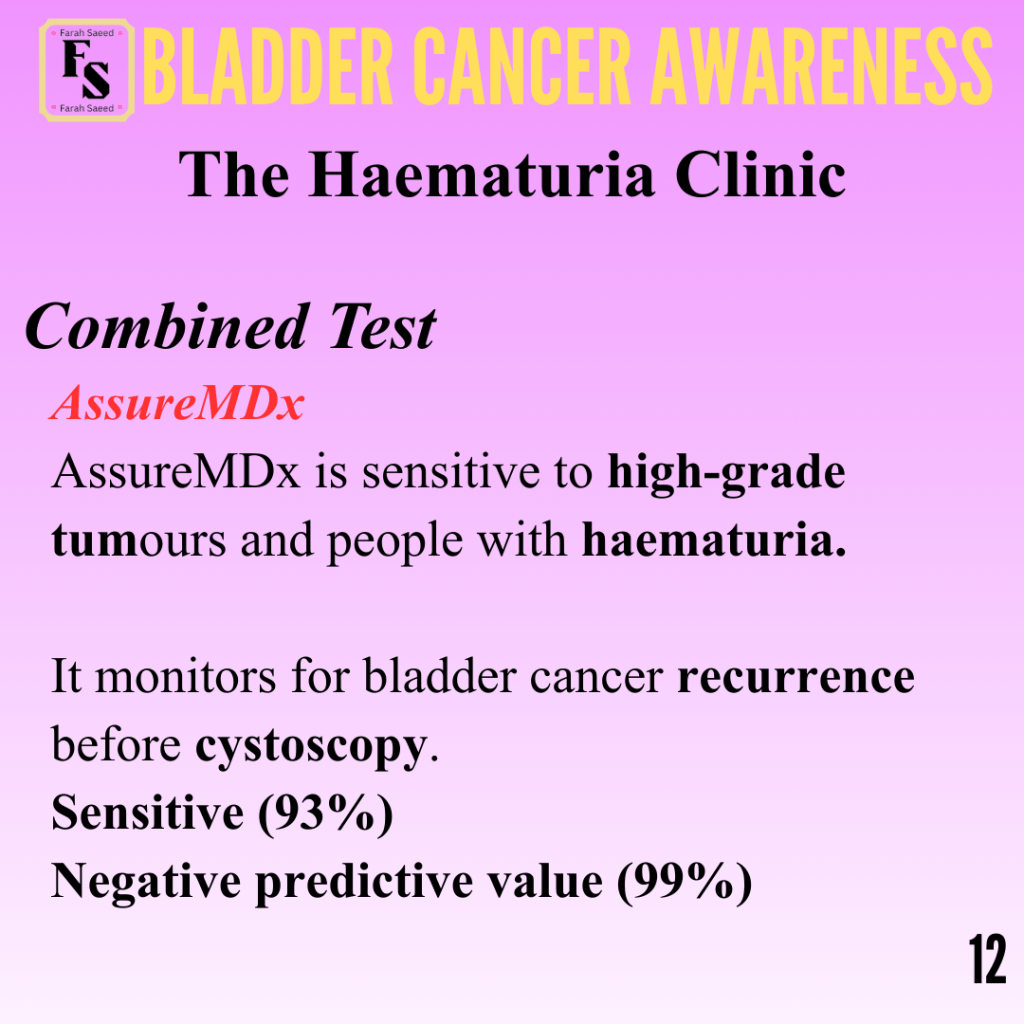
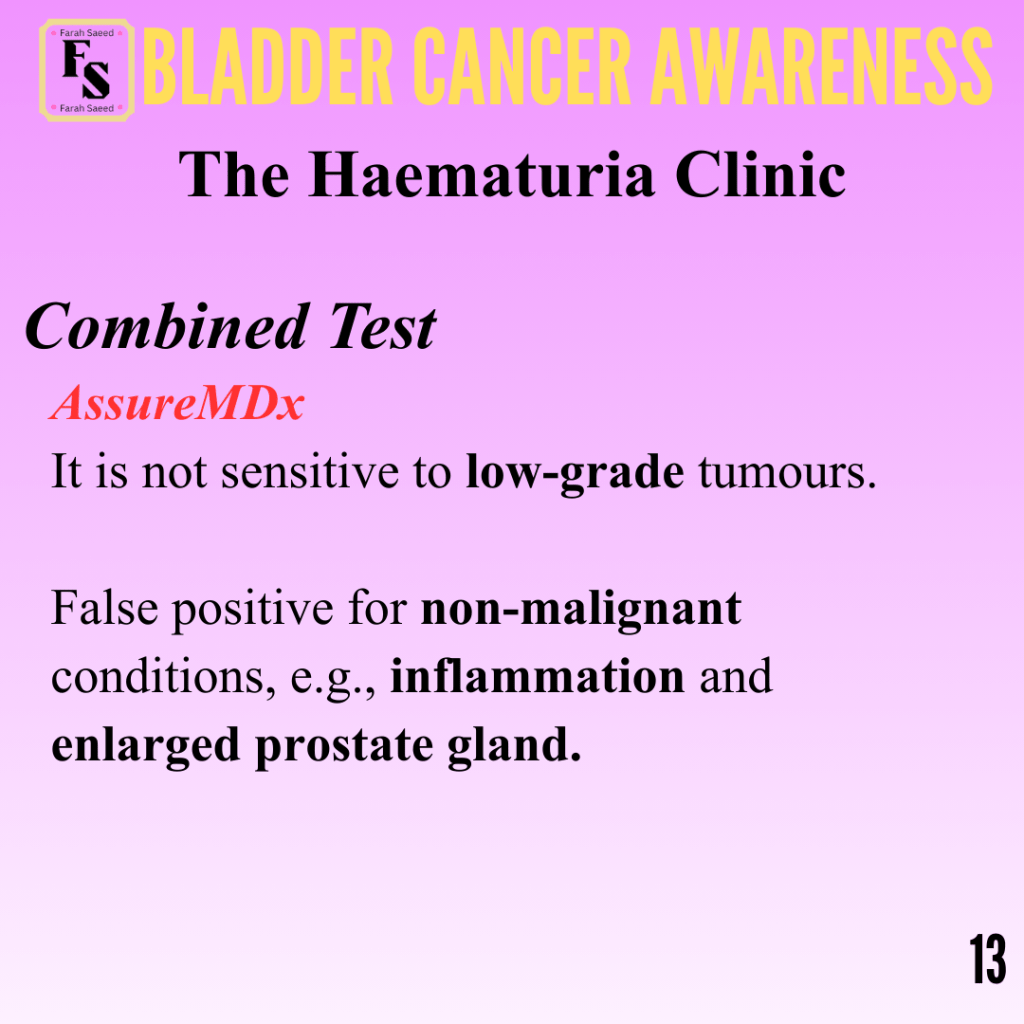
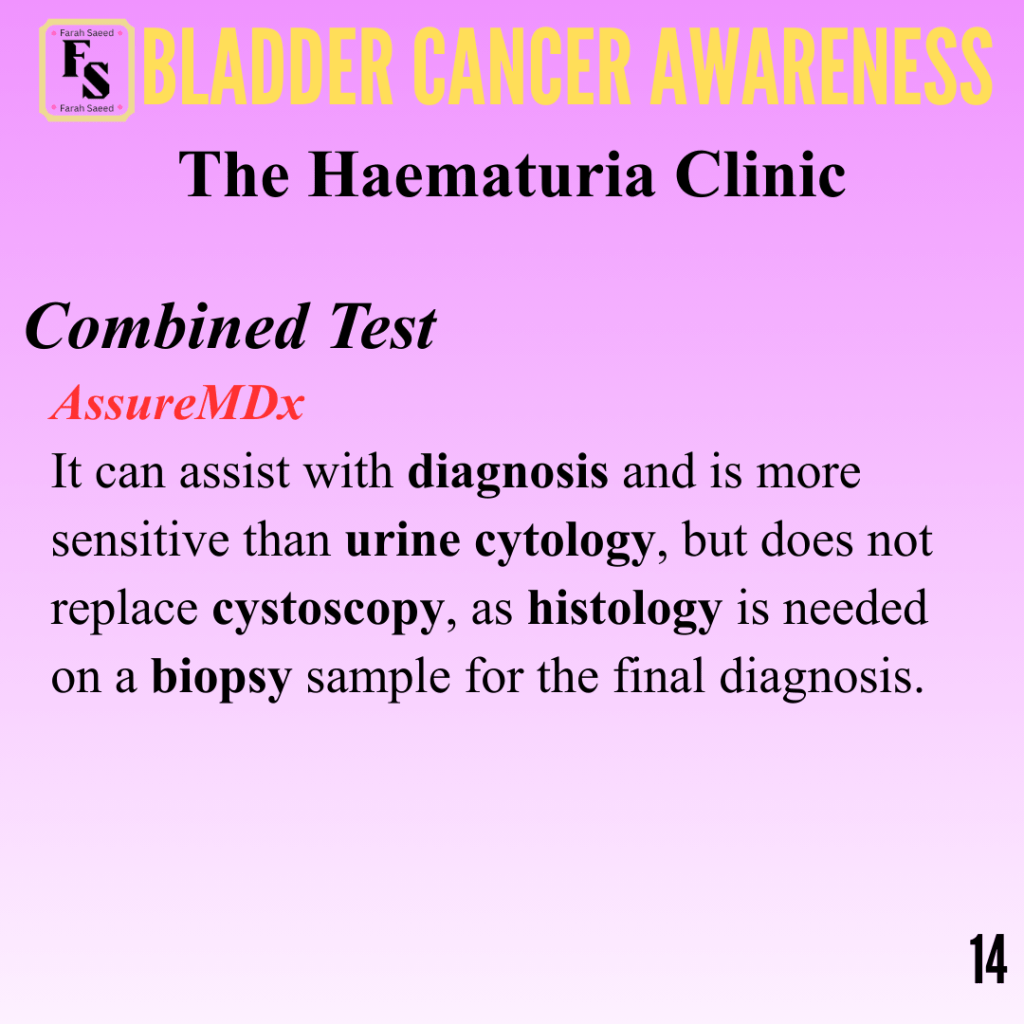
Combined test Urinary Biomarkers
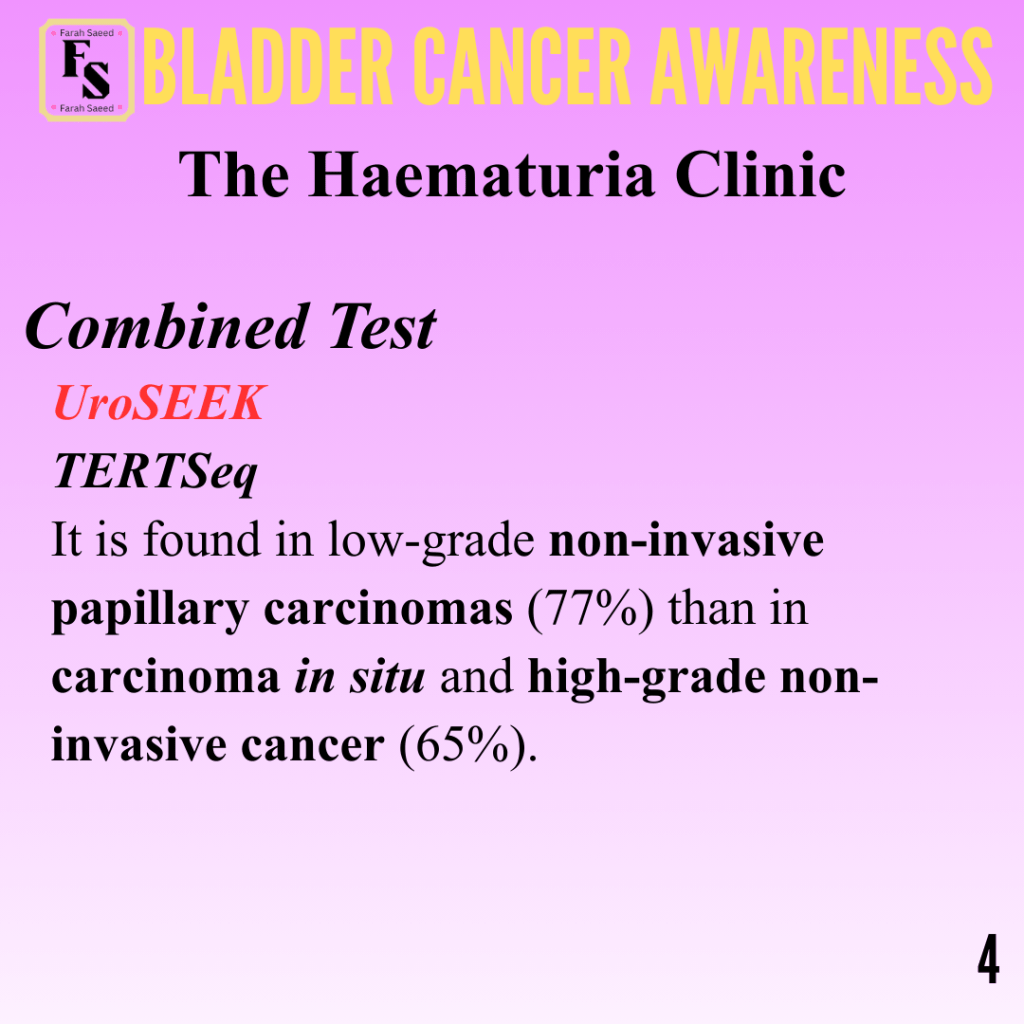
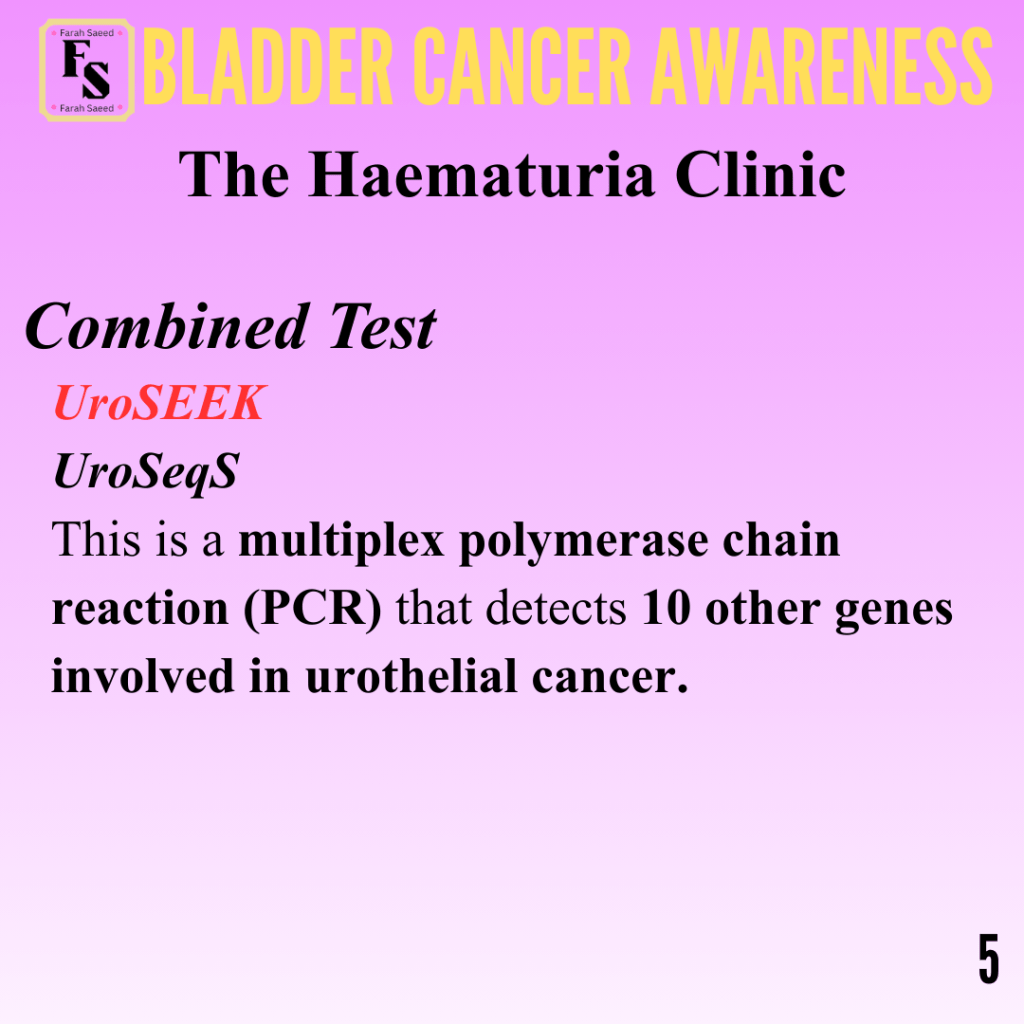
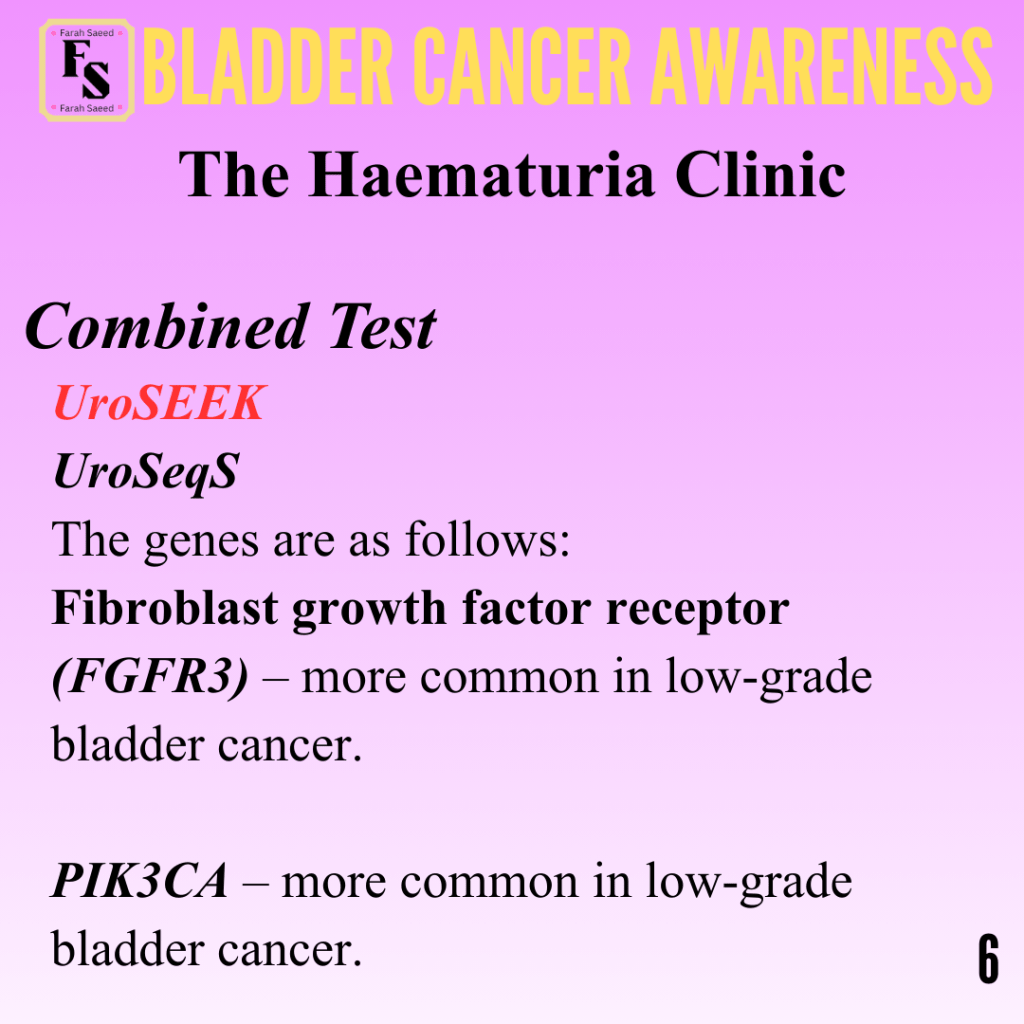
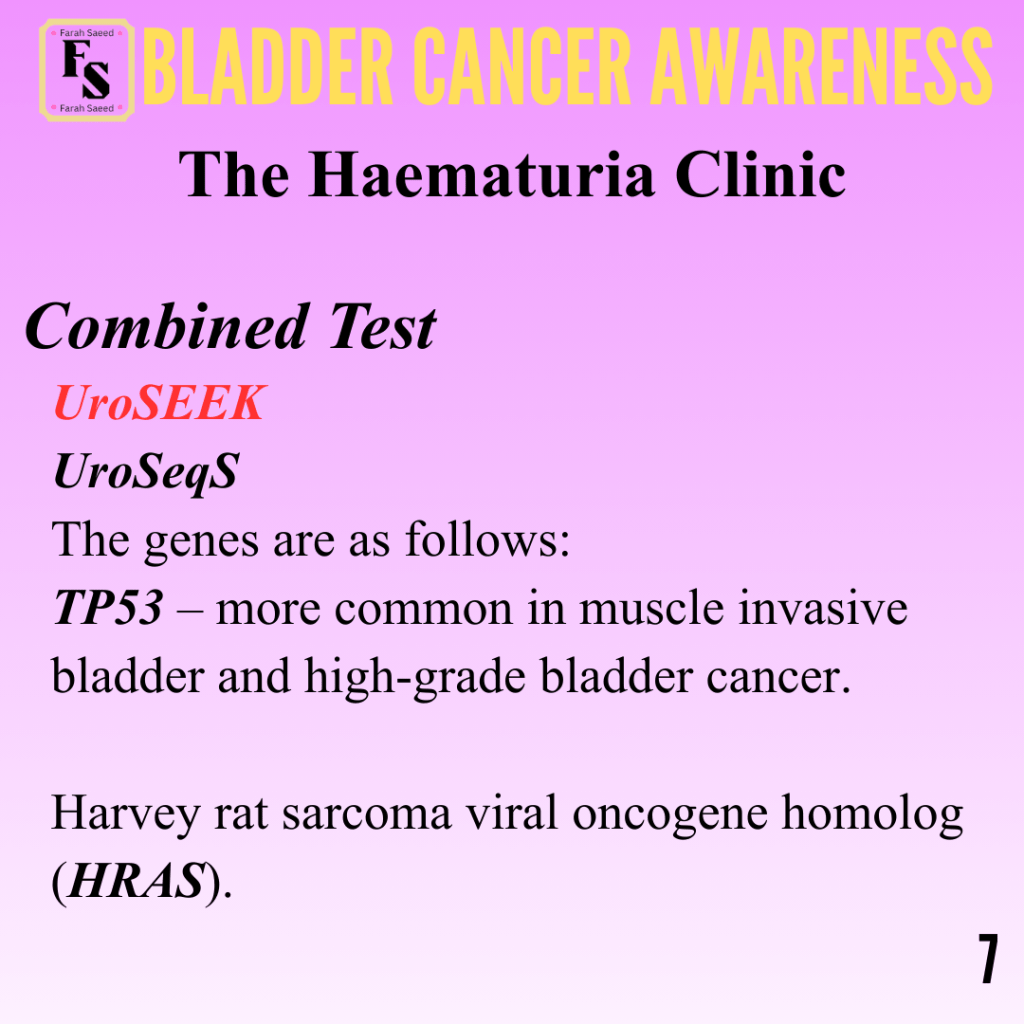
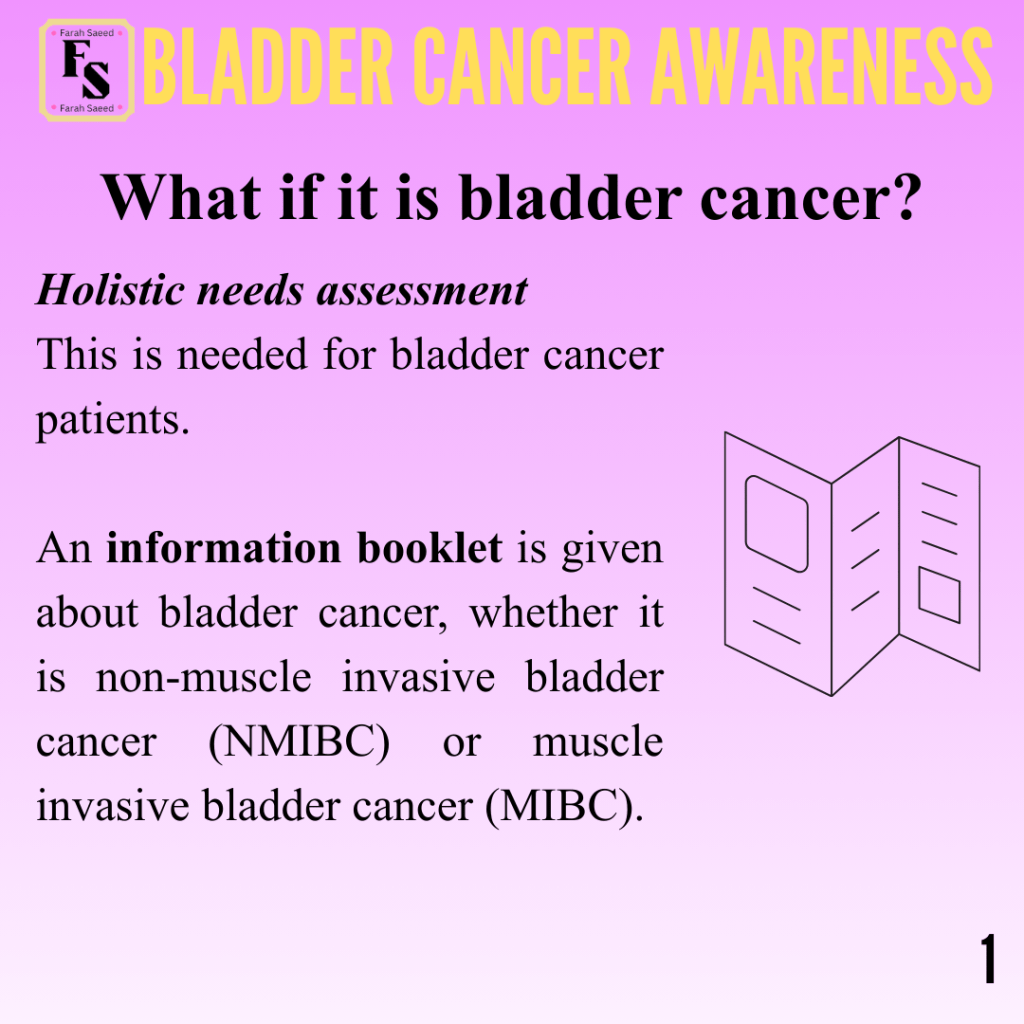
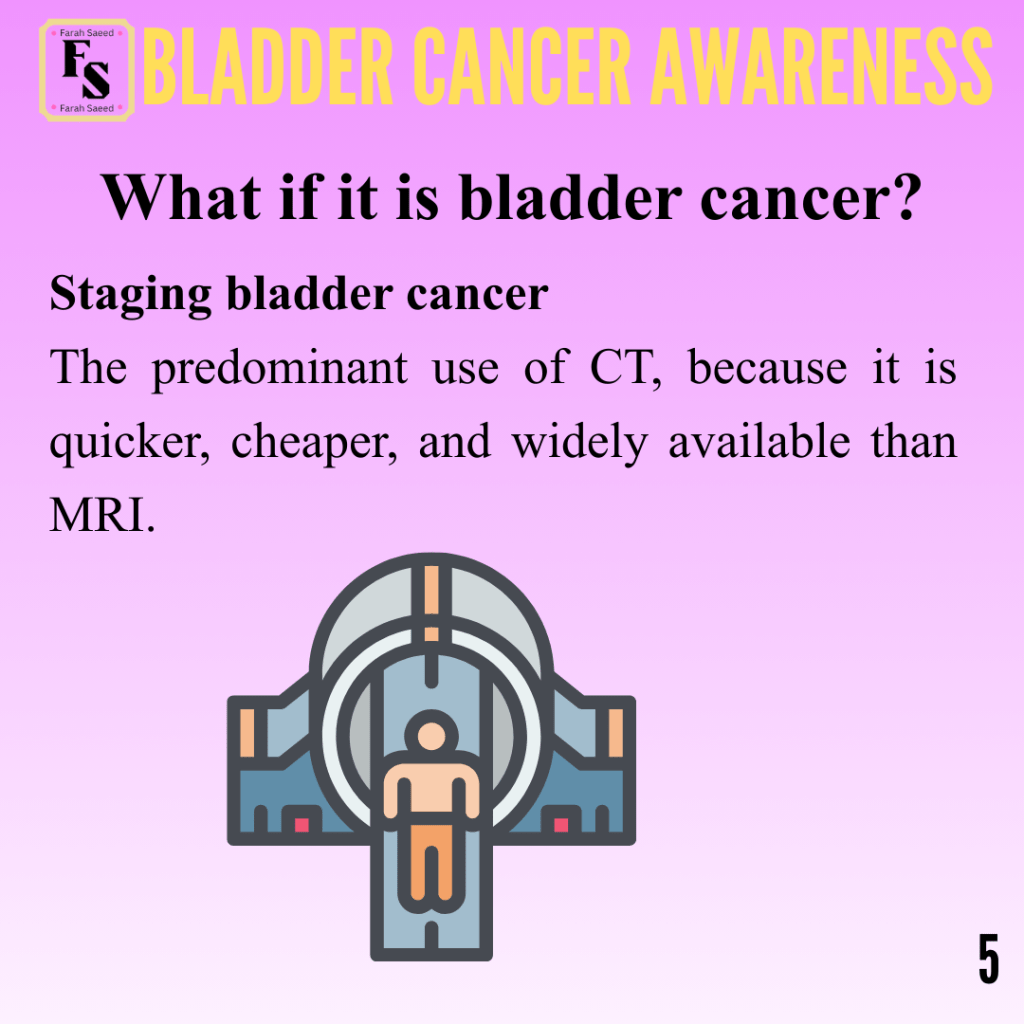
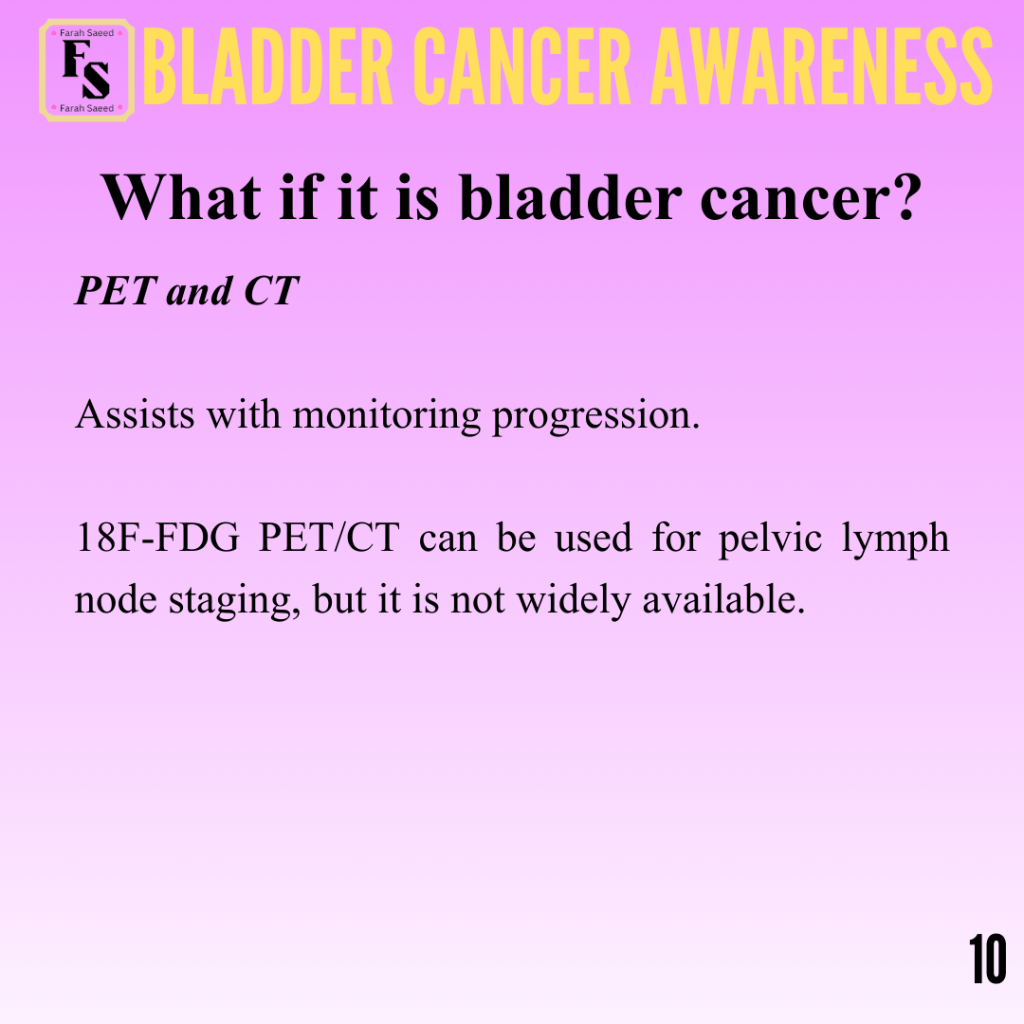
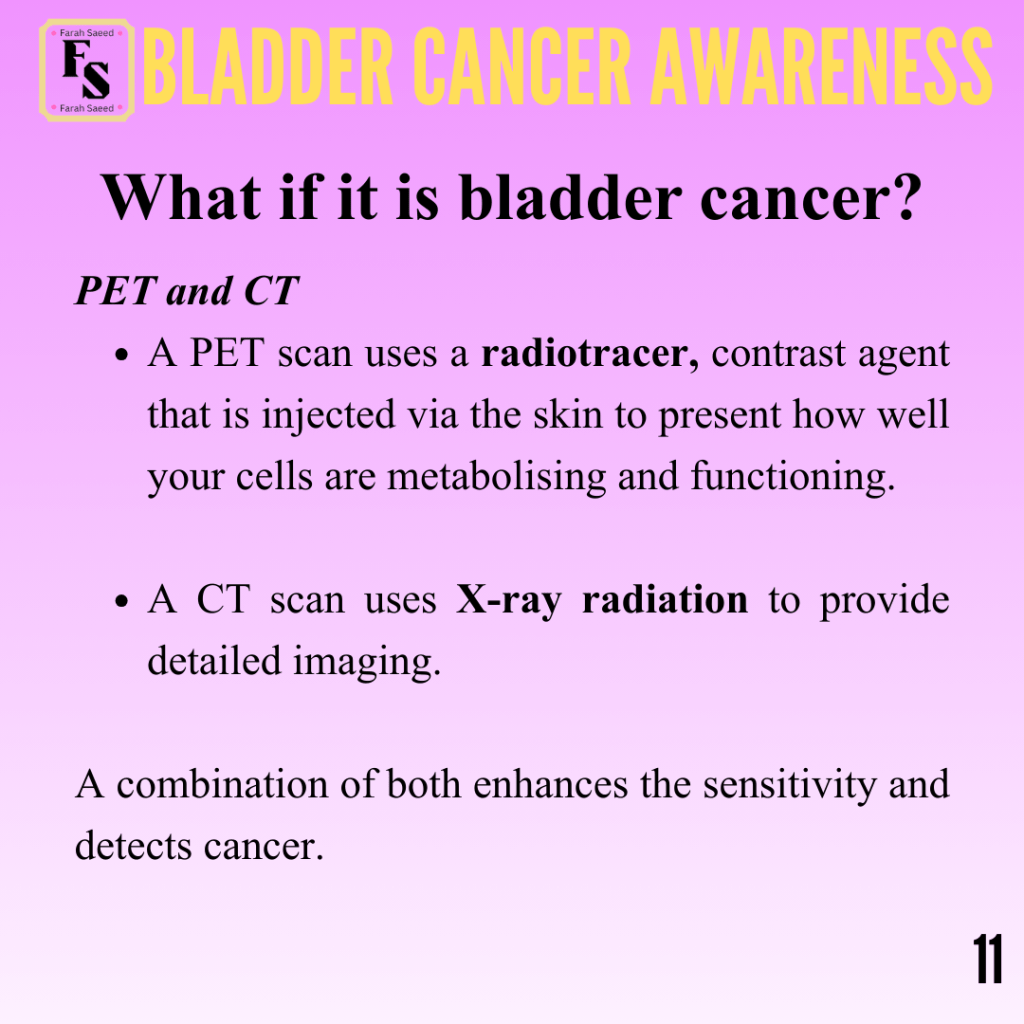
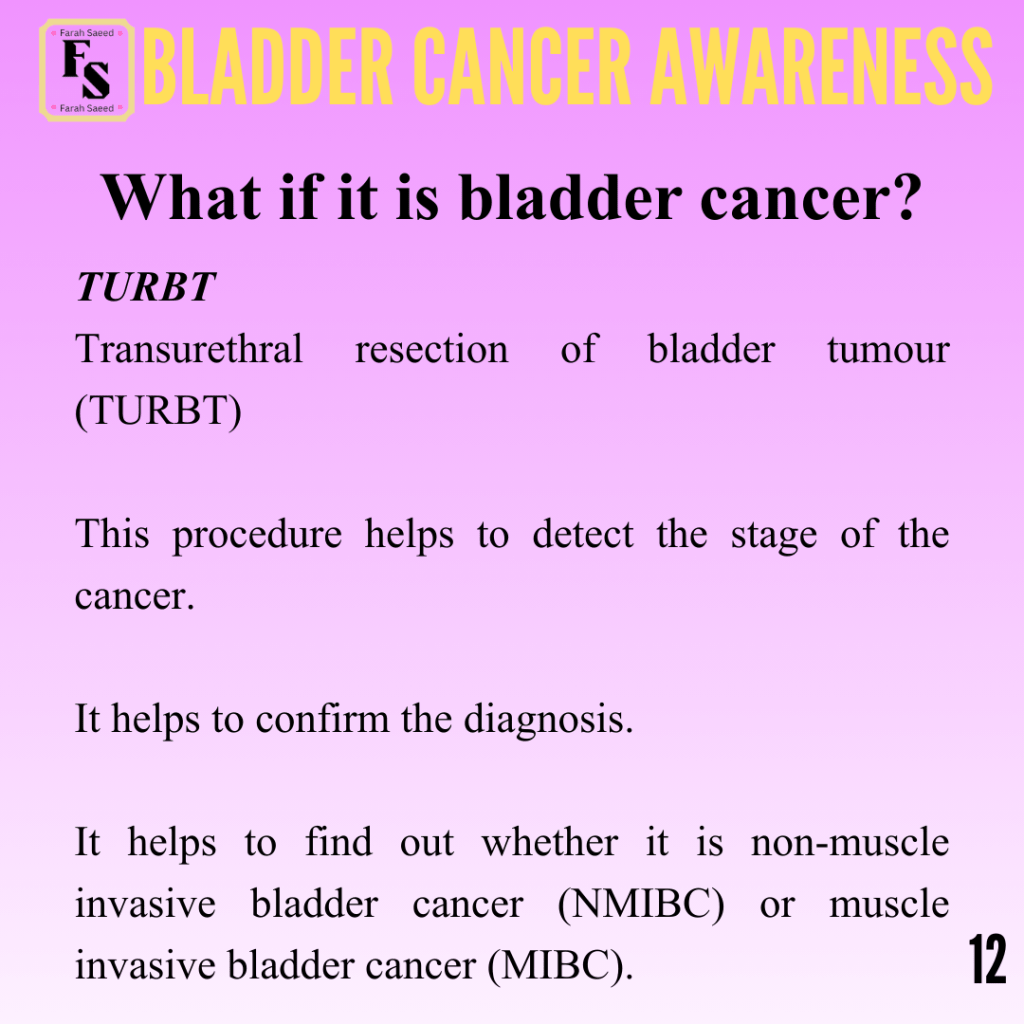
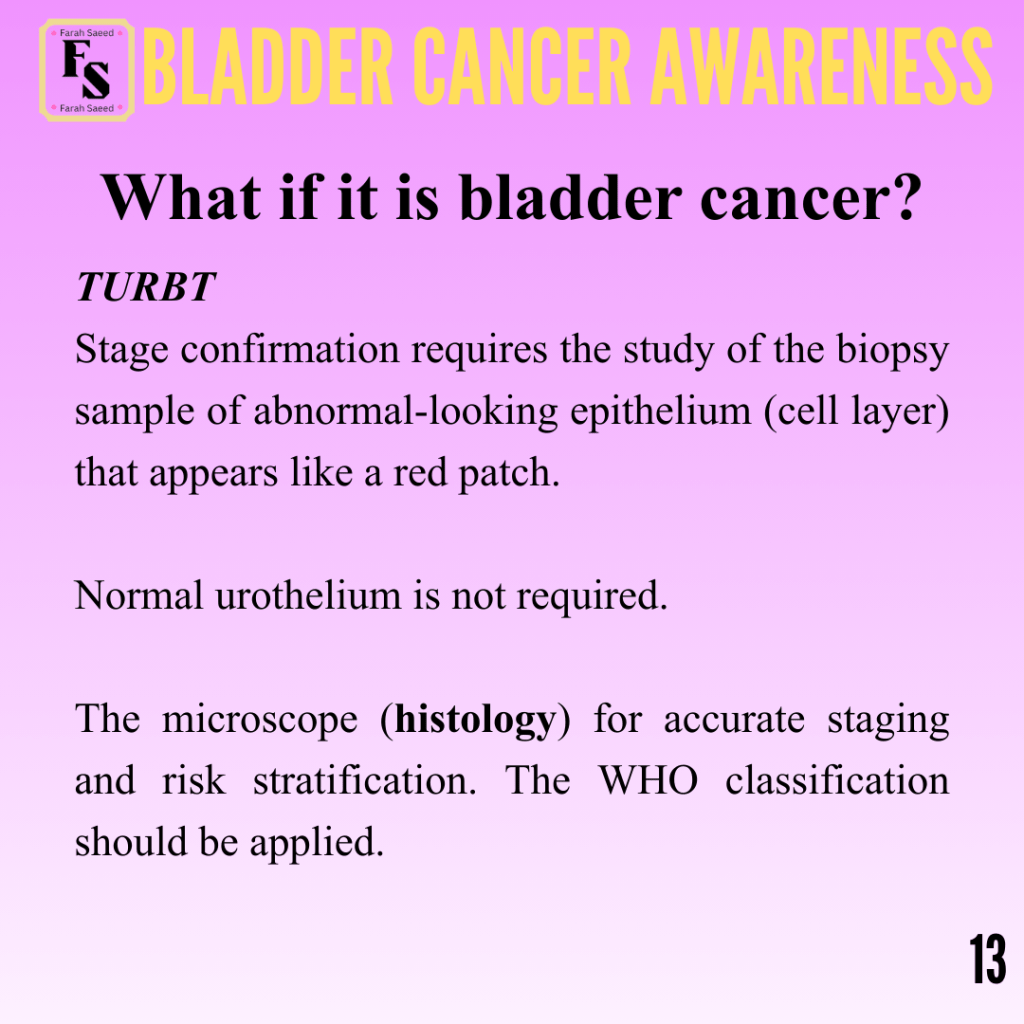
Haematuria Clinic: What if it is bladder cancer?

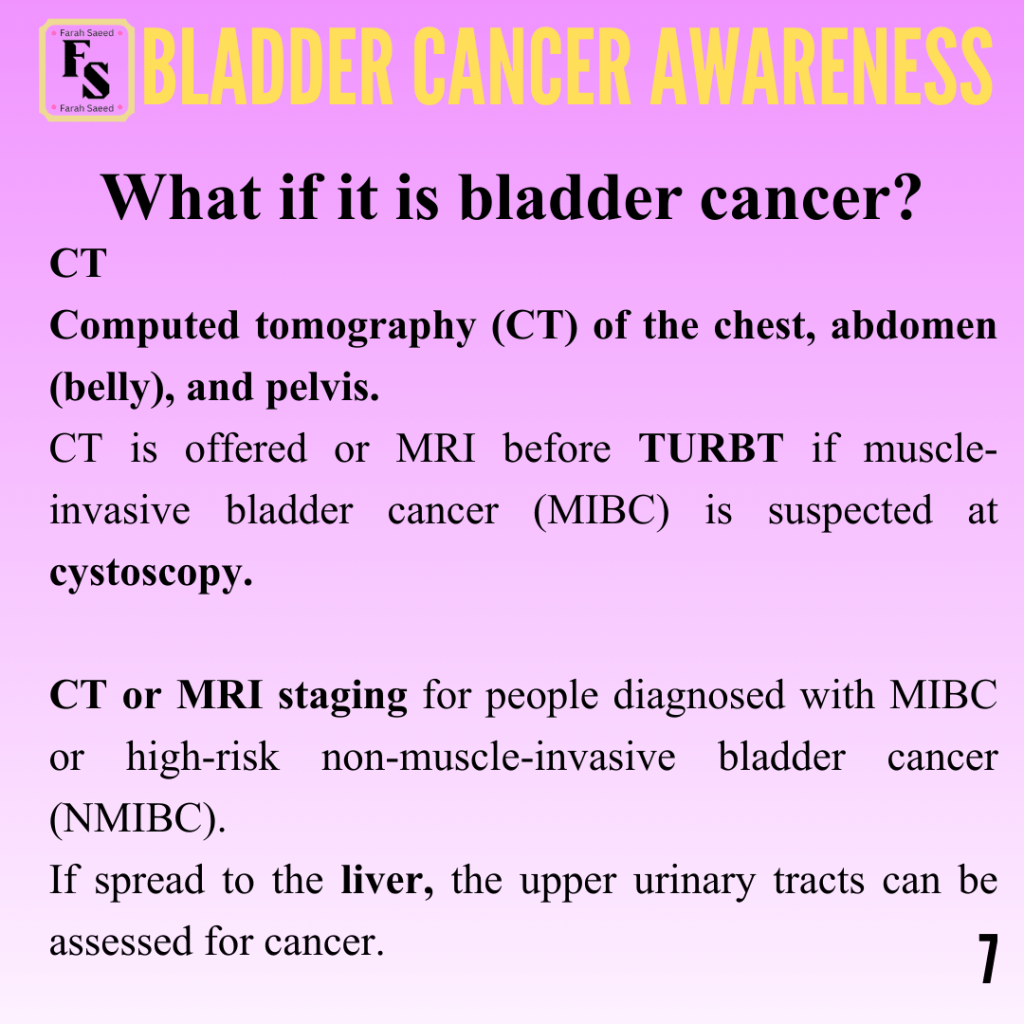
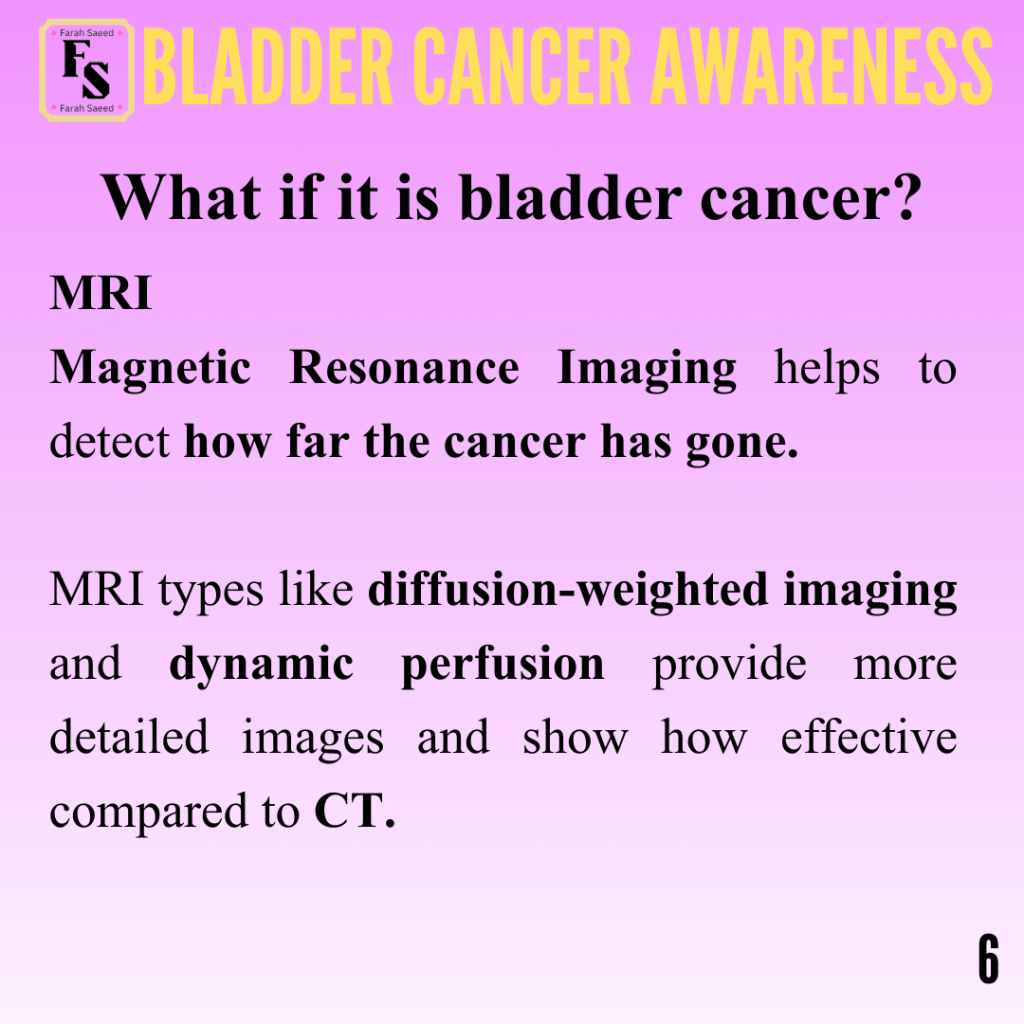
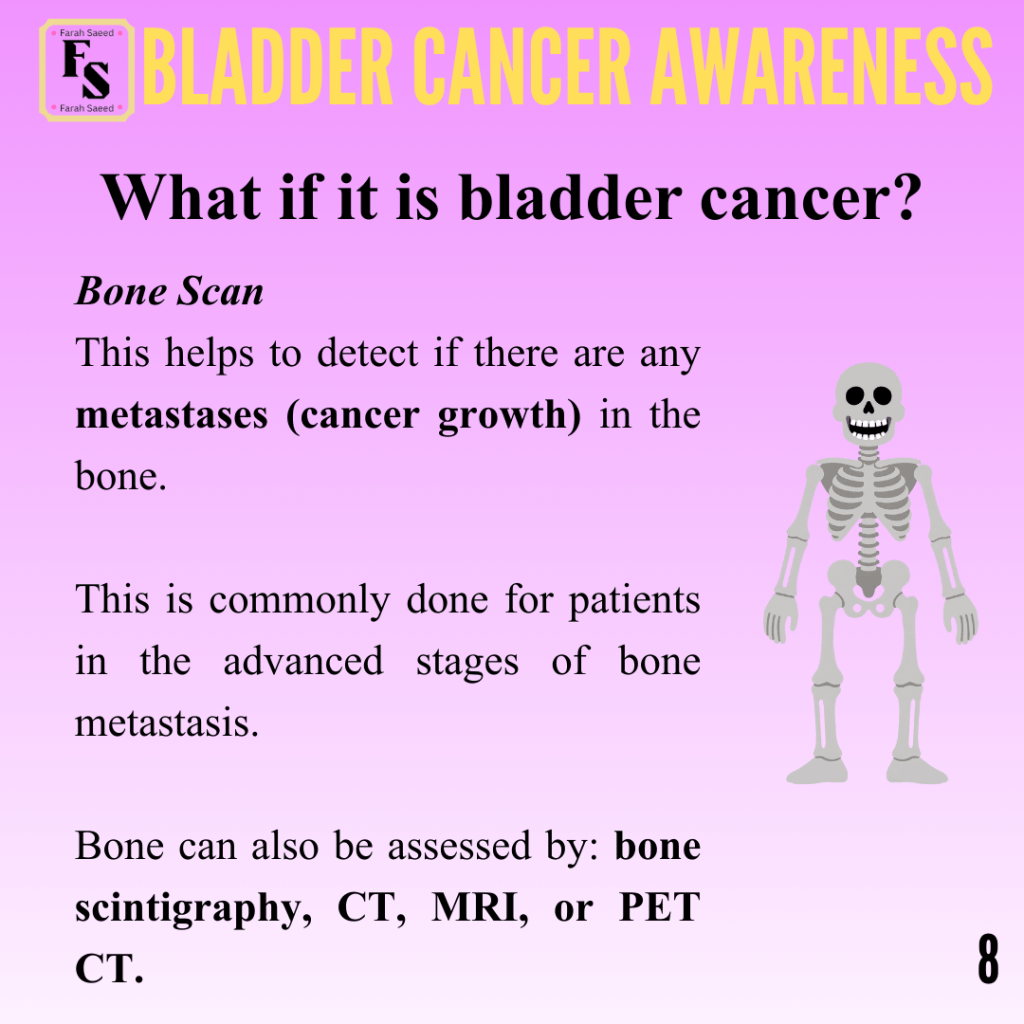
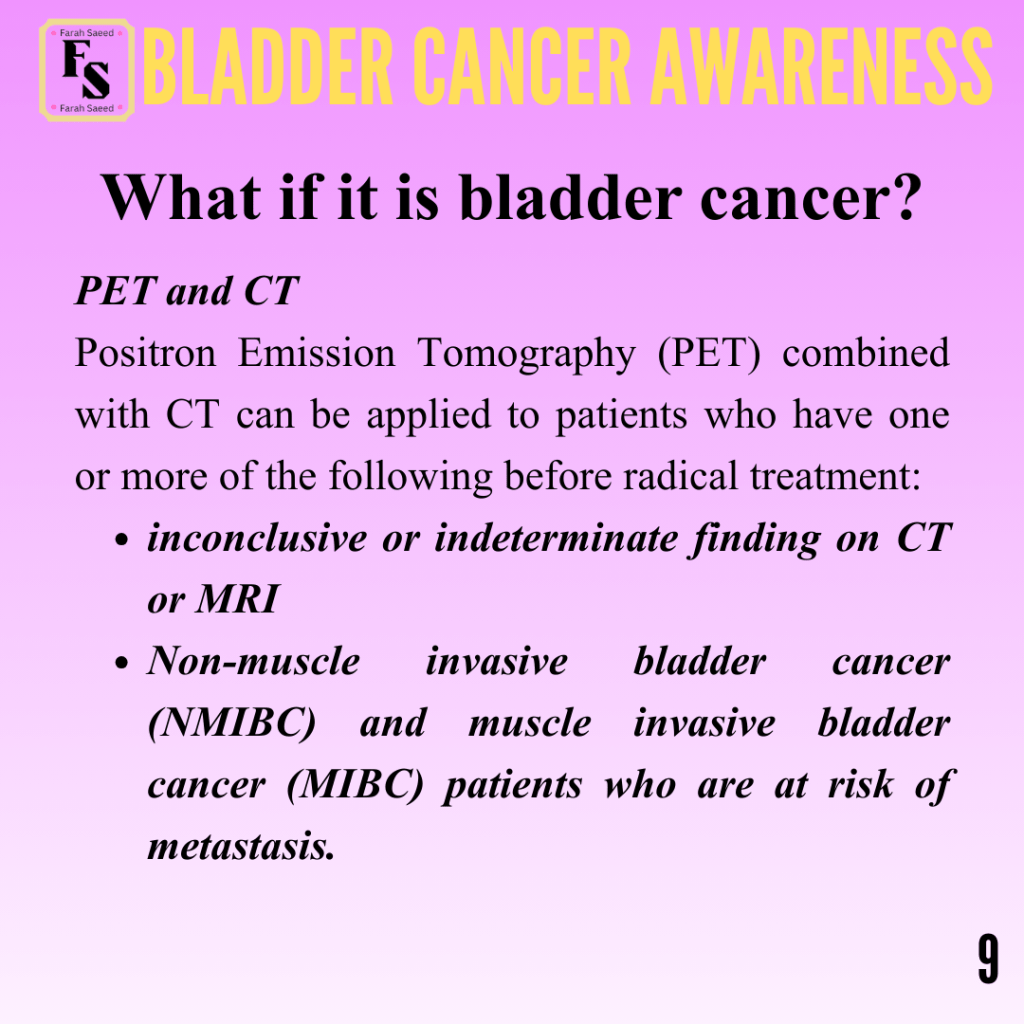
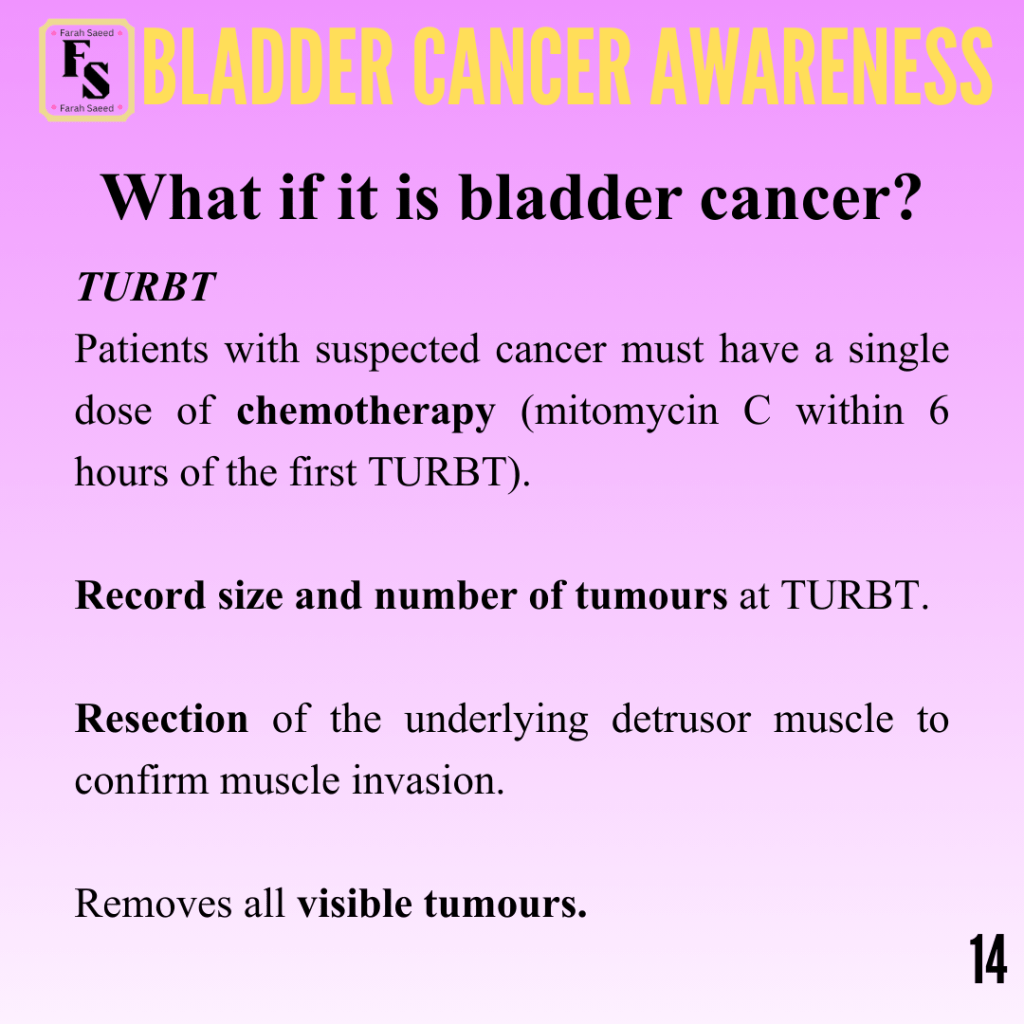
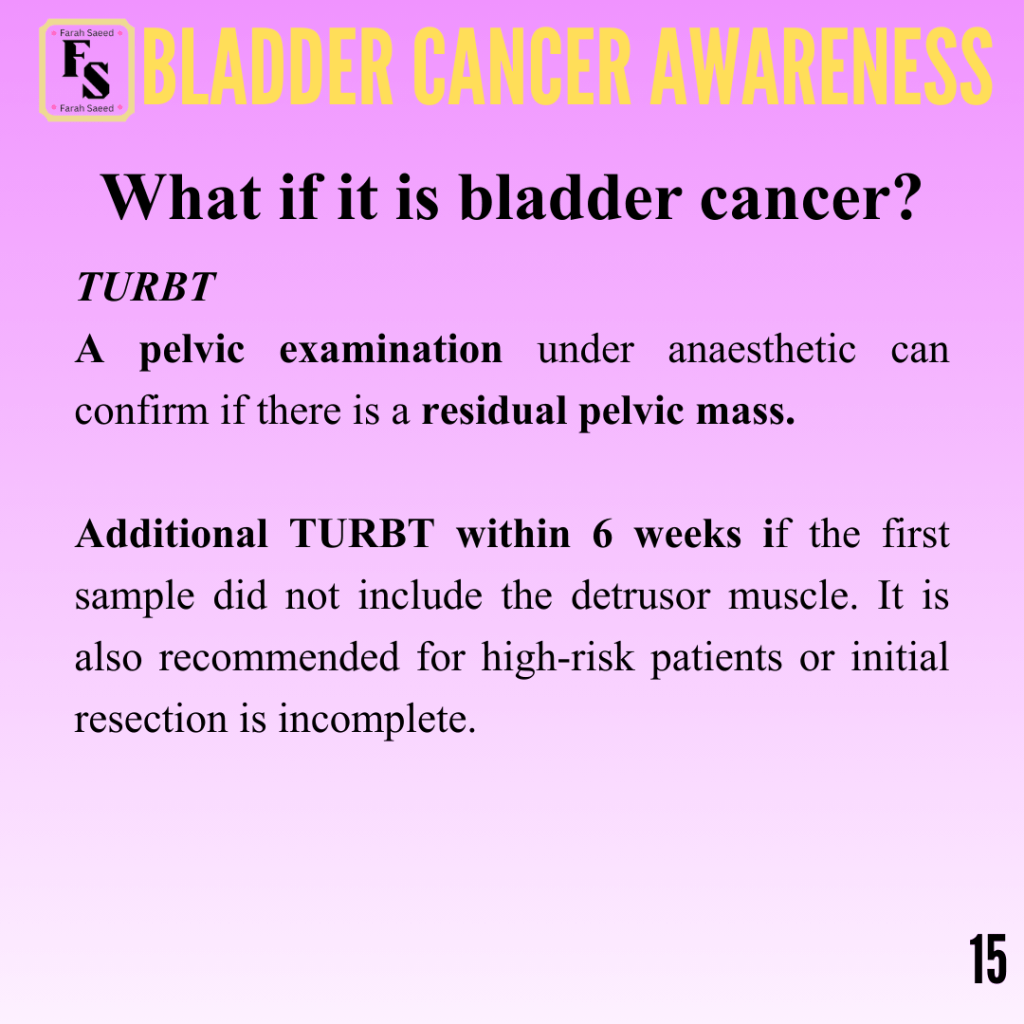
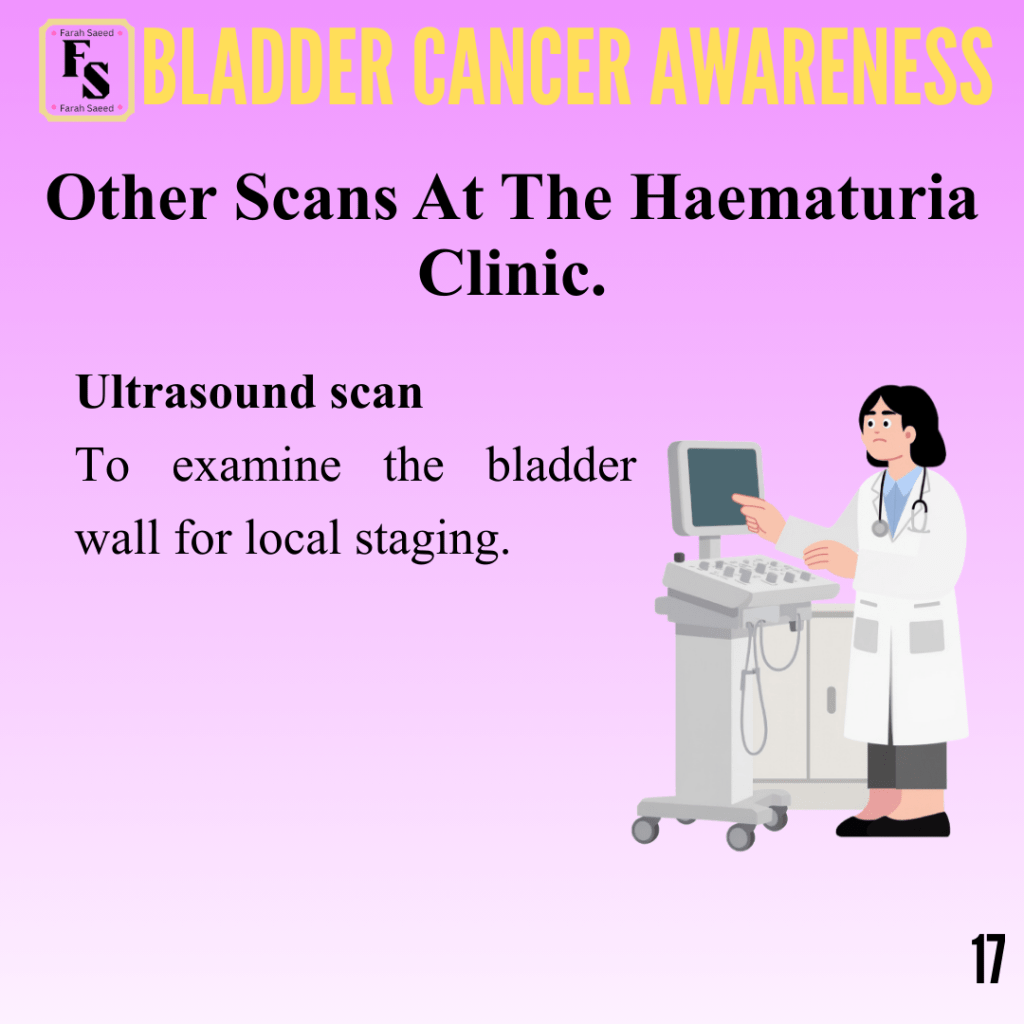
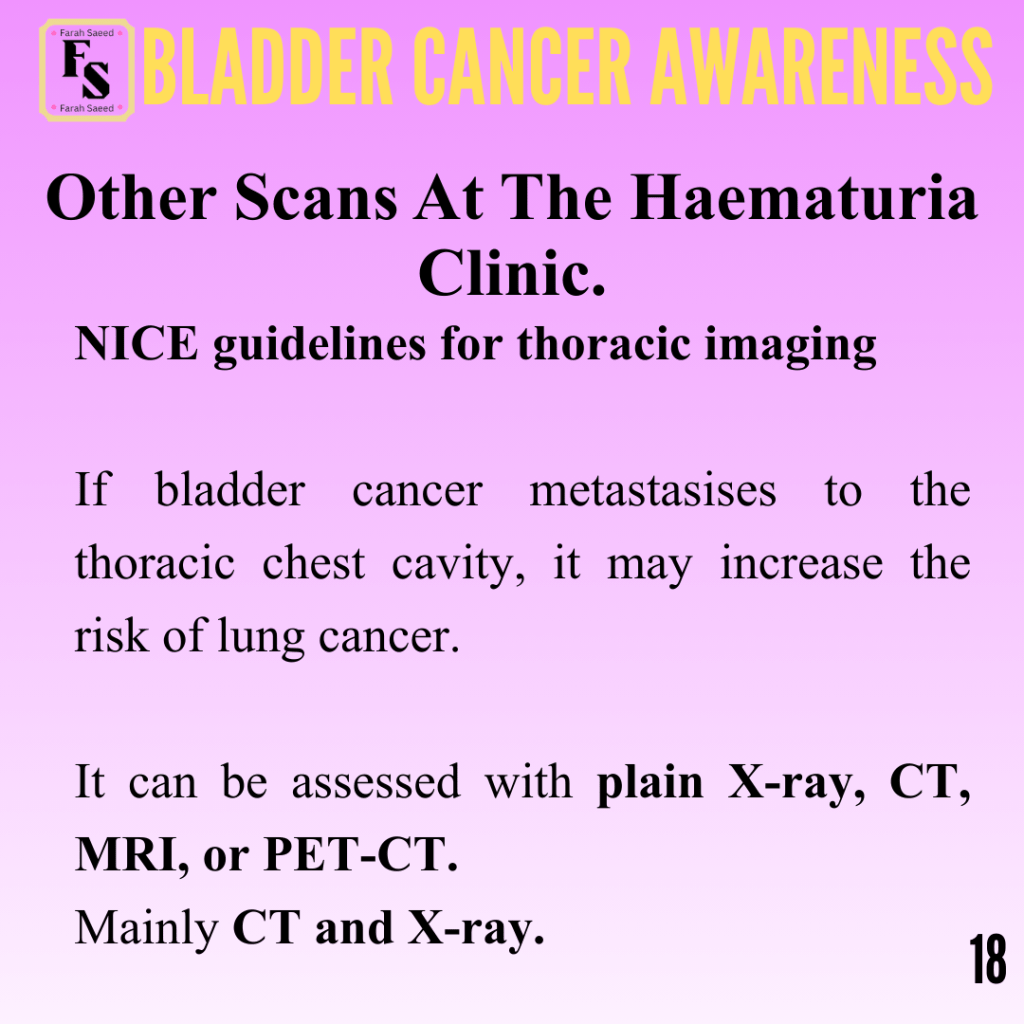
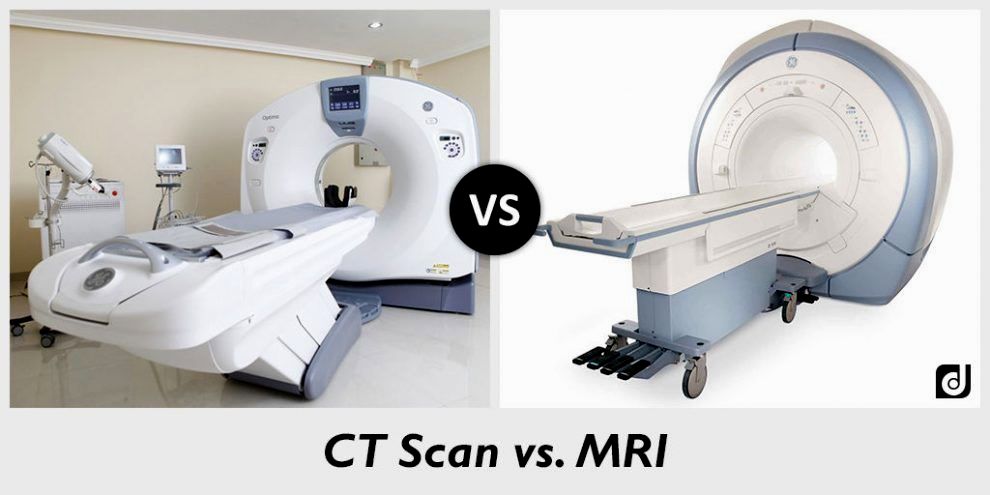
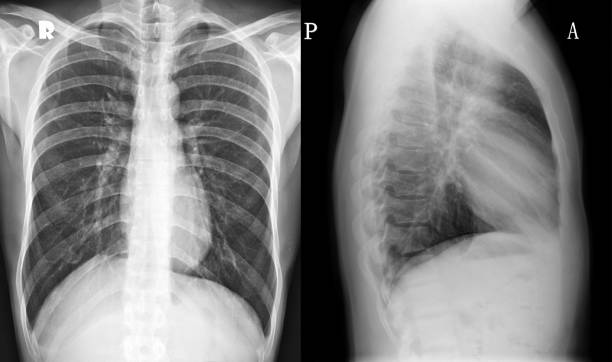
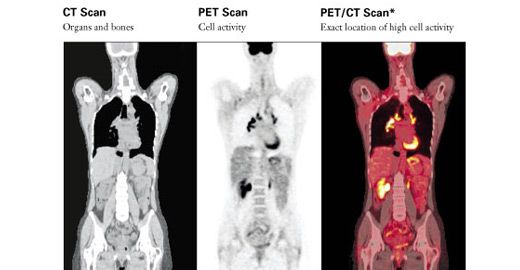
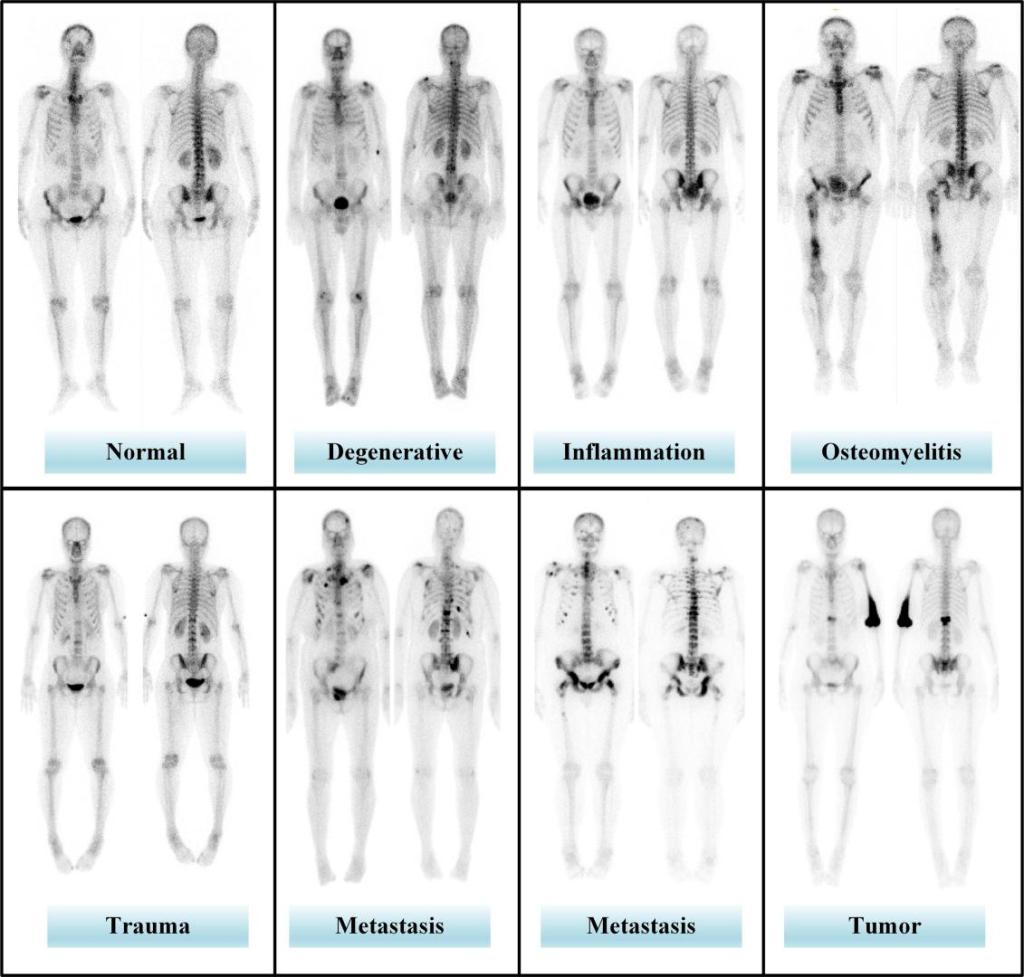
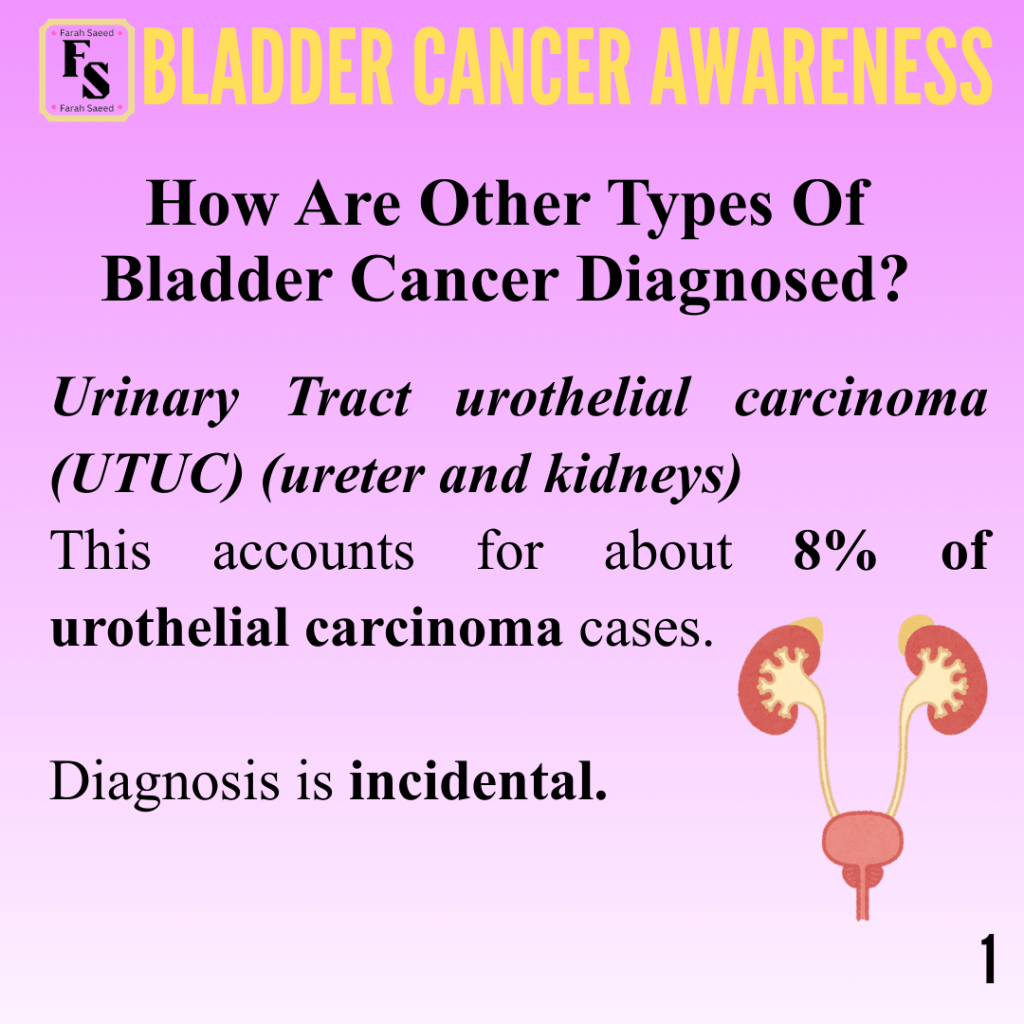
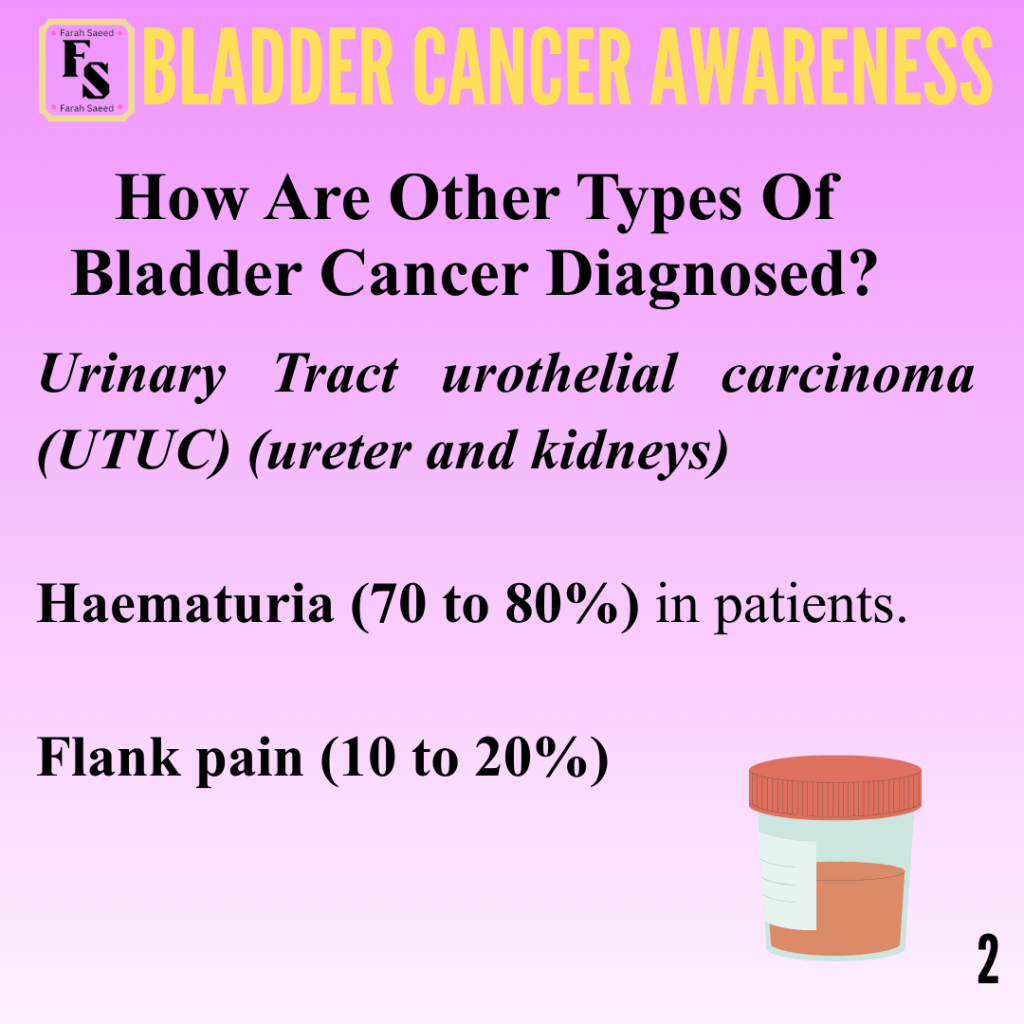
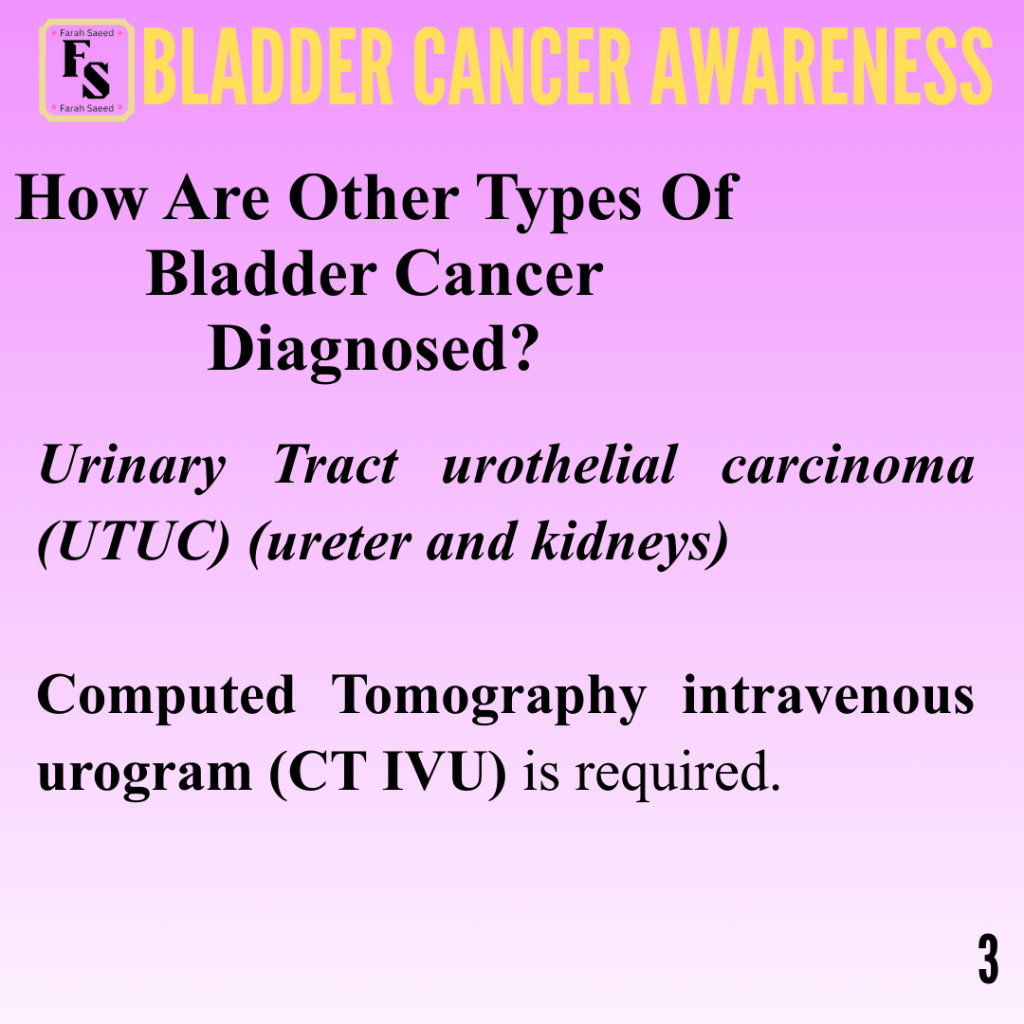
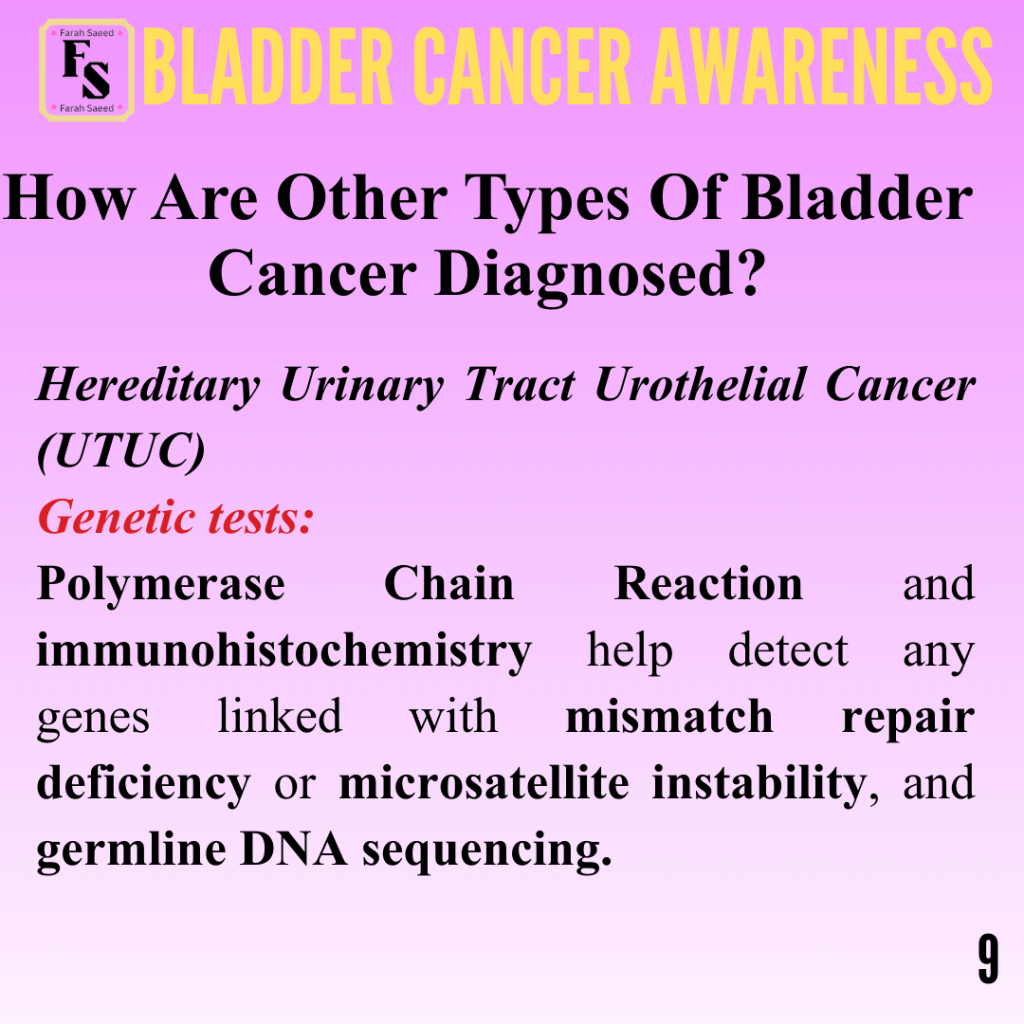
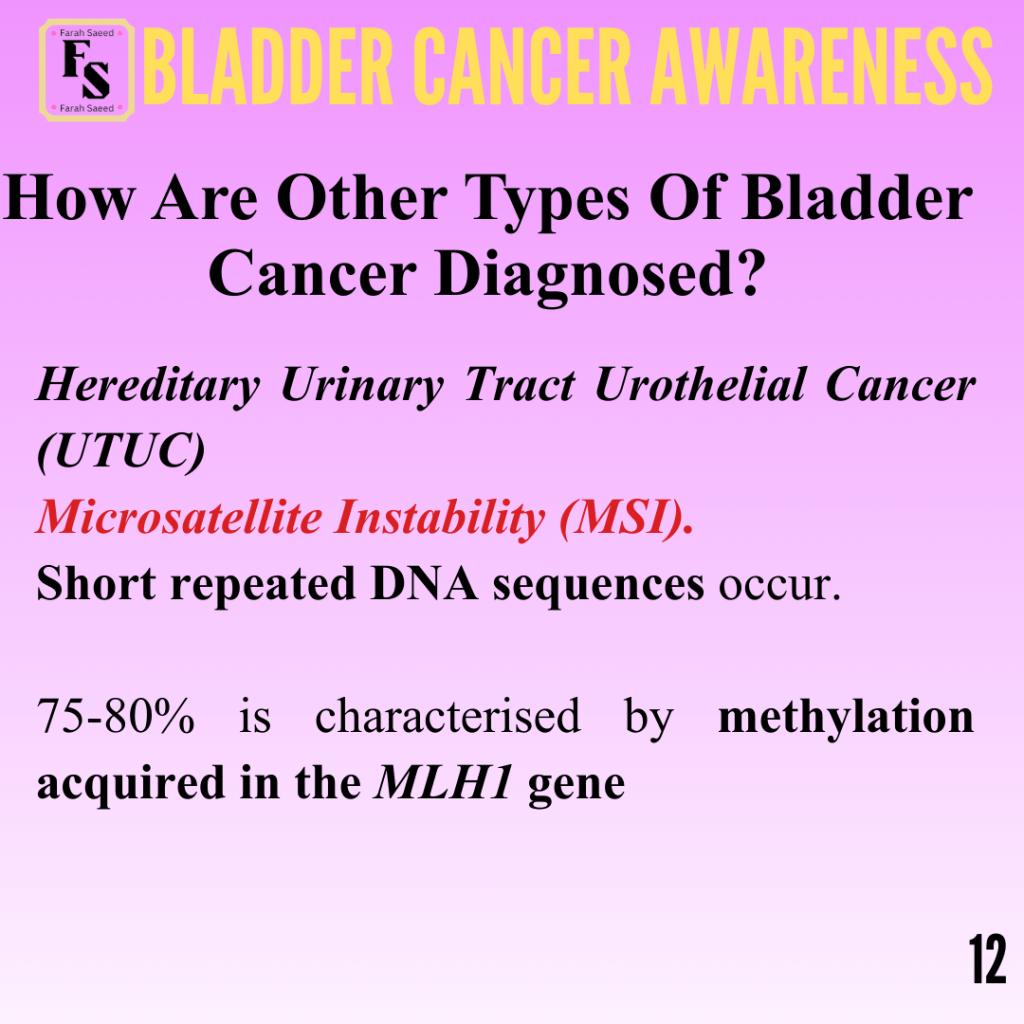
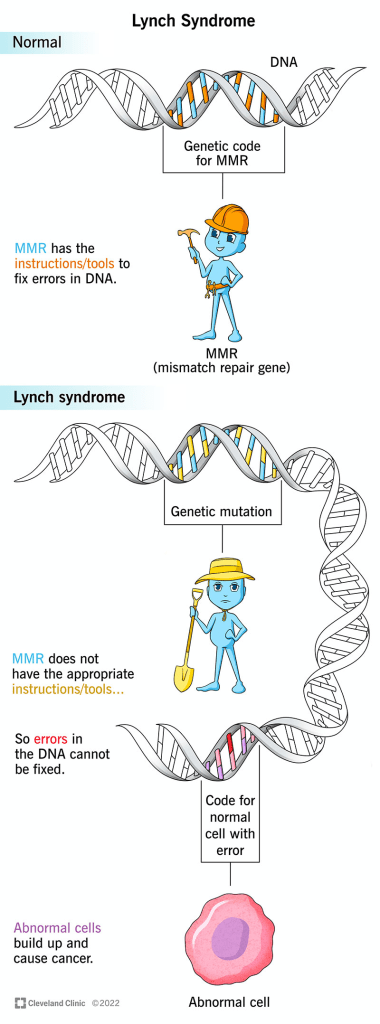
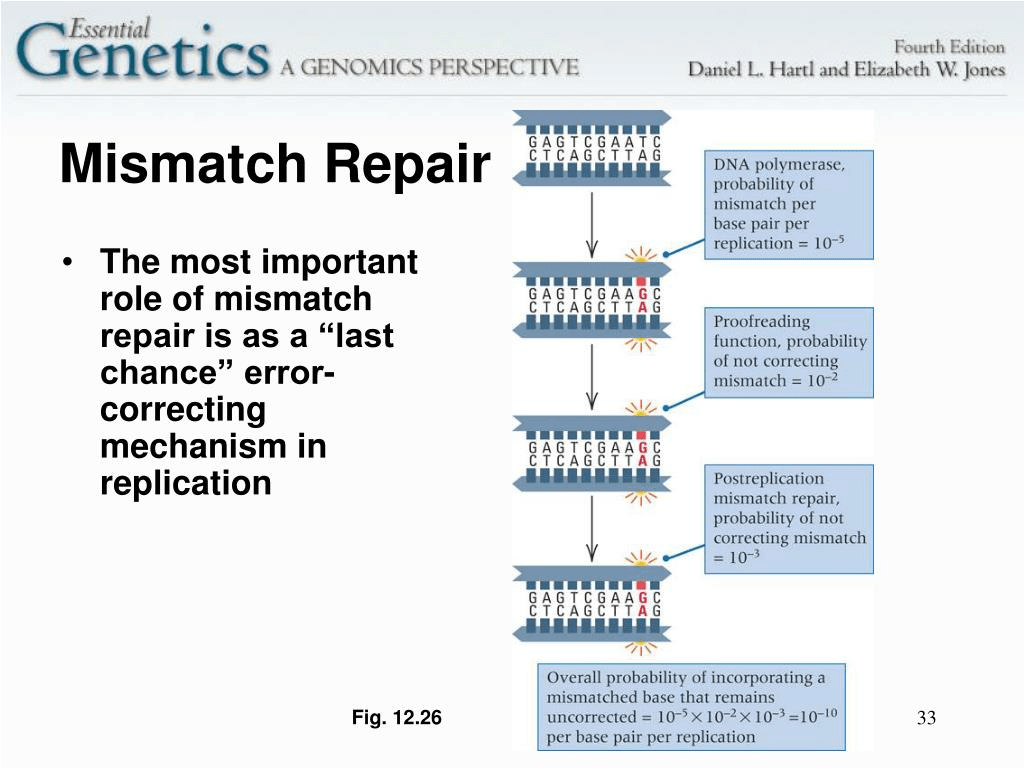
Diagnosis Of Other Types Of Bladder Cancer
References
Abazari, O., Shahidi, M., Dayati, P., Valizadeh, S., Vahidi, S., Tafti, M.A., and Zavarreza, J. (2025). Study of urine-based mRNA biomarkers for early detection of nonmuscle invasive bladder cancer (NMIBC). Urologic Oncology Seminars and Original Investigations, 43(6), pp.393.e9–393.e17. doi:https://doi.org/10.1016/j.urolonc.2024.12.273.
Action Bladder UK (2025). Diagnosis Available at: https://actionbladdercanceruk.org/diagnosis/ (Accessed: 8th January 2026)
Cassidy, J., Bissett, D., Spene, R. and Payne, M. (2010). Oxford Handbook of Oncology. Oxford: Oxford University Press.
Hubbard, J.G. and Amin, M. (1977). Pseudohematuria. Urology, [online] 10(3), pp.190–192. doi: https://doi.org/10.1016/0090-4295(77)90056-5.
John Hopkins (2026) The Pathologist’s Role Available at: https://pathology.jhu.edu/bladder-cancer/the-pathologists-role (Accessed: 17th January 2026)
Knipe, H. (2025). Renal papillary necrosis. Available at: https://radiopaedia.org/articles/renal-papillary-necrosis (Accessed: 11th January 2026)
Lang, K., Köhler, C.U., Wichert, K., Deix, T., Bartsch, G., Sommer, G., Lübke, C., Florian Roghmann, Reike, M.J., Harald Krentel, Katja Engellandt, Sven Schiermeier, Menke, V., Joachim Noldus, Behrens, T., Brüning, T. and Käfferlein, H.U. (2024). Urinary DNA-methylation and protein biomarkers identify urothelial carcinoma among other genitourinary diseases and cancer-free individuals. Journal of Translational Medicine, 22(1), pp.1061–1061. doi:https://doi.org/10.1186/s12967-024-05844-x.
Min, C.C. (2026). Bladder Cancer. Available at: https://ccmurology.com/diseases/bladder-cancer/ (Accessed: 17th January 2026)
National Health Service (2016) Guidelines for the Management of Bladder Cancer. Available at: https://www.england.nhs.uk/mids-east/wp-content/uploads/sites/7/2018/05/guidelines-for-the-management-of-bladder-cancer.pdf (Accessed: 11th January 2026)
National Health Service (2025). Overview: Bladder stones. Available at: https://www.nhs.uk/conditions/bladder-stones/ (Accessed: 11th January 2026)
National Health Service (2025). Overview: Kidney Stones. Available at: https://www.nhs.uk/conditions/kidney-stones/ (Accessed: 11th January 2026)
National Institute for Care and Excellence (2021). Bladder cancer: diagnosis and management. Available at: https://www.nice.org.uk/guidance/ng2/evidence/full-guideline-pdf-3744109 (Accessed: 11th January 2026)
National Kidney Foundation (2026). Thin Basement Membrane Disease. Available at: https://www.kidney.org/kidney-topics/thin-basement-membrane-disease (Accessed: 11th January 2026)
Noble, L. (2026). Optimising the bladder cancer pathway: reducing delays and improving outcomes. Available at: https://www.ucc-today.com/journals/issue/launch-edition/article/optimising-the-bladder-cancer-pathway-reducing-delays-and-improving-outcomes (Accessed: 8th January 2026)
Oyaert, M., Van Praet, C., Delrue, C., & Speeckaert, M. M. (2025). Novel Urinary Biomarkers for the Detection of Bladder Cancer. Cancers, 17(8), 1283. https://doi.org/10.3390/cancers17081283
SUNY Upstate Medical University (2026). What is a PET/CT and why is it done? Available at: https://www.upstate.edu/ura/pet-ct-scan.php (Accessed: 18th January 2026)
Tidy, C. (2025). Urolithiasis. Available at: https://patient.info/doctor/general-surgery/urinary-tract-stones-urolithiasis (Accessed: 11th January 2026)
Updated January 2026 Next Review May 2028
 The Farah Saeed Project