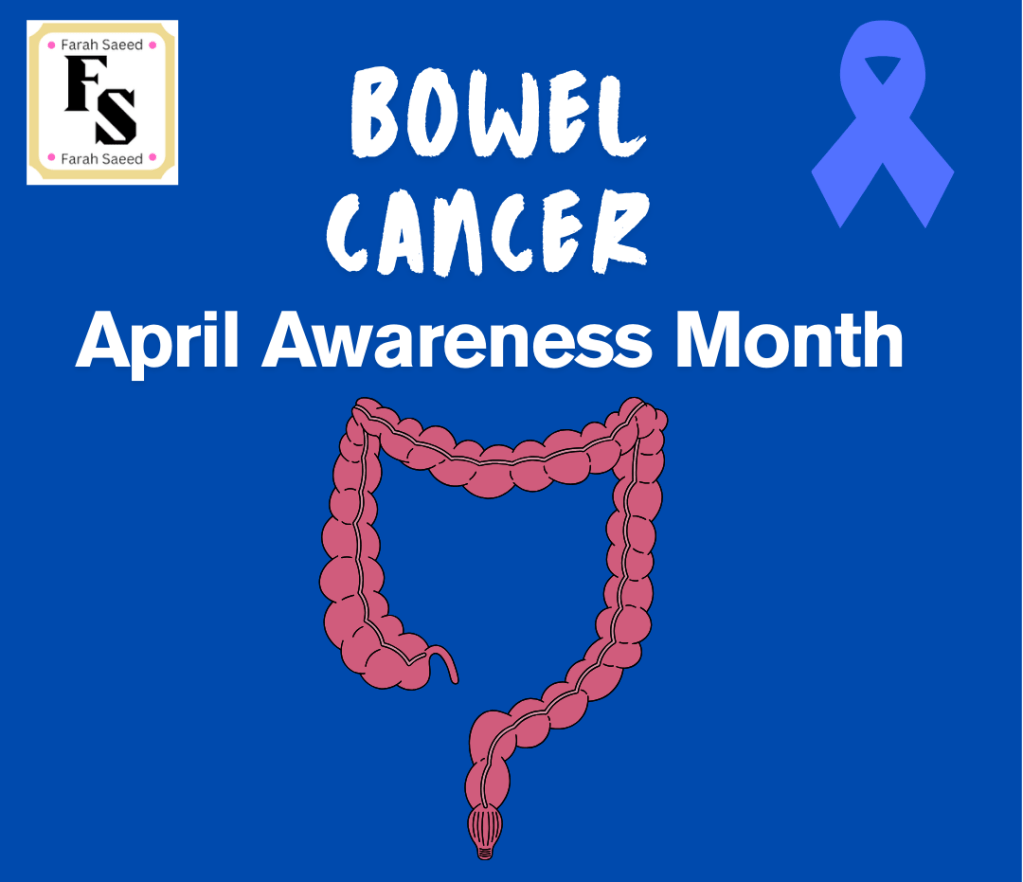
Bowel Cancer Screen
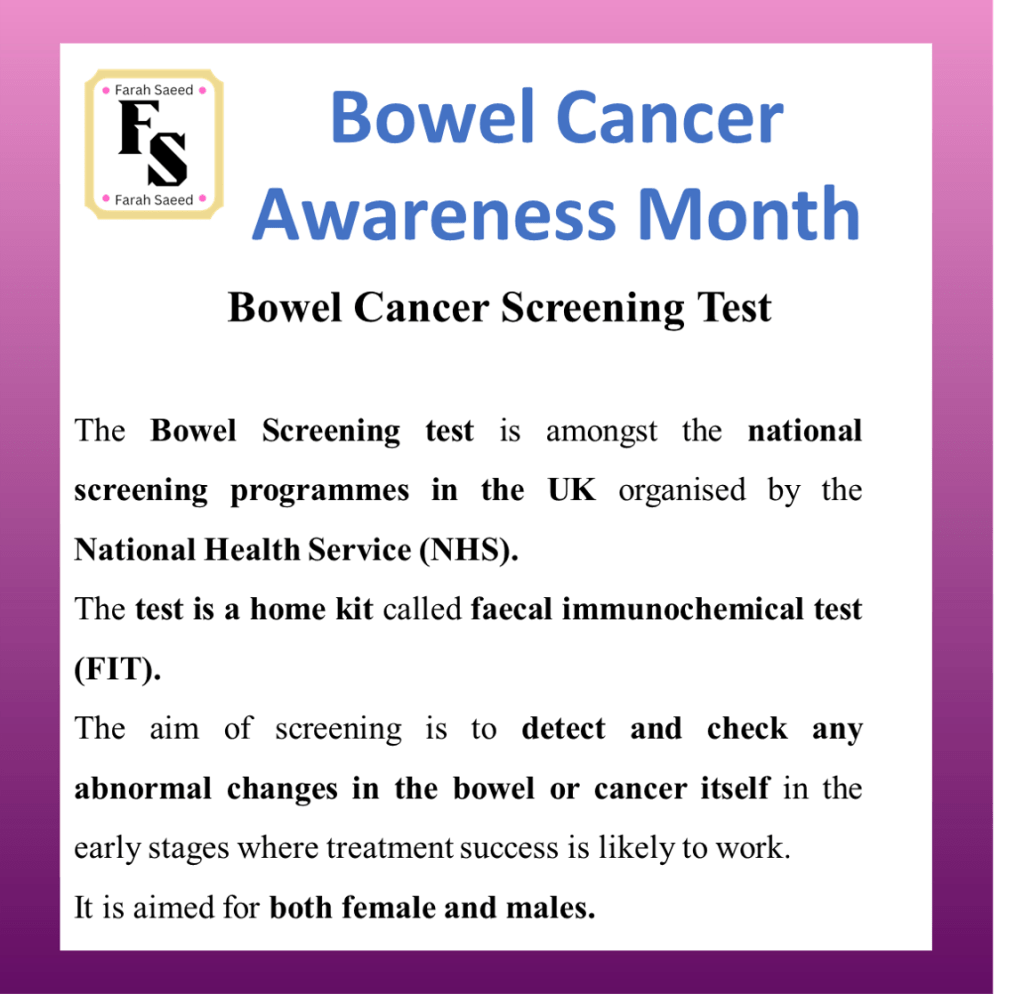
What Does FIT Detect?
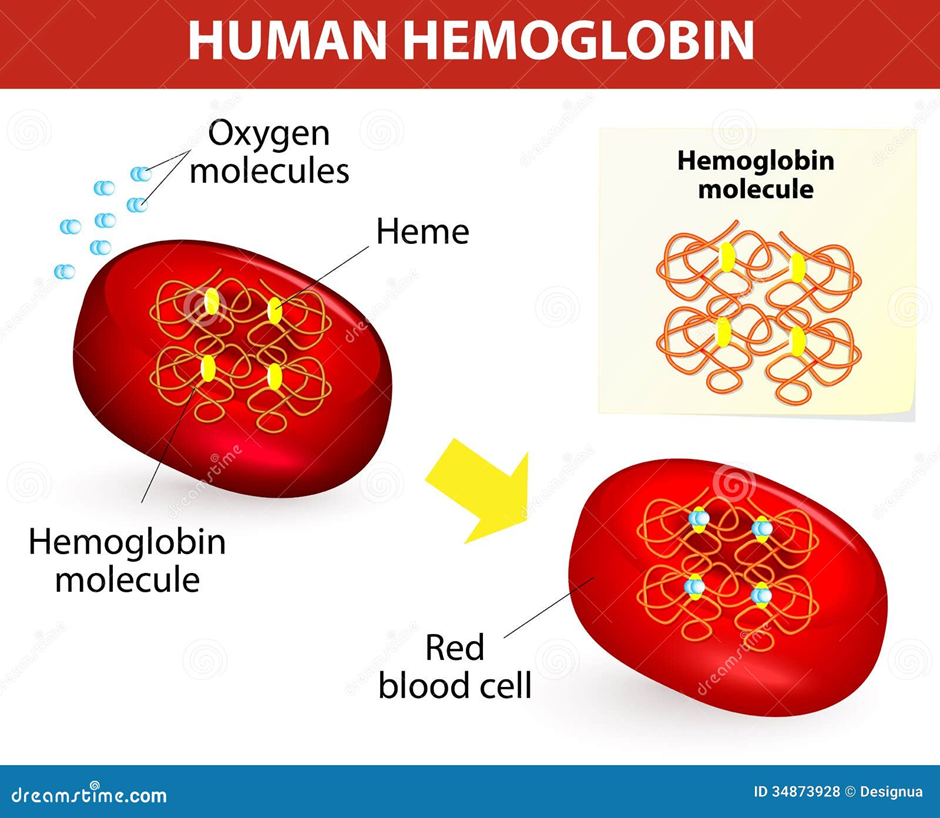
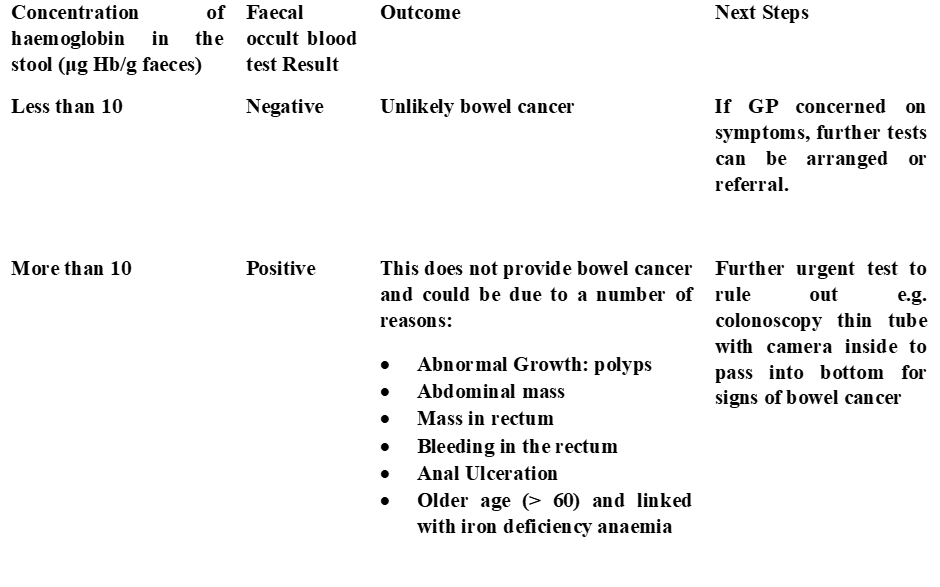
It is able to detect whether there is any blood in the stool with a detection threshold of 120 micrograms of haemoglobin/g of faeces.
Haemoglobin is a red pigment that makes red blood cells red. It carries oxygen around the body.

What Does The Participant Do In The FIT Test?
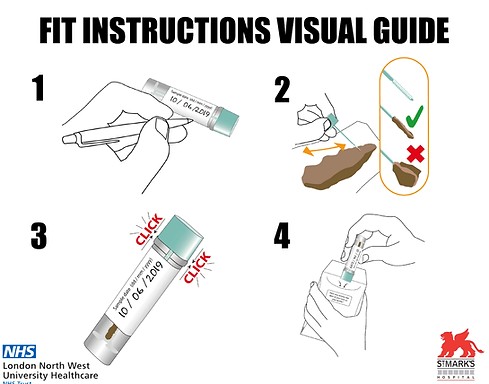
Read and follow instructions presented in the kit.
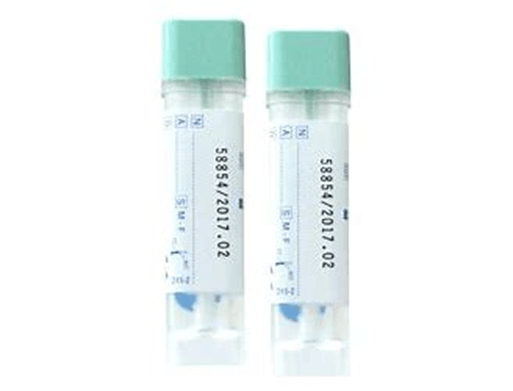
Collection of stool samples is achieved by adding a small plastic stick and placed in sample bottle. An image of the sample bottom is presented below.
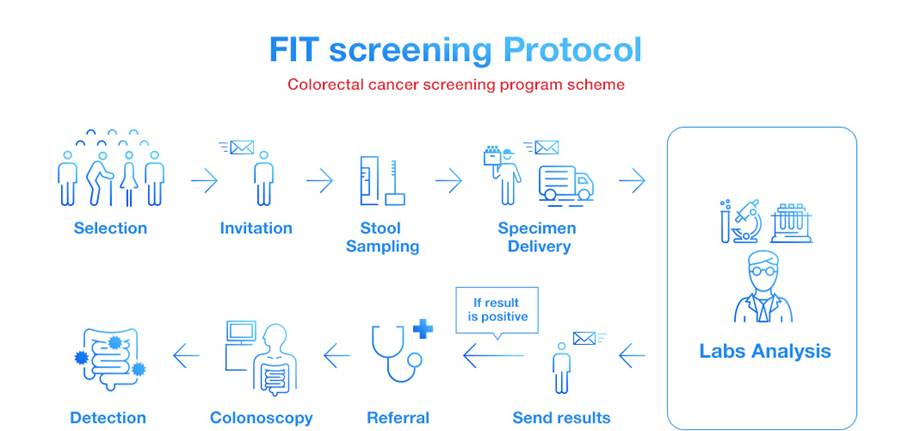
What Happens To Your Stool Sample?
Poo is sent in these tubes to the laboratory to test if any blood in stools.
When Does Bowel Screening Programme Occurs?
Bowel screening programme every two years, age currently 54 to 74.
It will soon be offered to everyone aged 50 to 74, so you may be sent a home test kit now if you’re aged 50 or over.
People over 75 years and over can also have a home kit if you’re aged 75 or over, but you need to call the bowel cancer screening helpline on 0800 707 6060 and ask for the test.
Please visit the NHS Bowel Screening Programme website for further information:
Overview Of The FIT Instructions In Different Ways.
Are You A Visual Learner?
Are You A Auditory Learner?
NHS Fit test overview video
Are You A Kinaesthetic Learner?
When Are Results Given?
Results given in two weeks.
What Are The Risks Of Screening
On one hand, performing NHS Bowel Cancer Screening is encouraging and saves live.
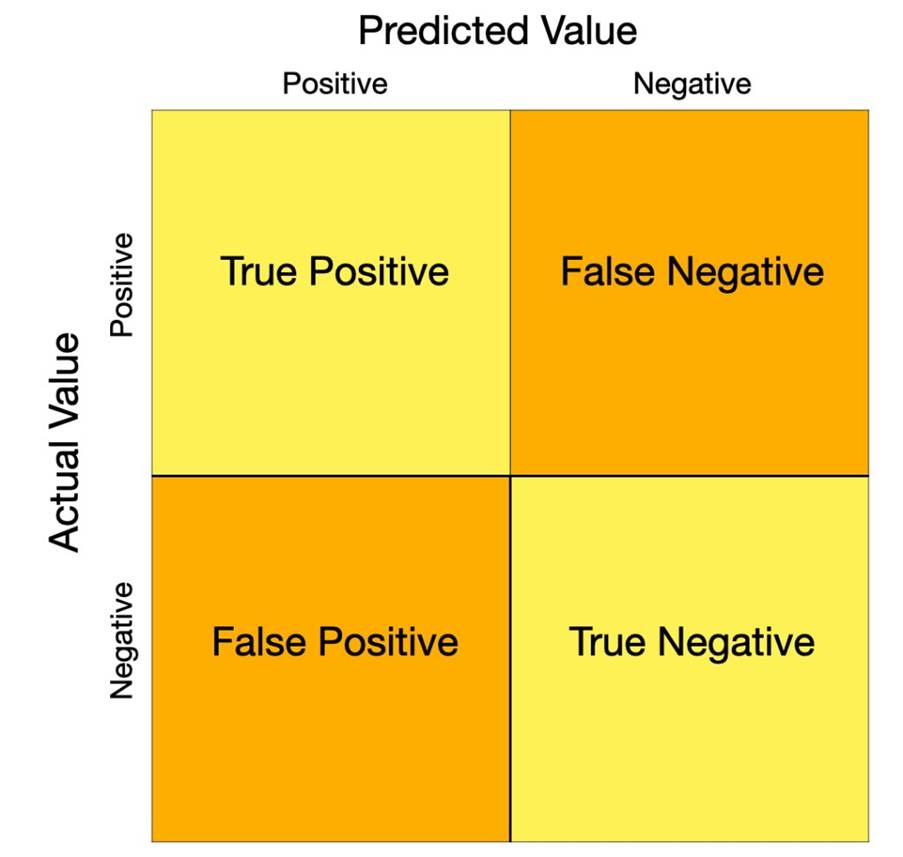
If the false positive is the issue: Result picked up despite no cancer.
If the false negative is the issue: Rarely occurs where test missed cancer.
No screening test is 100% available.
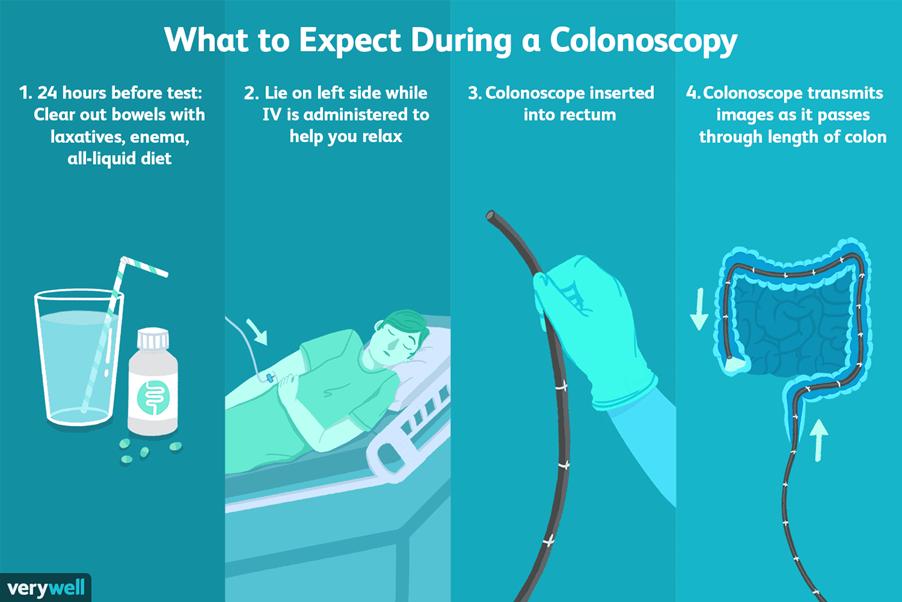
Small risks is linked to colonoscope find something unusual but it is rare.
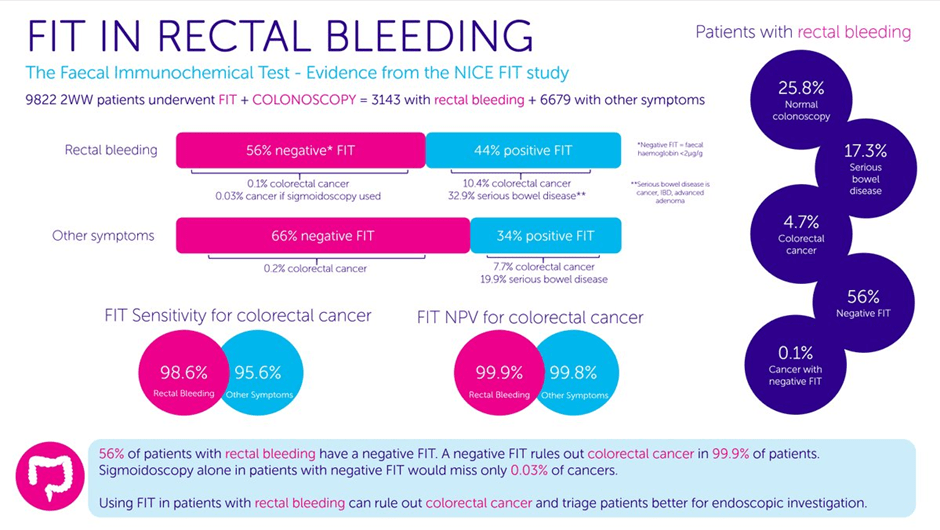
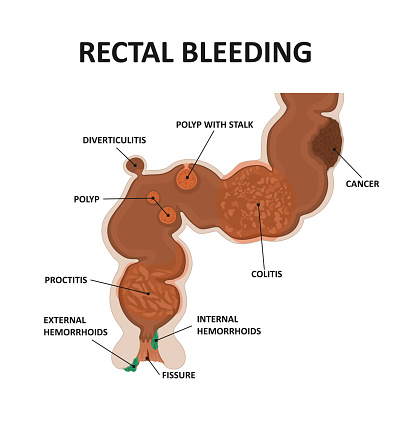
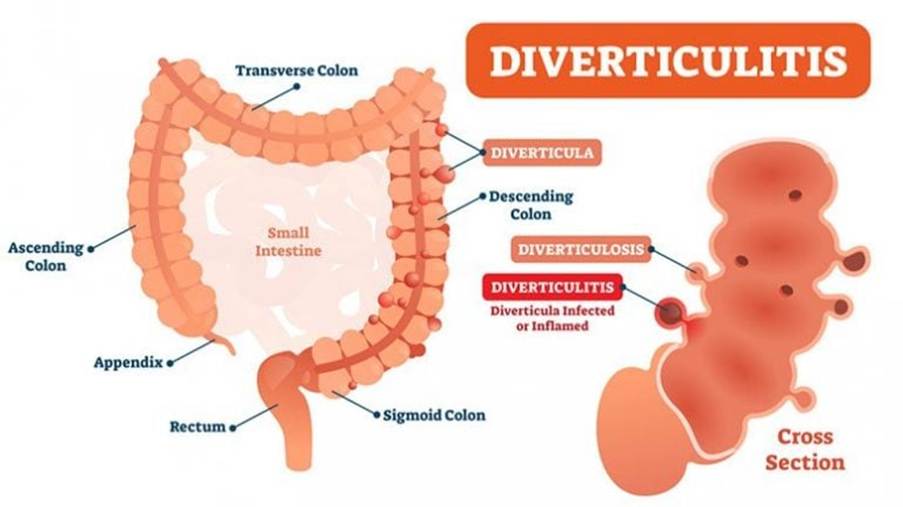
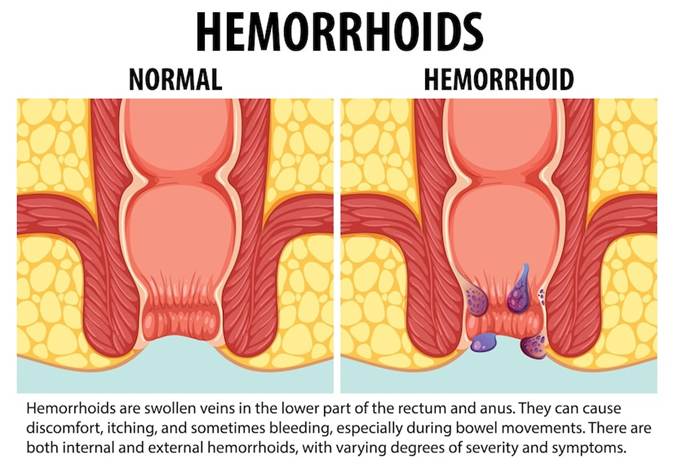
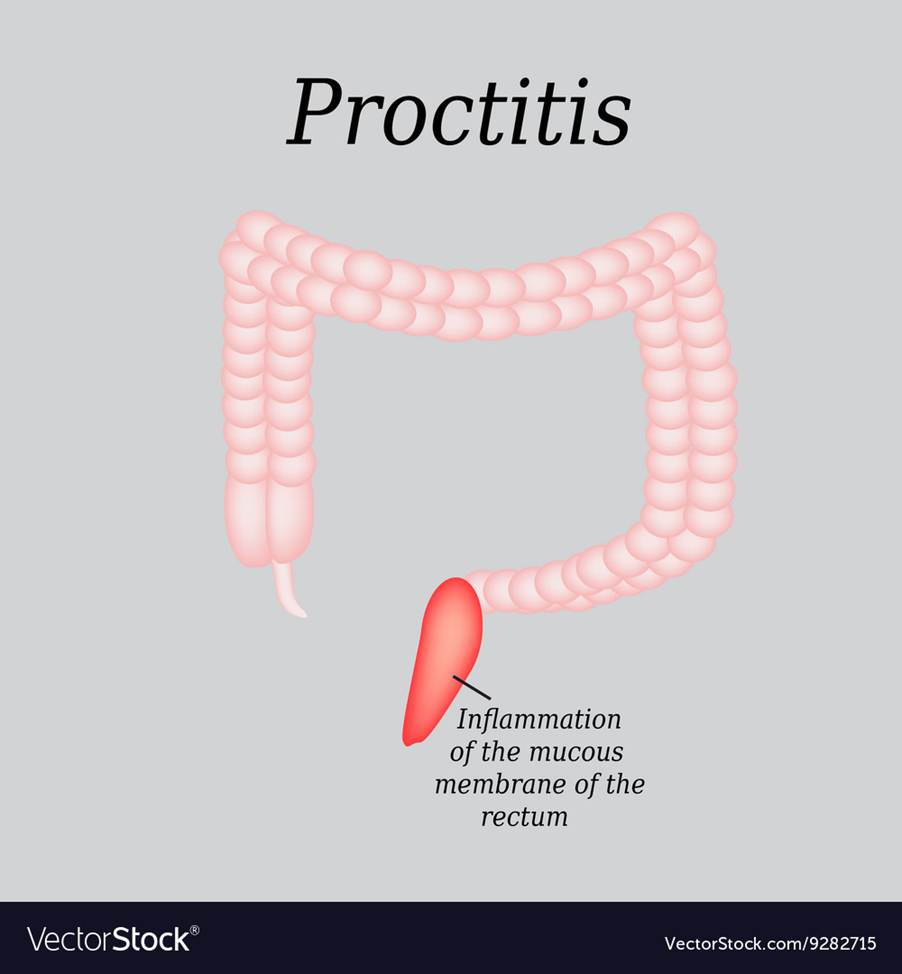
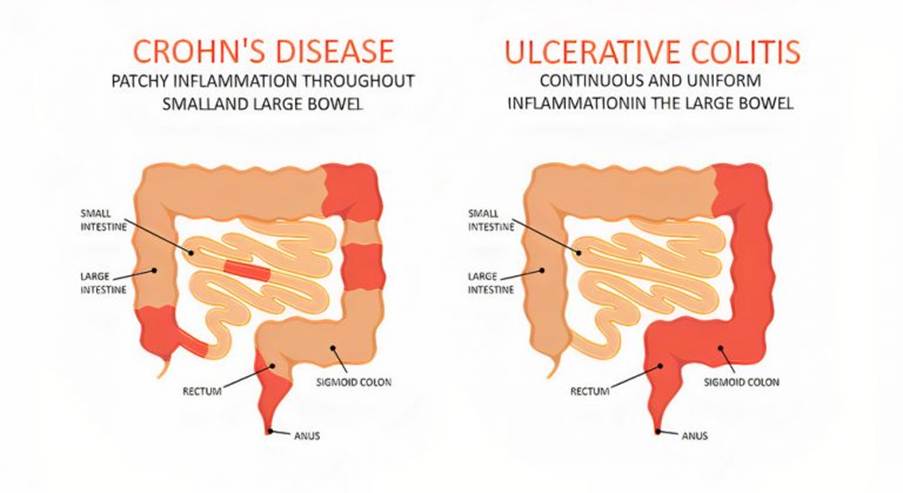
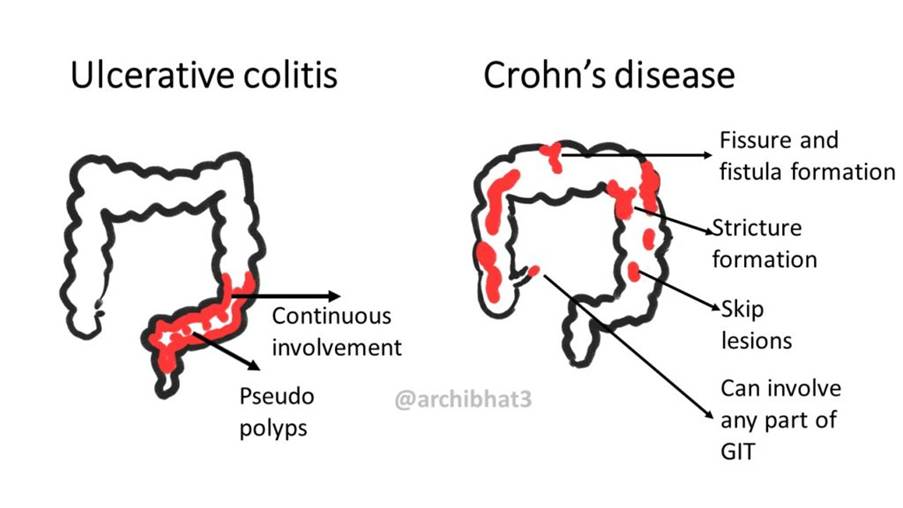
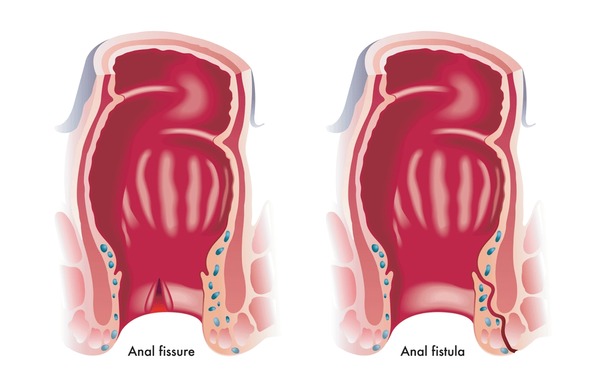
The above are results from a FIT study by the National Institute of Care and Excellence (NICE). It presents how the FIT test is a sensitive test and colonoscopy helps to detect colorectal cancer after experiencing rectal bleeding. There are a number of causes of rectal bleeding: colitis, cancer, haemorrhoids, polyps, proctitis and diverticulitis.

References
Anatomy and Physiology Diploma notes
Brooker, R.J., Widmaier, E.P., Graham, L.E. and Stiling, P.D. (2008). Biology. 1st ed. New York, Ny: McGraw-Hill Education.
NHS Tayside (2014) Haemmorhoids. Available at: https://www.nhstayside.scot.nhs.uk/WorkingWithUs/ReferralHelpSystem/PROD_348947/index.htm (Accessed: 8th April 2025)
North Bristol NHS trust (2025) FIT Testing for Patients Available at: https://www.nbt.nhs.uk/severn-pathology/pathology-services/clinical-biochemistry/fit-testing/fit-testing-patients (Accessed: 17th June 2025)
Smith, O. (2015) Mind maps For Medical Students Florida: CRC Press
University of Oxford (2007) Concise Colour Oxford Medical dictionary 4 edn. Oxford: Oxford University Press.
Widmaier, E., Raff, H., Strang, K. (2006) Van der’s Human Physiology New York: McGraw-Hill
Updated June 2025 Next Review June 2027
 The Farah Saeed Project