About Understanding Cancer Season Two
Discover a more well-equipped course to help you understand cancer better.
Understanding Cancer Season Two aims to build a FREE self-paced course to provide insight into how cells communicate normally on a cellular and molecular level and to determine the causes of its dysregulation that results in cancer. This is after being inspired by lecturers in academia.
The course is currently in demand and was first released on the 31st of July 2023. The information is still relevant and factual and has a comprehensive list for further reading and development.
These resources are FREE to use within educational settings and can be modified based on factors, for instance, time, discussions, and worksheets. The worksheets can be constructed by the educator based on the level and learning needs of the students. The Quiz can be a starter, plenary, or part of a seminar session.
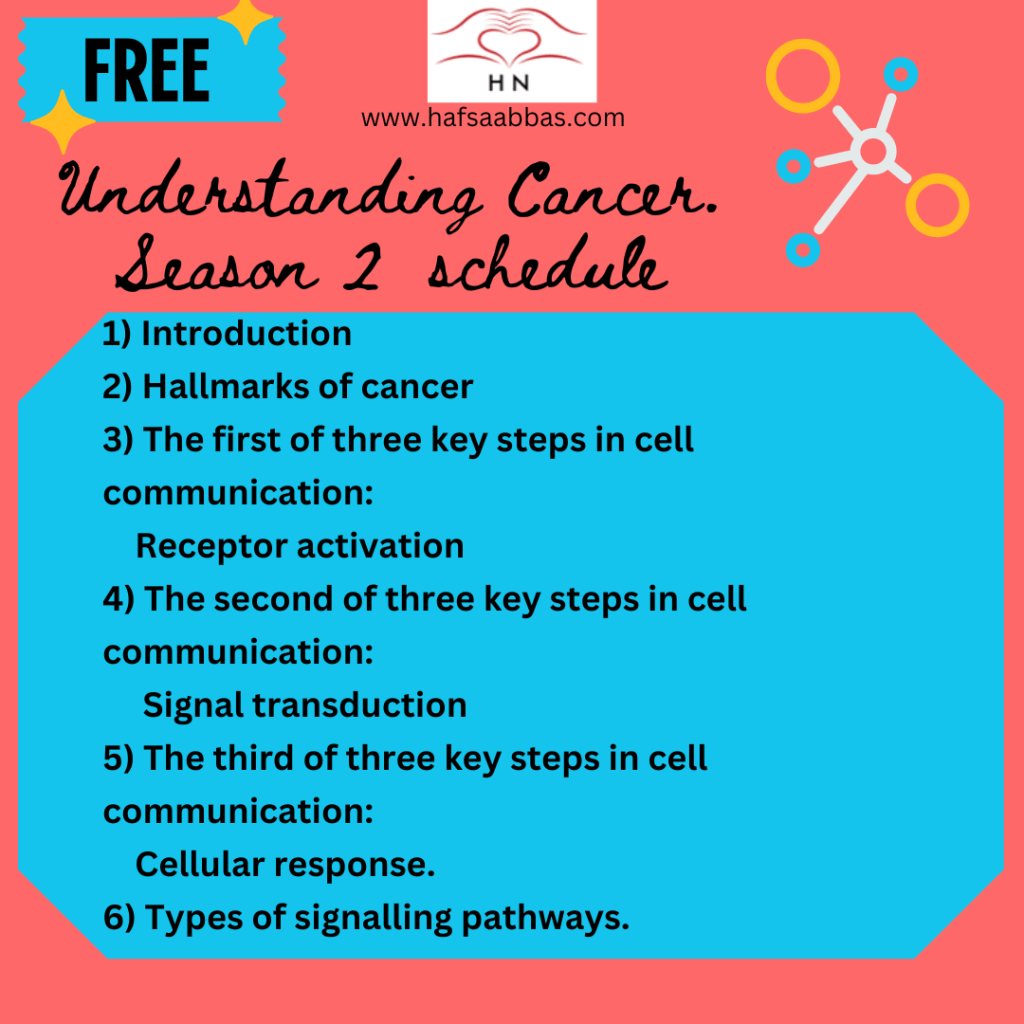
How Does It Work?
In Season Two, the general public will hopefully consolidate their understanding through carefully designed learning resources.
1) Simplified and clear lecture notes in PowerPoint, PDF, and video formats.
2) Revision posters with hand-drawn images.
3) Quizzes with answers to self-check.
4) Glossary – keywords with their meanings
5) 10–15-minute FREE Zoom meeting for students who require further one-to-one assistance with the resources.


Lecture One: Introduction to Cancer
This lecture aims to provide an insight into defining cancer and distinguishing the key differences between benign and malignant cancer. To determine factors that influence survival rates of cancer. To understand the importance of cellular communication. To provide insight into the historical development of cancer from key researchers: Edwin Smith, James Breasted, Hippocrates, Galen, Avicenna and James Needham. To instigate the structure and function of the chromosomes, DNA and genes and what causes genes to become faulty. To be able to understand the differences between oncogenes and tumour suppressor genes with key examples.
Lecture Notes
Tumourigenesis
This is an image of the structure of the skin. It presents how an abnormal cell begins with a change in a gene known as a mutation (purple circles with blue fragments) and can then undergo proliferation to form hyperplasia, dysplasia, in situ and malignancy (dark green). A malignant tumour is able to invade and metastasize other organs. A large size of this image is found in the resource list.

Structure Of The Animal Cell
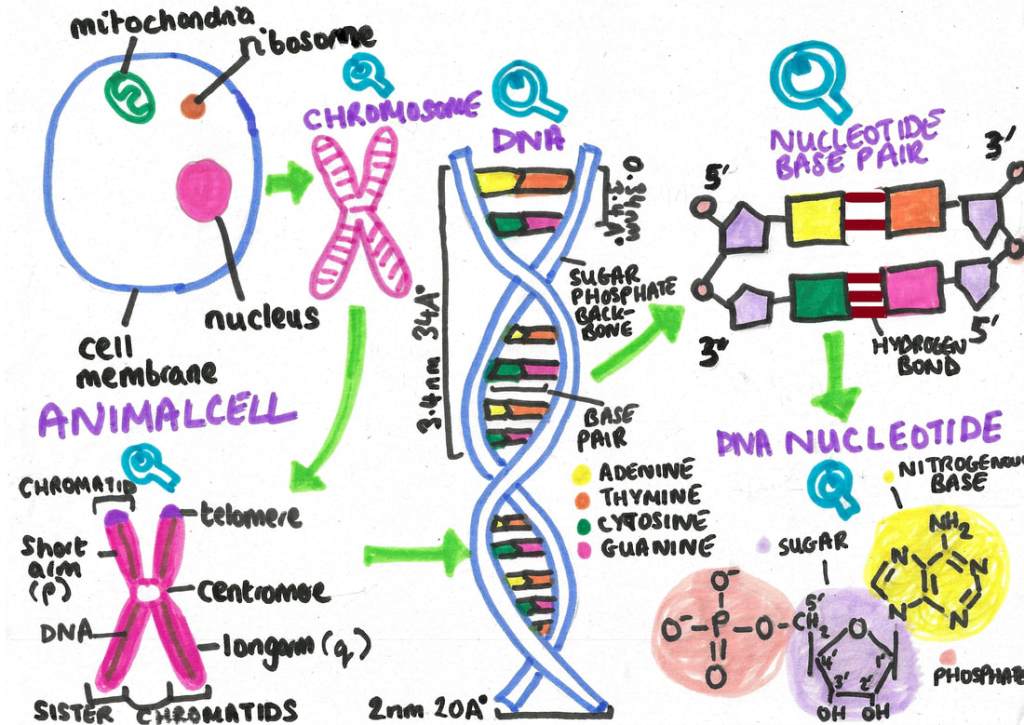
This image presents the structure of the fundamental unit of life from largest to smallest: the cell, nucleus, chromosome, DNA, gene, and nucleotide. A large size of this image is found in the resource list.
Early Discoverers Of Cancer
This image presents key medics who had a great role in developing our understanding of cancer today. A large size of this image is found in the resource list.

Types Of Genes Involved In Cancer
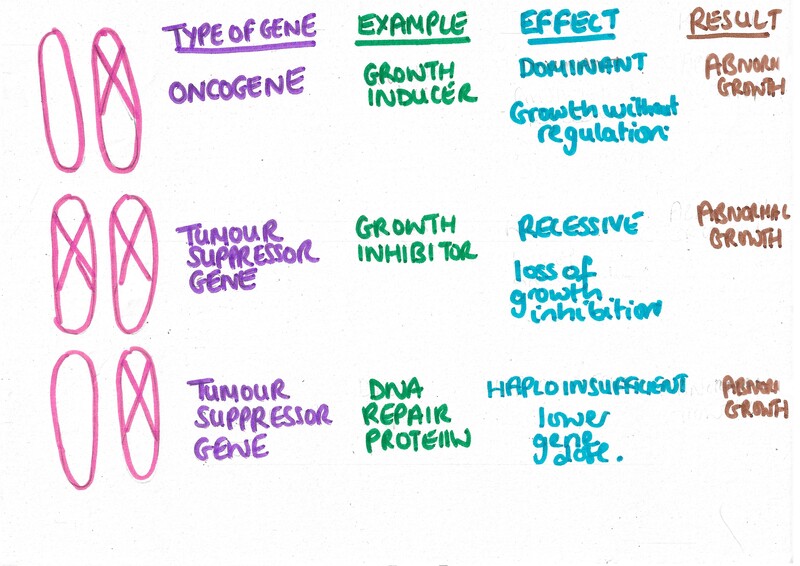
This image presents the effect of each type of gene (pink) involved in cancer. Oncogene can cause the cancer to grow. Tumour suppressor genes can prevent cancer growth and help repair. However, tumour suppressor genes are able to under mutation to form protooncogenes that can result in abnormal growth. A large size of this image is found in the resource list.
Resource List for Lecture One
Youtube Video
Structure of the DNA summary table
Glossary
Quiz
PDF formats of the images
 The Farah Saeed Project
Leave a comment