Lecture Thirteen: Wnt signalling pathway
This lecture aims to review the Wnt family of ligands and how they can undergo cellular communication through three main pathways: β-catenin dependent, β-catenin independent, and Planar Cell Polarity (PCP). Dysregulation of this pathway results in cancer.
The Wnt Pathway
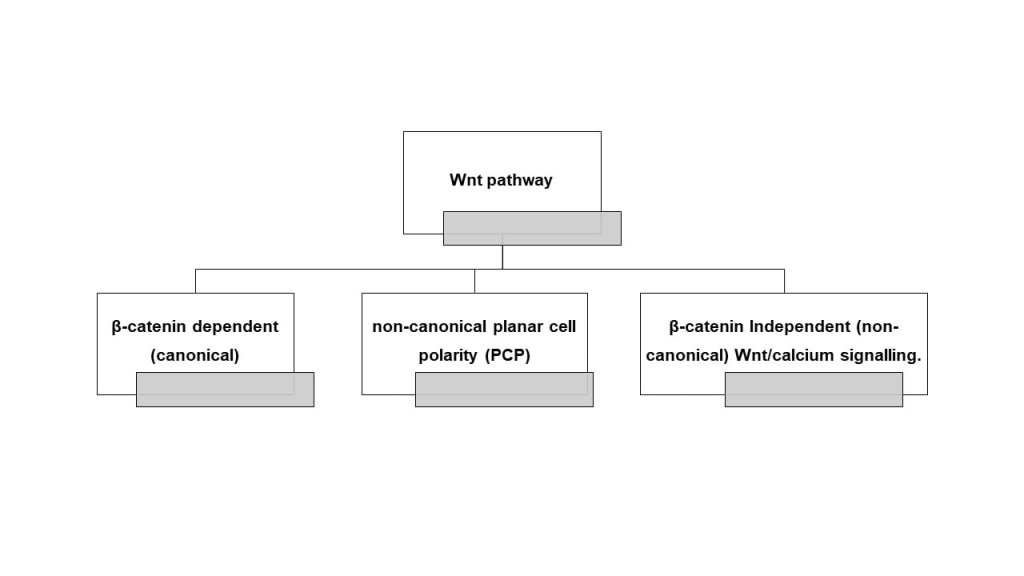
The image presents the classification of the Wnt pathway. There are more than 15 receptors and their respective ligands are glycoproteins with lots of cysteine receptors. In β-catenin dependent pathway, the Wnt ligand binds with the Frizzled receptor. The ligand-receptor complex then binds with low-density lipoprotein receptor-related protein (LRP). LRP undergoes phosphorylation and then phosphorylates Dishevelled protein. Disheveled is a negative regulator of the destruction complex. This stabilizes β-catenin and then translocates to the nucleus to induce transcription. In the Planar Cell Polarity (PCP) pathway, the Wnt binds to the Frizzled receptor. The Dishevelled protein links with small GTPases. Amongst the GTPases are Rho, Ras-related C3 botulinum toxin substrate (Rac1), and cell division control protein 42 (Cdc42). The signal is transduced via the JNK kinase to induce transcription. In the β-catenin independent pathway, the Frizzled receptor can be activated by Dishevelled protein or G protein to stimulate Phospholipase C and subsequent secondary messengers: inositol triphosphate (IP3) and Diaglycerol (DAG) to induce downstream signaling, transcription, and cellular response. This highlights the significant role of the Frizzled receptor and Dishevelled protein in all three types of Wnt pathways. A larger size of the image can be found in the resource list.
Resource List For Lecture Thirteen
Youtube video
Glossary
Quiz
PDF formats of the images
 The Farah Saeed Project
Leave a comment