
Lecture Eight: PI3K/AKT/mTOR
This lecture discusses how the structure of Phosphatidylinositol 3-Kinases (PI3Ks), AKT, and mammalian targets of rapamycin (mTOR) adapted to their function and regulation. To review the three key steps: receptor activation, signal transduction, and cellular response. To present the proteins that link EGFR and PI3K/Akt/mTOR signaling pathways. To review the mutations of key components that cause dysregulation of the pathway and different types of cancer, especially at advanced stages.
Structure Of PI3K, AKT and mTOR
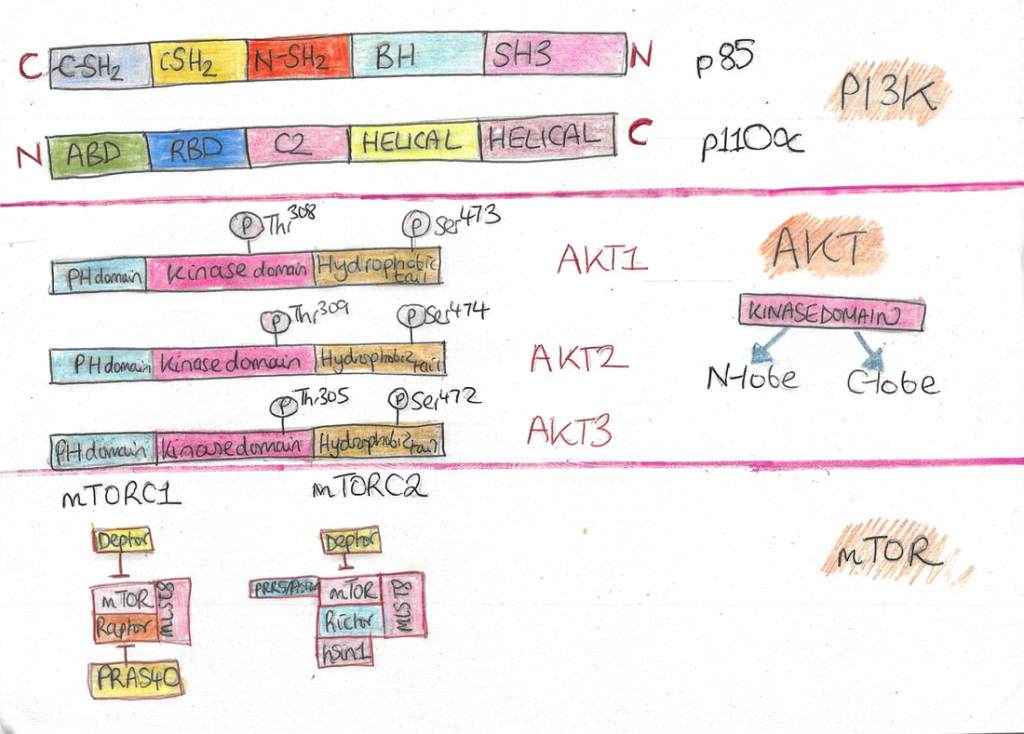
The image presents the structure of the Phosphatidylinositol 3-Kinases (PI3Ks), Akt, and mammalian target of rapamycin (mTOR). The PI3K is an enzyme with two subunits: catalytic p110 and regulatory p85. Three main classes of PI3K vary in structure, function, and regulation. AKT also known as protein kinase B has three types: AKT1 is found in the cytoplasm and nucleus of cells whereas, AKT2 is found in the mitochondria of cells. AKT3 resides in the nucleus of the brain, kidneys, and the heart. One of the AKT targets is the serine-threonine kinase, mTOR and there are two main types of mTOR with distinctive features. mTOR1 consists of the Raptor that regulates mTOR activity. This interaction is facilitated by the mLST 8 bound to the kinase domain of mTOR. The activity of mTORC1 is negatively regulated by PRAS40 and Deptor.
However, mTOR2 is bound with the Rictor protein. Rictor-1 interacts with Protor-1. MLST 8 facilitates the complex between two mTOR. mSin1 induces mTOR to phosphorylate and activate Akt. Deptor solely negatively regulates mTORC2. The heat shock protein, Hsp70 maintains kinase activity and phosphorylates Akt. A larger size of the image is found in the resource list.
The PI3K/Akt/mTOR pathway
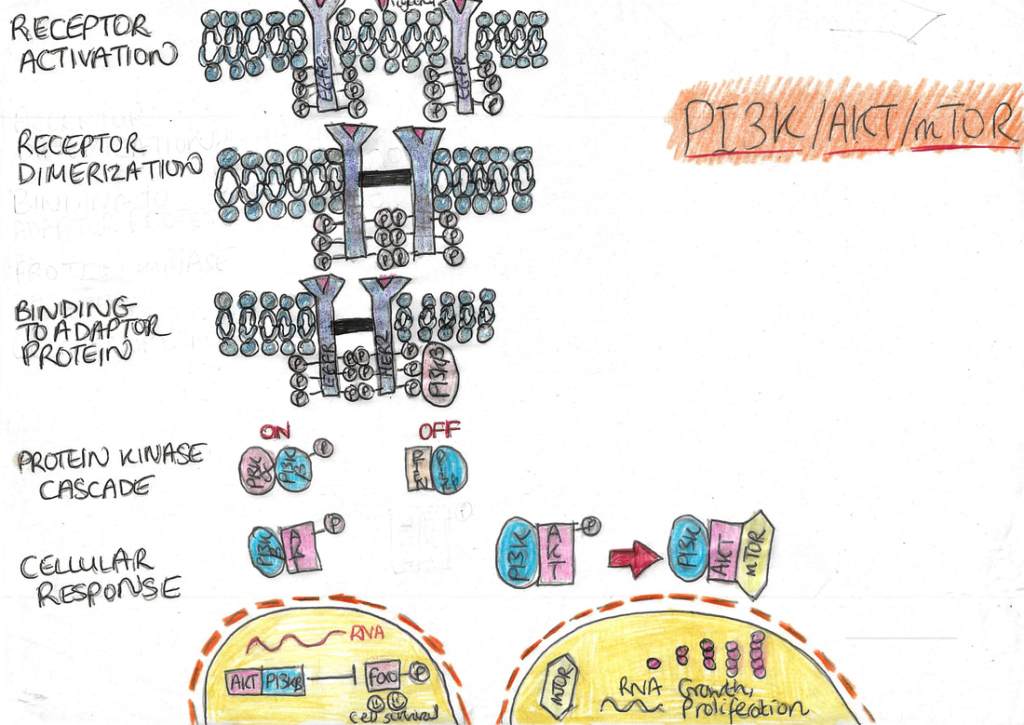
The image presents the key steps involved in the PI3K/Akt/mTOR pathway where the ligand (pink triangle) binds with the receptor (grey). Amongst the ligands the receptor can bind to are: hormones, cytokine proteins, growth factors, and nutrients. Dimerization of the receptor and phosphorylation occurs at the regulatory p85 subunit of PI3K. Further interactions between the domains of p110 and p85 subunits occur. Signal transduction has additional steps where the p110 catalytic subunit of PI3K Class 1 (aqua blue) produces the PIP3. The Akt (pink) translocates to the plasma membrane and is phosphorylated by PDK1 and mTORC2 (yellow). Downstream signaling of AKT targets to elicit a response ans transcribe target genes for cellular processes, for instance, metabolism, protein synthesis, proliferation, migration, and cell survival. A larger size of the image is found in the resource list.
Genes involved in the PI3K/Akt/mTOR pathway
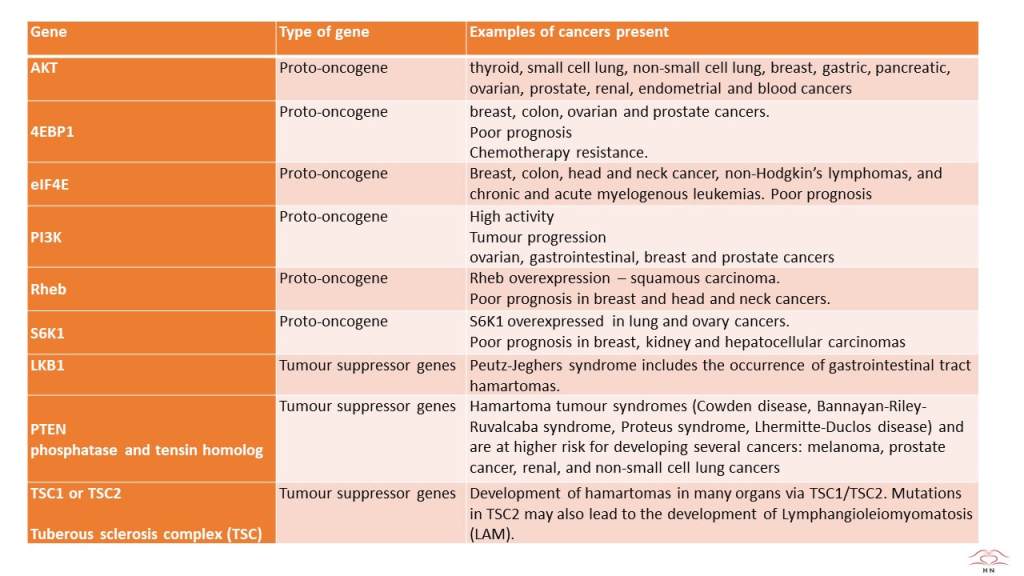
.A summary table presenting a multitude of genes that promote or suppressor tumour progression and examples of cancer it is involved in. A larger size of this table is found in the resource list.
Resource List For Lecture Eight
Youtube video
Glossary
Quiz
PDF formats of the images
 The Farah Saeed Project

Leave a comment