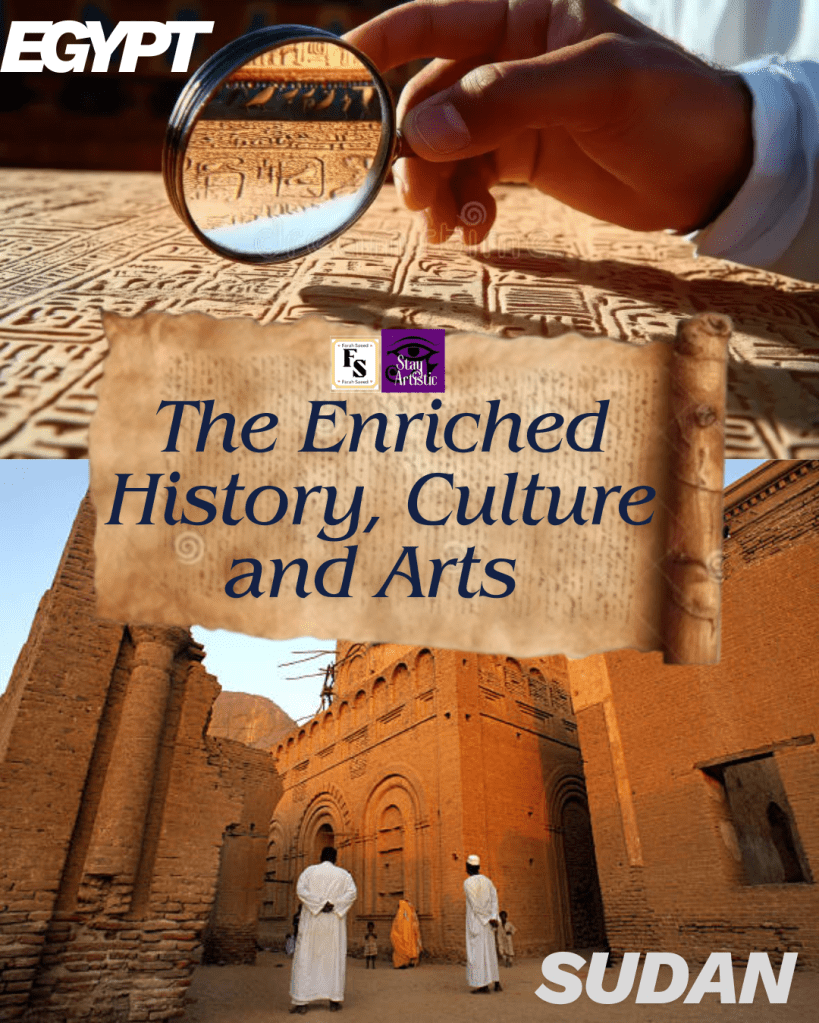
This artistic project Enriched history, culture, and arts, examining the intertwined histories of Egypt and Sudan, highlighting how rituals, artistic expressions, and architecture reflect cultural exchange and Egypt’s artistic influence on Sudan, shaping both nations’ identities. Egypt will be on Saturdays, whilst Sudan will be on Sundays.
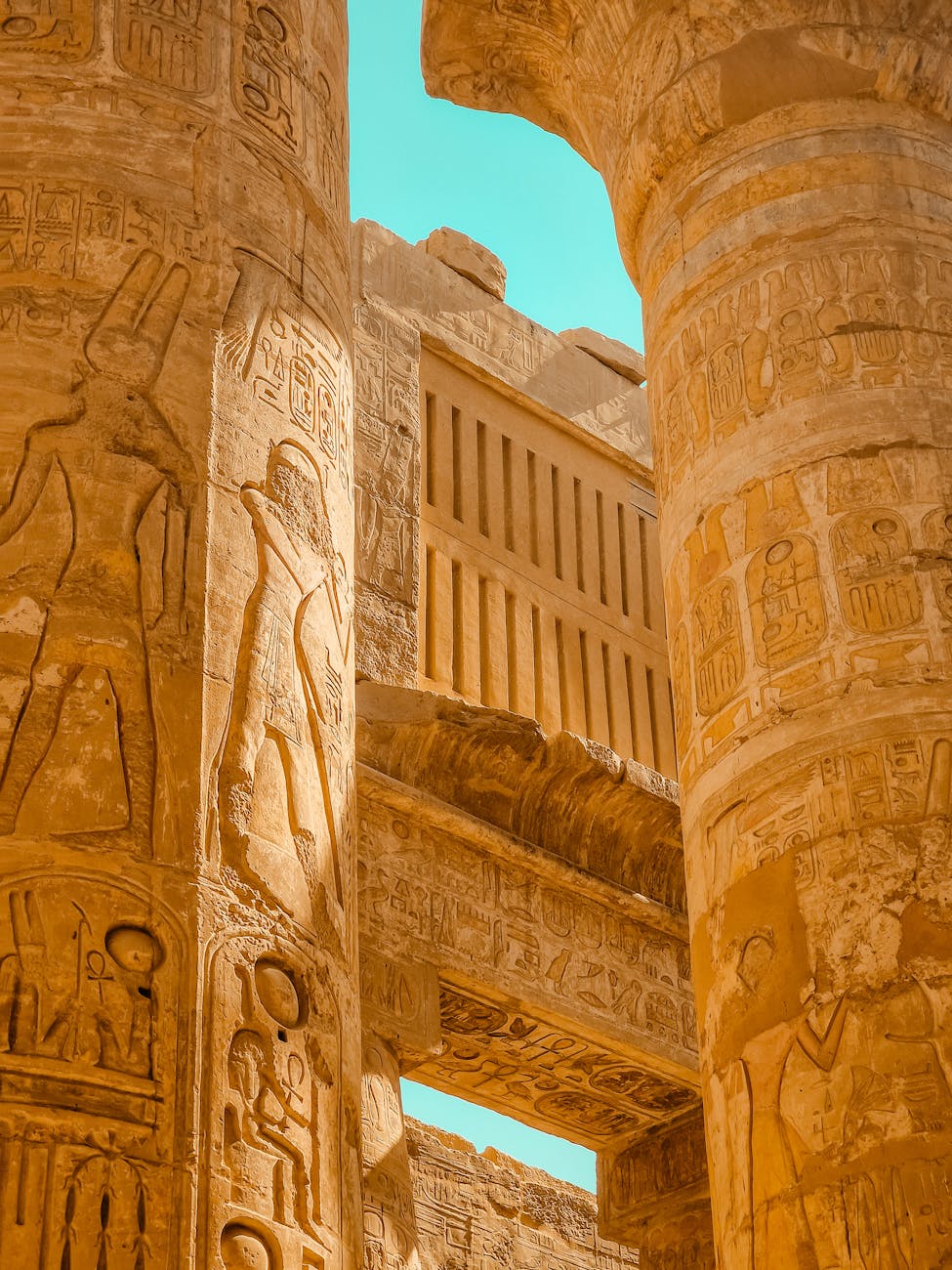
Building on this historical context, it is important to recognize that for over 3000 years, from 3100 B.C. to 30 B.C., Ancient Egypt was an influential civilization and powerhouse whose works of art are exemplified through the monuments and other preserved documents. Today, many artisans contribute to the local economy by selling handmade products connected with ancient history and modern-day art. This leads to a sense of solidarity and respect from a cultural perspective and maintains stability in a culturally resonant built environment. The creative expression of decorative arts can be established using defined materials, architectural traditions, and meaningful inscriptions displayed in homes, buildings, and public spaces.
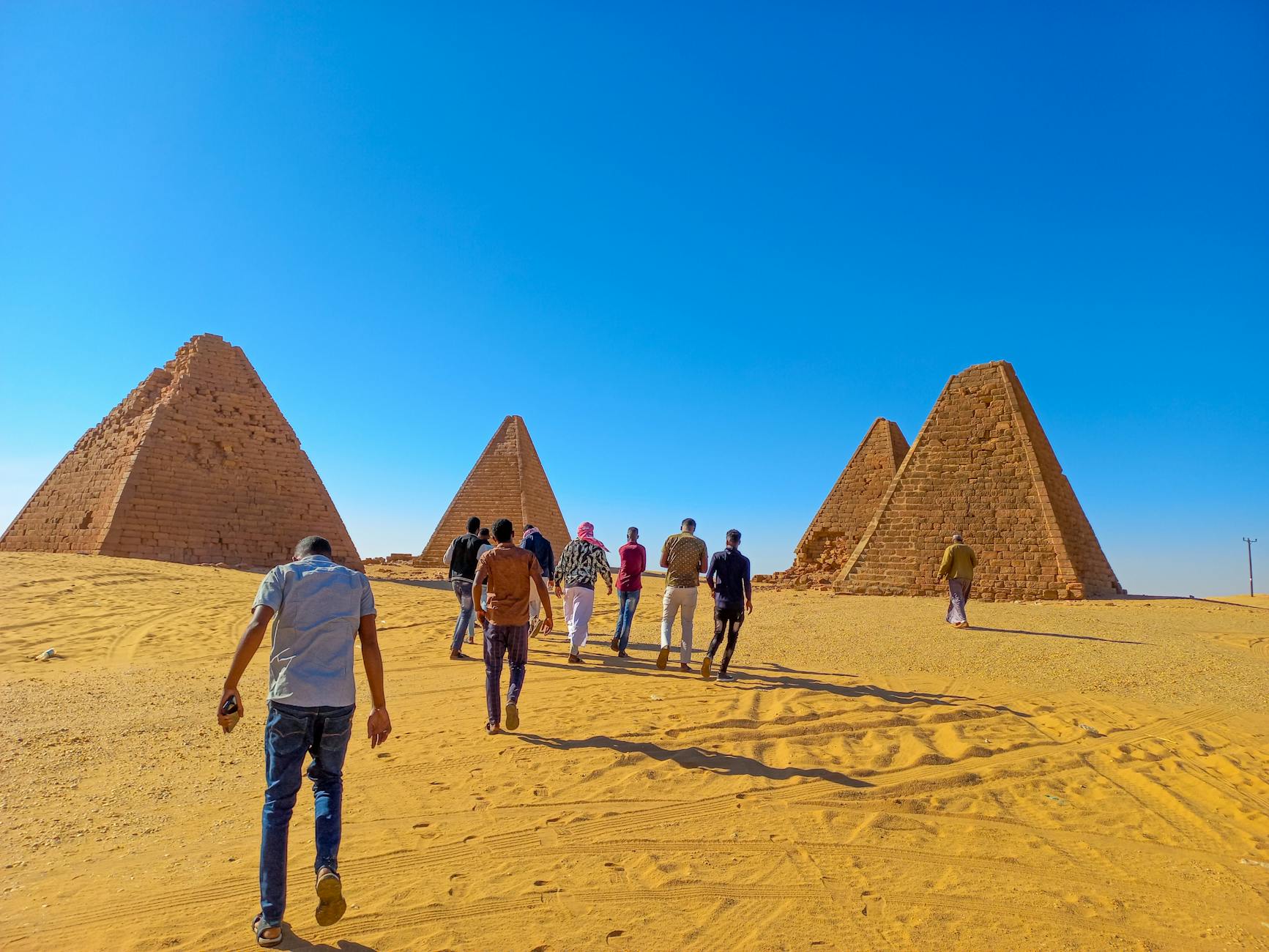
Some of the most iconic measurements in African history and heritage have left an architectural legacy, especially the kingdom of Kush, whose period is between 25000 BCE and 350 AD. Many of the basic buildings are made of a range of environmental techniques for health and social reasons. The reigns and materials vary based on Sudan’s geography, tradition, environmental adaptability for the hot, arid climate, where mud and stone absorbed heat during the day and released it at night, and cultural influences.
For example, the Sahara Desert in the north is a consistent source of heat to keep the interior warm during hot desert nights. Most are constructed from mud bricks and dried clay that has been spanned by centuries, where it is mixed with straw or cow dung to make insulating bricks. Straw huts with conical roofs are called ghotiya. Vaulted designs are supported by wooden beams for temples. They also used hypostyle halls and courtyards, but often incorporated distinctively Kushite elements, like carved stone reliefs depicting local gods and kings. Some of these courtyards had decorated pathways influenced by the Arabian arts. Moreover, some nomads living throughout Sudan sleep in tents and depend on their tribes. The Rashiaida, for example, used goat hair, whereas the Hadendowa weave their homes from palm fiber.
In contrast, the coastal regions of Sudan, particularly the port town of Suakin, offer a stark contrast to the ancient pyramids and temples of the Nile Valley. There is a porous nature of coral stone and reefs that helps to suppress the humid coastal environment. This was abundantly found in the Red Sea region. Mashrabiyas are wooden lattice screens or windows—a distinctive feature of many homes, providing privacy while allowing for airflow.
Preservation of architectural heritage is important historically, regionally, and globally,, and helps to identify ways to further help improve Sudan and Egypt alike.
Collectively, both countries, Egypt and Sudan, are among the 54 nations that form the beautiful continent of Africa. It even included the islands of Cape Verde, the Comoros, Madagascar, the Seychelles, and Mauritius. Africa is the second-largest continent, encompassed by savannahs, grasslands, safaris, mountains, deserts, and surrounded by water. The North is the Mediterranean, to the northeast is the Red Sea, to the east is the Indian Ocean, and to the west is the Atlantic Ocean. The origin of Africa has given rise to several hypotheses. Some consider it stems from the Greco-Roman and Phoenician influence, where the Greeks referred to it as ‘aphrike’, meaning ‘without cold’, whereas the Latin considered it to be sunny and called Africa ‘aprica’.
Each country is unique in its own nature through the streams of culture, native languages, indigenous groups, traditions, colonism, and historical forms that influence its societal practices, customs, style, and life. The aim is to flip the image of war, hunger, and poverty by focusing on the architectural and cultural traditions. Most importantly, this is not a comparative mission but to mesmerise the architectural monuments left behind that hold stories of historical civilizations.
References
Guy-Allen (2015) 54 countries, 54 photos, 1 continent. Available at: https://www.one.org/stories/54-countries-54-photos-1-continent/ (Accessed: 17th May 2026)
Hage, R. (2025) The Traditional Architecture of Sudan – A Historical and Regional Survey. Available at: https://www.arabamerica.com/the-traditional-architecture-of-sudan-a-historical-and-regional-survey/ (Accessed: 25th April 2026)
Jarus, O. (2025) Ancient Egypt: History, dynasties, religion and writing. Available at: https://www.livescience.com/archaeology/ancient-egyptians/ancient-egypt-history-dynasties-religion-and-writing (Accessed: 25th April 2026)
National Geographic Society (2026) Africa: Human Geography. Available at: https://education.nationalgeographic.org/resource/africa-human-geography/ (Accessed: 17th May 2026)
 The Farah Saeed Project
Leave a comment