Day One
Dear brothers and sisters in Deen and those who are in humanity,
I hope you are well,
The first of the best ten days of one of the most sacred months of the lunar (moon) calendar of Dhul Hijjah has reached us.
It is a moment where we increase His Remembrance by ordaining the good and forbidding the evil through tongue and in action, and in its place is pure Remembrance of Allah (The Almighty) (Dhikr), increasing Dua (supplication) and performing other good actions of worship.
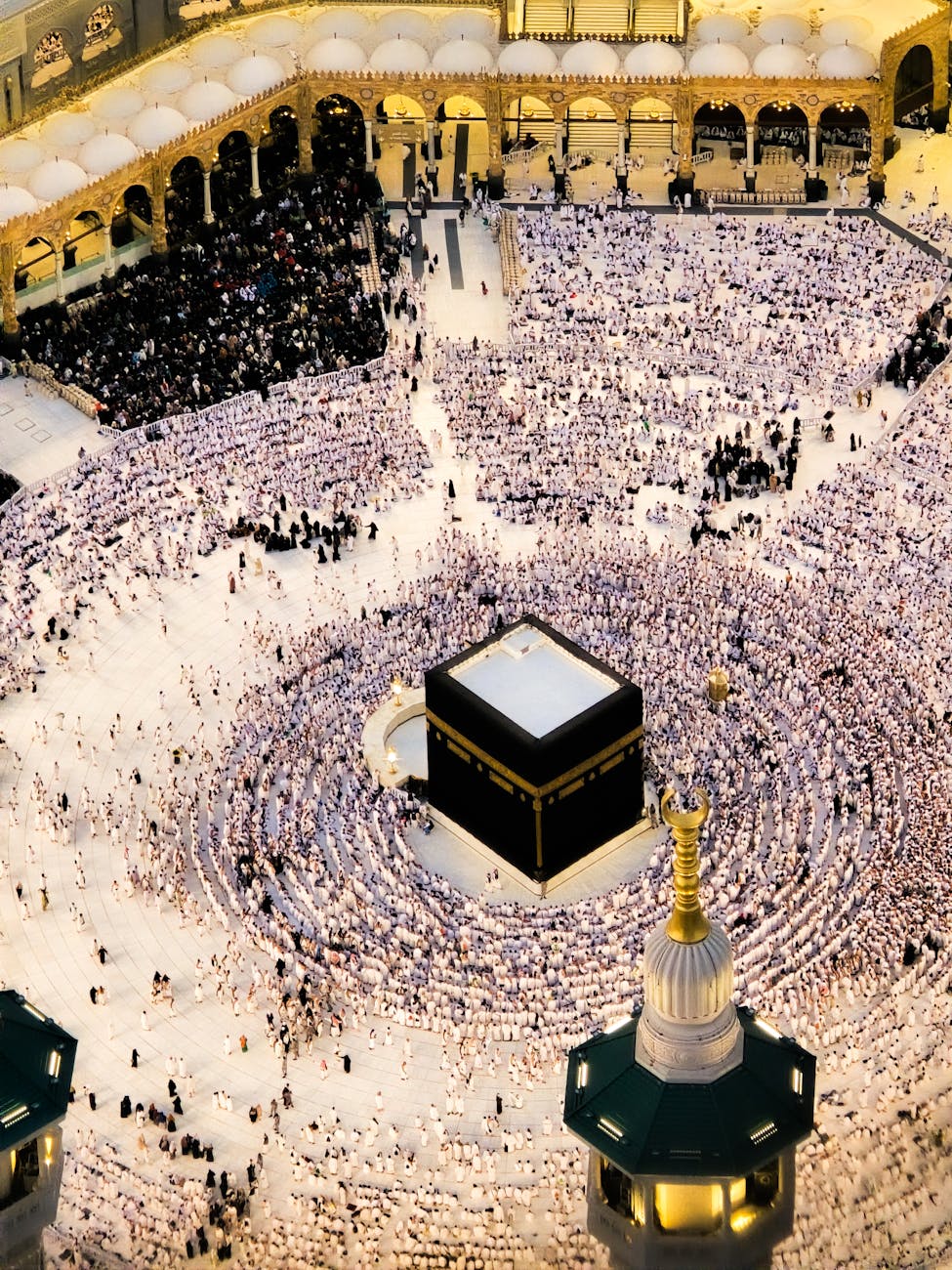
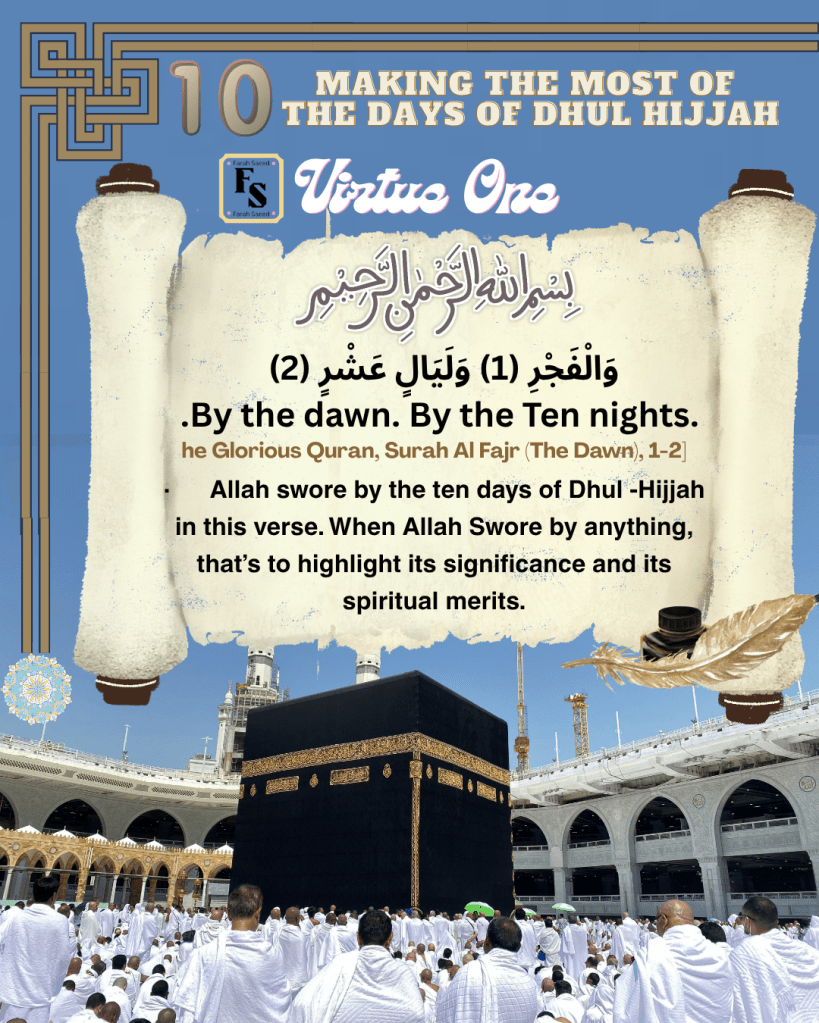
Allah sworn that these are the best ten days which holds many significance where He has written and invited billions of people for the golden opportunity of a lifetime to visit His Sacred Mosque, fulfilling its rites from the intention in Ihram all the way to the Days of Tashreeq where the Rami of the Jamarat (throwing stones at the pillars) takes place to inculate piety and goodness within our souls.
These days, we intensely concentrate on Allah (The Most High), and we are all in different stages of our level of piety.
Just like how we enter into an exercise or routine gradually for a significant event…
Over the next ten days, we aim to give an insight to Muslims and non-Muslims alike on why these 10 days of Dhul Hijjah, especially the big day…Day of Arafah and why it is important for Muslims, and a gentle reminder so there is mutual respect.
Day Two
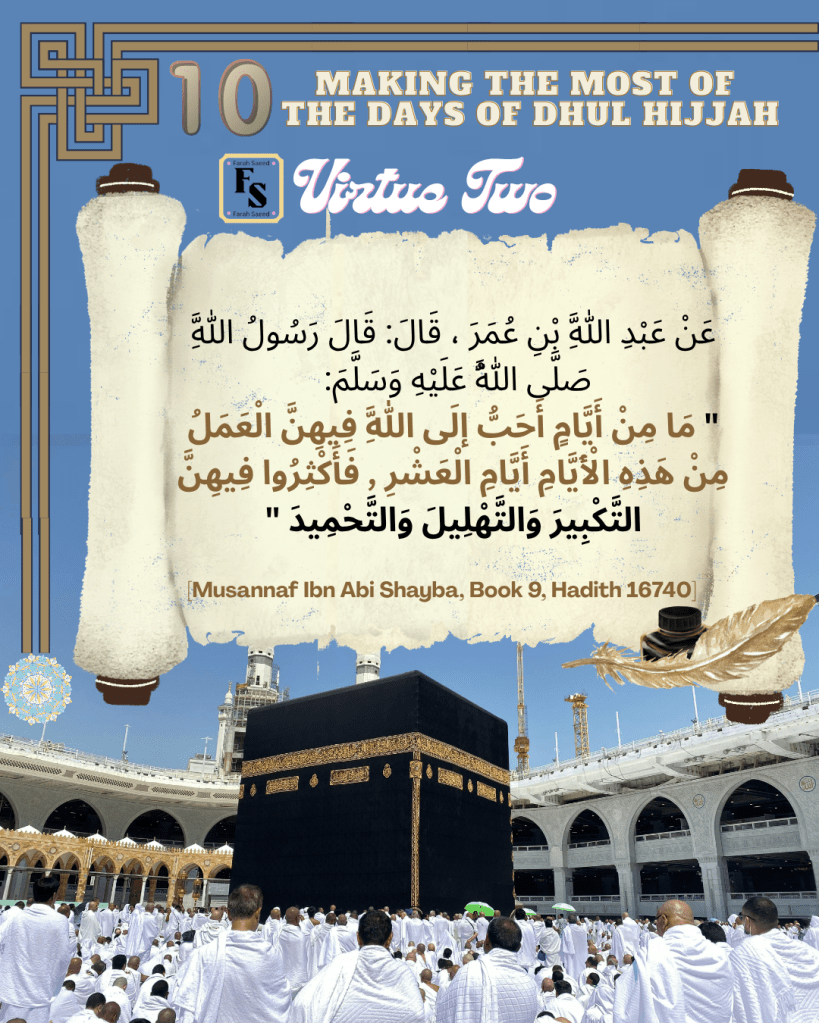
Dear brothers and sisters in Deen and those who are in humanity,
I hope you are well,
How was your first day of Dhul Hijjah like?
Not to worry, there are still eight days before the big day..Day of Arafah on the 9th of Dhul Hijjah (The Day of Standing)!
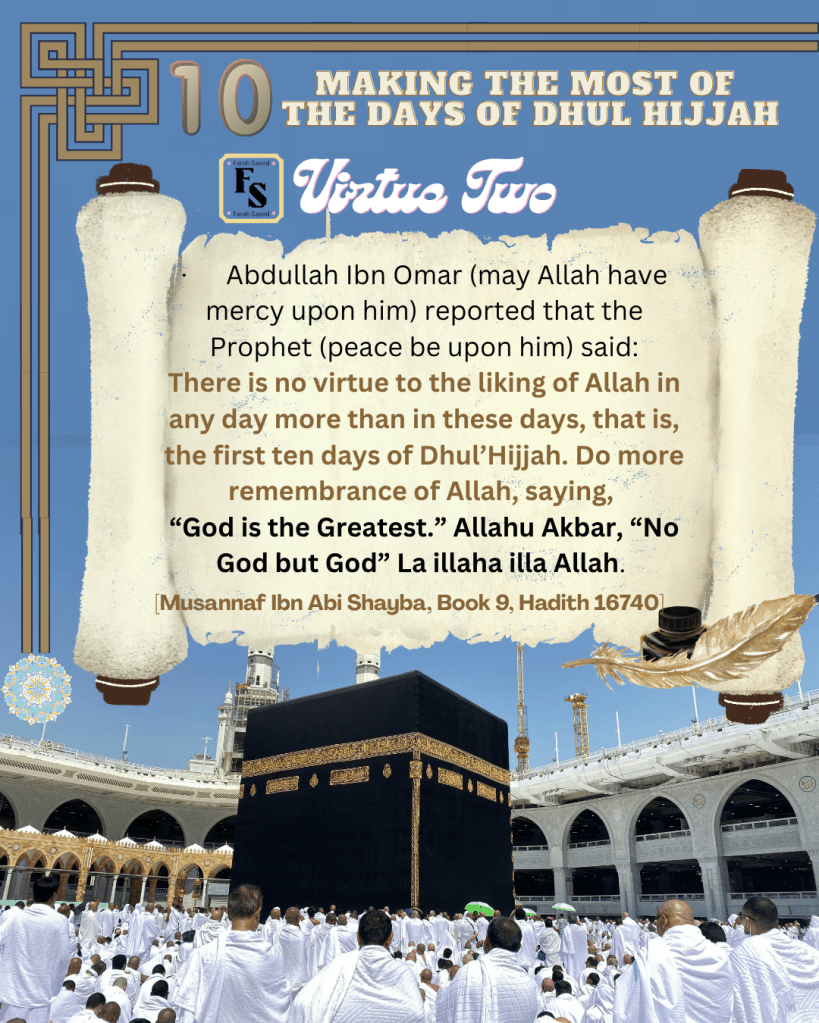
Today’s hadith (Sayings of the Prophet Muhammad (peace be upon him) reflects on a good daily routine that Muslims perform:
Takbeer
Allahu Akbar (God is Great)
Tahleel
La ilaha illah Allah (There is no deity but Allah).
Tahmeed
Alhamdulilah (All Praise To Allah).
La ilaha illah Allah is part of the declaration of faith where Muslims believe that there is no God but Allah and Prophet Muhammad is His Messenger.
Muslims also believe that Allah (God) has created everything from the heavens, earth, and all his creation with His Divine Power and Decree. Therefore, He is Great.
This is why Muslims praise Him because we are all thankful to Him for His limitless blessings that we have on us, around us, and inside us.
Thus, we worship Him with submission and humility because He is the ilah (deity) who does not depend on anyone, and none is worthy to worship other than Him. None has equal power to Him, and He is the Sustainer of the entire universe.
We continuously say the tahleel, tahmeed, and takbeer because this is the essence of a belief. Just like how water moistens our tongue, seeking His Remembrance softens our hearts and vision on the practicality of life.
As Muslims, we understand our limit and our purpose in life is to balance worldly commitments like study, work, and family life with our spiritual commitment. This enables to create unhampered, steady progress and success in both worlds as we believe there is an afterlife.
Believing in God and seeking His Remembrance dispels all clouds of ignorance and is replaced by the reality of living rightly and acting justly.
Remembrance of Allah produces a strong degree of determination to trust in Allah (The Most High) by observing God’s law and also an attitude of peace and contentment.
The seed of faith (Imaan) is what one prospers through His obedience. Remembrance of Allah produces a strong degree of determination to trust in Allah (The Most High) by observing God’s law and also an attitude of peace and contentment.
The seed of faith (Imaan) is what one prospers through His obedience.
So how can we make dhikr?
For those who are not performing Hajj, there is no specific place to do it, you can do it whilst doing your other commitments at home, on transport, shopping, break time at work or school, college or university.
This is achieved either via the fingers of the hand, tasbeeh (beaded necklace), or tasbeeh timer on the finger.
Day Three
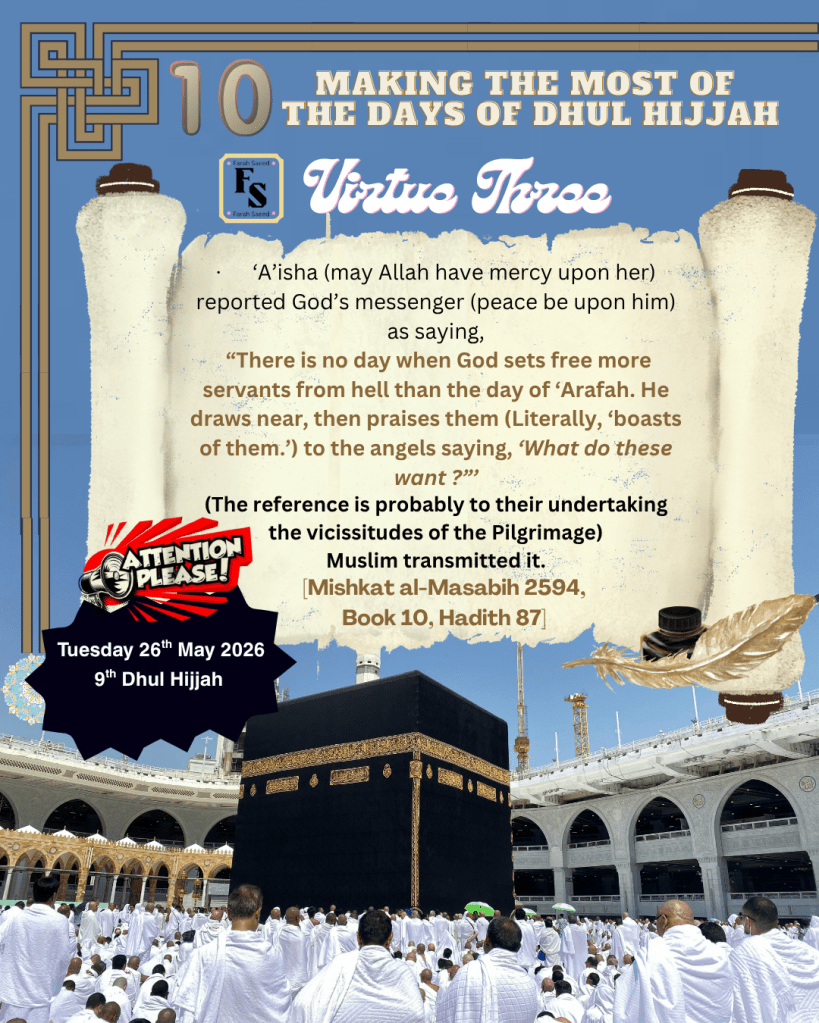
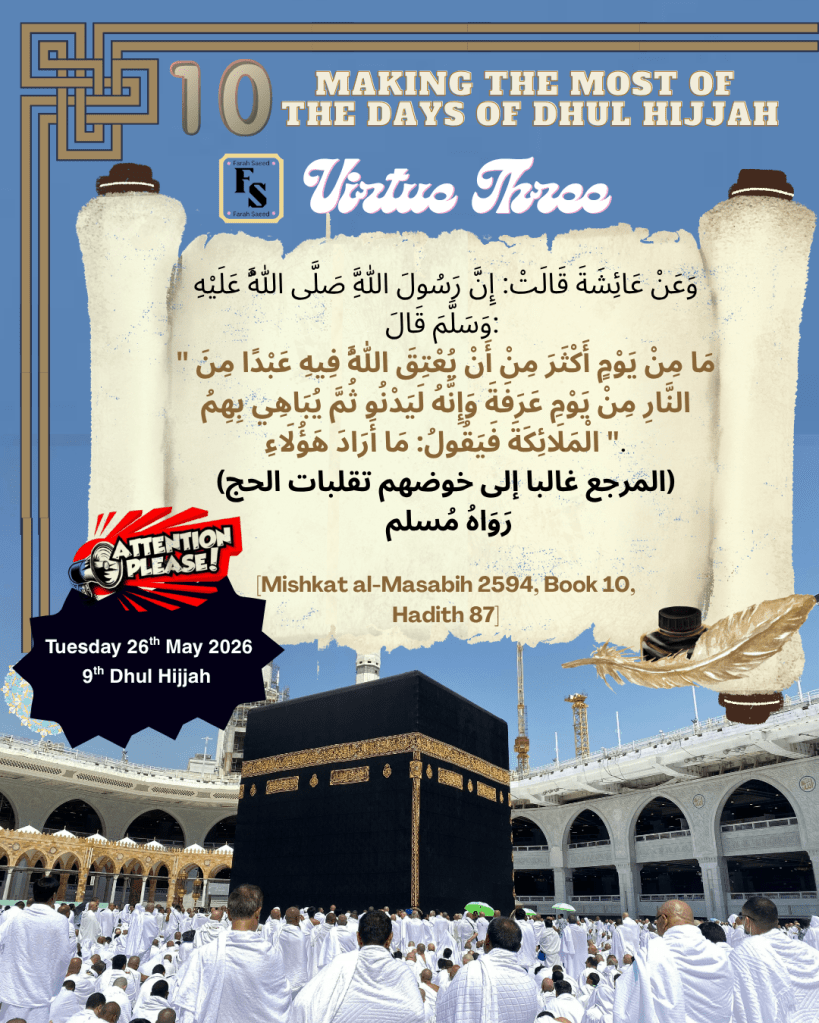
Dear brothers and sisters in Deen and those who are in humanity,
I hope you are well. The hadith (sayings of the Prophet) presents another virtue of the blessed days of Dhul-Hijjah.
It explains how Allah (The Most High) becomes happy and boasts with His angels when He hears the Hajj pilgrims and those who are not performing pilgrimage seeking His Remembrance, praising Him, and making Dua for forgiveness and protection from the Hellfire. Al-Lateef (The Most Gentle) and Al Ghafoor (The Most Forgiving)
For a universal explanation to help Muslims and Non-muslims understand the importance of Arafah.
The aim of today is to discuss the following:
Why was Hell even created?
Does God want us to go to Hell?
Does Allah (The Most High) does not forgive on any other days?
Why are Muslims seeking forgiveness from Allah (The Most High) during the Hajj (pilgrimage season)?
Where is Mount Arafah?
Why are Hajj pilgrims going to Arafah to seek forgiveness?
What is Hell and why it was created?
Allah (The Most High) has created the heavens and the Earth, and Muslims believe that we were created to worship Him and are here on this planet temporarily until an appointed time, and we will be resurrected to be accounted for everything we have done on this planet, the good and the bad, irrespective of the religion followed.
On the arrival of the Day of Judgement, everything will perish. Amongst the nature of God’s creation are angels, and one of the appointed angels by the name of Israfeel will blow the Trumpet, and all humans will be resurrected on the Plains of Hashr. Al Hashr is the Arabic term for Gathering. Hence, the day of judgement is also known as the Yawm Al Hashr (The Day of Gathering), Yawm al Hisaab (The Day of Reckoning), and Yawm al Hisaab (The Day of Accountability).
If good deeds are heavier than the evil deeds, then we will go to Jannah (Paradise).
If more sins are committed and outweigh the good actions, then we will go to Jahannam (Hell).
In Islamic theology. Paradise is a place where there is infinite peace, happiness, and beauty for those who believe in Allah and have good character and perform good actions. In contrast, Hell is a place of severe punishment, disobedience, and committed evil without repentance.
The concepts of Paradise and Hell shape us, and the Glorious Quran has presented descriptions and repeated advice on both locations as a mere warning and motivation to become better and righteous. Hell has been described using the following phrases:“the fire” (النار, Al-Nar), “the blazing fire” (جحيم, Jaheem), “that which breaks to pieces” (حطمة , Hutamah), “the abyss” (هاوية, Haawiyah), “the blaze” (سعير, Sa’eer), and “the place of burning” (سقر , Saqar) and appears more than 500 times in different contexts.
Does God want us to go to Hell?
Do you think Our Beloved Lord, who has blessed us with everything, wants us to go to Hell?
No, He doesn’t.
It is us mankind who make the choice, and sometimes, even after making a mistake, we do not seek refuge in Allah, so we face the consequences. To seek refuge and forgiveness, one can simply turn to Allah with a sincere heart and ask for His mercy and guidance. For example, say “Astaghfirullah” (I seek forgiveness from Allah) and make a sincere intention not to repeat the mistake. You can also perform a simple dua (supplication) like: “O Allah, forgive me for my mistake, help me do better, and protect me from repeating it.” Seeking forgiveness can be done at any time by feeling remorse, asking Allah for forgiveness, and trying to improve your actions.
This is why Allah offers many chances for us to get back on track, through the guidance of the Quran (The Word of God) and the Hadith (Sayings of the Prophet peace be upon him).
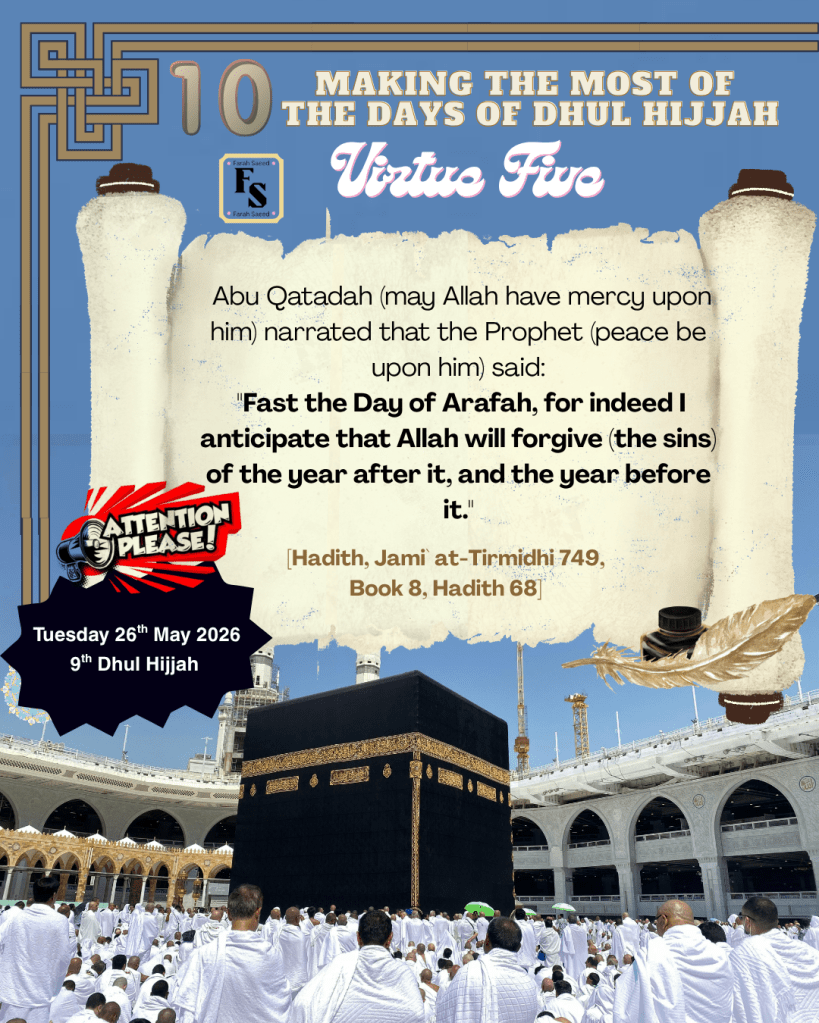
Now, the Day of Arafah is a special day where Muslims believe that fasting on this day will expiate sins of the previous year and the forthcoming year. It was narrated from Abu Qatadah that the Messenger of Allah (peace be upon him) said:
“Fasting on the Day of ‘Arafah, I hope from Allah, expiates for the sins of the year before and the year after.”
[Sunan Ibn Majah 1730]
Does Allah (The Most High) does not forgive on any other days?
Allah is the Most Gracious and Most Merciful and there are specific duas (supplications) that can be recited on removing some of the sins. However, the most prominent times when sins are mainly forgiven when a sincere intention is present are during the last ten days of Ramadan and Arafat (9th Dhul Hijjah).
There are some similarities between them, whereby in Ramadan, effort is made throughout the month of Ramadan, waiting for the Night of Power, where sins are forgiven, and worshipping Him accounts for 83 years of Ibadah (worship), and fasting with sincere faith, forgives all past sins.
On the other hand, the first ten Days of Dhul-Hijjah are also where effort is made in preparation for the Arafah Day, where sins of the previous year and the forthcoming year are forgiven.
However, there are several differences; the Night of Power is unknown, and Muslims search for it in the last ten nights, especially on the odd nights (21st, 23rd, 25th, 27th, and 29th nights of the lunar month of Ramadan). On the other hand, Arafah is a known day, and there is wisdom for Allah alone knows how weak mankind is.
However, let us just converse….
There are some people who, when doing a task, whether they have an appointed deadline or not, work passionately towards it because it is a goal and intention. Some leave it until the last minute and then make an effort on the day. Some people are in a constant state of worry about doing a task because they don’t know when the appointed deadline is.
This is the state of human nature.
Why are Muslims seeking forgiveness from Allah (The Most High) during the Hajj (pilgrimage season)?
For anything we have done in the past.
Hajj is a journey of effort, sacrifice, and devotion where the white cloth connotes purity, submission, and release of all worldly desires.
Where is Mount Arafah?
The literal meaning of the word Arafah is “to know.”
Mount Arafat is in Jabal Al Rahmah (The Mountain of Mercy). It is situated on the plains of Arafah. This is 20 kilometres southeast of Makkah in Saudi Arabia. It is near all key locations of the rituals of Hajj. 10 kilometres from the tent city of Mina, 6 kilometres from Muzdalifah, and 22 kilometres from Makkah, where the Kaaba, house of Allah, is found.
Why are Hajj pilgrims going to Arafah to seek forgiveness?
People who are not performing Hajj can seek forgiveness from Allah anywhere.
On the other hand, those who are performing Hajj seek His Remembrance and forgiveness throughout the journey and most particularly on the plains of Arafah, because it is a special place for supplication, because:
This is where Prophet Adam (peace be upon him) and Eve/Hawa were reunited and forgiven by Allah after they were taken out of Jannah.
This is where the Prophet Muhammad (peace be upon him) delivered his Last Sermon (Khutbah Al-Wada) and spent his last Hajj in deep prayer.
This is the time when Allah frees people more from the Hellfire than on any other day.
This is where Prophet Ibrahim (peace be upon him) made dua.
This is the day when Shaytan (Devil) is humiliated, rejected, and infuriated.
Therefore, it is a place where asking from Allah on the Mount of Arafah, His response is promised. Therefore, a pilgrim’s heart should be filled with purity, need, and asking for His forgiveness.
Overall, the Day of Judgement is central, with accountability for all actions. Arafah and Ramadan are special times for forgiveness and spiritual renewal. Seeking forgiveness is accessible to all, not just Hajj pilgrims.
References
Tariq, A. (2026) Mount Arafah – Jabal ar-Rahmah – Facts and Significance in Islam. Available at: https://thepilgrim.co/mount-arafat/ (Accessed: 20th May 2026)
Zahra, S. (2025) The Concepts of Paradise (Jannah) and Hell (Jahannam) in Islam. Available at: https://blog.muslimandquran.com/the-concepts-of-paradise-jannah-and-hell-jahannam-in-islam/ (Accessed: 20th May 2026)
Day Four
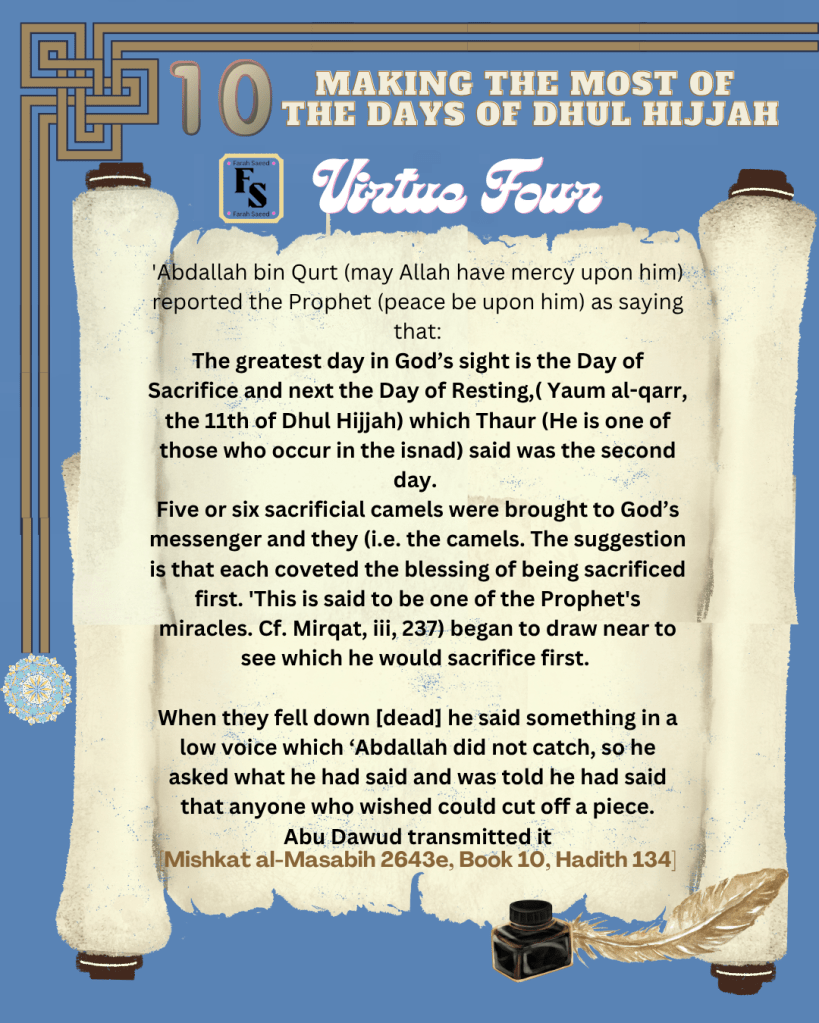
Dear brothers and sisters in Deen and those who are in humanity,
I hope you are well,
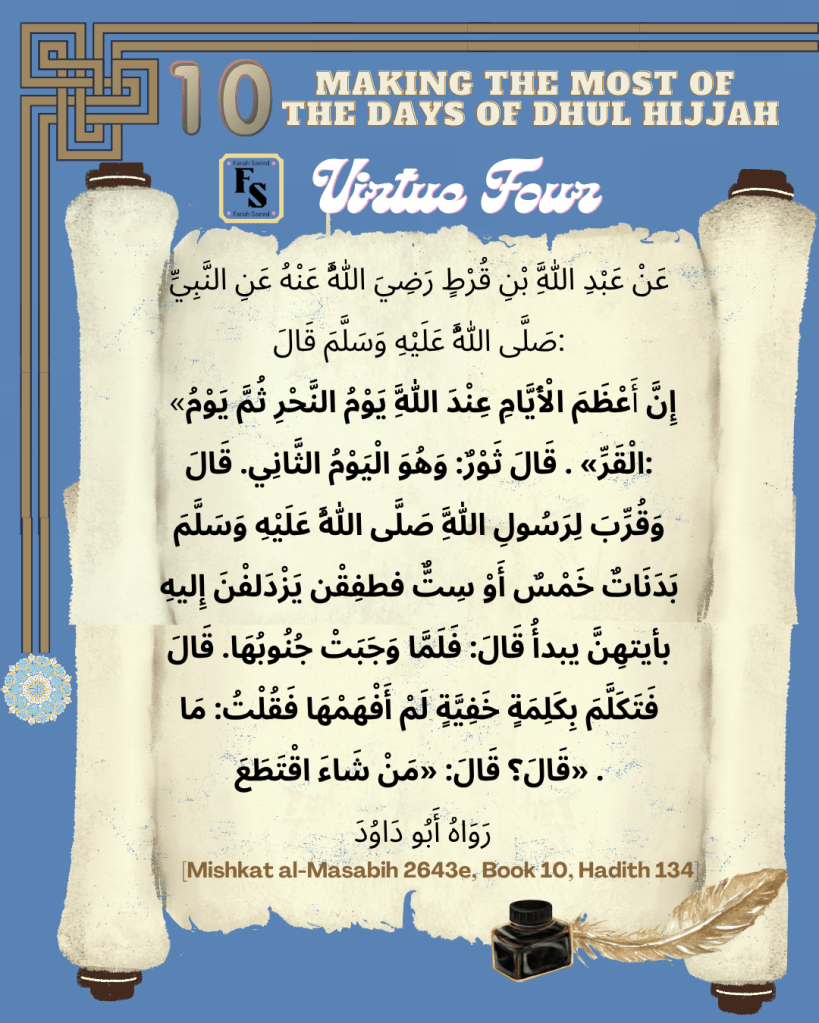
The hadith today has several angles to discuss when contemplating on the two stated dates:
The Day of Sacrifice (Youm Al Nahr) (10th Dhul Hijjah)
The Day of Resting (Youm Al Qarr) (11th Dhul Hijjah)
However, to make it easier for everyone. The four areas we will discuss is the following:
Why is it called the Day of Sacrifice and key lessons?
Why camels are specifically selected?
Why is it called the day of Yawm Al Qarr and virtues?
Though they are days away, it is important to understand rather than wait till both respective days and not understand their purpose.
Let us begin.
The Day of Sacrifice
On this day, billions of Muslims worldwide perform Qurbani. Qurbani is a sacrifice of an animal that is normally a camel, cow, or sheep. This is performed to mark the completion of Hajj and is given to people who are in need and other pilgrims. This story relates to the sacrifice Prophet Ibrahim (peace be upon him) had made when he submitted to Allah’s command in sacrificing his son, Prophet Ismail (peace be upon him).
The Glorious Quran, which is the book that Muslims believe in, states the following:
“And the camels and cattle We have appointed for you as among the symbols [i.e., rites] of Allāh; for you therein is good. So mention the name of Allāh upon them when lined up [for sacrifice]; and when they are [lifeless] on their sides, then eat from them and feed the needy [who does not seek aid] and the beggar. Thus have We subjected them to you that you may be grateful. Their meat will not reach Allāh, nor will their blood, but what reaches Him is piety from you. Thus have We subjected them to you that you may glorify Allāh for that [to] which He has guided you; and give good tidings to the doers of good.”
[The Glorious Quran Surah Al Hajj (The Pilgrimage) 22: 36 to 37]
This story highlights the importance of faith and loyalty in Islam. The example of Prophet Ibrahim (peace be upon him) shows us that true loyalty means putting our trust in Allah above all else. His willingness to follow Allah’s command, even when faced with an extremely difficult test, teaches us about the strength of faith and the importance of loyalty—to Allah, to our families, to ourselves, to our communities, and to humanity as a whole. The story encourages us to reflect on our own lives and think about how we can show loyalty and commitment to what is right, even during tough times.
Some people may think Oh, this is murder.
This is correct if it is done by someone who is not of a title nor has been granted Prophethood by Allah.
Prophets are selected and chosen by Allah Himself to pass His Message to many of the previous civilizations. Prophet Muhammad (peace be upon him) is the seal of the Prophets.
One of these Prophets is Abraham (Ibrahim), peace be upon him, who is connected to the People of the Book, who are the Bible and Torah.
In Islam, Muslims believe that Prophet Ibrahim was a devout friend of Allah and a model.
In Surah Al Nahl (The Bee), Allah says in the Quran:
“And those they invoke other than Allāh create nothing, and they [themselves] are created.”
[Surah Al-Nahl (The Bee), 16:20]
How did the sacrifice occur?
Prophet Ibrahim (peace be upon him) was an aged, trusted, and hopeful person who awaited a son. Allah (The Most High), capable of all things, granted him Ismail (peace be upon him) despite his old age—a hope after despair and the fruit of his life. When Allah tested Prophet Ibrahim through a Divine dream, uniquely vivid for only Allah and His Prophet, Ibrahim was commanded to sacrifice his only son, Ismail (peace be upon him).
This is similar to the story of Noah (Nuh) (peace be upon him), where He was commanded to build an Ark and two sets of each type of animal. Prophet Noah (peace be upon him) did not know why, but He trusted Allah and worked day and night building it with his sons.
Let us go back to the Parable of Prophet Ibrahim (peace be upon him)
So, imagine the magnitude of pain experienced that cannot be conveyed in words by Prophet Ibrahim (peace be upon him) when he was commanded by the Almighty to do this.
However, Prophet Ibrahim (peace be upon him) was hesitant and doubted this. This was supported by the temptation of the devil (Iblis), who tried to disobey Allah three times, hence why the stoning of the Hajj ritual towards the end takes place.
Why were stones being thrown?
Iblis can conquer mankind when he senses fear, doubt, weakness, envy, or any negative trait. He seizes the opportunity to provide reasons and justifications. On the other hand, the distress of Prophet Ibrahim (peace be upon him) that any father would feel tried to interpret the dream from different angles. Perhaps it may mean killing one’s ego, it may mean a general noun, or it may mean slaughtering the love of Ismail. The Iblis kept trying to turn him away.
Prophet Ibrahim (peace be upon him) had faith in Allah (The Most High), and He knew Allah knows the Unseen. He chose the love of Allah over the love of self. Prophethood over Fatherhood. He was a seeker of Truth and had full consciousness of Allah and duty towards Allah.
But what was the most painful conversation that took place between the father and son in the tent city of Makkah?
In the Glorious Quran, it states that Prophet Ibrahim (peace be upon him) consulted and said to his son:
And when he reached with him [the age of] exertion,1 he said, “O my son, indeed I have seen in a dream that I [must] sacrifice you, so see what you think.” He said, “O my father, do as you are commanded. You will find me, if Allāh wills, of the steadfast.”
[Surah Al-Saafat (Those Ranged in Ranks) 37:102]
Consider the feelings experienced by both the son and father.
However, when there are two Prophets with faith in the midst of sadness and belief, comforting words were given from the son to the father, which ultimately gave strength to Ibrahim (peace be upon him).
As he was about to do the action, every moment was harder than the previous moment; the knife did not cut, and Allah (The Most High) sent a sheep from heaven and said
“O Ibrahim! You have confirmed the Vision; thus indeed do We reward those who do right; this is indeed the manifest trial!”
[Surah Al-Saafat (Those Ranged in Ranks) 37:104 to 105]
Therefore, it was not the blood that Prophet Ibrahim was tested for, but it was a test of faith. He was promoted for sacrificing his son without sacrificing his son and causing harm.
This is why billions of Muslims sacrifice an animal on Eid Day.
What if someone cannot afford to sacrifice an animal?
They fast for three days at Hajj and an additional seven days when they return home.
Allah (The Most High) states:
“…And when you are secure, then whoever performs ʿumra [during the Hajj months] followed by Hajj [offers] what can be obtained with ease of sacrificial animals. And whoever cannot find [or afford such an animal] – then a fast of three days during Hajj and of seven when you are returned [home]. Those are then complete [days]. This is for those whose family is not in the area of al-Masjid al-Haram.”
[The Glorious Quran, Surah Al-Baqarah (The Cow) 2:196]
Why are camels specifically selected in the hadith?
The best sacrifice is a camel, followed by a cow, then a sheep, then a share in a cow.
The respected scholars, Abu Hanifah and Al-Shafii (may Allah be pleased with them), indicated that the camel was the best to be offered and draws one closer to Allah when a Hajj pilgrim performs a sacrifice, referred to as Hadiy.
Prophet (peace be upon him) mentioned in relation to the Friday prayer:
“Whoever comes at the earliest hour, it is as if he sacrificed a camel. Whoever comes in the second hour, it is as if he sacrificed a cow. Whoever comes in the third hour, it is as if he sacrificed a horned ram. Whoever comes in the fourth hour, it is as if he sacrificed a chicken. Whoever comes in the fifth hour, it is as if he sacrificed an egg.”
[Hadith, Sahih Al-Bukhari 881, Muslim 850]
Why is it called the Day of Yawm Al Qarr and virtues?
Yawm Al-Qarr (The Day of Resting) is the 11th of Dhul-Hijjah, the day after Hajj.
It is the first of three Days of Tashreeq.
The name is derived from when Hajj pilgrims settle (qar) and rest after they perform the strenuous exercise on the Tawaf Al-Ifadah and offering sacrice in Mina and Tawaf Al prepare for the remaining days of Hajj.
During these three days, Muslims seek forgiveness, make supplication (Dua), increase in His Remembrance by making Takbeer (Allahu Akbar/Allah is Great), and send blessings upon the Prophet (peace be upon him) and do good and protect from Hellfire. Fasting must not take place.
Key Points
Qurbani commemorates Prophet Ibrahim’s devotion and is a test of faith, not just a ritual sacrifice.
The story emphasizes loyalty to Allah, family, and community, with Quranic and prophetic examples.
Yawm Al-Qarr and the Days of Tashreeq are spiritually significant, with specific practices and virtues.
References:
Hatim (n.d.) The Day of Qarr. Available at: https://icstillwater.org/the-day-of-qarr/ (Accessed: 21st May 2026)
International Centre for Collective Ijtihad (2026) Can Animal Sacrifice (Qurbani) at Hajj be subtituted with another offering? Available at: https://www.collectiveijtihad.org/blog/animal-sacrifice-at-hajj#:~:text=One%20of%20the%20rituals%20of%20Hajj%20%28or%20more,Eid%20al-Adha%20to%20mark%20the%20completion%20of%20Hajj. (Accessed: 21st May 2026)
Islam Online (2026) The Story of Ibrahim’s Sacrifice. Available at: https://islamonline.net/en/the-story-of-ibrahims-sacrifice/ (Accessed: 21st May 2026)
Islam Q and A (2011) The best animals to be sacrificed are camels, then cows, then sheep, then to share in a sacrifice. Available at: https://islamqa.info/en/answers/45767/the-best-animals-to-be-sacrificed-are-camels-then-cows-then-sheep-then-to-share-in-a-sacrifice (Accessed: 21st May 2026)
IslamWeb (2010) The Blessed Days: Day of Nahr and the Days of Tashreeq. Available at: https://www.islamweb.net/en/article/155290/the-blessed-days-day-of-nahr-and-the-days-of-tashreeq (Accessed: 21st May 2026)
Day Five
Dear brothers and sisters in Deen and those who are in humanity,
I hope you are well,
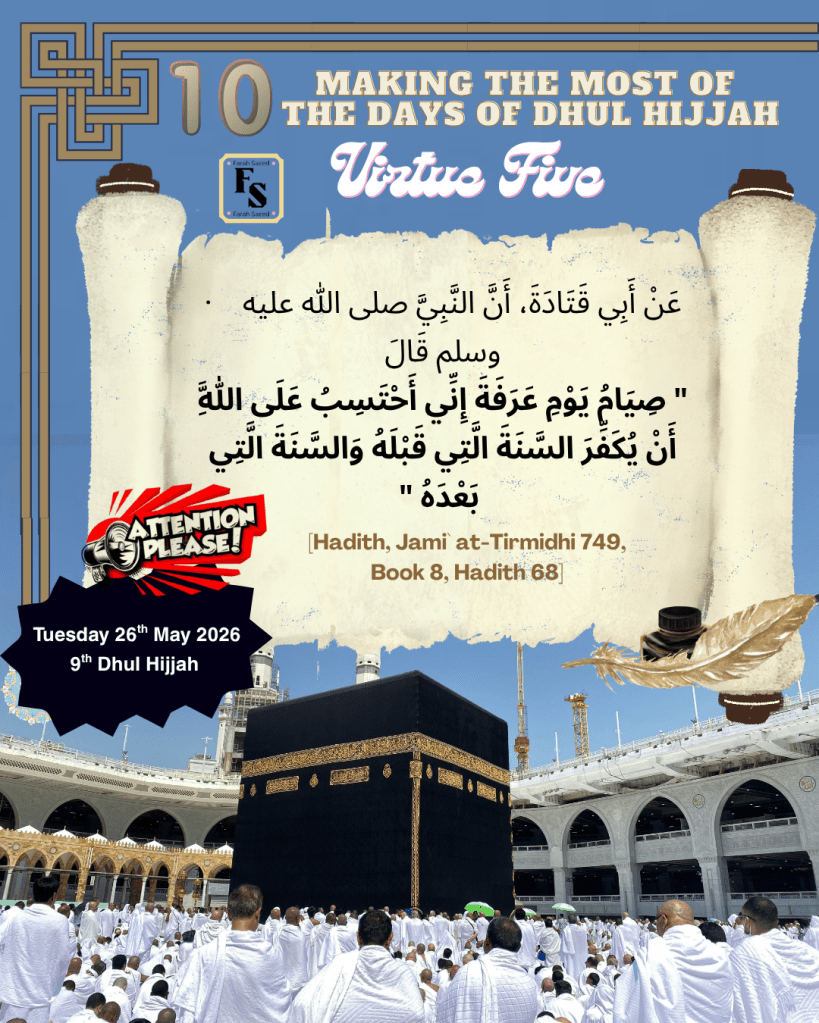
Today’s hadith reflects Allah’s immense forgiveness on the Day of Arafah (9th Dhul-Hijjah), when fasting erases the sins of the year before and after.
Allah descends to the sky on the Day of Arafah, where He sees, hears, and senses all the Hajj pilgrims and those worldwide who make du’a and seek His forgiveness. There is no other day than the Day of Arafah on which Allah frees people from the Hellfire. It is the best opportunity to make dua and seek His ultimate repentance, and Allah (The Most High) showers His blessings upon them.
Just as Ramadan is the month of the Quran, Arafah and the other days of Dhul-Hijjah are the time of Dhikr (seeking His remembrance).
Allah (The Most High) descends to the sky and says to the angels,
“My slaves have come to Me, rough and disheveled, coming from every distant valley hoping for My mercy, so if your sins were equivalent to the amount of a grain of sand or a drop of rain or like the foam on the sea, I will forgive them. So go forth, My slaves! Having forgiveness and for what or who you have interceded for.”
[Tabarani]
Let us trust that Allah will accept our worship, purify us, and guide us to improvement, making this day meaningful for our faith.
Allah, the Most High, states
“O you who believe! Fasting is prescribed for you as it was prescribed for those before you that you may attain God-consciousness.”
[The Glorious Quran, Surah Al Baqarah (The Cow) 2:183]
So, let us know, lose hope for when we communicate with Allah in a state of cleanliness, wudhu (ablution), facing the Qibla, and raising our hands glorifying Him, and focus exclusively on Allah with a firm belief that only Allah can answer our dua. Raising our hands demonstrates the level of humility, meekness, and piety as we soften our tone, regrettably admit to and confess to our sins, and make dua from the bottom of our hearts with the strongest presence of mind and firm belief that He will accept our journey of forgiveness.
Don’t lose hope, make the most of this day where billions of people climb on the granite hill of Mount Arafah that holds great value culturally and historically, and therefore, standing on the Mount of Arafah, fasting and seeking His forgiveness is an important part of the rites of Hajj.


Leave a Reply