
Dear brothers and sisters in faith and humanity,
In our second article of the four-part series “Muharram – Another Chance To Seek Allah’s Forgiveness”, we will discuss the Splitting of the Red Sea. The Red Sea is a type of tropical sea and is 2250 km in length. It is situated between the continents of Africa and Asia. To the North and west, it is bordered by Egypt, where it is bifurcated by the Sinai Peninsula into the Gulf of Aqaba and the Gulf of Suez, connected to the Mediterranean. The Gulf of Aqaba is bordered by Egypt and is shared with Palestine, Jordan, and Saudi Arabia. To the West, it is bordered by Sudan. Eritrea and Djibouti. It is home to various marine life.
However, this sea has historical stories that are shared between Islam, Judaism, and Christianity, where the Septuagint translation of the Biblical Book of Exodus revealed a story of the Israelites’ miraculous escape by crossing the ‘Yam Suph’ (Red Sea). In Islam, we also believe this has occurred, and one of the virtues of fasting Ashurah (10th Muharram) is to contemplate trusting Allah (The Most High).
Imagine all the fish of different sizes, shapes, and forms are all split into two, providing a pathway to escape the brutality of Pharaoh Ramses II. Here, the central figure is Prophet Moses (peace be upon him), who, since his early life, has faced miraculous events, from being placed in a woven basket that floated on the River Nile and was maintained by the upthrust forces until it reached the resting area of Pharaoh’s palace. The Pharaoh’s wife, Asiyah, wanted to adopt him. Thereafter, several events occurred where he returned to Bani Israel and later escaped the Pharaoh and his army via the Red Sea. Through the story of Prophet Moses, we can understand the importance of patience, faith (Imaan), reliance in Allah (Tawaakul), and divine protection.
The Ancient Egyptian civilization believed that Pharaohs were seen as divine figures. They believed in multiple semi-divine gods, and they constructed temples for belief and prayer and tombs in preparation for the afterlife. On the other hand, Bani Israel (Children of Israel) were oppressed and believed in Allah (The Most High). This is a reflective moment of how a country is divided with several deities.
The Glorious Quran and The Sunnah (The Teachings of Prophet Muhammad peace be upon him) have many verses that relate the story of Prophet Moses (peace be upon him) and the Red Sea. To contemplate the significance of this event on the Day of Ashurah, a brief insight into the unfolding events of his story is given.
The Early Life of Prophet Moses (peace be upon him)
Prophet Musa (Moses) was born in Egypt at a time when male babies from Bani Israelites were killed as infants, and many Bani Israelites (Children of Israel) faced multiple atrocities. His mother was so worried about her child that she placed him in a woven basket in the River Nile, and Allah (The Most High) allowed it to land in the house of the Pharaoh! The wife of the Pharaoh, Asiyah, rejoiced over him, and something inside drew him to her, where she pleaded with her husband not to kill him. Here is how the life of Prophet Moses began in the Pharaoh’s palace and became part of his family.
“[Saying], ‘Cast him into the chest and cast it into the river, and the river will throw it onto the bank; there will take him an enemy to an enemy and Me to him.’ And I bestowed upon you love from Me that you would be brought up under My eye [i.e., observation and care].”
[The Glorious Quran, Surah Taha, 20:39]
The young Prophet Moses (peace be upon him) grew into a wise, strong, and knowledgeable man. He was surrounded with love and care from all those who raised him and was even breastfed by his birthing mother unknowingly.
“And when he attained his full strength and was [mentally] mature, We bestowed upon him judgement and knowledge. And thus do We reward the doers of good.”
[The Glorious Quran, Surah Al Qasas (The Stories), 28:14]
The first attempt to escape from the Pharaoh
One of the main characteristics of Prophet Moses (peace be upon him) was his fairness, humility, and justice. He often walked through the streets of Egypt where Bani Israelites (Children of Israel) resided. However, one day, an incident occurred: he saw one of the men from Bani Israelites fight with a man from Ancient Egypt. In defense, he struck him and killed the Ancient Egyptian man.
Prophet Moses (peace be upon him) was so disheartened, he sought forgiveness from Allah (The Most High) for his sin. He was also worried about what would happen because of his crime.
The following day, he walked along the streets of Ancient Egypt. Again, the same man from Bani Israel began fighting with another Ancient Egyptian man who sought his help. Prophet Moses (peace be upon him) became furious at the behaviour of the man from Bani Israel for keeping causing mishaps. The man thought he was going to kill him and then blatantly exposed his sin in public:
“And he became inside the city fearful and anticipating [exposure], when suddenly the one who sought his help the previous day cried out to him [once again]. Moses said to him, “Indeed, you are an evident, [persistent] deviator. And when he wanted to strike the one who was an enemy to both of them, he said, “O Moses, do you intend to kill me as you killed someone yesterday? You only want to be a tyrant in the land and do not want to be of the amenders.”
[The Glorious Quran, Surah Al Qasas (The Stories), 28:18-19]
The Ancient Egyptian man was shocked by how the son of the Pharaoh would perform such an action. He then alerted the Pharaoh about this matter, and then the search began. However, there was one righteous man who knew Prophet Moses (peace be upon him) did not mean to cause harm and informed Prophet Moses (peace be upon him) to escape Egypt after hearing what the people were about to do.
“And a man came from the farthest end of the city, running. He said, “O Moses, indeed the eminent ones are conferring over you [intending] to kill you, so leave [the city]; indeed, I am to you of the sincere advisors.”
[The Glorious Quran, Surah Al Qasas (The Stories), 28:20]
With the limited time he had, he escaped and headed towards the land of Madyan (Midian), which is where the people of tribe where the Prophet Shuaib (peace be upon him) were from. There he saw two sisters with their flock of sheep near a well. They were mocked by fellow shepherds, and due to the natural aura of Prophet Moses (peace be upon him), he came to their defence. The two sisters narrated what happened to their father, who was weak, noble, and wise. They settled an agreement where Prophet Moses (peace be upon him) would take care of their livestock animals for a period of eight years. Thereafter, he would marry one of his daughters.
All Glory be to Allah! Imagine the transition of a baby child from a Bani Israelite who escaped death and was raised in a palace by the perpetrator who raised him like his son with luxury, love, and care, and then escaping again to then work as a humble shepherd!
Prophet Moses (peace be upon him) then travelled with his family towards Egypt.
Facing the Pharaoh Again
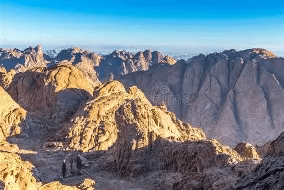
On his journey, Prophet Moses (peace be upon him) encountered the Divine call from a bush that was burning in Al-Toor (Mount Sinai). As a family man, he thought about keeping his family warm and then curiously went to it.
“And when Moses had completed the term and was traveling with his family, he perceived from the direction of the mount a fire. He said to his family, “Stay here; indeed, I have perceived a fire. Perhaps I will bring you from there [some] information or burning wood from the fire that you may warm yourselves. But when he came to it, he was called from the right side of the valley in a blessed spot – from the tree, “O Moses, indeed I am Allāh, Lord of the worlds.”
[The Glorious Quran, Surah Al Qasas (The Stories), 28:29-30]
Little did he know that it was Allah (The Most High) that led him there with several miracles to help his mission of calling the Pharaoh to believe in Allah (The Most High). The first was his stick on the ground that converted to a snake. The second command was to place his hand into his garment, and it came out white and luminous.
The Prophet Moses (peace be upon him) was astonished by these miracles. He was further shocked when Allah (The Most High) commanded him to return to the Pharaoh in Egypt with the hope that He would be guided and to stop the oppressive actions placed on the Bani Israelites. Allah (The Most High) was merciful and accepted Prophet Moses (peace be upon him )’s request to help ease his speech and to be accompanied by his brother, Prophet Haroon (peace be upon him). He was also merciful to the Pharaoh by asking to speak to him mildly to help guide him to the right path.
“So [Moses] threw his staff, and suddenly it was a serpent manifest. And he drew out his hand; thereupon it was white for the observers.”
[The Glorious Quran, Surah Al-Shu’ara (The Poets) 26:32-22]
The Pharaoh faced the son he raised, whose initial reaction was disbelief and arrogance, despite presenting him with the evidence from Allah (The Most High). He even challenged Allah’s Power and accused Prophet Moses of sorcery. During the head-to-head challenge, the sorcerers threw their staff, but none could beat the miracle of Allah (The Most High). The sorcerers then prostrated and believed in the message proclaimed by Prophet Moses and Haroon (may Allah have mercy upon them):
“They said, “O Moses, either you throw [your staff], or we will be the ones to throw [first].” He said, “Throw,” and when they threw, they bewitched the eyes of the people and struck terror into them, and they presented a great [feat of] magic. And We inspired Moses, “Throw your staff,” and at once it devoured what they were falsifying. So the truth was established, and abolished was what they were doing. And they [i.e., Pharaoh and his people] were overcome right there and became debased. And the magicians fell down in prostration [to Allāh]. They said, “We have believed in the Lord of the worlds, the Lord of Moses and Aaron.”
[The Glorious Quran, Surah Al Araf (The Heights), 115-122]
Much to his fury, the Pharaoh cut the hands and feet of the sorcerers and crucified them. However, they needed have no fear and bore patience with their trial. Later, the chiefs advised the Pharaoh to kill Prophet Moses (peace be upon him) and his followers and accused them of corruption and mischief.
The Pharaoh conducted more killings, where they killed their sons but let their women of Bani Israelites remain alive. The Prophet Moses (peace be upon him) tried to comfort the Bani Israelites and asked them to remain patient. The Pharaoh did not stop.
He then intended to kill Prophet Moses (peace be upon him) for turning his followers away. Again, similar to the incident before when he escaped to Madyan. Allah (The Most High) lightened the heart of another righteous man to help Prophet Moses (peace be upon him). However, this time, he was from the family of the Pharaoh who believed in Allah (The Most High) but concealed his faith, trying to dissuade this murder by stating:
“O my people, sovereignty is yours today, [your being] dominant in the land. But who would protect us from the punishment of Allāh if it came to us?” Pharaoh said, “I do not show you except what I see, and I do not guide you except to the way of right conduct.”
[The Glorious Quran, Surah Al Ghafir (The Forgiver) 40:29]
The Pharaoh was adamant that He was superior to Allah (The Most High). Similarly, Moses was committed to calling Pharaoh and his people towards the right path, but the Pharaoh’s response was more oppressive with time. The Prophet Moses (peace be upon him) prayed against them to the Almighty, Al-Jabbar (The Compeller).
A series of divine plagues came forth with increasing severity.
Amongst the examples was the transformation of the Nile waters to blood. The infestation of frogs, lice, and flies had a major impact on their agriculture, trade, and daily life, causing distress. A disease then struck the livestock (pestilence). There were painful boils that afflicted the people of Egypt, including the Pharaoh. Further devastation followed when crops and properties were damaged by hail and even locusts. There was also the appearance of intense darkness and the death of the firstborn males.
The Pharaoh on each of these occasions was unable to stop these disasters and punishments and continued to persist in transgression, and the response of the Pharaoh alternated, where he would seek relief and promise to stop the oppression of the Bani Israelites and would then go back on his word once the plague was lifted and caused further intensification and transgression.
“And they said, “No matter what sign you bring us with which to bewitch us, we will not be believers in you.” So We sent upon them the flood and locusts and lice and frogs and blood as distinct signs, but they were arrogant and were a criminal people. And when the punishment descended upon them, they said, “O Moses, invoke for us your Lord by what He has promised you. If you [can] remove the punishment from us, we will surely believe you, and we will send with you the Children of Israel.” But when We removed the punishment from them until a term which they were to reach, then at once they broke their word.”
[The Glorious Quran, Surah Al Araf (The Heights) 7:132-135]
The Plagues and broken promises caused his heart to harden out of disbelief.
“And even if We gave them mercy and removed what was upon them of affliction, they would persist in their transgression, wandering blindly. And We had gripped them with suffering [as a warning], but they did not yield to their Lord, nor did they humbly supplicate, [and will continue thus] Until when We have opened before them a door of severe punishment, immediately they will be therein in despair.”
[The Glorious Quran, Surah Al Araf (The Heights) 23:75-77]
The second attempt to escape from the Pharaoh – Splitting of the Sea
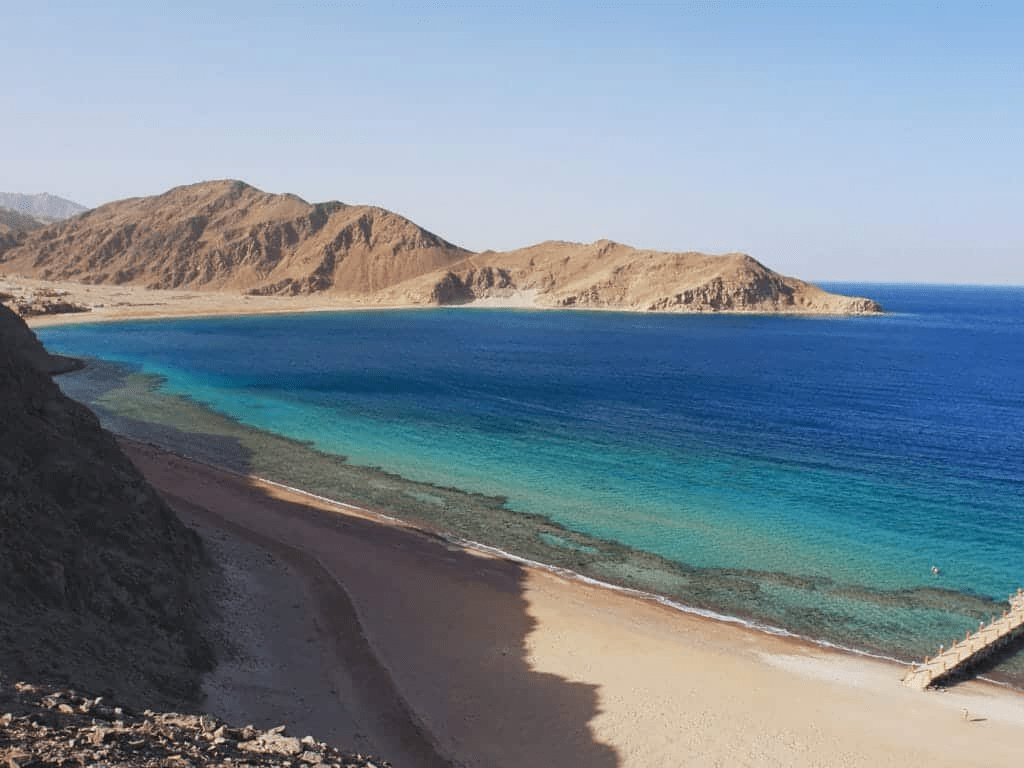
Following the plagues with hope that the Pharaoh would have admonition, the tyrannical Pharoah surrended and released the Bani Israelites to leave Egypt. The Prophet Moses, peace be upon him, and the Bani Israelites left in secret.
Alternatively, the Shaytan (The Devil) made Pharaoh change his mind again, and he regretted his decision. When he found out they were to escape, he tried to pursue the Bani Israelites and Prophet Moses (peace be upon him) with his army, who were heading towards the Red Sea.
They caught up with Prophet Moses (peace be upon him) at sunrise on the shores of the Red Sea. Due to the mass oppression imposed by the Pharaoh, the Bani Israelites feared for their lives. However, the Prophet Moses (peace be upon him) had faith that Allah (The Most High) would help him, and he was guided by Allah (The Most High) to strike the Red Sea with his staff. This led to the miraculous partition of one of the great creations of the planet Earth – the sea that raised its heights like mountains, creating a dry path for the Bani Israelites to escape.
“And when the two companies saw one another, the companions of Moses said, “Indeed, we are to be overtaken!” [Moses] said, “No! Indeed, with me is my Lord; He will guide me.” Then We inspired to Moses, “Strike with your staff the sea,” and it parted, and each portion was like a great towering mountain.”
[The Glorious Quran, Surah Al-Shu’ara (The Poets), 26: 61-63]
Without a strike of thought, the Pharaoh and his army followed the Bani Israelites into the parted Red Sea to recapture them. Conversely, Allah (The Most High) caused the waters to return to their normal form, where both the Pharaoh and his army drowned. This was an ultimate symbol of the end of the Pharaoh’s tyranny and divine deliverance to the Bani Israelites. The mercy of Allah was greater than His wrath, and the Angel Gabriel threw mud in the mouth of the Pharaoh to prevent him from reciting his belief and seeking forgiveness of Allah (The Most High).
Ibn ‘Abbas, may Allah be pleased with him, narrated that the Prophet (peace be upon him) said,
“When Allah drowned Pharaoh, he said, ‘I believe that there is no god except the One that the children of Israel believe in.’ So Jibreel (Gabriel) said, ‘O Muhammad! If you could only have seen me while I was taking the mud from the sea, and filling his mouth out of fear that the mercy would reach him.’“
[Hadith, Al-Tirmidhi]
“So We took retribution from them, and We drowned them in the sea because they denied Our signs and were heedless of them.”
[The Glorious Quran, Surah Al A’raf (The Heights), 7:136]
“And We took the Children of Israel across the sea, and Pharaoh and his soldiers pursued them in tyranny and enmity until, when drowning overtook him, he said, “I believe that there is no deity except that in whom the Children of Israel believe, and I am of the Muslims.” Now? And you had disobeyed [Him] before and were of the corrupters?”
[The Glorious Quran, Surah Younis, 10:90-91]
It was too late to change his fate. Allah assured that he will be punished with a painful torment in the afterlife.
“So Allāh protected him from the evils they plotted, and the people of Pharaoh were enveloped by the worst of punishment. The Fire; they are exposed to it morning and evening. And the Day the Hour appears [it will be said], “Make the people of Pharaoh enter the severest punishment.”
[The Glorious Quran, Surah Al Ghafir (The Forgiver), 40:45-46]
Life After Splitting Of The Red Sea
The Bani Israelites headed towards the Holy Land of Palestine and rejoiced in the victory against the tyrannical Pharaoh and his army.
“And We took the Children of Israel across the sea; then they came upon a people intent in devotion to [some] idols of theirs. They [the Children of Israel] said, “O Moses, make for us a god just as they have gods.” He said, “Indeed, you are a people behaving ignorantly. Indeed, those [worshippers] – destroyed is that in which they are [engaged], and worthless is whatever they were doing.” He said, “Is it other than Allāh I should desire for you as a god while He has preferred you over the worlds?”
[The Glorious Quran, Surah Al-Araf (The Heights), 7:138 to 140]
When suddenley, along the way, they experienced thirst and hunger due to the intensity of the heat. They complained to Prophet Moses (peace be upon him), and he raised his hands to the Lord and prayed for His Mercy. Allah is the Provider, the Most Gracious and Most Merciful, granted his supplication. He shaded them with clouds and granted them water, but this was insufficient; they then asked for game meat (manna and quails), vegetables, pulses, and other food to eat.
“And We divided them into twelve descendant tribes [as distinct] nations. And We inspired to Moses when his people implored him for water, “Strike with your staff the stone,” and there gushed forth from it twelve springs. Every people [i.e., tribe] knew its watering place. And We shaded them with clouds and sent down upon them manna and quails, [saying], “Eat from the good things with which We have provided you.” And they wronged Us not, but they were [only] wronging themselves.”
[The Glorious Quran, Surah Al Araf (The Heights), 7:160]
“And [recall] when you said, “O Moses, we can never endure one [kind of] food. So call upon your Lord to bring forth for us from the earth its green herbs and its cucumbers and its garlic and its lentils and its onions.” [Moses] said, “Would you exchange what is better for what is less? Go into [any] settlement, and indeed, you will have what you have asked.” And they were covered with humiliation and poverty and returned with anger from Allāh [upon them]. That was because they [repeatedly] disbelieved in the signs of Allāh and killed the prophets without right. That was because they disobeyed and were [habitually] transgressing.”
[The Glorious Quran, Surah Al-Baqarah (The Cow), 2:61]
One of the promises that Allah (The Most High) gave to Prophet Moses (peace be upon him) was a Book of guidance that consisted of commandments and prohibitions to help Bani Israel. Prophet Moses (peace be upon him) then asked Allah for this book. He commanded him to fast for forty days and appointed his brother, Prophet Haroon (peace be upon him), to take charge. This book was later to be revealed as the Torah and was given to him on Mount Al-Toor (Sinai).
In contrast, on his return from the 40 days, he faced another trial – he saw the Bani Israelites worshipping a calf. A man by the name of Al-Saamiri made it from their gold jewellery because they could not see God, though everything around them was sufficient evidence to declare that there is something bigger and larger Power that is beyond the power of man.
Prophet Haroon (peace be upon him) tried to guide and explain to his brother that he tried to guide them, but they would not stop worshipping him until Prophet Moses returned.
And he extracted for them [the statue of] a calf which had a lowing sound, and they said, “This is your god and the god of Moses, but he forgot.” Did they not see that it could not return to them any speech [i.e., response] and that it did not possess for them any harm or benefit? And Aaron had already told them before [the return of Moses], “O my people, you are only being tested by it, and indeed, your Lord is the Most Merciful, so follow me and obey my order.” They said, “We will never cease being devoted to it [i.e., the calf] until Moses returns to us.”
[The Glorious Quran, Surah Taha (88-91]
Upon hearing this, he tried to explain the truth to them, and he burned the calf and threw it in the sea. He also punished al-Saamiri, and he subsequently felt pain from anything he touched.
The Bani Israelites regretted their actions, and to resolve the matter, Prophet Moses (peace be upon him) selected seventy men to accompany him to Mount Al Toor Sinai to worship Allah and seek forgiveness. Allah responded to Prophet Moses (peace be upon him), but some did not believe that Allah spoke to him and disobeyed and said:
And [recall] when you said, “O Moses, we will never believe you until we see Allāh outright”; so the thunderbolt took you while you were looking on. Then We revived you after your death that perhaps you would be grateful.
[The Glorious Quran, Surah Al-Baqarah (The Cow), 2:55-56]
Furthermore, the disobedience of the Bani Israelites became more apparent when Moses came with the Torah. They refused to accept it and complained about its rulings.
“And [recall] when We took your covenant, [O Children of Israel, to abide by the Torah] and We raised over you the mount, [saying], “Take what We have given you with determination and remember what is in it that perhaps you may become righteous.”Then you turned away after that. And if not for the favor of Allāh upon you and His mercy, you would have been among the losers.”
[The Glorious Quran, Surah Al-Baqarah (The Cow), 2:63-64]
Prophet Moses (peace be upon him) tried to liaise with the Bani Israel to go with him to the Holy Land in Palestine. However, fear overwhelmed them when they observed its inhabitants. They rebelled against the Prophet Moses (peace be upon him). In response, Prophet Moses (peace be upon him) prayed to Allah, and Allah answered and forbade them from entering the Holy Land, where they would wander for 40 years.
“They said, “O Moses, indeed we will not enter it, ever, as long as they are within it; so go, you and your Lord, and fight. Indeed, we are remaining right here.” [Moses] said, “My Lord, indeed I do not possess [i.e., control] except myself and my brother, so part us1 from the defiantly disobedient people.” [Allāh] said, “Then indeed, it is forbidden to them for forty years [in which] they will wander throughout the land. So do not grieve over the defiantly disobedient people.”
[The Glorious Quran, Surah Al-Maidah (The Table), 5:24-26]
The Prophet Moses (peace be upon him) was a patient believer who tried to fulfil and resolve the complaints of the Bani Israelites. Prophet Haroon passed away, and this was followed by Prophet Moses (peace be upon them). Most of the Bani Israelites passed away too.
When the agreed time of 40 years passed, one of the students and servants of Prophet Moses (peace be upon him), Yusha’ ibn Noon (Joshua the son of Nun), led them to the Holy Land where he besieged it until he was able to conquer it.
On the other hand, the Bani Israelites disobeyed him too. Yusha’ commanded Bani Israelites to enter the land prostrating, and went on their backsides. The Bani Israelites who were in wildnerness was replaced with a new generation who were taught the Torah and adhered to its principles.
Yusha was mentioned in the Quran in the following verse:
“And Lo! [In the course of his wanderings,] Moses said to his servant (fata), ‘I shall not give up until I reach the junction of the two seas, even if I [have to] spend untold years [in my quest]!’”
[The Glorious Quran, Surah Kahf, (The Cave), 18:60]
Allah (The Most High) continued to bestow blessings on the Bani Israelities, where he made Prophets and Kings from them and favoured them above others, yet they lacked gratitude and did not appreciate this.
“And [mention, O Muḥammad], when Moses said to his people, “O my people, remember the favor of Allāh upon you when He appointed among you prophets and made you possessors1 and gave you that which He had not given anyone among the worlds.”
[The Glorious Quran, Surah Al-Maidah (The Table), 5:20]
Lessons from the Splitting of the Red Sea
The story of Prophet Moses and the Red Sea is central to Ashurah’s significance. Fasting on Ashurah is linked to seeking forgiveness and reflecting on faith. It commemorates the salvation of Prophet Moses (peace be upon him) and Bani Israel from the Pharaoh’s tyranny. The story is symbolic of hope and truth through obstacles. Divine justice and mercy are recurring themes throughout the narrative.
Allah (The Most High) will raise the people who are oppressed (Prophet Moses and Bani Israel) in front of the oppressor (Pharaoh).
Continue to strive hard and have hope. The miraculous events of the staff that turned to a serpent, whiteness of the hand, defiance against the magicians, the plagues, and the splitting of the Red Sea were sufficient evidence to believe in Allah (The Most High), yet the Pharaoh was not submissive until the drowning in the Red Sea but was rejected because of a lack of sincerity of faith.
The preservation of the Pharaoh’s body is a sign for us all, past, present and future, on posterity – the Divine Justice before the Day of Judgement. A mark on the end of the tyranny and arrogance of the Pharaoh.
To remain humble and faithful to divine guidance.
To continue to seek repentance, especially as fasting Ashurah is the expiation of sins in the previous year and the need of sincere repentance.
To show gratitude to Allah (The Most High) for His blessings upon us all and to not turn away like the Bani Israelities.
“ So today We will save you in body that you may be to those who succeed you a sign. And indeed, many among the people, of Our signs, are heedless.”
[The Glorious Quran (Surah Yunus), 10:92]
References
Islam Q and A (2001) A brief look at Moosa (peace be upon him). Available at: https://islamqa.info/en/answers/10242/a-brief-look-at-moosa-(peace-be-upon-him) (Accessed: 13th June 2026)
Qisasul Islam (2024) The Story of Prophet Musa (Moses) and Fir’awn (Pharaoh): A Tale of Faith and Liberation. Available at https://qisasulislam.blogspot.com/2024/06/story-prophet-musa-moses-firaun-pharaoh-liberation-faith.html (Accessed: 17th June 2026)
World Atlas (n.d.) Red Sea Available at: https://www.worldatlas.com/seas/red-sea.html (Accessed: 17th June 2026)


Leave a Reply