Vaginal Intraepithelial Neoplasia (VAIN)
Vaginal Intraepithelial Neoplasia (VAIN) is a precancerous lesion that begins in the squamous epithelium (outer lining) of the vagina. Abnormal development of the epithelium) then begins to rise as a mild stage (Low-grade squamous intraepithelial lesion – LSIL) and then if not treated it becomes moderate and then severe displaying high-grade squamous intraepithelial lesion (HSIL). Many cases of HSIL are at increased risk of becoming cancerous (2%–12%). VAIN is divided into three: VAIN1 can be observed without therapeutic intervention because lesions often regress spontaneously. Biopsy- proven LSILs can be followed up. VAIN2 is the intermediate grade that requires initial treatment and observation, and VAIN3 is high-grade and requires immediate treatment. The type of treatment is tailored to the patient.
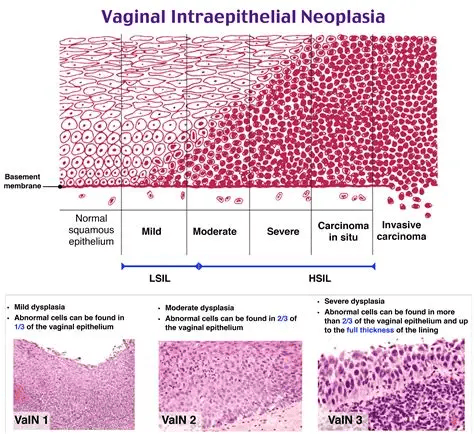
The earliest form of VAIN is VAIN 1, and it is characterised by cellular atypia (abnormal cells) that occur in one-third of the thickness of the vaginal lining. VAIN 1 is also known as low-grade squamous intraepithelial lesions (LSIL).
Further growth, where two-thirds of the thickness of the vaginal lining is affected, is VAIN 2. VAIN 3, otherwise known as high-grade squamous intraepithelial lesions (HSIL), is characterised by additional abnormal cellular growth where more than two-thirds of the vaginal lining is affected. Some patients are asymptomatic (no symptoms), whereas other patients have spotting after bonding and discharge from the vagina.
Moreover, VAIN 1 does not necessarily require treatment as it disappears and correlates with immune response. Nevertheless, watchful waiting by following up closely is an option. On the other hand, VAIN 2 or 3 require treatment.
Source: Rosh Review (2026) Explanation: D is the correct answer. Available at: https://go.roshreview.com/obgyn-qid-126985 (Accessed: 16th October 2026)
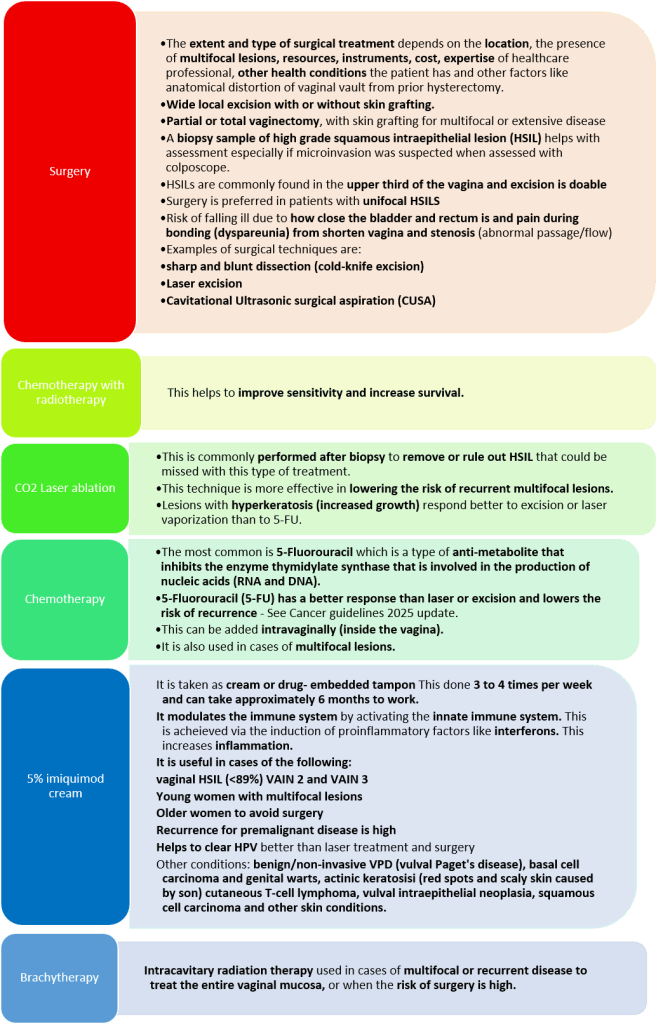
What treatments can be given for patients with VAIN 2 or 3?
- The choice of treatment depends on the following factors:
- Number of lesions
- Location of lesions
- Suspected invasive cancers
- Availability and cost of treatment options
- Skill of healthcare professional
Vaginal Adenosis
Vaginal adenosis is most commonly found in young women who had in utero exposure to DES and may coexist with a clear cell adenocarcinoma, though this is rare. Adenosis is replaced by squamous metaplasia, which occurs naturally, and requires follow-up and routine examination of the lesions but not removal.
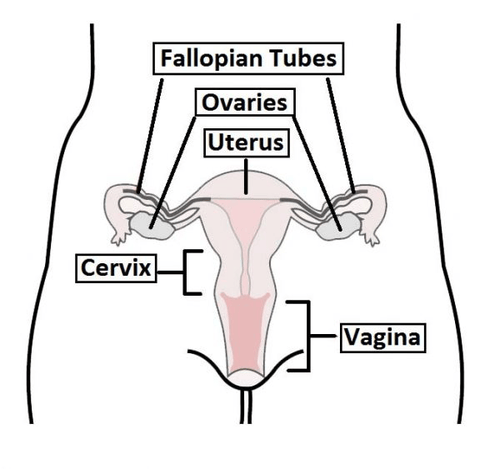
It commonly appears in the upper third of the vagina (34%) especially the back wall, middle third (9%) and lower third (2%).
What is adenosis by Pathology mini Tutorials
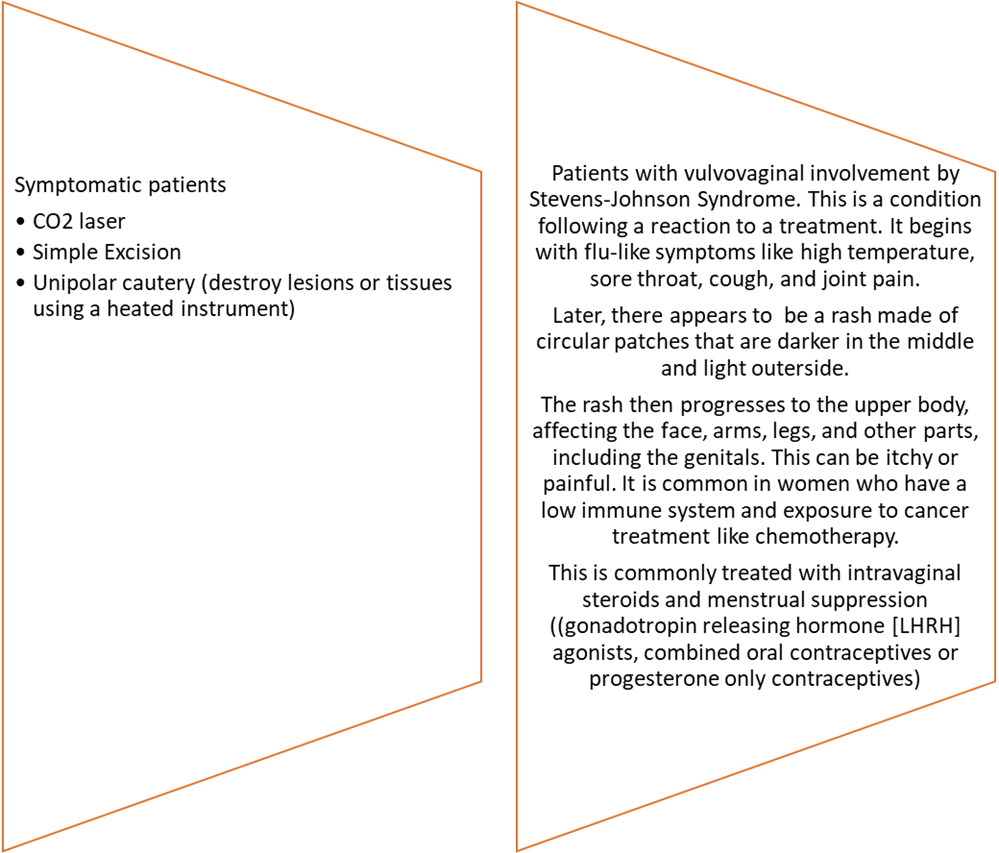
What Treatments Can Vaginal Adenosis Be Treated With?
CO2 Laser Resurfacing in Cincinnati | Amy Brenner, MD & Associates
Laser Vaginal Therapy For The Pelvic Floor and Urinary Incontinence – Dr Taiwo Durowade
Gonadotropin-releasing hormone (GnRH) agonists By Science In Motion
Hormonal Methods of Contraception – Preconception – Maternity Nursing By LevelUpRN
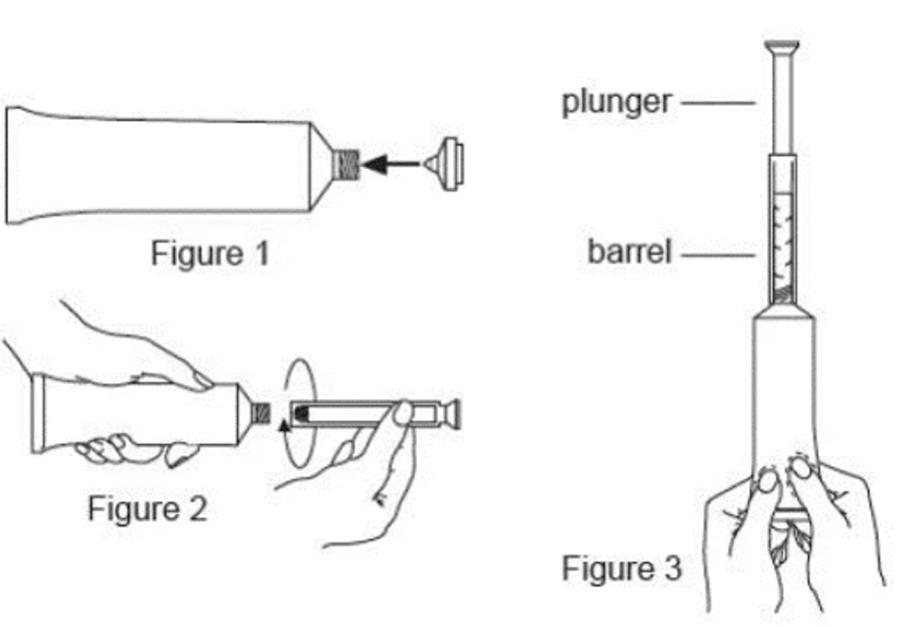
How To Use A Vaginal Applicator When Adding Topical Creams?
The aim is to provide an overview of what the procedure involves.
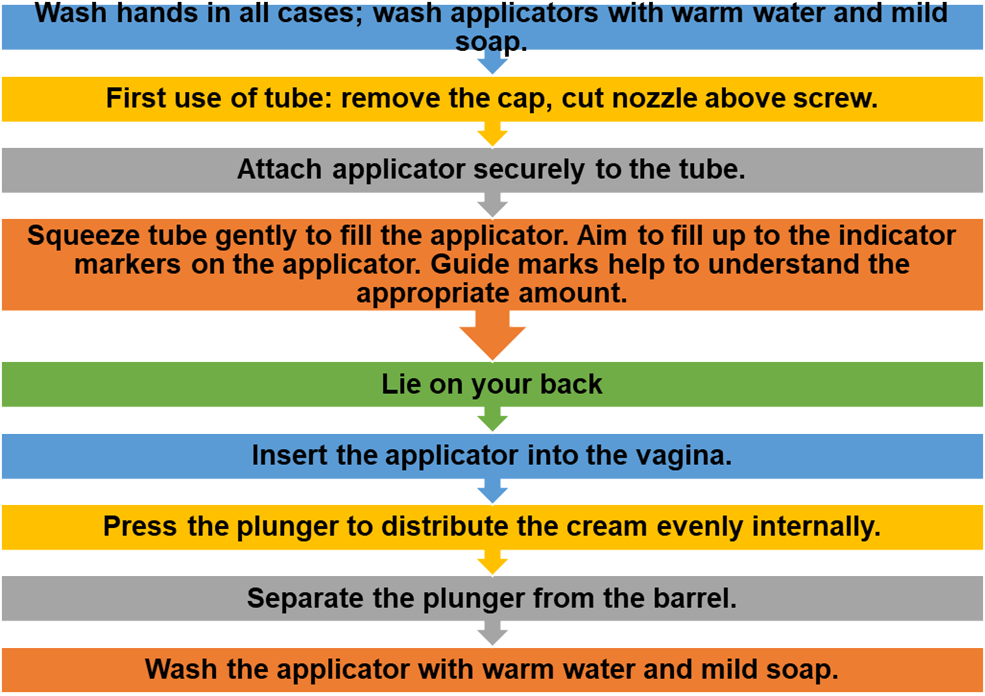
Full step by step procedure is in the link:
https://stratamgt.com/stratamgt-vaginal-applicator-tutorial-int/
References
Adams, T.S., Maluleke, J.C. and Cuello, M.A. (2025). Cancer of the vagina: 2025 Update. International Journal of Gynecology & Obstetrics, 171(S1), pp.48–59. doi:10.1002/ijgo.70325.
Cancer Research UK (2027) Vaginal intraepithelial neoplasia (VAIN) Available at: https://www.cancerresearchuk.org/about-cancer/vaginal-cancer/vain (Accessed: 11th October 2026)
Eilber, K.S. (2008). Benign cystic lesions of the vagina and vulva. Female Urology, pp.877–884. doi:10.1016/b978-1-4160-2339-5.50137-3.
Jones, J. and Maldonado, L. (2026) Vulva and Vagina Non-Tumour Vaginal Adenosis. Available at: https://www.pathologyoutlines.com/topic/vaginaladenosis.html (Accessed: 19th October 2026)
National Cancer Institute (2026) Vaginal Cancer Treatment (PDQ®)–Health Professional Version. Available at: https://www.cancer.gov/types/vaginal/hp/vaginal-treatment-pdq (Accessed: 17th August 2026)
Nout, R.A., Calaminus, G., Planchamp, F., Chargari, C., Lax, S., Martelli, H., McCluggage, W.G., Morice, P., Pakiz, M., Schmid, M.P., Stunt, J., Timmermann, B., Vokuhl, C., Orbach, D. and Fotopoulou, C. (2023). ESTRO/ESGO/SIOPe Guidelines for the management of patients with vaginal cancer. International Journal of Gynecologic Cancer, [online] 33(8). doi:10.1136/ijgc-2023-004695.
Rosh Review (2026) Explanation: D is the correct answer. Available at: https://go.roshreview.com/obgyn-qid-126985 (Accessed: 16th October 2026)


Leave a Reply