Pre-Dhul Hijjah Gift
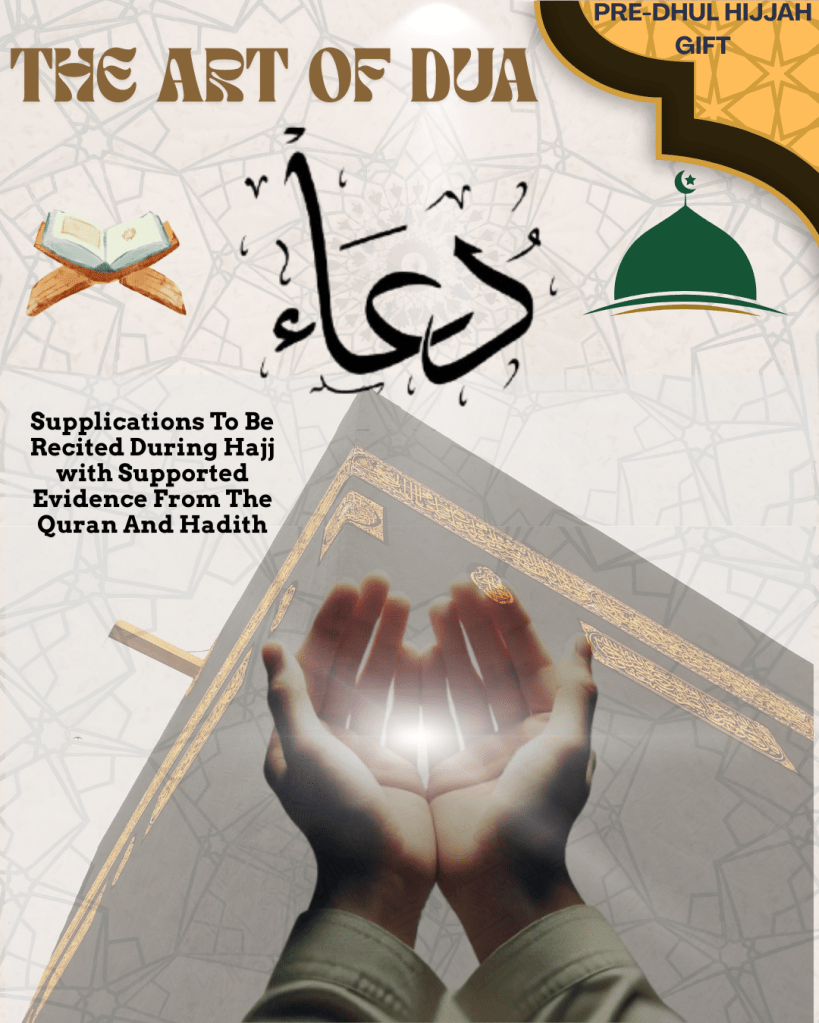
This book aims to provide a series of supplications during the season of Hajj (pilgrimage) to create, build, and make a connection with Allah (The Most High). An opportunity to seek forgiveness for our previous sins and incorporate His essence, attributes, and actions.
Book To Be Released On 17th May 2026 iA!
Stay Tuned!
The significance of Hajj (pilgrimage) is bound with humility, devotion, and spiritual connection with the Almighty Allah. It is one of the five pillars of Islam, where billions of people across the world come to perform their rightful duty of visiting the Kaaba, the metaphorical House of Allah, performing circumambulation around it (Tawaf), and completing the necessary steps for the acceptance of performing Hajj. The journey of Hajj is spiritually transformative. There are three different types of Hajj that a pilgrim may perform: Hajj Al-Tamattu, Hajj Al-Qiran, and Hajj Al-Ifrad. The most recommended for pilgrims by the Prophet Muhammad (peace be upon him) is Hajj Al-Tamattu, where Umrah is performed initially, followed by Hajj with a new Ihram. Ihram is the state in which the pilgrim prepares, makes the intention, and adheres to the dress code for performing the pilgrimage. Hajj Al-Qiran is when pilgrims perform Umrah and Hajj under one single Ihram, and they are referred to as Qaarin. The third and last but least is the Hajj Al-Ifrad. This is where pilgrims perform Hajj without any Umrah, and pilgrims who perform this type of Hajj are called Mufrid. Whether the pilgrim is amongst the Qaarin, Mufrid, or performs Hajj Al Tamattu, the necessary forms of worship and their virtues are equivocal. Allah (The Most High) loves His servants to perform righteous actions during the blessed ten days of Dhul Hijjah.
It was narrated from Ibn ‘Abbas (may Allah have mercy upon him) that the Prophet Muhammad (peace be upon him) said:
“There are no days during which righteous deeds are more beloved to Allah than these days,” meaning the (first) ten days of Dhul- Hijjah. They said: “O Messenger of Allah! Not even Jihad in the cause of Allah?” He said: “Not even Jihad in the cause of Allah, unless a man goes out with himself and his wealth and does not bring anything back.”
[Hadith, Sunan Ibn Majah 1727]
One of the righteous deeds is dua, the Arabic term for supplication. As a core act of worship to Allah the Almighty, who created us, we express our needs and gratitude to Him. Allah, the Most High, is our sole provider. He created everything within us, around us, and everywhere. He sees. He hears. He understands. Allah, the Most High, says in the Quran:
“When my servants ask you concerning me, (tell them) I am indeed close (to them). I listen to the prayer of every suppliant when he calls on me.”
[Surah Al-Baqarah (The Cow): 2:186]
Our Beloved Prophet (peace and blessings be upon him) said:
“Nothing is more honorable to Allah the Most High than dua.”
[Hadith, Sahih al-Jami`, 5268]
In another hadith, Prophet Muhammad (peace be upon him) said:
“The most excellent worship is dua.”
[Hadith, Sahih Al-Jami’, 1133].
Dua and remembrance of Allah (Dhikr) during the first ten days of Dhul-Hijjah carry a profound spiritual status, similar to reciting the Quran in Ramadan. Allah grants dua if He determines it benefits us, as He alone knows the Unseen. When performing dua, approach it with respect and sincerity.
Our Beloved Prophet, peace and blessings be upon him, said:
“Verily your Lord is the One modest and Generous, and when His servant raises his hands to Him in supplication, He is diffident (in some wordings, shy or hesitant) from returning them empty.”
[Hadith, Ahmad, Abu Dawud, and at-Tirmidhi – Hasan]
Making dua is a recognition of our weakness and His power and greatness.
“O mankind, you are those in need of Allah, while Allah is the Free of need, the Praiseworthy.“
[Quran, Surah Al-Fatir (The Originator) 35:15]
Our Beloved Prophet, peace and blessings be upon him, said:
“Ask Allah for everything, even the lace of your shoes. If Allah does not provide, it will never be available.”
[Hadith, Ibn al-Sunni, no. 349 – Hasan. Supported by at-Tirmidhi 4/298 and others.]
Do not underestimate the power of dua; it is our communication with our Beloved Creator and is an honoured act of worship, especially during Dhul-Hijjah. Allah listens to every supplication, no matter how small. Never lose hope in Allah’s mercy and blessings through dua.


Leave a comment