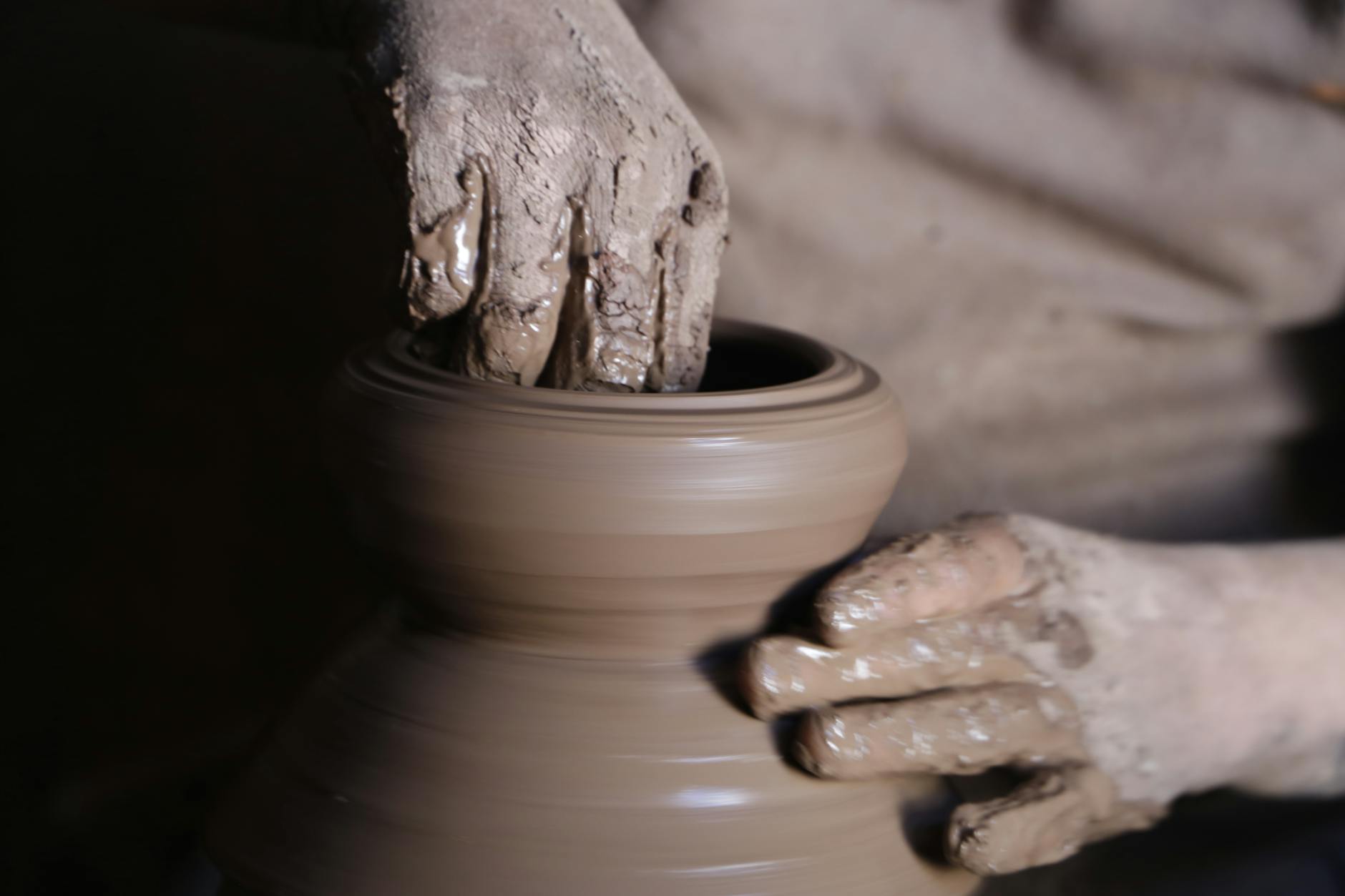
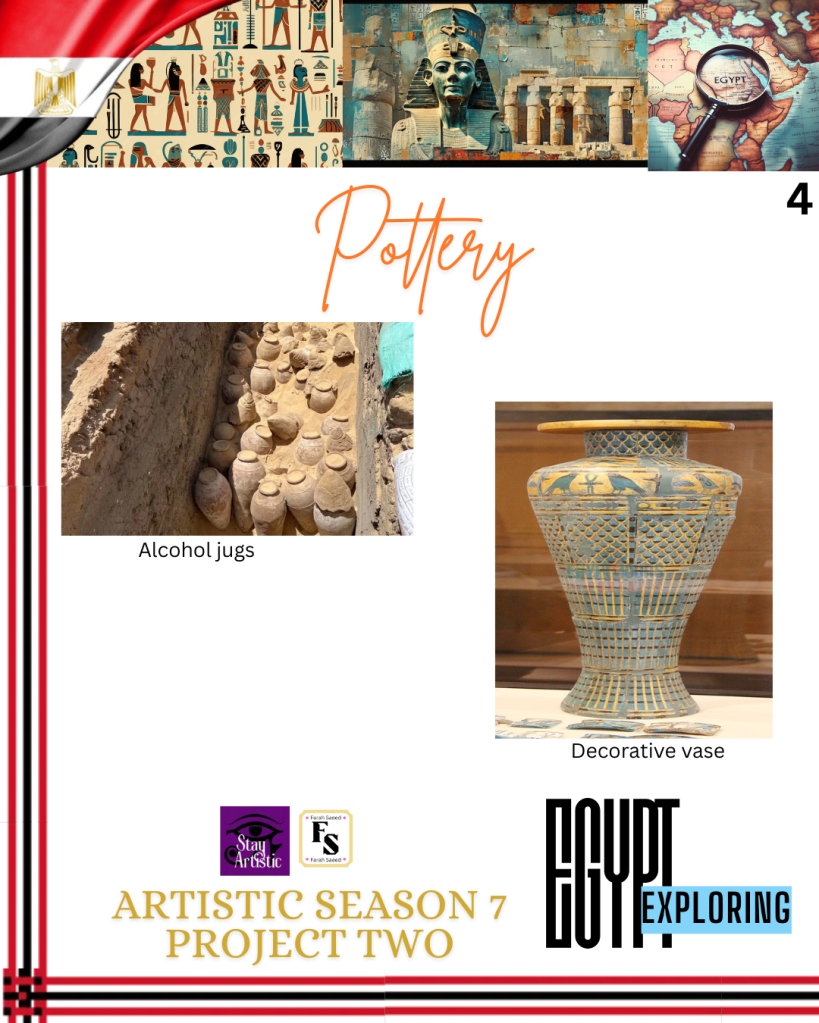
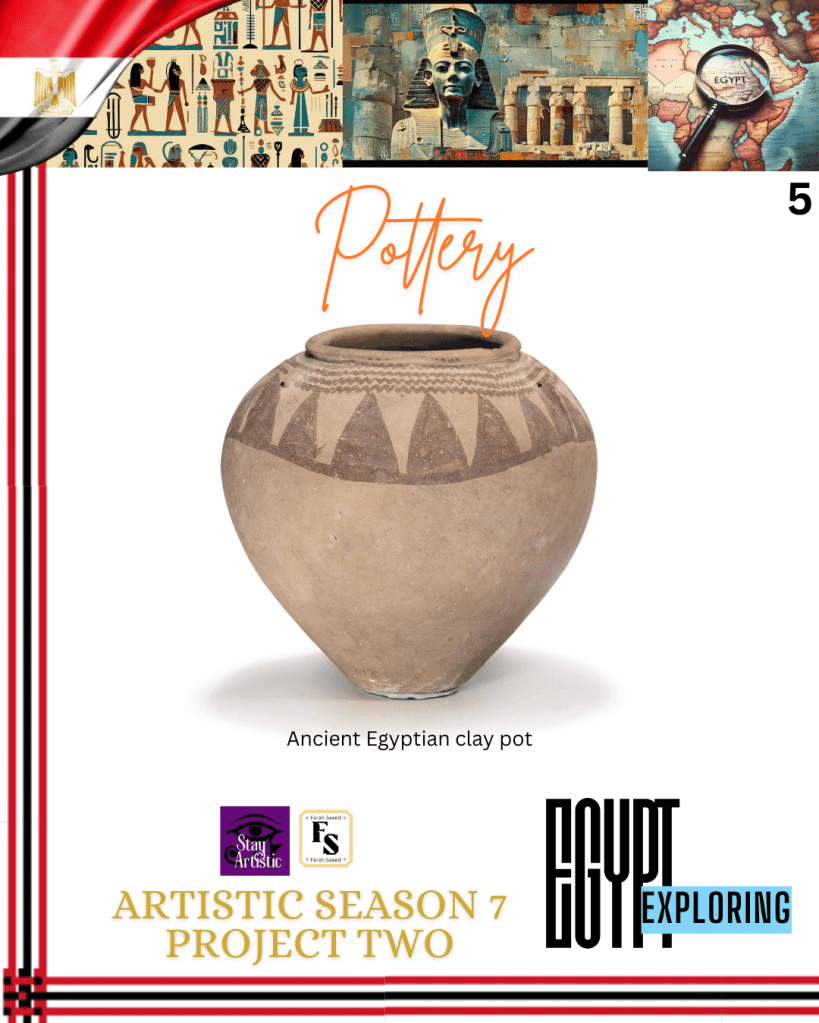
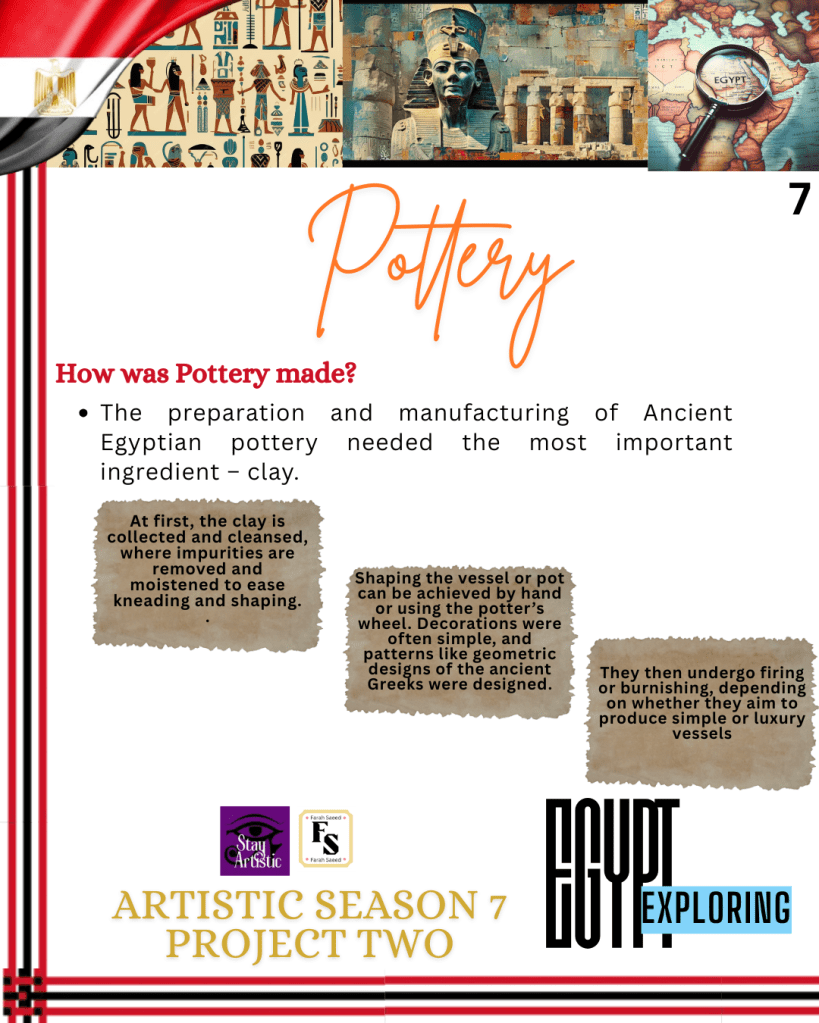
Ancient Egyptian pottery is well-cultivated and highlights the cultural, mechanical, art, and design that transformed over different dynasties and were influenced by other regions. This evolution is reflected in the depth of decorations, material choices, shapes, and manufacturing techniques, illustrating the social and economic progress of Ancient Egyptian civilization. While pottery first emerged independently in different parts of the world, the oldest known pottery dates to around 18,000 BC in East Asia, particularly China, at the end of the Paleolithic period.
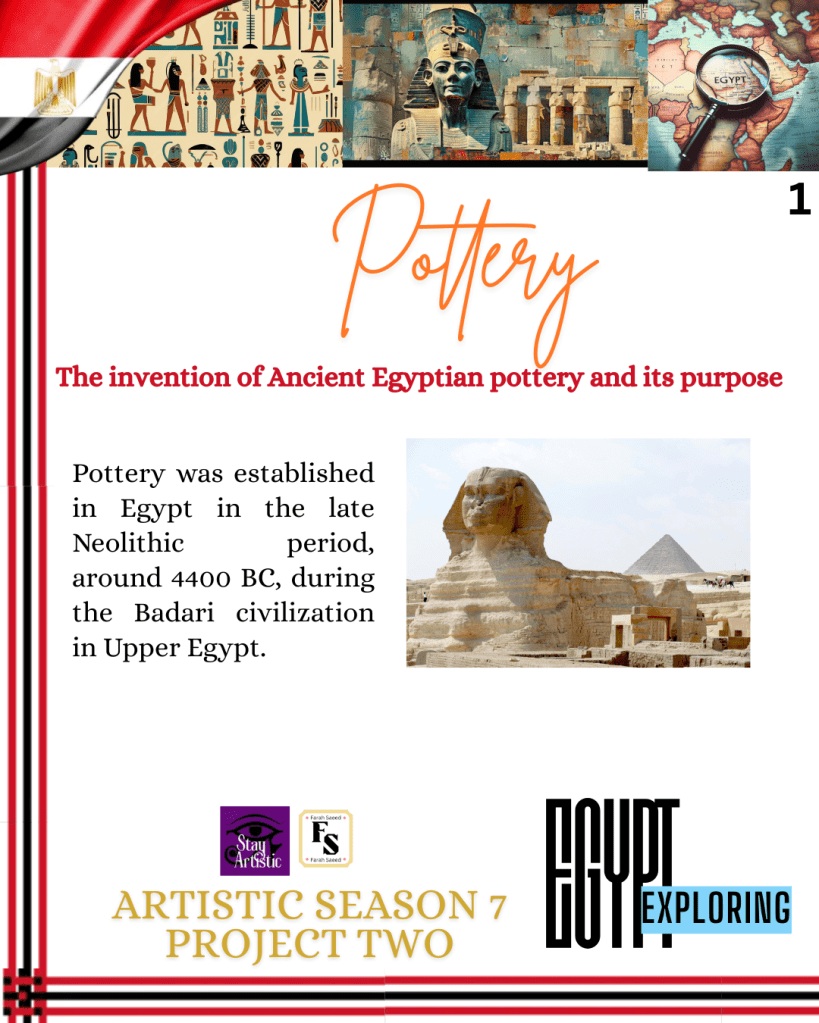
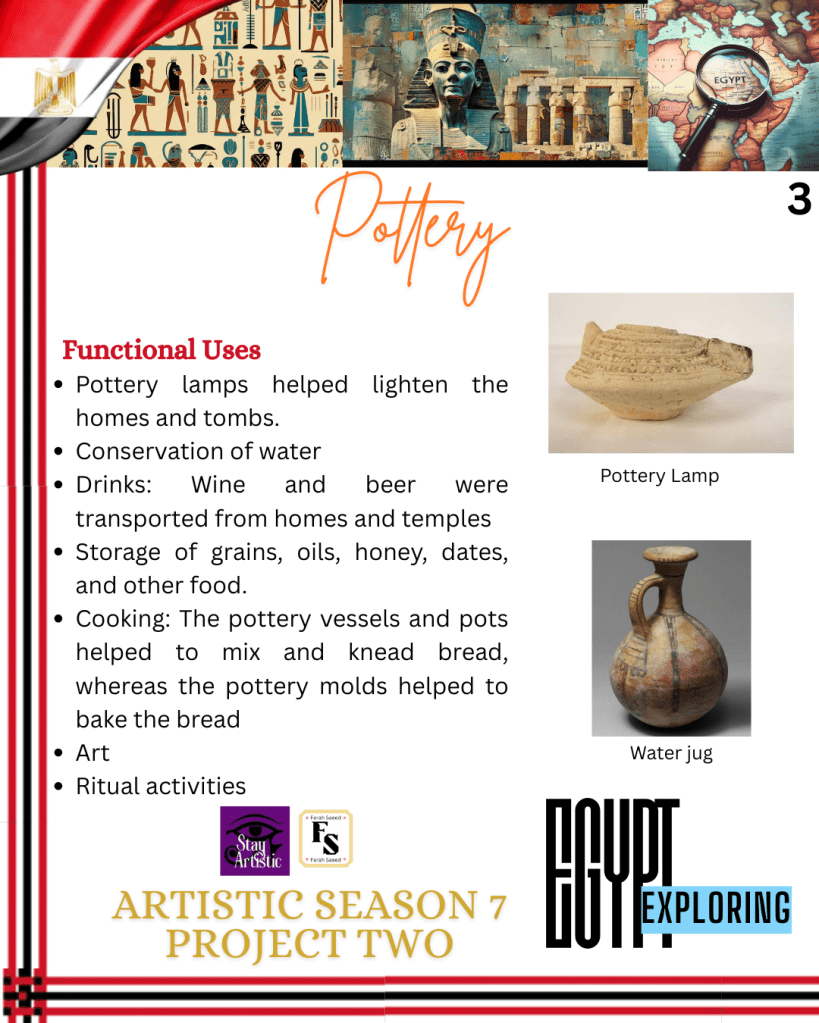
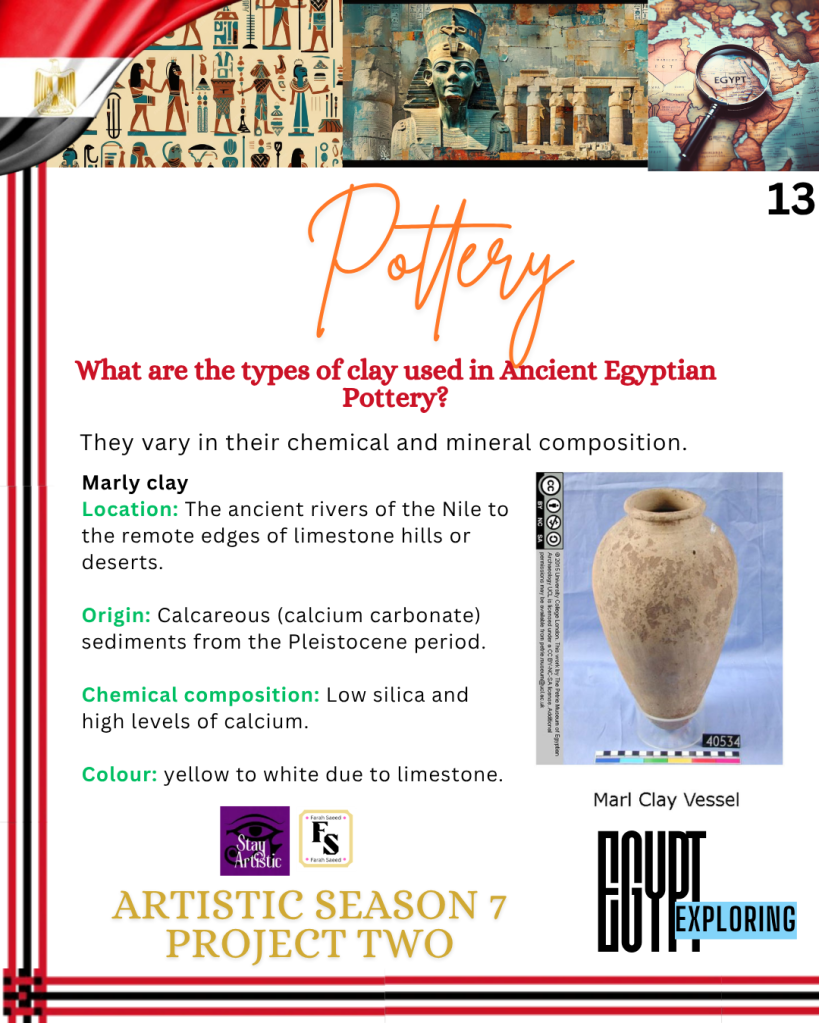
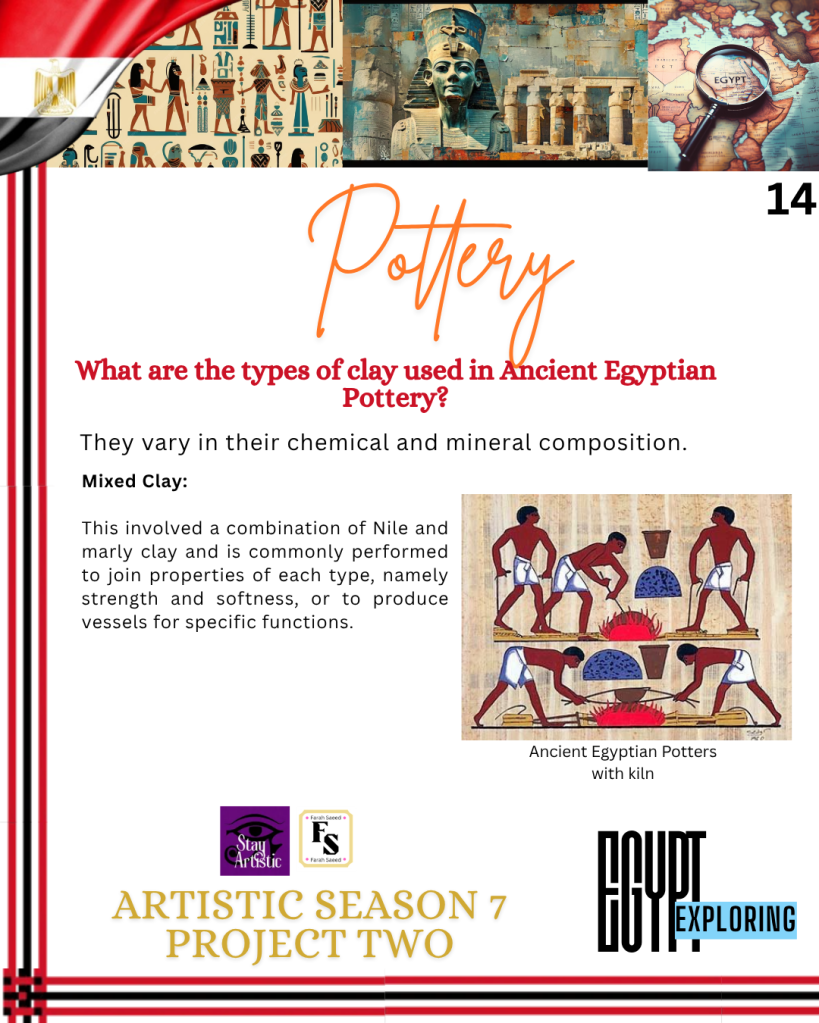
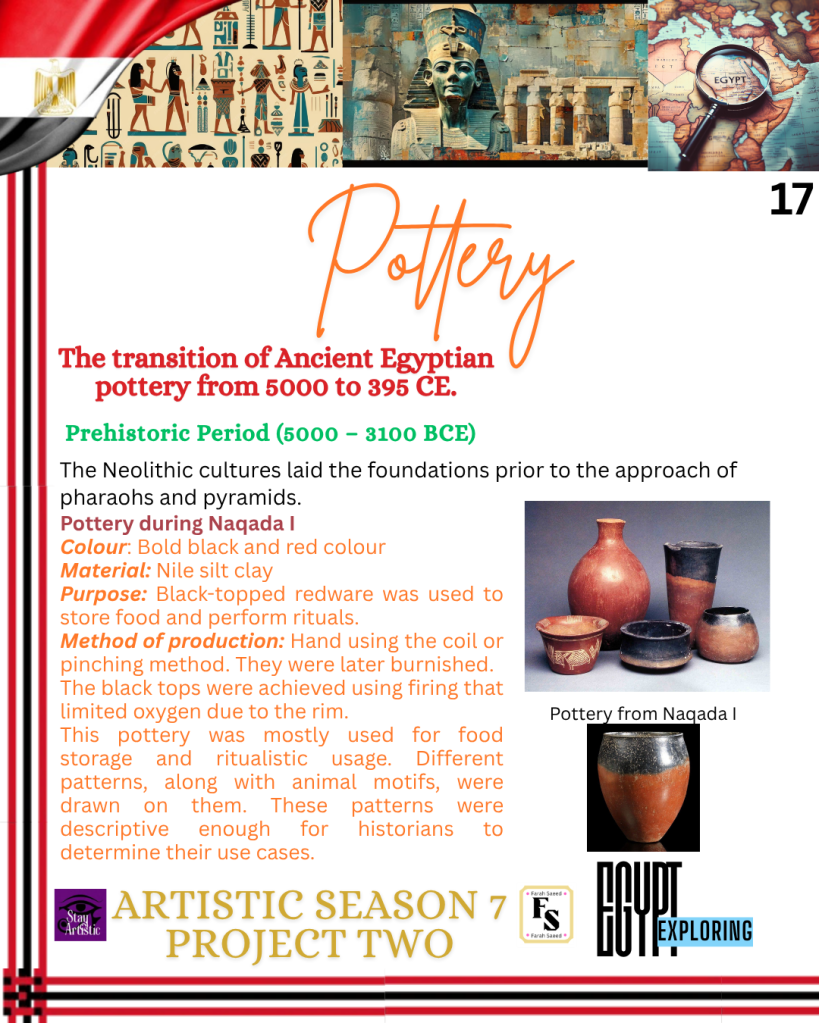
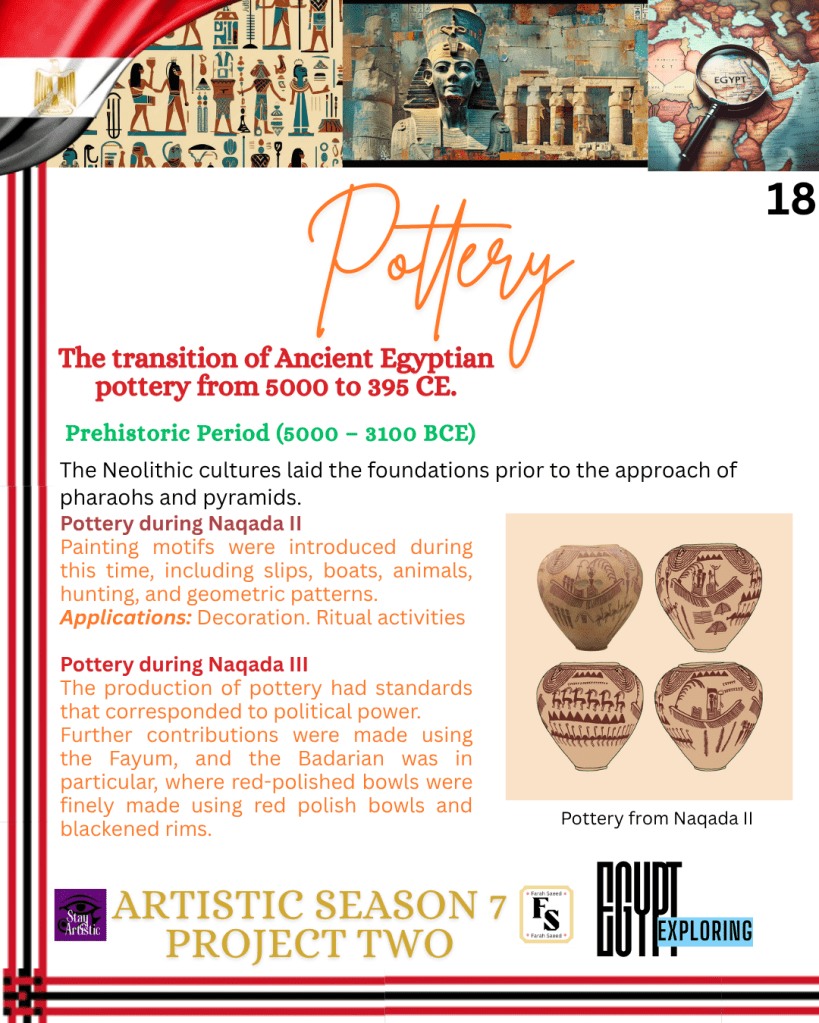
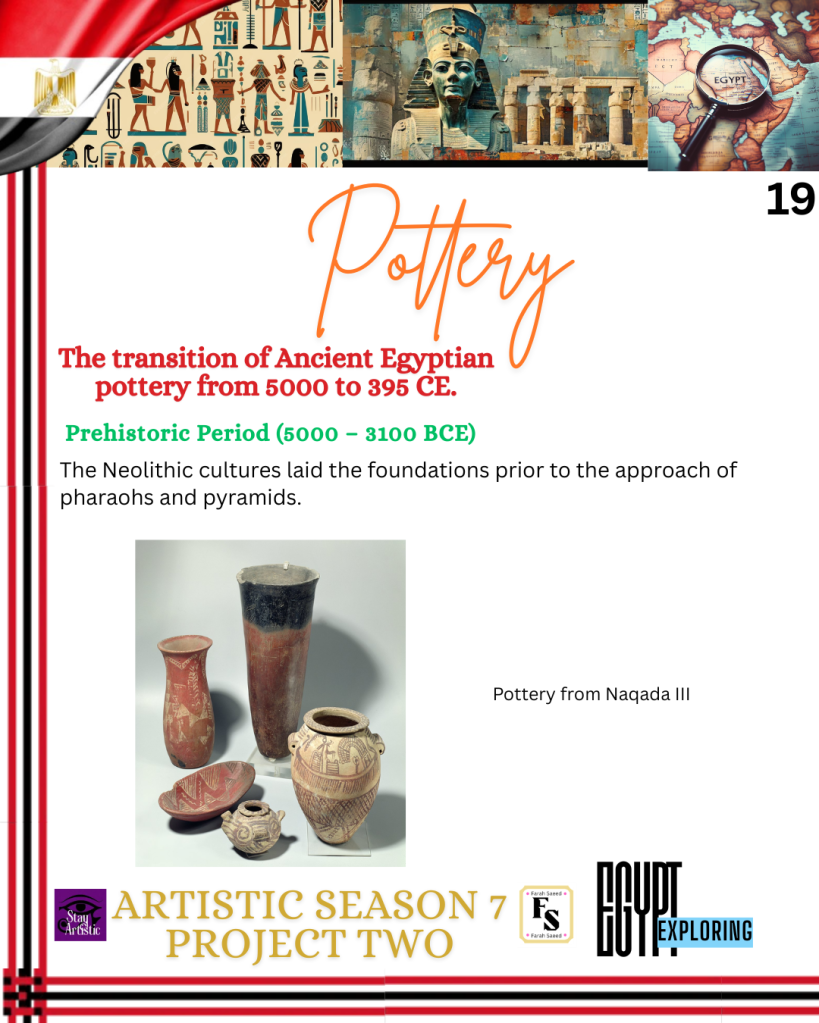
Pottery then appeared in Mesopotamia (modern-day Iraq) during the 7th millennium BC, and was developed in Egypt around the same time for its functional use in agriculture. In the Badari civilization of Upper Egypt, during the late Neolithic period, approximately 4400–4000 BC, Egyptians produced pottery to conserve water, grains, and for cooking, laying the groundwork for further advancements through the eras of the pharaohs and the construction of the pyramids.
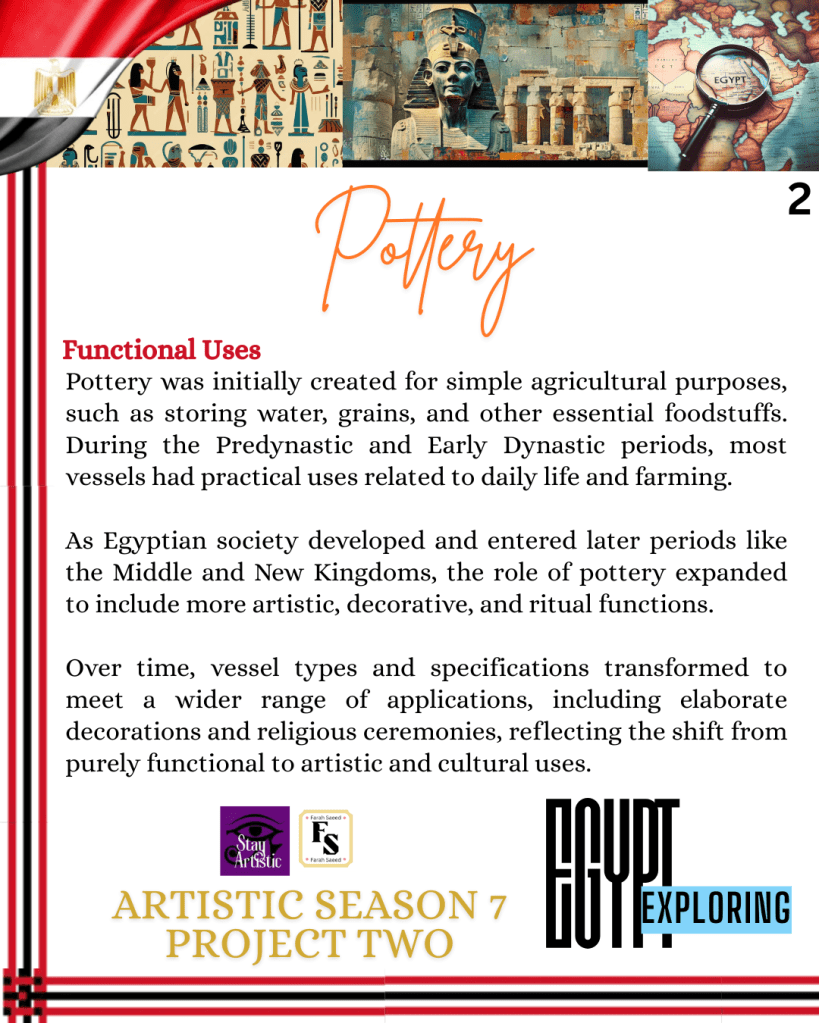
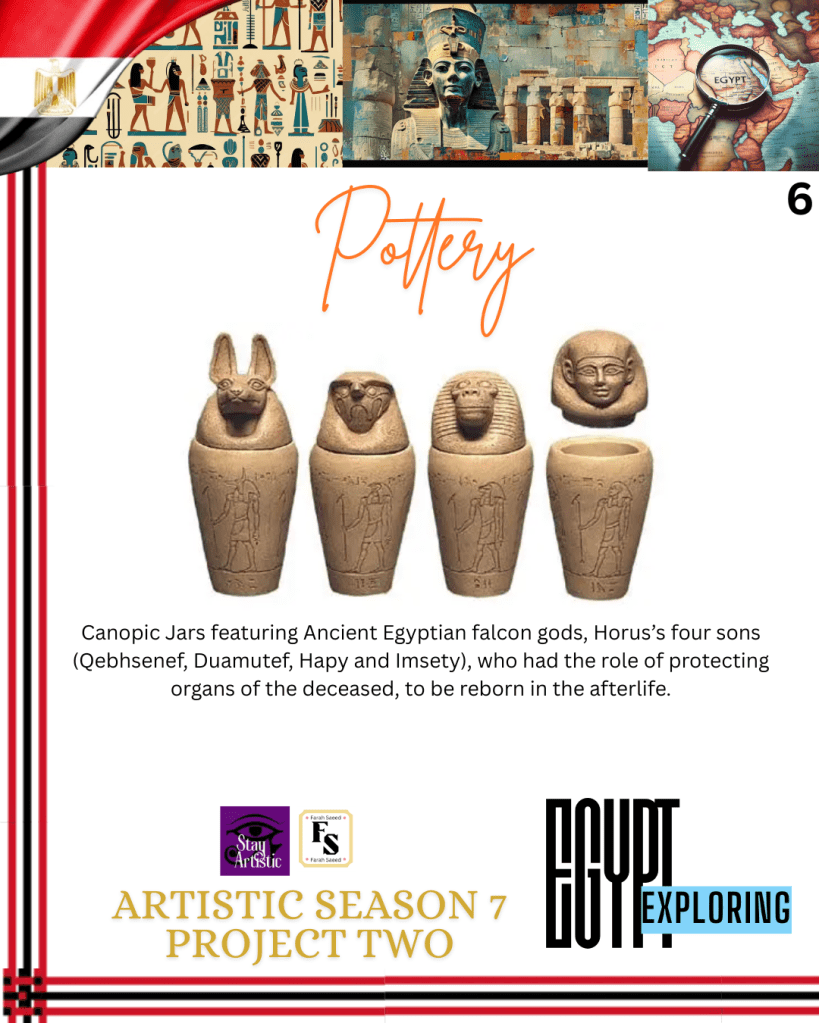
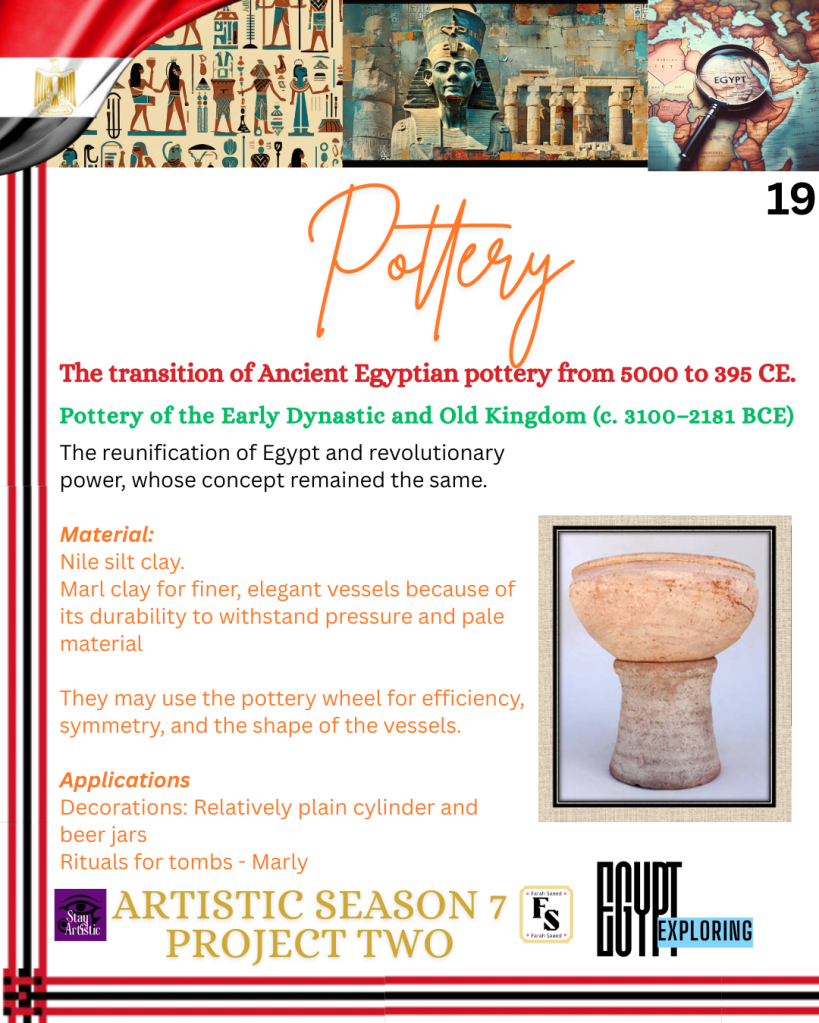
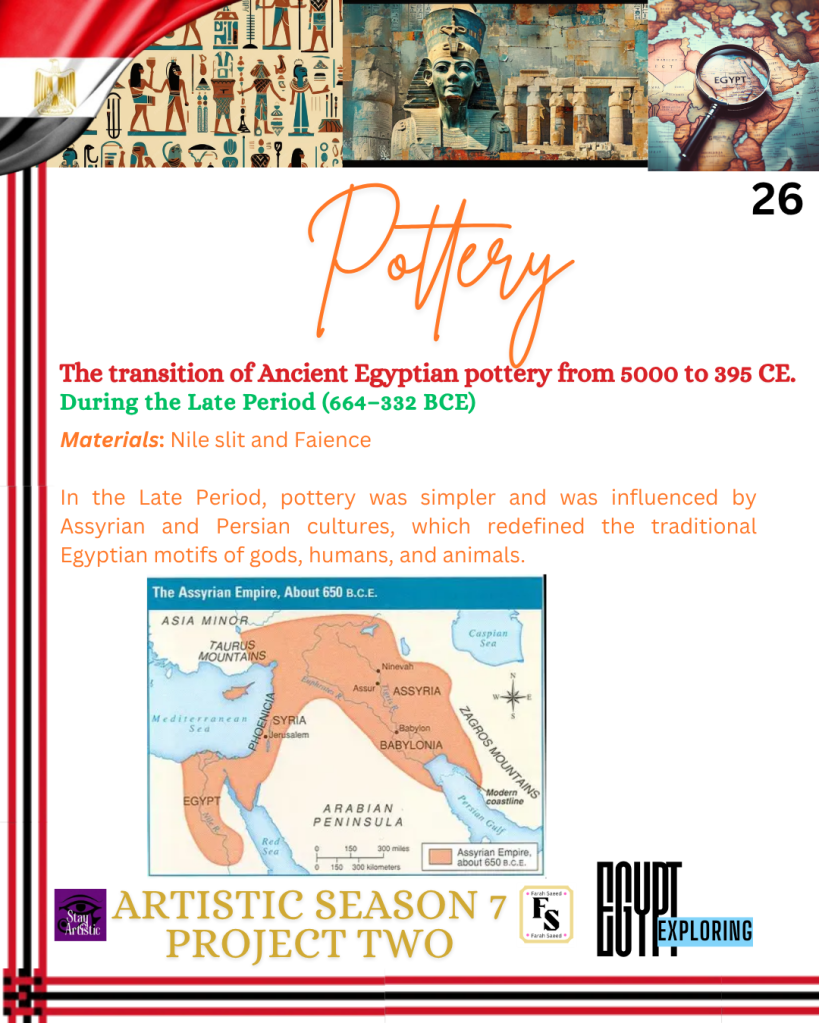
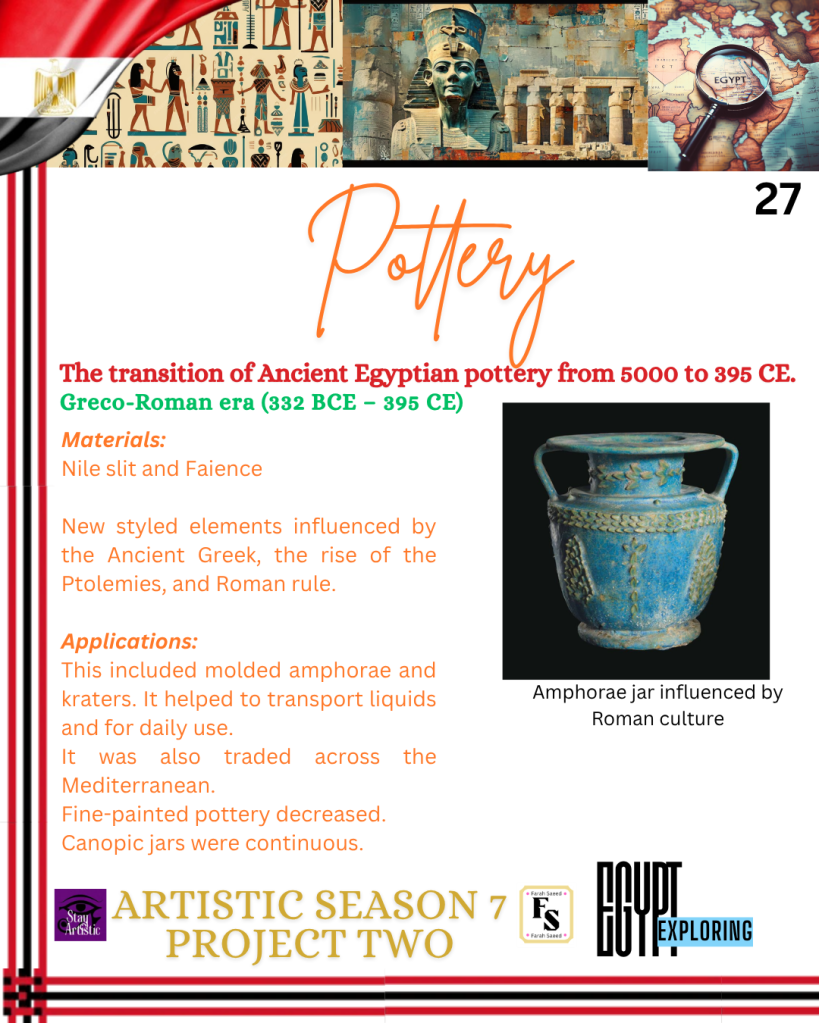
As Egypt unified through the Middle and New Kingdoms, pottery evolved from domestic to religious and cultural uses, with new stylistic elements introduced under foreign dominance by Assyrians, Persians, and later Greeks and Romans. Therefore, pottery reflects Ancient Egypt’s cultural and technological evolution that expanded from domestic to religious and cultural contexts whose style and technique were shaped by internal and external influences.
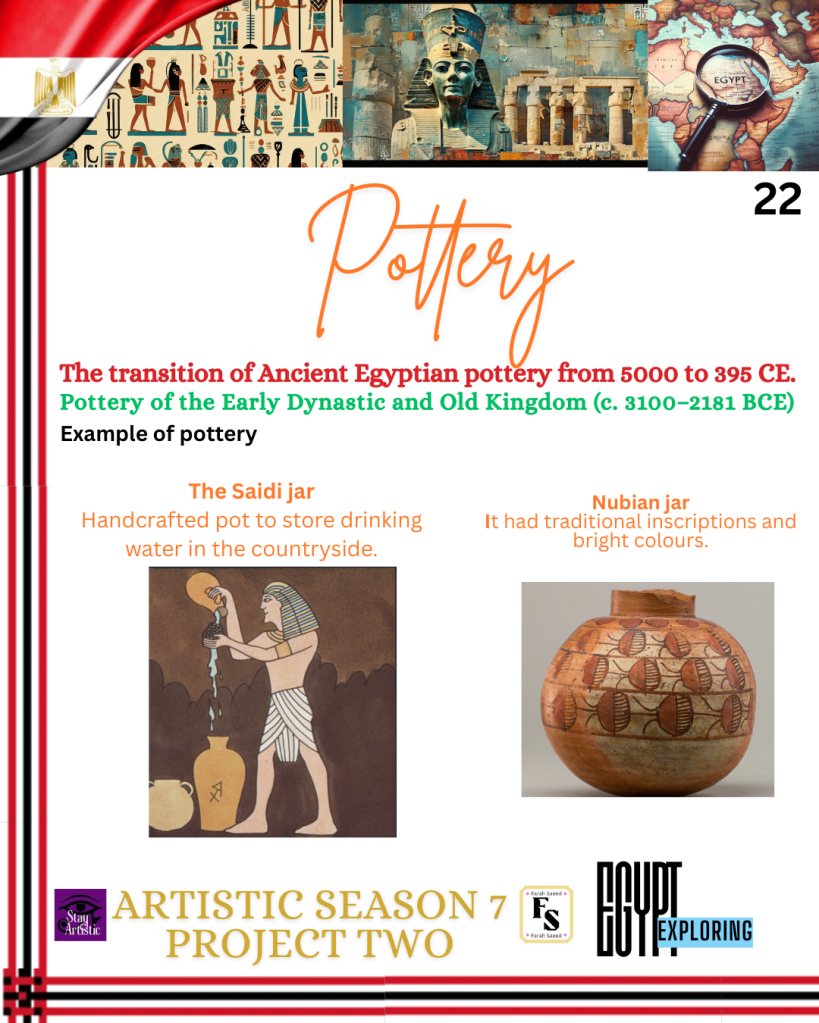
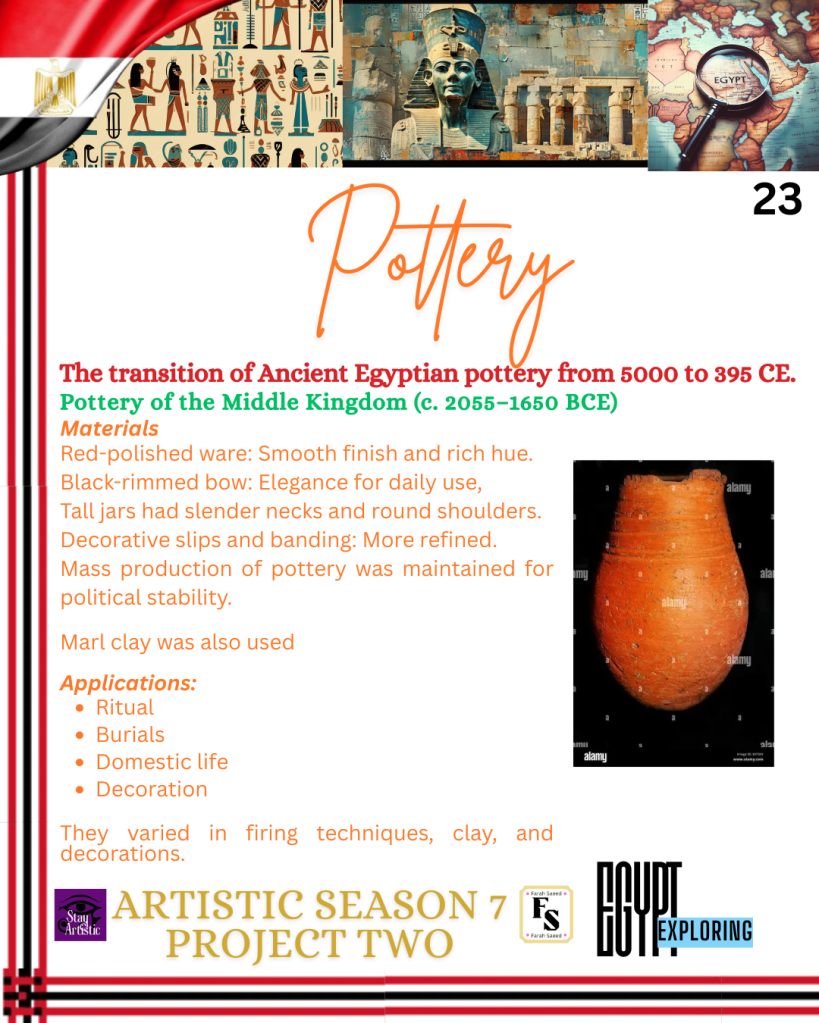
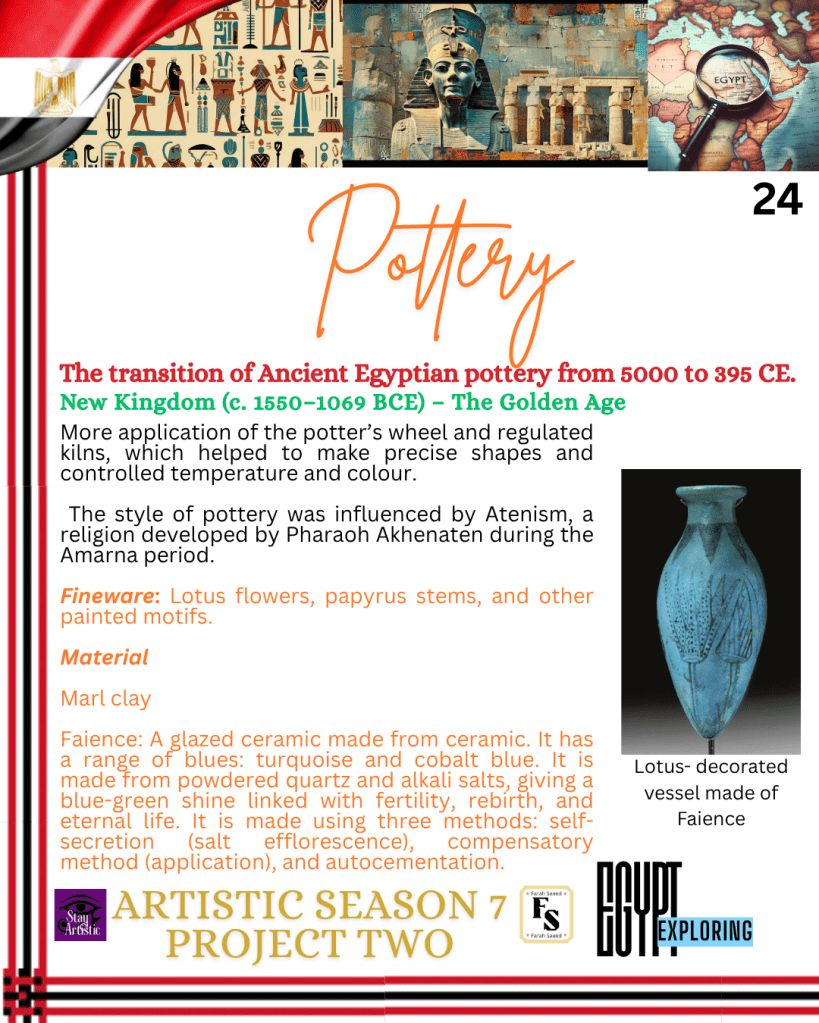
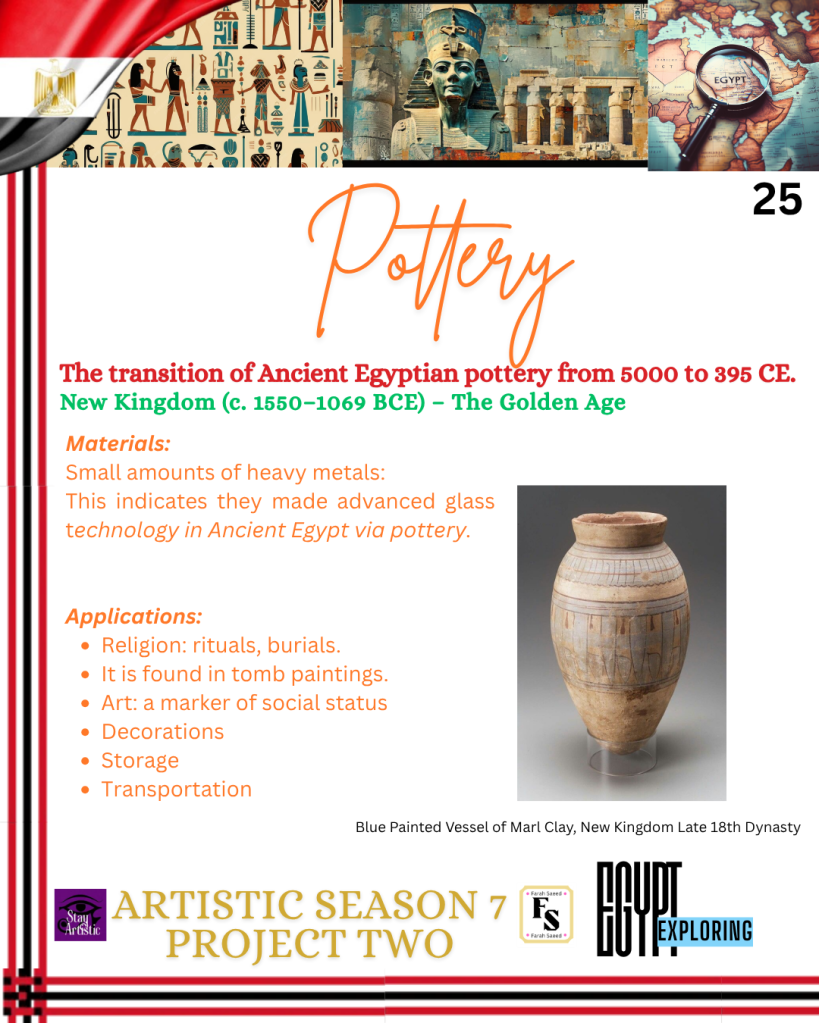
The slideshow can be found below:






Leave a Reply