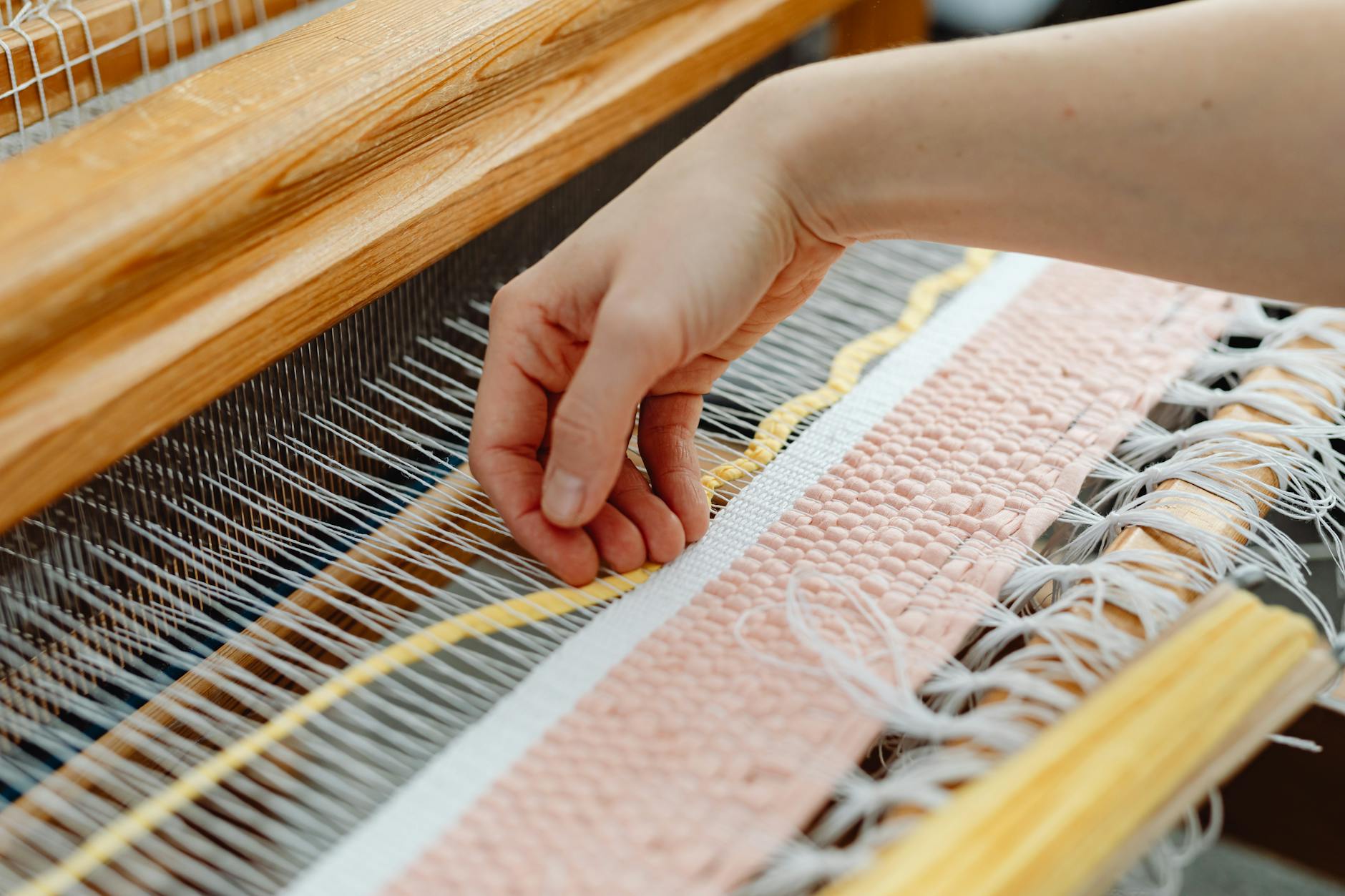
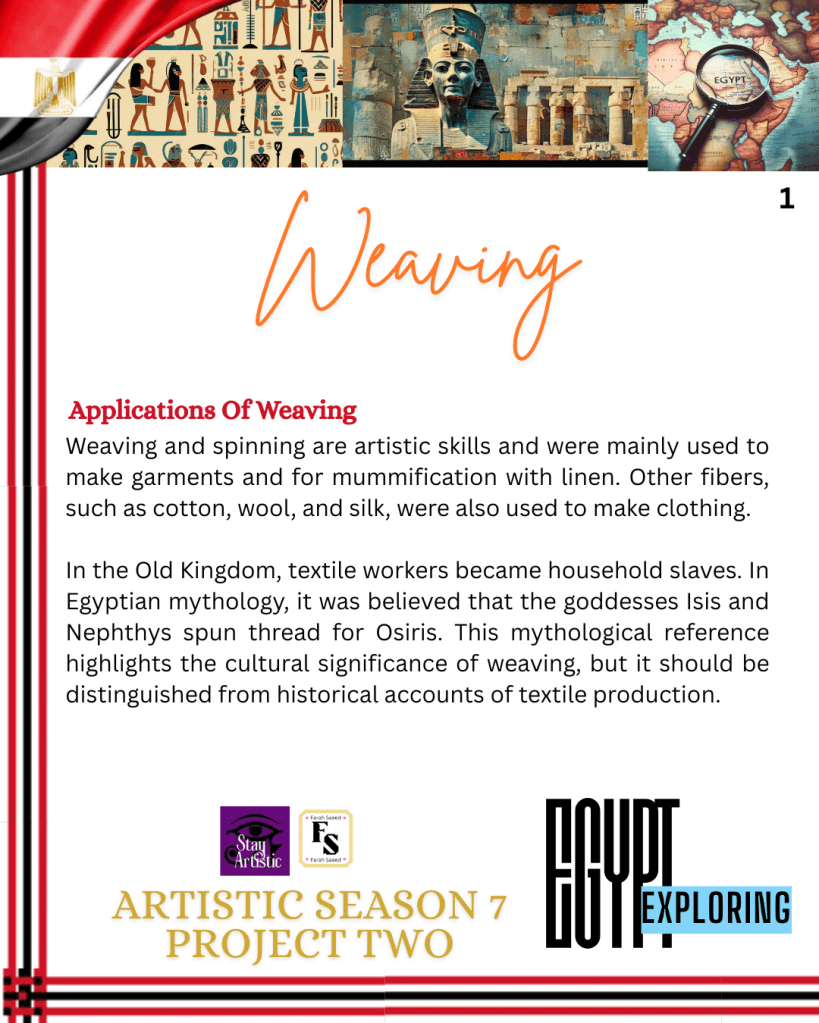
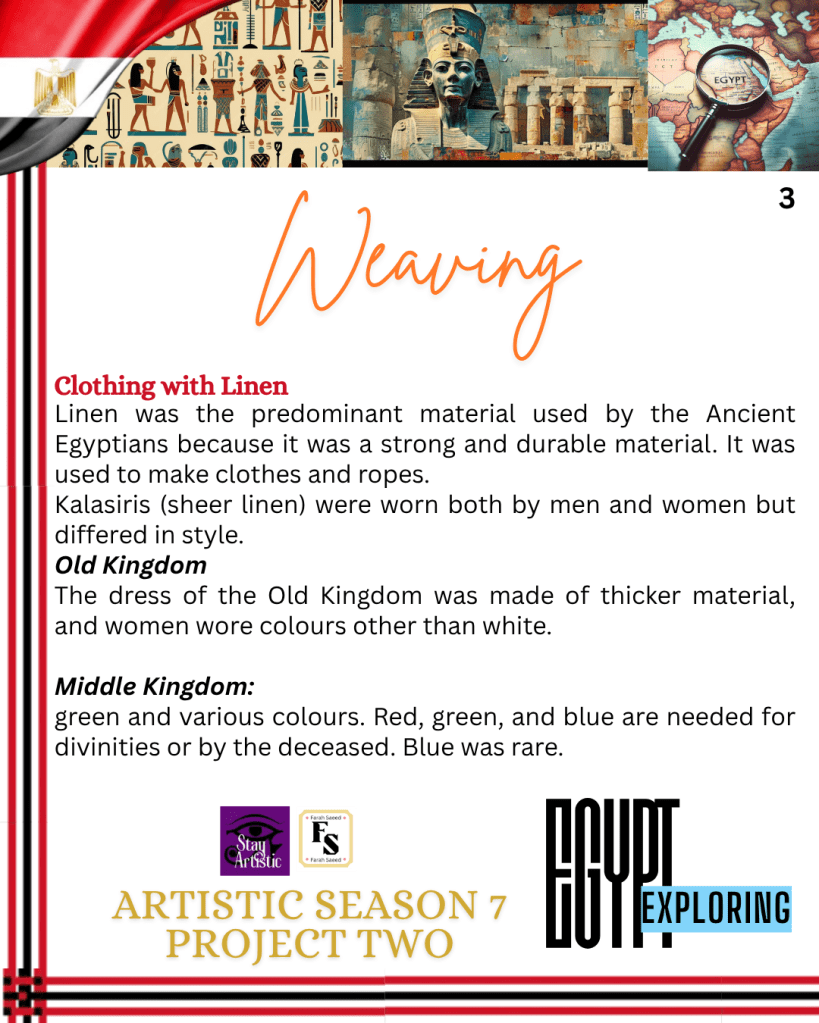
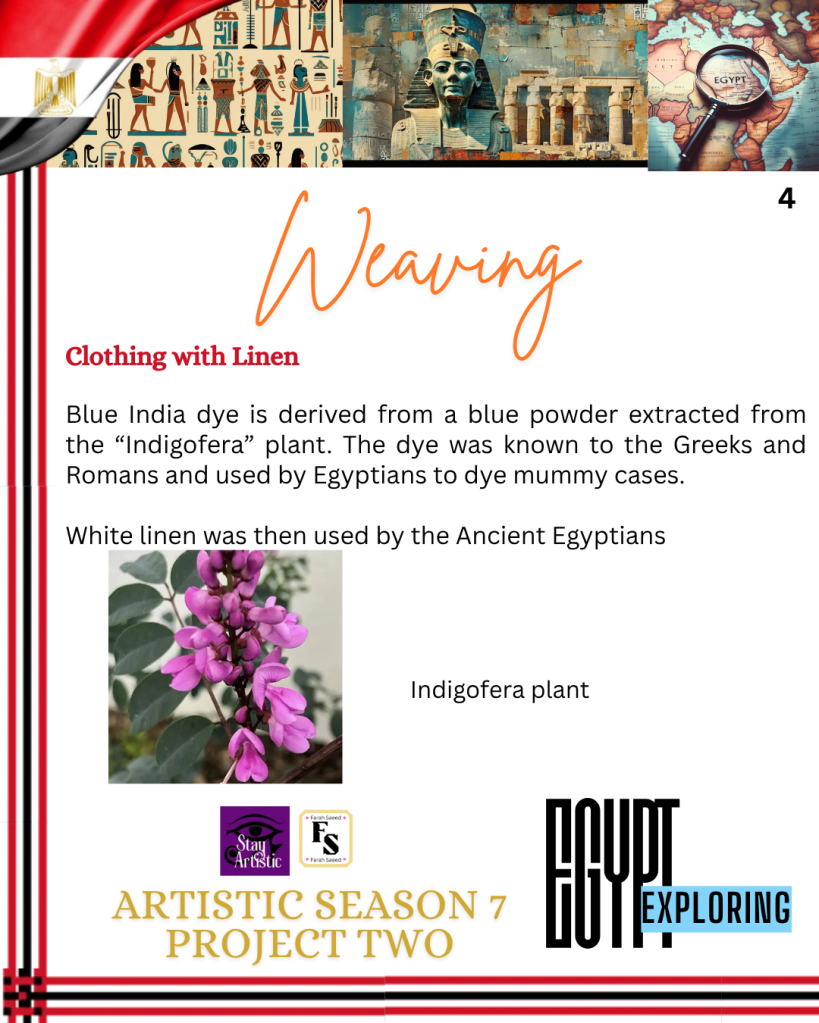
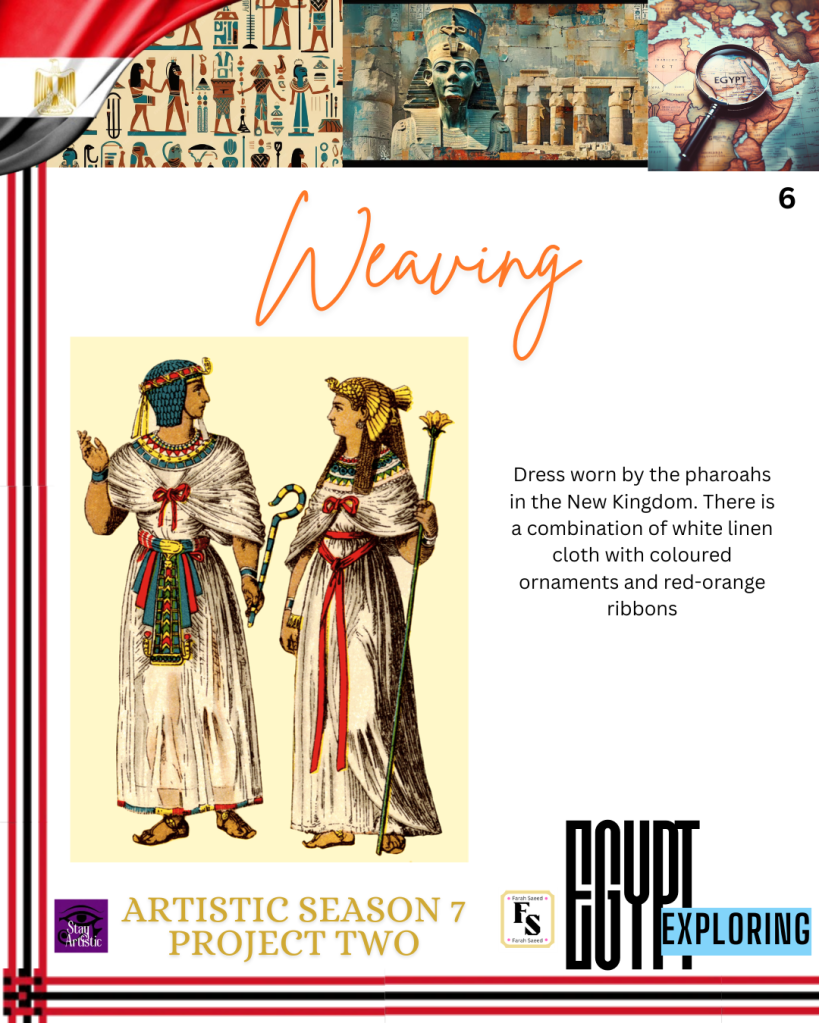
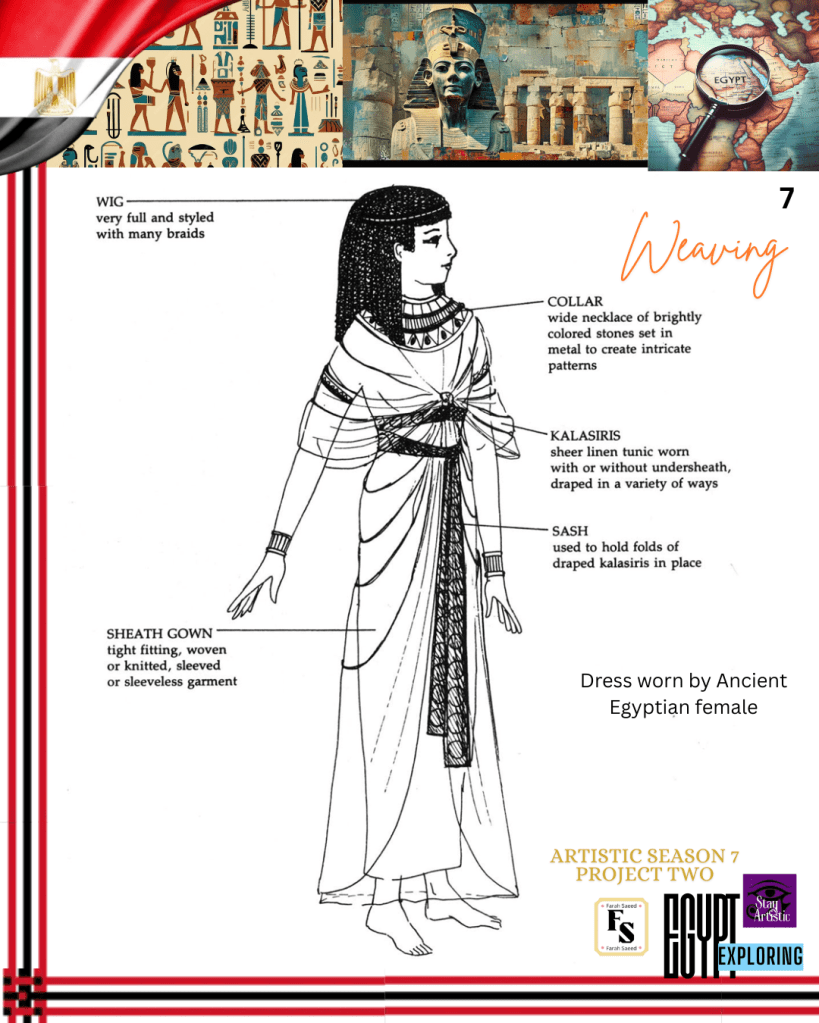
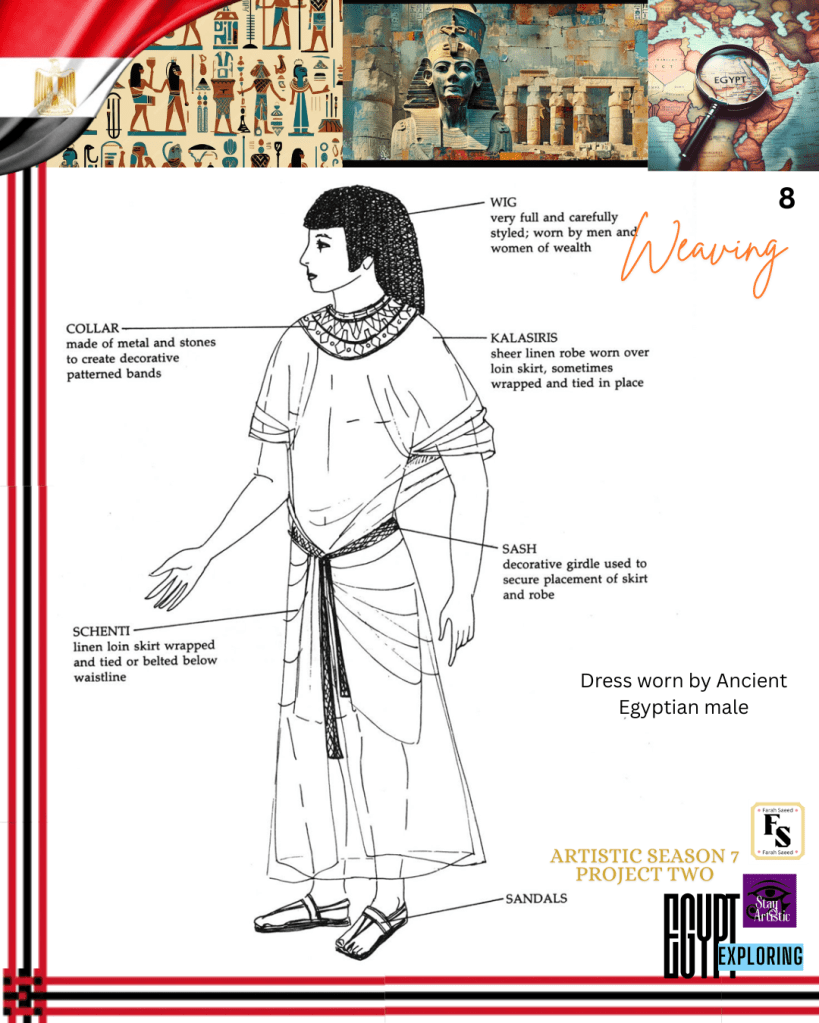
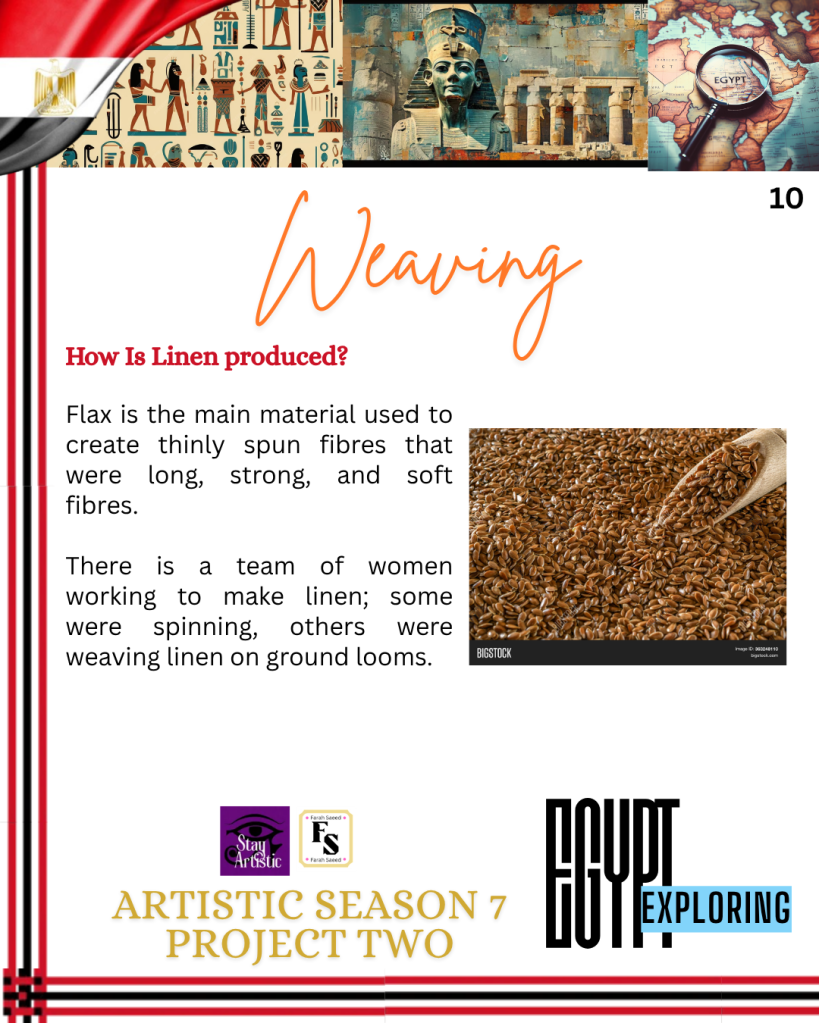
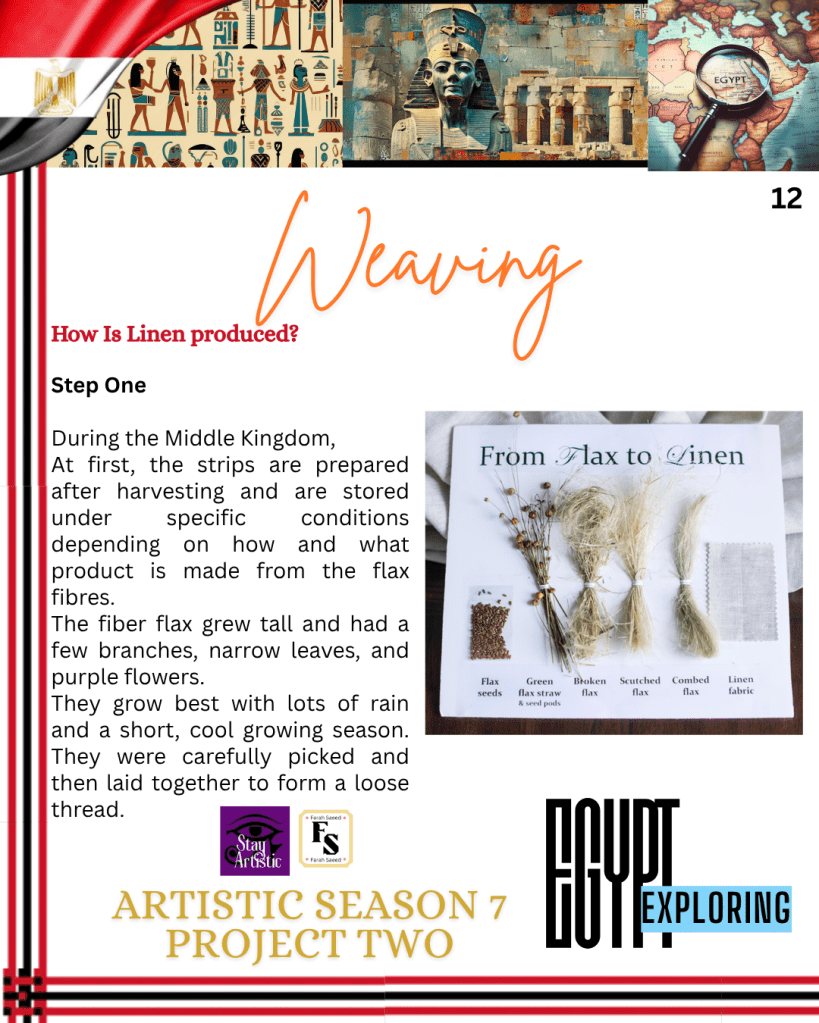
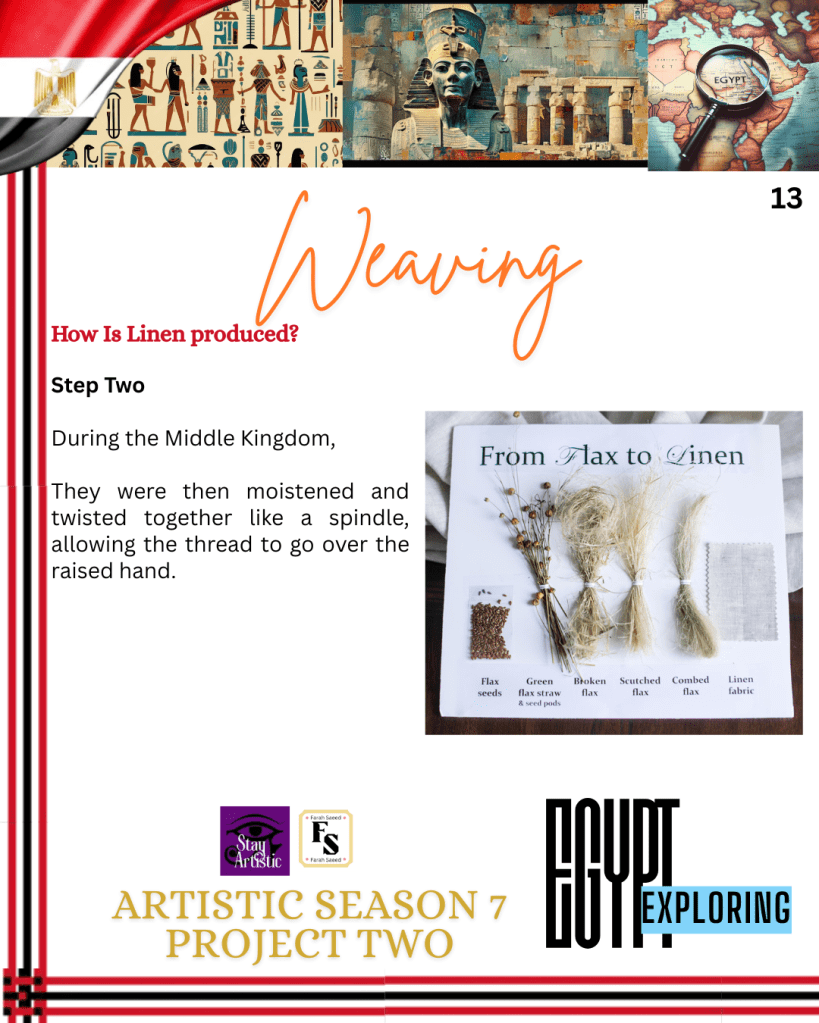
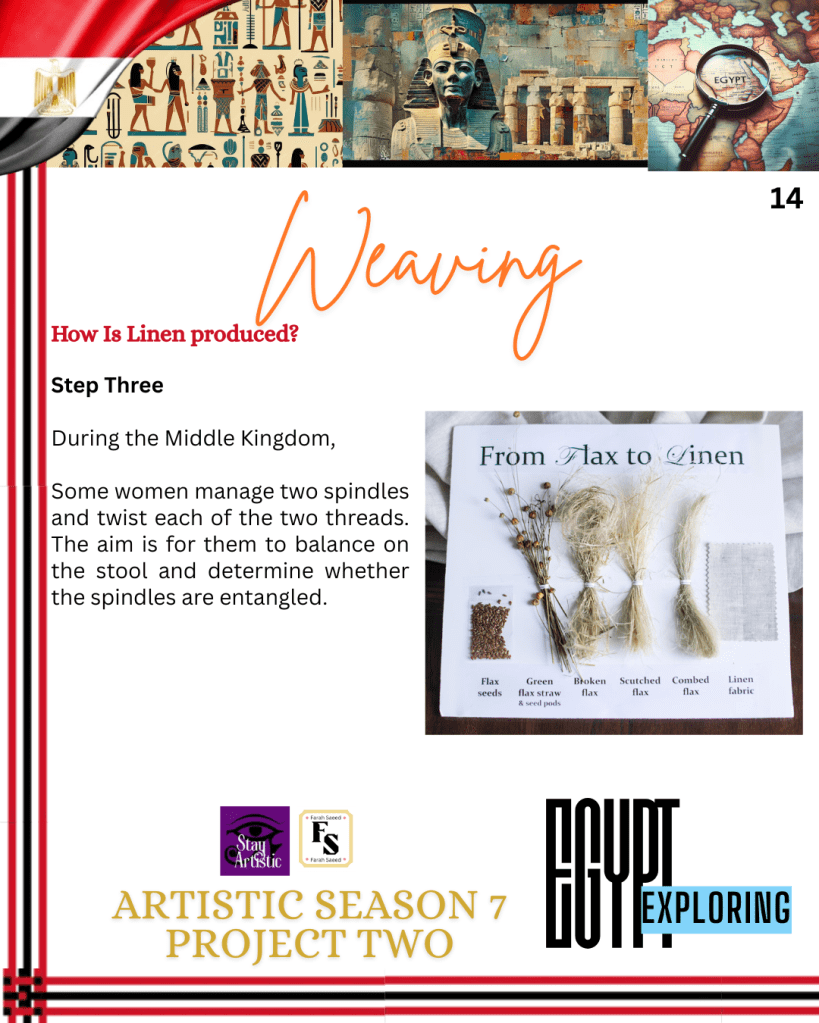
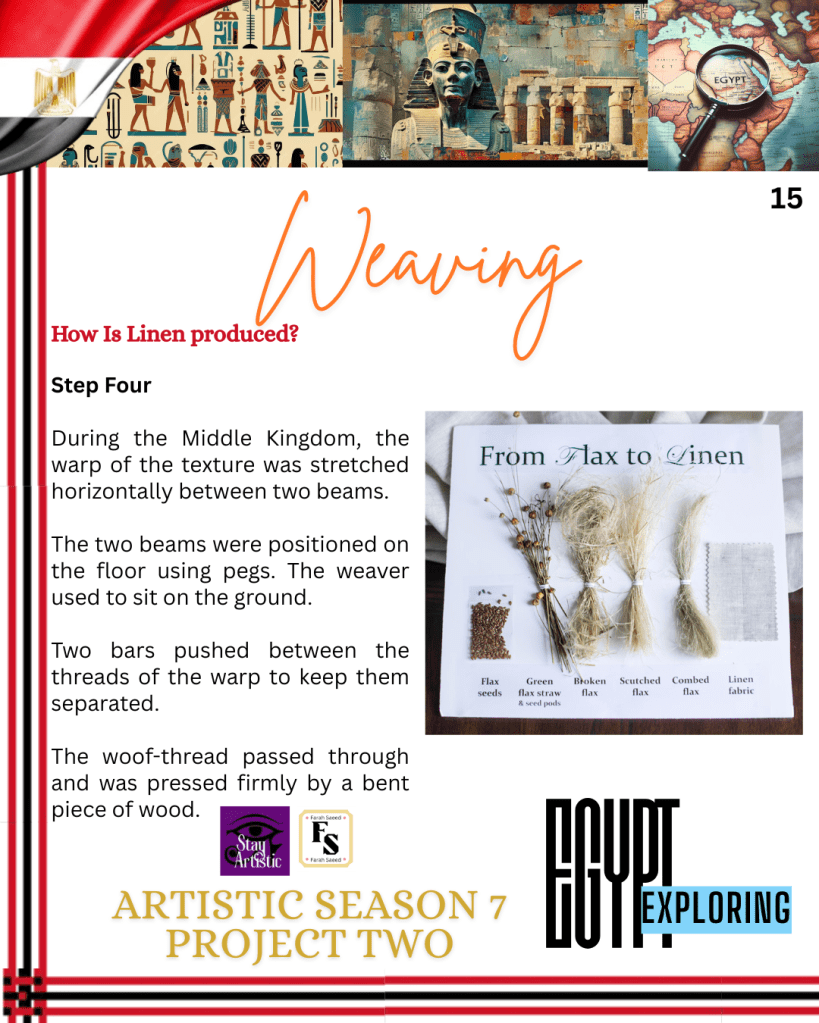
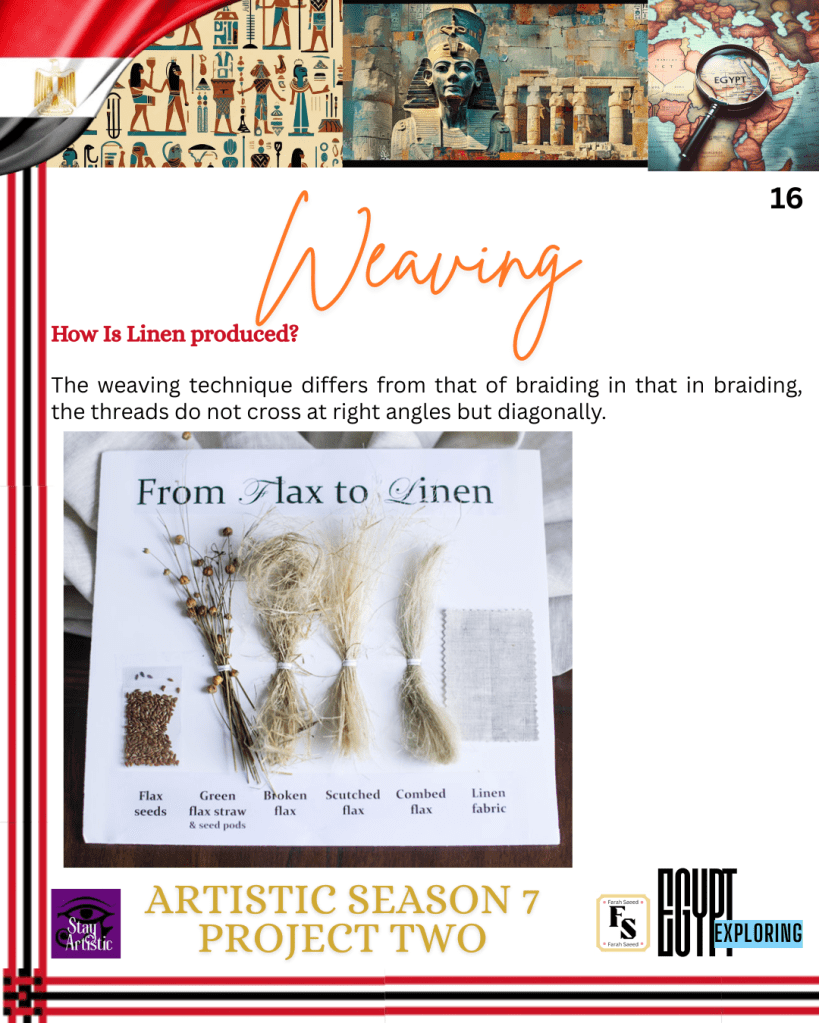
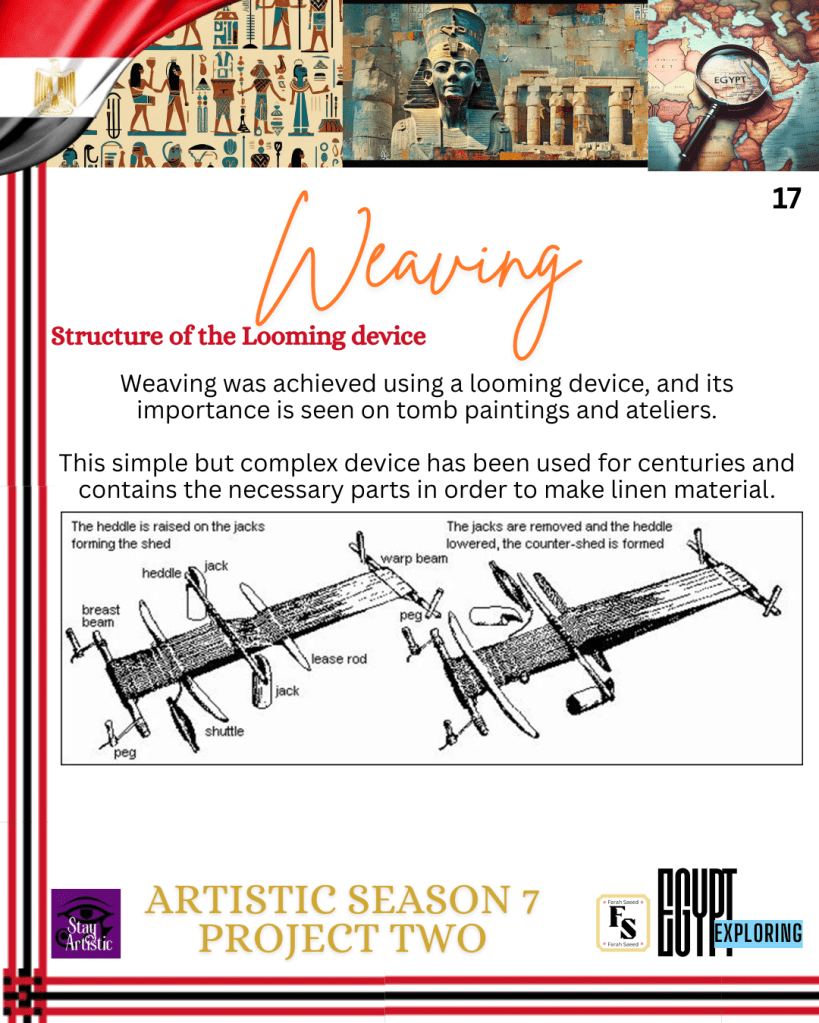
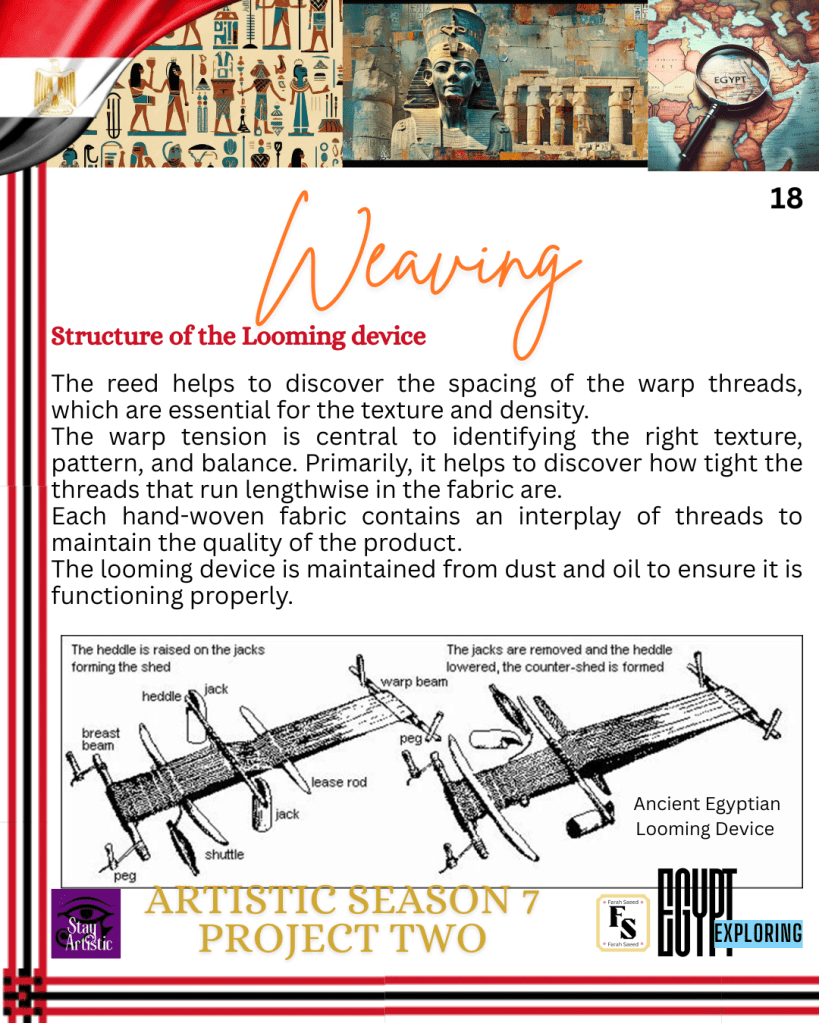
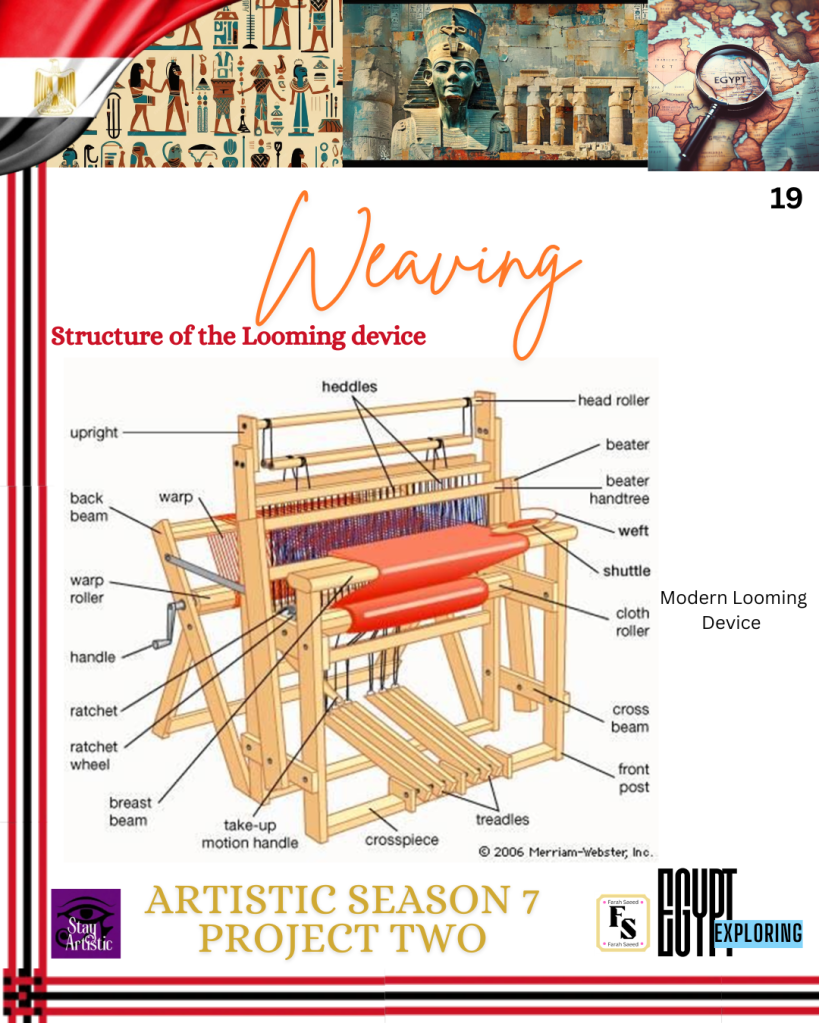
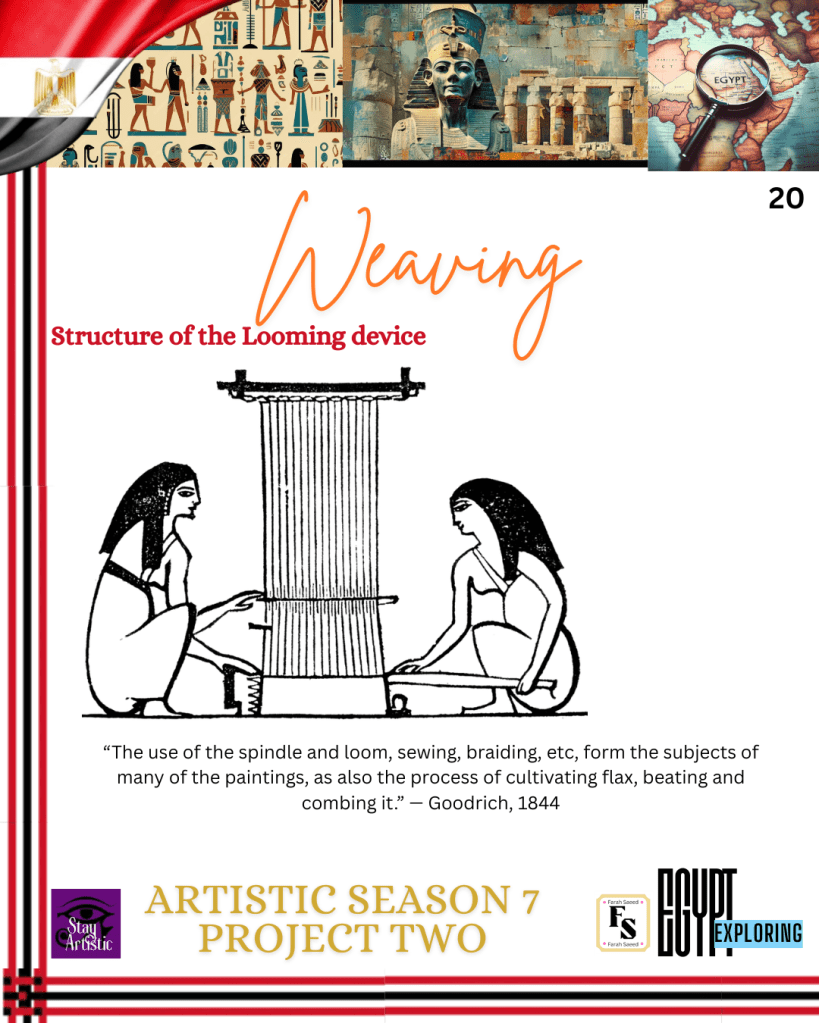
Weaving played a central role in Ancient Egyptian society, both as an essential craft and a form of artistic expression. This essay will examine the significance of weaving in Ancient Egypt by exploring its development, materials, uses, and impact on daily life and ritual practices. Weaving was a significant artistic craft tradition of the Ancient Egyptians, beginning around 5000 BC. This technique was mainly used to make linen and wool garments, with fine white linen textures being embroidered for pharaohs and noblemen, while workers wore coarse garments with different colored patterns. Clothing featured hand-made paintings and motifs, such as lotus flowers, scarabs, and zigzag patterns. Linen was further used in burial customs, wrapping mummies, and making sails. Artists and textile workers also used leather, evidenced by stone carvings from 3000 BC. Weaving in Upper Egypt involved many procedures from loom preparation to final product, including linen, cotton, wool, and silk. Handmade weaving required concentration and patience, but due to expensive materials and tools, the technique was later neglected.


Leave a comment