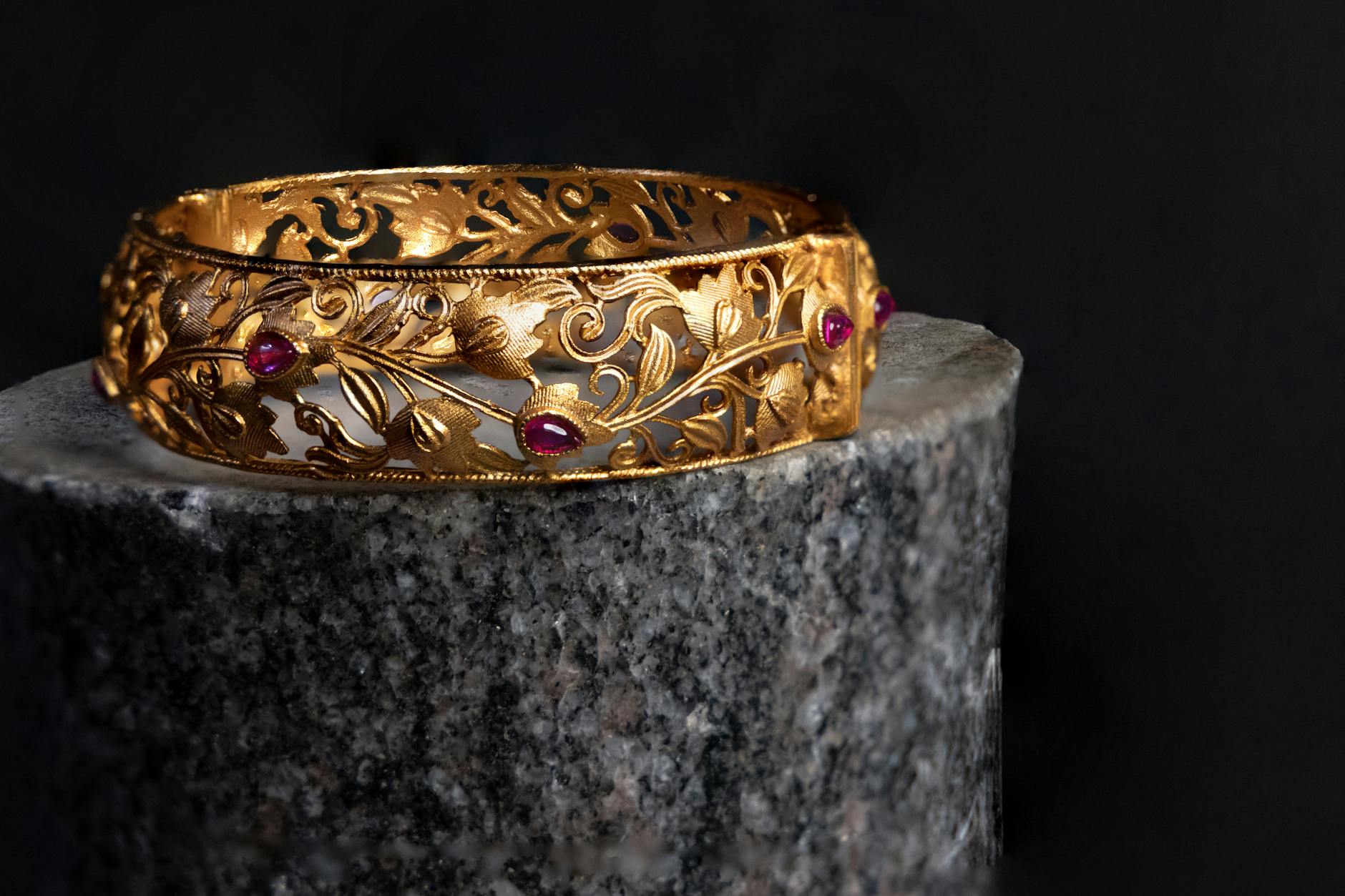
The jewellery of Ancient Nubia (present-day South of Egypt/Upper Egypt and Northern Sudan) has a long and enriched history. It has been transformed through its kingdoms due to religious, artistic, and cultural significance. Trade in gold, ivory, and other resources with Egypt, central Africa, and the Mediterranean also influenced jewellery design.
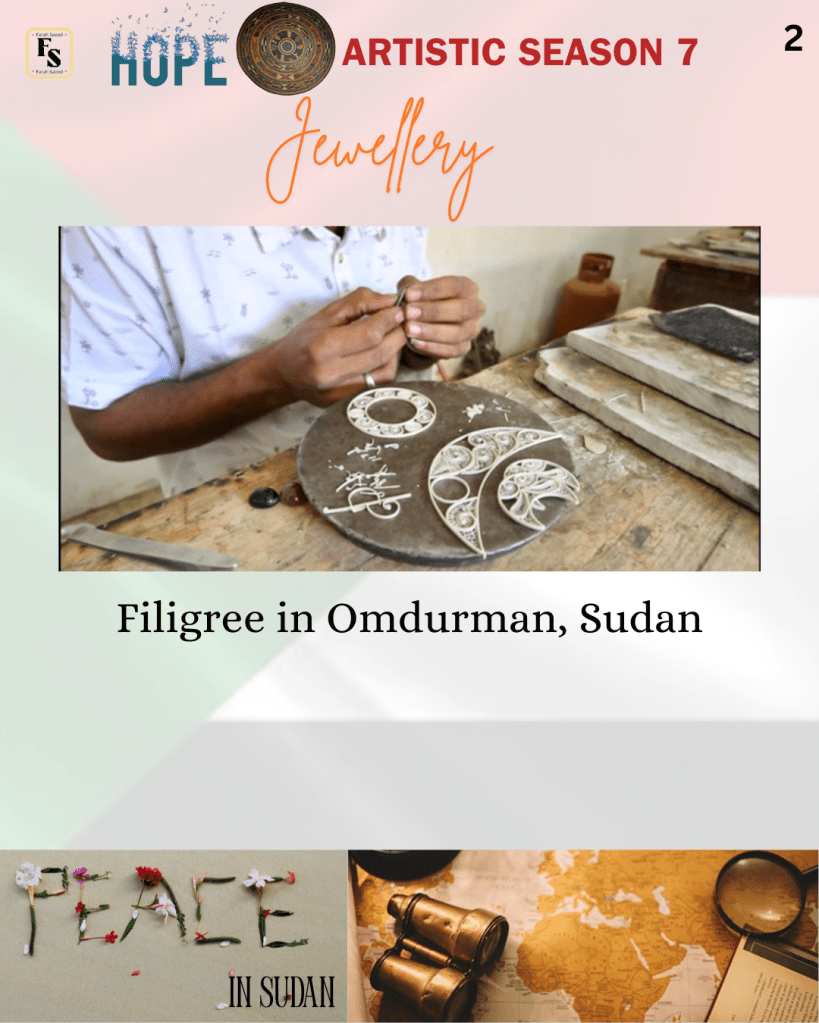
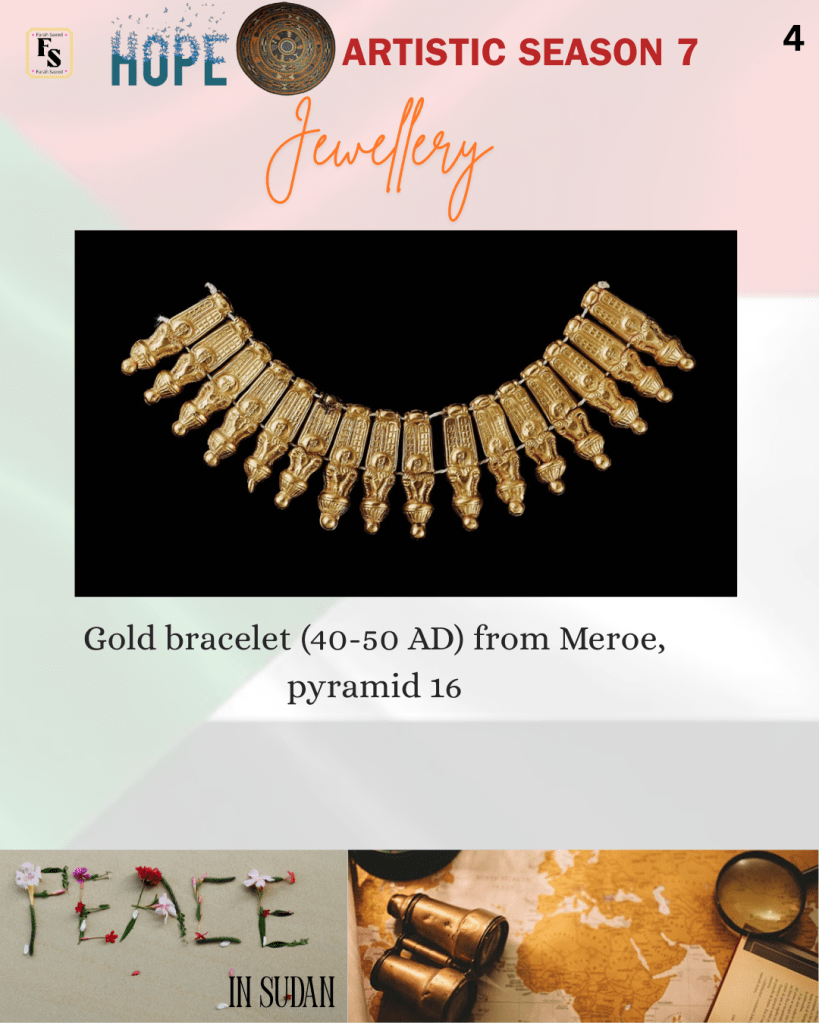
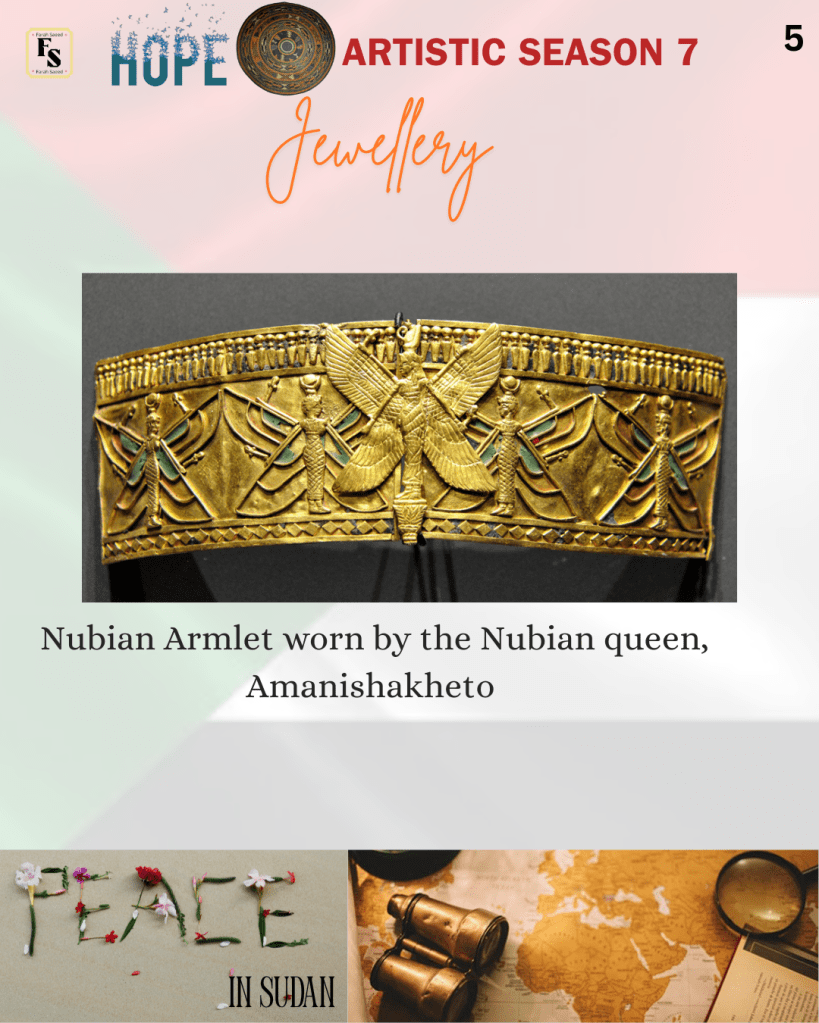
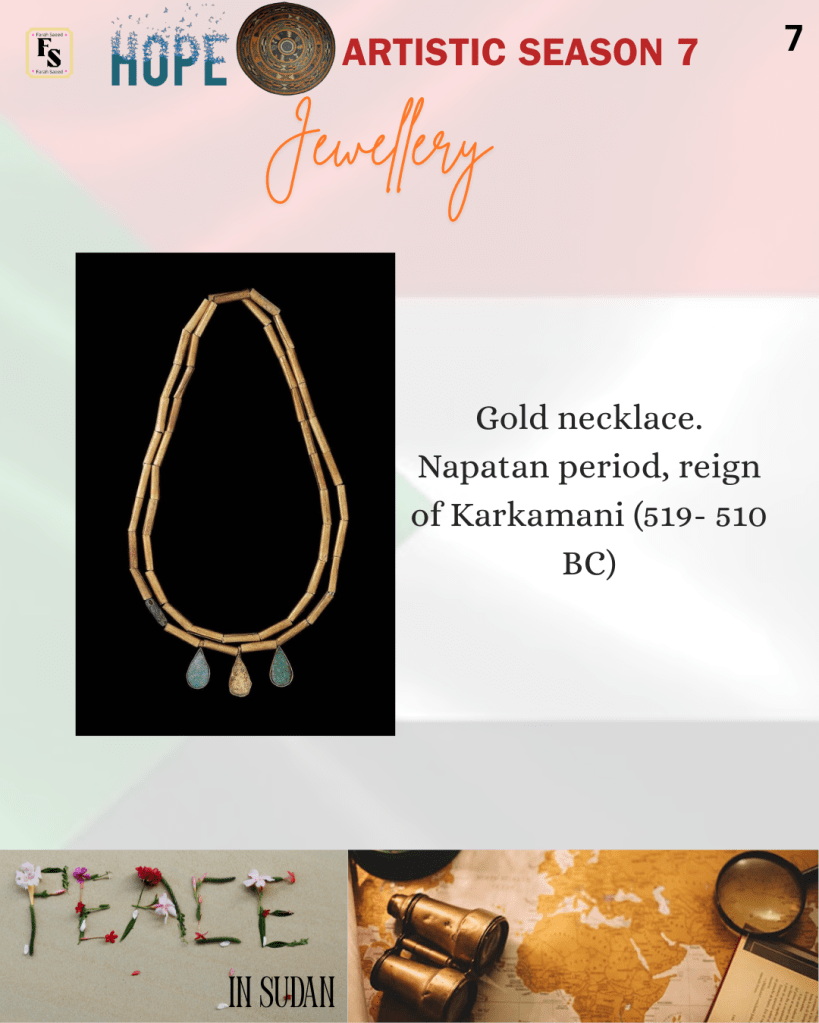
The Ancient Egyptians were the first to craft jewellery from gold and copper. Thereafter, around 2400 BC, jewels made of gold, silver, ivory, bone, shells, and faience were found in burials in Kerma, the capital city of the Kush Kingdom. This was due to symbolic and religious stances. Similarly, the range of jewels and use was applied in the second Kush Kingdom as it moved further along the Nile River in Napata, around 1000 BC. This was at the moment when the Ancient Egyptians withdrew. Moreover, many were crafted by local Nubian artisans and were often found in hieroglyphics. After 600 BC, the Kushite kings moved to the cosmopolitan city of Meroe, further along the Nile River, and many of the royal burials thereafter had jewellery and ornaments that combined Nubian, Egyptian, and Greco-Roman influences. Jewellery makers were skilled in enamelling, metalworking, and glass bead techniques. Enamelling is the process of adding powdered glass to metal and then melting it to create colourful patterns. Fine wirework (filigree) and decorating with tiny gold spheres (granulation) were considered fashionable. Beadwork with the cornelian gemstone was used to make necklaces, accessories, and decorative items. Other beads were made of metal and seeds to make bracelets, earrings, and headpieces with the ultimate goal to present identity and cultural and social significance. Today, Modern Sudan Jewellery designs are inspired by the art and culture of surrounding countries, particularly East Africa.


Leave a Reply