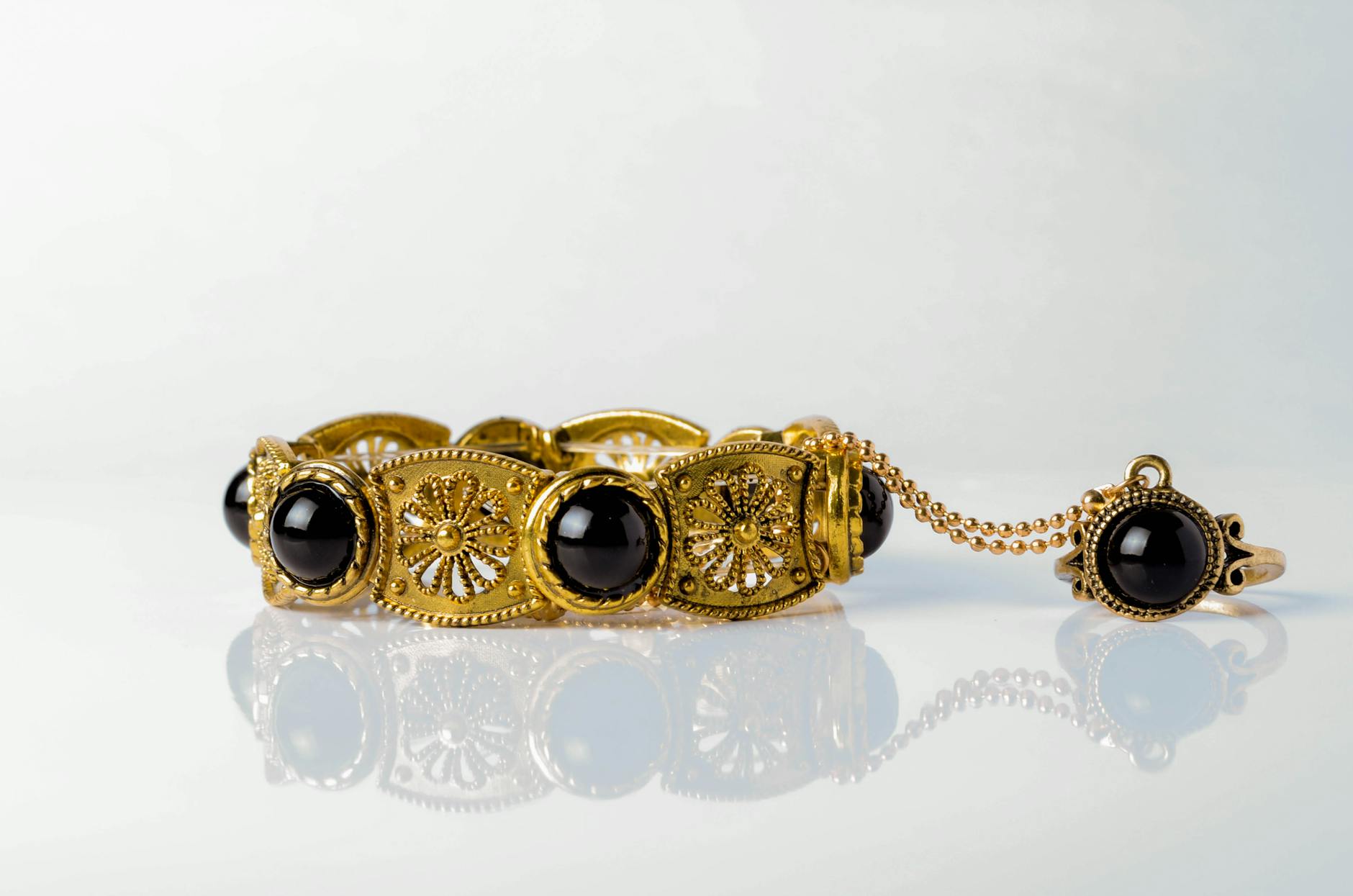
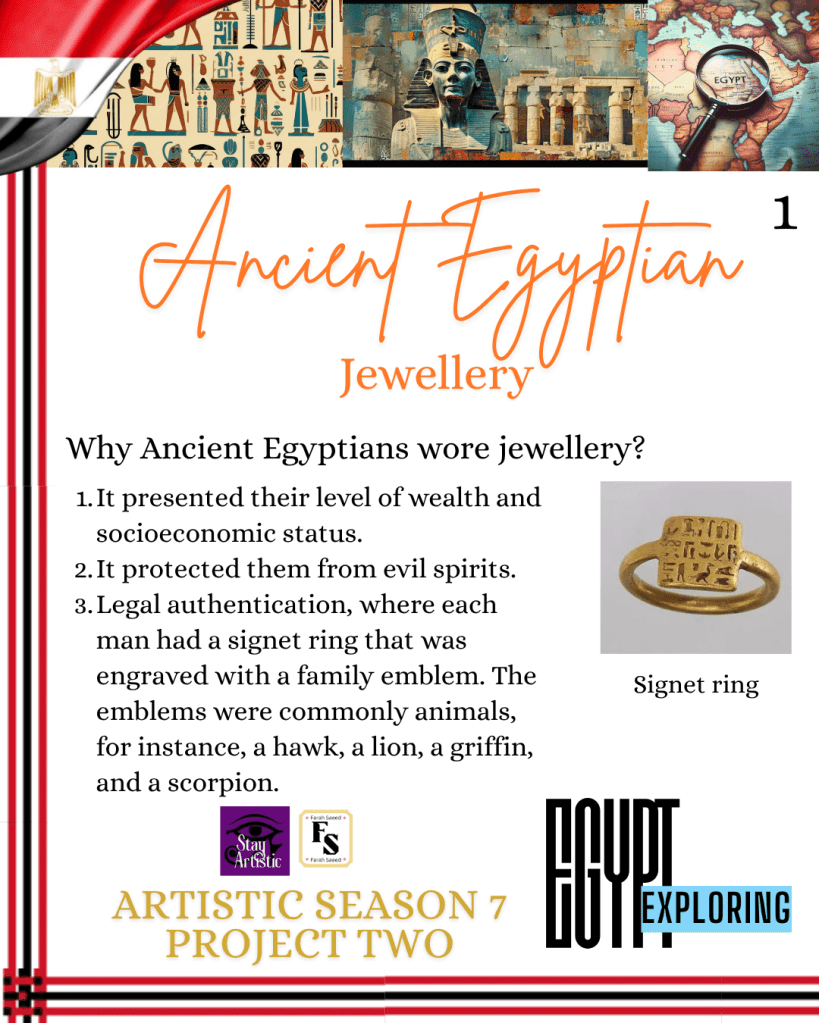
In Ancient Egypt, jewelry materials can be grouped into three main categories: metals, stones, and gems, each linked to social class distinctions. Metals such as gold were typically reserved for the wealthier class, signifying status and power. Copper, on the other hand, was more commonly used by the lower class for making simpler jewelry pieces. Silver was rarely used, as there were no local silver mines, making it a rarer and more valuable metal when found. Often, different metals were combined; for example, adding tin to copper created bronze, which was harder and more visually appealing than either metal alone.
When it comes to stones, a variety of rocks of different colors, textures, and forms were used. These materials were chosen not only for their beauty but also for their availability and symbolic meanings. While the upper class often used finely worked stones, those of lower socioeconomic status might use more common stones, as well as other simple materials such as bone and shell, sometimes fashioned into buttons or beads for adornment.
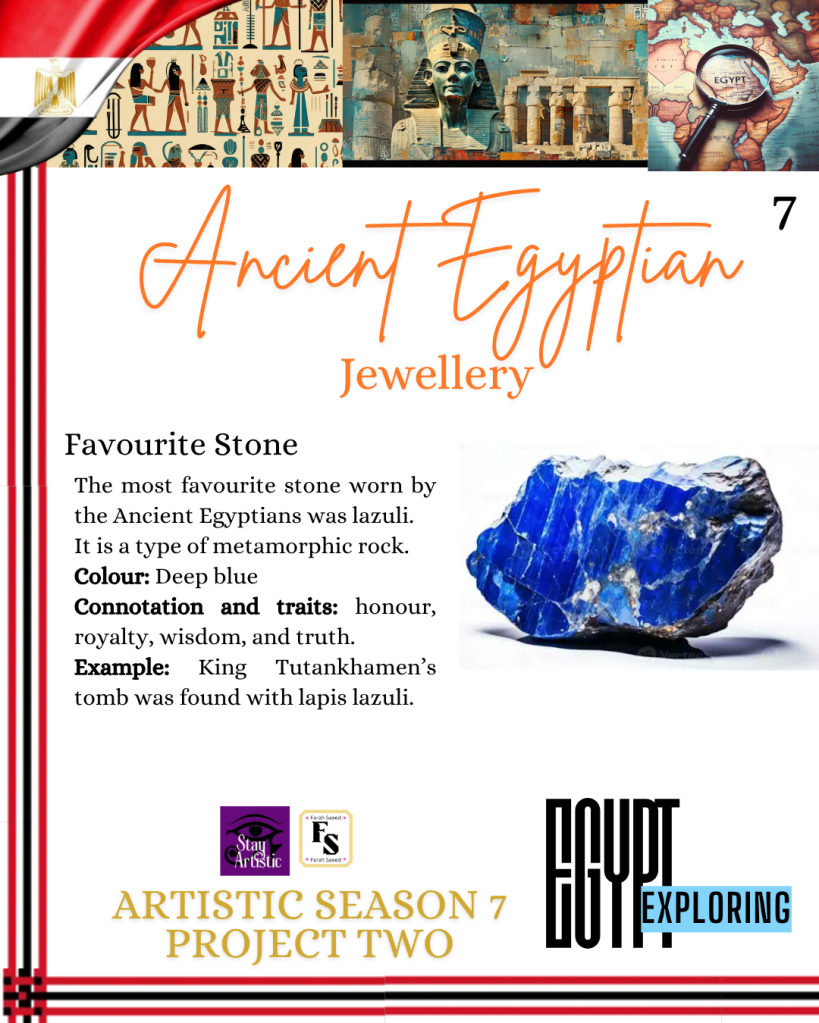
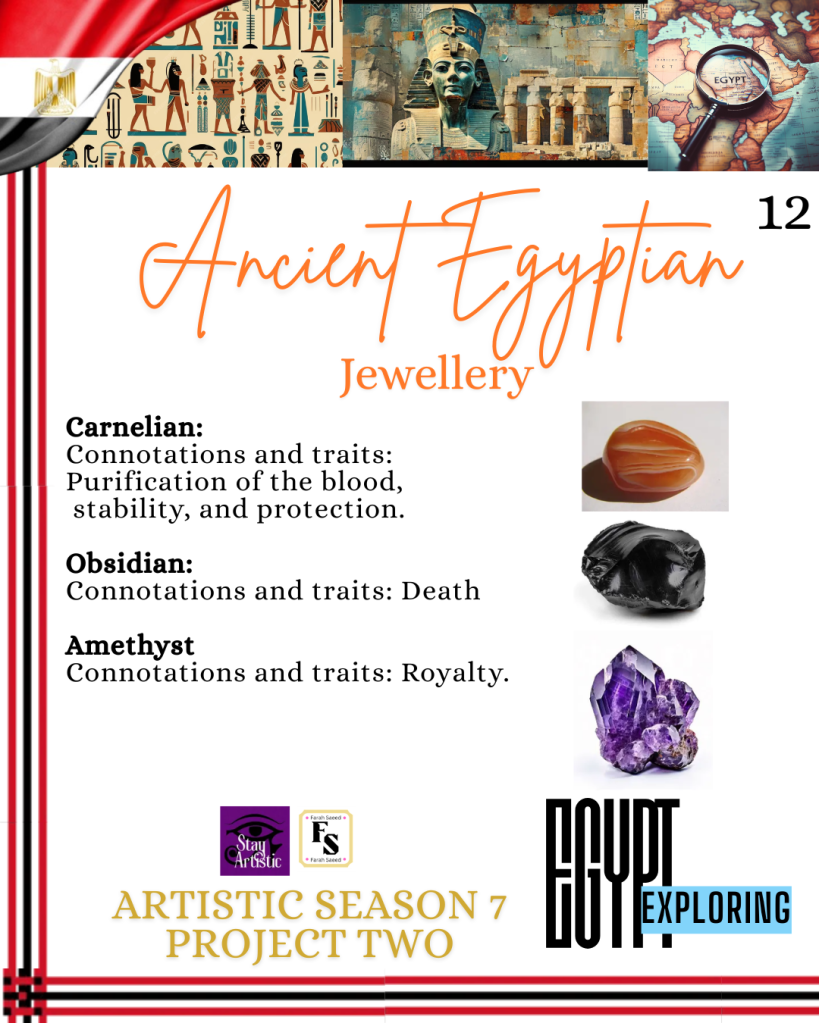
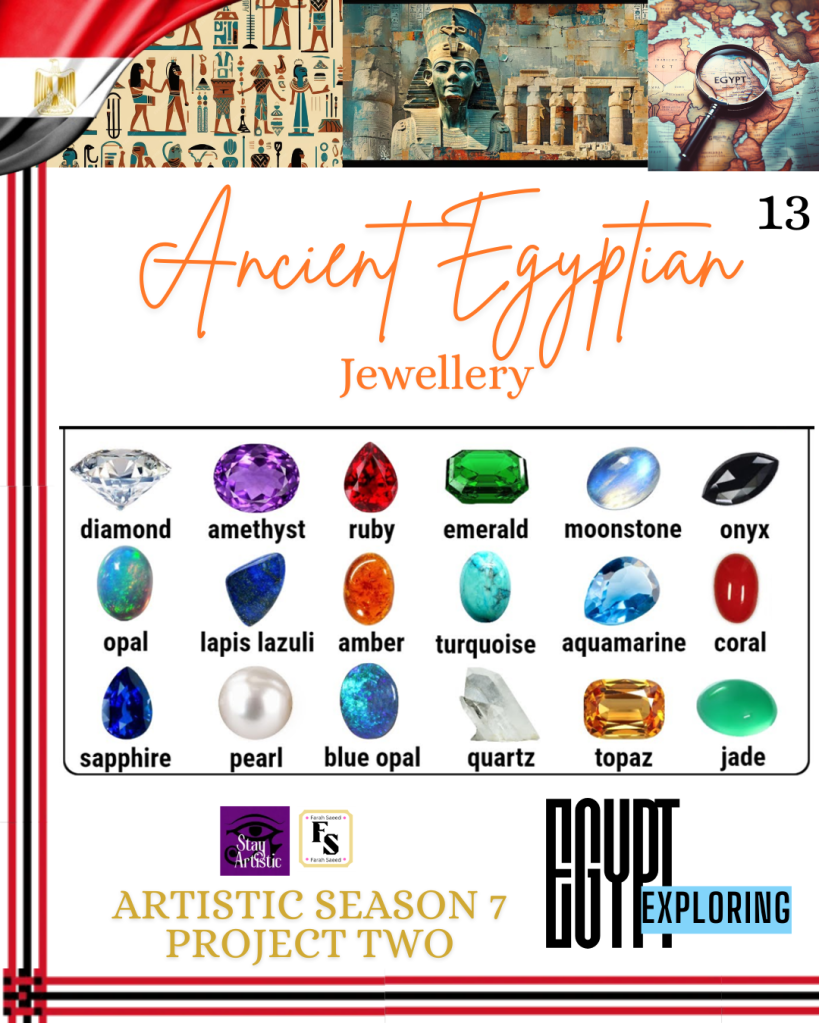
Gemstones—including lapis lazuli, turquoise, and carnelian—were particularly prized by the rich. Imported lapis lazuli, in particular, was a symbol of high status and used in elaborate jewelry designs.
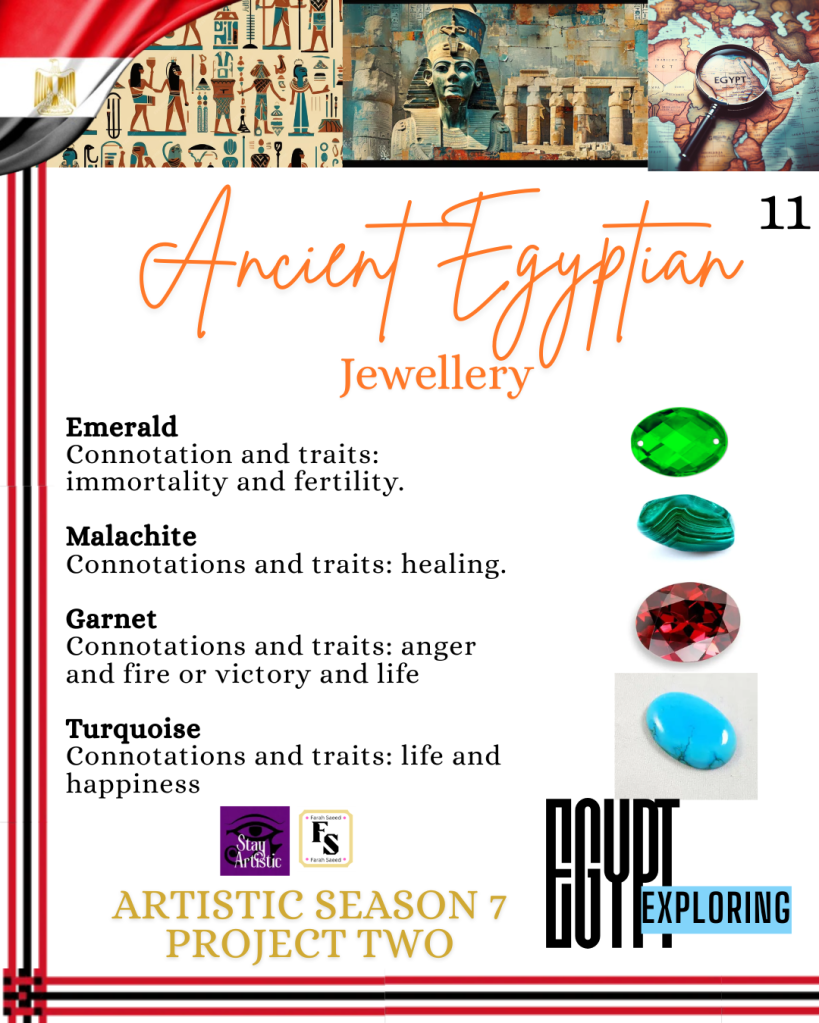
A key example is granite, which is a type of igneous rock. Igneous rocks are produced from the cooling of the molten magma found beneath the surface or lava on the surface. The speed of cooling determines the texture. Slow cooling forms large visible crystals. These are known as intrusive rocks, and granite is a key example. Granite contains quartz, feldspar, and mica minerals. Quartz has a trigonal or hexagonal crystal and is used for jewellery, especially agate and amethyst was predominantly used for jewellery. The difference between minerals and rocks is based on their origin. A mineral occurs naturally and is an inorganic solid with a crystalline structure. In contrast, a rock is a solid aggregate of a combination of minerals called mineraloids. Rocks mainly came from deserts, the Aswan granite quarry on the Nile, and the Red Sea. Other gemstones, including emerald, beryl, garnet, peridot, and turquoise, were found in Sinai. The mountainous region of Sinae had the coolest temperature during the night because of its height.
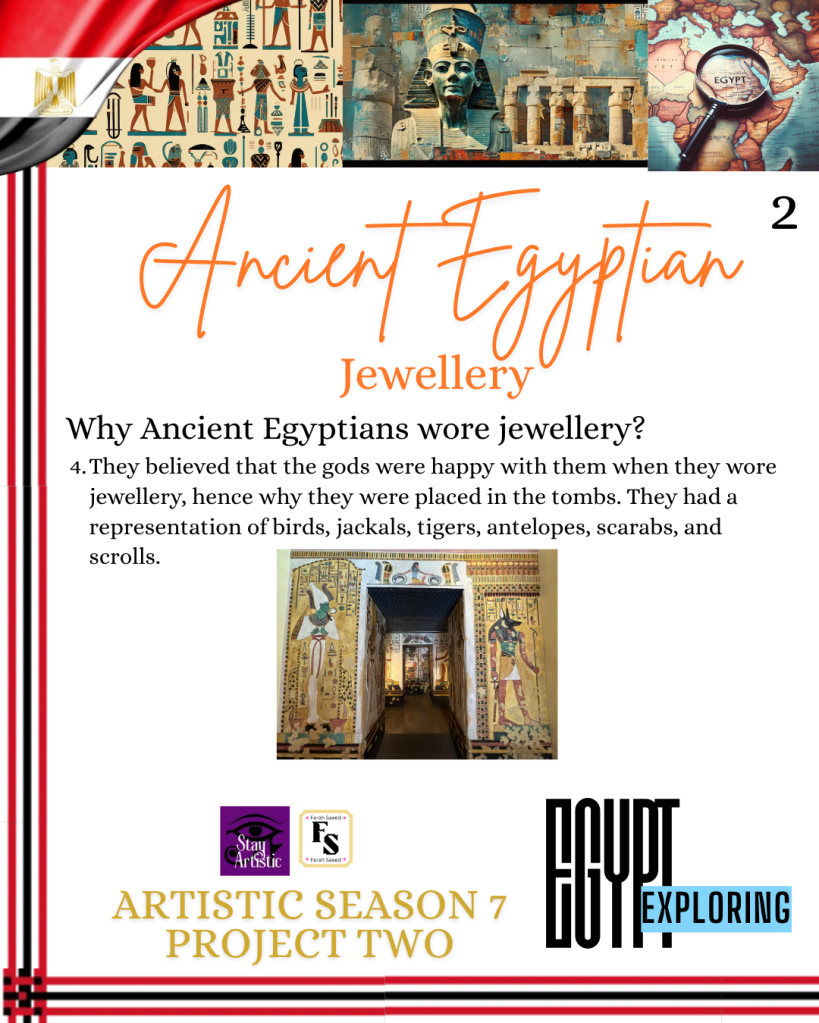
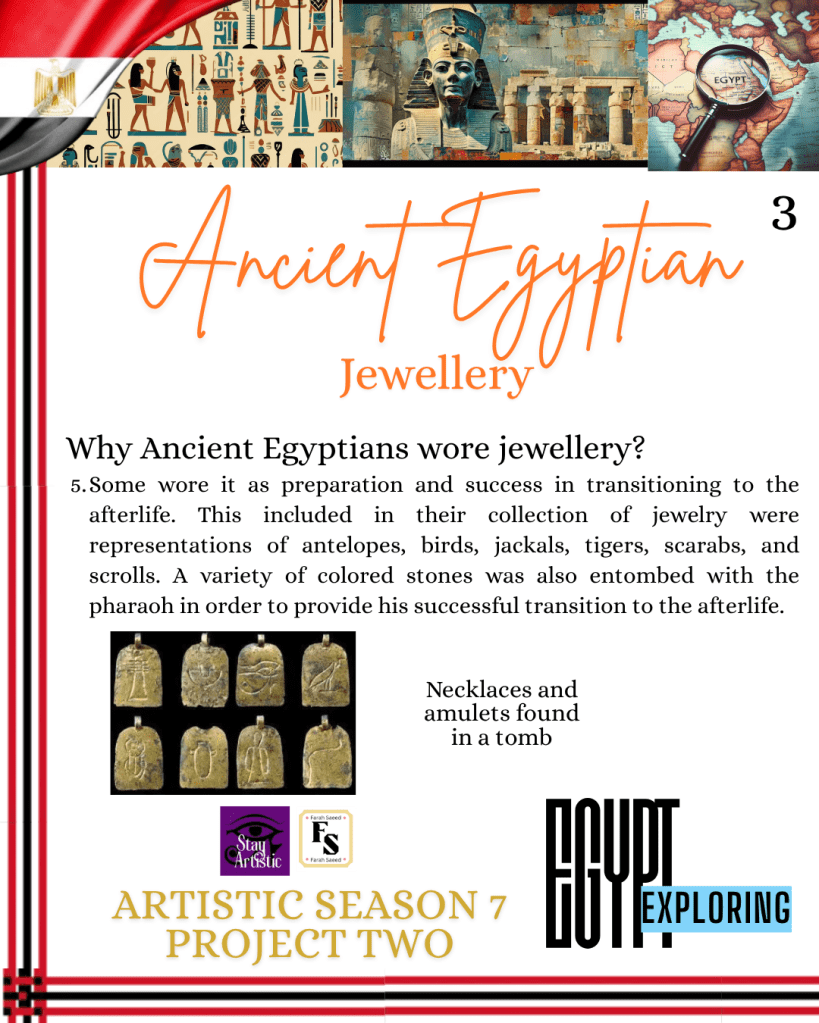
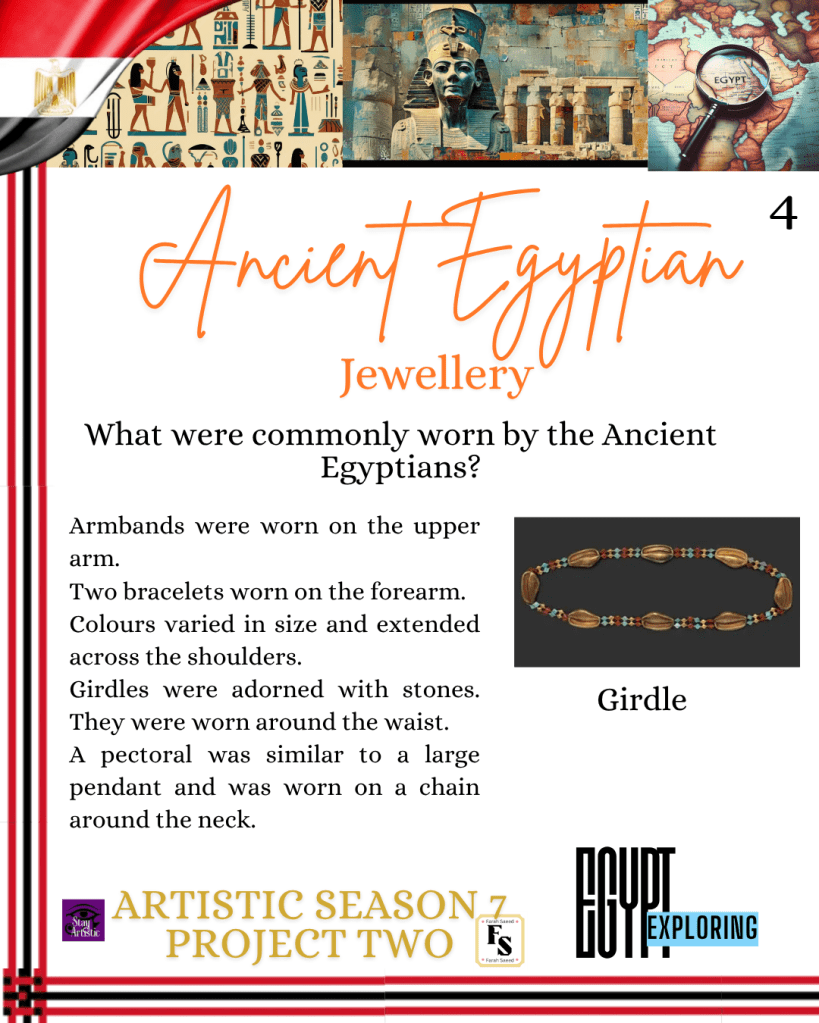
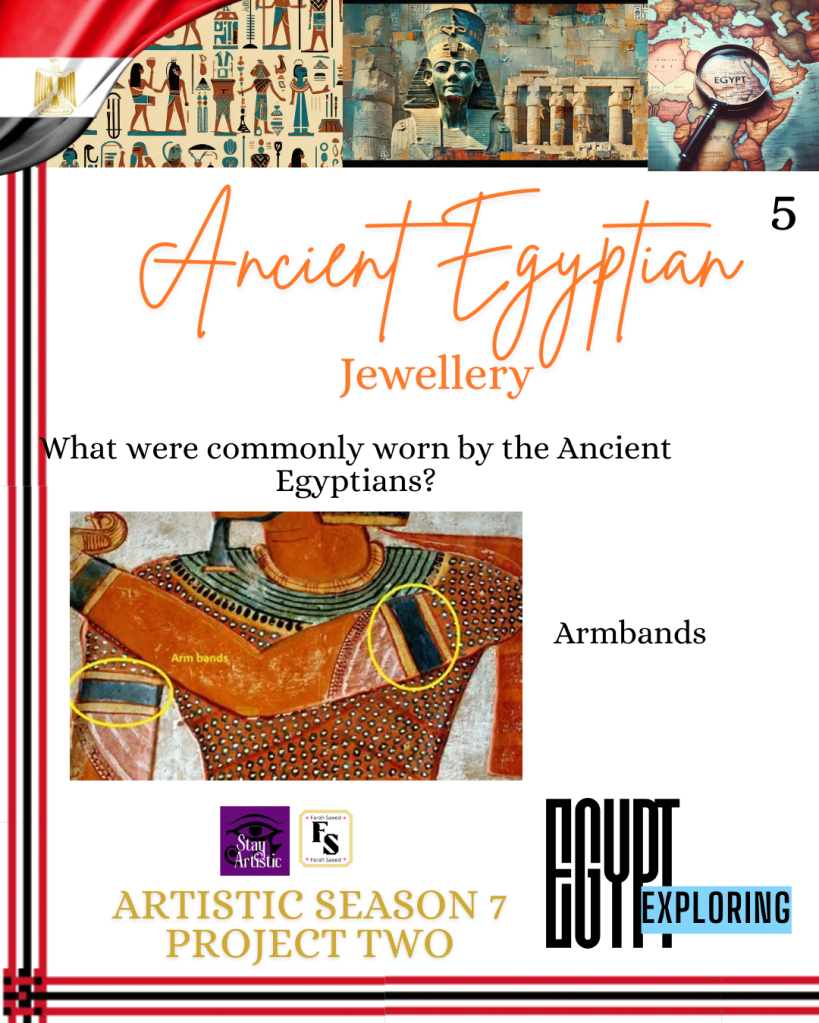
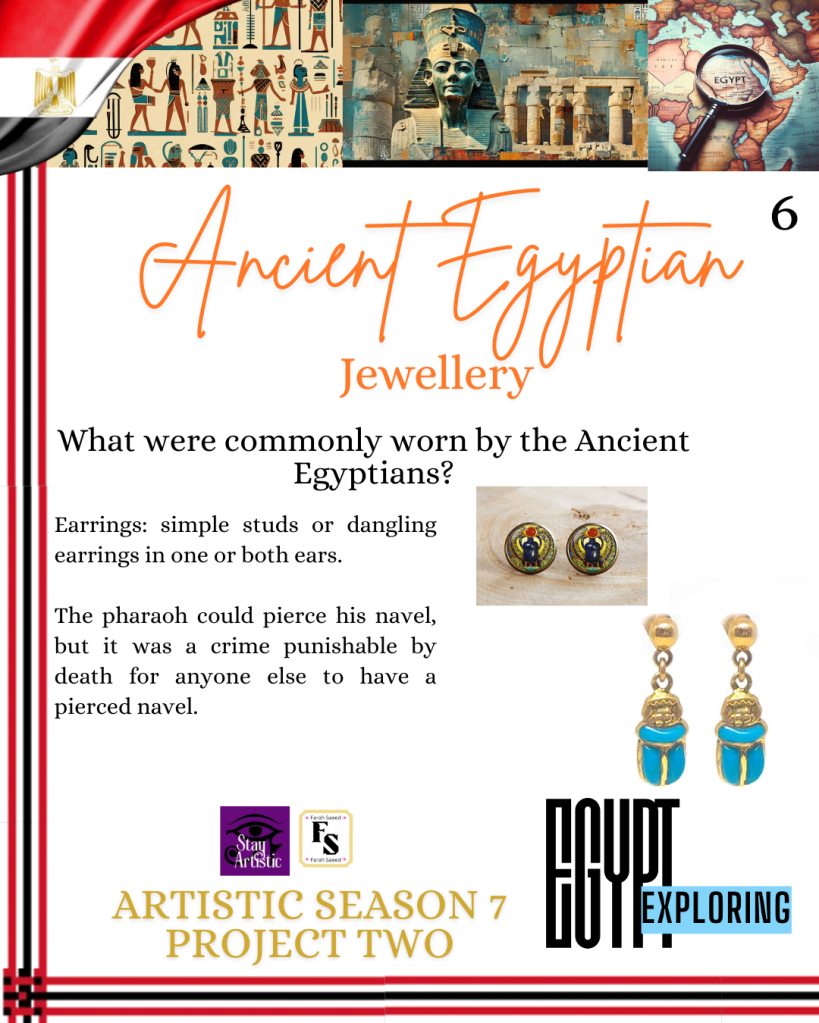
Overall, the complexity and extravagance of jewelry reflected social standing, with the wealthy displaying more luxurious items. Ancient Egyptians of all classes adorned their bodies with jewelry, though the materials and craftsmanship varied according to status. Because of the hot, arid climate, most clothing was simple, making jewelry an important means of personal expression.
 The Farah Saeed Project
Leave a comment