Dear brothers and sisters in faith and humanity,
In our fourth and last article of the four-part series “Muharram – Another Chance To Seek Allah’s Forgiveness”, we will discuss the story of the Prophet Nuh (peace be upon him) and his perseverance. It is another story that unites Islam, Christianity, and Judaism.
As we approach the 10th of Muharram (Day of Ashurah), another significant event, lesser known, is the time point when Prophet Noah (Nuh) (peace be upon him) settled on Mount Judi after the waters of the flood went away. This event is linked by many scholars to the significance of Ashurah, as it is narrated that Allah granted deliverance to Prophet Nuh (peace be upon him) and the believers on this very day. For Muslims today, Ashurah is a time to remember not only the deliverance of Moses and the Israelites but also the lessons in faith, patience, and reliance on Allah found in the story of Nuh. Reflecting upon his story during Ashurah encourages us to strengthen our gratitude and steadfastness in times of trial, drawing inspiration from the perseverance shown by Nuh and his community. He was the second prophet after Adam (peace be upon him) and the second father for humanity. The respected scholars have indicated that there are about ten centuries (qurun) between them. However, he was the first prophet Allah (The Most High) sent to the nation and called them about Allah (The Most High). He stayed a total of 950 years as a prophet (Nabi) and messenger (Rasool) before the flood began. His significance and important is mentioned in various chapters of the Quran and has a chapter named after him, Surah Al-Nuh. Thus, this article does not do justice to the lessons and the story it upholds, but rather it provides an insight so that we may all take heed.
The flood that engulfed the people of Nuh came into being as an order by Allah (The Most High) as a form of punishment for denying the message of Prophet Nuh (peace be upon him). He commanded Nuh (peace be upon him) to build an Ark and to protect his family, sincere followers, and pairs of every animal species. Thus, this event is a form of gratitude and thanks to Allah (The Most High).
The story of Nuh (peace be upon him) is symbolic as a reminder of the power of Allah (The Most High), where the people who choose to freely believe in Him are saved and have the mercy of Allah. On the other hand, those who choose to freely disbelieve in Him and reject divine signs are then consequently punished. The Parables of the Prophet (peace be upon them) in the Glorious Quran are an indication to inform us of what happened to our predecessors when not follow the Prophets (peace be upon them). Today, we have no prophets; we are left with two forms of guidance: The Quran and the Hadiths.
“Indeed, when the water overflowed, we carried you [i.e., your ancestors] in the sailing ship. That we might make it for you a reminder, and that a conscious ear would be conscious of it.”
[The Glorious Quran, Surah Al-Haqqah (The Inevitable Hour/The Inevitable Truth), 69: 11-12]
About Nuh and His Message
Prophet Nuh (peace be upon him) was a grateful servant of Allah (The Most High). Little is known about his early life, but scholars have informed that Prophet Nuh (peace be upon him) was from a noble family, like all prophets. Ibn Khaldun (may Allah have mercy upon him) explained that this would give them a family embedded with strength and protect them from anyone who caused them harm.
“O descendants of those We carried [in the ship] with Noah. Indeed, he was a grateful servant.”
[The Glorious Quran, Surah Al Isra (The Night Journey), 17:4]
His full name was Nuh, the son of Lamech, the son of Methuselah, the son of Enoch, the son of Jared, the son of Mahalalel, the son of Kenan, the son of Enos, son of Seth, son of Prophet Adam (peace be upon him); the father of humanity.
He had four sons: Shem, Ham, Japhet, and Canaan.
Prophet Nuh (peace be upon him) was both a Nabi and Rasool. A Nabi meant he would deliver information about Allah (The Most High) and had a high status above the rest of the people. In contrast, a Rasool is someone who has been sent and is commanded to convey the message with faith and gentleness.
Thus, believing in the Prophets is a way of loving Allah (The Most High) and is amongst the pillars of faith. Following the Prophet (peace be upon him) is a lantern of guidance for when one does not understand or comprehend the Unseen. It is taught by someone who received His message and taught them the reality in seeking Allah’s pleasure and forgiveness, and placed emphasis on the eternal goal of reaching the loftiness of Paradise.
Ibn Taymiyyah (may Allah have mercy upon him) said:
“It is the essence of success and happiness; whoever does not attain this belief will find confusion with regards to guidance and misguidance, belief and disbelief, and he will not be able to distinguish between what is correct and incorrect.”
The character of Prophet Nuh (peace be upon him) consisted of eagerness, perseverance, and patience. He tried to call people to God for 950 years? Yes, 950 years! This is because at an early age, many people lived for prolonged years of time and then decreased over a period of time.
How many of us would be this patient?
This is what differentiates commoners like Prophets and us.
Prophet Nuh (peace be upon him) had a balanced method of preaching His message. It consisted of two components: targhib (hope and encouragement) and tarhib (fear and warning) by placing emphasis on our universe, how the heavens and earth were created, and all the natural wonders that go beyond the capacity of human nature. Through this practical lens, people could appreciate the greatness of Allah (The Most High) using spiritual and moral senses, logic, and sound reasoning for justification.
The combination of consciousness, awareness, and fear of Allah’s wrath is pivotal to keep one steadfast upon the right path, abstain from major and minor sins, and avoid shirk (associating powers alongside him).
This is the journey of obtaining taqwa (piety), where he called Day and Night, openly and publicly highlighting his eagerness to guide them. He was sent with truth in creed (Aqeedah), goodness in ethics (akhlaq), and justice in law. He knew his limitations and often made Dua (supplications) and increased in prayer, and sought forgiveness. His actions were sincerely for Allah (The Most High).
[Noah] said, “My Lord, I seek refuge in You from asking that of which I have no knowledge. And unless You forgive me and have mercy upon me, I will be among the losers.”
[The Glorious Quran, Surah Al-Hud, 11:47]
In another verse:
He said, “O my people, indeed I am to you a clear warner – To worship Allāh, fear Him and obey me. He [i.e., Allāh] will forgive you of your sins and delay you for a specified term. Indeed, the time [set by] Allāh, when it comes, will not be delayed, if you only knew.”
[The Glorious Quran, Surah Al-Nuh, 71: 2-4]
He was thankful to him and knocked his doors out of supplication and prayer, but also feared his wrath.
The Shaytan (Devil) used to misdirect them through whispers by allowing the people of Noah to honour and glorify righteous men after they passed away, and placed images. The images were then enhanced to worship them as idols. The people of Noah had five idols: Wadd, Suwa’, Yaghuth, Ta’uq, and Nasr.
Moreover, the people of Nuh used to follow the elite who were abundant in their wealth and children. The Shaytan increased them in loss and encouraged them to continue. Even the elite, like the Chief of the tribe, rejected him and his message. This indicated that the Shaytan had influence over man and had an impact on development.
“And indeed, every time I invited them that You may forgive them, they put their fingers in their ears, covered themselves with their garments, persisted, and were arrogant with [great] arrogance.”
[The Glorious Quran, Surah Nuh, 71:7]
However, the Prophet Nuh (peace be upon him) was a patient believer. Though there was no previous Prophet before him to contemplate, many prophets descended after him, all united with the same purpose: to call them to the oneness of Allah (The Most High), “Tawheed”.
“And we have already sent Noah and Abraham and placed in their descendants prophethood and scripture; and among them is he who is guided, but many of them are defiantly disobedient.”
[The Glorious Quran, Surah Al-Hadid (The iron), 57:26]
And said, ‘Never leave your gods and never leave Wadd or Suwāʿ or Yaghūth and Yaʿūq and Nasr.’And already they have misled many. And, [my Lord], do not increase the wrongdoers except in error.”
[The Glorious Quran, Surah Nuh (71: 23-24]
The people of Nuh (peace be upon him) mocked and ridiculed him and were even threatened with stoning by them.
They said, “If you do not desist, O Noah, you will surely be of those who are stoned.”
[The Glorious Quran, Surah Al Shuraah (The Poets), 26:116]
Until one day, the Prophet Noah) opened his heart and called upon Allah (The Most High) and expressed his sadness experienced by the people of Nuh (peace be upon him).
He made dua against them.
“And Noah said, “My Lord, do not leave upon the earth from among the disbelievers an inhabitant. Indeed, if You leave them, they will mislead Your servants and not beget except [every] wicked one and [confirmed] disbeliever.”
This highlights the level of anguish felt by Prophet Nuh (peace be upon him)
Command of the building of the Ark
Prophet Nuh (peace be upon him) was ordered to build an Ark by Allah (The Most High) after his people rejected his message and accused him of being misguided. He was artistically creative as a carpenter and used his skills to build the Ark. The Ark is referred to in the Quran as Al-Fulk (the vessel) and As-Safinah (the ship), which is a physical means of salvation, mercy, and divine protection against disbelief.
“And recite to them the news of Noah, when he said to his people, “O my people, if my residence and my reminding of the signs of Allāh has become burdensome upon you, then I have relied upon Allāh. So resolve upon your plan and [call upon] your associates. Then let not your plan be obscure to you.1 Then carry it out upon me and do not give me respite. And if you turn away [from my advice], then no payment have I asked of you. My reward is only from Allāh, and I have been commanded to be of the Muslims [i.e., those who submit to Allāh].” And they denied him, so We saved him and those with him in the ship and made them successors, and We drowned those who denied Our signs. Then see how the end was for those who were warned.”
[The Glorious Quran, Surah Yunus, 10, 71-73]
Using the simple materials he was able to access, planks and nails, he built the ark that will be directly protected by Allah (The Most High).
According to Ibn Kathir (may Allah have mercy on him), the Ark was built from simple materials such as planks and nails, and this simplicity itself is significant. He explains that the true miracle was not in advanced craftsmanship, but in Allah’s direct protection of the vessel, as highlighted in the verse: ‘sailing under Our Eyes’ (Surah Al-Qamar, 54:14). Al-Qurtubi (may Allah have mercy on him) also emphasizes through his tafsir that the plain construction of the Ark serves as a reminder that divine power perfects the ordinary efforts of people and that the salvation of the believers depended entirely on Allah’s mercy and command, not on human expertise.
Other scholars, like Mawdudi Ibn Kathir (may Allah be pleased with them), reveal that “The building of the Ark and its story were preserved as a perpetual warning and lesson, transforming it from a historical object to a continuous spiritual reminder.”
Thus, the Ark is a formative action of a divine revelation (Wahy). It was built by Allah’s command and guidance and will be protected by His command. Another theme that can emerge is to trust Allah’s plan and have absolute trust and reliance (Tawwakul) even when it appears illogical to others. During the building of the Ark, he and his assistants were also mocked for building an Ark. The Ark is a vessel of faith that carries one through the floods of life’s continuous trials and tribulations and is an indirect measure of Allah’s love for us all.
“And We carried him on a [construction of] planks and nails. Sailing under Our observation as a reward for he who had been denied. And We left it as a sign, so is there any who will remember? And how [severe] were My punishment and warning.”
[The Glorious Quran, Surah Al-Qamar (The Moon), 54: 13-16]
Moreover, when the Ark was ready to be built, Allah ordered that every creature (male and female) of every kind be brought into it. For instance, camel and she-camel; cow and bull; goat and sheep; chicken and rooster, and other species too.
Many Judeo-Christian texts report how the animals and birds entered the ark and how the Shaytan entered the Ark in the form of a donkey’s tail, and other reports.
Prophet Nuh (peace be upon him), with full faith and enthusiasm, said with relief:
“And [Noah] said, “Embark therein; in the name of Allāh [are] its course and its anchorage. Indeed, my Lord is Forgiving and Merciful.”
[The Glorious Quran, Surah Hud, 11:41]
This highlights how this mission is protected by God Alone and His command.
In terms of people who attended, there was a small number of people who believed in his message and followed the way of the Prophet by embracing good manners. In relation to relatives, three of his sons accompanied him on the Ark: Shem (father of Arabs), Ham (father of Abyssinians), and Japhet (father of Romans and Europeans).
However, he was trying to search for his fourth son, Canaan.
Where is he?
He found his son at the top of the mountain. He was shocked and still called out to him with some form of hope, stating “Oh my son” as a father rather than a prophet, asking him to go on board the ark of salvation with the believers. However, he refused.
“And it sailed with them through waves like mountains, and Noah called to his son who was apart [from them], “O my son, come aboard with us and be not with the disbelievers. [But] he said, “I will take refuge on a mountain to protect me from the water.” [Noah] said, “There is no protector today from the decree of Allāh, except for whom He gives mercy.” And the waves came between them, and he was among the drowned.”
[The Glorious Quran, Surah Hud, 11:43-44]
He even made dua to Allah (The Most High), but Allah knew the Unseen.
He was even upset with his wife, the anchor of the family, who also did not believe in his message. A betrayal of faith.
“Allāh presents an example of those who disbelieved: the wife of Noah and the wife of Lot. They were under two of Our righteous servants but betrayed them, so they [i.e., those prophets] did not avail them from Allāh at all, and it was said, “Enter the Fire with those who enter.”
[The Glorious Quran, Surah Al-Tahreem (The Prohibition), 66:10]
A broken father with hope that he would bring his family together, but was unable to, but had trust in Allah.
What happened after the flood?
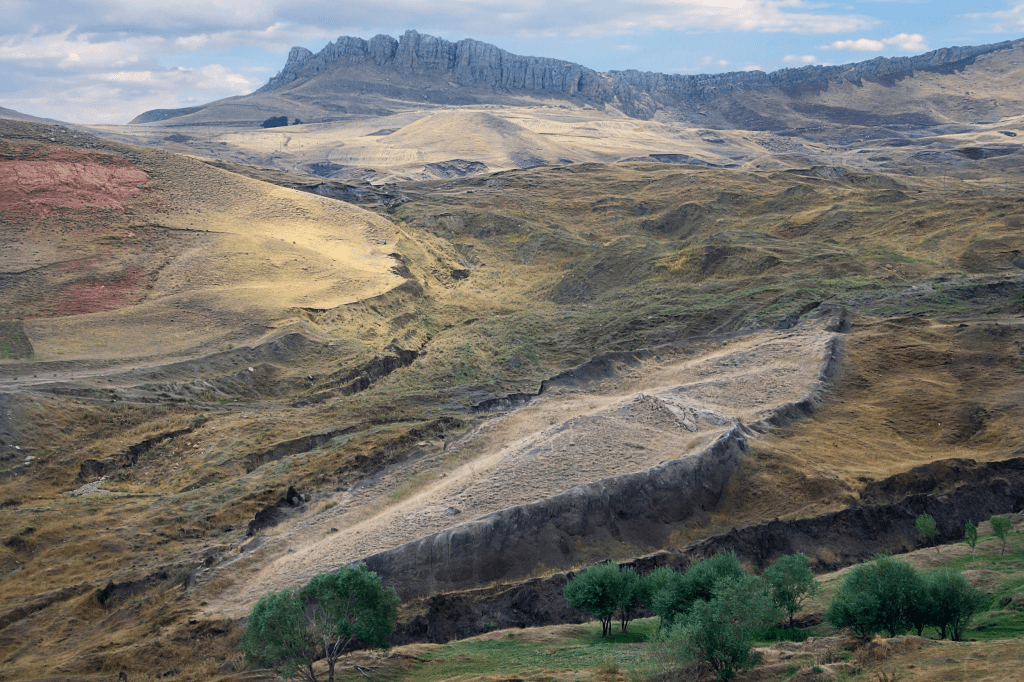
After the gushing sounds of the waves in the flood, none knew where they were going but placed full trust in Allah (The Most High). The Ark landed on Mount Judi. Mount Judi is in the Southeast region of Turkey and North East of Jazirat Ibn Umar on the banks of the Tigris river near the Turkish-Iraqi-Syrian border, and is in the city of Mosul.
“And it was said, ‘O earth, swallow your water, and O sky, withhold [your rain].” And the water subsided, and the matter was accomplished, and it [i.e., the ship] came to rest on the [mountain of] Jūdiyy. And it was said, “Away with the wrongdoing people.”
[The Glorious Quran, Surah Hud, 11:44]
In his Tafseer, Ibn Kathir (may Allah have mercy on him) said: “And, indeed, We have left this as a sign, is there then any that will remember (or receive admonition)? refers to this story, which serves as a lesson.” It was also suggested that it referred to the ship or ark itself, which was left so that those who came after the people of Nuh might learn lessons from it and not reject the Messengers.
Ibn Qutadah (peace be upon him) said: “Allah left it in Baaqirdi in the Arabian Peninsula (a place in Iraq), as a lesson and a sign, so that the first generations of this ummah would see it. How many ships have there been after it that have turned to dust and left no trace!”
Researchers have discovered remains of the wood of Noah’s ark as sediments on Mount Judi, and many studies are still underway on the sediments of the flood.
After they touched land, the second human civilization initiated when he descended from the Ark with peace and blessings after the flood – A new beginning. His followers who believed in his message worked alongside him to build noble qualities, seek forgiveness, and fear none other than Allah (The Most High). This is achieved through Tawheed (belief in the oneness of Allah), taqwa (piety), connection, seeking forgiveness, removing falsehood, and the divine laws found in the Glorious Quran that have neither changed nor altered but are pondered upon with open hearts and minds. The second civilization built by Prophet Nuh (peace be upon him) featured humanity, ethics, knowledge, and freedom.
It was said, “O Noah, disembark in security from Us and blessings upon you and upon nations [descending] from those with you. But other nations [of them] We will grant enjoyment; then there will touch them from Us a painful punishment.”
[The Glorious Quran, Surah Hud, 11:43]
Overall, the success of Noah’s Ark on Mount Judi is an epitome of victory and Allah’s promise to him, where he followed his commands with full gratitude. Other key gems that can be extracted are Prophet Nuh’s perseverance and trust in Allah despite hardship and adversity. The Ark is a symbol of faith and divine protection. Spiritual lessons from Nuh’s story remain relevant for spiritual growth.
References
Dr Ali Mohammad Al-Sallabi (2021) Nuh (Noah) And The Great Flood. Istanbul: Asalet Publications
Islam Q and A (1998) Finding Noah’s Ark. Available at: https://islamqa.info/en/answers/1485/finding-noahs-ark (Accessed: 24th June 2026)
Mishkah Academy (2024) What Is Day of Ashurah: Virtues of Ashurah Day? Available at: https://mishkahacademy.com/ashura-day/ (Accessed: 13th June 2026)
Quran Gallery (n.d) Ark Available at: https://www.qurangallery.app/topics/ark-islam-quran-fulk-safinah-noah (Accessed: 13th June 2026)
Sayyid Abul Ala Mawdudi (2011) Towards Understanding The Quran. UK Islamic Mission: Birmingham


Leave a Reply