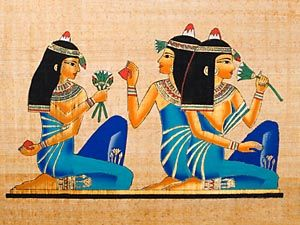
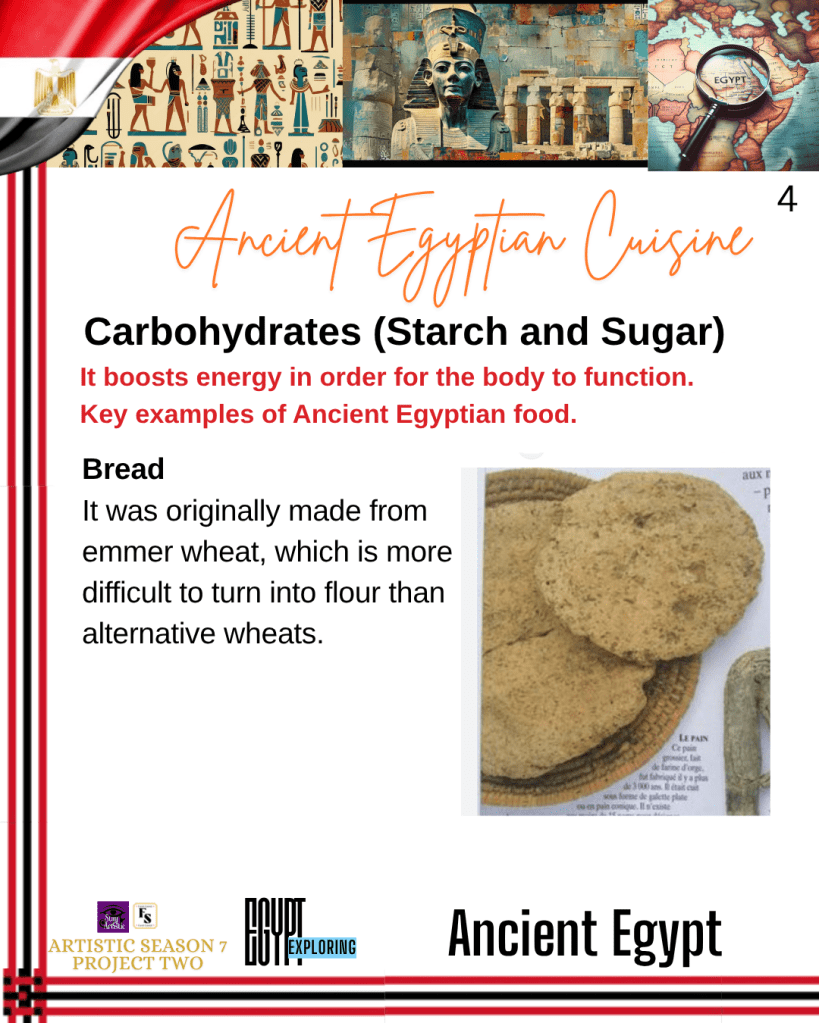
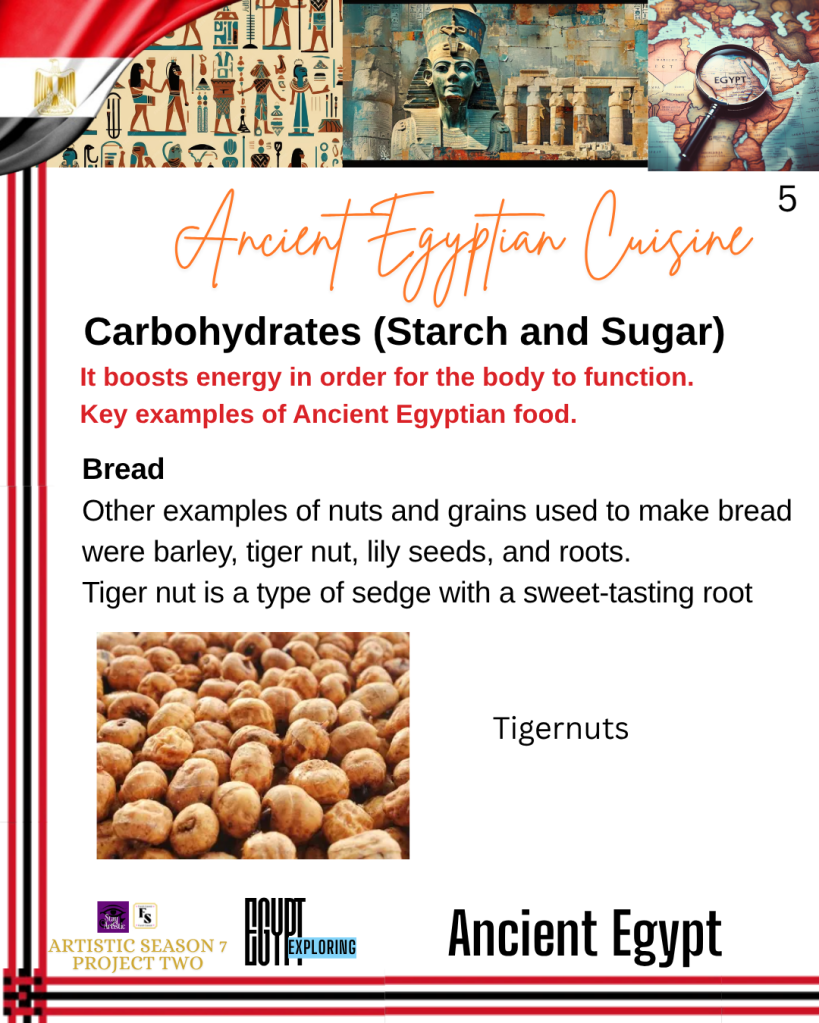
Egyptian cuisine has a wealth of traditional foods that span thousands of years, with key developments occurring throughout different historical periods such as the Old Kingdom (c. 2686–2181 BC), Middle Kingdom (c. 2055–1650 BC), New Kingdom (c. 1550–1070 BC), and later dynasties. It has been mainly inspired by the fruits and vegetables grown on the banks of the flourishing Nile. This was due to the irrigation system around the canals where Ancient Egyptians practiced crop rotation, which ensured several harvests from grains and replenished the soil. The Nile was known by the Ancient Egyptians as ‘Ar,’ meaning black river, where fertile silt mud grew crops on what was referred to as Khemet, meaning black land, and land was farmed after the flood each year. The Ancient Greeks referred to the Nile as Neilos, meaning god of the river, because of the food crops presented in the fertile farmland. The two primary crops cultivated along the Nile were barley and wheat to make bread and beer. The Ancient Egyptians regularly ate vegetables, fruits, bread, and beer. However, during festivals, meat was eaten and was given as offerings during religious rituals.
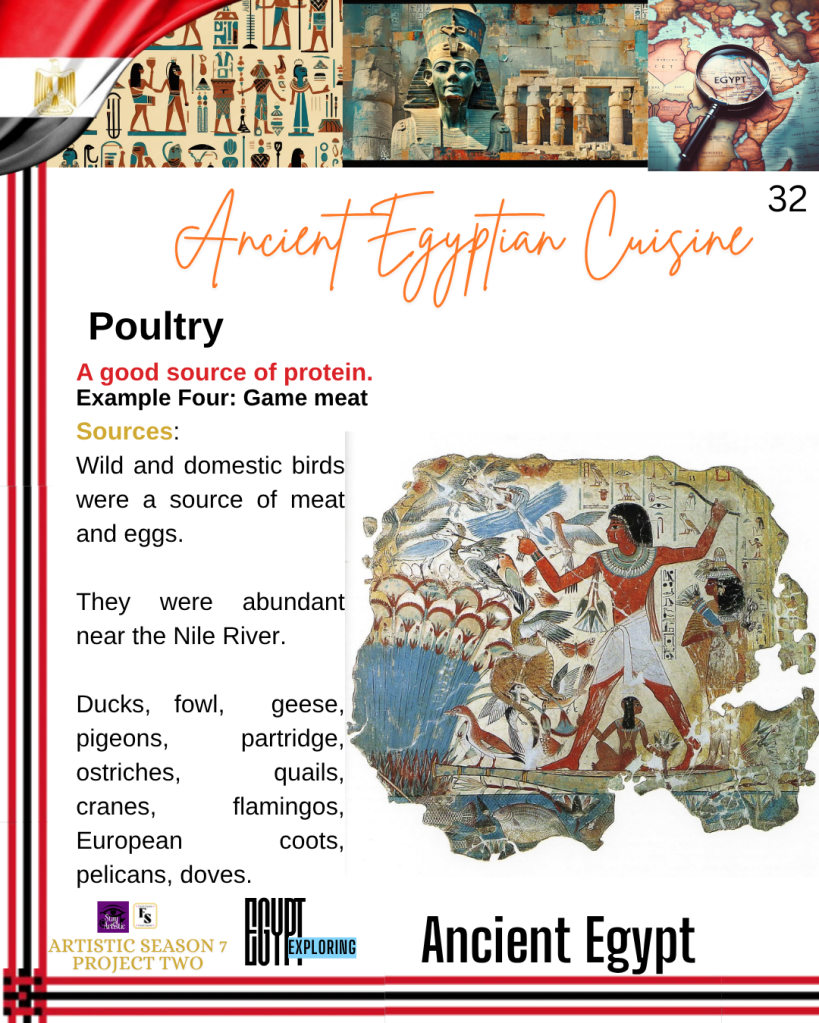
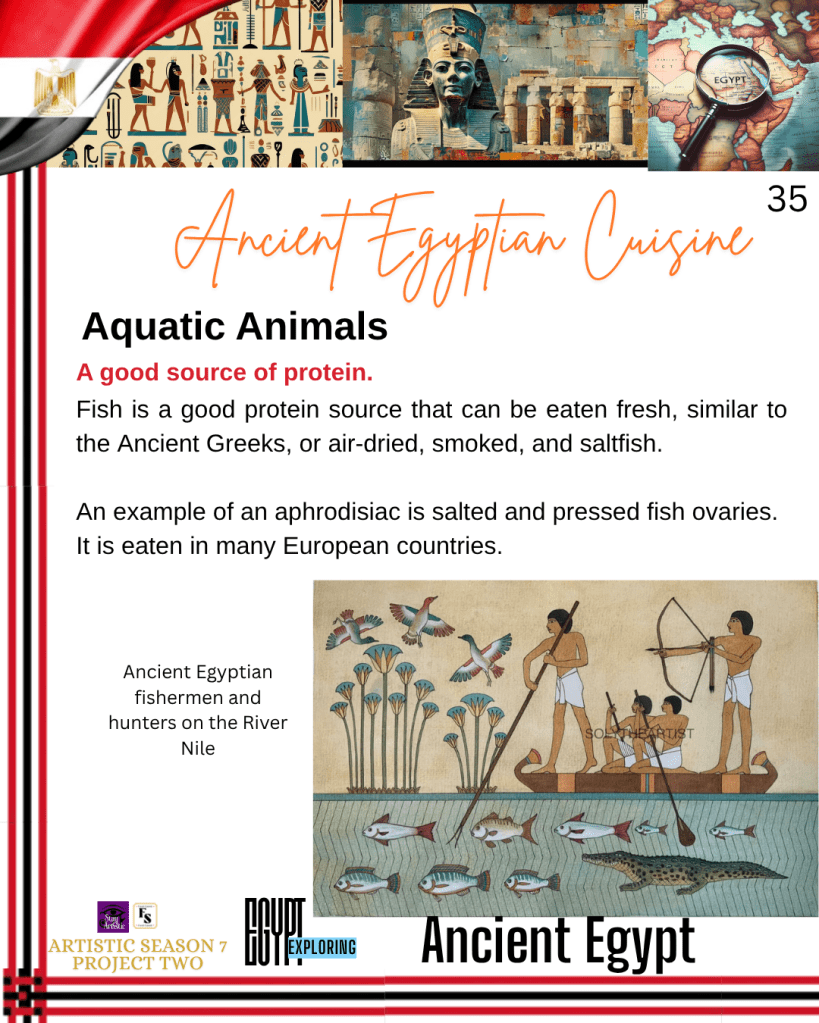
Additionally, the presence of birds and fish provided a source of protein. The wetlands in the Nile Delta were swamped with migrating Eurasian birds, where fowl was mainly hunted as food, sport amongst the elite, and offerings to the dead and gods. However, fishing was considered risky because of the presence of crocodiles and hippopotamuses in the river.
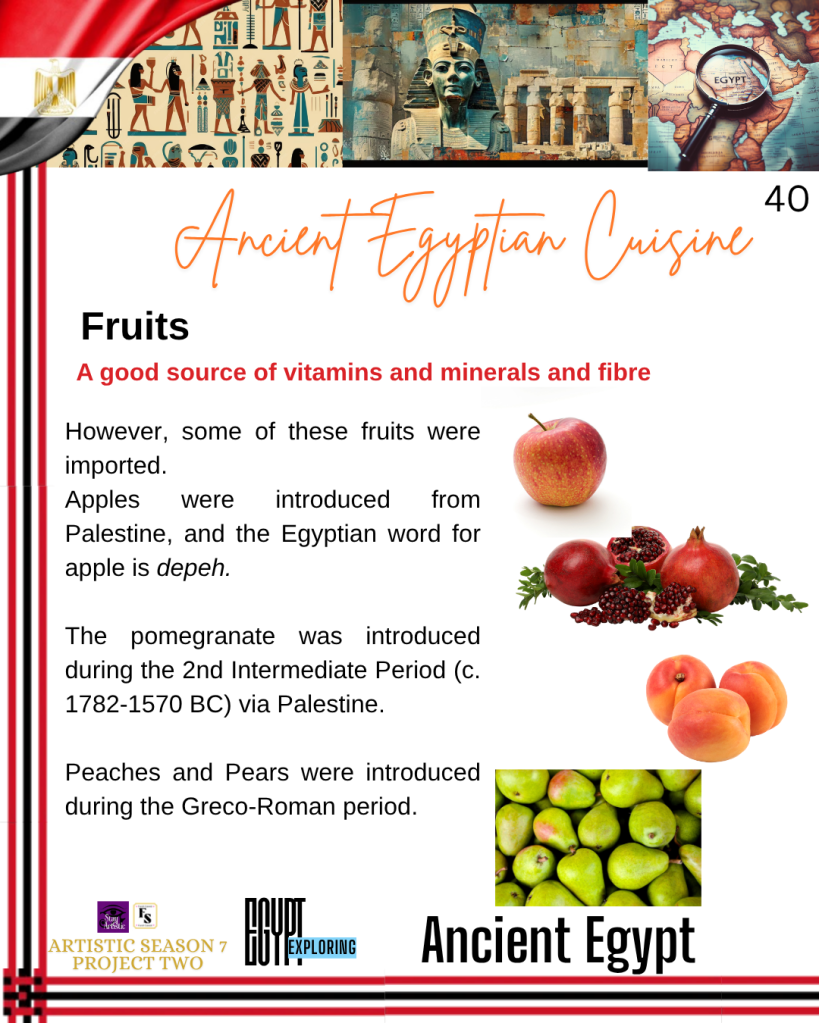
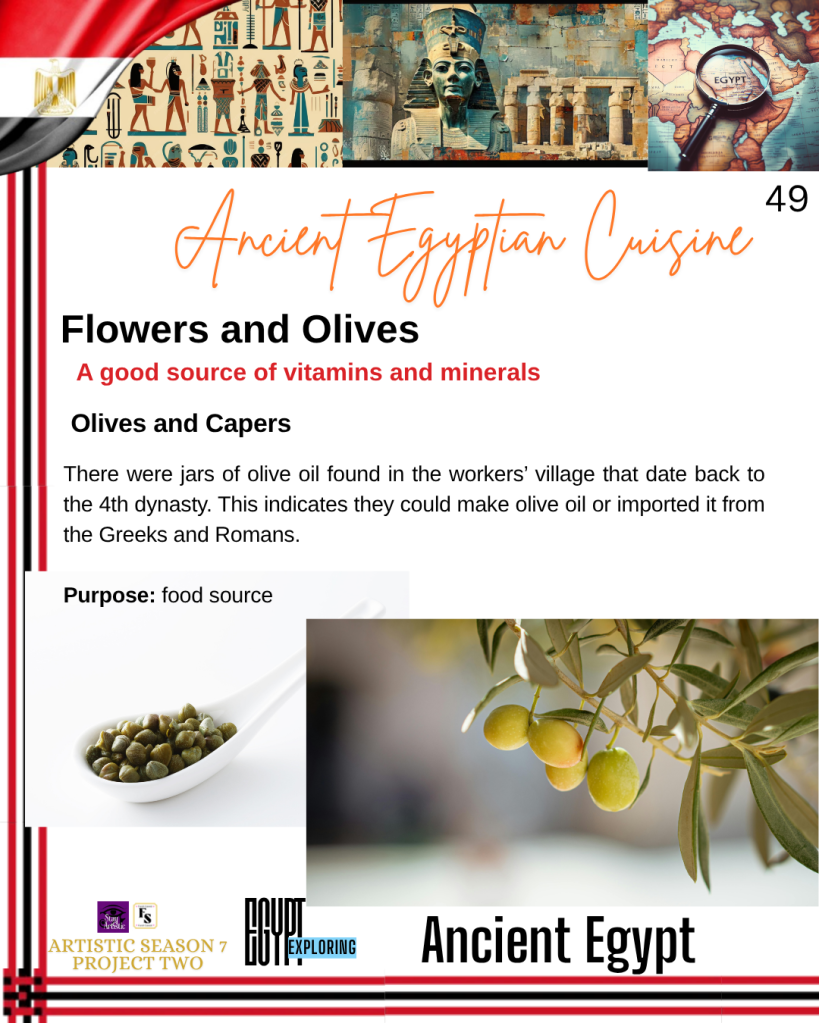
Trading with Africa, the Middle East, and the Mediterranean has also impacted their cuisine through the import of goods and introducing other exotic food influences. For example, spices such as cinnamon and cardamom arrived from trade with the Levant and Arabia, while lentils and chickpeas were introduced from neighboring regions. Peaches and apricots, originally native to Asia, were brought in via Mediterranean trade routes. Olive oil, a staple in many Mediterranean dishes, became more commonly used in Egypt as contact with Mediterranean traders increased.
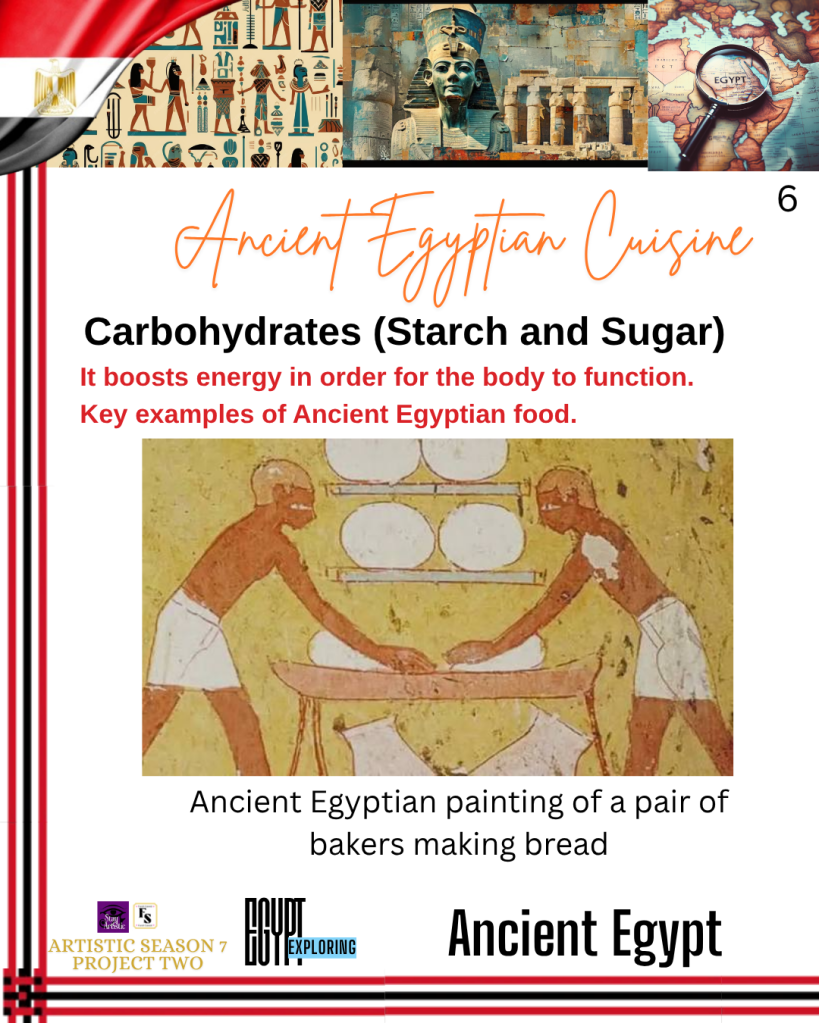
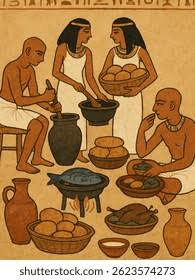
Much of our understanding of Ancient Egyptian cuisine comes from the excavated items and large granaries with sealed jars, residues of plant and animal remains in preparation for the afterlife, found in archaeological sites. The tomb and temple paintings of the pharaohs were other sources of evidence that illustrated the cooperative roles the Ancient Egyptians had. Men were involved in cooking at temples and preparing their own food in the fields, whereas women did cooking at home. Old Kingdom (2613 to 2181 BC) tomb owners monitored their servants’ preparation and delivery of food, particularly for the deceased. Middle Kingdom (2040 to 1782 BC) presented imagery of tomb activities of the bakery, brewery, and butcher’s yard. New Kingdom (1570 to 1070 BC) pharaohs portrayed offering to the gods plates of bread, meat, and vegetables.
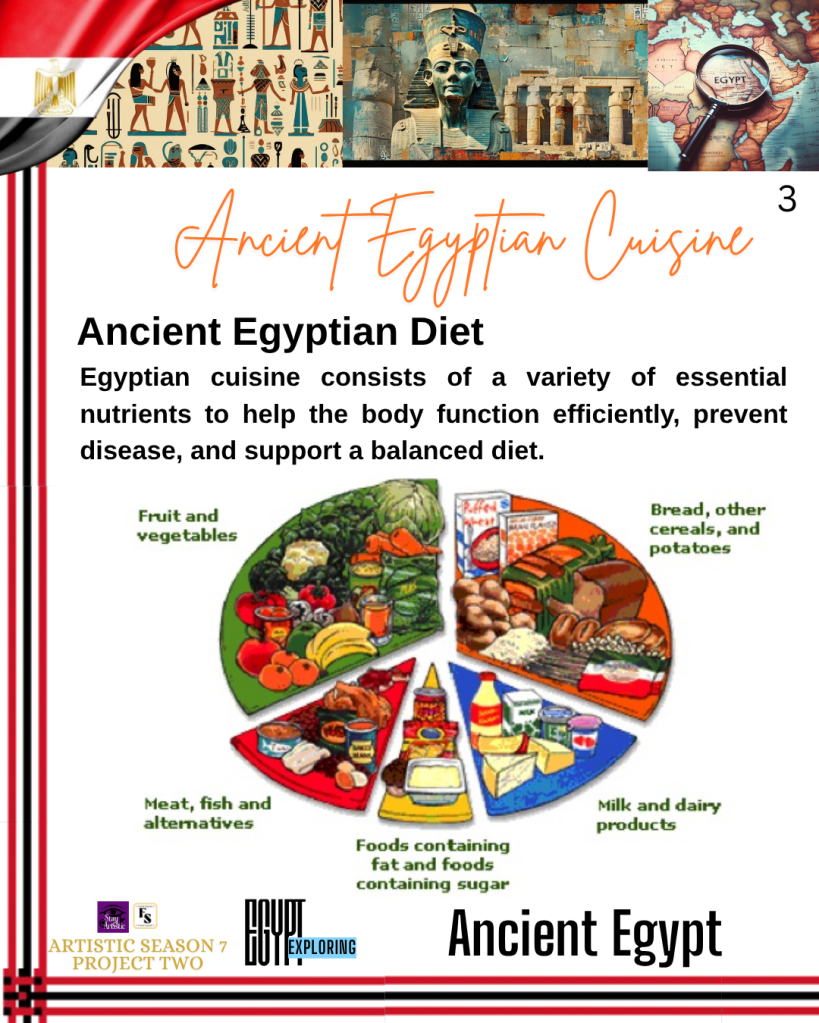
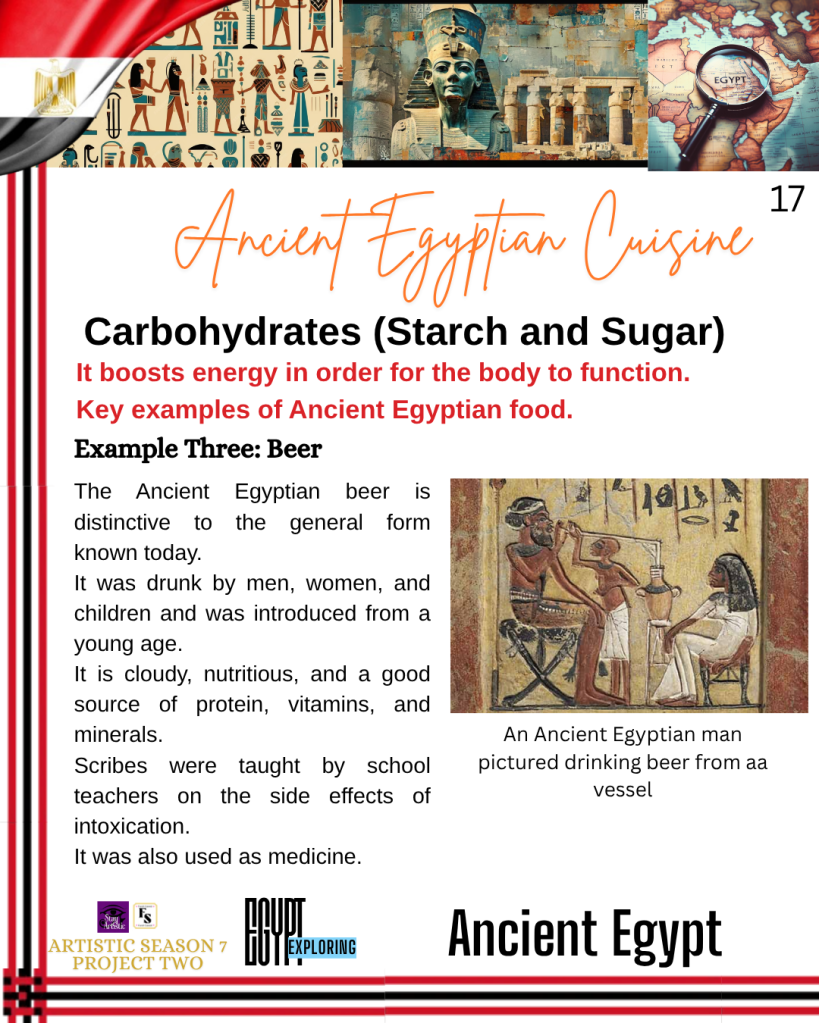
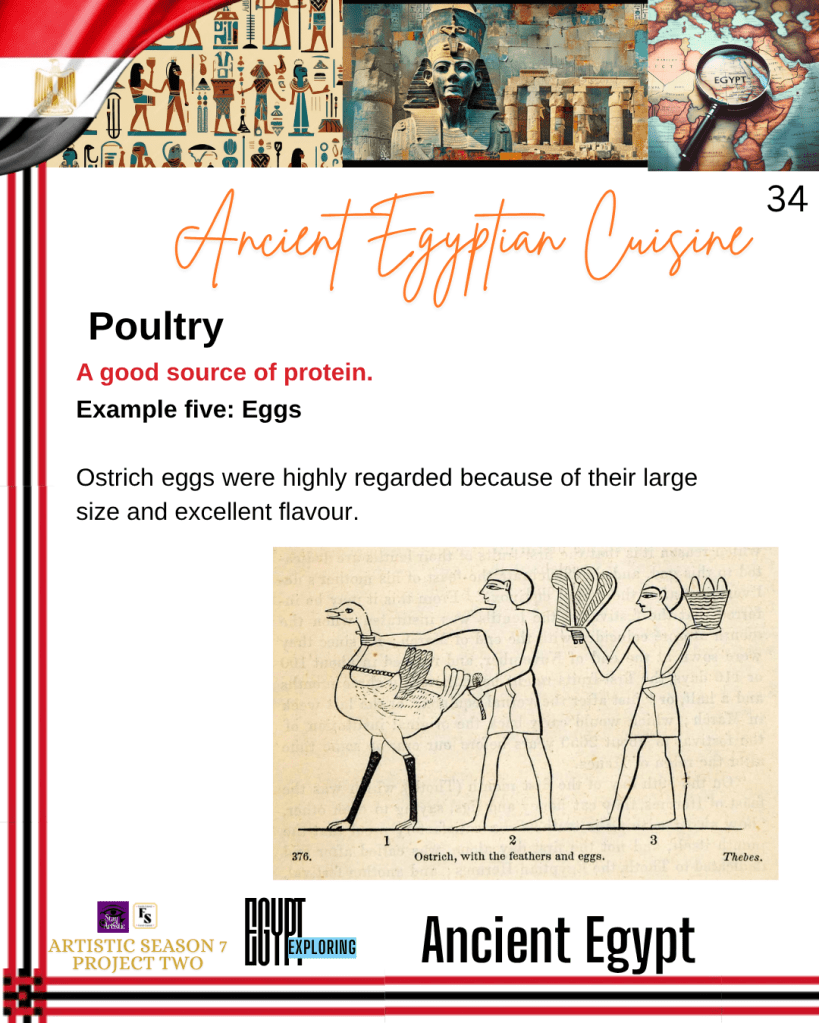
Moreover, the Ancient Egyptians lived a life of simplicity where soups, stews, and casseroles were mainly eaten. Vegetables like green onions, as well as some meat, poultry, and fish. For breakfast, bread, beer, and green onions were common to provide energy for manual labour that ranged from farming to building. They also purchased food from bakeries and taverns near their working sites. In the evening, a heavier meal comprised beer, eggs, bread, and stewed vegetables.
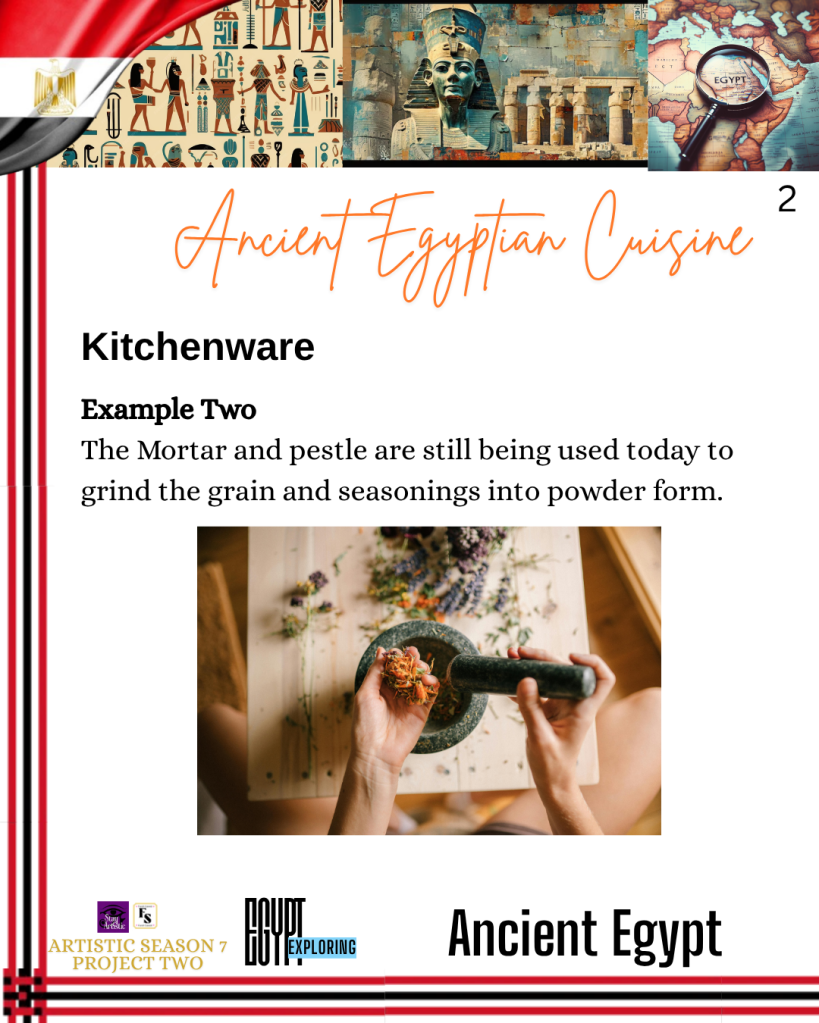
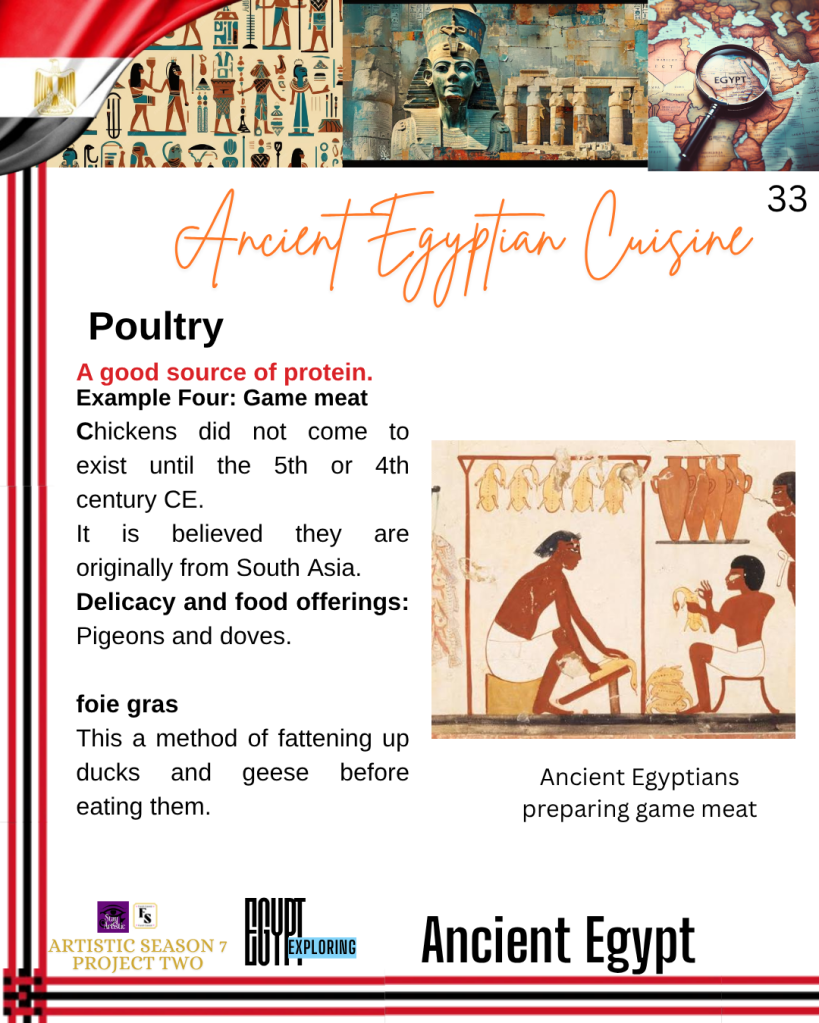
Ancient Egyptians enjoyed both eating vegetables raw and roasting or boiling them. Meat was braised or boiled and was less likely to be fried or roasted. Birds and small animals were stuffed with spices and chopped vegetables. This is similar to the Mahshi eaten today, but today’s version mainly is spiced, herbed rice stuffing and/or Freekeh (green durum wheat). A very common dish is Egyptian Hamam Mahshi (stuffed squab), which is a small pigeon and is deeply rooted in Egyptian culinary tradition. Vegetable oil and animal fats were both used for cooking. Balsam, linseed, sesame, and castor were all used for oil.
Hedgehogs were also loved by the Ancient Egyptians; the spiny hair was removed by covering it with clay, which hardened during baking. The clay shell was then removed.
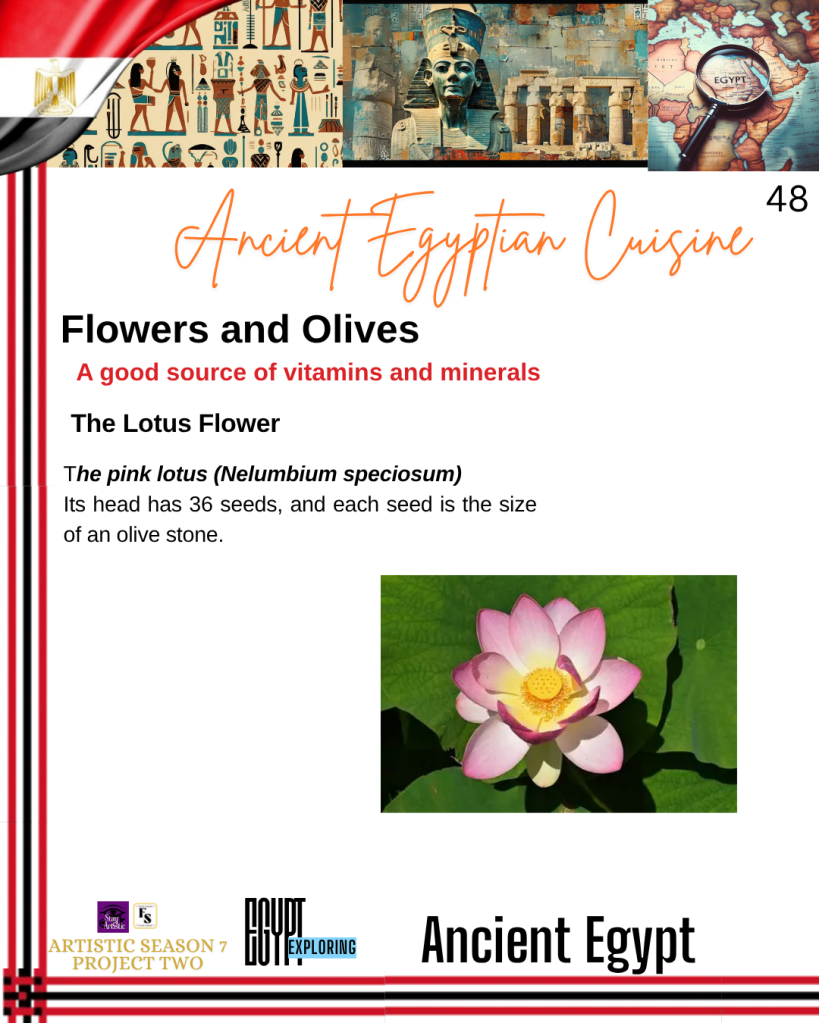
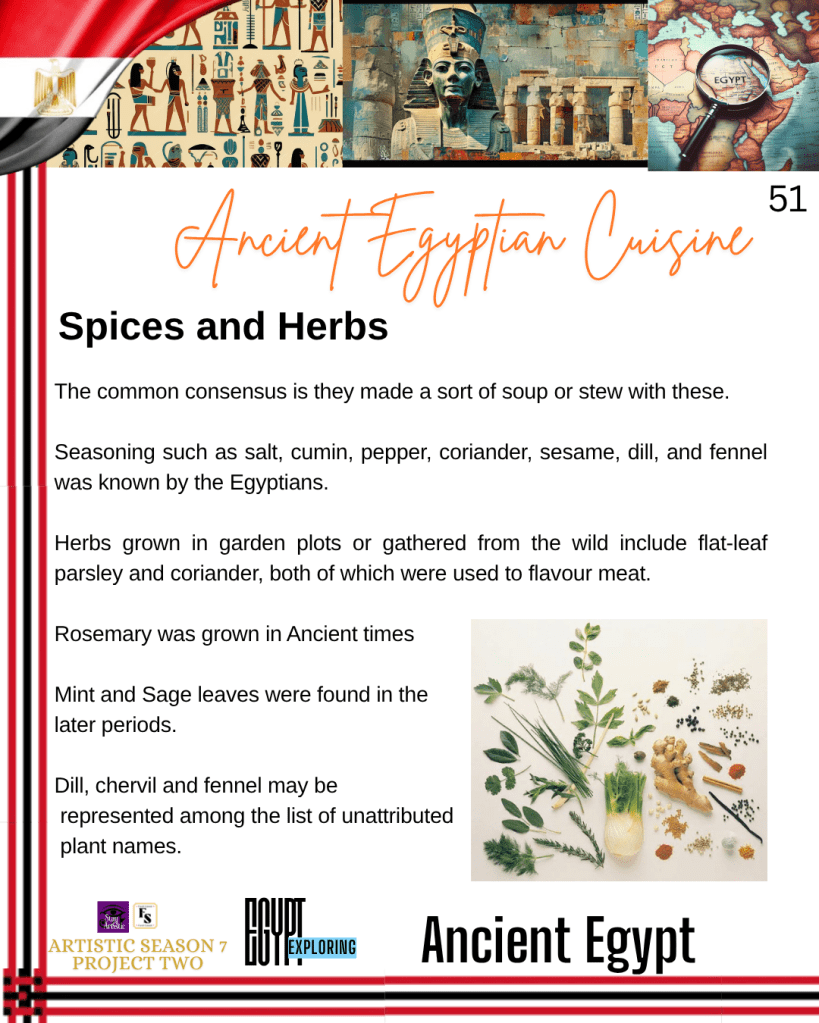
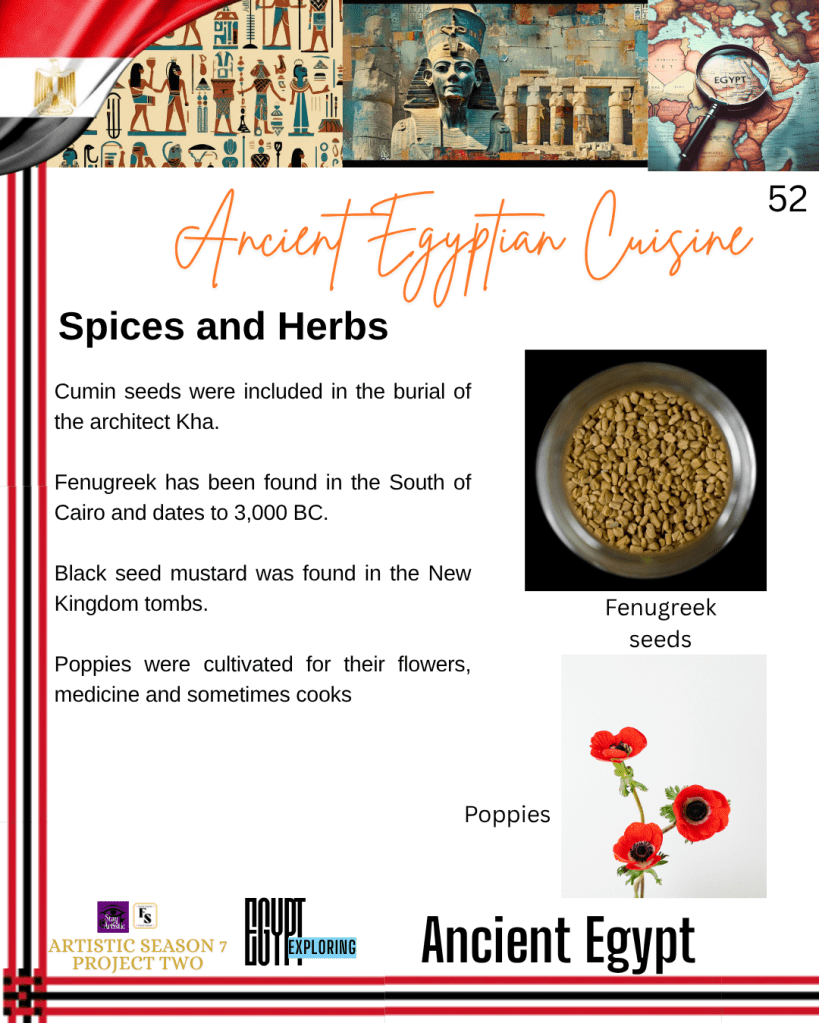
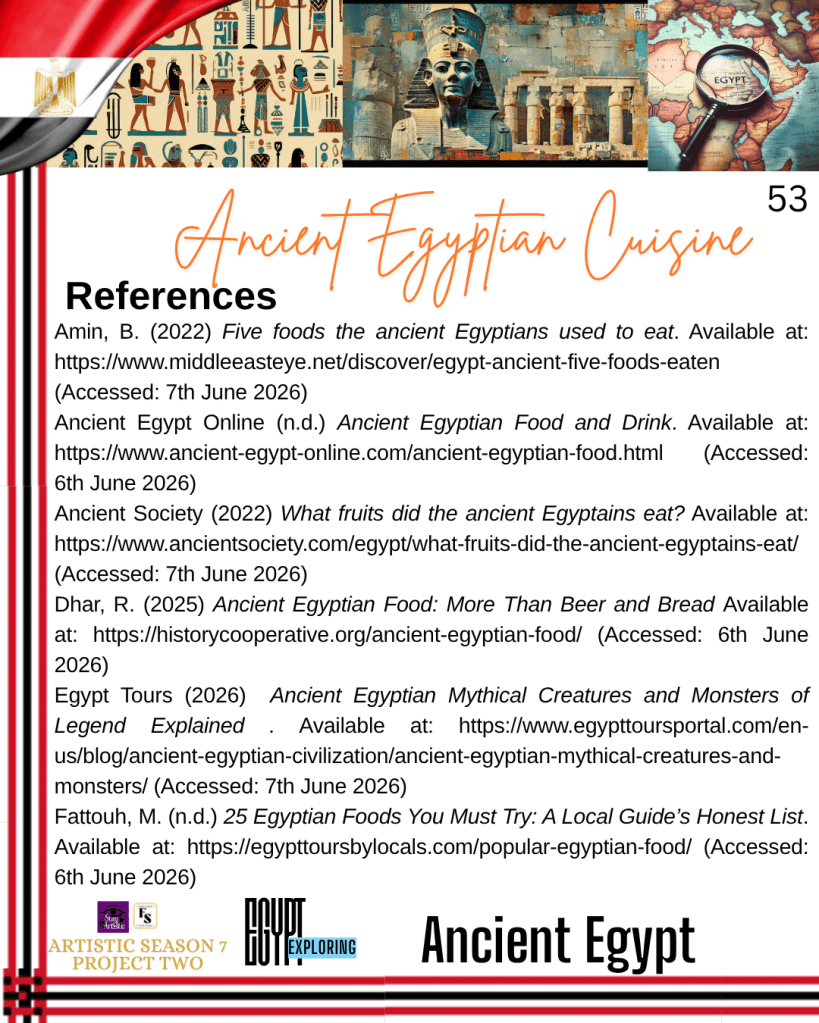
Furthermore, ancient Egypt always kept various spices and herbs to enhance flavouring and seasoning. Key examples of herbs were dill, parsley, thyme, cumin, fenugreek, oregano, and mint. Other additives like mustard, palm nuts, and lotus flowers added vibrancy to dishes.
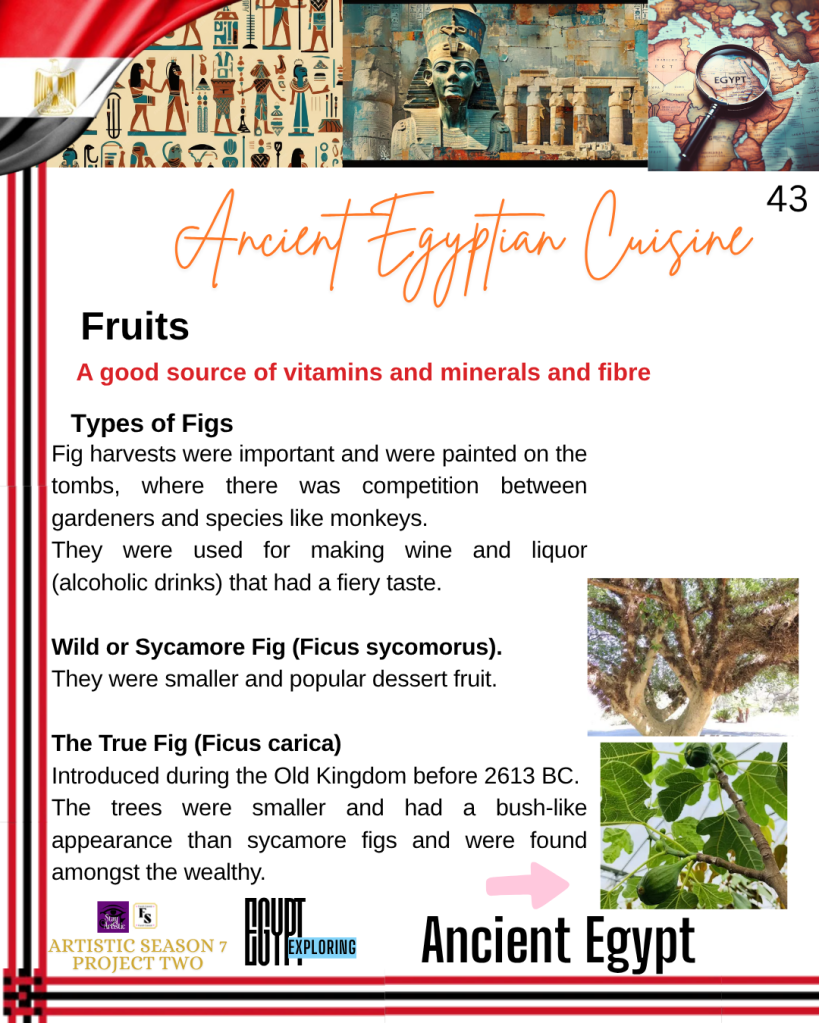
Preservation was also commonly performed, where they sun-dried, pickled or salted food products. Salt was the oldest and most useful condiment for all social classes, as it was naturally sourced from the Western Desert and the oases, or it could be from the salt pans on Mediterranean and Red Sea coasts. For example, salted fish and caviar (roe fish eggs). Meat was packed in brine and salt, they were also slow-cooked in fat to produce confit and stored in sealed jars. Fruits like grapes, figs, and dates were dried for long-term storage.
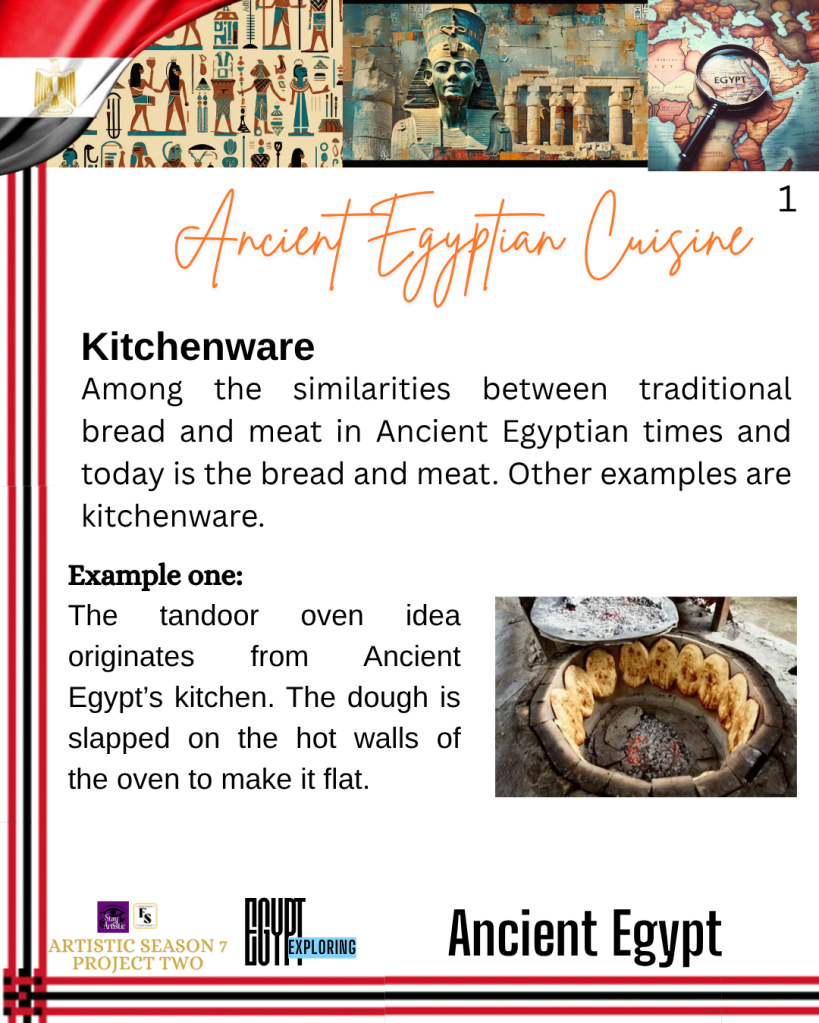
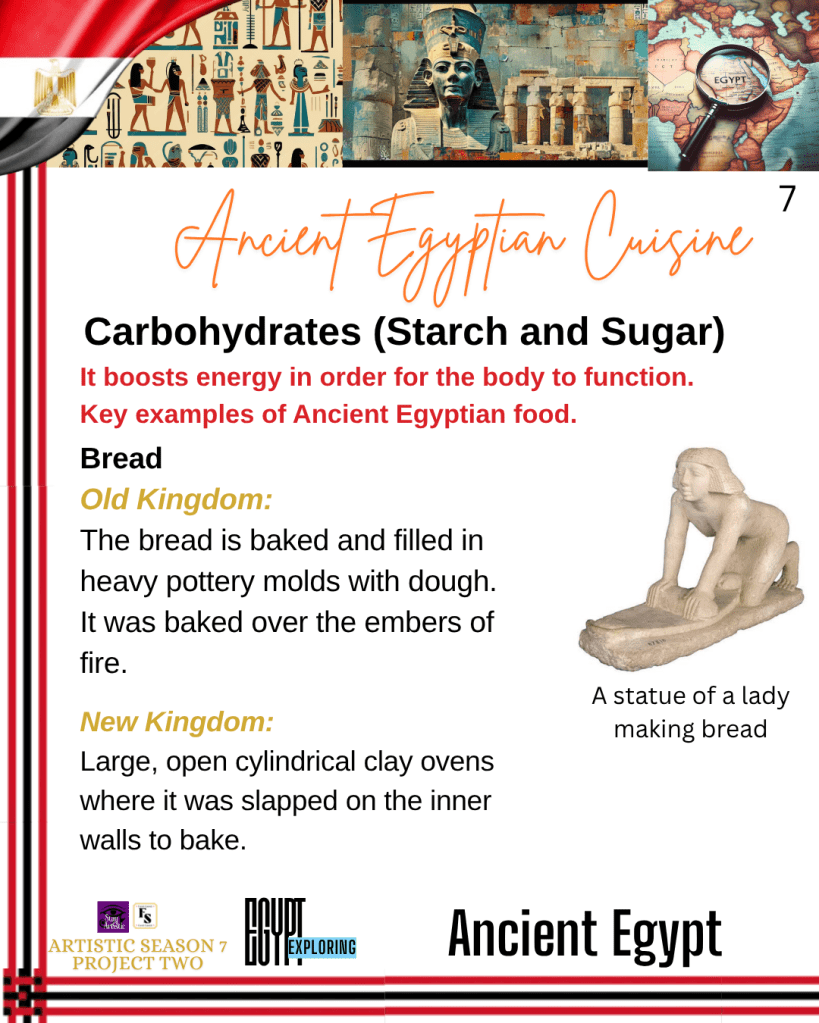
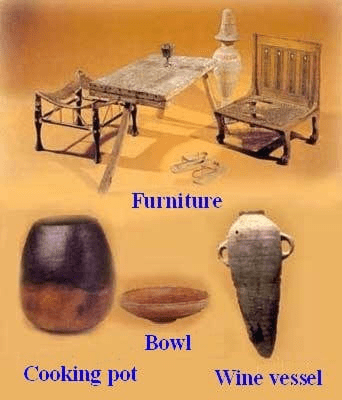
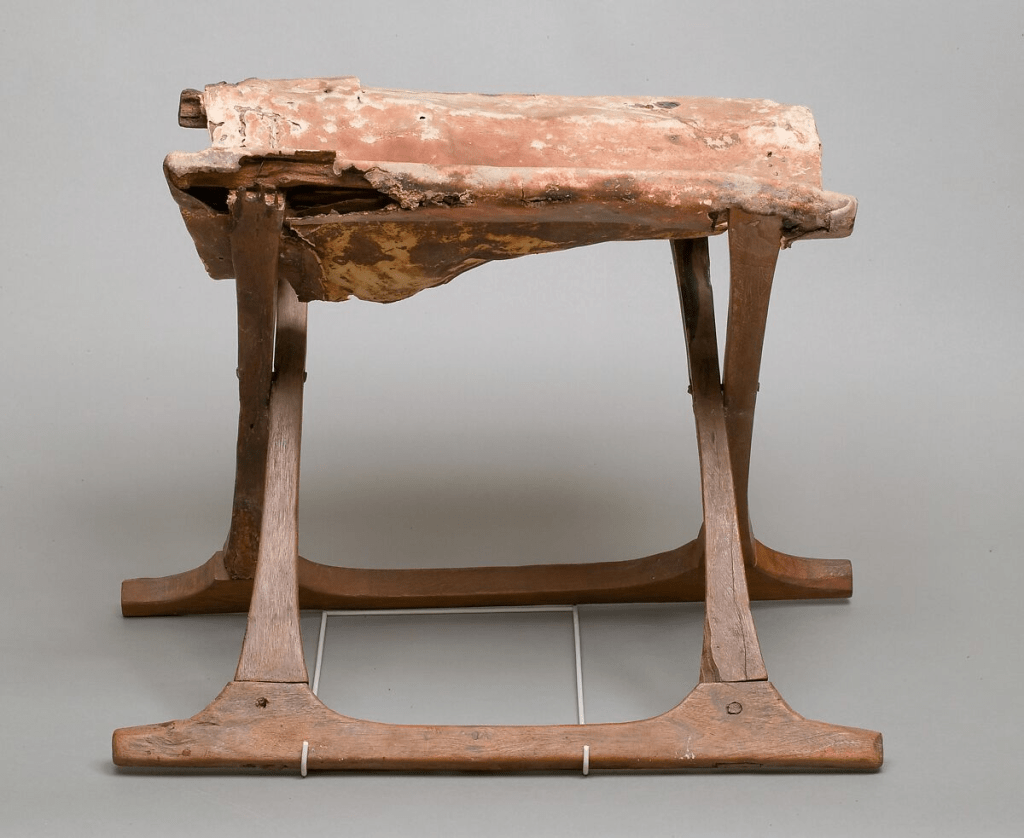
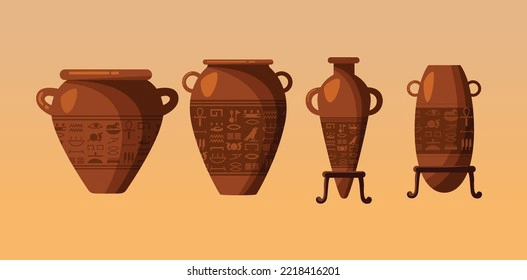
In the previous ancient civilizations (Old, Middle, and New Kingdoms), pots and storage vessels were made of stone and earthenware, and flint was used to make sharp utensils. The upper classes of the Egyptian social structure utilised bronze or copper cauldrons and had finely crafted dining ware made of metal, glass, and porcelain. Hearths were generally placed outside and on the top floor to prevent heat, smoke, and food smell. However, after the conquest of Egypt in 332 BCE by Alexander the Great (336-323 BCE) and during the Ptolemaic Dynasty, many Greeks migrated to Egypt, which influenced their culinary practices, whereby a range of kitchenware, grills, and ovens were made from metal and clay. They also imported specialised wine and cheese from Greece, and they had a preference for wheat, pears, peaches, apricots, plums, and walnuts in their dining. Additionally, people ate on stools or the floor, whereas the upper class sat on taller tables and high-backed chairs in the New Kingdom of Egypt. Therefore, the Ancient Egyptian cuisine was largely influenced by the social structure and transition through time, where imported goods altered their cooking practices but maintained their traditional food recipes. There is a unique assortment of flavours and dishes that correspond to agricultural resources in the fertile land and cultural diversity.
Key Points
Ancient Egyptian cuisine was shaped by the Nile’s resources and agricultural practices.
Trade and foreign influence introduced new foods and cooking methods.
Food preparation, preservation, and dining customs reflected social class and historical periods.
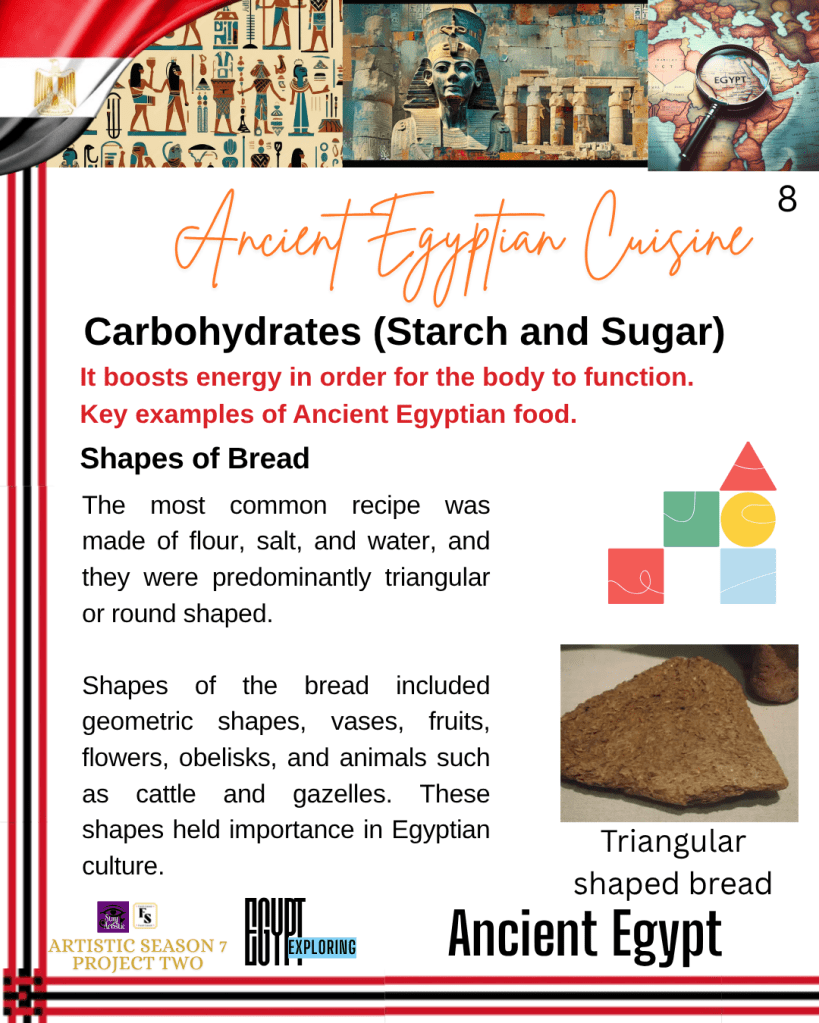
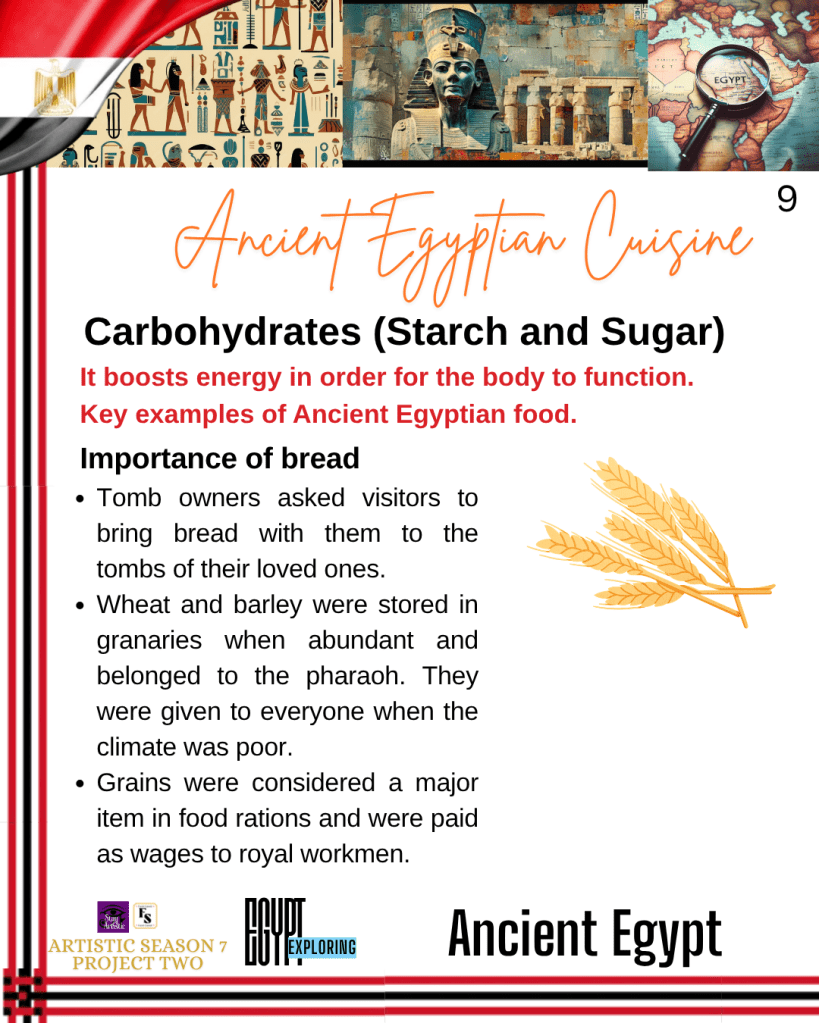
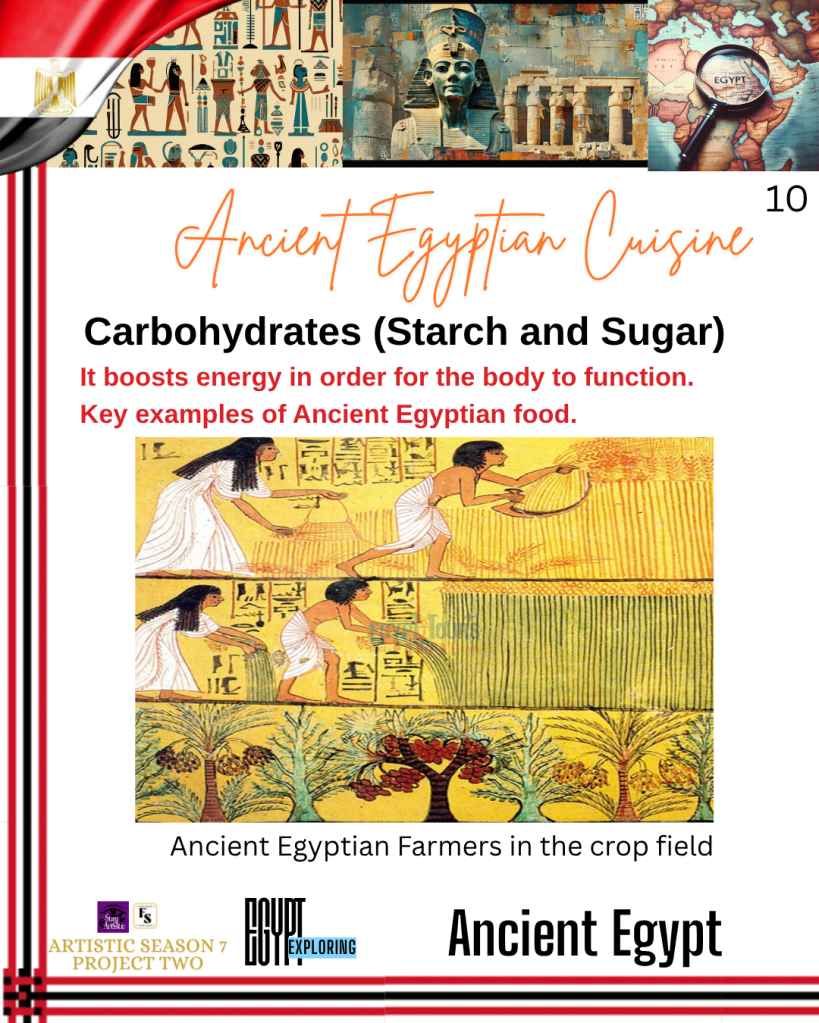
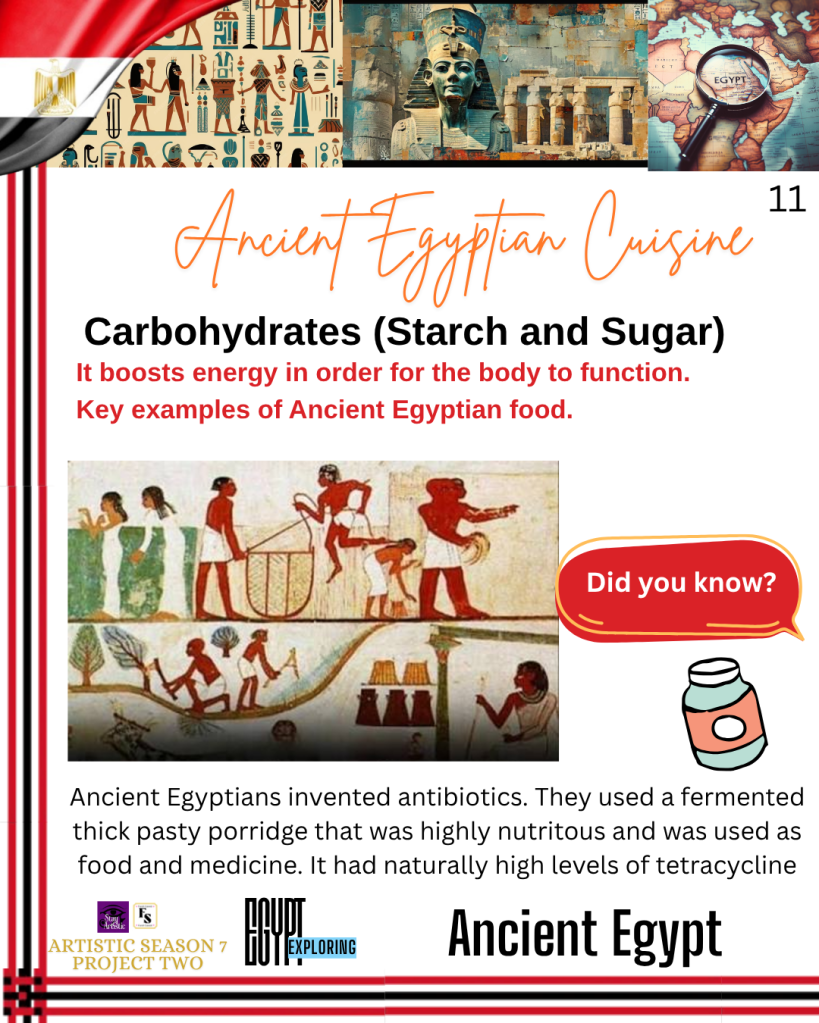
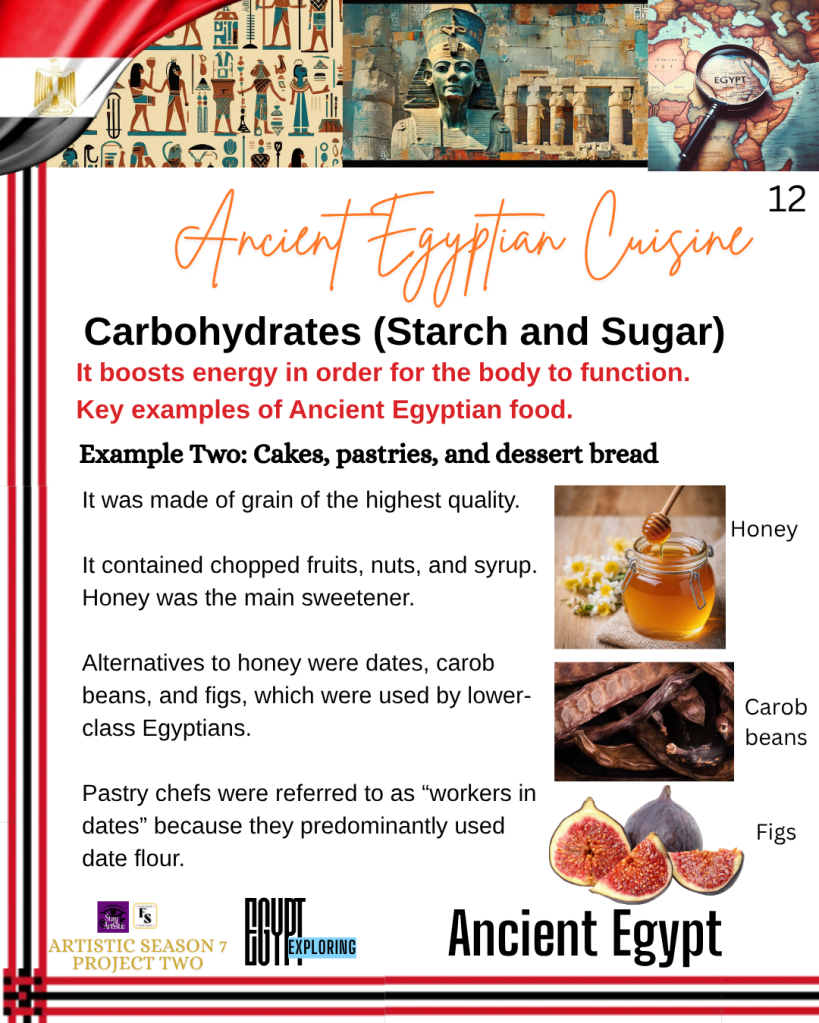
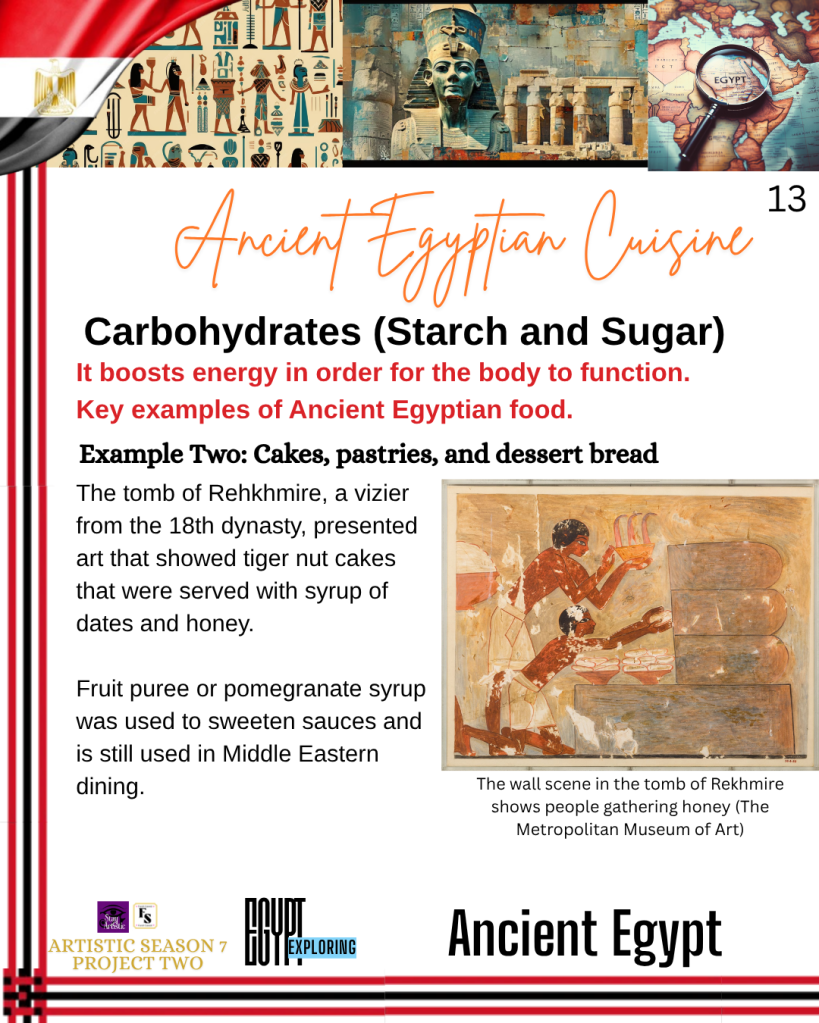
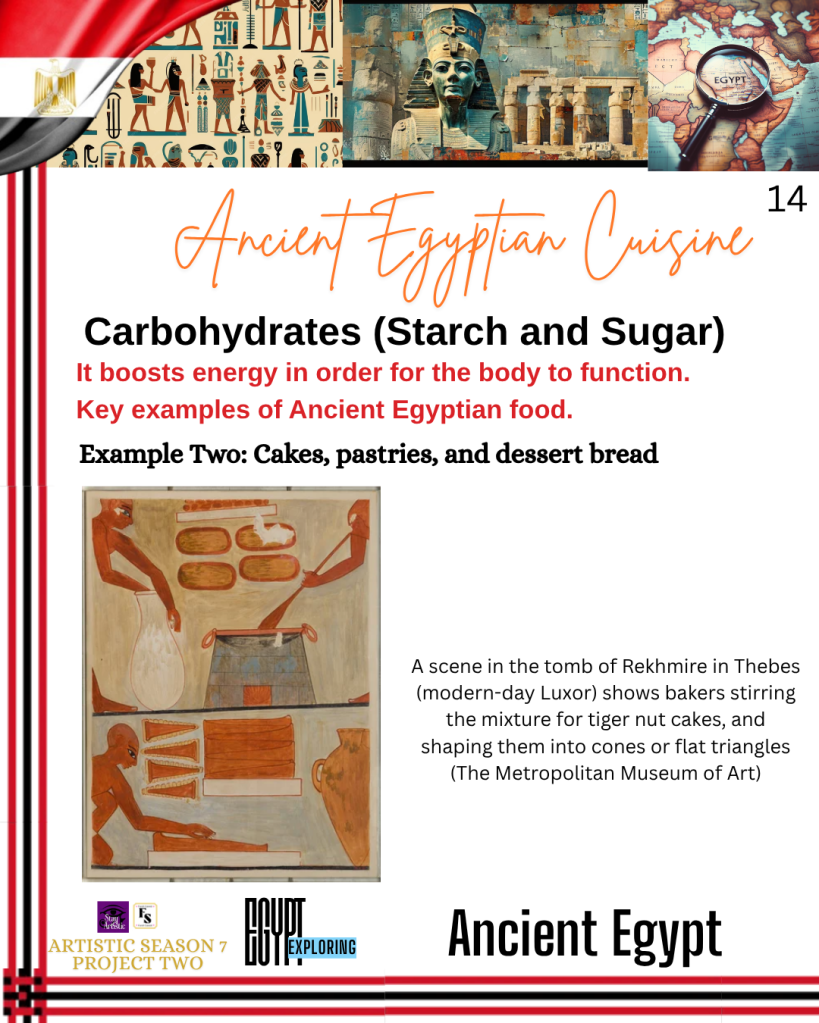
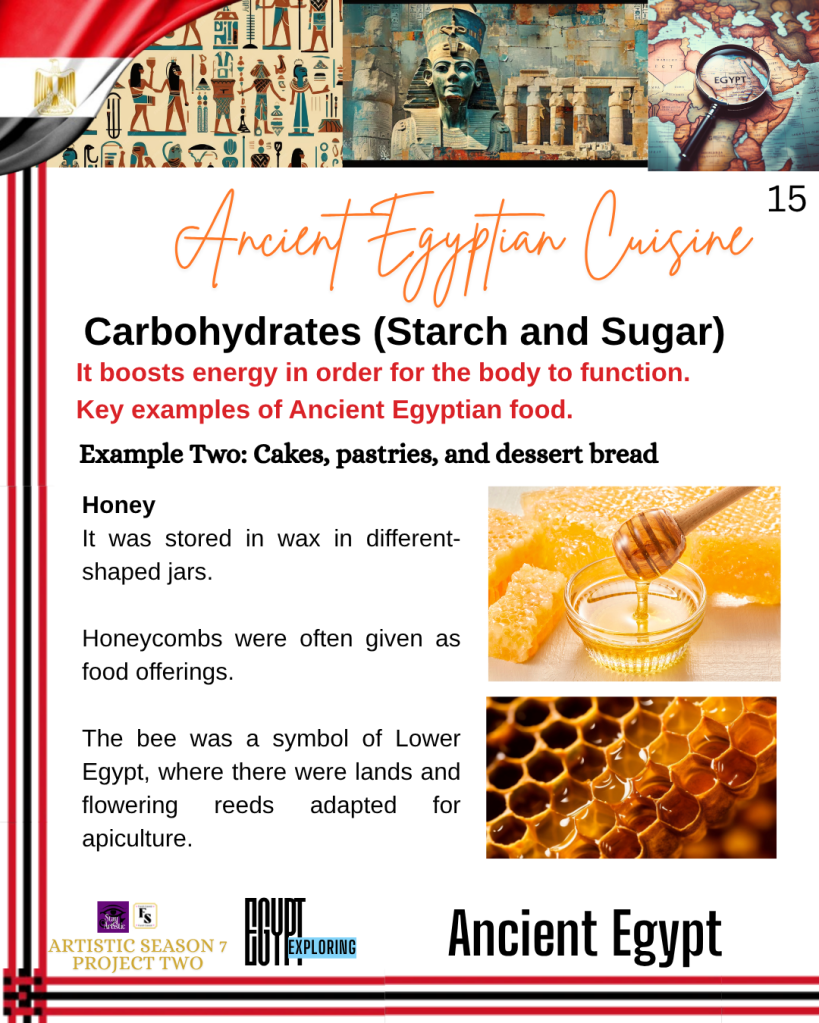
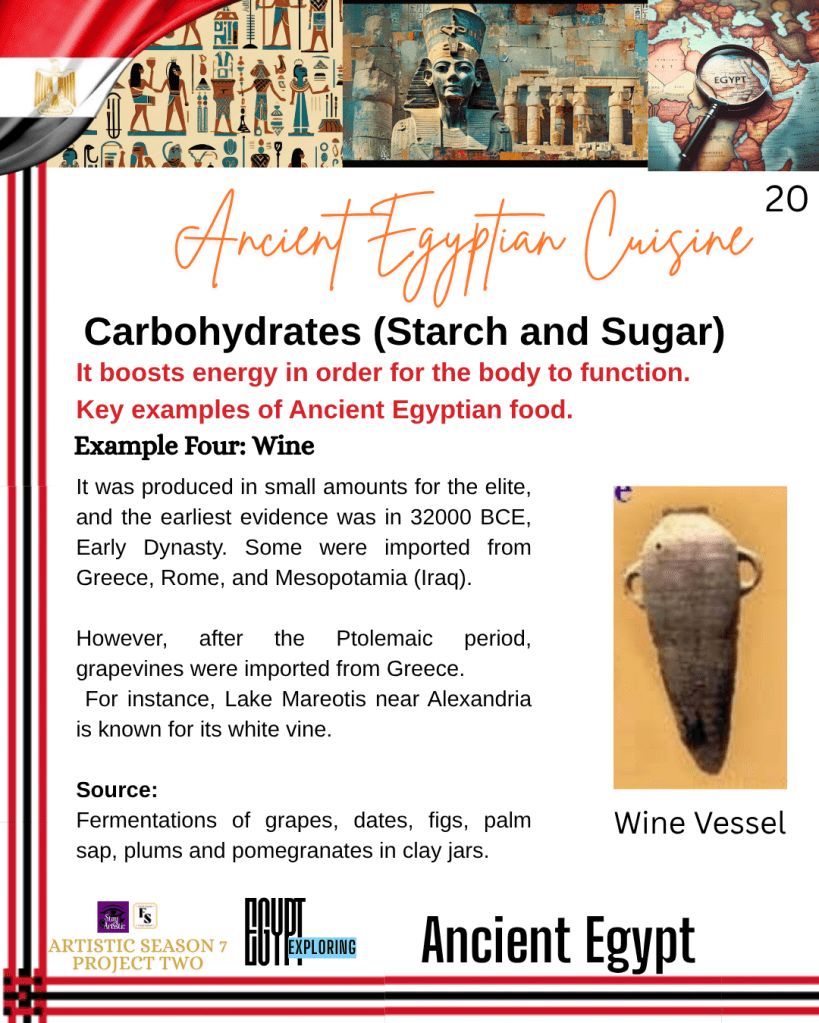
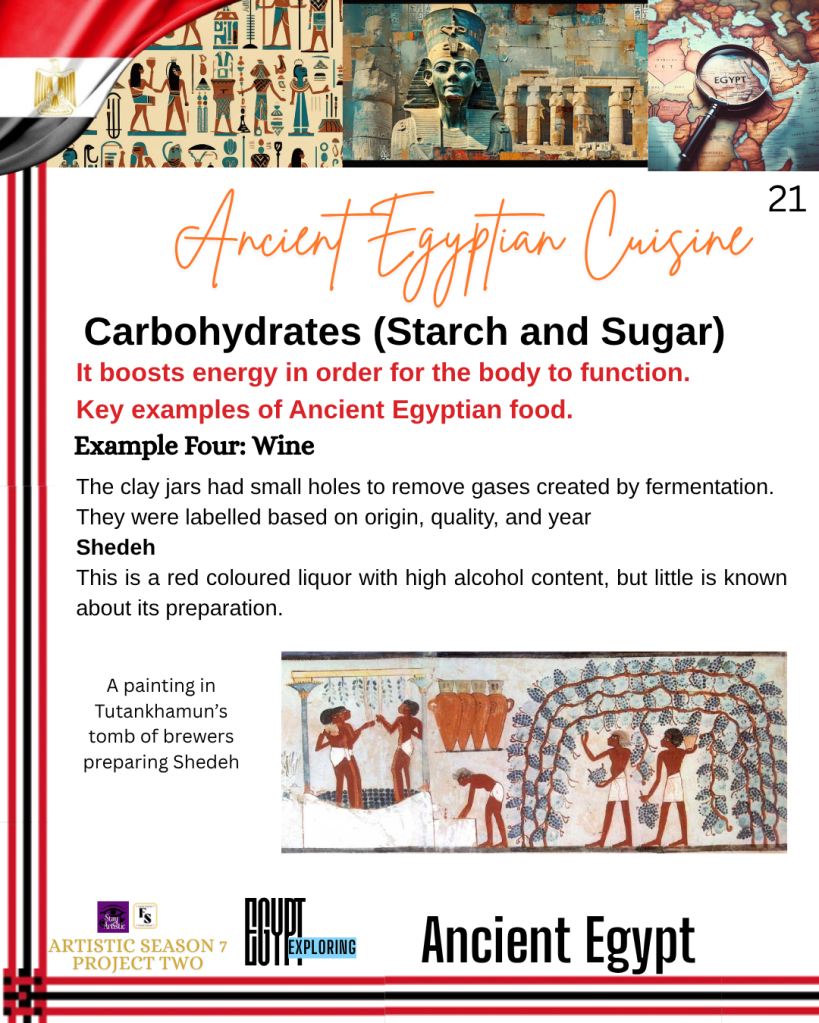
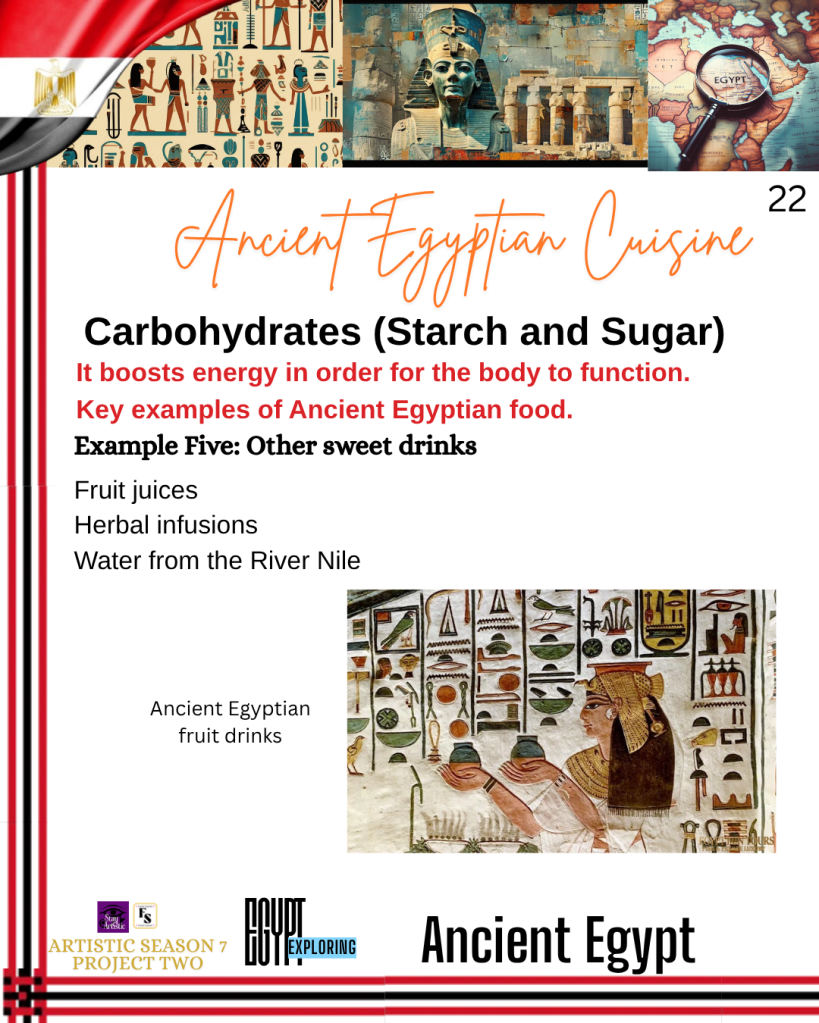
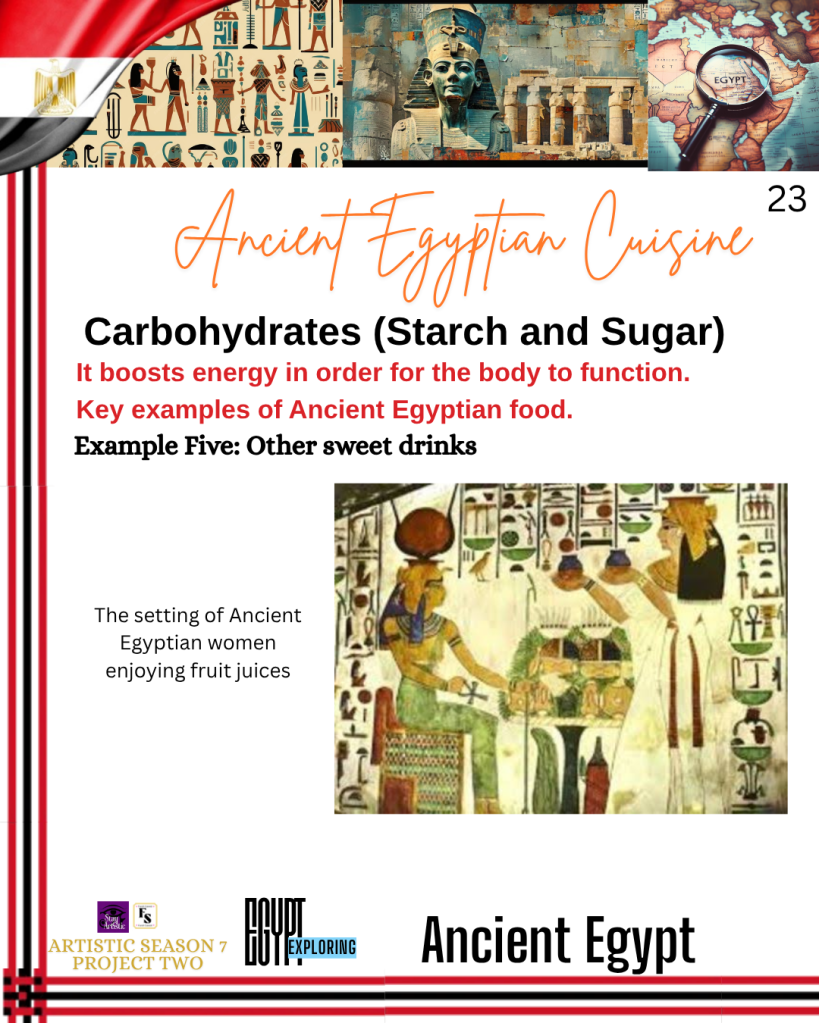
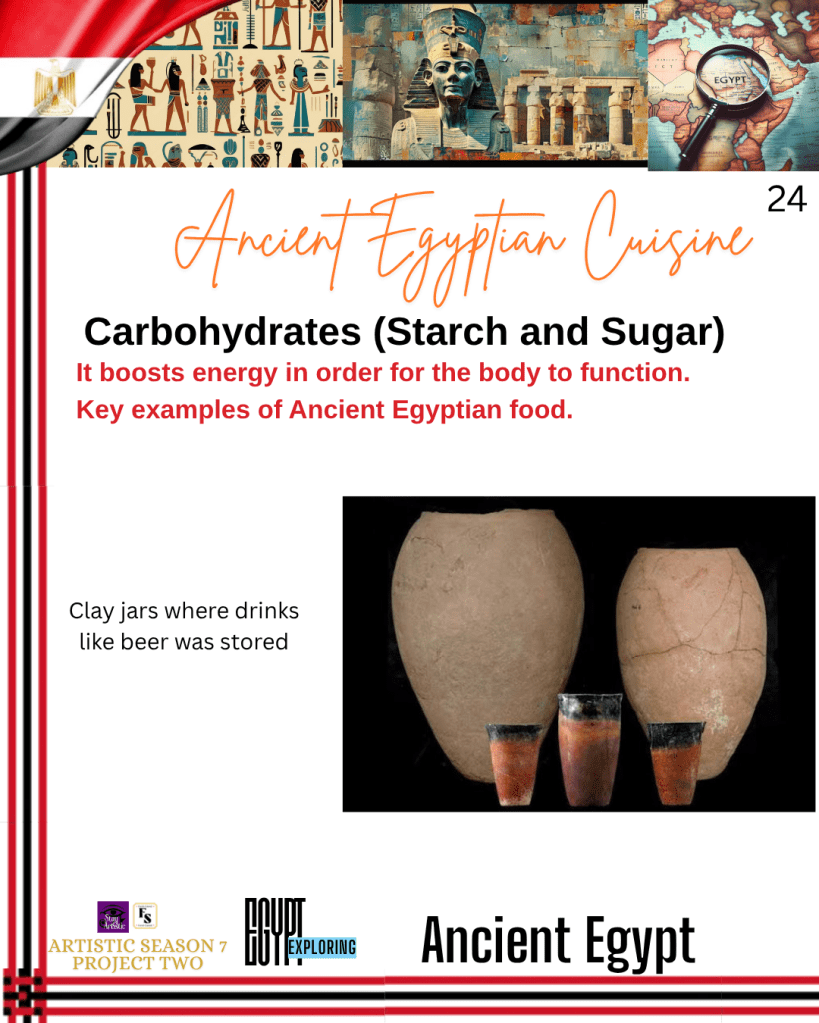
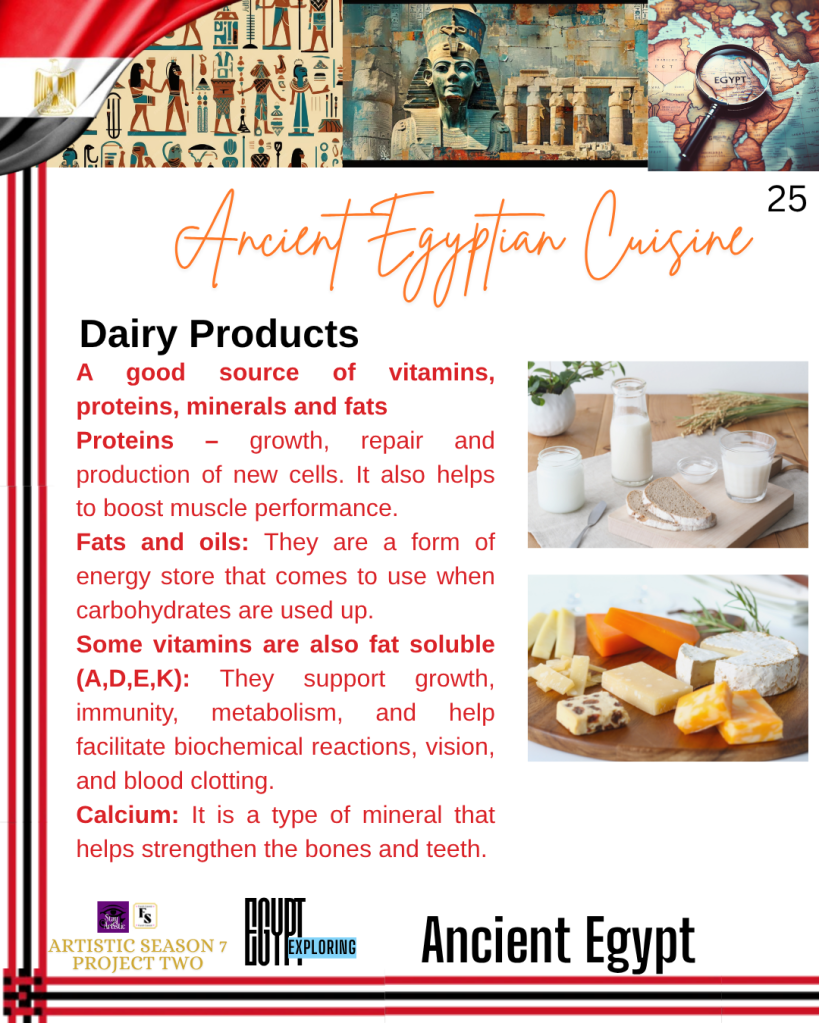
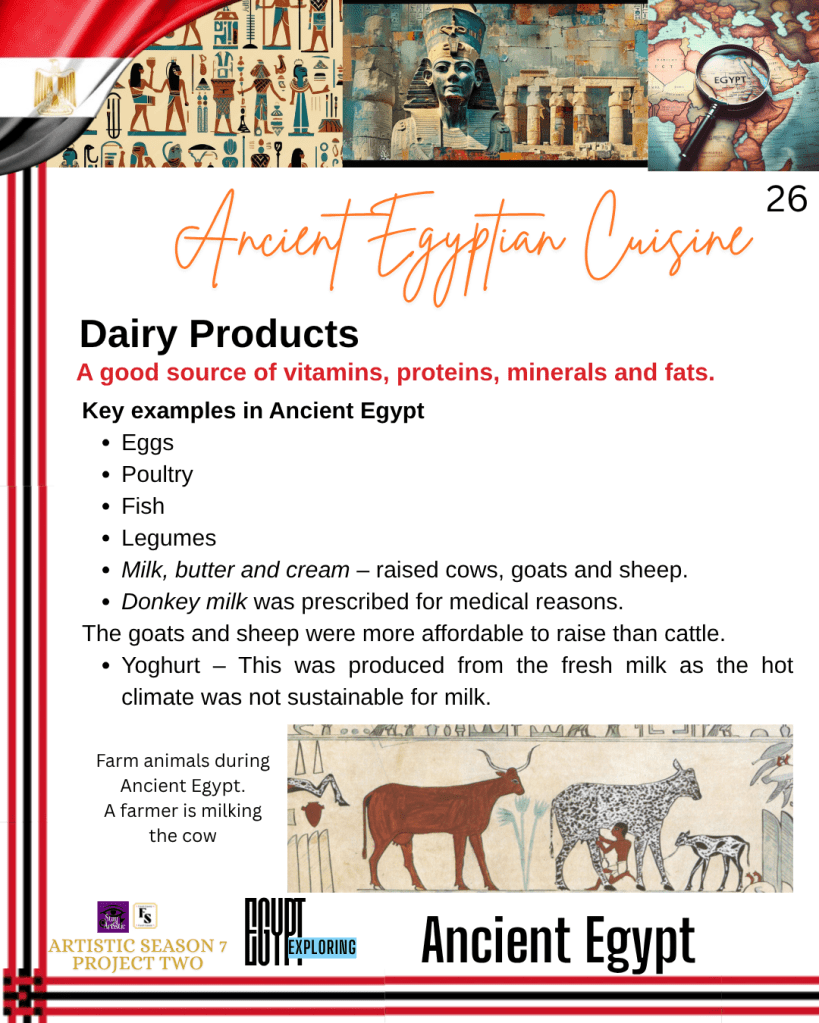
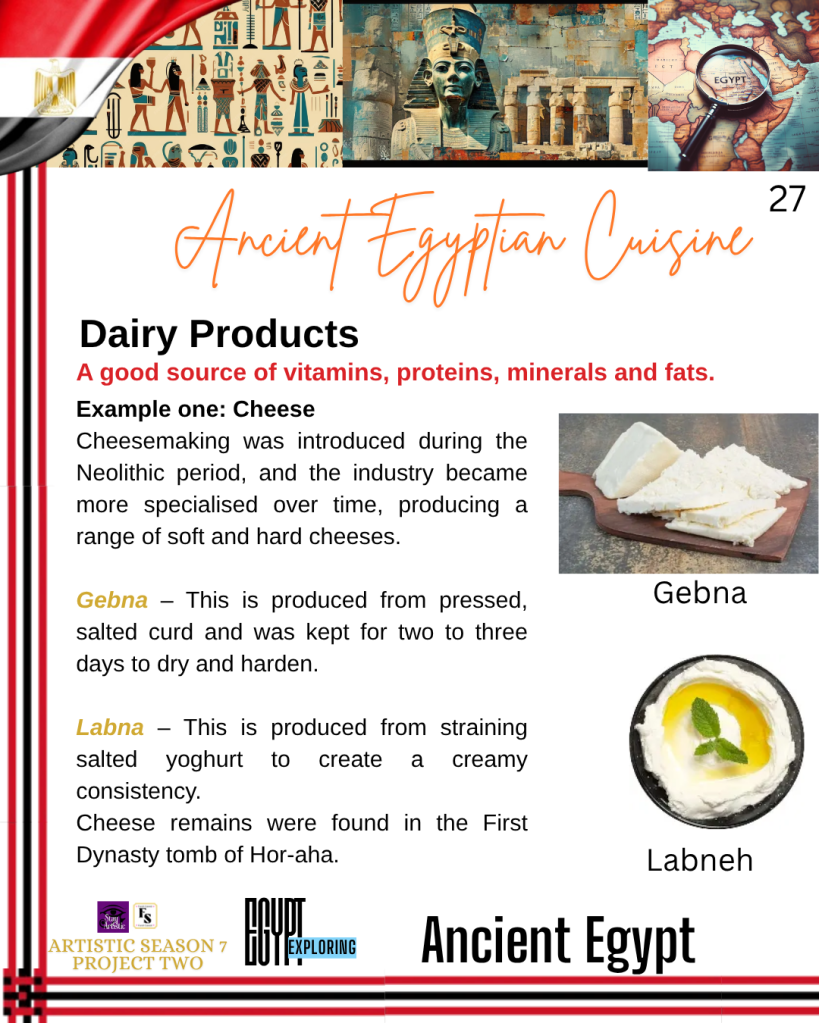
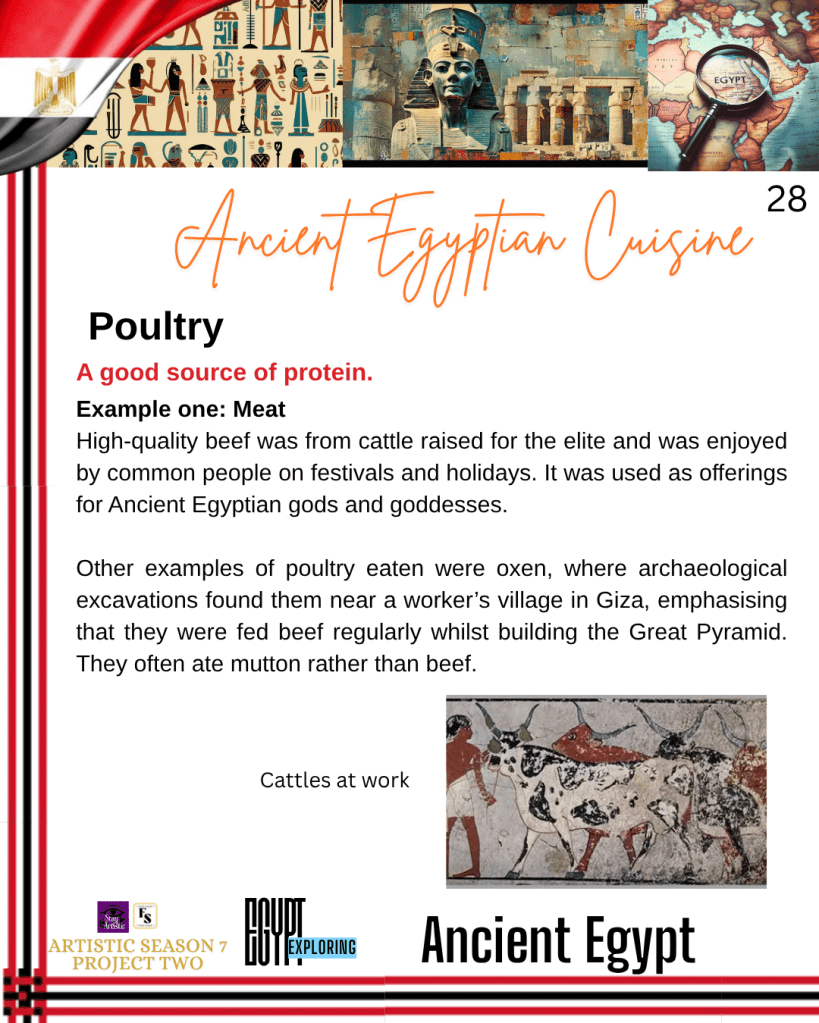
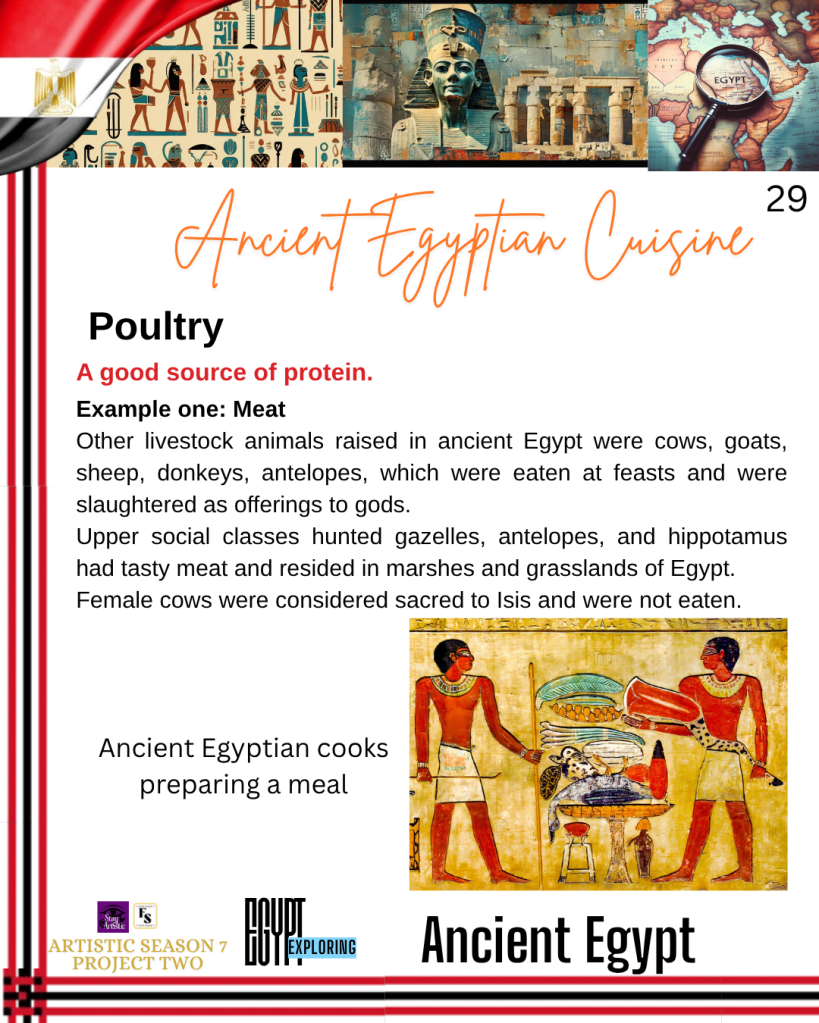
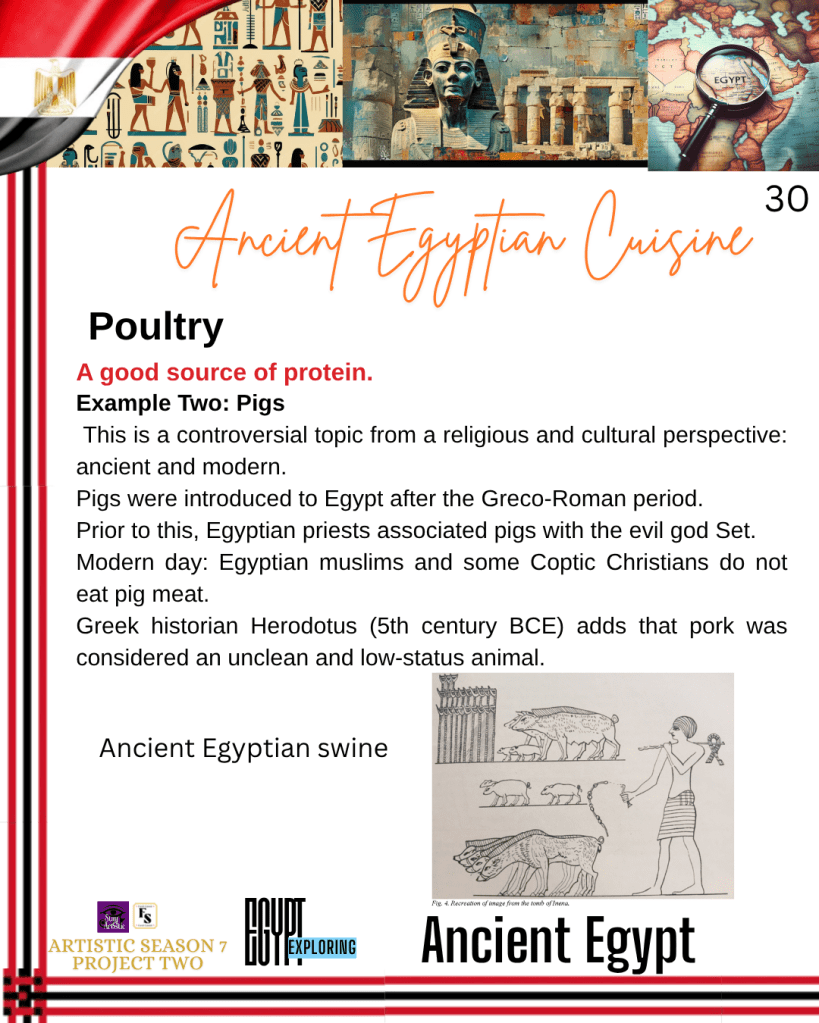
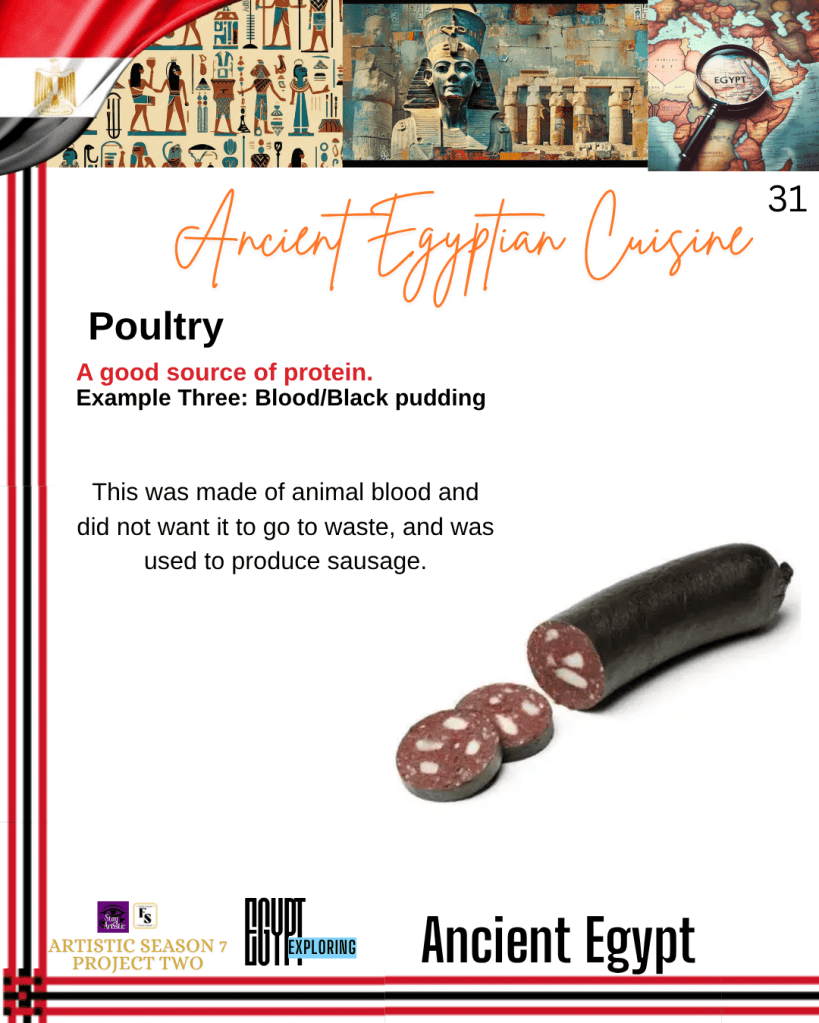
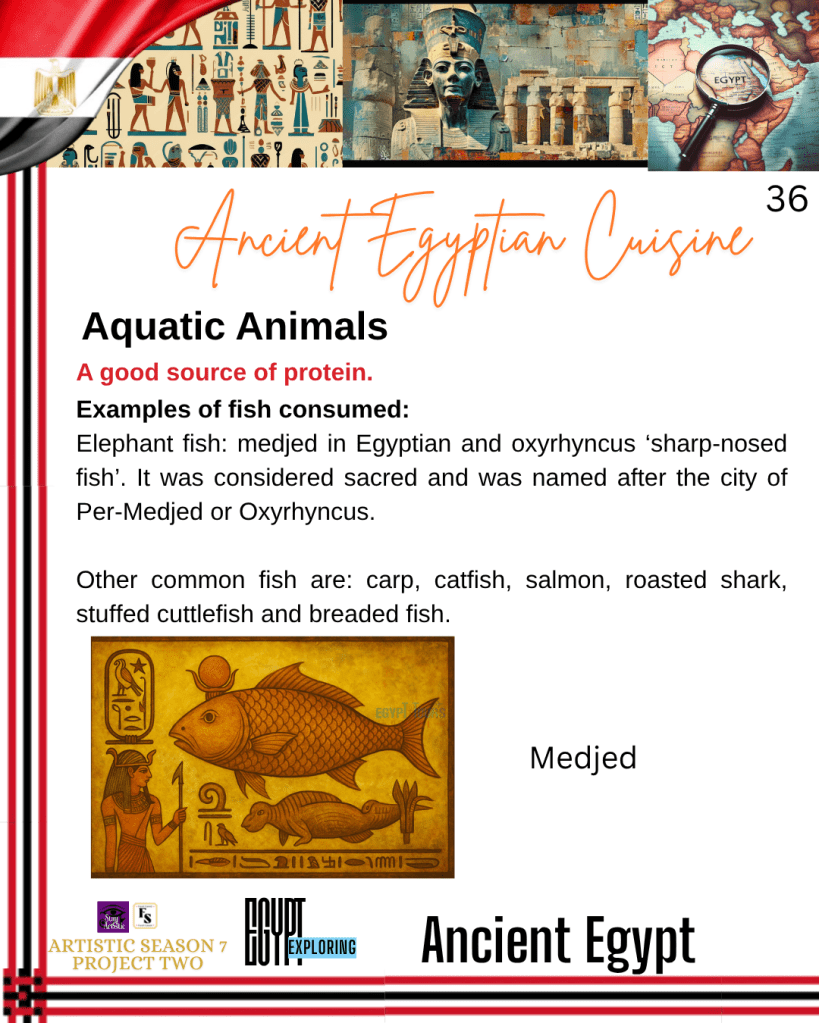
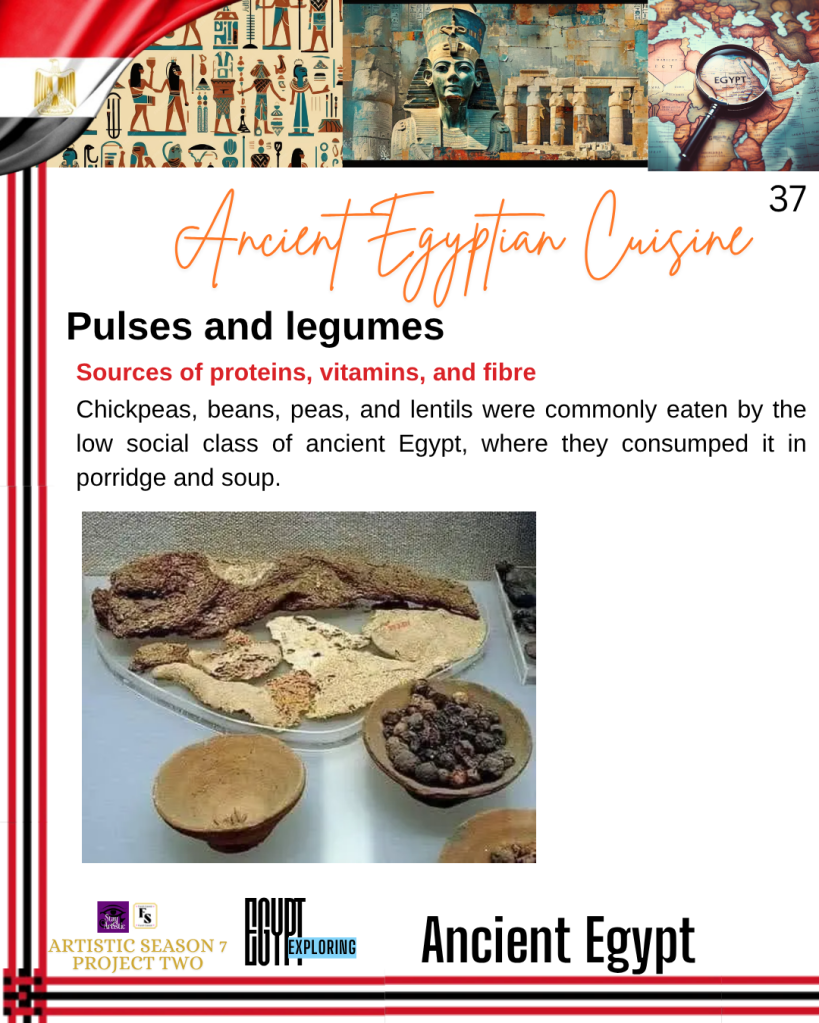
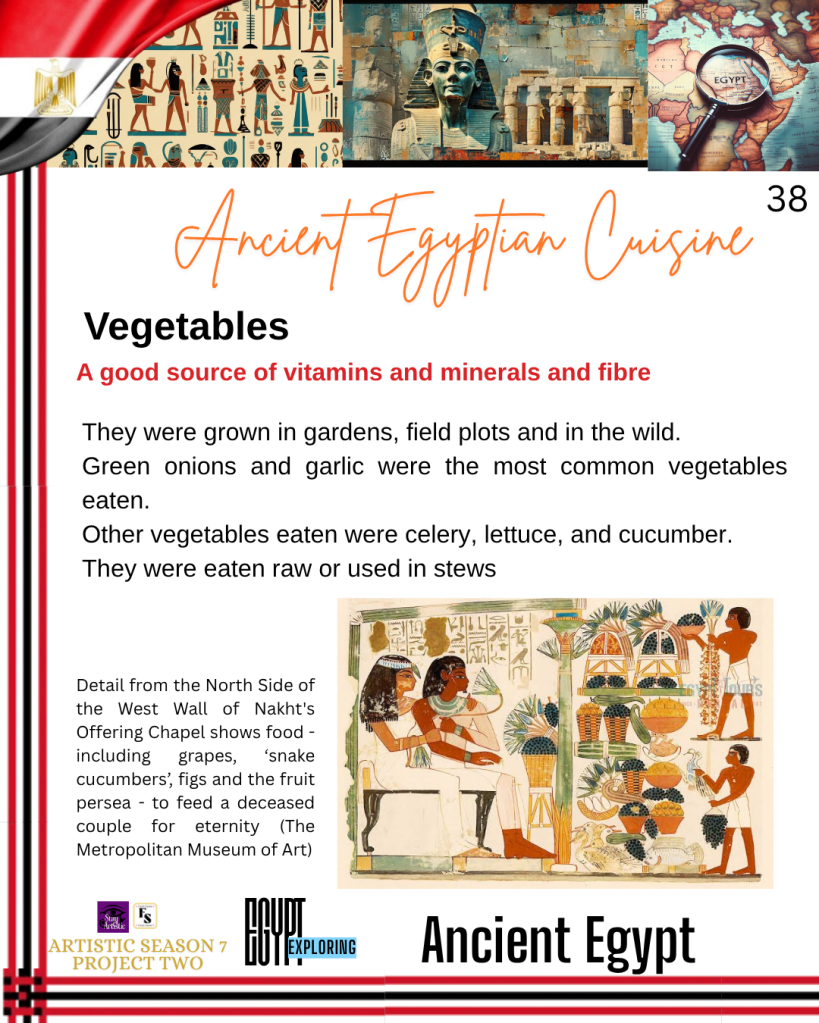
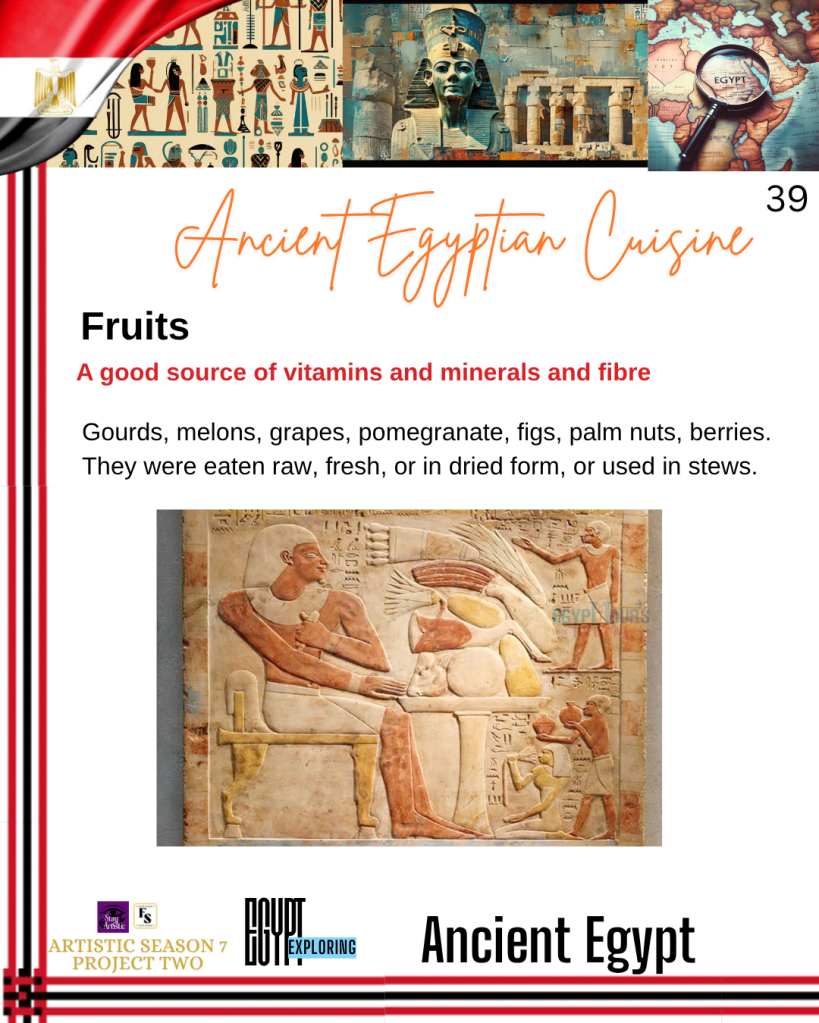
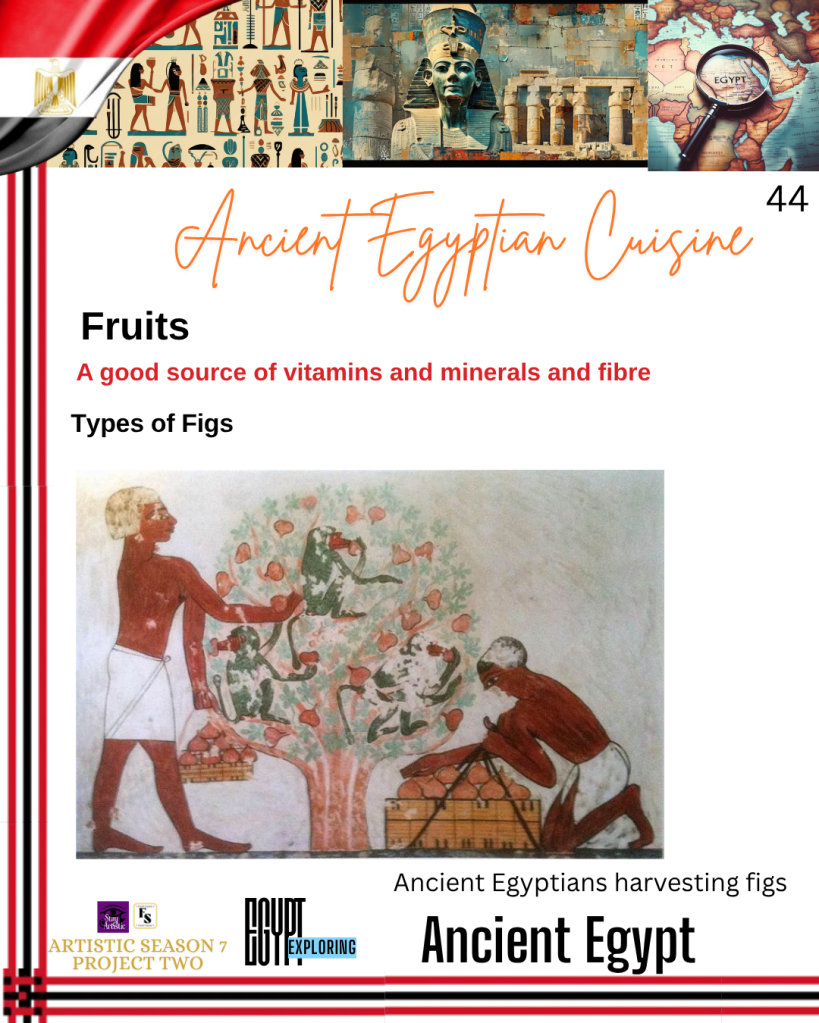
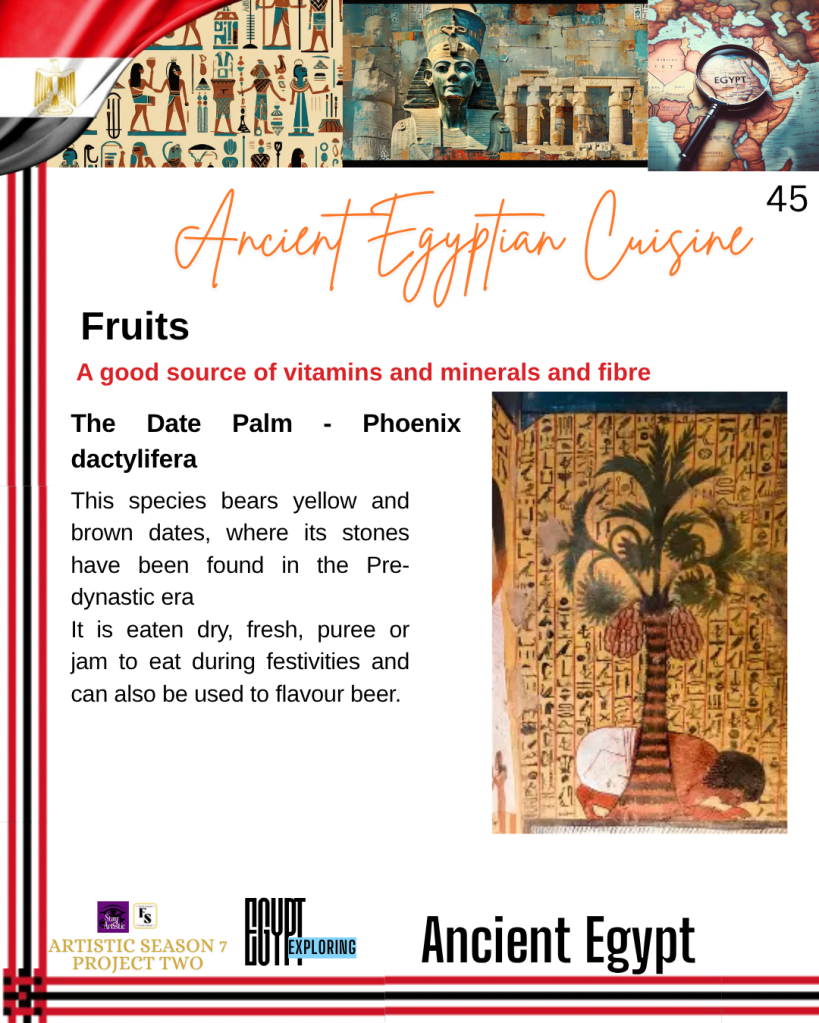
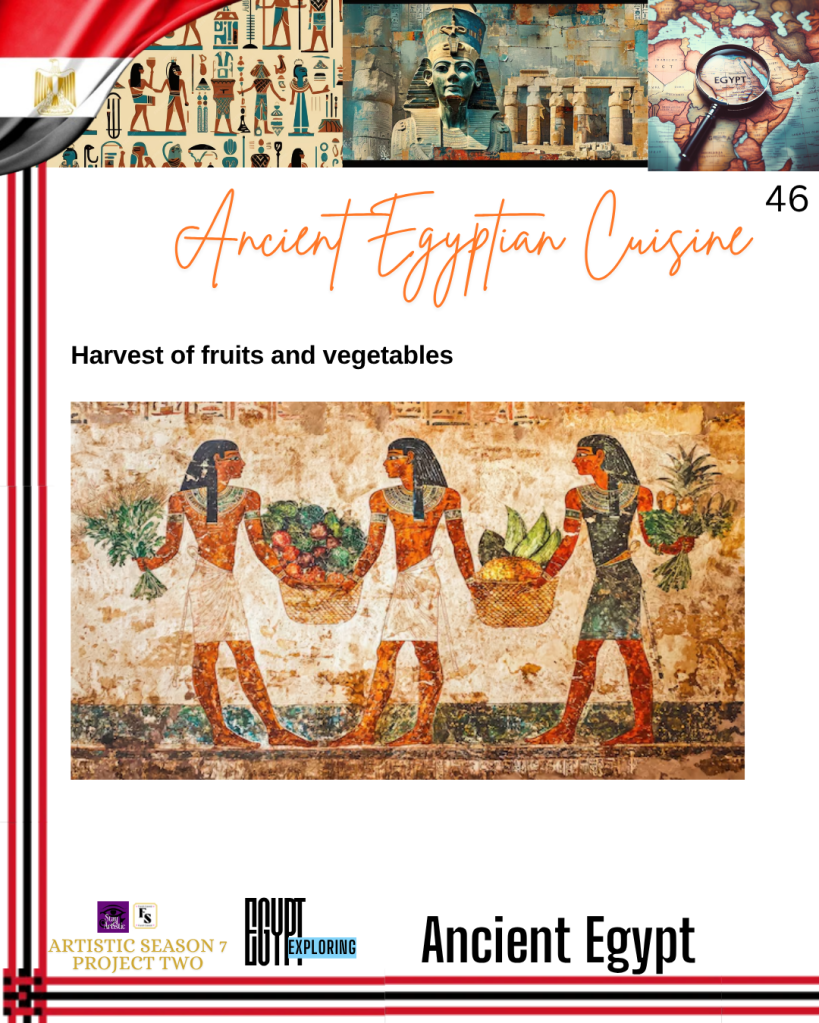
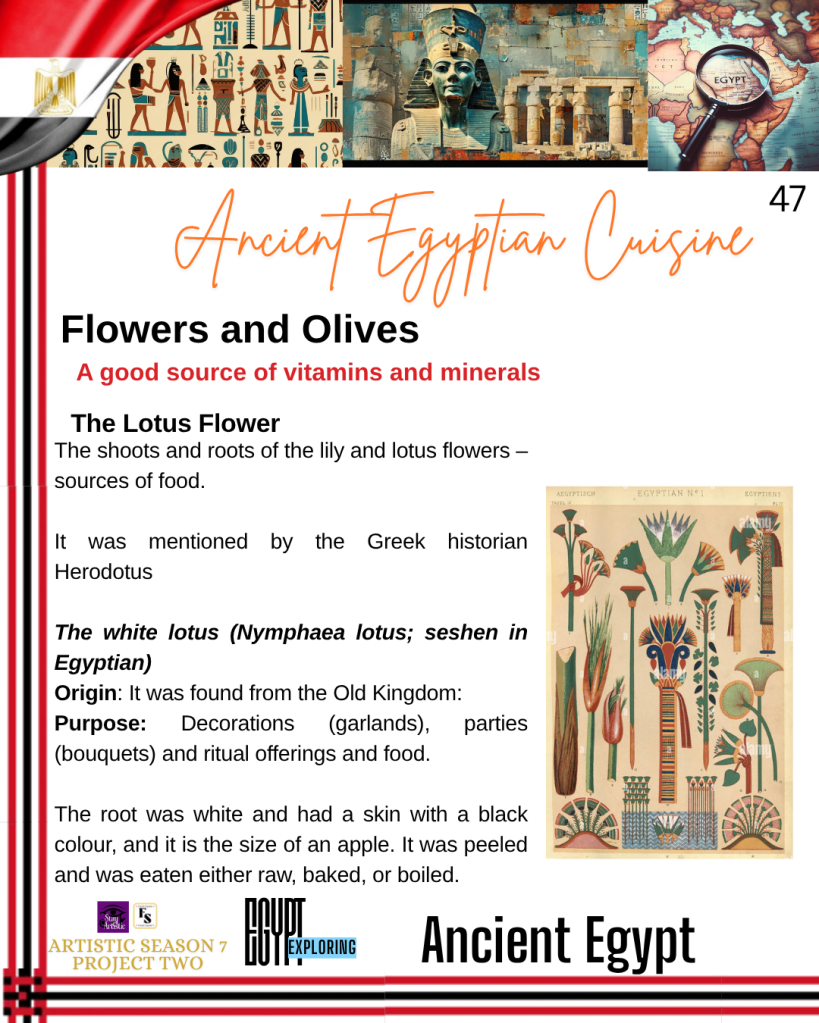
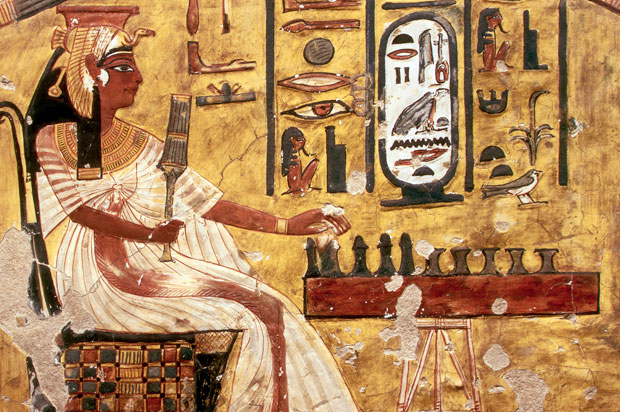
The Metropolitan Museum Of Art
Please visit their website to view a range of archaeological and historical art pieces: https://www.metmuseum.org/art/collection/search?department=Egyptian+Art
References
Amin, B. (2022) Five foods the ancient Egyptians used to eat. Available at: https://www.middleeasteye.net/discover/egypt-ancient-five-foods-eaten (Accessed: 7th June 2026)
Ancient Egypt Online (n.d.) Ancient Egyptian Food and Drink. Available at: https://www.ancient-egypt-online.com/ancient-egyptian-food.html (Accessed: 6th June 2026)
Ancient Society (2022) What fruits did the ancient Egyptains eat? Available at: https://www.ancientsociety.com/egypt/what-fruits-did-the-ancient-egyptains-eat/ (Accessed: 7th June 2026)
Dhar, R. (2025) Ancient Egyptian Food: More Than Beer and Bread Available at: https://historycooperative.org/ancient-egyptian-food/ (Accessed: 6th June 2026)
Egypt Tours (2026) Ancient Egyptian Mythical Creatures and Monsters of Legend Explained. Available at: https://www.egypttoursportal.com/en-us/blog/ancient-egyptian-civilization/ancient-egyptian-mythical-creatures-and-monsters/ (Accessed: 7th June 2026)
Fattouh, M. (n.d.) 25 Egyptian Foods You Must Try: A Local Guide’s Honest List. Available at: https://egypttoursbylocals.com/popular-egyptian-food/ (Accessed: 6th June 2026)
King, A. (2024) Food & Drink in Ancient Egypt Available at: https://www.worldhistory.org/article/2494/food–drink-in-ancient-egypt/ (Accessed: 6th June 2026)
Roy, S. (2024) Egyptian Eats: From Pharaohs to Modern Times, Exploring the Diversity of Egyptian Cuisine. Available at: https://www.afrodiscovery.com/country/egypt/egypt-traditional-cuisine/egyptian-eats-from-pharaohs-to-modern-times-exploring-the-diversity-of-egyptian-cuisine/ (Accessed: 6th June 2026)
Tastes of History (2025) Food History: What did ancient Egyptians eat?. Available at: https://www.tastesofhistory.co.uk/post/food-history-what-did-ancient-egyptians-eat (Accessed: 6th June 2026)


Leave a comment