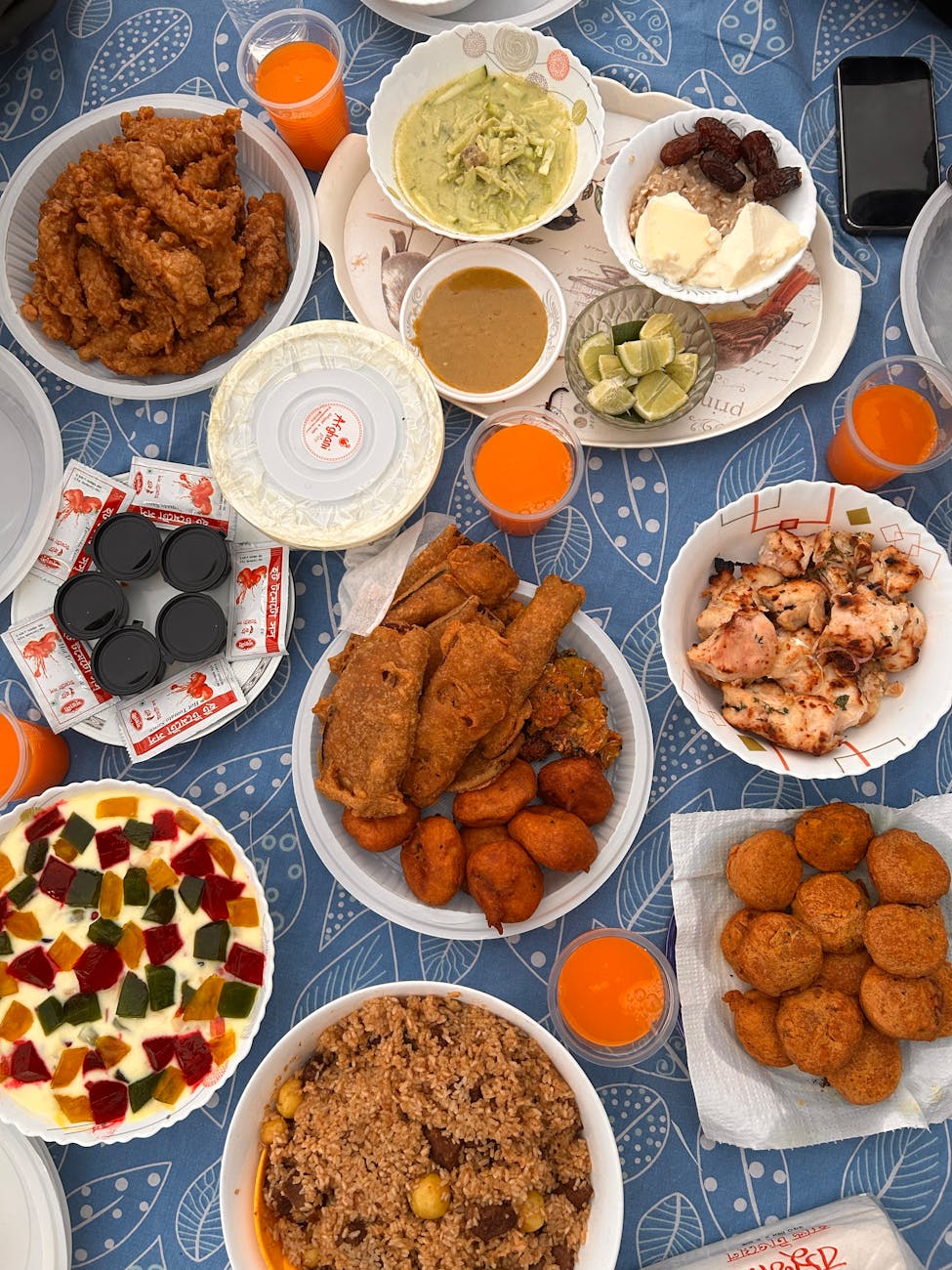
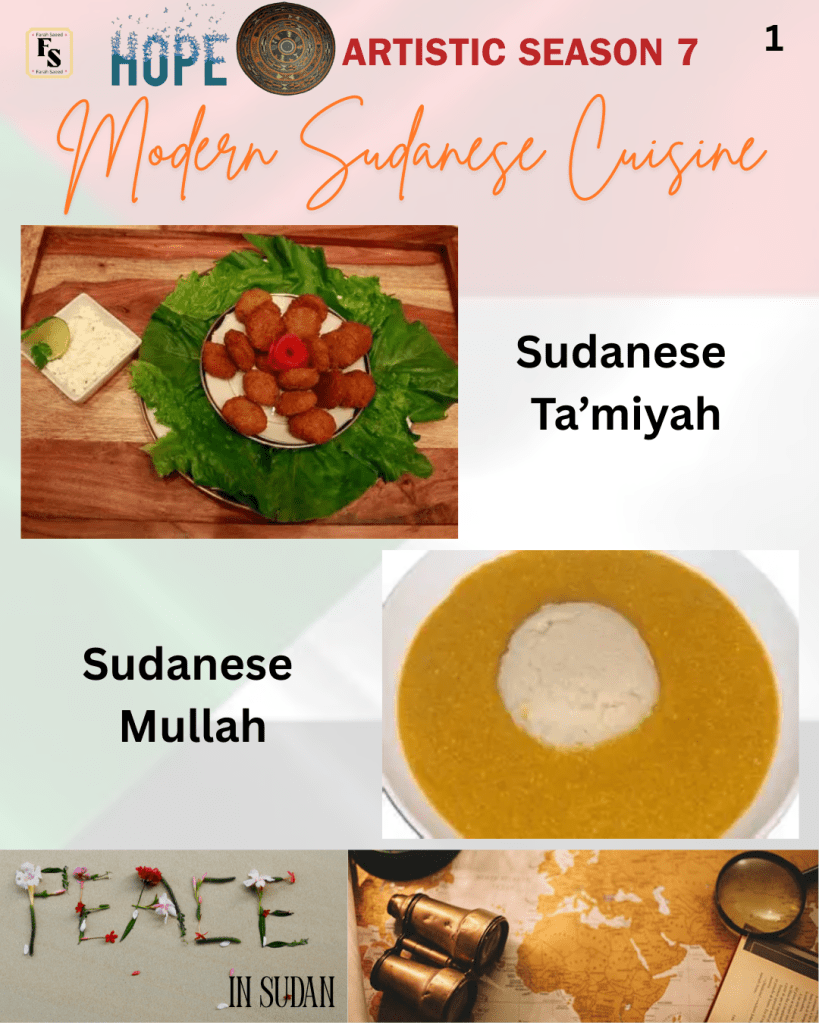
Over the centuries, Sudanese cuisine has been inspired by Arabian, Nubian, West African, and European cuisines, seasoned with a complexity of flavours. Some recipes like Ta’miyah and ful modames presents similarities with their neighbouring countries, like Egypt and the Middle east that is commonly served as a traditional breakfast as a sandwich or with dips. Ta’miyah in Sudan can be made from fava beans or chickpeas, where they are rehydrated and ground to a paste. They are then flavoured with cumin, coriander, garlic, salt, and lemon juice before being rolled and fried until golden. However, the thick broad bean stew (foul madams) in Sudan is accompanied by tomatoes, onions, feta, and hard-boiled eggs.
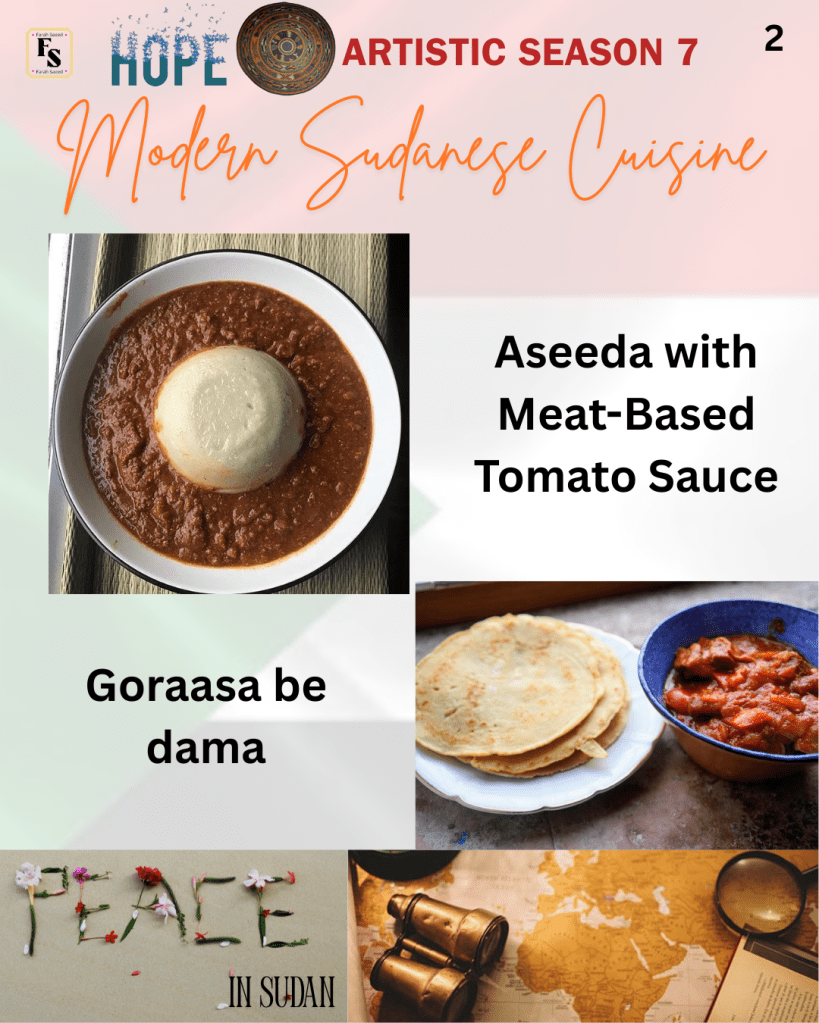
Another staple food consumed by the people of Sudan is porridge, which appears in several traditional varieties. Asida is a popular plain wheat or sorghum porridge, often eaten with savory stews or honey. ‘Aseeda’, prepared with millet or sorghum flour, has a smooth, thick texture and is usually topped with sauces or pulses. Millet and rice porridges are also common, sometimes cooked with peanuts for a richer flavor. Separate porridges are made from individual grains such as rice, maize, sorghum, or fava beans. Ingredients like okra, meat, and sesame may be added for variation, especially in festive or communal meals. Cumin, dill, and coriander are commonly used as garnishes to add unique aromas and enhance the taste.
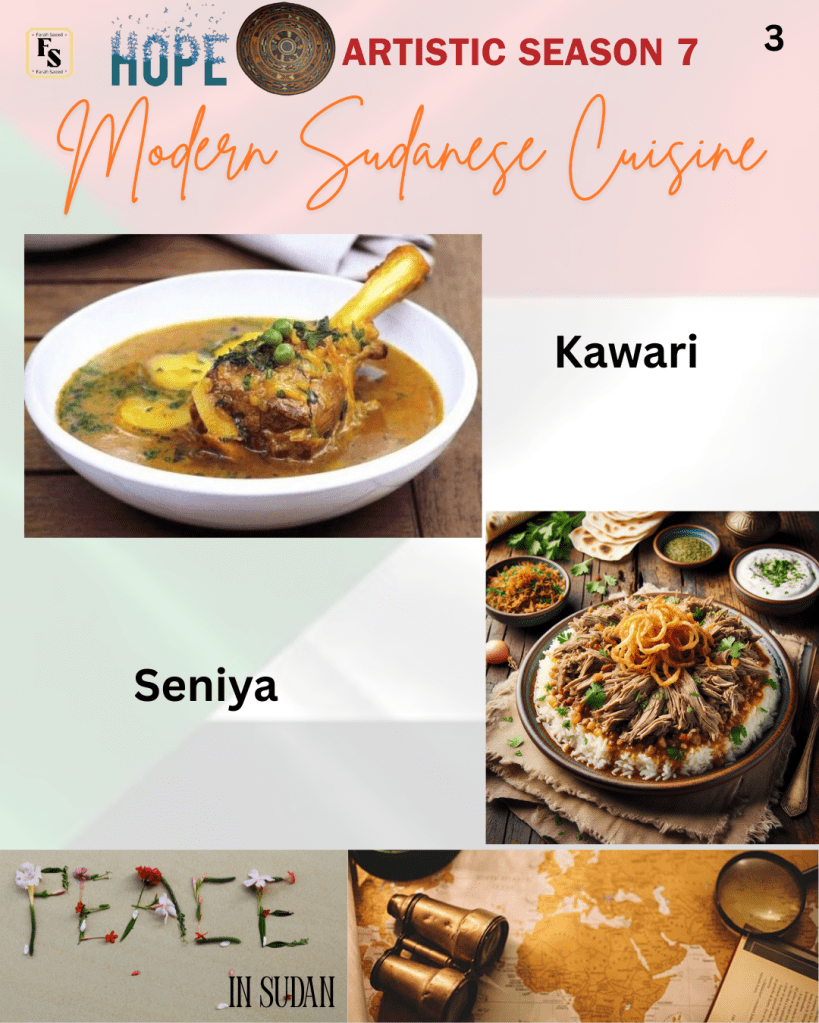
Amongst the traditional main dishes of Sudan is goraasa be dama. This is a beef stew made with fresh tomatoes and green peppers and is seasoned with cardamom and cinnamon. It is often prepared for family gatherings or special celebrations, symbolizing hospitality and warmth in Sudanese culture. In mild cold climates, a soup called kawari is served. It is made by boiling the feet (hooves) of cattle or sheep with a range of vegetables and is commonly enjoyed during winter months or on festive occasions, as it is believed to provide strength and comfort, especially after long days of work. Fassikh is a dish made of fish, spices, and tomatoes to give a spicy flavour. It is also eaten in Egypt during the spring term as a traditional celebration of growth.
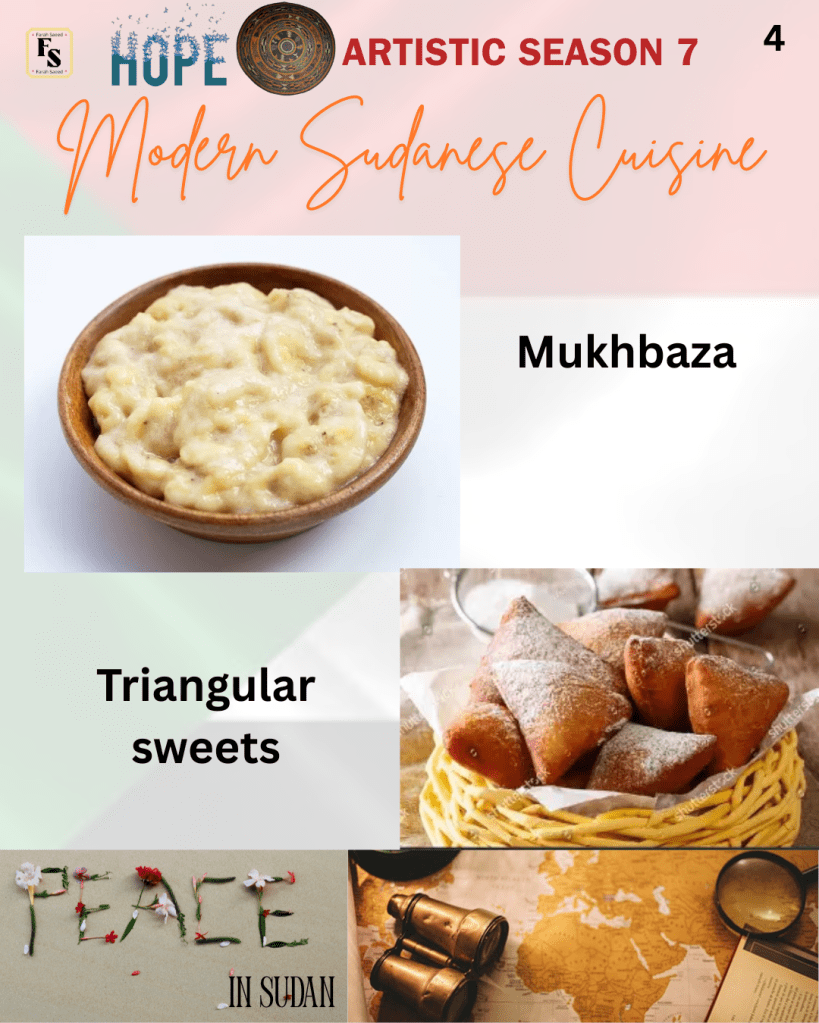
Amongst the Sudanese sweets are triangular and diamond-shaped deep-fried pastries that are similar to a doughnut. However, it is stuffed with dried dates and apricots. Mukhbaza, as the name is derived from the Arabic word for bread ‘khubz,’ consists of breadcrumbs, mashed bananas, and local honey. Basboosa is a shared sweet dish made with semolina and is also part of the Egyptian and Levant culture.
Tamarind-flavoured drink and red hibiscus tea are commonly drunk. Coffee and tea have cinnamon added. During communal gatherings and festivities, a large round metal platter called seniyya is served as a symbol of unity and peace. The seniyya normally contains mullah. It is the most common dish enjoyed by the people of Sudan. This is a rich meat stew flavoured with onion, garlic, peanut butter and sun-ripened tomatoes. A smooth texture is given as all contents are blended together for consistency. It is typically served with Sudanese flatbread called kisra. The two ingredients needed to make this traditional bread are flour and ghee. To get the crepe view, it is spread thinly on a flat griddle.
Key Points
Sudanese cuisine blends Arabian, Nubian, West African, and European influences.
Staple dishes include ta’miyah, ful modames, goraasa be dama, and mullah.
Sweets and drinks like basboosa, mukhbaza, and hibiscus tea are culturally significant.
References
Hales, M. (2025) Cuisine of Sudan: traditional Sudanese food to try. Available at: https://www.travellocal.com/en/articles/cuisine-of-sudan (Accessed: 19th April 2026)


Leave a comment