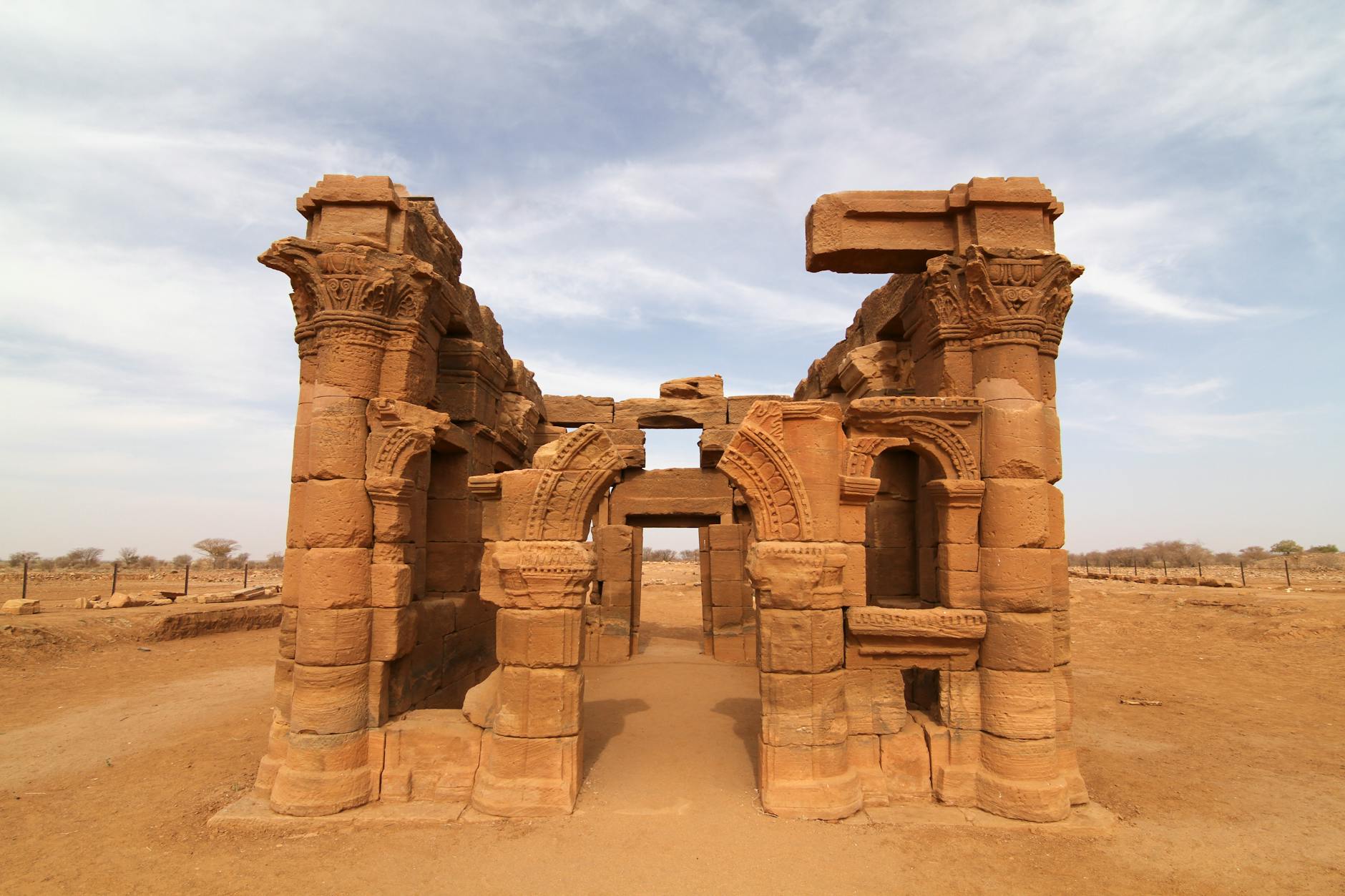
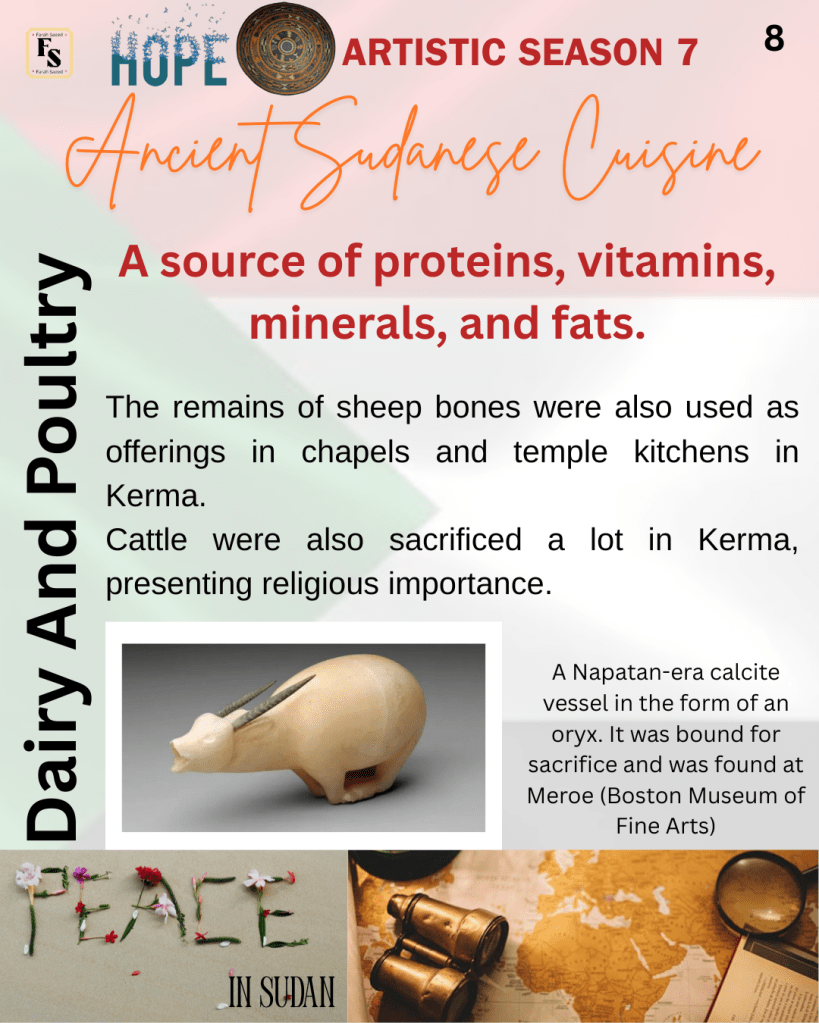
The Kushite cuisine is rooted in Ancient Egyptian, Mediterranean, African, and even Asian cuisine. This can be observed with the imports of goods such as Indian spices and Greek and Roman pottery. The Kushite kingdom shares several similarities with Ancient Egyptian customs, particularly religious traditions and clothing customs that have evolved over time. Though they had unique elements, the Ancient Egyptians and Kushites shared a common belief in Amun and built large temples such as the Temple of Amun in Jebel Barkal, where priests performed ritual sacrifices and oracles. One important ritual, for example, involved offering loaves of barley bread and jars of beer to Amun during temple ceremonies, accompanied by music and incense. They also built pyramids, such as those observed at Meroe, but they were smaller and steeper than the Pyramids at Giza.
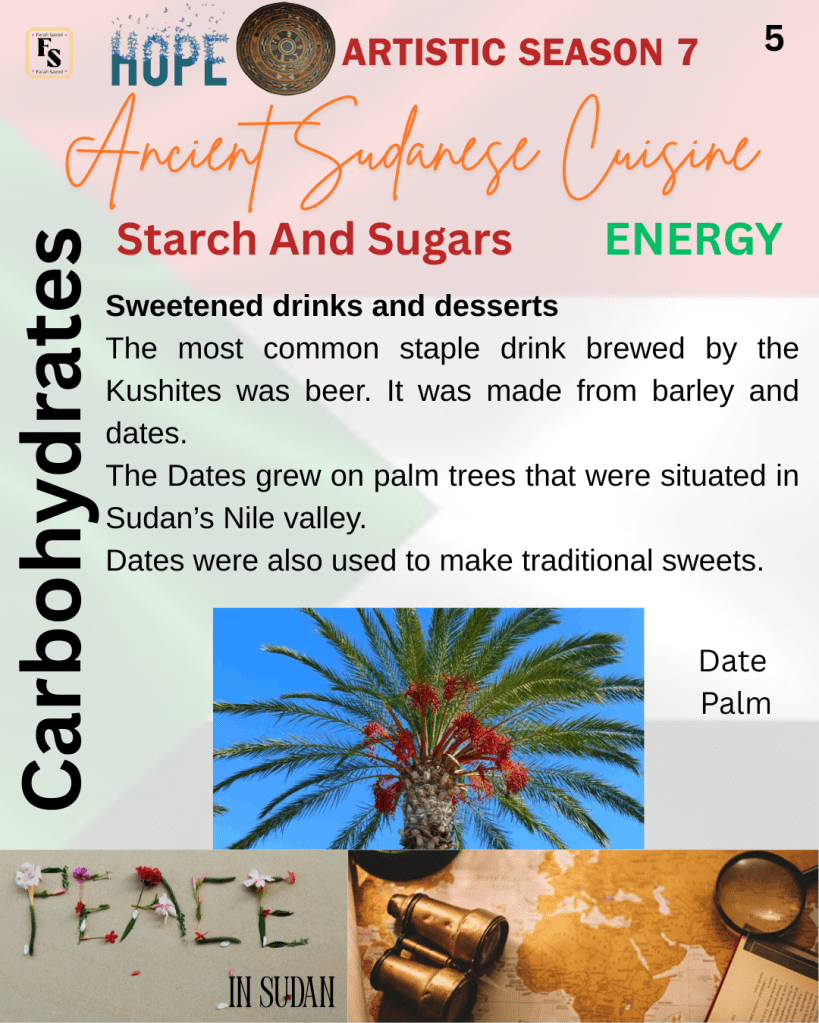
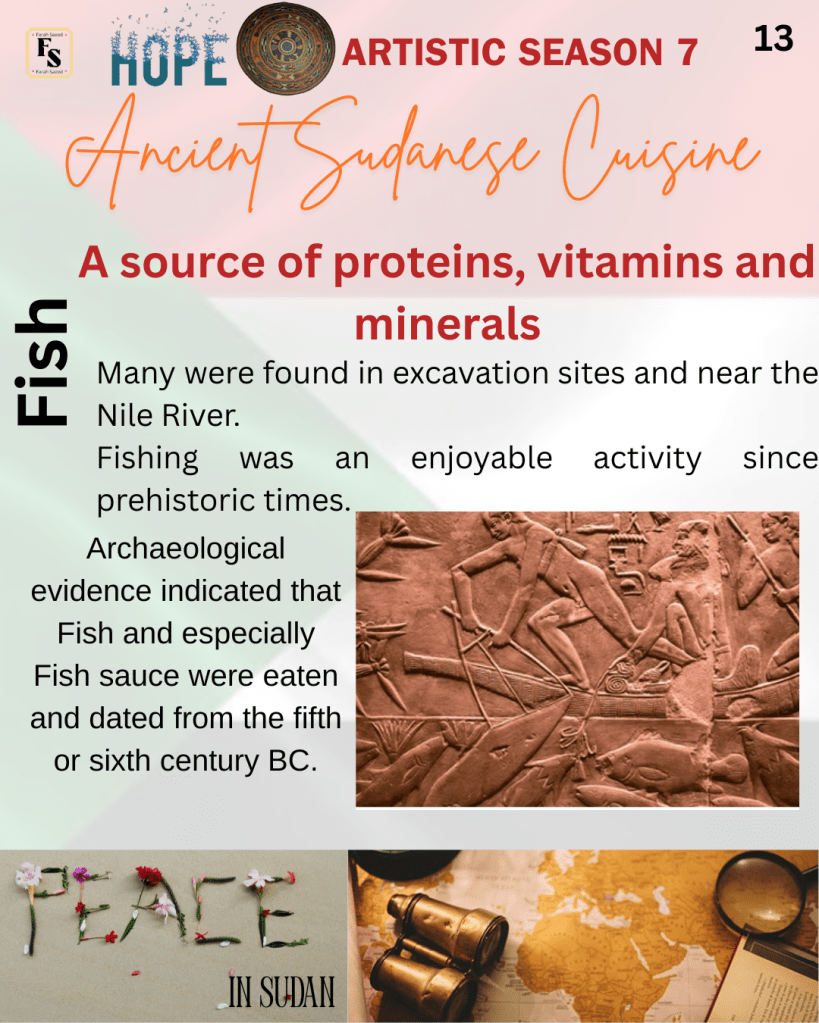
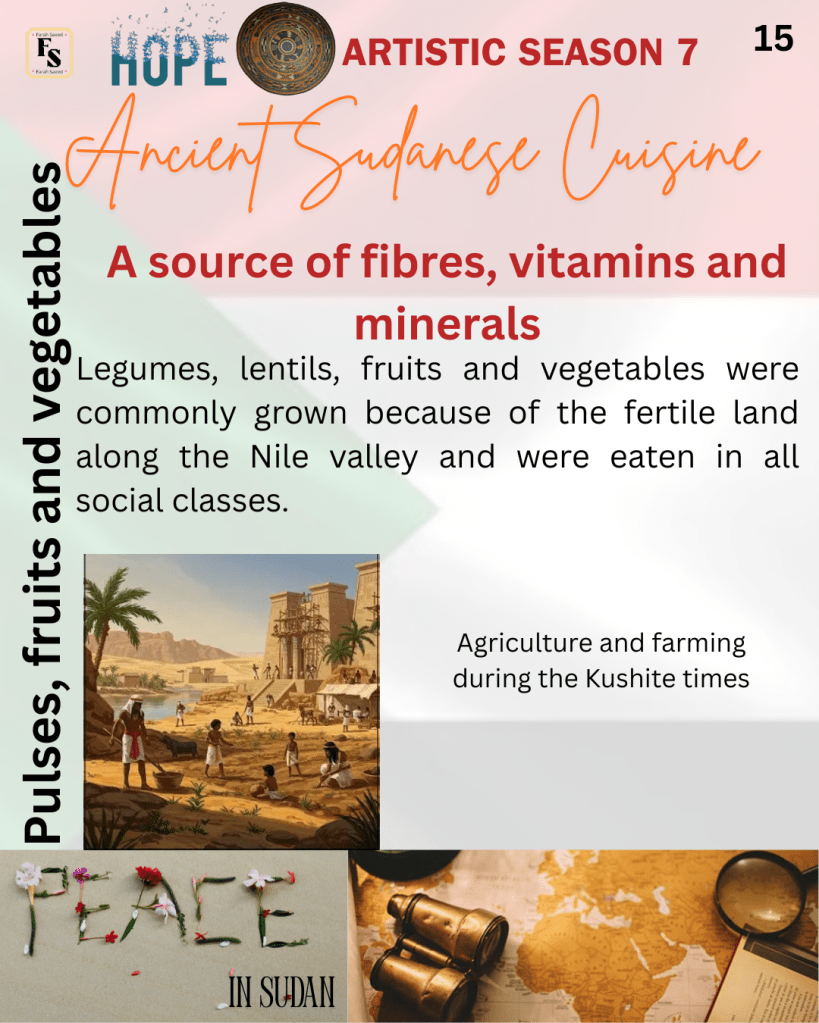
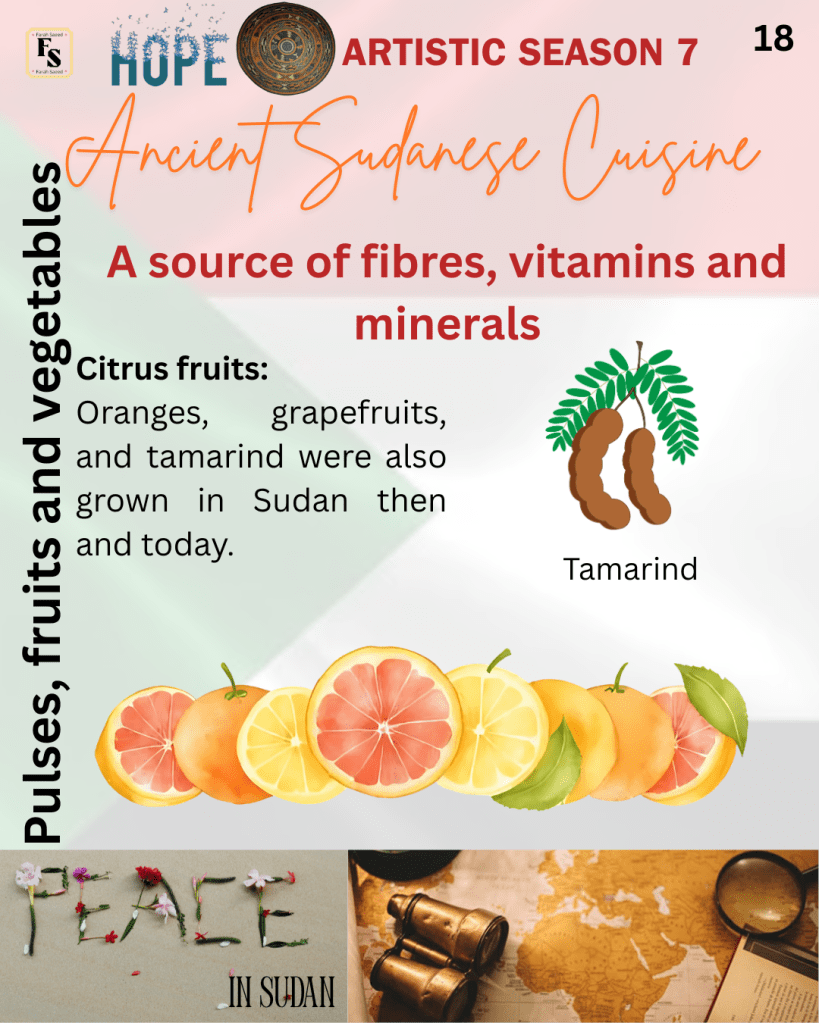
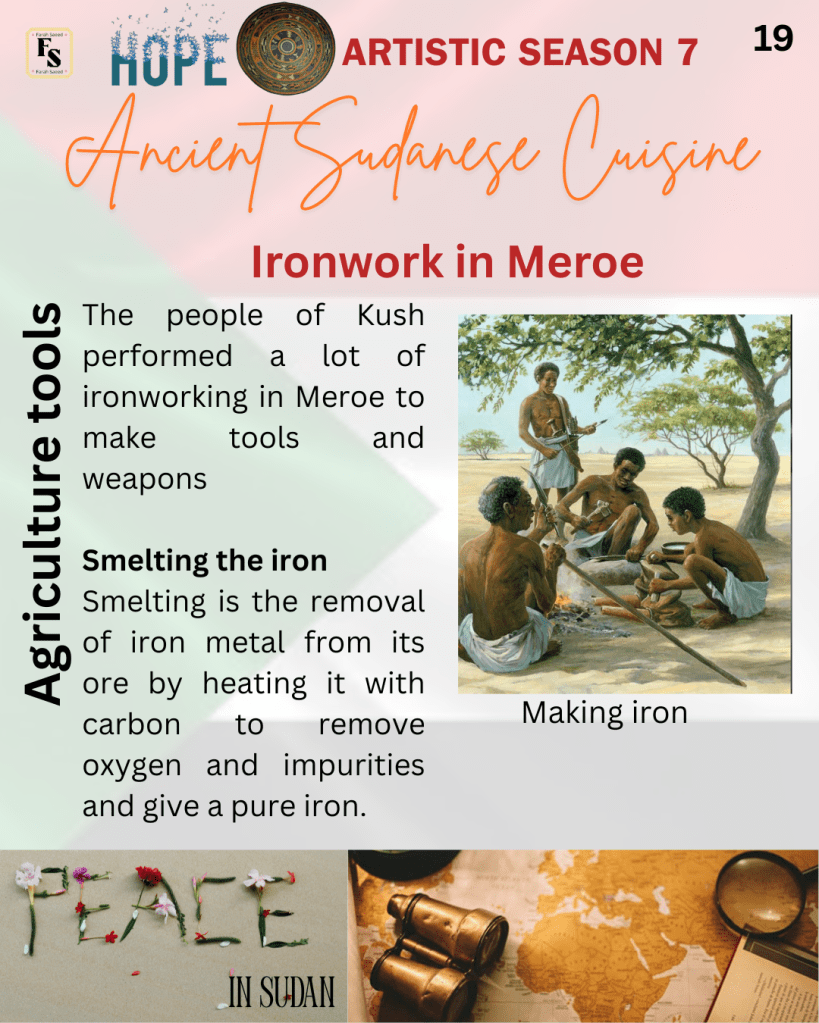
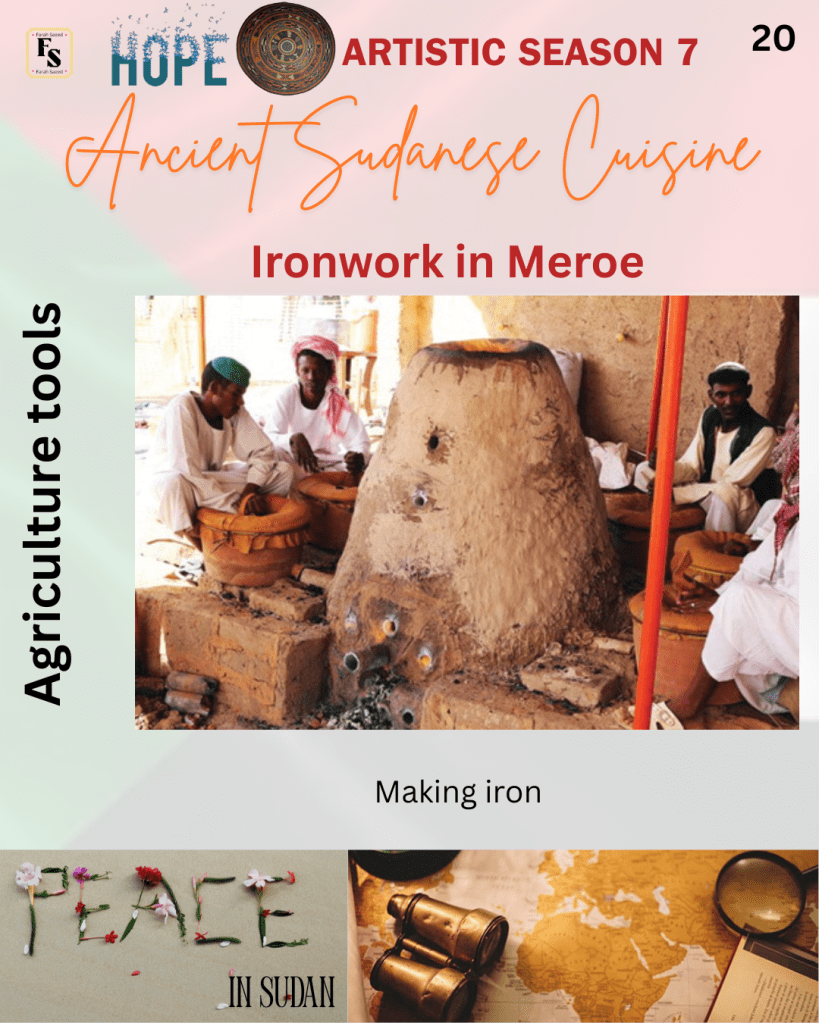
Agriculture along the Nile River provided Kush with silt essential for the fertile lands. Many rural communities relied on farming, w barley, fruits, and vegetables to make staple food. When it comes to staple grains, they cultivated barley, wheat, sorghum, and millet along the banks of the Nile. From these crops, the Kushites prepared dishes central to their diet. One common dish was a type of flatbread made from sorghum, paired with lentil stew or roasted fish. They also practiced herding for sustainability and lived in circular huts with thatched roofs. With access to the Nile, they had a steady supply of fish and birds, which featured in their meals, a practice traceable to the fifth and sixth centuries BC. For efficiency, they built irrigation canals to improve crop production during dry climates and designed iron tools in Meroe to help improve agriculture and construction. They also built traditional devices such as the shaduf that operated manually to raise water from low to high depressions to irrigate the land. This was also used by the Ancient Egyptians with improved performance. Later in the late Meroitic period, the Kushite farmers began to use the Saquia. This was a water wheel that inspired the Sudanese, whose original idea was from Southwest Asia.
Depressions called hafirs were dug on flat ground to collect rainwater, as seen at Musawwarat es Sufra. However, these were often insufficient for agriculture, leading the Kushites to construct additional infrastructure such as the dam at Shaq Al Ahmar for water storage. These innovations allowed the Kushites to better manage scarce water supplies, which helped ensure stable food production and supported the growth of their settlements. The advanced water systems developed in Kush influenced neighbouring societies and demonstrated the importance of environmental adaptation in sustaining powerful kingdoms in ancient Africa.
As part of dining customs, they commonly sat on mats and ate using their hands and wooden utensils. Social gatherings and feasts during festive seasons often involved music, storytelling, dancing, and dining.
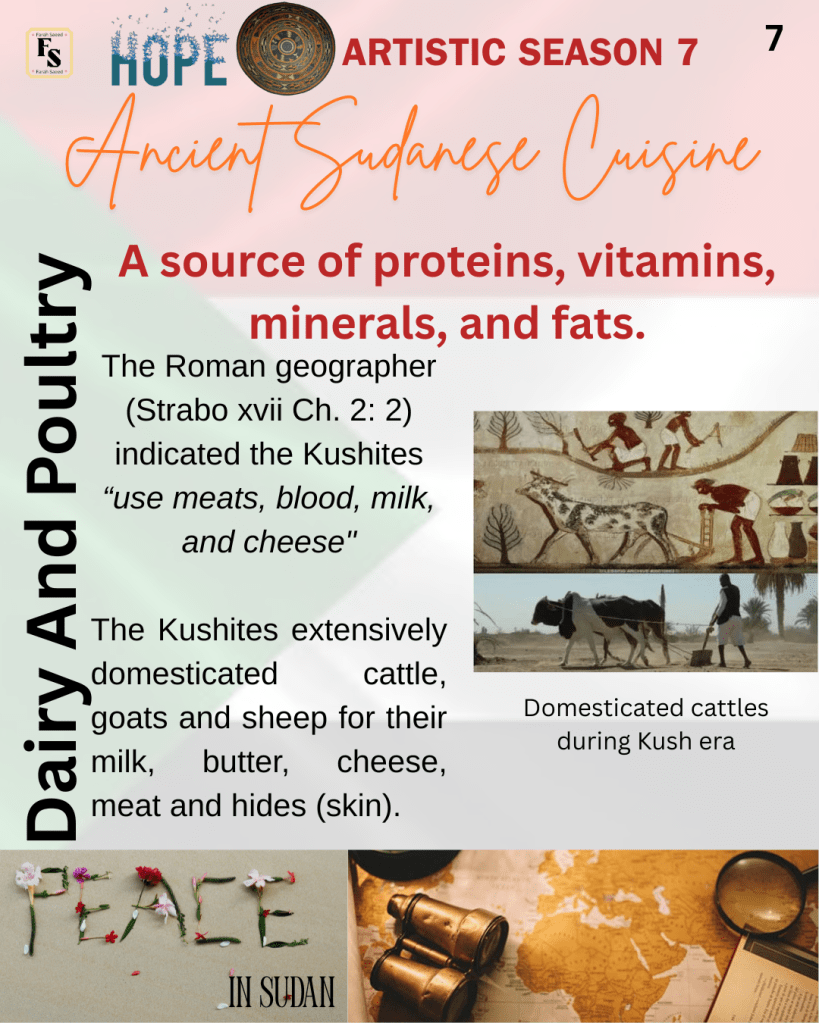
Communication was vital, as the Nomads who lived on either side of the Nile Valley in the semi-arid regions would look for good pastures with their flocks. The Kush farmers allowed nomads to herd their flocks on farms so their dung would be a natural fertiliser for their farms.
Key Points
Kushite culture blended Egyptian, Mediterranean, African, and Asian influences.
Agriculture and irrigation innovations were central to Kushite society.
Social customs included communal dining, music, and cooperation with nomads.








References
Sudan History (n.d) Daily Life. Available at: https://www.sudanhistory.org/dailylife_01_diet.htm (Accessed: 7th June 2026)
The Archaeologist (2025) Daily Life in the Kingdom of Kush: An Ancient African Powerhouse. Available at: https://www.thearchaeologist.org/blog/daily-life-in-the-kingdom-of-kush-an-ancient-african-powerhouse#google_vignette (Accessed: 7th June 2026)
 The Farah Saeed Project
Leave a comment