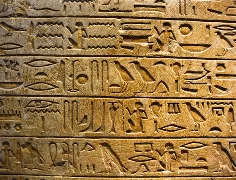
Uncovering the life of the Ancient Egyptian civilization was achieved by examining artifacts, tomb paintings, and their intricate writing system. Notably, the Ancient Egyptians were pioneers in developing a language in a coded manner consisting of pictograms, which served as a foundation for their later writing systems.
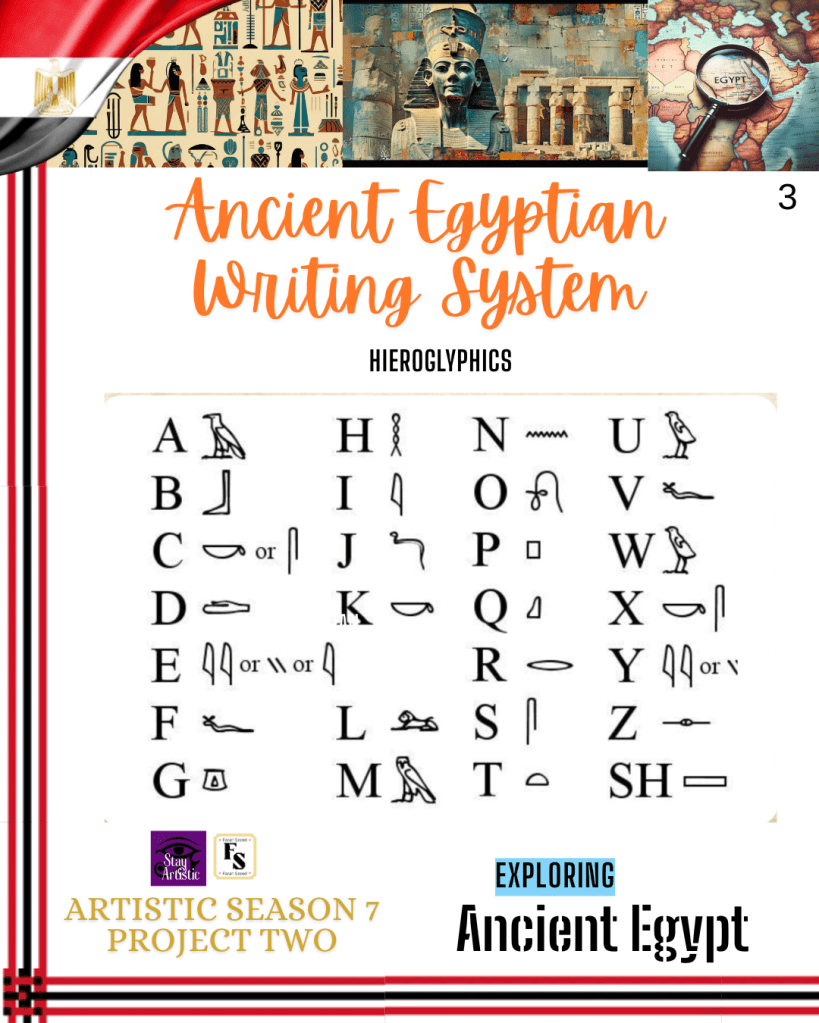
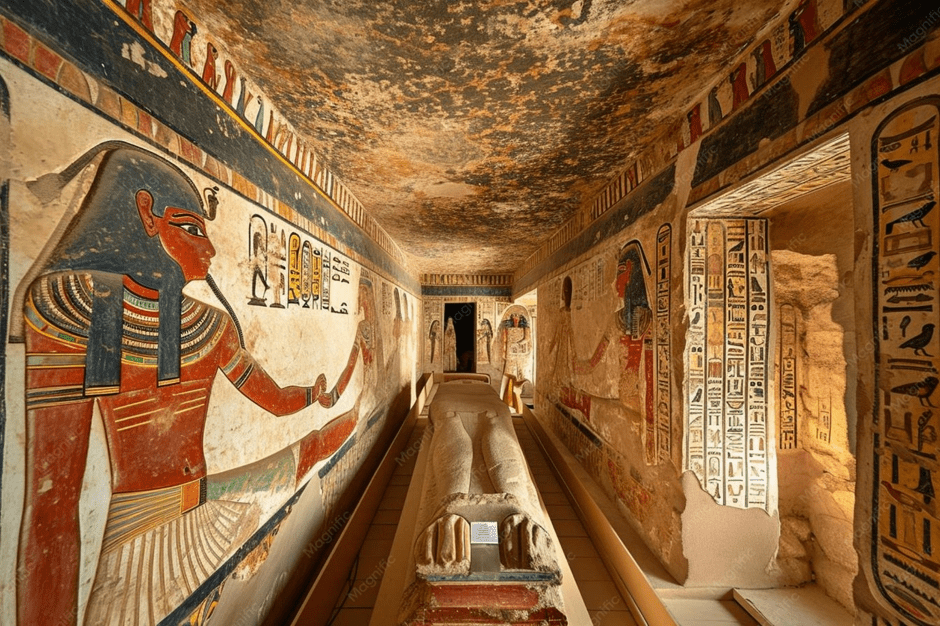
There were three main writing systems used by the Ancient Egyptians, each serving specific purposes: hieroglyphics, hieratic, and demotic. Hieroglyphics, called “medu netjer – words of the gods,” consisted of more than 700 pictorial symbols in its alphabet, representing sounds, words, and concepts. These were used from the fourth millennium BC until the Roman period. Hieroglyphics were essential for record-keeping, monumental inscriptions, religious texts, literature, and daily communication. They helped preserve knowledge across eras, inspiring advancements in medicine, arts, astronomy, agriculture, mathematics, and science. For trade and transport jars, the script was simplified and abbreviated, applied either before or after firing pottery, or written with carbon black pigment using a reed brush.
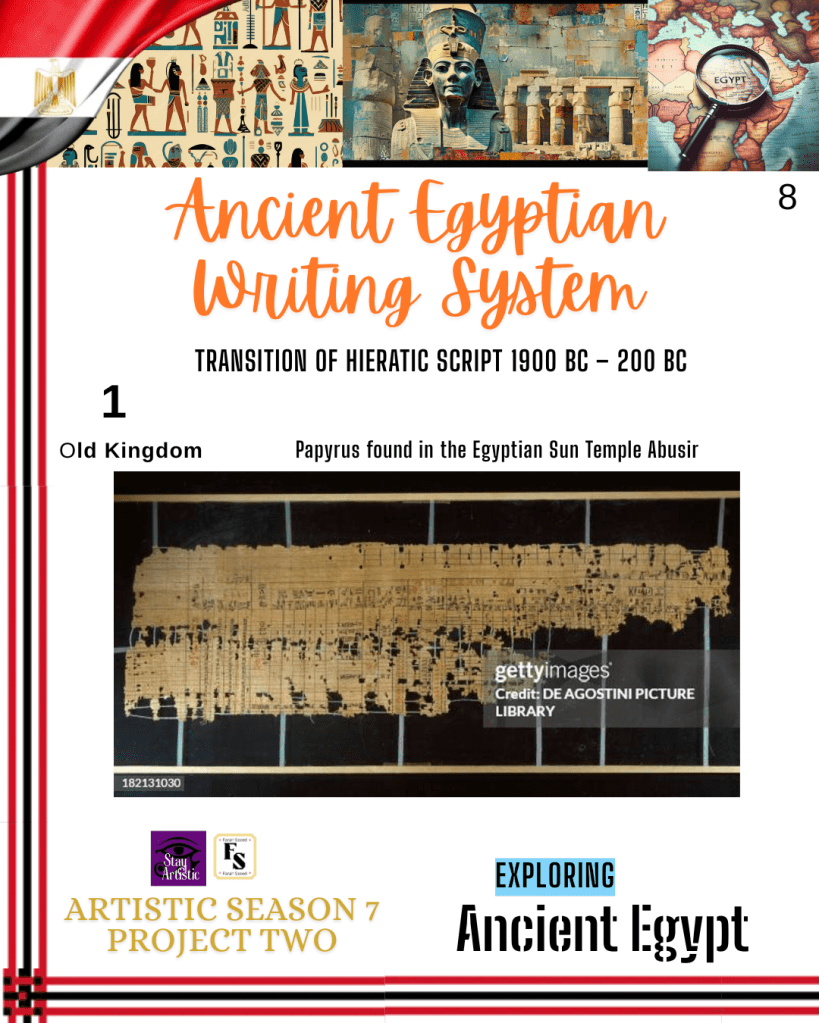
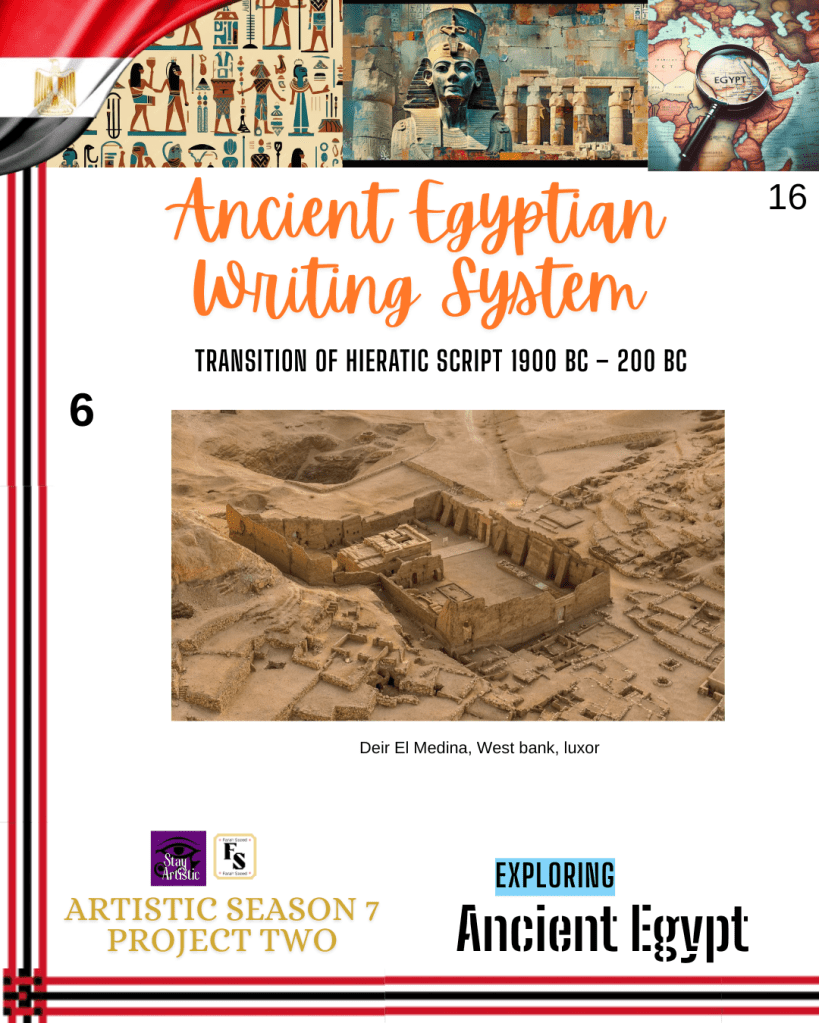
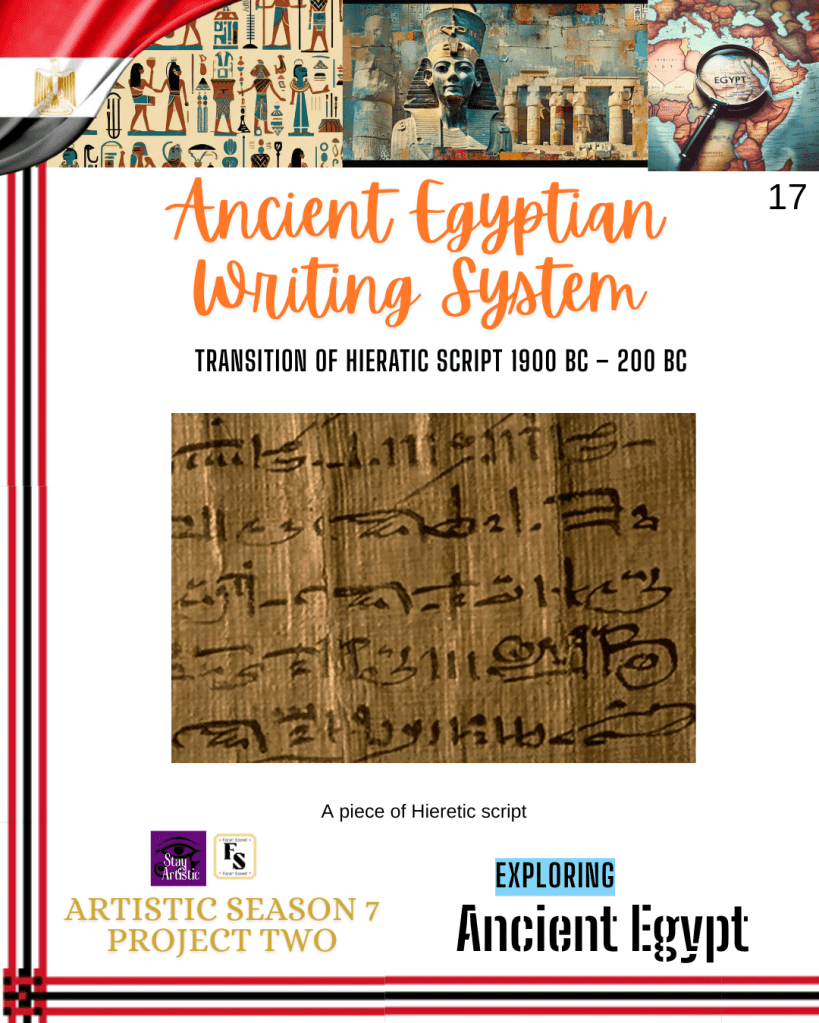
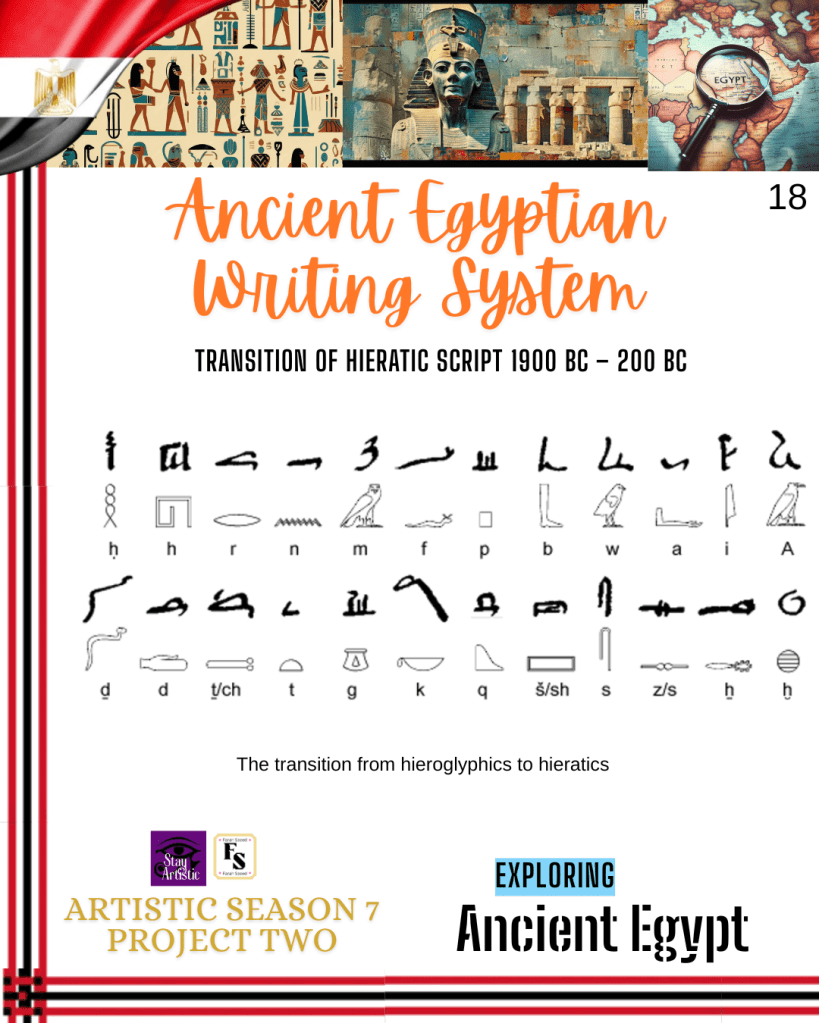
The hieratic script, from the Ancient Greek “hieratikos,” meaning “priestly,” was developed at the same time as hieroglyphs. It is relatively unknown outside Egyptology. Hieratic is best understood as a simplified, cursive form of hieroglyphics, designed for more practical, everyday writing. While hieroglyphics were often reserved for monumental inscriptions and religious texts, hieratic was used daily for writing letters, recording administrative documents, keeping legal records, and composing religious texts, for instance, rituals and funerary literature, until the 26th Dynasty.
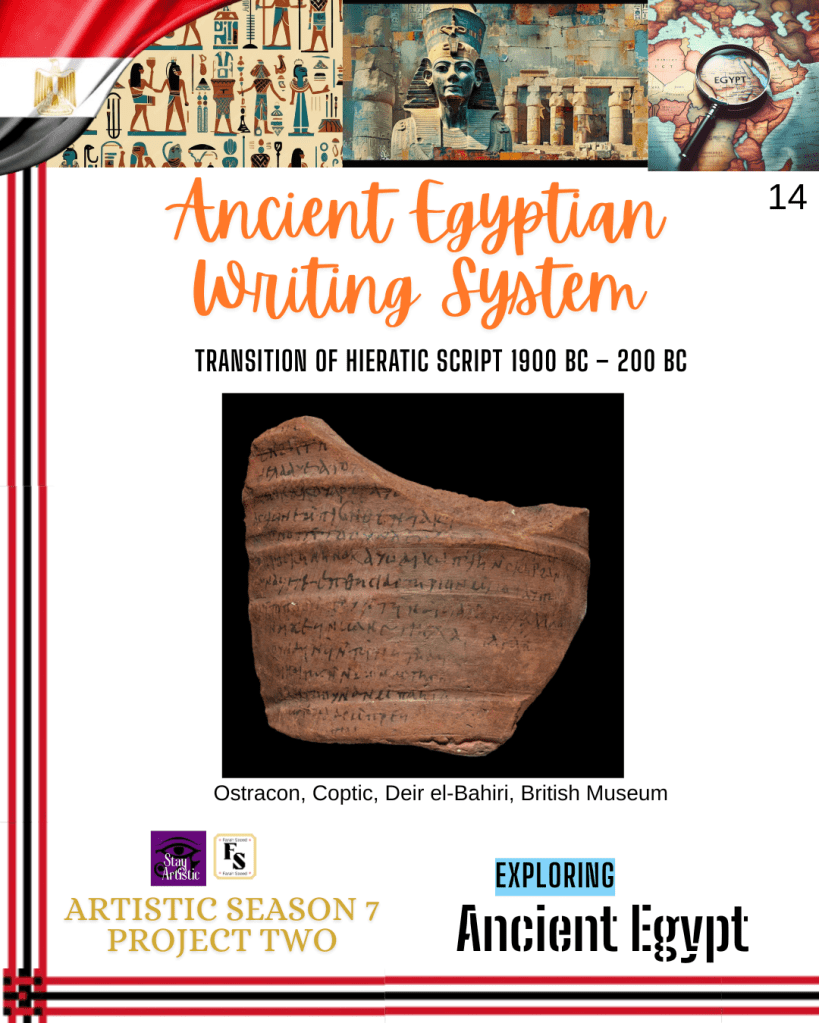
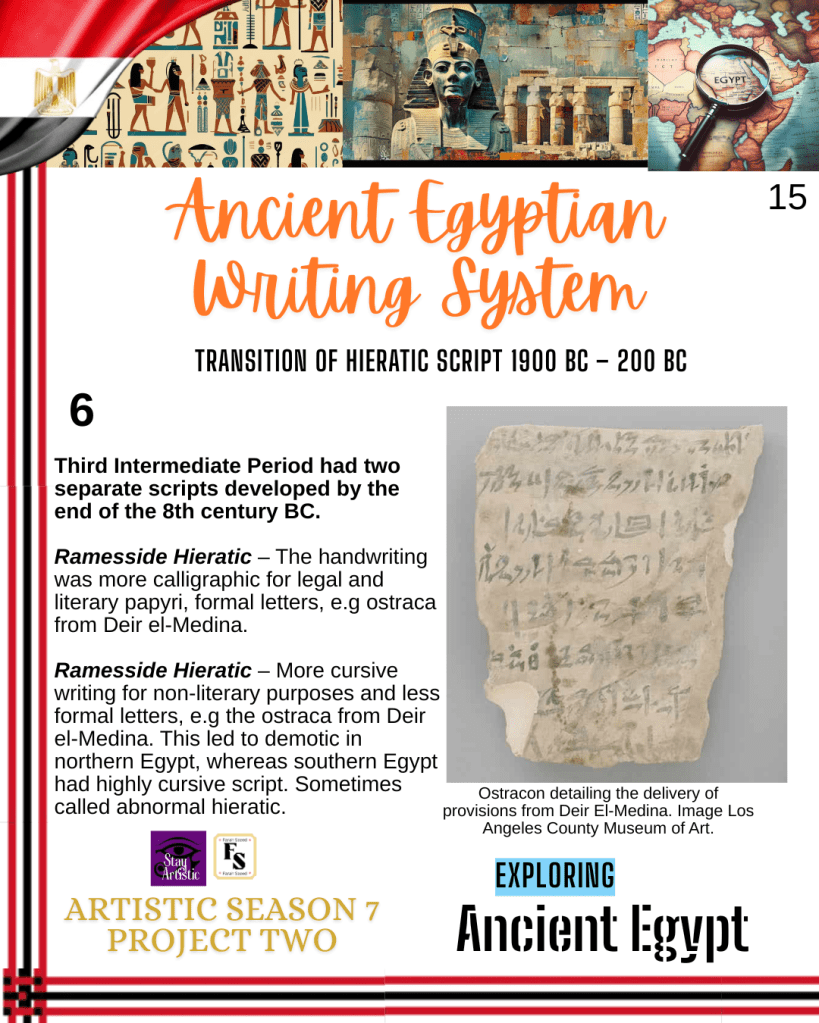
The hieratic script was written right to left in horizontal lines using black ink on papyrus, ostraca, and writing boards with a reed brush, rather than chiseled into stone monuments. The black ink was made of vegetable gum, soot, and beeswax, while ochre was used to make various colours.
Most literate Egyptians were trained in hieratic script, as it allowed much faster writing than drawing individual hieroglyphic symbols. It features a flowing, connected style similar to loops and italics in a cursive manner. This enabled scribes to write quickly without having to lift the pen between each character.
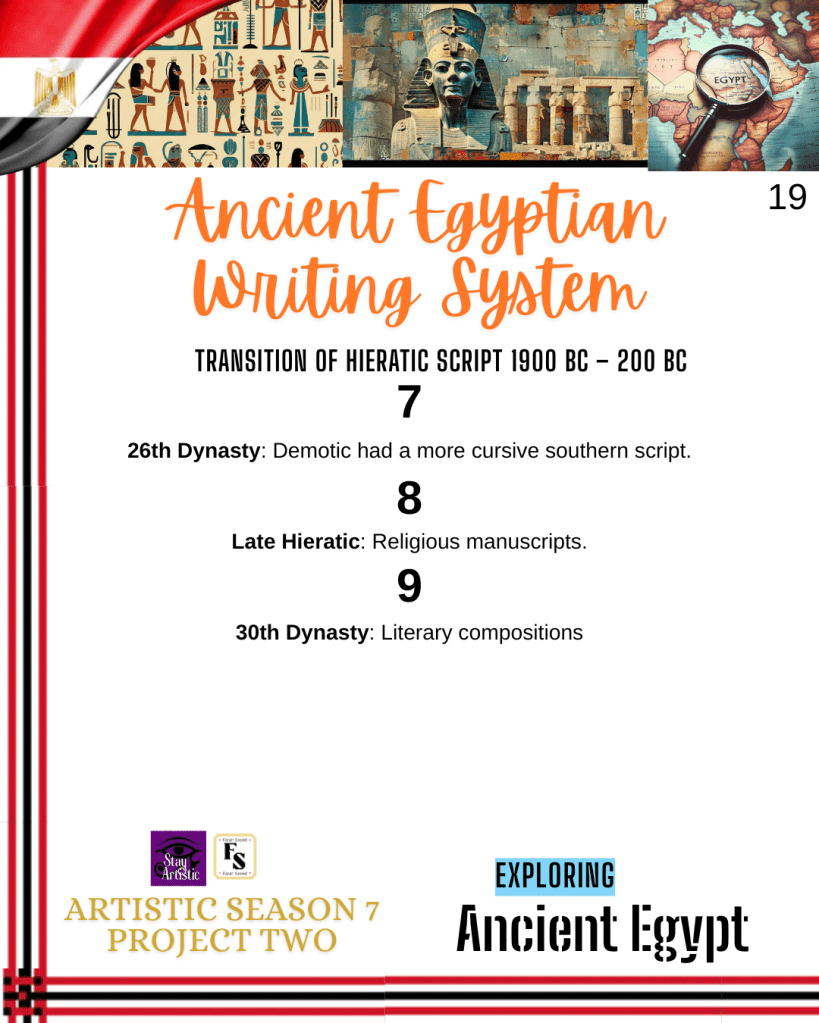
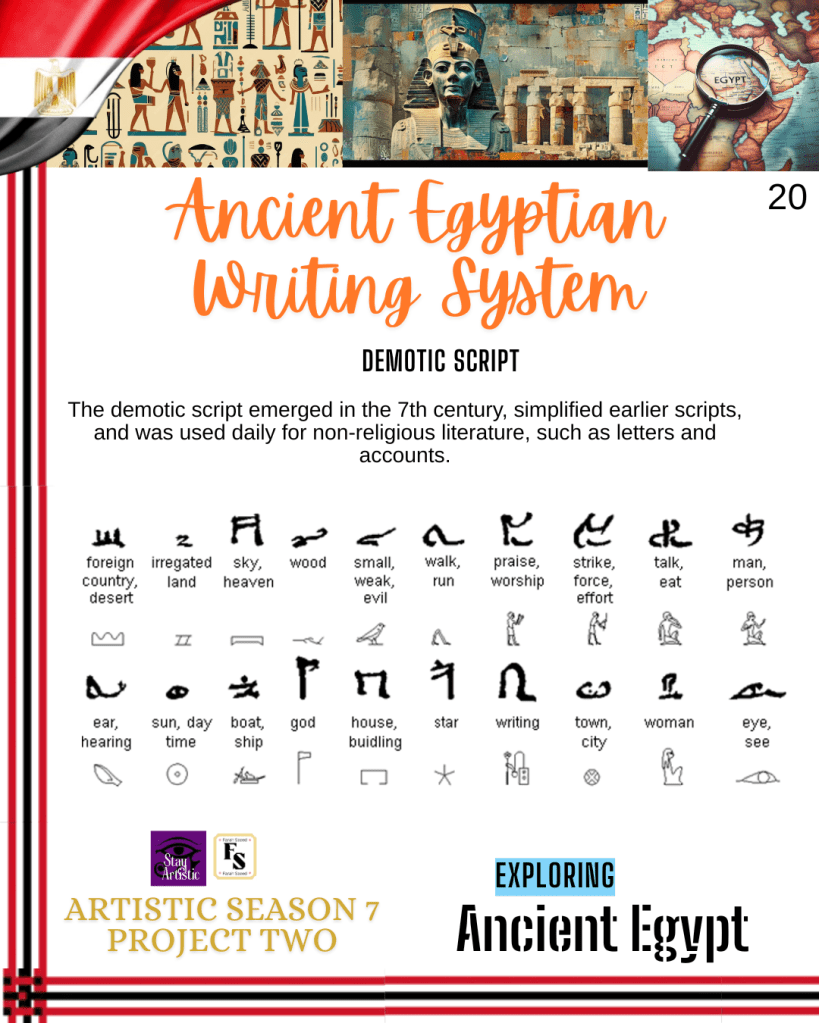
The third Ancient Egyptian standardized cursive script was the demotic, known as “sekh shat” or “document writing,”. It emerged around the 7th century BCE during the Late Period. The word “demotic” comes from the Greek demotikos, meaning “of the people” or “popular.” Demotic was a further simplification of the earlier scripts and was primarily used for daily purposes and non-religious literature, such as letters and accounts.
To clarify the timelines: The hieratic script developed around the same time as hieroglyphs, circa 3200 BCE, and was used throughout Egyptian history, mainly for religious texts and everyday administrative purposes. Hieratic continued to be widely applied until about 700 BCE. As Egypt entered the Late Period, the hieratic script gradually shifted more towards religious contexts, particularly by priests, while demotic became dominant for secular, administrative, and commercial writing from the 7th century BCE onwards. Therefore, for several centuries, hieratic and demotic scripts overlapped, but demotic was more commonly found in official and everyday records, while hieratic survived mainly in religious settings. Demotic script is distinguished by its highly abbreviated and stylized signs, often linked together, making it the most difficult to read among the three scripts.
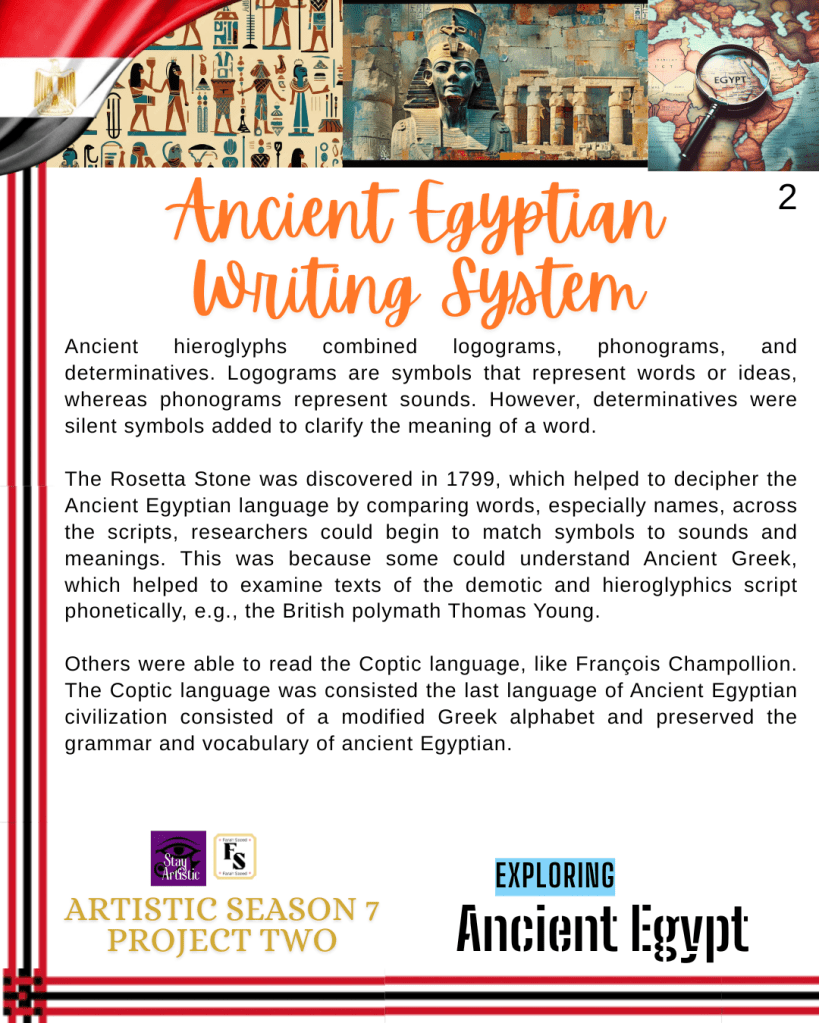
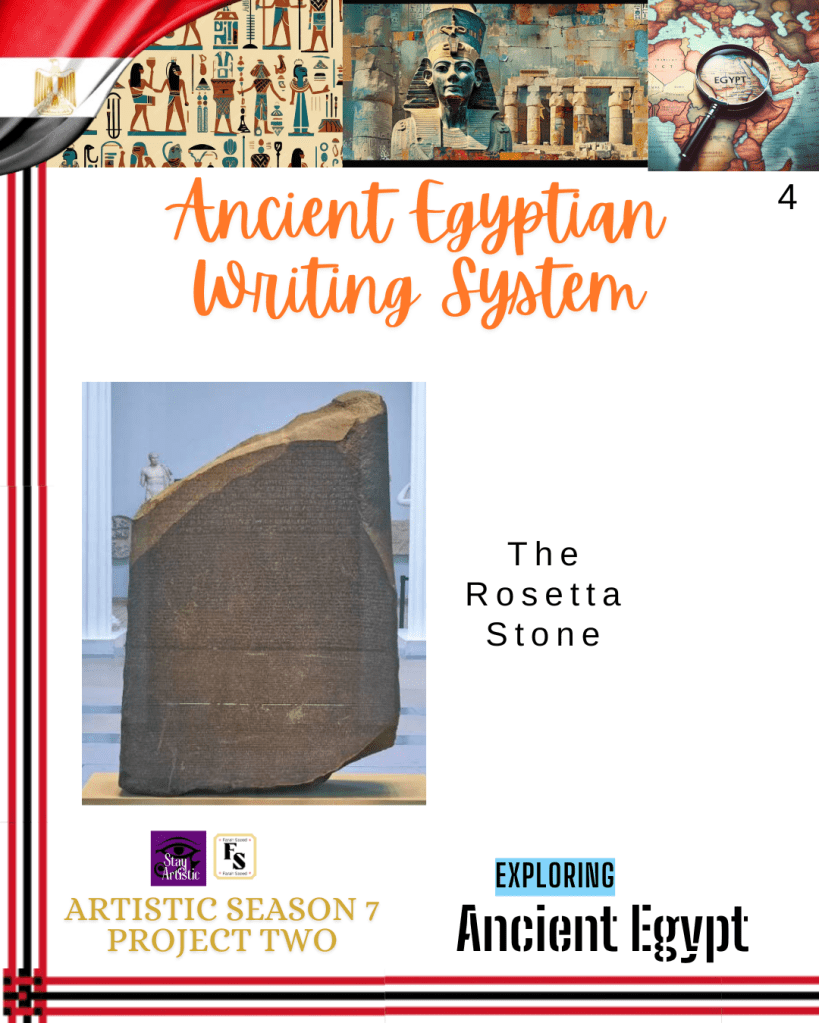
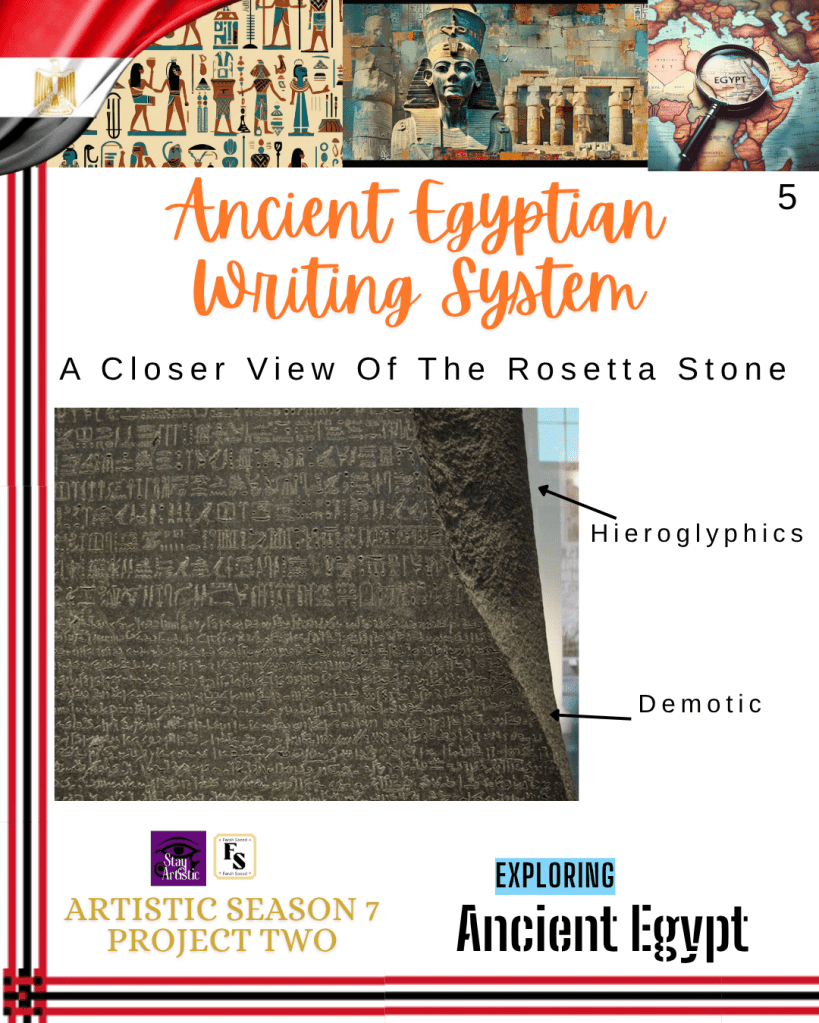
The decipherment of the Ancient Egyptian’s writing system was successful in the 19th century and has been explored ever since the discovery of the Rosetta Stone in 1799 during Napoleon Bonaparte’s Egyptian campaign, when French soldiers dug near the town of Rosetta, modern-day Rashid in the Nile Delta. It consisted of a large slab of stone made from granodiorite that was about four feet tall and over two feet wide. The Rosetta Stone was a royal decree in 196 BCE issued by priests honouring King Ptolemy V Epiphanes. It is a fragment of a larger stele (slab of stone or wood) carved with three scripts: Hieroglyphics, Demotic, and Greek. Demotic was very cursive, used for literary texts, whereas hieroglyphs were for monuments and sacred texts. Ancient Greek texts were administrative. Scholars in the fields of archaeology, history, and Egyptology were able to unlock these signs that had challenged researchers for centuries since the decline of the Ancient Egyptian civilization, because some could read Ancient Greek, which helped to reveal the Demotic and Hieroglyphics. For instance, the British polymath Thomas Young was able to identify some of the demotic and hieroglyphic scripts phonetically, especially “Ptolemy”. Others were able to read the Coptic language, like François Champollion. In 1822, he correlated Egyptian words and grammar with hieroglyphic texts. Thus, the phonetic language and symbols were similar to letters in the alphabet and helped to understand the Ancient Egyptians’ texts and sparked the birth of modern Egyptology.
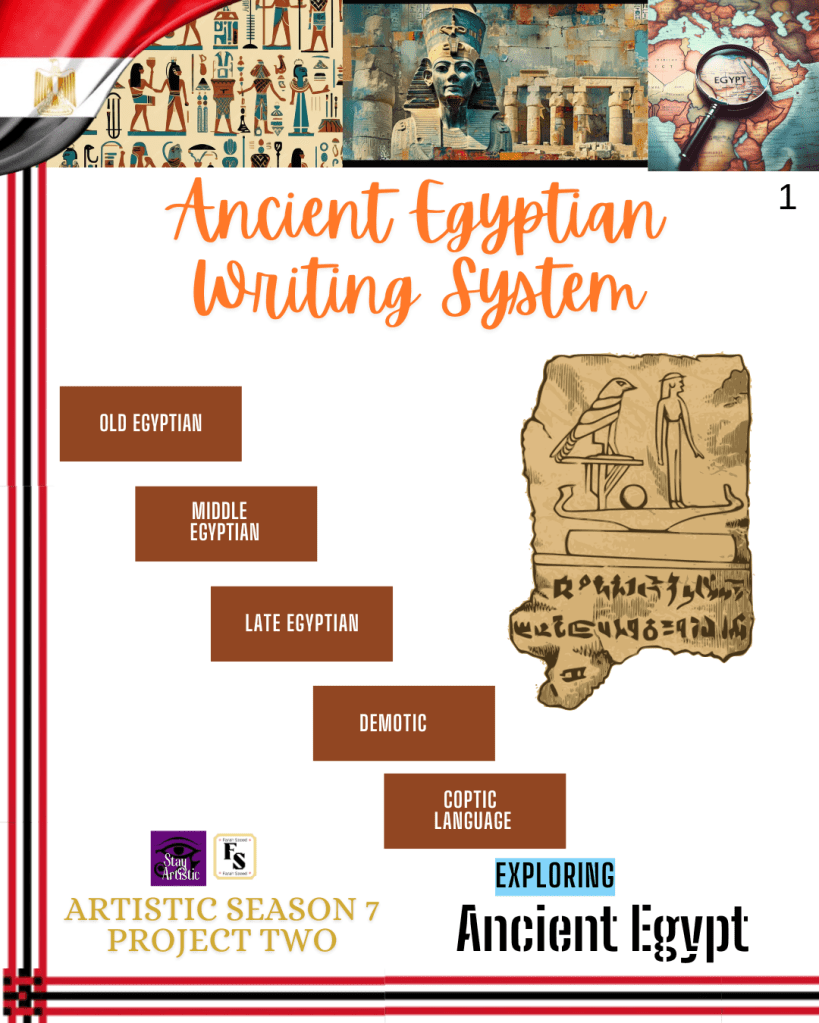
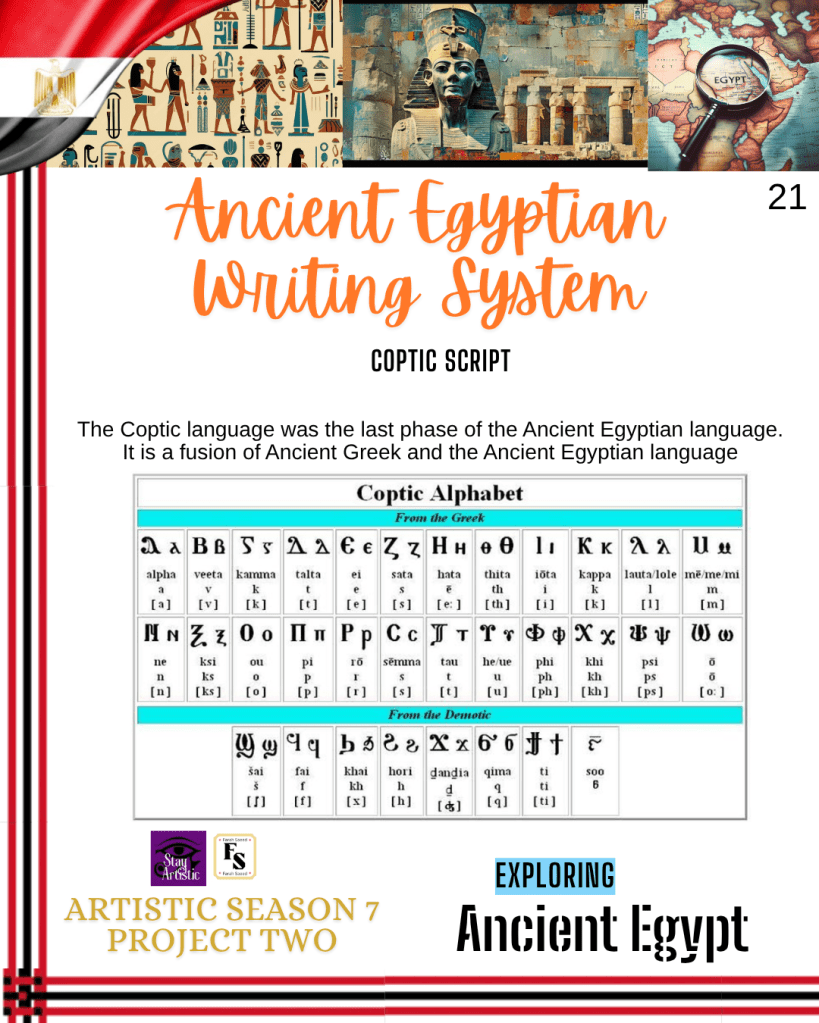
The Coptic language was historically used by Egyptian Christians during the 4th to 9th centuries AD. It consists of a modified Greek alphabet and preserves the grammar and vocabulary of ancient Egyptian. It was developed around the 3rd century AD in Roman Egypt as the last stage of the Ancient Egyptian language that evolved through several stages: Old Egyptian, Middle Egyptian, Late Egyptian, Demotic, and finally Coptic for over 4000 years.
Today, the most common spoken and written language is Modern Standard Arabic, which connects with the wider Arab world. It is derived from Classical Arabic, the sacred language of the Quran that carries centuries of tradition. European influence has also shaped Egyptian culture and tourism, namely French, Russian, Spanish, German, and Italian. This indicates the level of fluidity of the Egyptian linguistic landscape from ancient civilizations, colonial influences, contemporary globalization, and religion.
The discovery of the Rosetta Stone transformed archaeology, Egyptology, and linguistic science to understand the Ancient Egyptian civilization, counteracting time. Today it is displayed in the British Museum in London alongside other artifacts.
References
Archaeology News (2021) Ostracon Available at: https://archaeologymag.com/encyclopedia/ostracon/ (AccessedL 20th June 2026)
Egypt History (2026) Senusret III. Available at: https://historyegypt.org/people/senusret-III
Egypt Top Tours (2026) What Language Is Spoken in Egypt? A Complete Guide. Available at: https://www.egypttoptours.com/blog/what-language-is-spoken-in-egypt (Accessed: 20th June 2026)
Hagen F. (2025) Hieratic: An Ancient Egyptian Cursive Script. Cambridge: Cambridge University Press. Available at: https://www.cambridge.org/core/elements/abs/hieratic/FF268461EFDC77F0DAFBC1565C9F5D3E (AccessedL 20th June 2026)
Imhausen, A. (n.d.) Ancient Egyptian Science. Available at: https://www.hps.cam.ac.uk/students/research-guide/ancient-egyptian-science (Accessed: 12th April 2026)
Mark, J. (2017) Senusret III. Available at: https://www.worldhistory.org/Senusret_III/ (Accessed: 20th June 2026)
Millmore, M. (1997) Ancient Egyptian Inventions. Available at: https://discoveringegypt.com/ancient-egyptian-inventions/ (Accessed: 20th June 2026)
Omniglot (2023) Ancient Egyptian scripts Available at: https://www.omniglot.com/writing/egyptian_hieratic.htm (Accessed: 20th June 2026)
The Archaelogist (2024) List of Ancient Egyptians inventions. Available at: https://www.thearchaeologist.org/blog/ancient-egyptian-inventions (Accessed: 20th June 2026)
The Archaelogist (2025) The Rosetta Stone and the Deciphering of Egyptian Hieroglyphs, Available at: https://www.thearchaeologist.org/blog/the-rosetta-stone-and-the-deciphering-of-egyptian-hieroglyphs (Accessed: 20th June 2026)
The Archaelogist (2026) Ancient Egyptian Writing: Hieroglyphs, Hieratic, and Demotic. Available at: https://www.thearchaeologist.org/blog/ancient-egyptian-writing-hieroglyphs-hieratic-and-demotic (Accessed: 20th June 2026)
University College London (2002) The Hieratic Script. Available at: https://www.ucl.ac.uk/museums-static/digitalegypt/writing/hieratic.html (Accessed: 20th June 2026)


Leave a comment