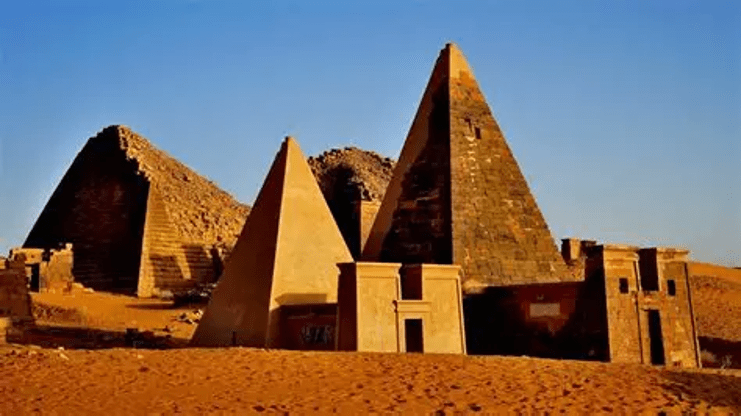
Sudan has an architectural legacy that can be traced back to the Ancient Kushite civilization, which spanned from 2500 BCE to 350 AD. The art and architectural elements in their monuments, particularly their pyramids and temples, show a dual influence of Ancient Egypt and Ancient Sudan. This is especially notable in the 25th dynasty, because many kings from the Kingdom of Kush served as pharaohs of Egypt from 744 to 656 BC. The earliest pyramids were built in El-Kurru, where the last 25th Dynasty King, Tantamani, was laid to rest. However, unlike the Ancient Egyptians, the Ancient Kushites did not build tombs inside the pyramids; they were buried in underground burial chambers beneath the pyramids. Other influences included Graeco-Roman and indigenous African traditions. The aim of this article is to provide insight into some of the historical landmarks that testify to the Ancient Kushite Kingdom, which was inspired by the Ancient Egyptians but added its own cultural and architectural traditions.
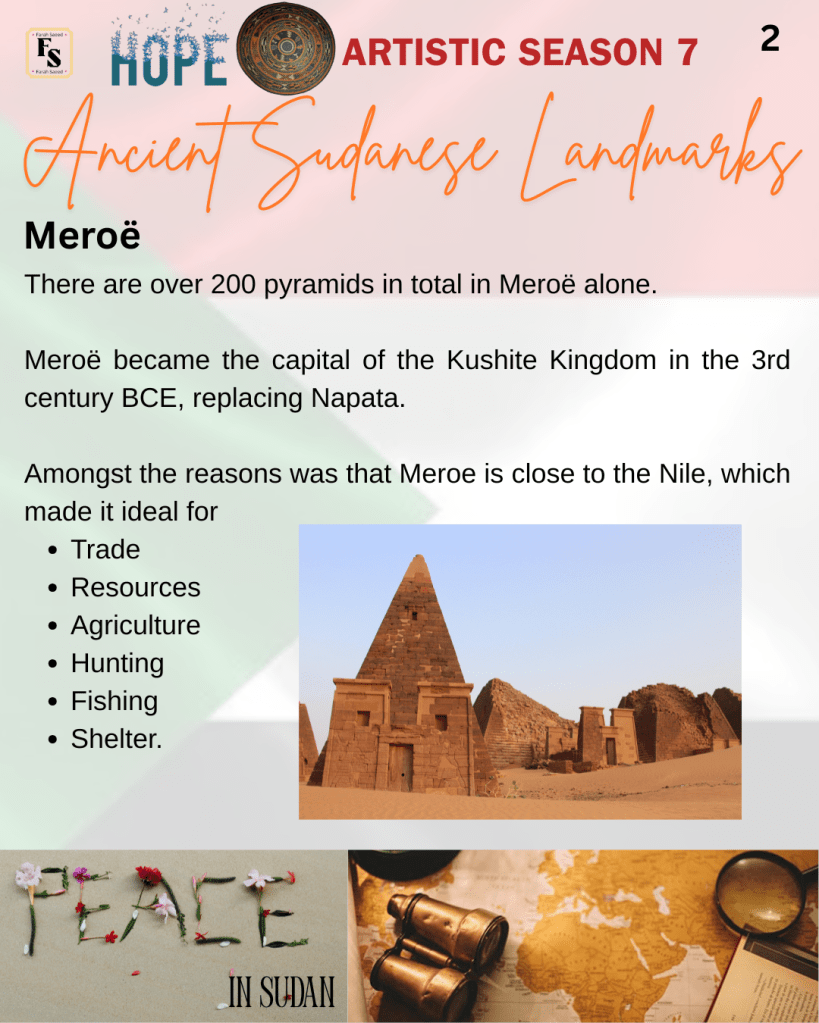
The Pyramids of Meroë
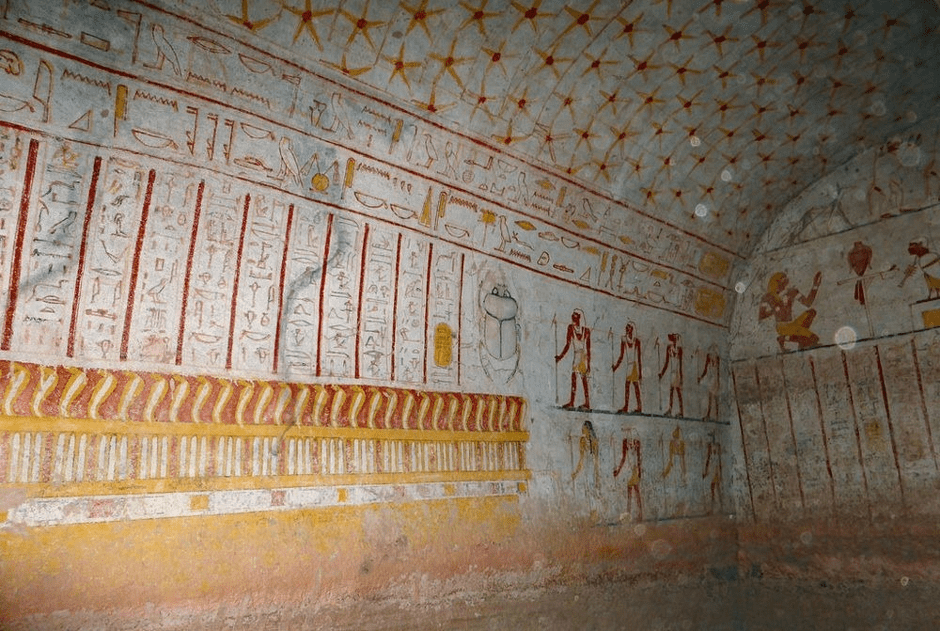
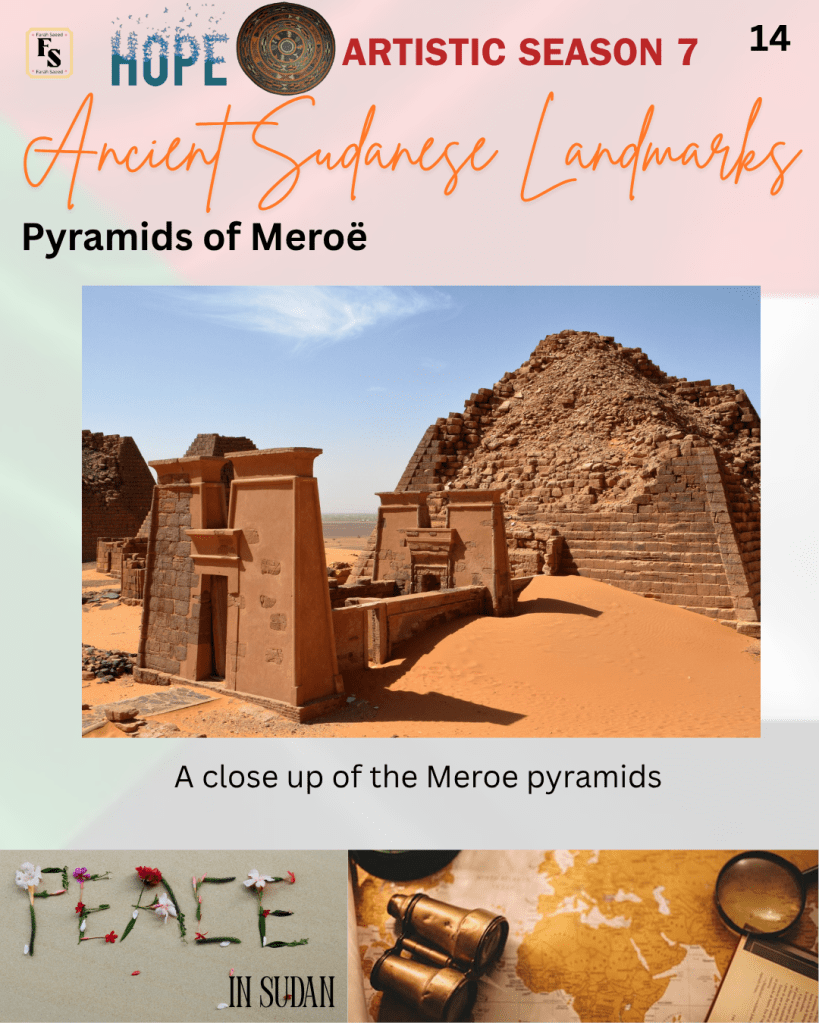
There are approximately 255 pyramids in Sudan, and they were constructed to honour the Ancient Kushite Kings and Queens. However, in Meroë alone, there are over 200 pyramids. Meroë became the capital of the Kushite Kingdom in the 3rd century BCE, replacing Napata. It was close to the Nile, which made it ideal for trade, resources, agriculture, hunting, fishing, and a viable location to reside. Meroe holds three components: the pyramidial site of Meroë, and further than the river Nile are the temples in Naga and Musawwarat es Sufra.
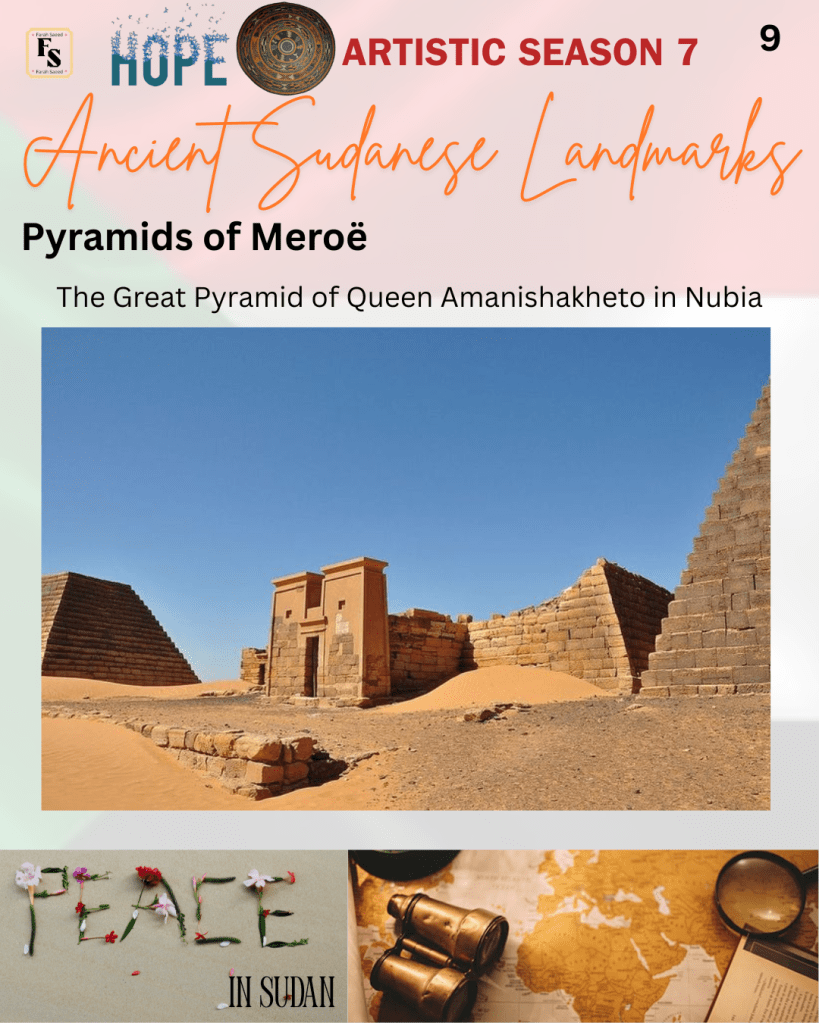
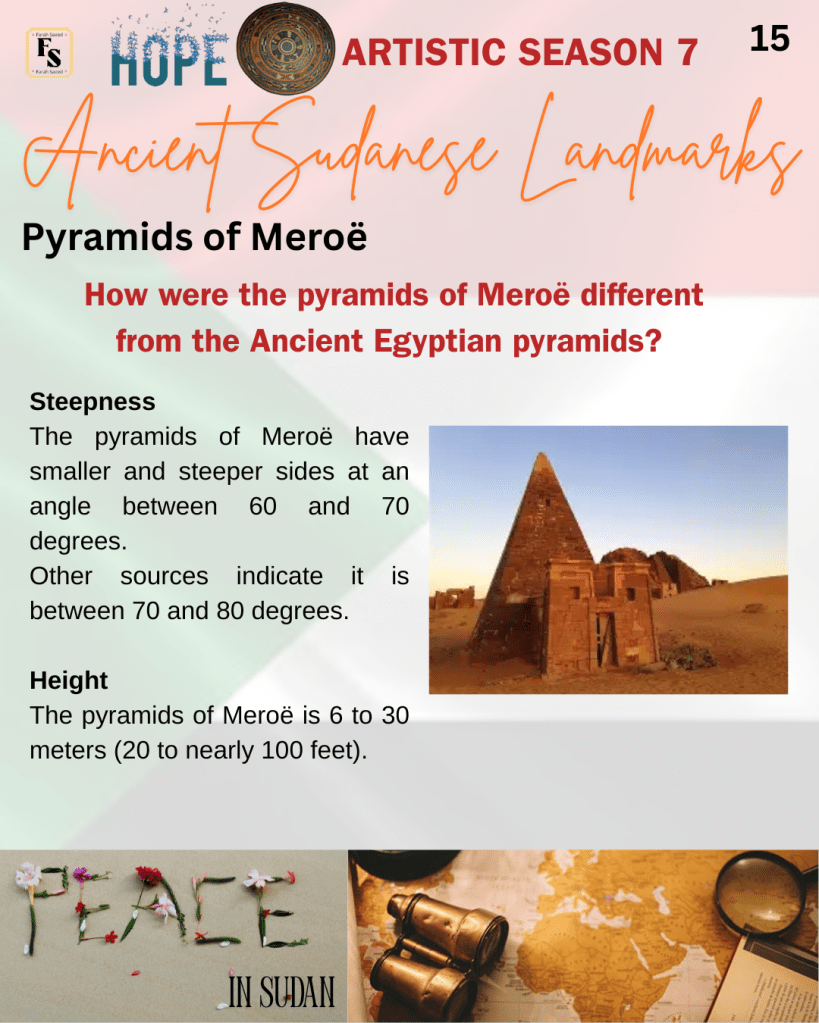
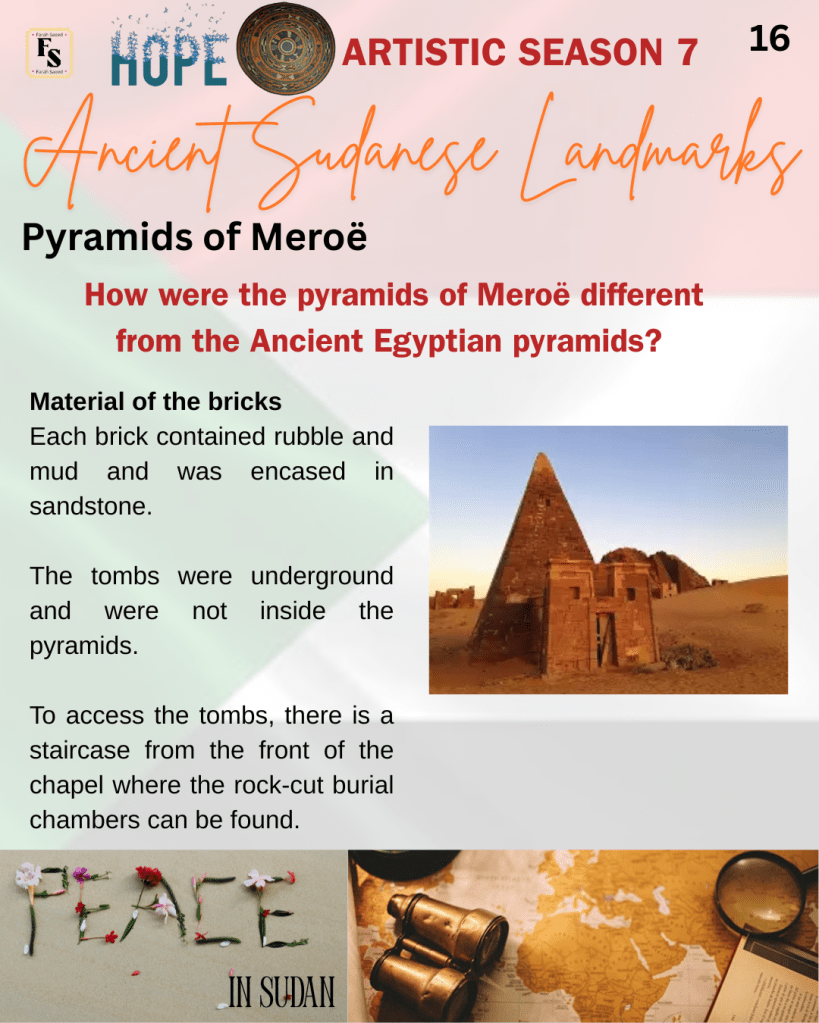
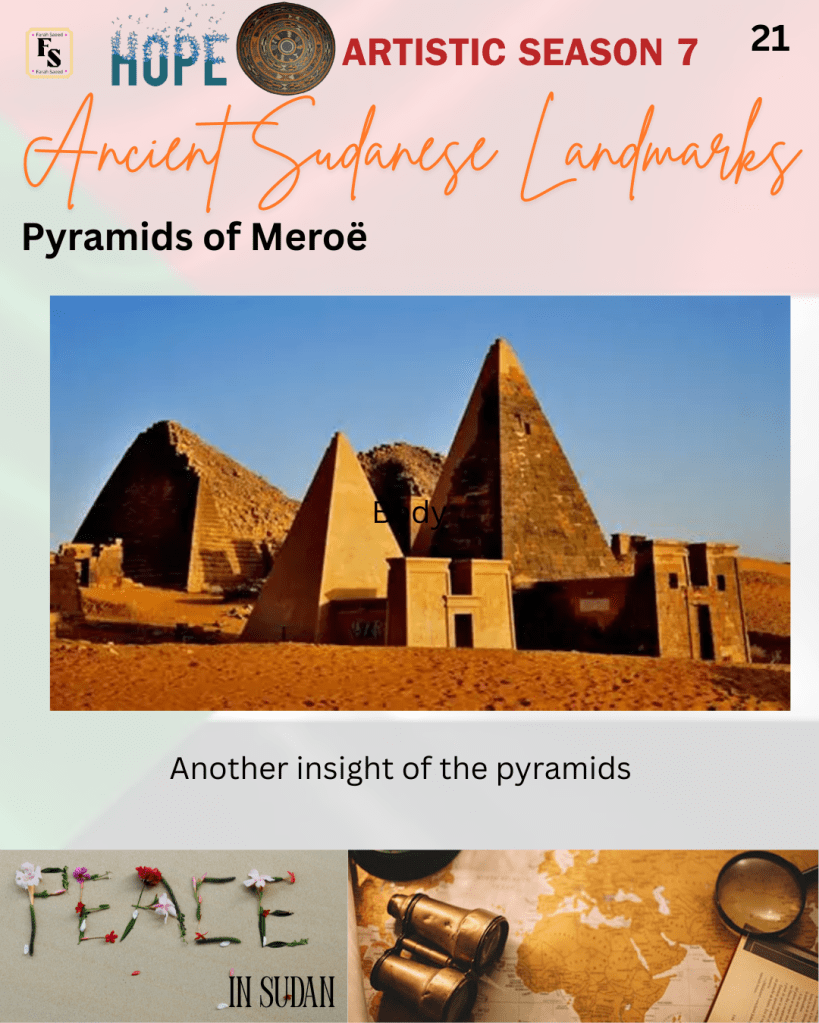
Smaller and steeper sides at an angle between 60 and 70 degrees, the pyramids of Meroë, known as the “City of a Thousand Pyramids,” which artistically make it distinctive to the Ancient Egyptians. They are situated in the Northeastern Sudanese desert. Other sources indicated the angle is between 70 and 80 degrees. The height of the pyramids of Meroë is 6 to 30 meters (20 to nearly 100 feet) in height. Each brick contained rubble and mud and was encased in sandstone. At Meroë, construction of pyramids grew well into the 4th century CE, making these some of the last pyramids built in the ancient world.
There are three royal necropolises at Meroe: Western, Southern, and Northern cemeteries. The Western cemetery has more than 500 graves with funerary architecture, for instance, pit graves, mounds, mastabas (bench), mortuary chapels, and pyramids. It had burials of common people, royal dependents, and members of the elite. It was in use from the 8th century BC.
The Southern cemetery contains more than 200 graves, and it was also in use over the 8th century BCE, and comprised Kushite royalty. The Northern cemetery was built when both Southern and Western cemeteries were full, with the same concept. It was built for royals, burial chambers under pyramids, and mortuary chapels.
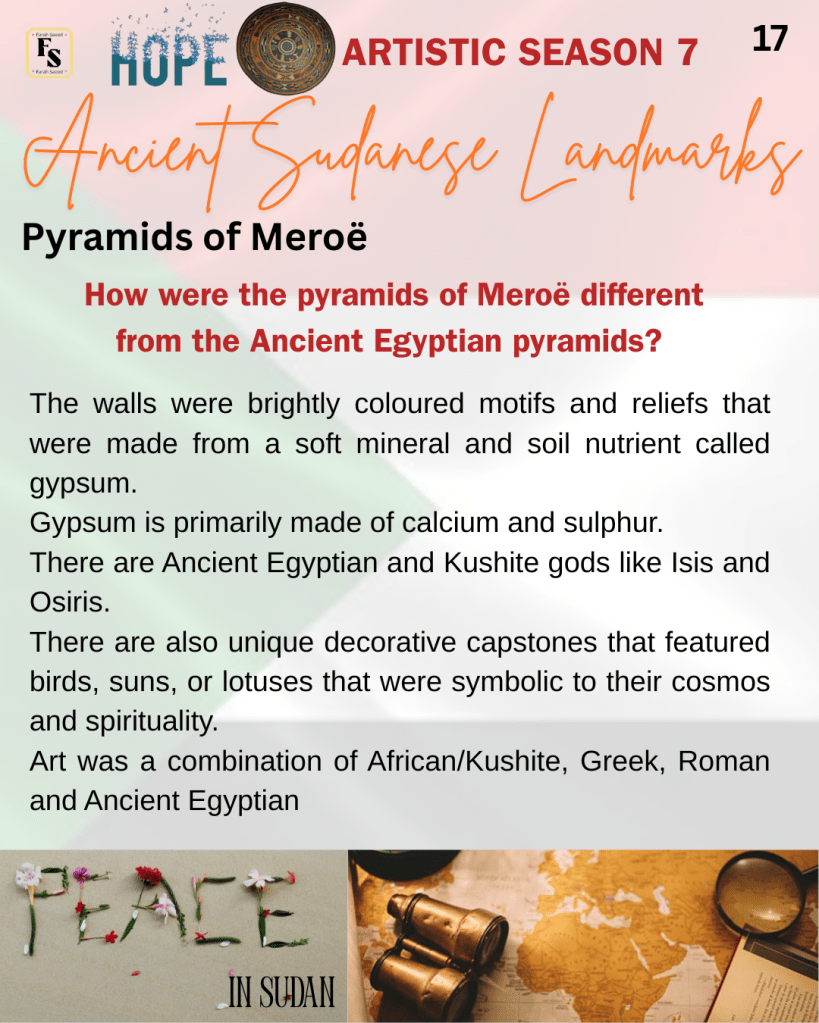
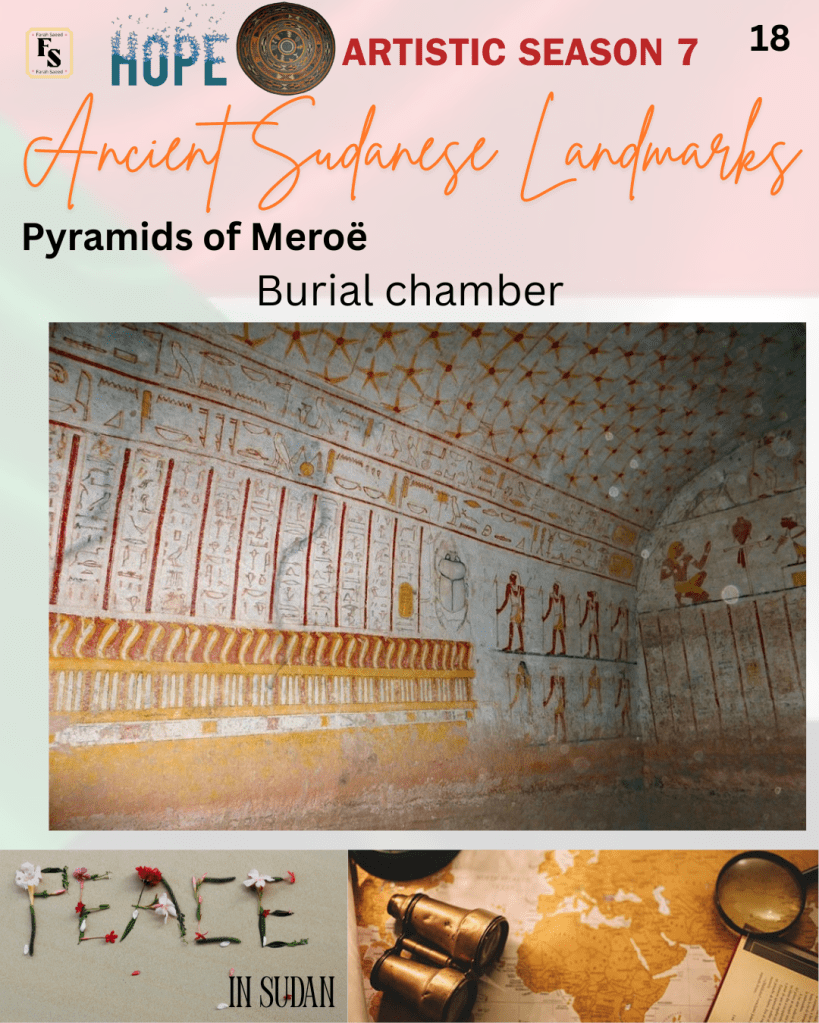
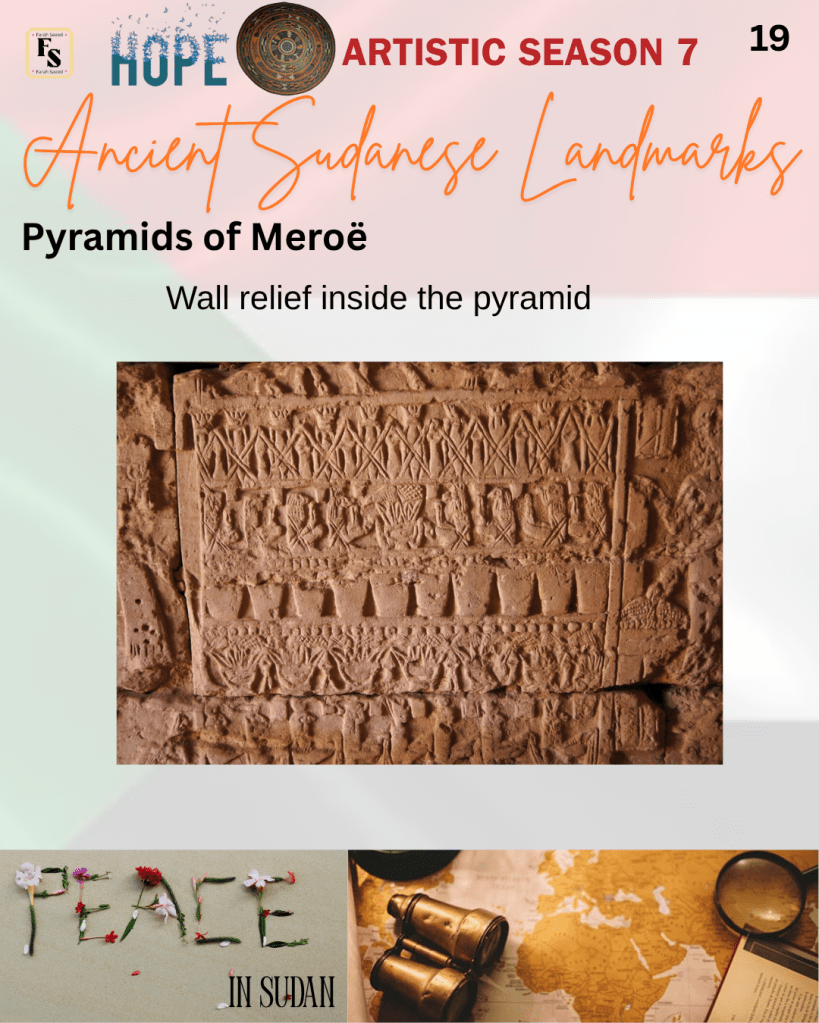
The Ancient Kushite pyramids were distinct from Ancient Egyptian not just externally with their steeper hills and presence of sandstone, but also internally, as they do not have internal chambers. The underground tombs were where the elite were buried, and there is a staircase from the front of the chapel where the rock-cut burial chambers can be found. The walls were brightly coloured motifs and reliefs that were made from a soft mineral and soil nutrient called gypsum. Gypsum is primarily made of calcium and sulphur, with images of Ancient Egyptian and Kushite gods like Isis and Osiris. There are also unique decorative capstones that featured birds, suns, or lotuses that were symbolic to their cosmos and spirituality.
The integrated chapel attached to the eastern side of the pyramid was carved with gods, royal figures, and other motifs. Amongst them was the Ba statue that had a human-headed bird that represented the human soul. They were accompanied by gateway structures and carved stelae. They were visited for worship by priests and family members to sustain spirituals of the dead. Thus, the pyramids alongside chapels unified the living, the dead, and the conceptual eternal life.
However, the purpose of the pyramids were similar to the Ancient Egyptians was to connect the living with the divine where each pyramid had chapels, offering tables where rituals were performed to support the journey of the soul “ba” in the afterlife. In the burial chambers, there were many treasures, including jewellery, religious texts, furniture, and symbols that represented their status and faith.
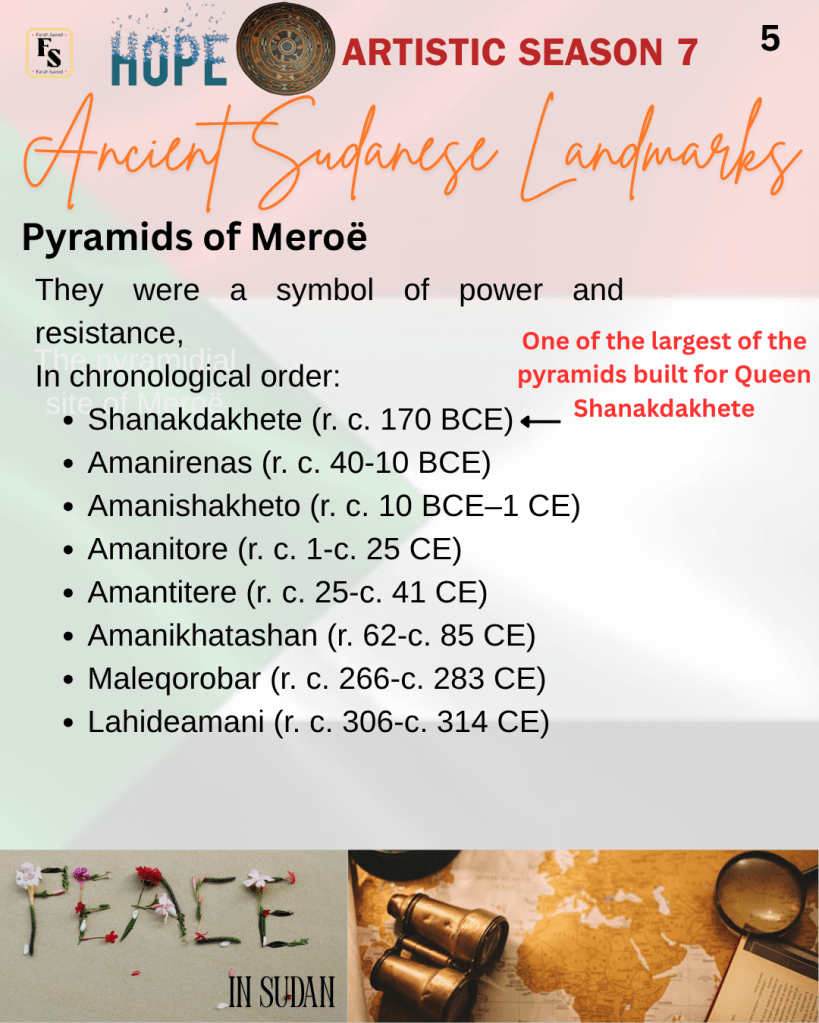
Amongst the royals that were buried at the pyramids of Meroë were the warrior queens also known as Candaces or Kandake, “Queen Regent” or “Queen Mother” who held spiritual, social, cultural, military, and political responsibilities. They were symbolic of power and resistance that contributed to the Ancient Kushites’ legacy. In chronological order: Shanakdakhete (r. c. 170 BCE), Amanirenas (r. c. 40-10 BCE), Amanishakheto (r. c. 10 BCE–1 CE), Amanitore (r. c. 1-c. 25 CE), Amantitere (r. c. 25-c. 41 CE), Amanikhatashan (r. 62-c. 85 CE), Maleqorobar (r. c. 266-c. 283 CE) and Lahideamani (r. c. 306-c. 314 CE),
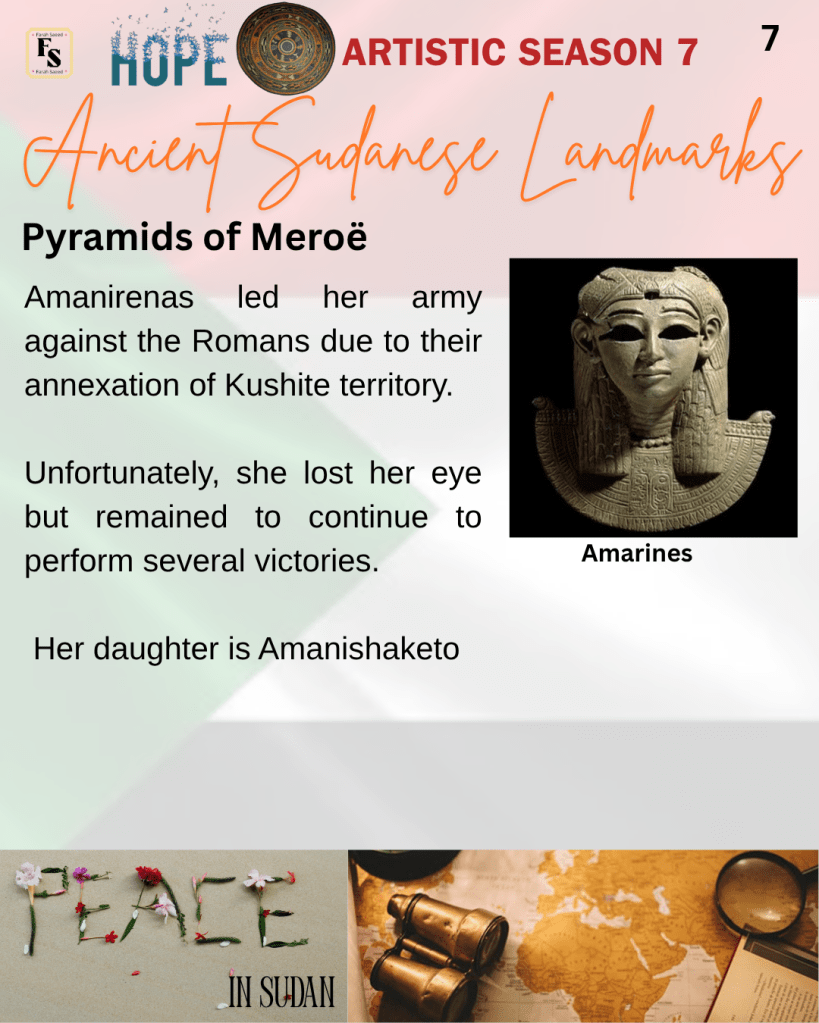
Under the rule of the independent Queen Shanakdakhe Kandake, she oversaw many architectural works, including temples, palaces, and irrigation systems. She expanded the Kush Kingdom and flourished culturally and economically. Queen Shanakdakhe Kandake underwent several battles known as the First War of Kandakes. According to Roman historian Strabo, Amanirenas led her army against the Romans due to their annexation of Kushite territory. Unfortunately, she lost her eye but remained to continue to perform several victories. Her daughter. Amanishaketo is one whose face has been carved on a pyramid at Meroe to highlight how she preserved the Ancient Kushite Kingdom and even defied Emperor Augustus because they breached the Peace Treaty created with Queen Amanirenas. She was also a pyramid builder and her tomb was the largest every bult. Her tomb contained significant evidence of wealth and craftsmanship, e.g., gold amulets, jewellery, and crowns. Queen Amanishakheto Kandake is also known for the Temple and Pyramid Complex she built at Wad Ban Naqa. Her palace also resides there.
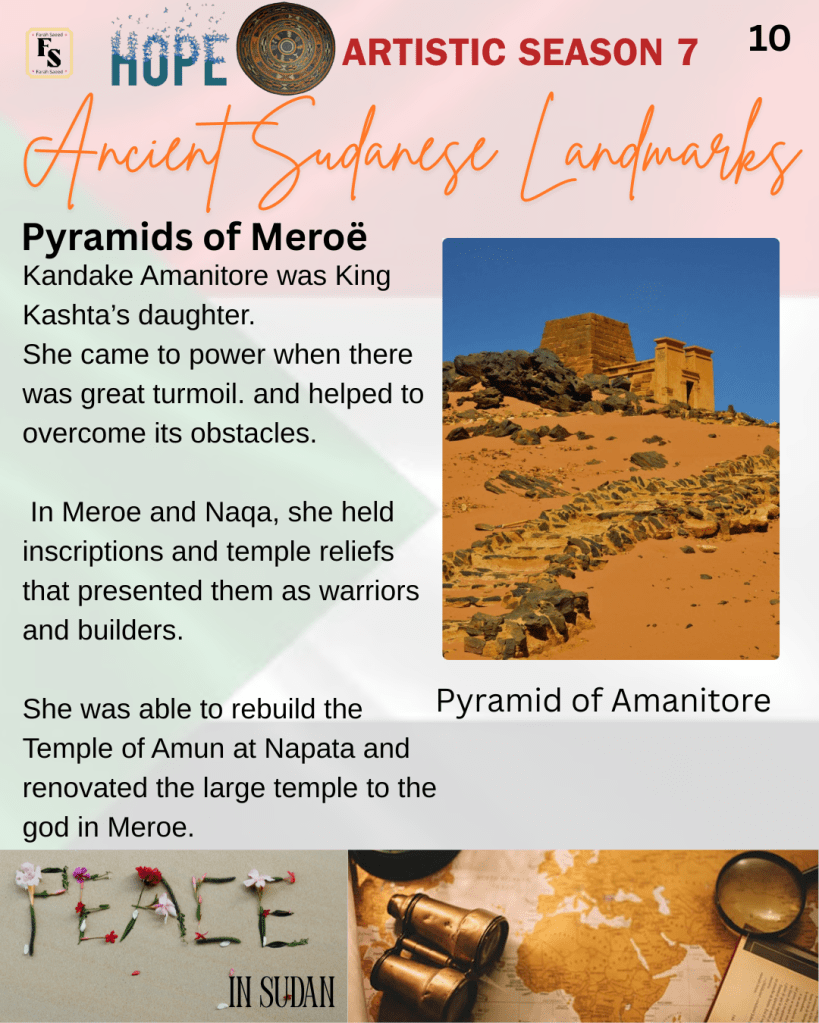
Later, Kandake Amanitore, whose father was King Kashta, came to power when there was great turmoil and an attack by Roman forces. In Meroe and Naqa, she held inscriptions and temple reliefs that presented them as warriors and builders. The kingdom was further flourishing, and many admired her for her wisdom, strength, and achievements. She was able to rebuild the Temple of Amun at Napata and renovated the large temple to the god in Meroe.
Other Kandakes are found in Biblical scriptures and were said to be Jewish and have held military campaigns against the Romans: Amantitere and Amanikhatashan. She was linked to the Egyptian goddess Nut, the sky goddess who was considered the mother to other Egyptian gods: Osiris, Isis, Set, Nephthys, and Horus the Elder. The remaining two Kandakes, Maleqorobar and Lahideamani, little is known about them.
Furthermore, none new the existence of the pyramids other than the local people until the 19th century when the Europeans explored, thereafter, they received wider attention. The pyramids are the silent witnesses of the Kushite civilization that once dominated the Nile, where their pyramids still exist as wind and sand wear them away.
With much sadness, some of the pyramids of Meroe were shockingly looted. In 1821, the Italian Giuseppe Ferlini, who was said to have destroyed more than 40 pyramids that stood for over two thousand years, to seek gold. Amongst them were jewellery of Queen Amanishakheto, such as armlets and necklaces, but they are present in Egyptian Museums in Munich and Berlin. On one hand, it caused irreparable damage to the history of Sudan, but also fuelled archaeologists worldwide to go and study the pyramids of Meroe and other pyramids in Sudan.
Today, the pyramids of Sudan are part of the UNESCO World Heritage Sites where archaeologists continue to explore, excavate, and learn about the hidden history of the Nubian culture, the role of the Ancient Kushite Kingdom, and the artefacts and other contents present in the tombs. Ongoing conservation efforts are made to protect the monuments from erosion, looting, and modern development. Together, these efforts help preserve the enduring legacy of the Ancient Kushite civilization.
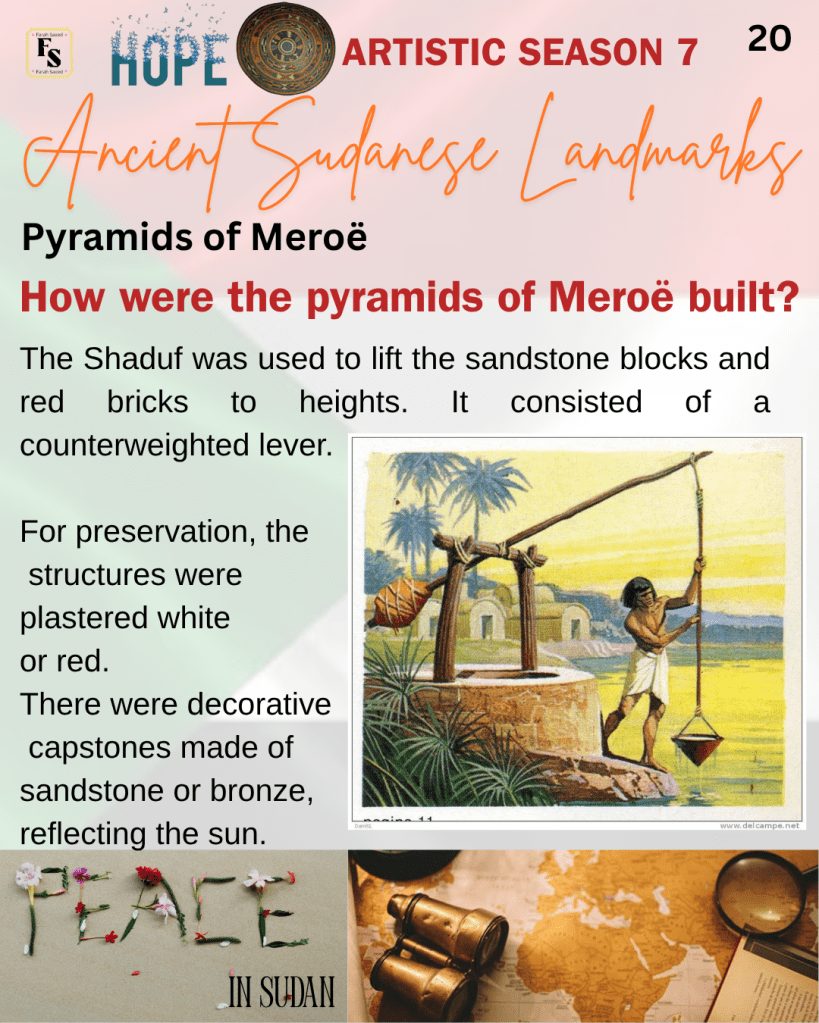
How were the pyramids of Meroe built?
The Shaduf was used to lift the sandstone blocks and red bricks to heights. It consisted of a counterweighted lever.
For preservation, the structures were plastered white or red. There were decorative capstones made of sandstone or bronze, reflecting the sun.
Temple of Sedeinga
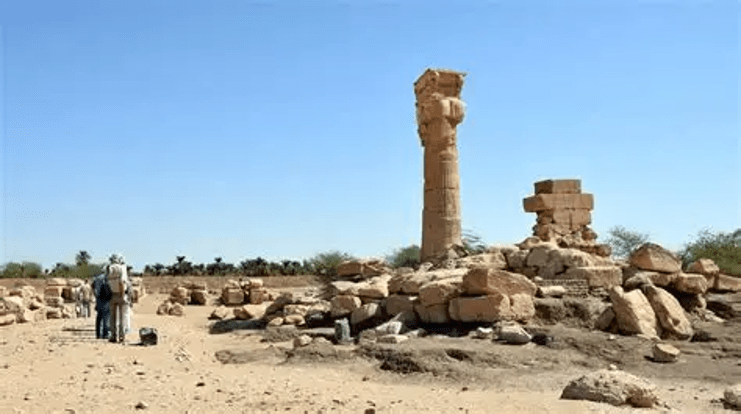
Sedeinga is situated on the west bank of the Nile between the 2nd and 3rd cataracts, about 45km south of Amara West. In the historical context, a cataract is a large rapids of water over rocks or waterfalls along the Nile River. They are naturally formed and typically found from Ethiopia to Egypt.
The temples at Soleb and Sedeinga were constructed by the New Kingdom Pharaoh Amenhotep III. It was dedicated to his chief wife, Tiye, who is often presented in images as a human-headed lioness. Her headdress was flat-topped and was similar to that of Nefertiti, the Egyptian queen. Amenhotep III was often presented on walls as receiving life from the goddess Isis and incense from Amun.
It was inspired by and given respect to the Eye of Ra. This inspired other Pharaohs, like Ramses II, at the temple of Abu Simbel in Luxor, Egypt.
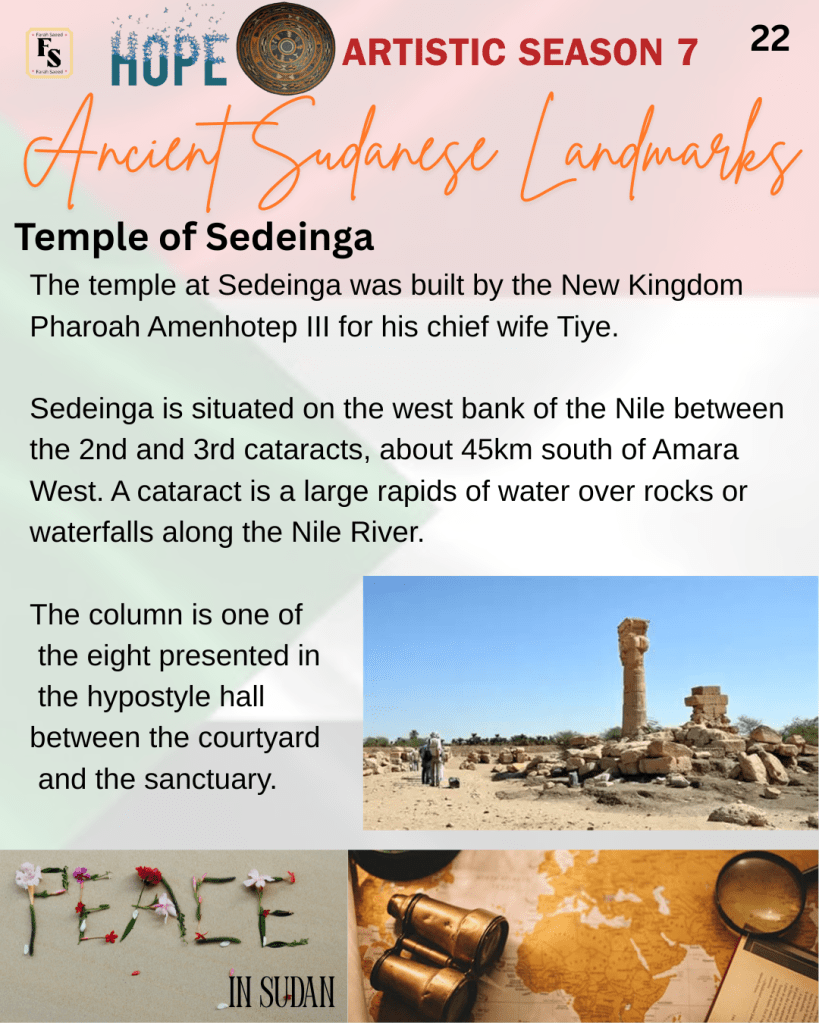
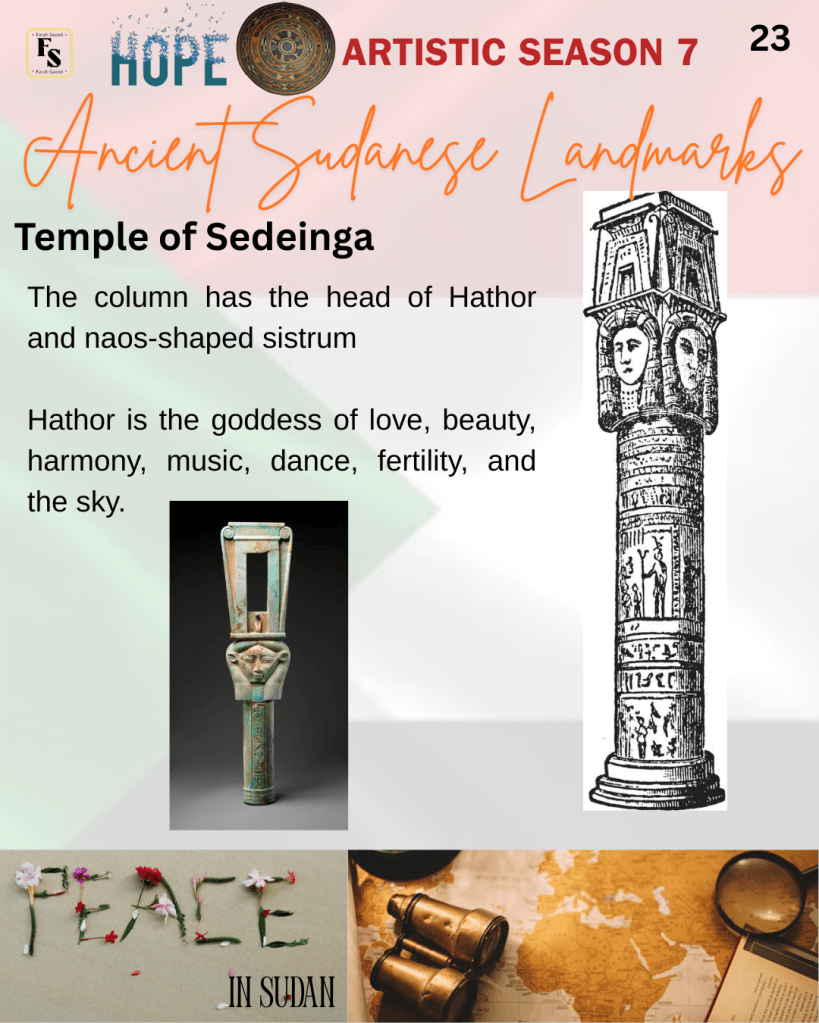
The temple of Sedeinga remains a fluted-like column with the head of Hathor and a naos-shaped sistrum. Hathor is the goddess of love, beauty, harmony, music, dance, fertility, and the sky. However, this began to change over history, where she was linked to foreign lands, drunkenness, fertility, and the afterlife. Her name is House of Horus “, Het-Heru, linking her to the falcon god Horus. Her mother is Isis, and her father was Osiris.
The column is one of the eight presented in the hypostyle hall between the courtyard and the sanctuary.
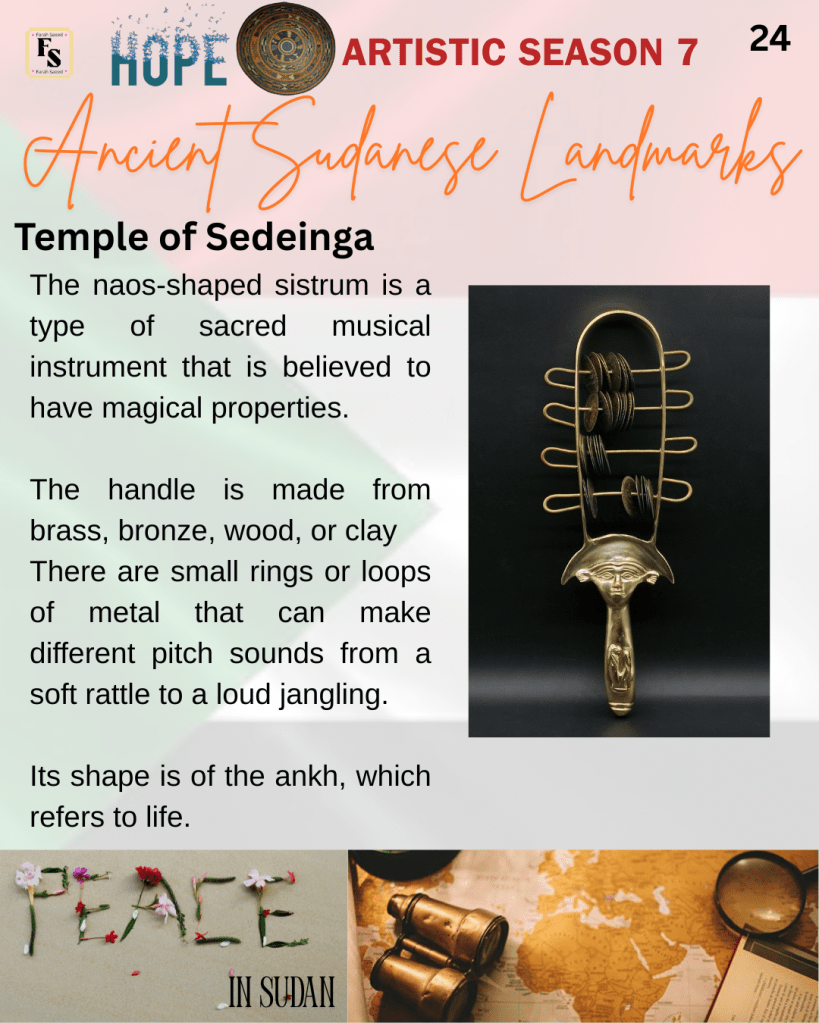
The naos-shaped sistrum is a type of sacred musical instrument that is believed to have magical properties. The naos-shaped sistrum is the oldest form of sistrum and was carried by high-ranking individuals. Naos-shaped or sesheshet traces back to the Old Kingdom and refers to the inner chamber of the temple that has the cult figure. The handle is made from brass, bronze, wood, or clay; there are small rings or loops of metal that can make different pitch sounds from a soft rattle to a loud jangling. Its shape is of the ankh, which refers to life. It produces a breeze-hitting sound and blowing through papyrus reeds. The sistrum was important in both Kushite and Egyptian rituals as it was believed to invoke the presence and favor of the gods, particularly Hathor, and was used to ensure fertility, ward off evil, and maintain harmony during religious ceremonies. It was used to stop the flooding of the Nile and frighten away Seth, the god of the desert, storms, disorder, and violence.
Hathor has other images presented on a large lintel with panels and cobras along the doorway. A lintel is a form of horizontal support across the top of a door or window.
The Roman Kiosk/Hathor Temple
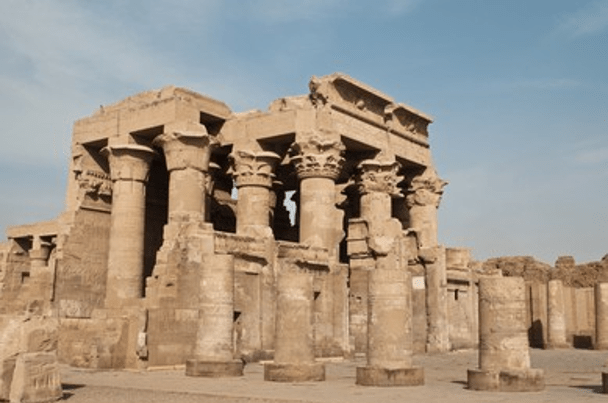
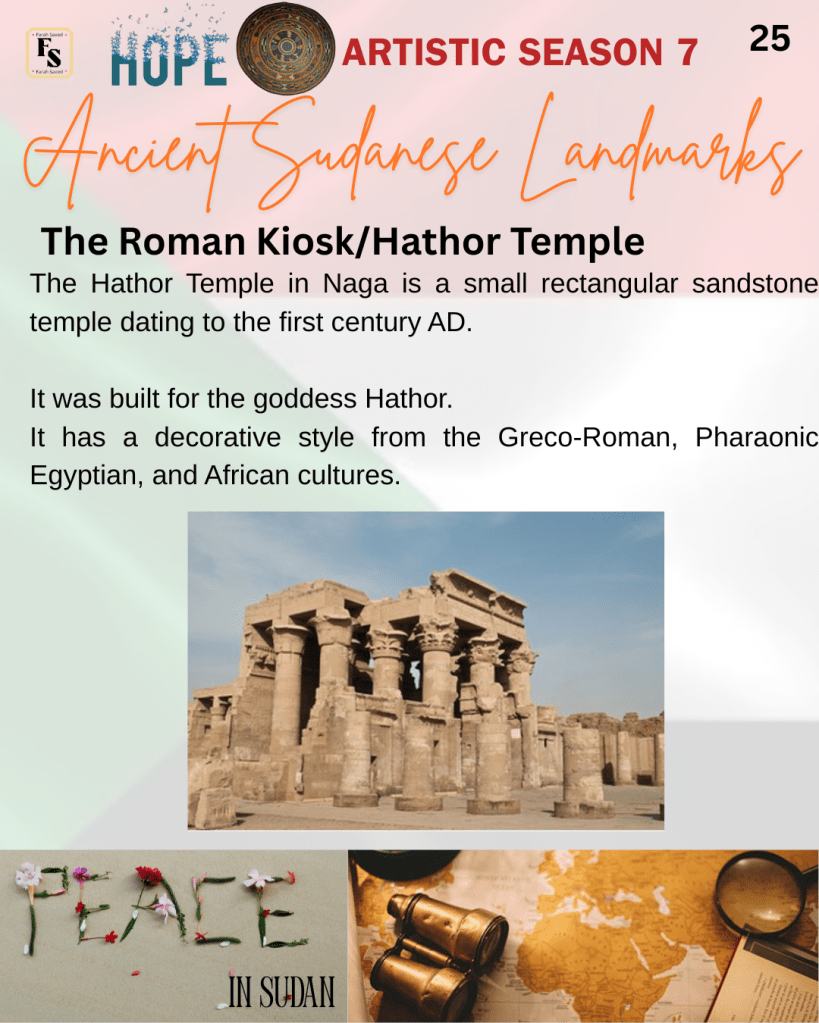
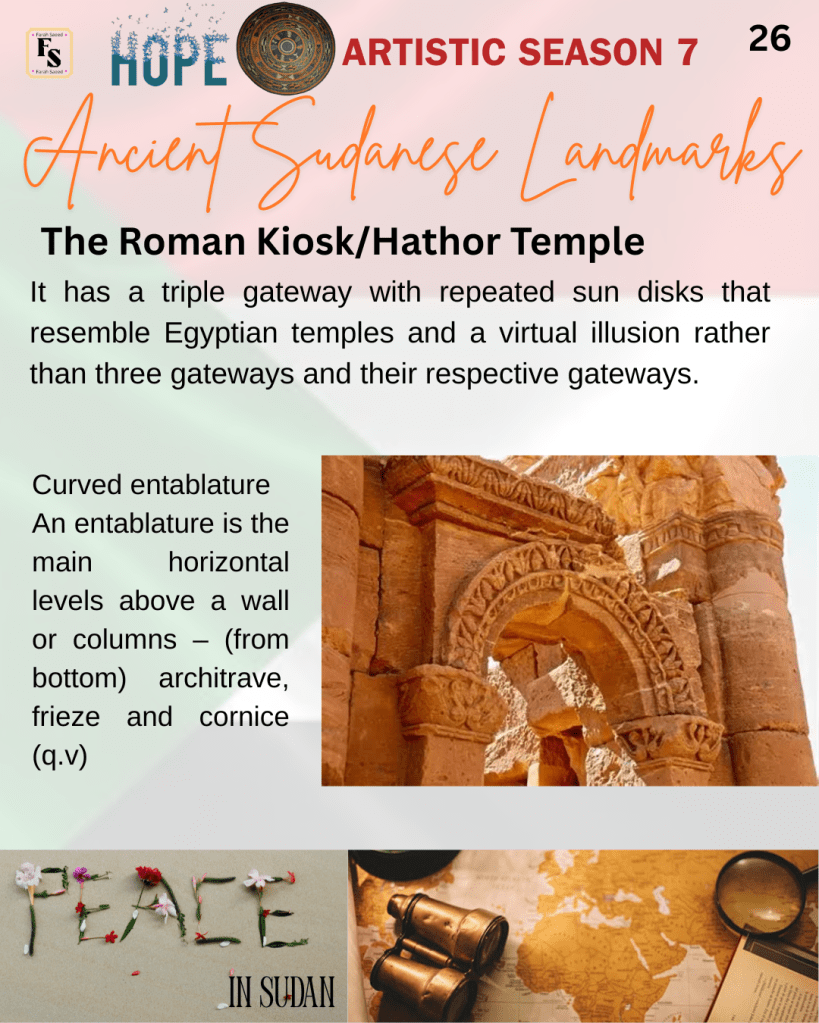
The Hathor Temple in Naga is a small rectangular sandstone temple dating to the first century AD. The style, location of the kiosk, and decorations are a combination of elements and motifs from the Greco-Roman, Pharaonic Egyptian, and African cultures.
Archaeologists hypothesise that it was built and dedicated to the goddess of love, harmony, and fertility, Hathor. It has a triple gateway with repeated sun disks that resemble Egyptian temples and a virtual illusion rather than three gateways and their respective gateways.
Temple of Amun, Naqa
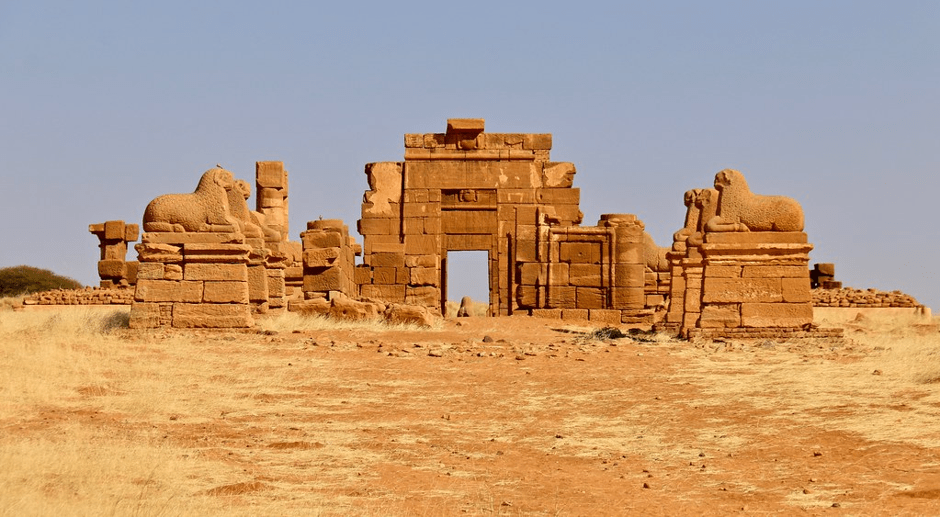
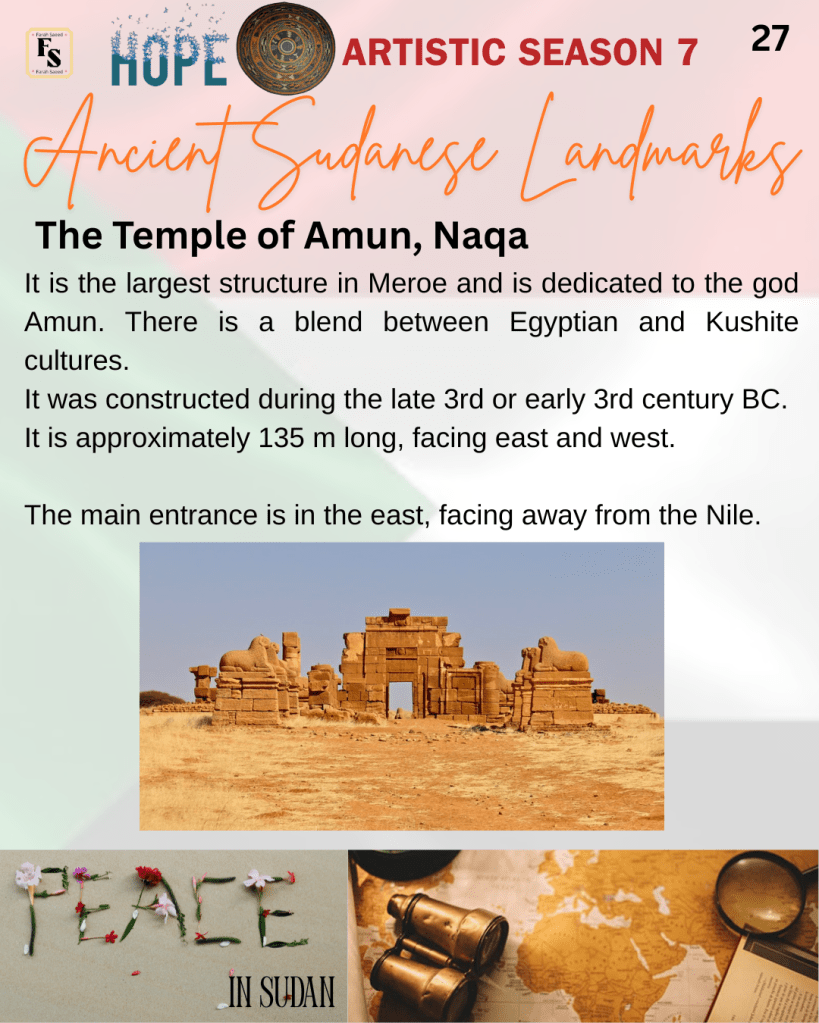
It is the largest structure in Meroe and is dedicated to the god Amun. It was constructed during the late 3rd or early 3rd century BC. It is approximately 135 m long, facing east and west. The main entrance is in the east, facing away from the Nile.
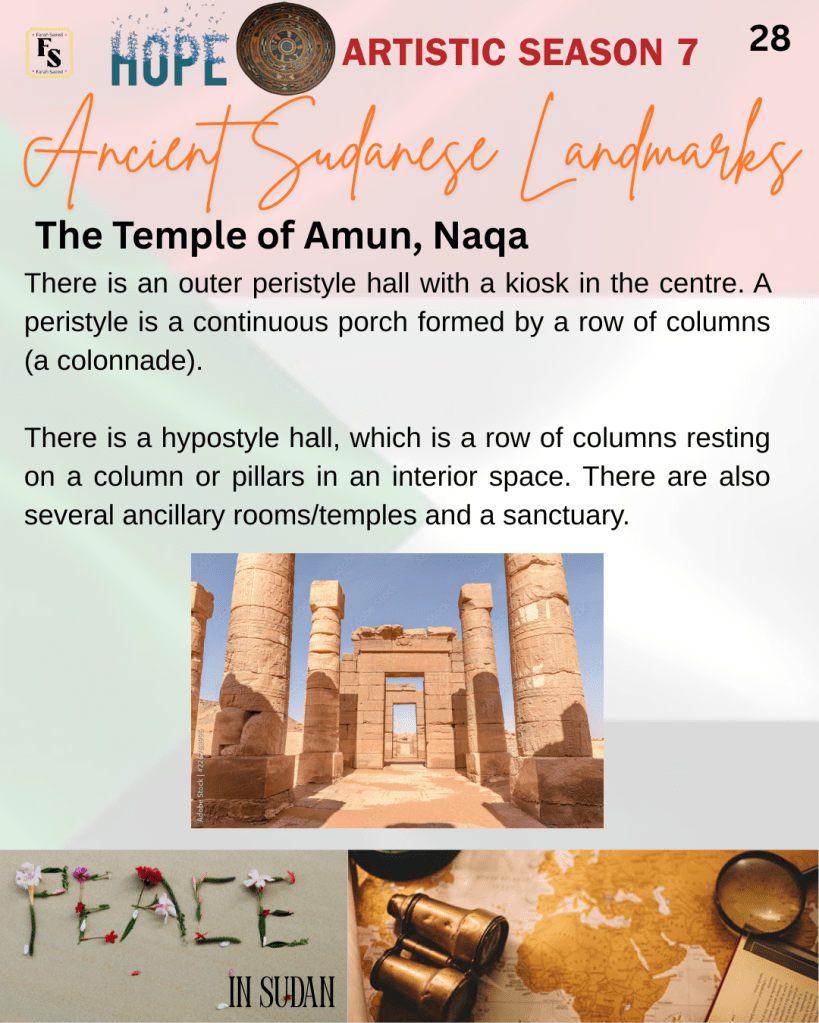
There is an outer peristyle hall with a kiosk in the centre. A peristyle is a continuous porch formed by a row of columns (a colonnade). There is also a hypostyle hall, which is a row of columns resting on a column or pillars in an interior space. There are also several ancillary rooms/temples and a sanctuary.
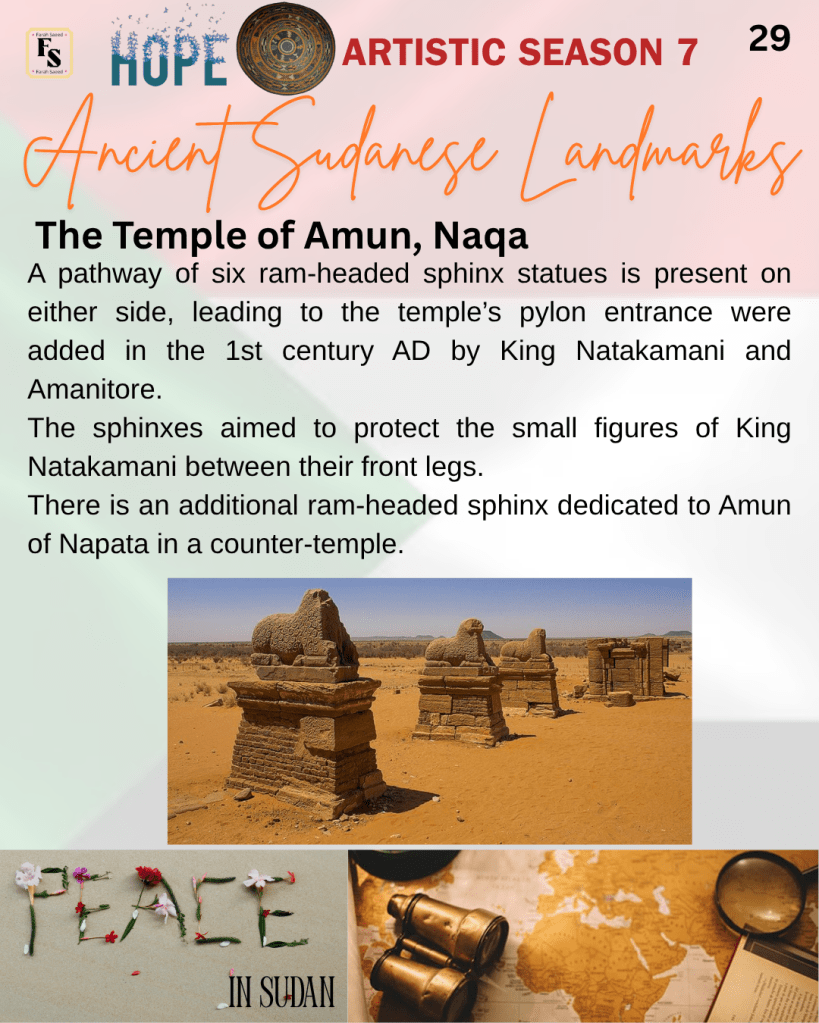
A pathway of six ram-headed sphinx statues is present on either side, leading to the temple’s pylon entrance were added in the 1st century AD by King Natakamani and Amanitore. The aim of the sphinxes was to protect the small figures of King Natakamani between their front legs. There is an additional ram-headed sphinx dedicated to Amun of Napata in a counter-temple.
The ritual chapel is present between the 3rd and 4th set of sphinxes. There is a relief on the pylons presenting the royal couple sitting on traditional enemies of the state. Similar to all temples, there is a blend of Egyptian features, for instance, hypostyle halls and courtyards with Kushite elements, e.g., carved stone relief that depicts gods and Kings.
Overall, Sudan’s architecture reflects both Egyptian and Kushite influences. In some cases, Greco-Roman art is found in the later dynasties of the Ancient Kushite civilization. Kandake queens played significant political and cultural roles in Kushite history. Distinctive architectural features and religious symbolism set Kushite monuments apart.




References
Ancient Society (2022) Hathor: The Egyptian Goddess of Love, Joy, Music, and Motherhood Available at: https://www.ancientsociety.com/gods/hathor/ (Accessed: 28th June 2026)
Artefacts Museum (n.d) Kandake Institution. Available at: https://artifactsmuseum.com/artifact/kandake-institution (Accessed: 28th June 2026)
Bassioni, A.M. (2024). The Roman Kiosk (Hathor’s Chapel) at Naga: A Reflection of Alexandrian Hellenistic Architecture. The International Journal of Tourism and Hospitality Studies, 7(2), pp.136–149. doi:https://doi.org/10.21608/ijthsx.2024.319128.1116.
Canterbury Historical and Archaeological Society (2026) Entablature. Available at: https://www.canterbury-archaeology.org.uk/entablature (Accessed: 28th June 2026)
Dr. Abdelrahman Ali Mohamed (2017) Sudanese Cultural Heritage Sites Available at: https://sudan.un.org/sites/default/files/2019-10/180520_WH%20sites%20Final%20en_0.pdf (Accessed: 28th June 2026)
Editors of Science News Today (2025) The Pyramids of Sudan and Nubia. Available at: https://www.sciencenewstoday.org/the-pyramids-of-sudan-and-nubia (Accessed: 28th June 2026)
Gillan, J. (2024) Rattling the Divine: The Mystical Role of the Sistrum. Available at: https://www.ancient-origins.net/myths-legends-africa/sacred-and-magical-sistrum-ancient-egypt-002004 (Accessed: 28th June 2026)
Hage, R. (2025) The Traditional Architecture of Sudan – A Historical and Regional Survey. Availablr at: https://www.arabamerica.com/the-traditional-architecture-of-sudan-a-historical-and-regional-survey/ (Accessed: 28th June 2026)
Mark, J. (2018) The Candaces of Meroe. Available at: https://www.worldhistory.org/The_Candaces_of_Meroe/ (Accessed: 28th June 2026)
Science Insights (2026) What Is Gypsum for Soil? Benefits, Uses, and Limits. Available at: https://scienceinsights.org/what-is-gypsum-for-soil-benefits-uses-and-limits/ (Accessed: 28th June 2026)
Sky history (n.d) Why does Sudan have so many pyramids? Available at: https://www.history.co.uk/articles/sudan-so-many-pyramids (Accessed: 28th June 2026)
The Archaeologist (2026) The Kingdom of Kush: The Royal Pyramids of Meroë and Their Secrets. Available at: https://www.thearchaeologist.org/blog/the-kingdom-of-kush-the-royal-pyramids-of-mero-and-their-secrets (Accessed: 28th June 2026)
The Shelby White and Leon Levy Program for Archaeological Publications (2026) Amun Sanctuary – Jebel Barkal (Sudan). Available at: https://whitelevy.fas.harvard.edu/amun-sanctuary-%E2%80%93-jebel-barkal-sudan (Accessed: 28th June 2026)
World Heritage Site (2026) Meroe Available at: https://www.worldheritagesite.org/list/meroe/ (Accessed: 28th June 2026)
Yosra (n.d) 10 Sudanese Structures That Showcase Africa’s Rich Architectural Heritage Available at: https://www.arch2o.com/buildings-sudanese-diverse-architecture/ (AccessedL 28th June 2026)


Leave a Reply