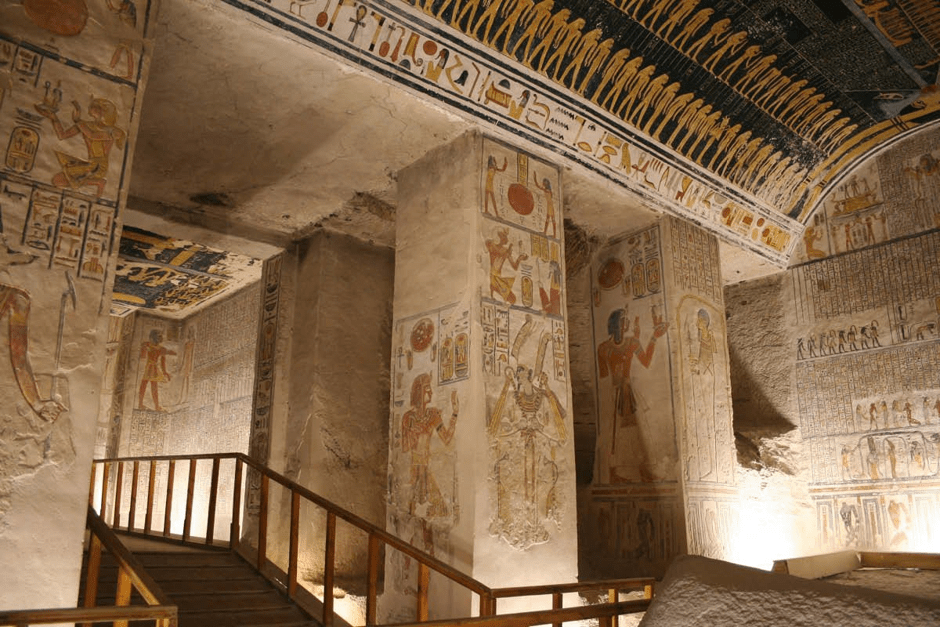
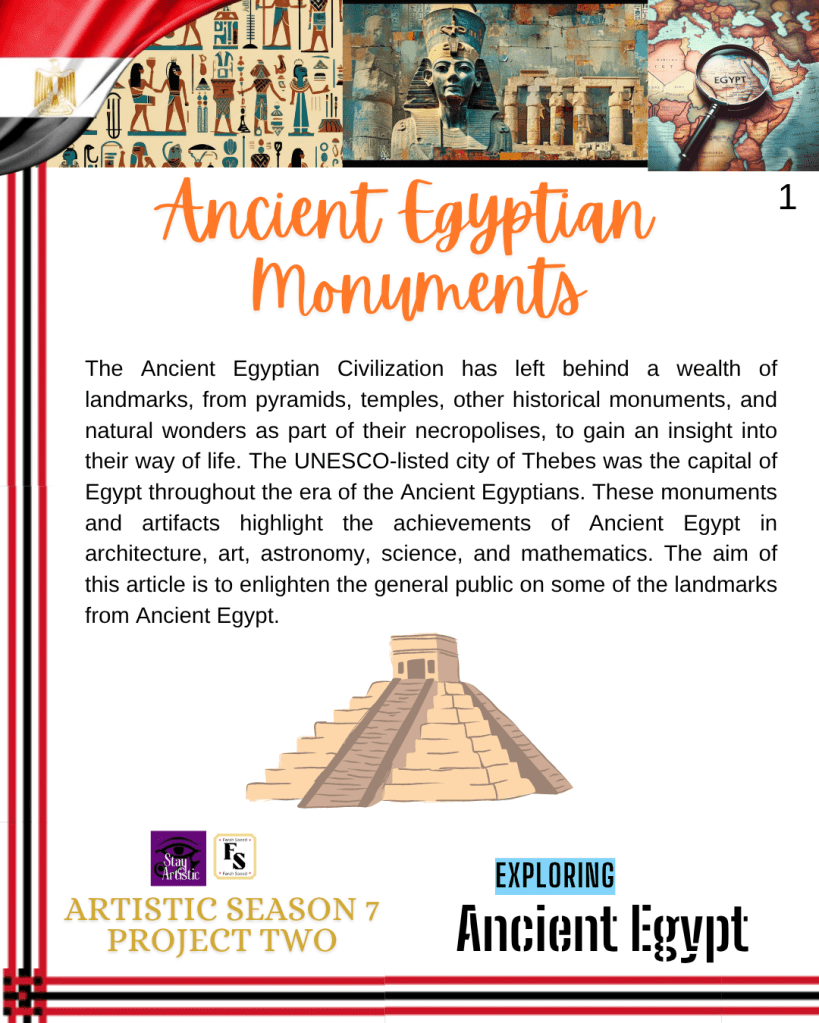
The Ancient Egyptian Civilization has left behind a wealth of landmarks, from pyramids, temples, other historical monuments, and natural wonders as part of their necropolises, to gain an insight into their way of life. The UNESCO-listed city of Thebes was the capital of Egypt throughout the era of the Ancient Egyptians. These monuments and artifacts highlight the achievements of Ancient Egypt in architecture, art, astronomy, science, and mathematics. The aim of this article is to enlighten the general public on some of the landmarks from Ancient Egypt.
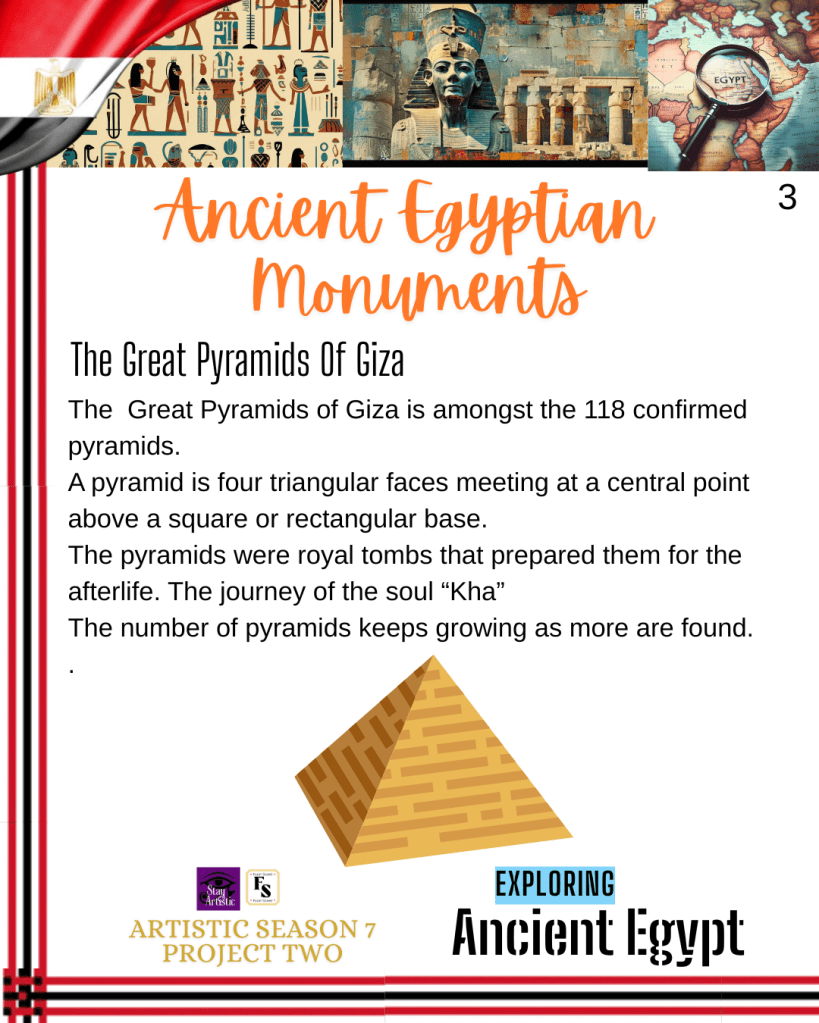
The Pyramids we observe today were a major project organised by the Pharaoh at the time, involving the populations all over Ancient Egypt. There are more than 118 confirmed pyramids that have been categorised on the architectural definition of a pyramid: four triangular faces meeting at a central point above a square or rectangular base. Ancient Egypt’s pyramid-building tradition has been extended from Abu Rawash in the North to Meroë in Sudan in the south across 1500 years. The Great Pyramids of Giza are amongst the Seven Wonders of the World, and there are nine pyramids present in Giza. Thus, most of Ancient Egypt’s pyramids are found outside of Giza. However, the number of pyramids is increasing as radiotracing, satellite imaging, and excavation reveal more buried historical structures than what can be seen with the eye. The oldest pyramid in Egypt is the Step Pyramid of Djoser at Saqqara, which was built around 2650 BC by the architect Imhotep for the 3rd Dynasty King Pharaoh Djoser.
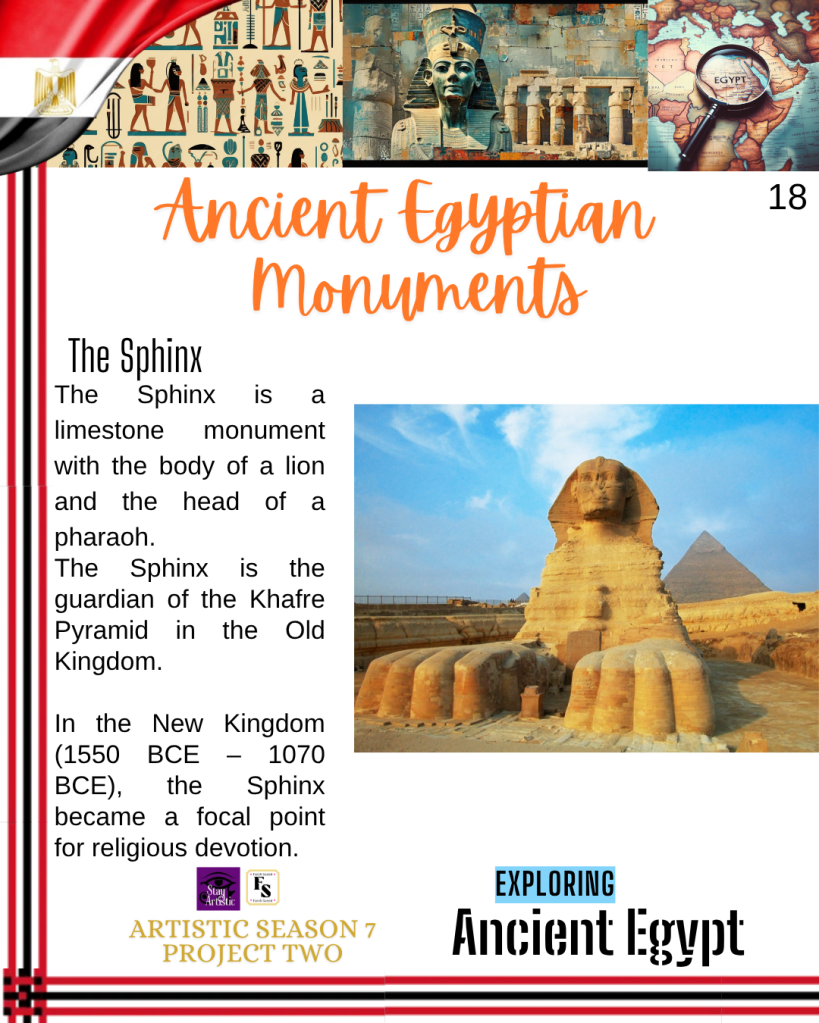
The Pyramids of Gaza and its companion, the Great Sphinx, are the largest ever built and form the Giza plateau. The Sphinx is a limestone monument with the body of a lion and the head of a pharaoh. There are also smaller pyramids and subsidiary structures. The Great Sphinx and temples are part of the Giza plateau but are not classified as pyramids.
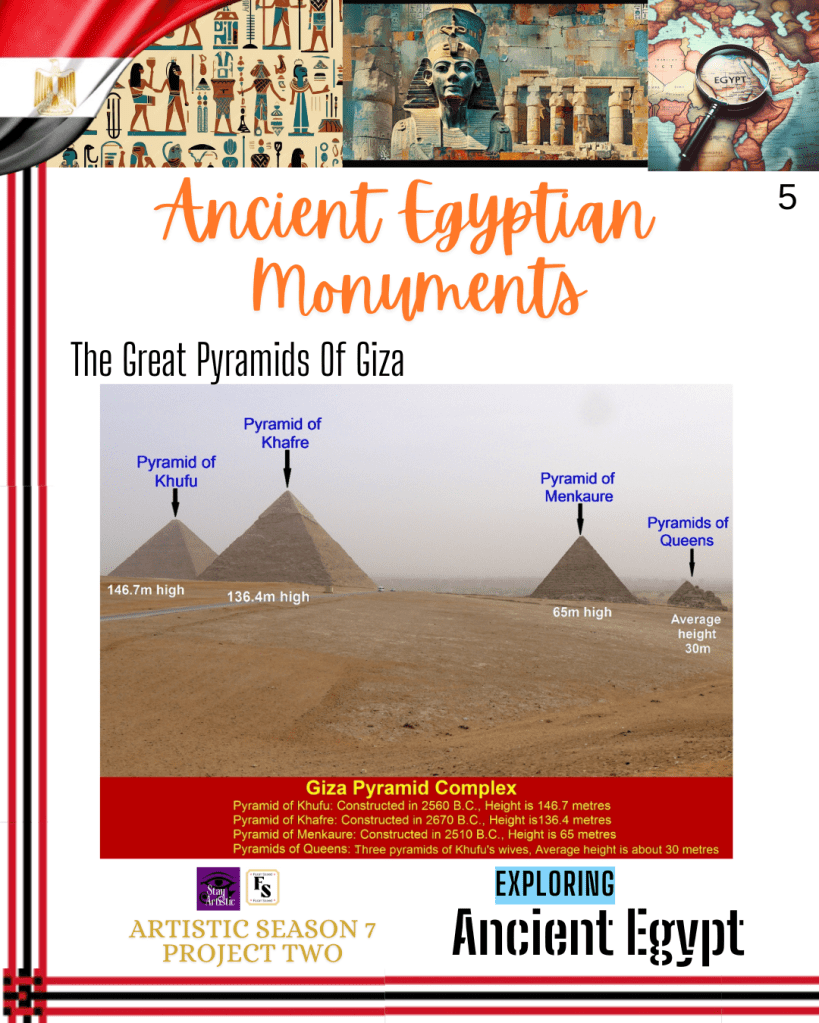
The Pyramids were built over three generations from 2580 to 2503 BC for the 4th Dynasty royal necropolis and its expansion. The Giza plateau contains the three main pyramids: Khufu, Khafre, and Menkaure, father, son, and grandson, respectively. Each of the pyramid complexes consists of a pyramid, a pyramid temple, causeway that leads to the valley temple. Before the fourth Dynasty, there is evidence of the Giza plateau’s usage as a settlement and necropolis during the Predynastic and Early Dynastic periods. However, besides the Giza plateau, there are pyramid complexes during the Third and Fourth Dynasties in Meidum, Dahshur, Saqqarah, Giza, and Abu Roash.
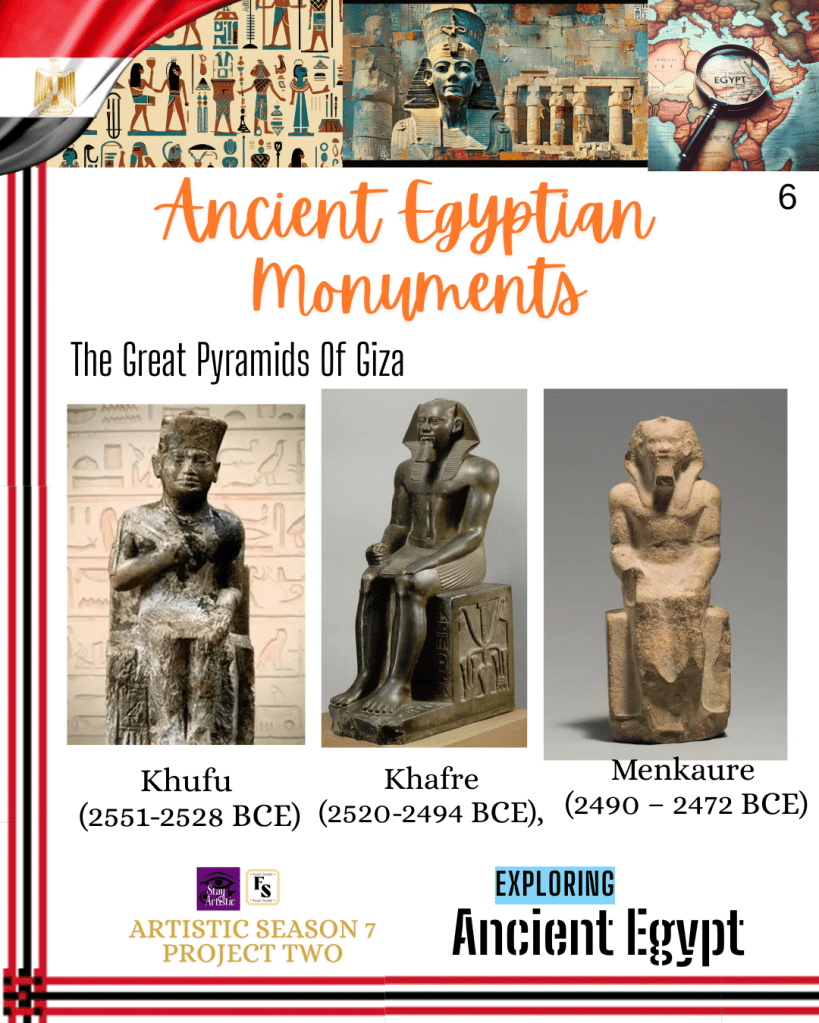
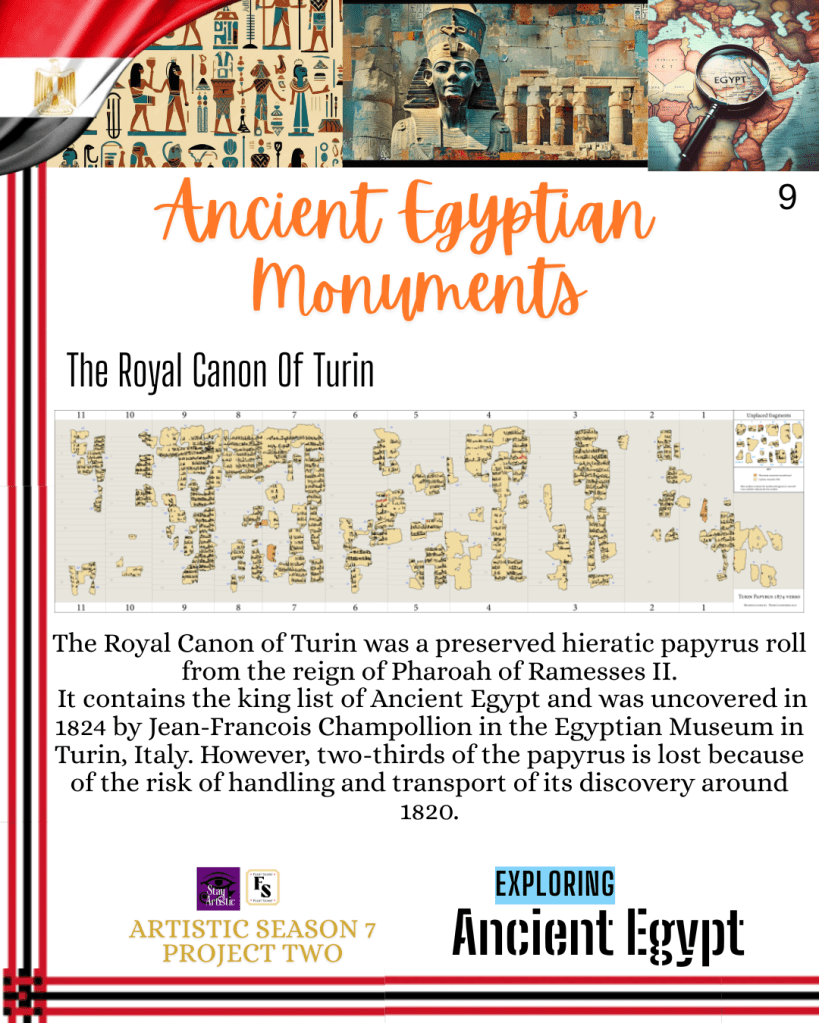
The first Egyptian king of the Old Kingdom, often called the Pyramid Age, to commission a pyramid in Giza was Pharaoh Khufu (2551-2528 BCE), in Greek, it is Cheops, and it was built circa 2550 BC. It is considered the largest, with dimensions of 146.5m and containing 2.3 million stones weighing an average of 2.5 to 15 tons. Other sources indicate it is 147 metres (481 feet) tall over the plateau. It inspired the Greek mathematician Pythagoras for their architectural work. His reign was twenty-three years. The reign length was established based on records of graffiti, the Biennial Cattle Census, and the Royal Canon of Turin. The Biennial Cattle Census refers to the record of a survey on the number of livestock animals every two years. The Royal Canon of Turin was a preserved hieratic papyrus roll from the reign of Pharaoh Ramesses II. It contains the king list of Ancient Egypt and was uncovered in 1824 by Jean-Francois Champollion in the Egyptian Museum in Turin, Italy. However, two-thirds of the papyrus is lost because of the risk of handling and transport of its discovery around 1820.
On the other hand, recent research discovered that the reign length for Pharaoh Khufu was twenty-six or twenty-seven based on two artifacts: the rock inscription discovered in the Western Desert and a papyrus in Wadi El-Jarf on the Red Sea coast.
The Pharaoh’s son Khafre (2520-2494 BCE), in Greek: Chephren, is the second valley temple at Giza, and it was built circa 2520 BC. It is slightly shorter (136.4 m) but appears a similar height as it is constructed on a higher terrain. The landscape, as it contains the Great Sphinx, is considered to be the guardian of Khafra’s pyramid complex. His weight was twenty-six years. However, scholars have mentioned that before 1800, the Sphinx’s head was the only aspect visible; the remainder was buried in the sand.
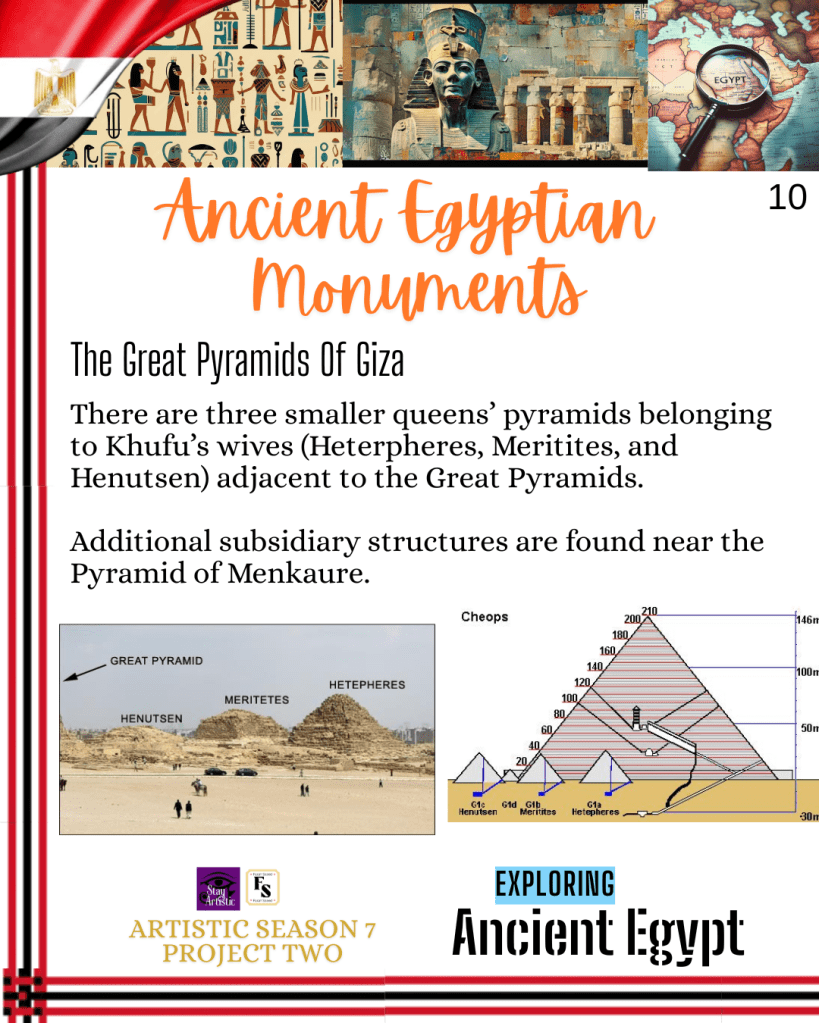
The third pyramid was built for Pharaoh Khafre’s son Menkaure (2490 – 2472 BCE), in Greek: Mycerinus, circa 2490 BC. It is the smallest by height and is about 218 feet. His reign was eighteen years. The pyramid complex contains two separate temples connected by a long causeway alongside the three pyramids of Khufu’s wives.
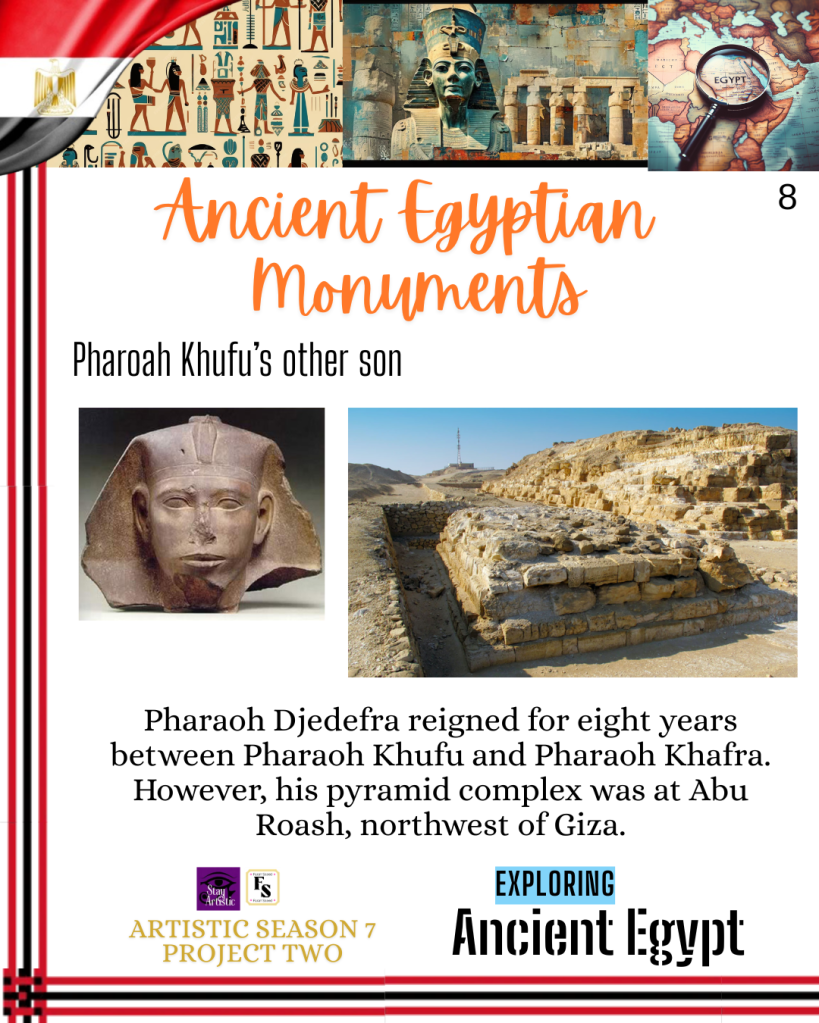
The Pharaoh Khufu had another son by the name of Djedefra. He reigned between Khufu and Khafra and was for eight years. However, his pyramid complex was at Abu Roash, northwest of Giza. However, the reign may possibly be longer due to Khufu’s boat grave graffito at Giza recently found.
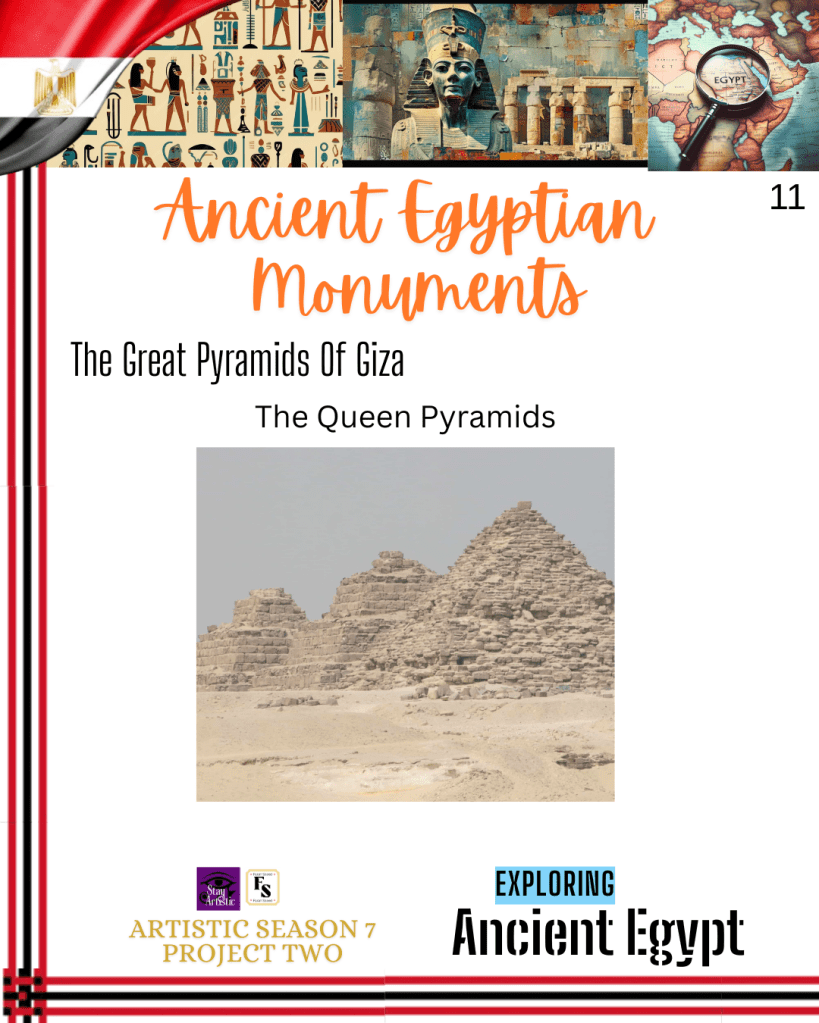
There are three smaller queens’ pyramids belonging to Khufu’s wives (Heterpheres, Meritites, and Henutsen) adjacent to the Great Pyramids. Additional subsidiary structures are found near the Pyramid of Menkaure.
Why were the Great Pyramids built in Giza?
Amongst the reasons for building the pyramids, the Sphinx and surrounding tombs on the Giza Plateau clarified by scholars like David Jeffreys, Ana Tavares and Mark Lehner, was the close proximity of the Nile to the west bank, that were used for funerary and other ceremonial purposes only from the late Third or early Fourth Dynasty. It also helped transport materials like stone along solar boats to the pyramid via the harbour area.
The Pharaoh Khufu was ambitious and wanted to create a ‘new’ necropolis that was distinctive from his father, Pharaoh Sneferu at Dahshur, by utilizing the Giza Plateau. It was also selected by his sons and grandsons, who indicated the offers of construction at the Giza Plateau as the plateau was higher than the surrounding area. The Mokkatam Formation, which had the geology (rocks) of the site, helped to lay out the three pyramids on a diagonal. The Ancient Egyptians focused on alignment as the southeast corners of the three pyramids aligned with the diagonal. There were many core blocks used to construct the pyramids, and they were found near the quarries situated by the pyramids. Mark Lehner also suggested that the diagonal may be associated with the three pyramids at Giza, pointing to Heliopolis. The Heliopolis is situated in the northeast and was important in the fourth dynasty, where the sun god Ra was worshiped. It may also be related to the solar symbols or primordial mound where creation rose. The Benben stone is a sacred mound in Heliopolis and is the solid point associated with the first point where the cosmic egg, which all originates. The descending rays of the sun present the pyramid’s shape and the pharaoh’s journey to life after death to the heavens.
However, much to our excitement, some areas affect their existence. Dedicated Egyptian Archaeologist, Zahi Hawass, has informed that places like the interior chambers of the Pyramids of Giza faced challenges and risks in the past from inefficiently managing tourism, urbanisation, vehicular traffic, and making inappropriate planning for excavation sites. Perspiration and breath can enter the large limestone rocks and stones, causing them to “crumble into powder” that was once carried by committed workers via large ramps to build the 2.3 million stone block mountains and their companion, the Great Sphinx. Thus, cleaning, preservation, and renovation are done in a systematic way to maintain enthusiastic tourists and also protect one of the seven wonders of the world by opening smaller pyramids and tombs of the nobles for them to mesmerise and explore.
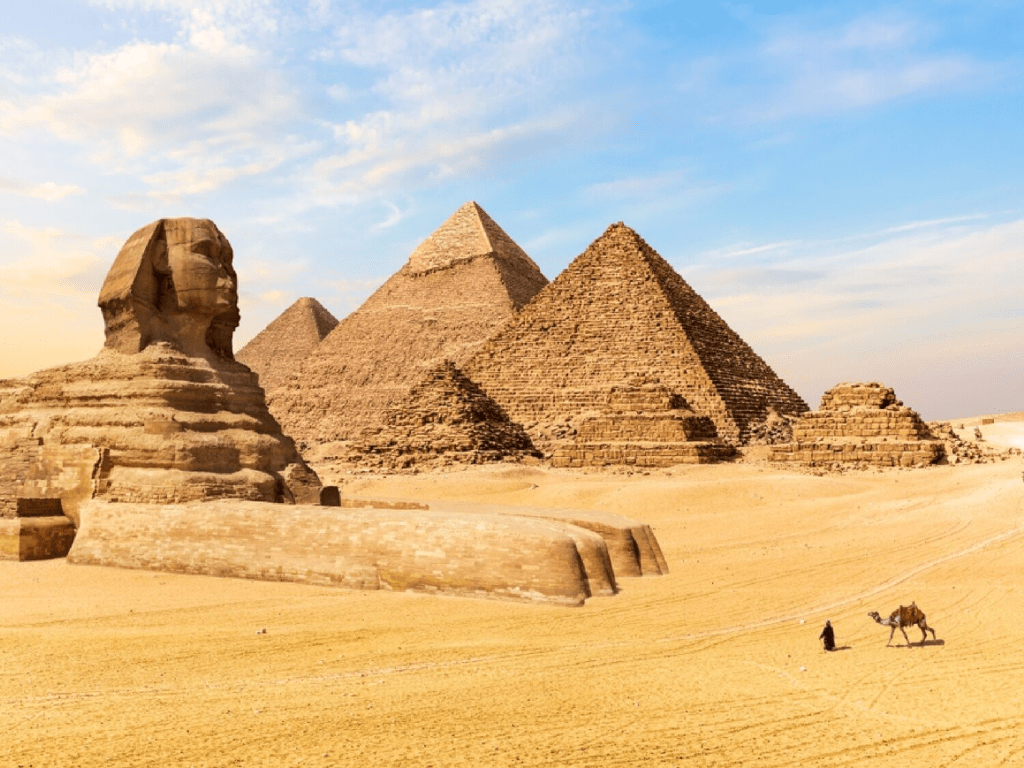
What is found inside the pyramid?
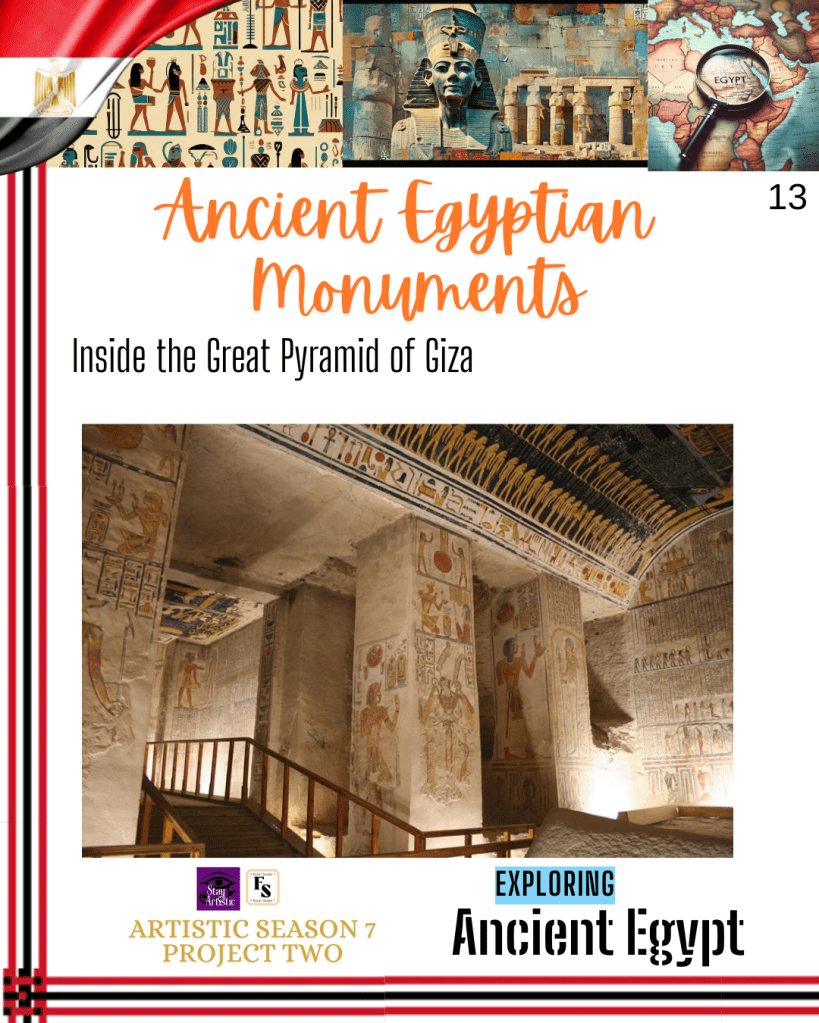
There is a range of tomb art that consists of paintings of ancient Egyptians performing a range of tasks in agriculture, hunting, carpentry, costumes, and performing religious rituals and burial practices. The Ancient Egyptians believed in the afterlife and worshipped lots of gods and goddesses, which influenced their art, architecture, and daily life. The inscriptions and hieroglyphics helped to understand the Egyptian grammar and language. Many images can be found at The Giza Project, an online repository of a range of evidence in the Ancient Egyptian era.
The link between religion and the Great Pyramids
The Great Pyramids, queens’ pyramids, rock-cut tombs, and mastabas had great religious significance in Ancient Egypt. A mastaba field is a bench that was laid out in rows around Pharaoh Khufu’s pyramid during the early Fourth Dynasty. Additional mastabas were added to the Western cemetery, G2000 and Hemiunu (G4000). Prince Hemiunu is the nephew of Pharaoh Khufu, who served as a vizier and was the architect for the building of Pharaoh Khufu’s pyramid at Giza. In the Eastern Cemetery (G 7000), there is Ankh-haf (G 7510). Prince Ankhhaf was the brother of King Khufu. He had titles of “eldest king’s son of his body” (sa nswt n khtf smsw), “vizier,” and “the great one of Five of the house of Thoth” (wr djw pr-Djehuti). There were also cemeteries of members of other members of the royal families, the elite, and officials. This illustrates that the structure existed during Ancient Egypt. Further mastabas were added in former quarries that built the pyramids and tombs.
The pyramids were royal tombs constructed to serve as eternal resting places for the deceased. Religious rituals were performed by priests and family members of the deceased to ensure their well-being in the afterlife. The rituals consist of prayers, offerings of food, and recitation of spells from the Book of the Dead. The Book of the Dead consisted of spells and rituals and was buried with the deceased to help them through the afterlife, overcome challenges in the underworld, and attain eternal life.
The Ancient Egyptians believed that their soul, referred to as “ka,” must be preserved through mummification after death to ensure an appropriate soul’s journey to the afterlife. This was supported by several gods. The jackal-headed god, Anubis, guided people to the underworld, where they would be judged by the god Osiris. Maat was the goddess of truth and justice, and the ancient Egyptians believed that the heart of the deceased needed to be weighed after death against the feather of Maat. If the heart were pure and balanced, the deceased would be granted eternal life. If the heart were sinful and hateful, it would face eternal punishment and be consumed by a monster. Other gods facilitated in their daily life, for instance, the wife of Osiris, who was Isis, who cured human illness, and Tefnut, who helped rain to fall.
Who built the Great Pyramids of Giza?
A large group of skilled craftworkers in the communities helped to build the infrastructure. It is estimated that there were 5000 permanent employees and 20,000 temporary workers who would work for a few months on the pyramid site before returning home.
The builders and administrative team were valued by the pharaohs, and this can be evidenced by how they were sheltered near the pyramids. They were clothed and provided with medical care. They were fed primarily bread, beer, and prime beef to strengthen them. It was a combination of wealth and control of the Ancient Pharaohs. A key example is the Heit Al-Ghurab settlement. The west of the settlement consisted of tombs of the pyramid builders, artists, and workers. The building of pyramids was backed by the civil service.
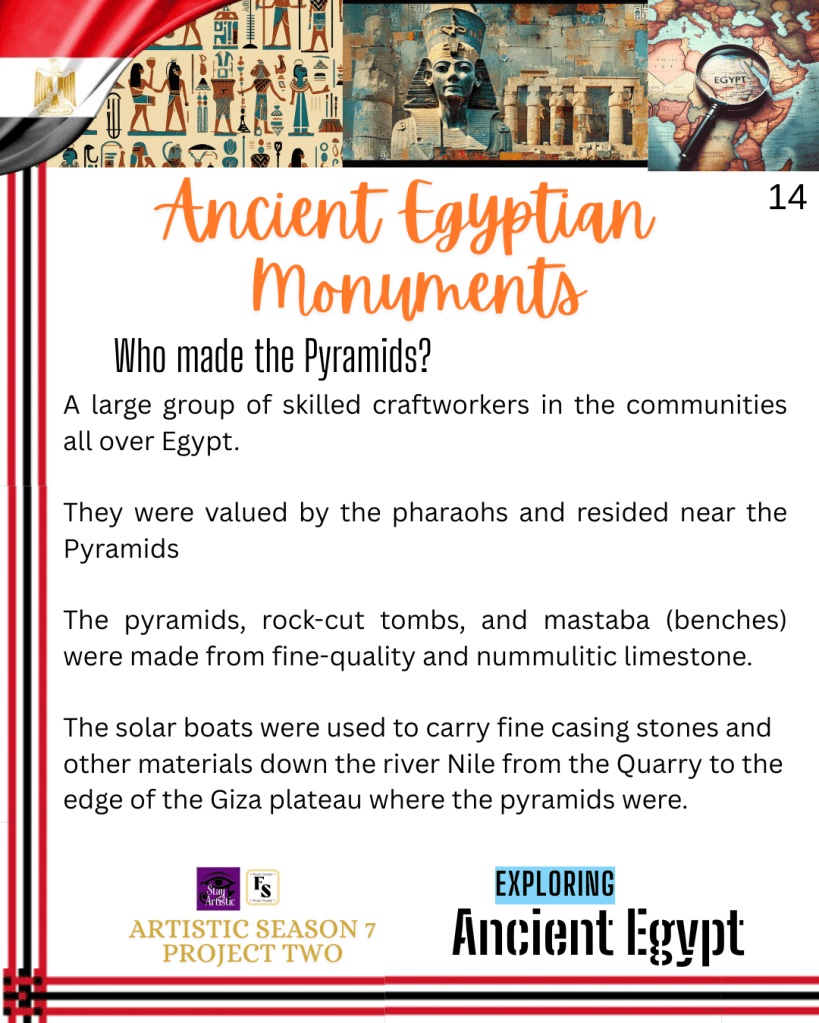
The type of material used to make the pyramids, rock-cut tombs, and mastabs was fine-quality and nummulitic limestone. However, the form of tomb and certain materials evolved over time and corresponded to the idea of social status and what was acceptable to do by both the elite and commoners.
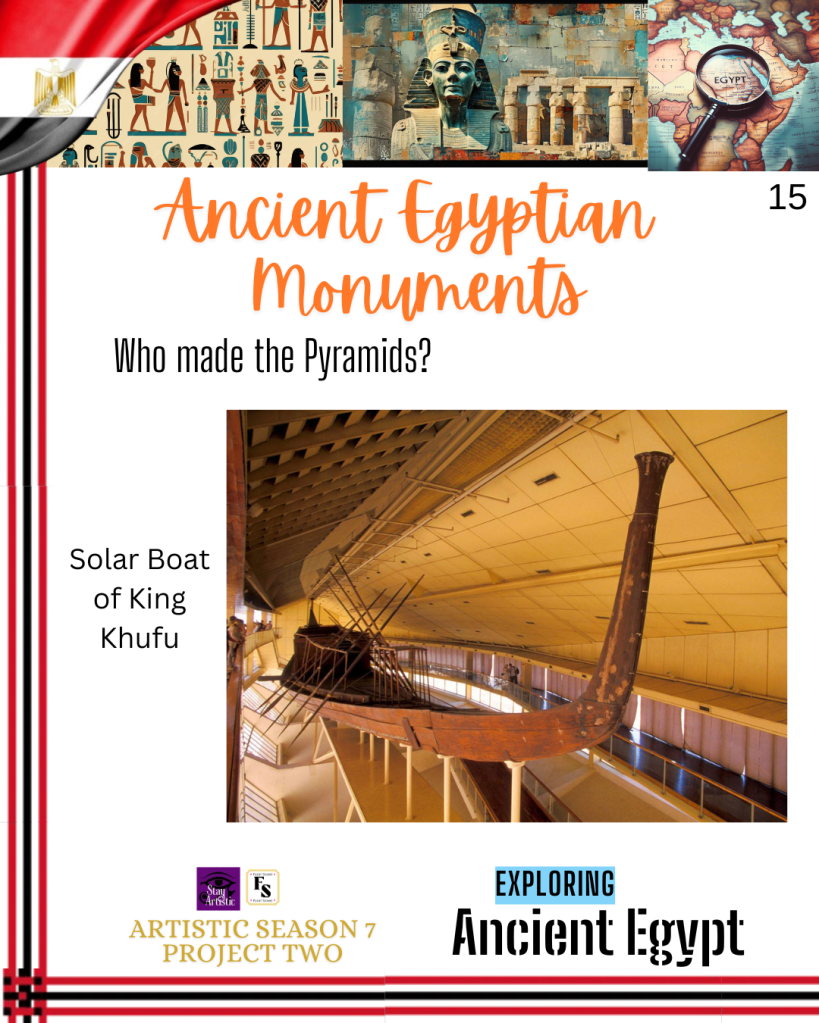
The solar boats were used to carry fine casing stones and other materials down the river from the Quarry to the edge of the Giza plateau. The first solar cedarwood boat identified was in 1954 under the direction of Kamal El-Mallakh, an Egyptian Antiquities Organisation. A row of Mataba tombs that appear like a long boat was found in pits. The boats were covered by massive stone slabs.
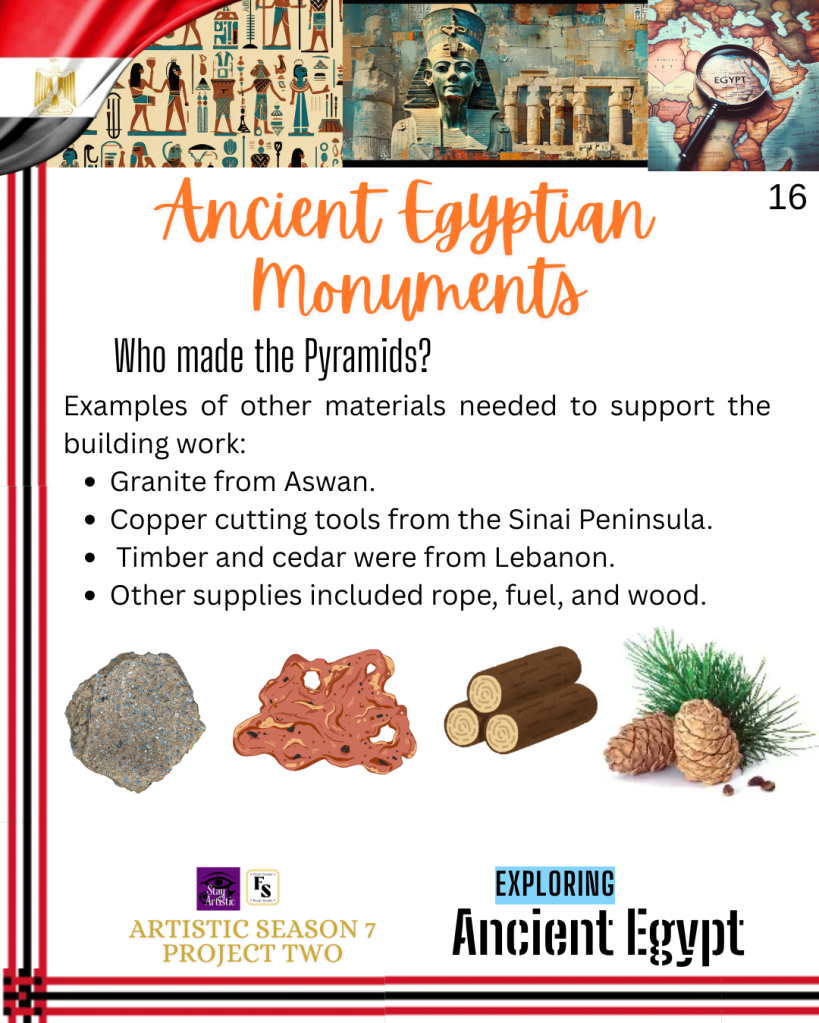
Examples of other materials were granite from Aswan and copper cutting tools from the Sinai Peninsula. Timber and cedar were from Lebanon. Other supplies included rope, fuel, and wood to support the building work. The cattle from farms near the Nile Delta were used to sustain the workers. This was established by records on ancient papyri and archaeological sites.
Once reached the Giza plateau, the stone blocks were moved along large ramps to the heights. They were greased by water or wet clay and were used with ropes and rollers. Levers and sledges. There were internal and external ramps to support. The exterior ramps surround the pyramid in a zig-zag or spiralled manner. There is evidence of this found in the remains of structures near some of the pyramids. The steepness of the ramps is debatable. In 2018, Dr Roland Enmarch, an Egyptologist, discovered, alongside his team, a ramp cut into rock at a quarry at Hatnub in the Eastern Desert of Egypt. It was a source of soft rock of alabaster used in the structure of the pyramids. There is evidence of inscriptions at the quarry.
However, there have been speculations that some of the building materials were reused from settlements. This caused differences in the dates for the Old Kingdom in previous studies between 1984 and 1995, but with recent, precise ranges of calibrated age, they were able to establish when the monuments completed their dates.
Moreover, much of our understanding of the Great Pyramids is due to the works of Egyptian and worldwide archaeologists and Egyptologists who have come to explore and study the ancient tombs. Amongst the examples are the Italian archaeologist, Giovanni Battista Belzoni (1778 – 1823), who explored the pyramid of Khufu and Khara and the upper entrance of Khafra’s pyramids. The Prussian archaeologist Karl Richard Lepsius (1810-1884), who published a twelve-volume document titled aus Aegypten und Aethiopien that consisted of plans and drawings of the pyramids and tombs of Giza. He even cleared, drew, and numbered 87 tombs. The French archaeologist, August Mariette (1821-1881), discovered Khafra’s valley temple in 1951 after clearing the Sphinx. There, he found statues in 1860 consisting of the King with the falcon god Horus encircling his head with wings.
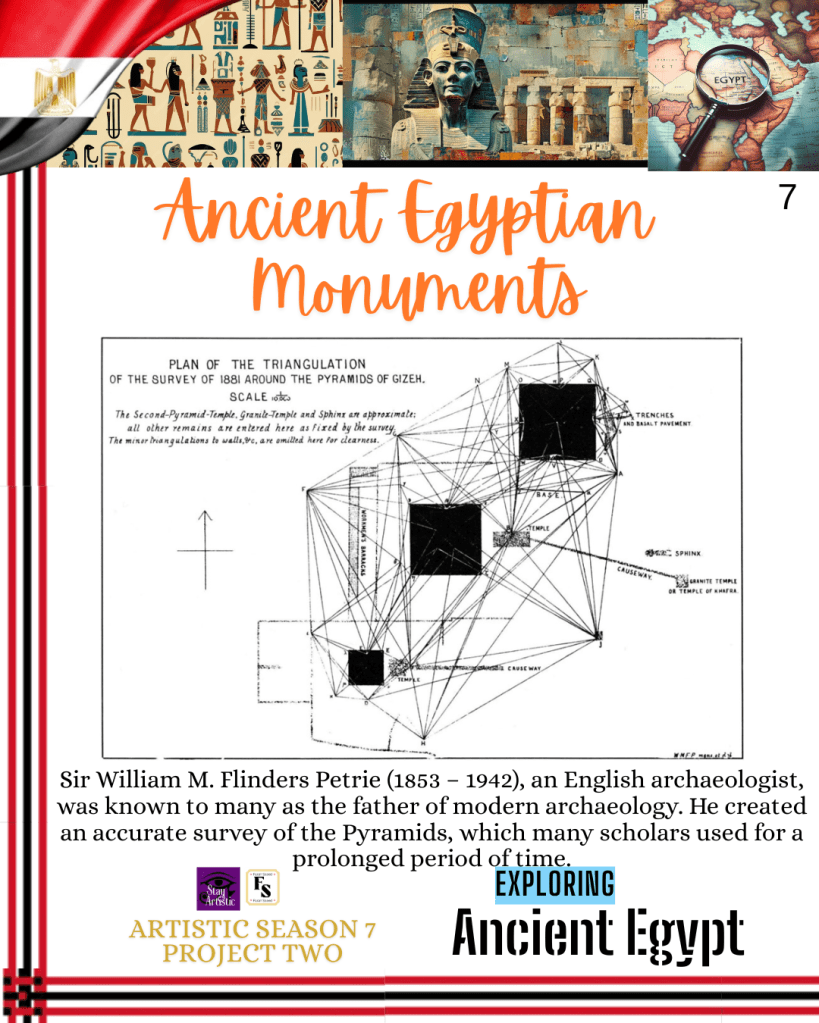
Sir William M. Flinders Petrie (1853 – 1942), an English archaeologist, was known to many as the father of modern archaeology, where he pioneered techniques relevant for excavation and invented a dating method to trace back history from the ancient remains. This led to his publication in 1904 titled Methods and Aims in Archaeology. In two seasons at Giza (1880 -1882) and (1906-1907), he created an accurate survey of the Pyramids, which many scholars used for a prolonged period of time.
In 1903, further collaboration correlated with interest in Egyptology. Egyptian Antiquities Service Director Gaston Maspero proposed that the plateau of Giza was to be divided by three experts in archaeology. George Reisner studied the Northernmost cemetery sector and the Menkaure Pyramid in the Heartst Expedition and the Museum of Fine Arts Expedition. The German archaeologist, Georg Steindorff, explored the middle of the Giza plateau and the Khafre Pyramid. The Italian Ernesto Schiaparelli received the southernmost section, the Khufu Pyramid, and the Eastern Cemetery.
Between 1958 and 1968, Hagg Ahmed Youssef, a native Egyptian archaeologist and wood conservator, reconstructed a 142-foot-long vessel. This was later added to a pit where it was previously buried and opened as a special museum in 1982.
The Sphinx
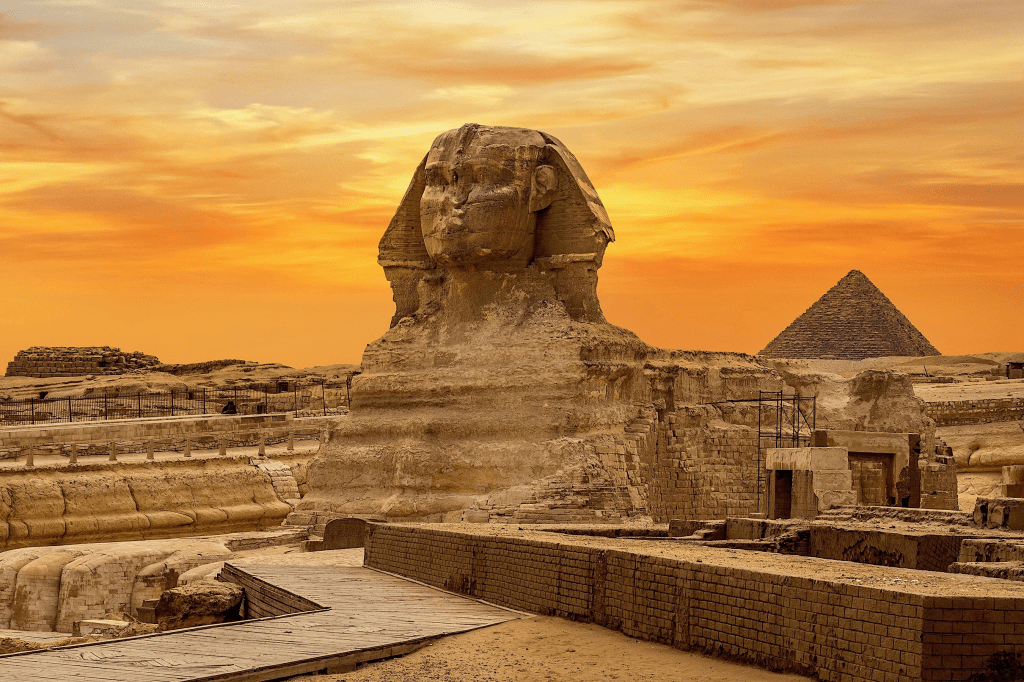
The statue consists of a Pharaoh’s head and the body of a lion, which has defined dimensions that bring wonder today. The total length from the forepaws to the tail was 73.5m (240 feet). The maximum height was 20 m (66 feet), and the maximum width was 19.1 m. The Sphinx contains many tunnels, shafts, and natural cavities where there is ongoing exploration taking place. On top of his head, there is an ancient man-made conical opening or shaft hole where Mark Lehner measured it to be 1.4 to 1.75 metres deep and 1.5 to 1.6 metres wide. It was longer on the east-west axis. This differed from Napoleon’s survey of 3 metres.
The Sphinx appeared as the guardian of the Khafre Pyramid in the Old Kingdom. In the New Kingdom (1550 BCE – 1070 BCE), the Sphinx became a focal point for religious devotion. Amongst the New Kingdom Pharaohs were Amenhotep II, Thutmose IV, and Tutankhamen. Later, Amenhotep II constructed a temple near the Sphinx titled Horemakhet, “Horus in the Horizon,” and the Sphinx Stela that mentions Khufu and Khafra. A stela is a slab of stone or wood.
Another stela was erected by Pharaoh Amenhotep II’s son Thutmose IV (1400-1391 BCE), called the Dream Stela. It was discovered by the Italian archaeologist, Giovanni Battista Caviglia, when he excavated around the Sphinx and cleared sand from the forelegs of the Sphinx. He also collaborated with Henry Salt and, later, Howard Vyse. Yet, concern for the preservation of the Sphinx prompted him to rebury it for protection, an unheard-of practice at the time. Other contributions made by Giovanni Battista Caviglia (1770 to 1845) were exploring the mastab tombs in Giza’s cemetery and the interior chambers of the Great Pyramid from 1816 to 1819.
Zivie, Mark Lehner, and Zahi Hawass referred that there is an open-air chapel between the Sphinx’s forepaws. It was built there that corresponds to Thutmose IV’s dream, while in the Sphrinx to rule Upper and Lower Egypt if he restored the Sphrinx. This was discussed by Zivie, Mark Lehner, and Zahi Hawass.
In addition, archaeologists worldwide facilitated its existence. For instance, François Auguste Ferdinand Mariette not only contributed to the Khafre Valley Temple in 1858 but also cleared the Sphinx and helped establish the first museum for Egyptian antiquities. He also became its first director (1851 – 1860).
Al Dahshur Pyramids
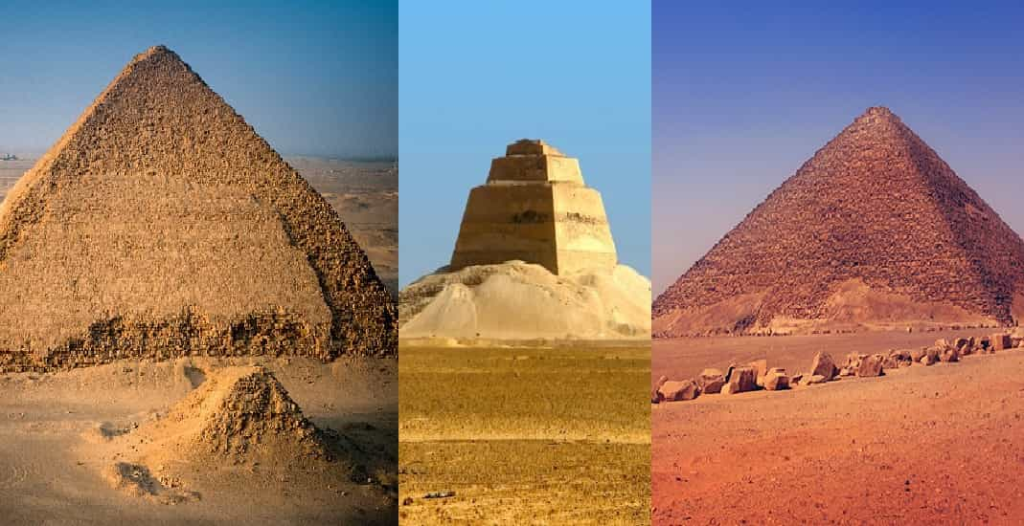
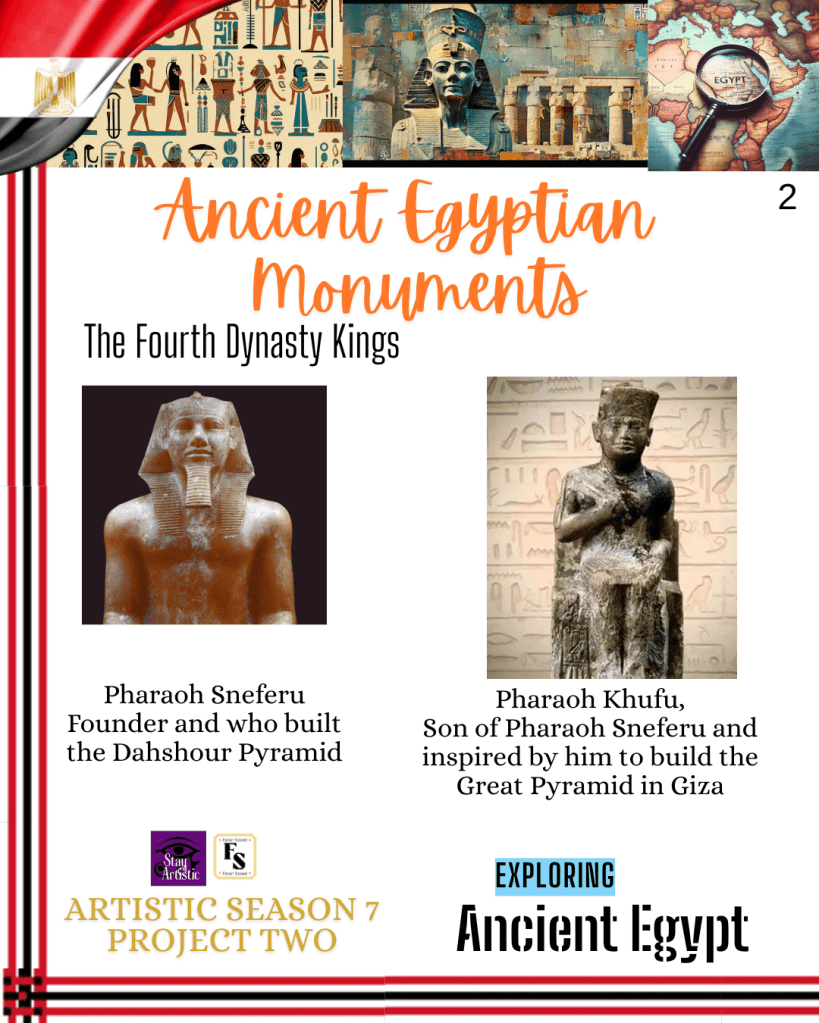
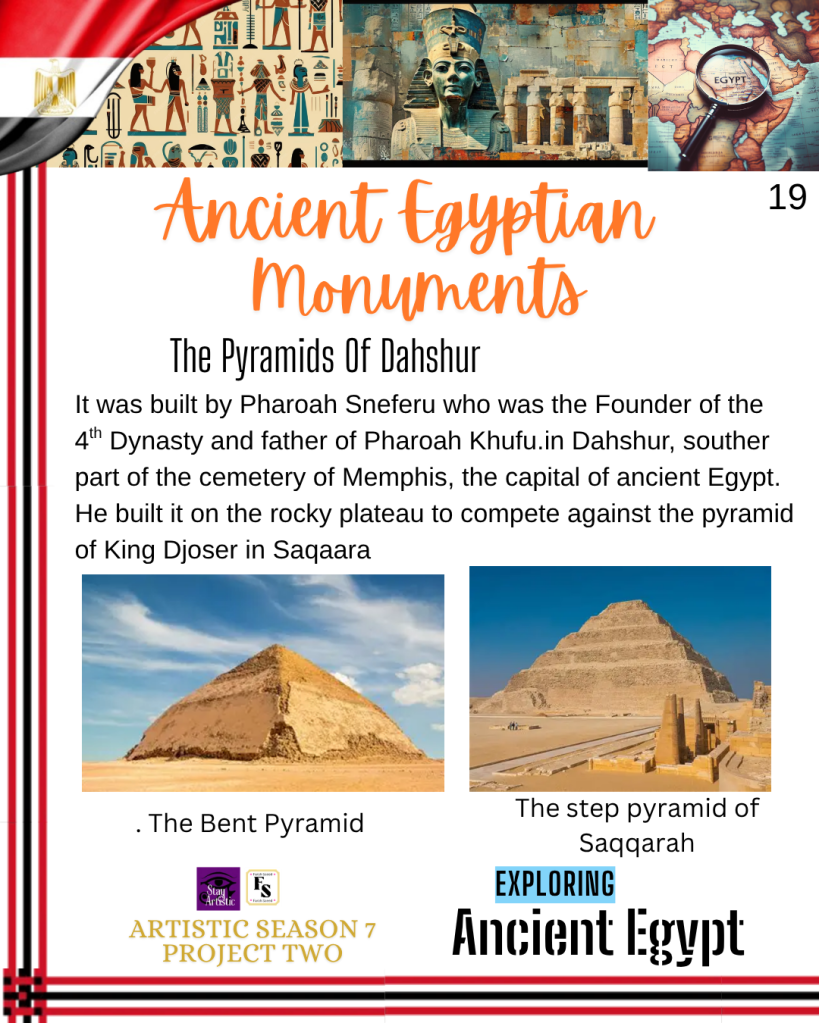
Dahshur is a pyramid site situated 40 km south of Cairo, on the west bank of the Nile River. Pharaoh Khufu’s father, Pharaoh Sneferu, was the founder of the Fourth Dynasty (2680 – 2560 BC). He aspired to build pyramids, constructing a step pyramid and the Meidum Pyramid. The pyramid had four triangular walls to a centred point but was unstable, and builders suggested easing it by reducing its angle. It had steps to smooth its shape.
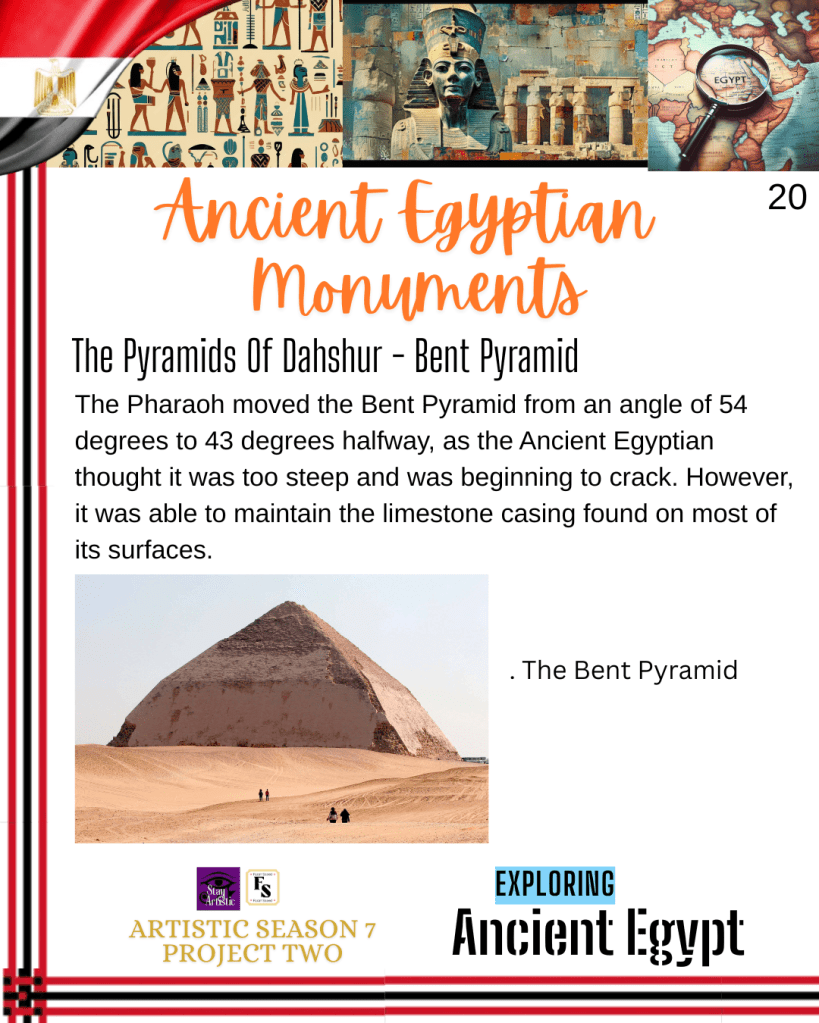
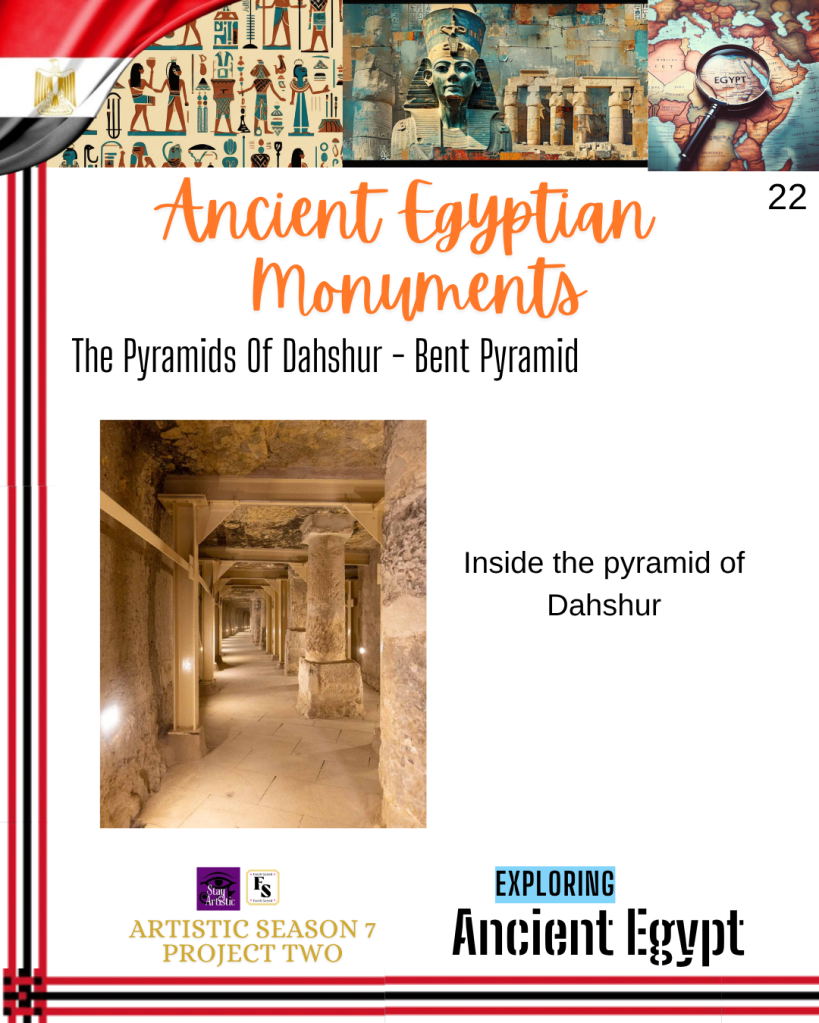
The Dahshur pyramids contain two pyramids: Bent and Red. The Bent Pyramid of Pharaoh moved from an angle of 54 degrees to 43 degrees halfway, as the Ancient Egyptian thought it was too steep and was beginning to crack. However, it was able to maintain the limestone casing found on most of its surfaces.
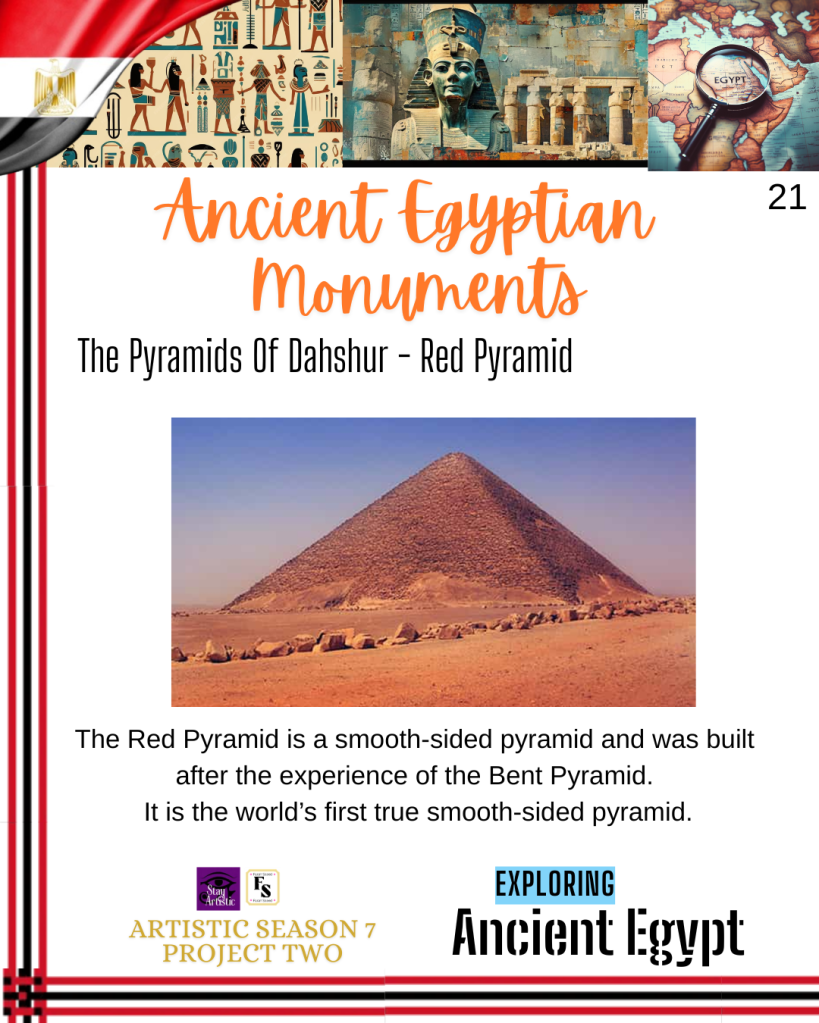
The Red Pyramid is smooth-sided and was built after the experience of the Bent Pyramid. It is the world’s first true smooth-sided pyramid, though it is visited less. He added more volume to the pyramid than any other pharaoh. The Pharaoh Sneferu inspired his son Khufu with the experience and background he held to build the Great Pyramid.
Overall, the pyramids were monumental royal tombs built by skilled workers, not slaves. Religious beliefs deeply influenced pyramid construction and burial practices. Modern archaeology continues to reveal new insights about Ancient Egypt’s monuments.


References
Egypt For Travel (2026) How Many Pyramids Are in Egypt? The Complete 2026 Answer. Available at: https://www.egyptfortravel.com/egypt-travel-blog/how-many-pyramids-are-in-egypt (Accessed: 27th June 2026)
Egypt Museum (n.d) Bust of Prince Ankhhaf. Available at: https://egypt-museum.com/bust-of-prince-ankhhaf/ (Accessed: 27th June 2026)
Flentye, L. (2018). The Art and Archaeology of the Giza Plateau. Oxford University Press eBooks. doi:https://doi.org/10.1093/oxfordhb/9780199935413.013.29.
Giza Project at Harvard University (2026) Archaeology at Giza Available at: https://giza.fas.harvard.edu/archaeology/ (Accessed: 27th June 2026)
Hawass, Z. (2003) Pyramids: Excavation and Preservation. Available at: https://www.world-archaeology.com/features/pyramids-excavation-and-preservation/ (Accessed: 27th June 2026)
Lundström, P. (2025) Royal Canon of Turin Available at: https://pharaoh.se/ancient-egypt/kinglist/turin/ (Accessed: 27th June 2026)
National Geographic society (20`5) How were the Pyramids of Giza built? Available at: https://www.nationalgeographic.com/history/article/giza-pyramids (Accessed: 27th June 2026)
Poole, G. J. (2026) Sir Flinders Petrie Available at: https://www.britannica.com/biography/Flinders-Petrie (Accessed: 27th June 2026)
Rosicrucian Egyptian Museum (2026) Old Kingdom Architects. Available at: https://egyptianmuseum.org/explore/old-kingdom-architects-hemiunu (Accessed: 27th June 2026)
Science Focus (2026) We might finally know how the pyramids were built https://www.sciencefocus.com/science/egyptian-pyramids-new-studies (Accessed: 27th June 2026)
The Archaelogist (2025) The Role of the Sphinx in Ancient Egyptian Beliefs Available at: https://www.thearchaeologist.org/blog/the-role-of-the-sphinx-in-ancient-egyptian-beliefs (AccessedL 27th June 2026)
The great Sphinc of Giza (2026) The Dimensions of the Great Sphinx of Giza: Available at: https://www.thegreatsphinxofgiza.com/faqs-about-the-great-sphinx/great-sphinx-of-giza-dimensions (Accessed: 27th June 2026)
Tyldesley, J. (2011) Ancient Egypt and the Modern World Available at: https://www.bbc.co.uk/history/ancient/egyptians/egypt_importance_01.shtml (Accessed: 12th April 2026)
World Heritage Site (2026) Dahshour. Available at: https://www.worldheritagesite.org/tentative/dahshour/ (Accessed: 27th June 2026)


Leave a comment