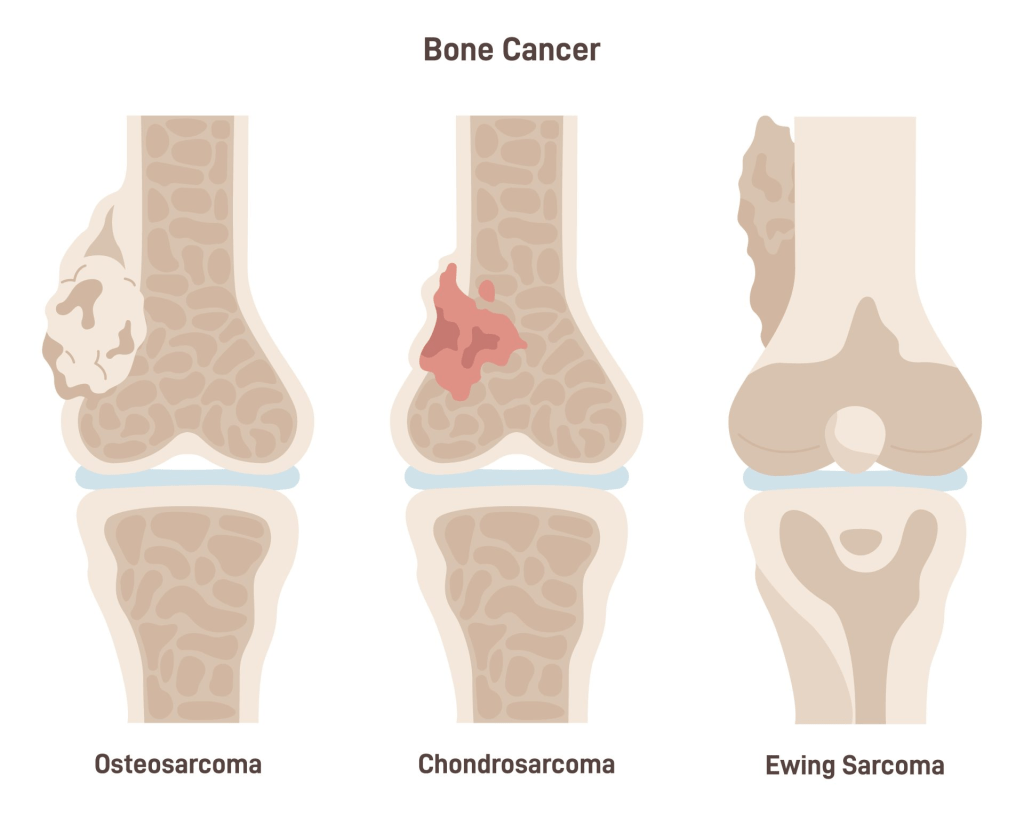
Overview of Chondrosarcoma
Malignancy: Yes, a malignant bone tumour that originates from the cartilage cells.
Type of bone tumour: Most common primary tumour
Grade: Most are low grade
10% of low-grade tumours transform to higher grades
90% of patients with Grade 1 have a 5-year survival, and is decreased to 40% in patients with Grade 3 tumours.
It can metastasize to the lungs, and this causes resistance to therapies and late diagnosis.
Location:
It affects the cells of the cartilage of the bones (chondrocytes).
The role of the cartilage is to prevent friction between the two bones, and when there is damage to the cartilage, it can result in broken bones and pain.
Chondrosarcoma can grow inside a bone or on the bone surface.
Painful mass in the pelvis, shoulder blades (subclavicular joints), and long bones.
Examples of long bones are:
- fibula, tibia, and femur (lower limbs)
- radius, ulna, and humerus (upper limbs)
Onset:
Tumours occur in patients who are middle to late age (30 to 60).
Risk Factors Of Chondrosarcoma
A) Gender
Males are commonly affected
B) Ethnicity:
No racial dominance
C) Small bone growths called enchondromas that can transform into chondrosarcoma.
Appearance Under Microscope
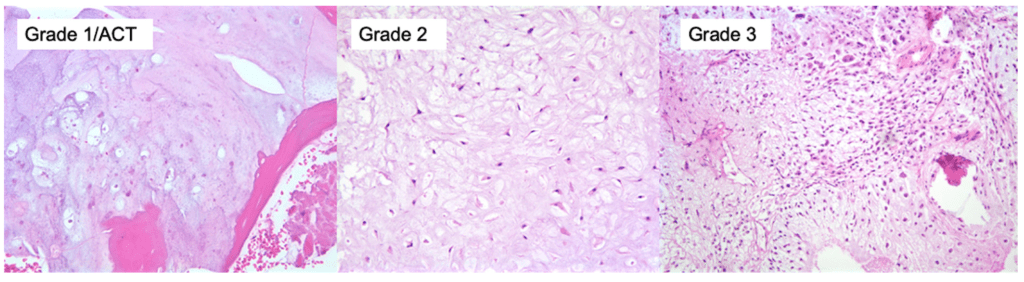
Chondrosarcoma with haematoxylin and eosin (H and E) staining at x200 magnification.
Depending on the grade, features may include lobular or diffuse growth, permeation of the intertrabecular spaces, cellularity, atypical cells, mitotic activity, myxoid changes, liquefaction of the chondroid matrix, and necrosis. There is also abundant cartilaginous matrix with chondrocytes embedded in lacunae. In the microscopic image of Grade 1, there are some atypical cells, small chondrocytes, and nuclei, with some lobular growth. In the microscopic image of Grade 2, the number of atypical cells has increased, and the size of the nucleus has increased, as seen with the dark-shaded dots. A few atypical cells are paired or joined together, called binucleated cells. In the microscopic image of Grade 3, there is increased growth (mitotic activity), increased nucleus size in atypical cells, and polymorphism, pleomorphism (different forms of cells), and chondroid (Images from Guney and Qasem, 2024; Gazendam et al., 2023).
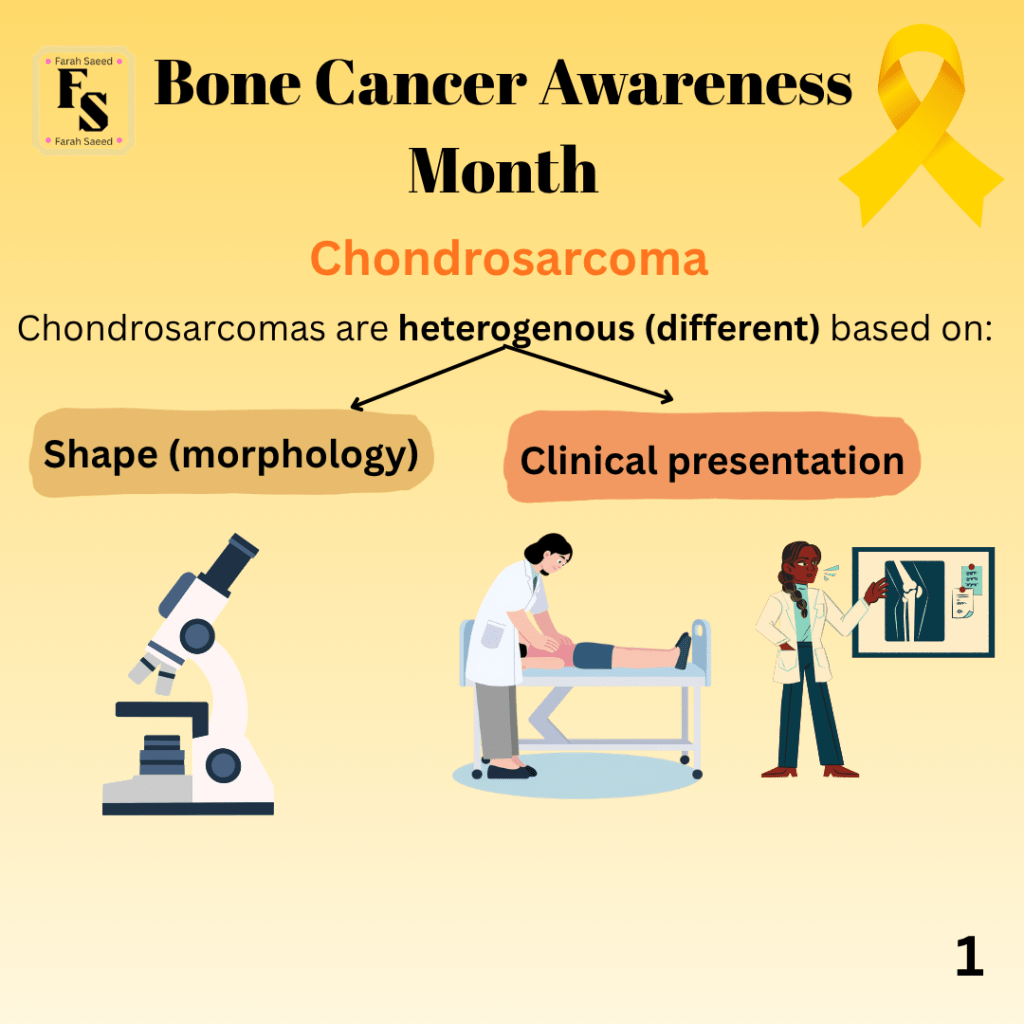
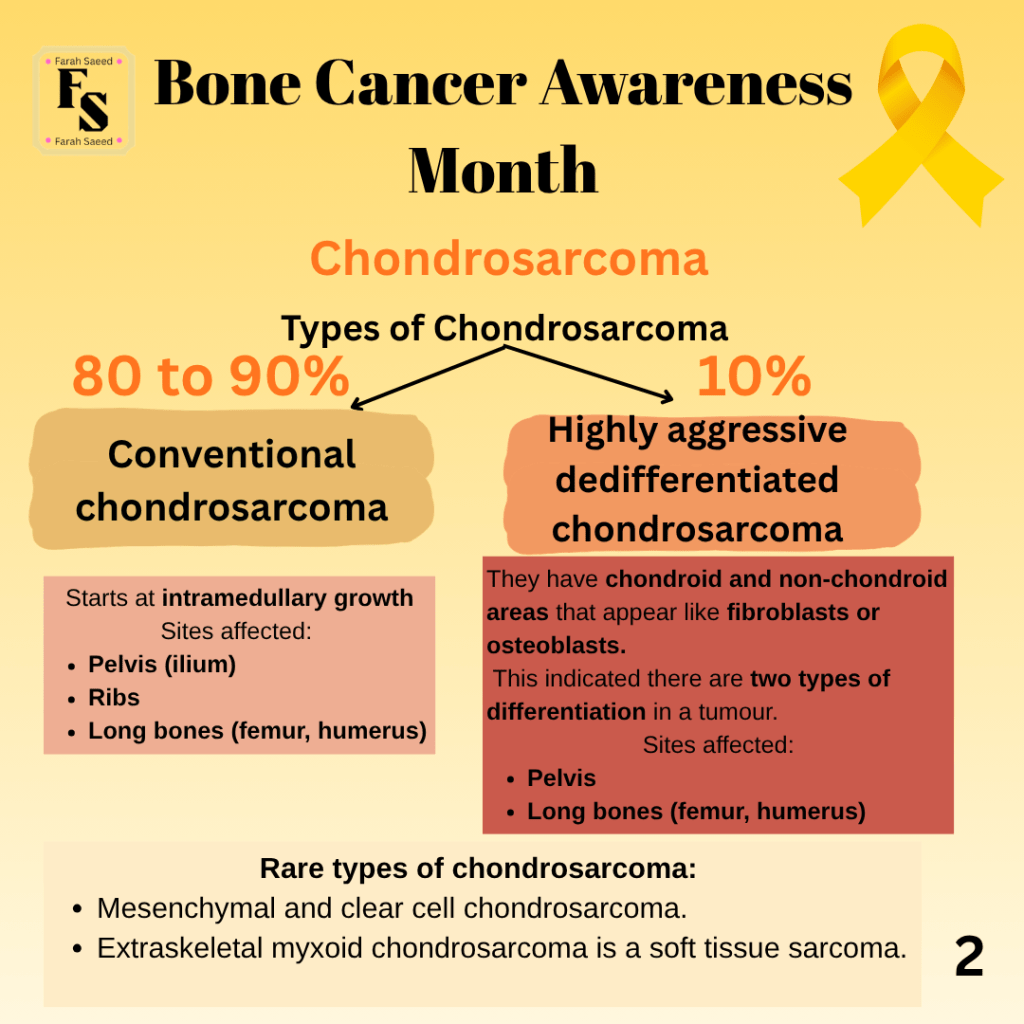
Types of Chondrosarcoma
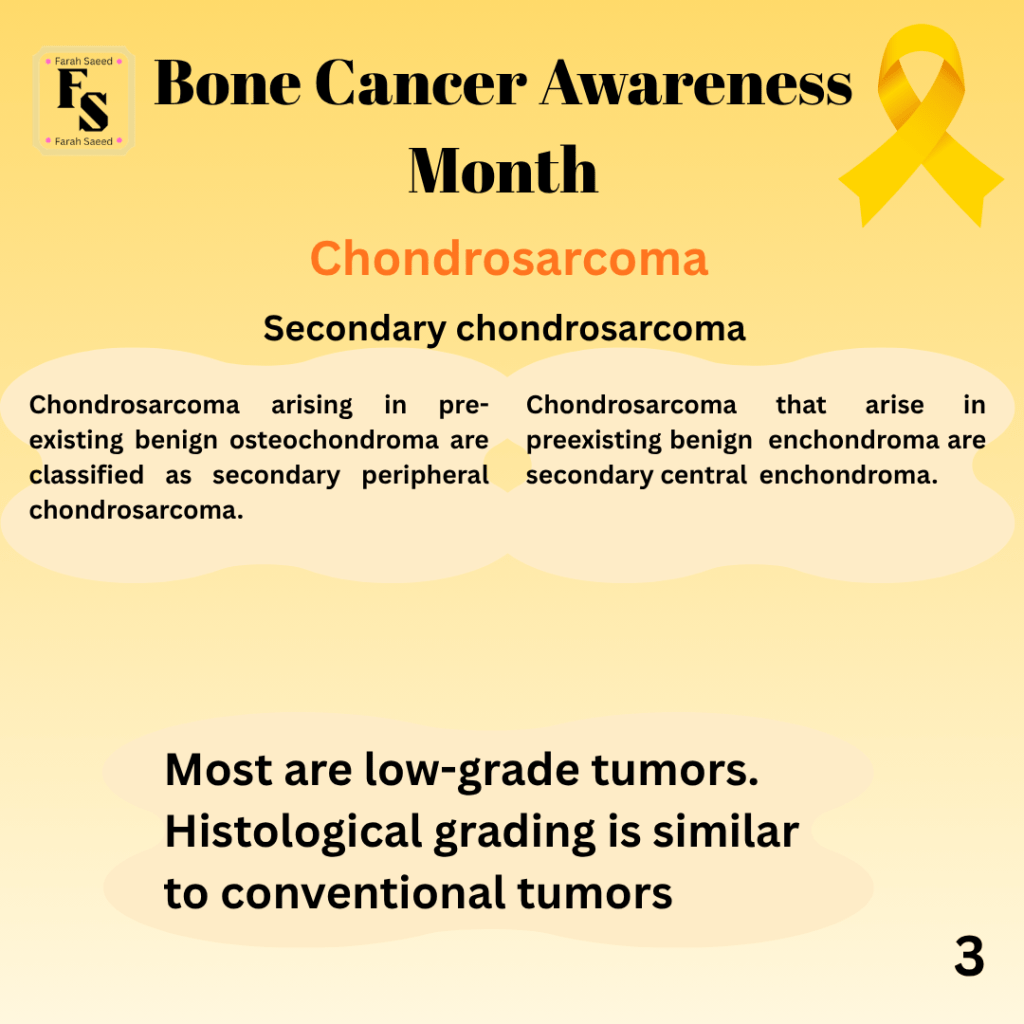
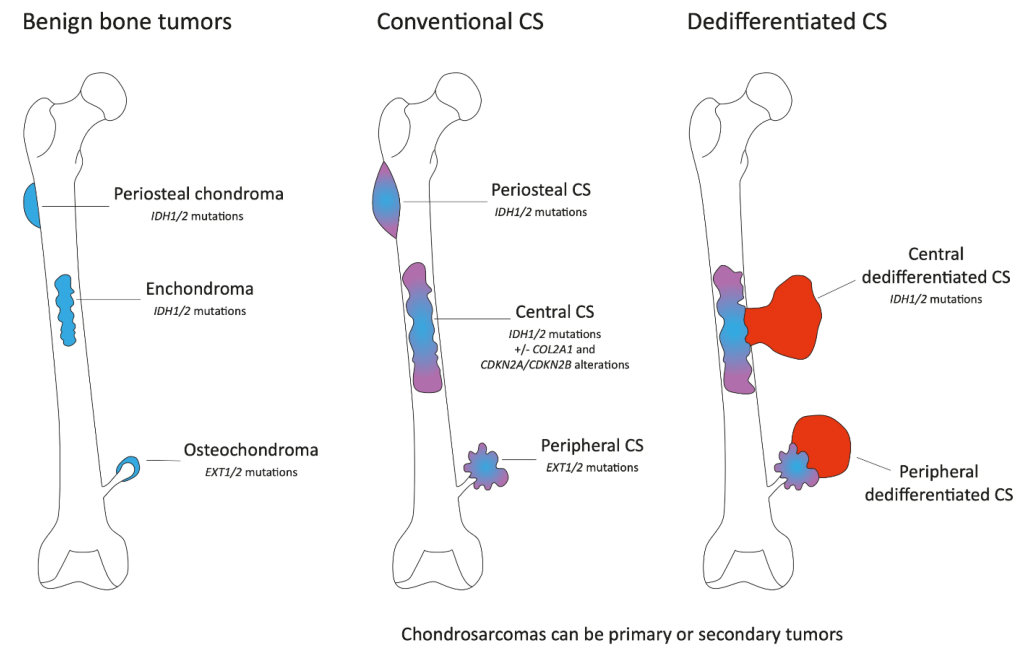

References
Bădilă, A.E., Rădulescu, D.M., Niculescu, A.-G., Grumezescu, A.M., Rădulescu, M. and Rădulescu, A.R. (2021). Recent Advances in the Treatment of Bone Metastases and Primary Bone Tumors: An Up-to-Date Review. Cancers, [online] 13(16), p.4229. Doi: https://doi.org/10.3390/cancers13164229.
Biermann, J.S., Hirbe, A., Ahlawat, S., Bernthal, N.M., Binitie, O., Boles, S., Brigman, B., Callan, A.K., Cipriano, C., Cranmer, L.D., Davis, J., Donnelly, E., Ferguson, M., Graham, A., Groundland, J., Hess, M., Hiniker, S.M., Hoover-Regan, M.L., Hornick, J.L. and Jonard, B. (2025). Bone Cancer, Version 2.2025, NCCN Clinical Practice Guidelines in Oncology. Journal of the National Comprehensive Cancer Network, [online] 23(4). does: https://doi.org/10.6004/jnccn.2025.0017.
Cancer Research UK (2025a) Types of bone cancer. Available at: https://www.cancerresearchuk.org/about-cancer/bone-cancer/types (Accessed 3rd April 2026)
Cowan, P., Launico, M. and Kahai, P. (2024) Anatomy, Bones. Available at: https://www.ncbi.nlm.nih.gov/books/NBK537199/ (Accessed: 9th April 2026)
Gazendam, A., Popovic, S., Parasu, N., & Ghert, M. (2023). Chondrosarcoma: A Clinical Review. Journal of Clinical Medicine, 12(7), 2506. https://doi.org/10.3390/jcm12072506
Gerrand, C., Amary, F., Anwar, H.A., Brennan, B., Dileo, P., Kalkat, M.S., McCabe, M.G., McCullough, A.L., Parry, M.C., Patel, A., Seddon, B.M., Sherriff, J.M., Tirabosco, R. and Strauss, S.J. (2024). UK guidelines for the management of bone sarcomas. British Journal of Cancer. doi:https://doi.org/10.1038/s41416-024-02868-4.
Guney, A. and Qasem, S. (2024) Bone and joints Chondrosarcoma. Available at: https://www.pathologyoutlines.com/topic/bonechondrosarcoma.html (Accessed: 20th July 2026)
Hosseini, H., Heydari, S., Kiavash Hushmandi, Salman Daneshi and Rasoul Raesi (2025). Bone tumors: a systematic review of prevalence, risk determinants, and survival patterns. BMC Cancer, 25(1). doi:https://doi.org/10.1186/s12885-025-13720-0.
Pullan, J.E., and Lotfollahzadeh, S. (2024) Primary Bone Cancer Available at: https://www.ncbi.nlm.nih.gov/books/NBK560830/ (Accessed: 9th April 2026)
WHO Editorial Board. WHO classification of bone tumours. In WHO Classification of Tumours Editorial Board. Soft tissue and bone tumours. Bovee J, Flanagan AM, Lazar AJ, Nielsen GP and Yoshida A (eds) pp 338. International Agency for Research on Cancer (2020)
Updated July 2026 Next Review July 2028
 The Farah Saeed Project
Leave a comment