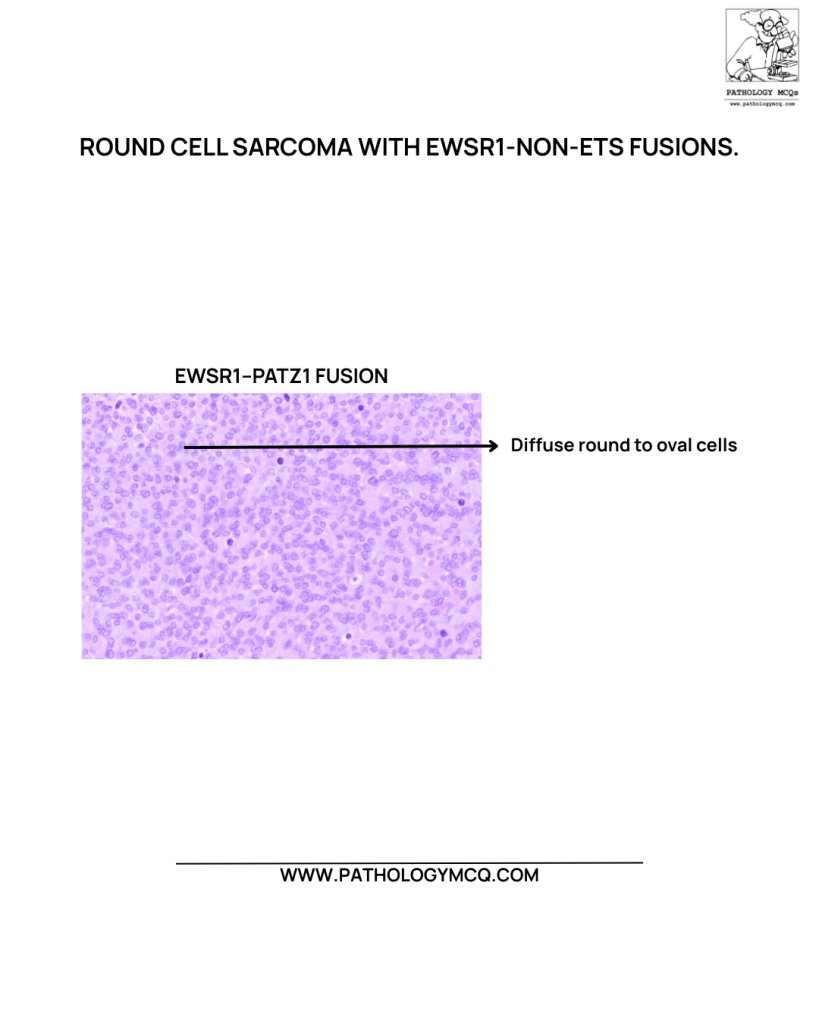
Overview of Round Cell Sarcoma
Malignancy: Malignant
Type of bone tumour: Mesenchymal tumour
Grade: Varies
Location:
- Upper limbs: humerus and radius
- Lower limbs: Tibia, Femur
- Rare in viscera/abdomen/belly
- Other locations are affected and depend on the type of round cell sarcoma.
Onset: Varies with type of round cell sarcoma
Risk Factors Of Round Cell Sarcoma
A) Genetics:
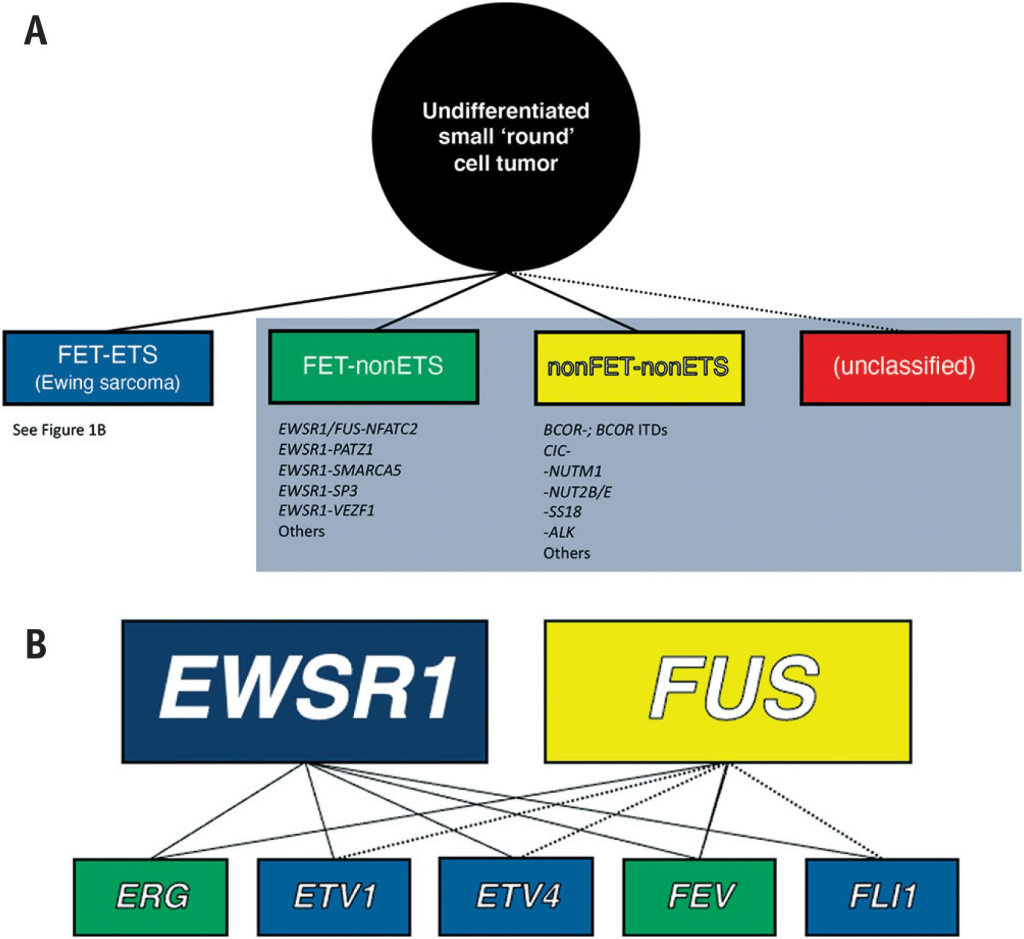
EWSR1::NFATC2 and FUS::NFATC2 fusions
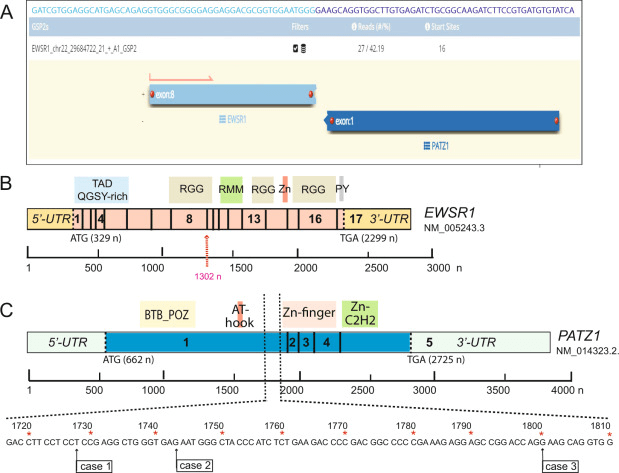
EWS RNA-binding protein 1 (EWSR1) is a member of the FET or TET family and is found on chromosome 22 (22q12).
It undergoes rearrangement with the ETS family gene, like FLI1, to form a fusion and increases the risk of Ewing Sarcoma.
However, a fusion between EWSR1 and Nuclear factor of activated T cells 2 (NFATC2), a type of transcription factor, can form a rare bone cancer called round cell sarcoma of the bone.
In some fusions, another member of the FET/TET family called FUS replaces EWSR1 to form a fusion with NFATC2. FUS is on chromosome 16p11.2, and NFATC2 is on chromosome 20q13.2.
This leads to a FUS::NFATC2 fusion.
Other risk factors of Round Cell Sarcoma
Age
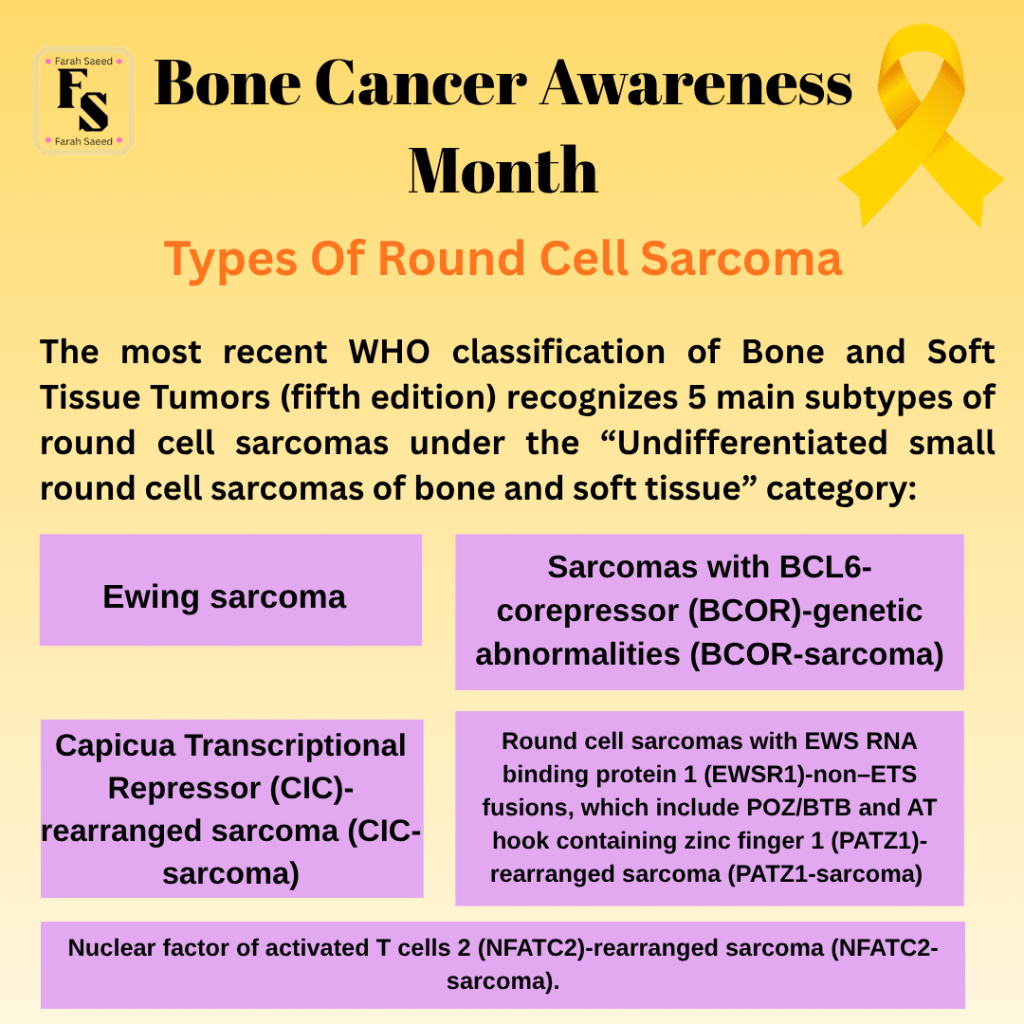
Ewing sarcoma and BCOR-sarcoma occur predominantly in children and adolescents <20 years old.
CIC-sarcoma, NFATC2-sarcoma, and PATZ1-sarcoma à young- to middle-aged adults (<50 years).
In older adults, a tumor displaying rhabdomyosarcomatous.
B) Gender
Males are mainly affected, as there is a slight increase than female.
Most have an equal distribution between sex/gender.
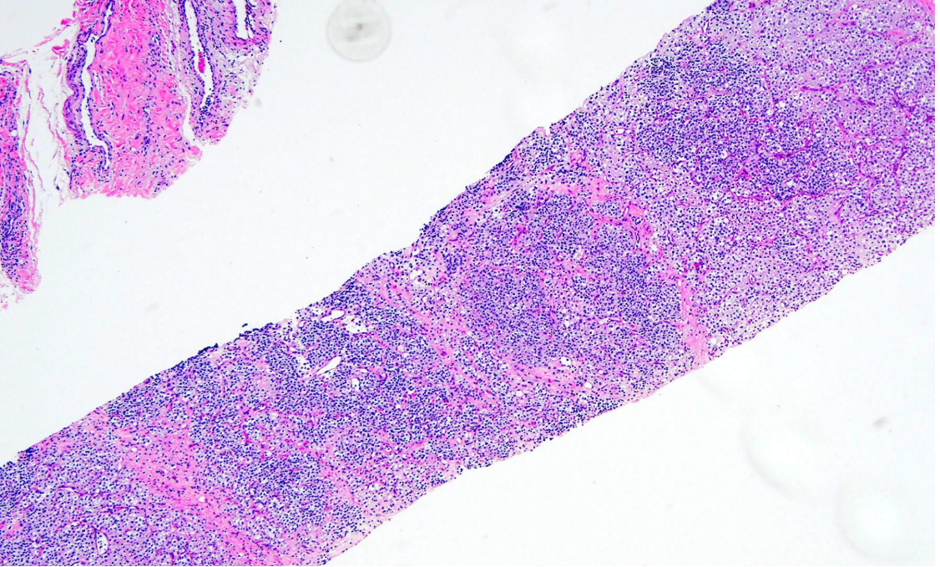
Appearance Under Microscope
Cell Morphology:
- Small- to medium-sized round cells
- Monotonous nuclei
- High nuclear-to-cytoplasmic ratio, giving a blue colour to the tumour.
- Fibromyxoid and hyaline stromal changes
- EWSR1::NFATC2 and FUS::NFATC2 fusions
Recommended reading
References
Al-Obaidy, K.I., Bridge, J.A., Cheng, L., Janos Sumegi, Reuter, V.E., Ryma Benayed, Hameed, M., Williamson, S.R., Hes, O., Alruwaii, F.I., Segal, J.P., Pankhuri Wanjari, Idrees, M.T., Nassiri, M., Eble, J.N. and Grignon, D.J. (2021). EWSR1-PATZ1 fusion renal cell carcinoma: a recurrent gene fusion characterizing thyroid-like follicular renal cell carcinoma. Modern Pathology, 34(10), pp.1921–1934. doi:10.1038/s41379-021-00833-7.
Alexiev, B. and Jennings, L. (2026) Bone & joints Undifferentiated spindle and small round cell sarcomas of soft tissue and bone NFATC2 rearranged sarcoma. Available at: https://www.pathologyoutlines.com/topic/boneroundcellsarcomaewsr1.html (Accessed: 26th April 2026)
Bădilă, A.E., Rădulescu, D.M., Niculescu, A.-G., Grumezescu, A.M., Rădulescu, M. and Rădulescu, A.R. (2021). Recent Advances in the Treatment of Bone Metastases and Primary Bone Tumors: An Up-to-Date Review. Cancers, [online] 13(16), p.4229. Doi: https://doi.org/10.3390/cancers13164229.
Biermann, J.S., Hirbe, A., Ahlawat, S., Bernthal, N.M., Binitie, O., Boles, S., Brigman, B., Callan, A.K., Cipriano, C., Cranmer, L.D., Davis, J., Donnelly, E., Ferguson, M., Graham, A., Groundland, J., Hess, M., Hiniker, S.M., Hoover-Regan, M.L., Hornick, J.L. and Jonard, B. (2025). Bone Cancer, Version 2.2025, NCCN Clinical Practice Guidelines in Oncology. Journal of the National Comprehensive Cancer Network, [online] 23(4). does: https://doi.org/10.6004/jnccn.2025.0017.
Cancer Research UK (2025a) Types of bone cancer. Available at: https://www.cancerresearchuk.org/about-cancer/bone-cancer/types (Accessed 3rd April 2026)
Cowan, P., Launico, M. and Kahai, P. (2024) Anatomy, Bones. Available at: https://www.ncbi.nlm.nih.gov/books/NBK537199/ (Accessed: 9th April 2026)
Gerrand, C., Amary, F., Anwar, H.A., Brennan, B., Dileo, P., Kalkat, M.S., McCabe, M.G., McCullough, A.L., Parry, M.C., Patel, A., Seddon, B.M., Sherriff, J.M., Tirabosco, R. and Strauss, S.J. (2024). UK guidelines for the management of bone sarcomas. British Journal of Cancer. doi:https://doi.org/10.1038/s41416-024-02868-4.
Hosseini, H., Heydari, S., Kiavash Hushmandi, Salman Daneshi and Rasoul Raesi (2025). Bone tumors: a systematic review of prevalence, risk determinants, and survival patterns. BMC Cancer, 25(1). doi:https://doi.org/10.1186/s12885-025-13720-0.
Pullan, J.E., and Lotfollahzadeh, S. (2024) Primary Bone Cancer Available at: https://www.ncbi.nlm.nih.gov/books/NBK560830/ (Accessed: 9th April 2026)
WHO Editorial Board. WHO classification of bone tumours. In WHO Classification of Tumours Editorial Board. Soft tissue and bone tumours. Bovee J, Flanagan AM, Lazar AJ, Nielsen GP and Yoshida A (eds) pp 338. International Agency for Research on Cancer (2020)
Updated July 2026 Next Review July 2028


Leave a comment