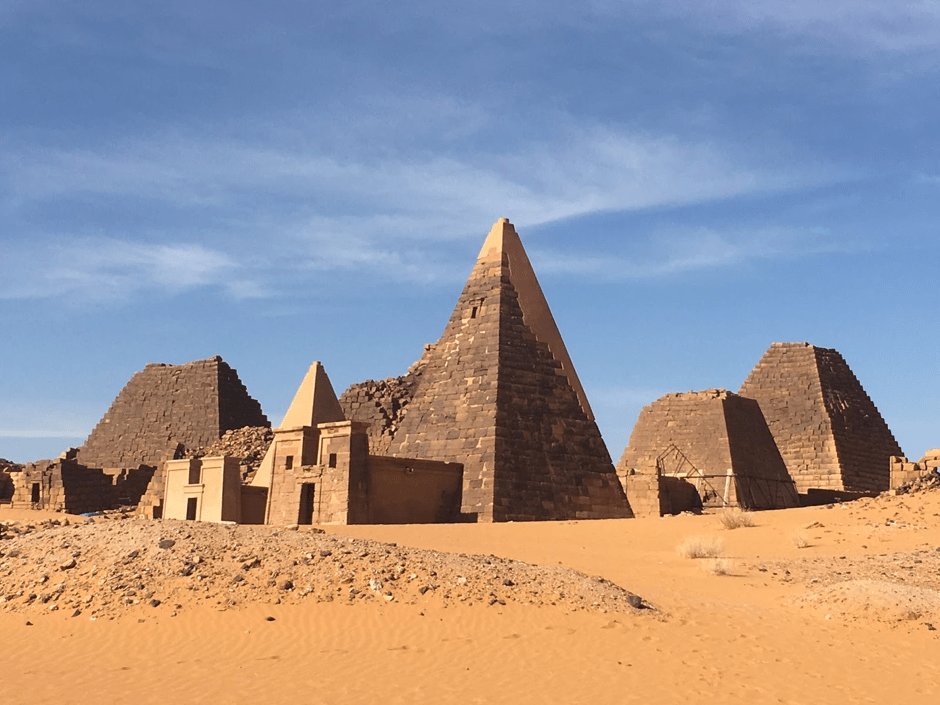
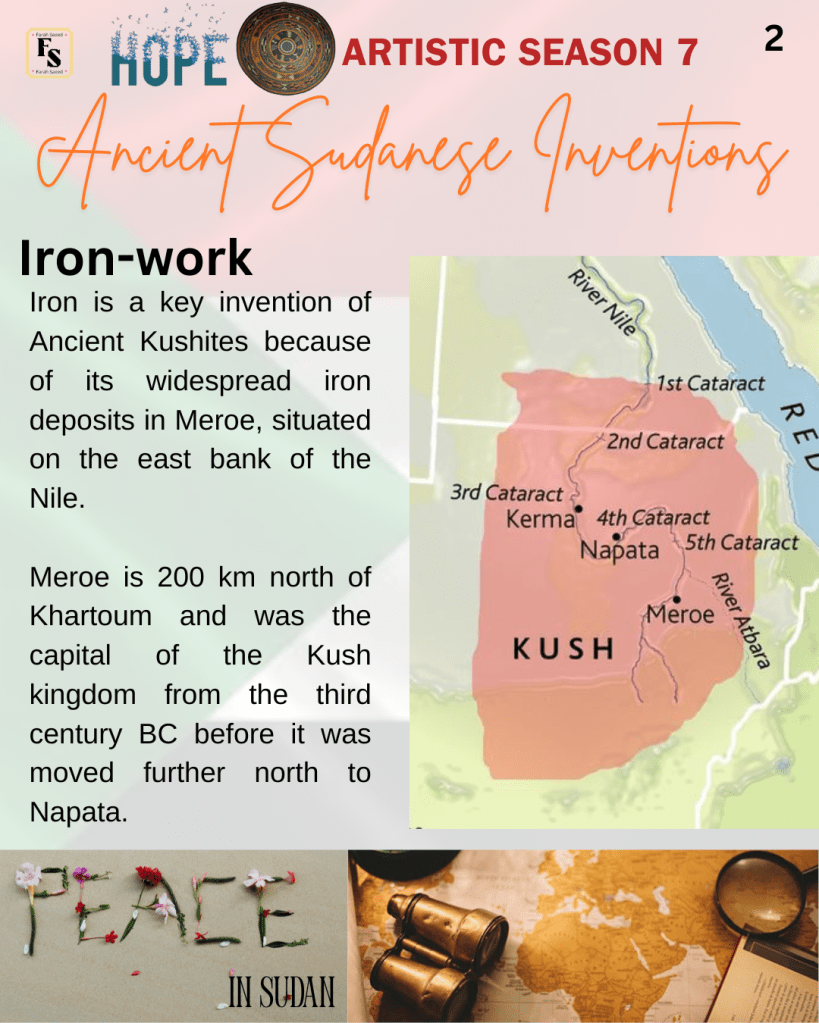
The Ancient Kushite Kingdom shares a common invention in being able to invent metallurgy (iron) and the engineering ability to construct pyramids. The landscape of the Royal City of Meroe and nearby Meroitic towns of Hamadab, El-Hassa, Muweis, and Musawwarat es-Sufra is key evidence of iron production that was essential for agriculture and military purposes. The Kushites have also produced other materials like ceramics and organic articles that support the functional aspects of farming, architecture, and adornment in Meroe. The invention of the Meroitic writing system and language called also exemplifies their cherished culture and communication and record-keeping, where they worked skillfully in trade and the development of agricultural models to raise livestock animals, namely cattle. This indicates the distinctiveness of their cultural and artistic achievements (Dieudonné-Glad et al., 2021; Seihiro, 2015; Humphris et al., 2018).
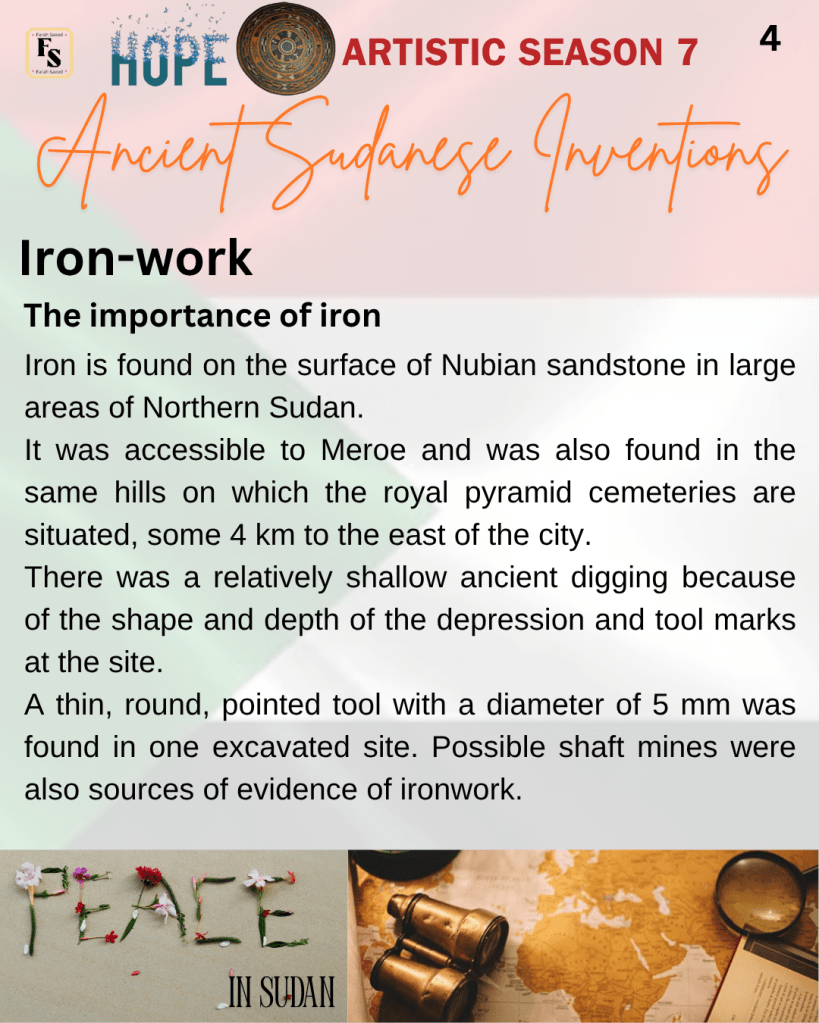
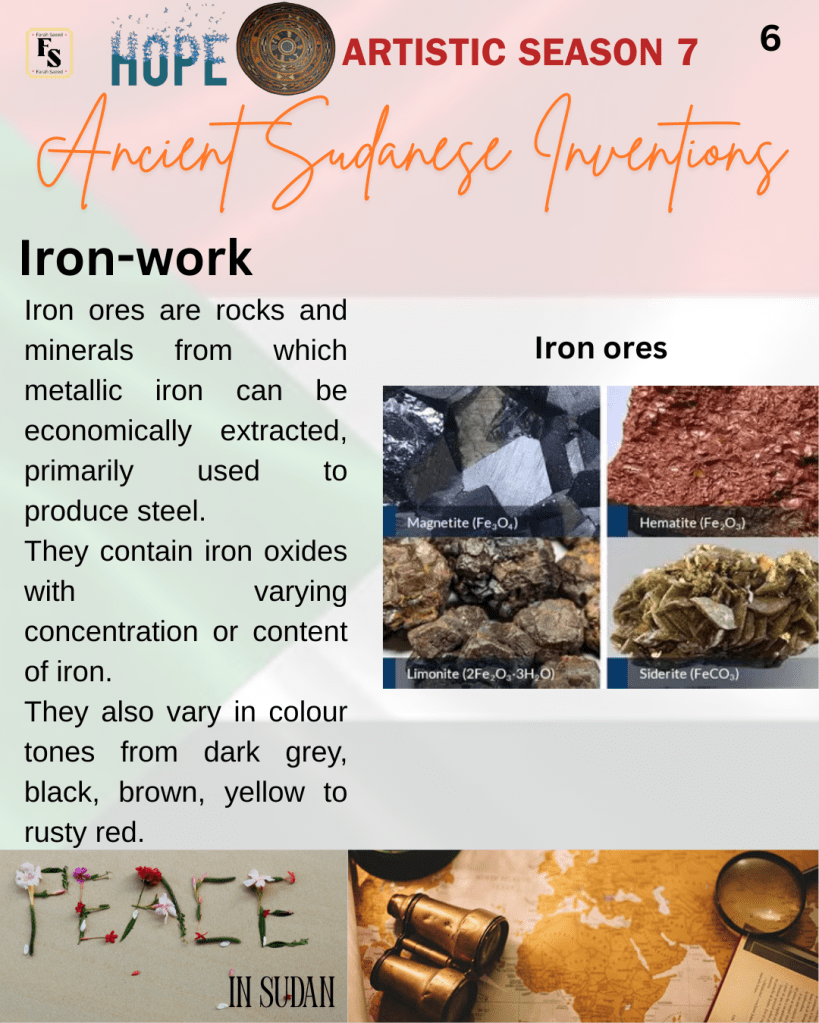
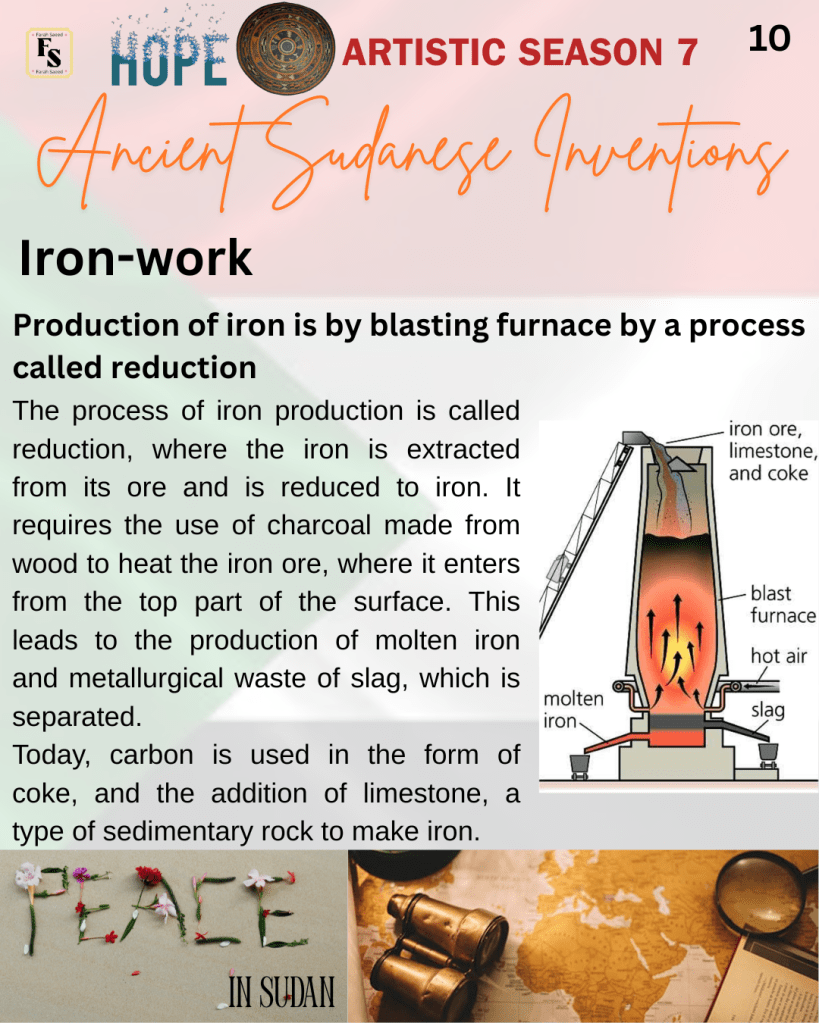
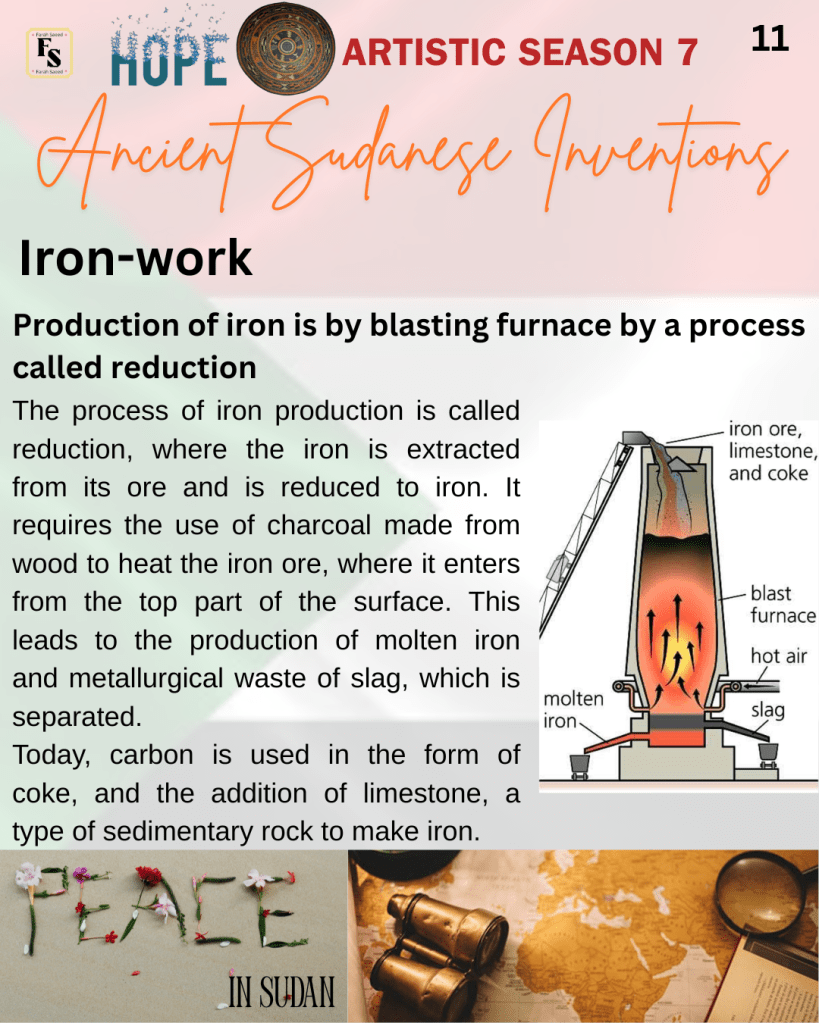
Key evidence can be established through the study of tomb paintings and carvings, wood-fuelled crafts, rocks (geology), the iron mines, black mounds, and remains of iron-forming worksites that span over one thousand years. Two types of remains indicate their legacy in iron craftmanship and are studied by archaeometallurgical researchers at excavation sites: slag and the location of the tuyeres. Slag is the metallurgical waste that is produced when pure iron is made in the blast furnace. Tuyeres are a tube, nozzle, or pipe that blows air into the furnace under pressure. This causes the fire to become hotter in front of the blast, enabling the metals to be smelted. Smelting is the process where heat and a chemical reducing agent are added to an ore to extract the metal (Dieudonné-Glad et al., 2021; Seihiro, 2015; Humphris et al., 2018). Iron ores are rocks and minerals from which metallic iron can be economically extracted and are primarily used to produce steel.
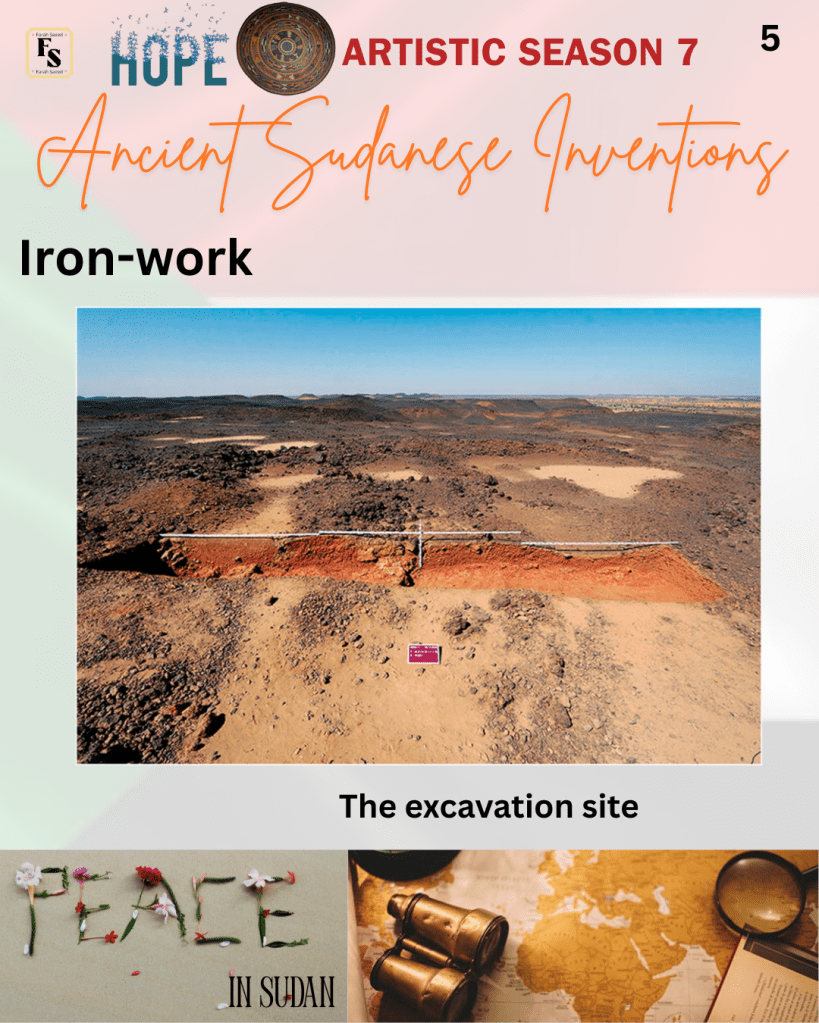
In the 20th century, multiple Egyptologists studied iron-construction sites that began with A.H. Sayce, who described Meroe as the “Birmingham of Africa” and discovered black mounds as iron-making sites when the Sudan railway was constructed. This is in light of their level of industry and knowledge of iron metallurgy. However, excavation only began in the late 1960s by P. Shinnie and R. Tylecote because there was a lack of specific research, and vegetation hid their existence. Both Shinnie and Tylecote studied a 50-metre-long trench. Shinnie studied six furnaces in the north mound in Meroe between 1969 and 1970 and again from 1973 to 1975. In contrast, Tylecote studied smelting and smithing furnaces, tuyeres, and crucibles. Smithing is the process of shaping the metal and is commonly performed by a blacksmith. The samples of iron slags and ores that reveal the date of its development were studied by T. Rehren in 2001.
Moreover, distinguishing the time periods during which iron products were produced during the Meroitic era by B. Abdur and R. Gordon. The most reliable method to date when smelting was produced is through radiocarbon dating of charcoal, which, based on current understanding, was between the 8th and 6th centuries BC in Meroe and in Muweis and Hamadab from the 2nd or 4th century A.D. (Dieudonné-Glad et al., 2021; Seihiro, 2015; Humphris et al., 2018). In addition, the relationship between the Meroitic god Apdemak and iron was examined by M.S. Bashir. This presents the development of the historical and chemical analysis and extensive studies in ironwork, and the research team to understand how the Kushites invented iron and its widespread importance in their daily life.
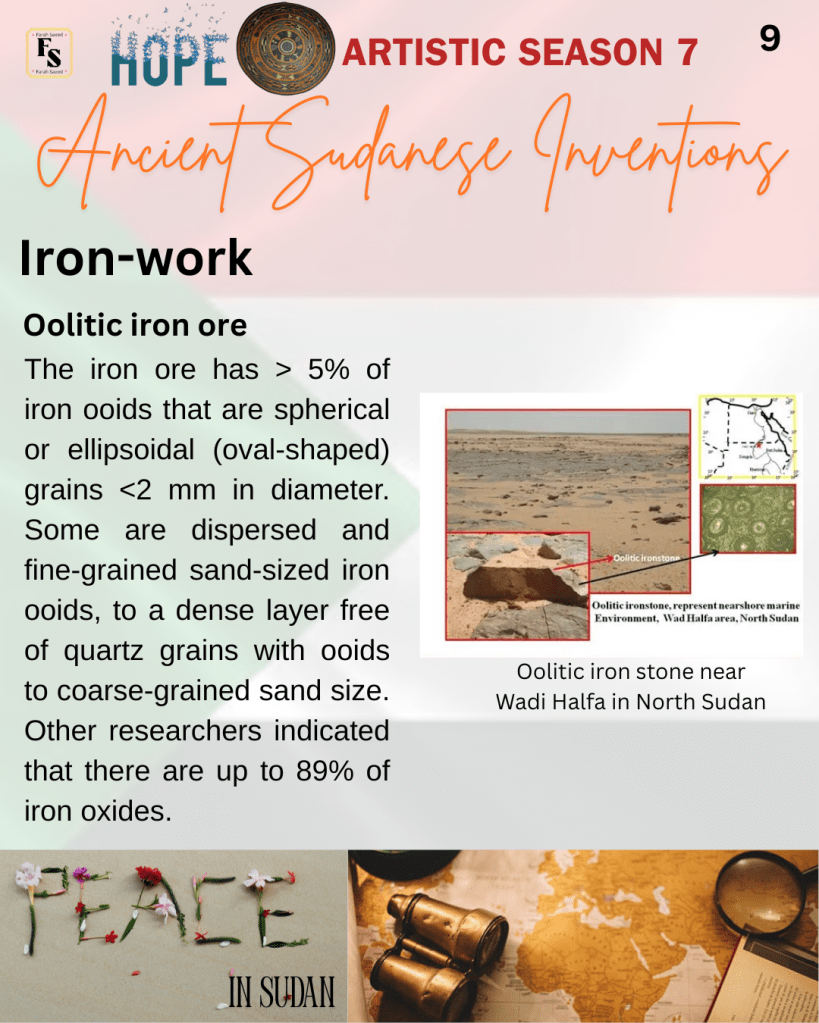
The slags and tuyeres at the excavation sites were determined based on the shape, size, weight, texture, and composition. For instance, some had charcoal and imprints, whereas others did not. This led to the classification of slags into tapped, solid, slag with charcoal, and cord-like slag. Tapped slags have a pasty-like appearance that flows before it gradually solidifies upon cooling. This is indicated by the imprints on the ground and the roughness in front of the furnace.
On the other hand, solid slags have blue-grey colour breaks formed from the impact post-cooling. They are also compact in shape, have minimal cavities, and have no flow marks. Some parts of its surface are curved, grey-fired sandy clay with large quartz grains. Other parts of its surface are flat, smooth, with large bubbles that correspond to the horizontal plane (Dieudonné-Glad et al. 2021).
Slag with charcoal or its imprint sometimes appears rusty because of the small metal deposits that have converted into hydroxides and oxides during landfill. The fourth type of slag is referred to as cord-like slag that has a pasty appearance like tapped slags; however, it is a cord-like shape as the name suggests that has been solidifying during vertical stretching. Moreover, they are smaller in size with neither imprint nor breaks at the upper end (Dieudonné-Glad et al. 2021).
The relevance of tuyeres in metalloarchaelogy is that the location of the tuyeres determines the hottest area of the furnace where the metal was formed. The presence of cylinder-shaped slag in Muweis is key evidence of the diameter of the tuyere. Moreover, Tylecote’s findings of solidified slags discovered there showed that liquid slag present at the bottom of the furnace at the same level as the tuyere (Dieudonné-Glad et al. 2021).
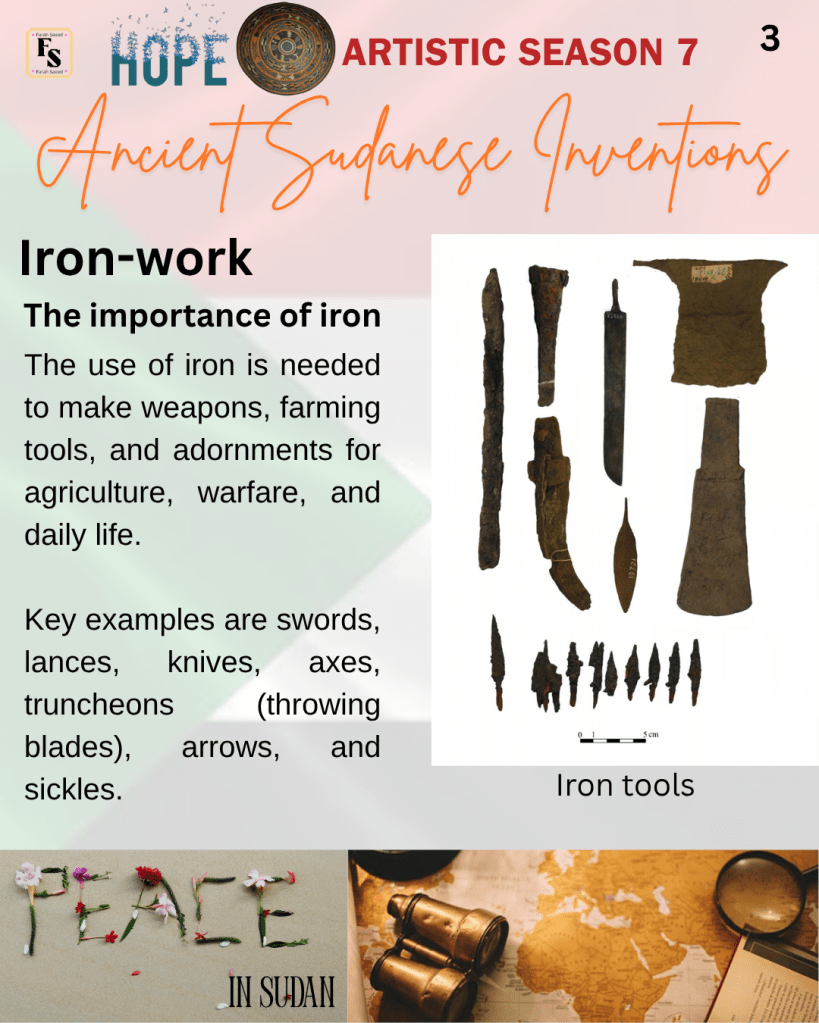
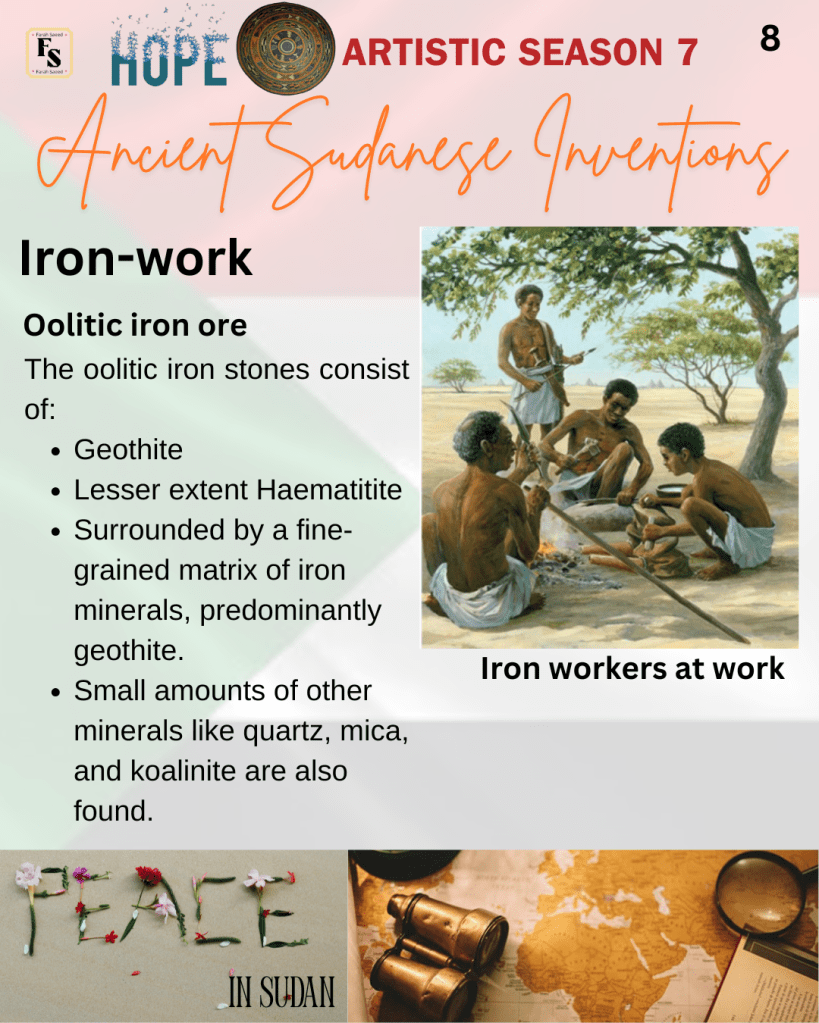
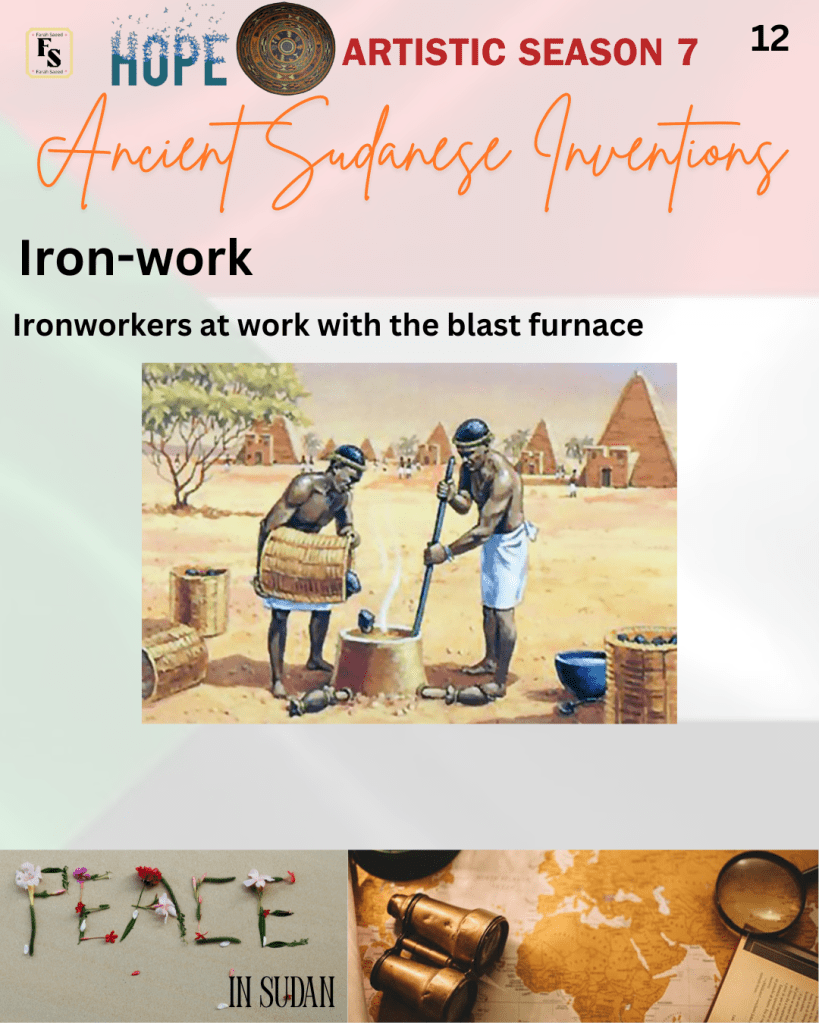
More recently, the pre-colonial Kordofan capital of Bara is another indication of iron production in the middle of the 19th century. It was predominantly found in Jabal Abd Al-Hadi, otherwise known as Jabal Haraza; these are the Nubian Mountains found between Dongola and Kordofan but are now a forgotten art. Ernst Marno in 1875 indicated that the large village of Tendar contains arts. People from the region of Jawama’a obtained iron from a brown ore found in the area. The ironwork at the time normally took place in the dry season of the year. The conical furnaces were made from clay-like earth and were a meter high. They were fired by two bellows at the base that consisted of deep basin-shaped clay pots with a nozzle and were covered with goatskin. The iron ore was mixed with charcoal of hashab wood, called acacia verek, and was poured into the furnace. The metal was then collected from the bottom. This was used to make tools such as malot, lance heads, hashiash (agricultural tools), small iron currency called sinnars, garden hoes, and the different sizes and shapes of knives. The malots were tools that cut down weeds (Spaulding, 2016).
However, critics like Ignatius Pallme in 1838 to 1839 have implied that the ironworkers at Kordofan dug the iron from the bowels of the earth, melted it using a simple process, but do not know how to harden it nor make heavy objects other than spearheads, knives, hashiash, and sinnar. The mineralogist Joseph Ritter von Russegge in 1837 indicated that the ironworking of Meroitic and Kordofan and modern Sudanese culture are distinctive, where it is possible, due to the conspicuous inventory of existing artifacts. This shows the practice of recycling and re-forging iron objects, which was both economically practical and culturally valued, since metal was not wasted but was continually useful for new purposes. Additionally, Nubian cultural traditions included unique methods of storing iron. If iron was left exposed on land, it was believed the strong north wind and corn would be overwhelmed by sand, so the iron was stowed away in ‘fekis’, which are deep fissures in rocks, to protect it. This highlights a careful approach to preserving valuable materials and preventing environmental damage (Spaulding, 2016).
Overall, ongoing work is being done to understand metallurgy in Kushite and Modern times by looking at other types of metals that have been preserved, undefined shapes, and furnace sites at the excavation. It has stunned archaeologists and historians alike about the sources and methods by which iron ores were smelted at the site. The Kingdom of Kush, particularly the Meroitic civilization, is renowned for its iron production and ironworking techniques, as well as other raw materials that had a mass impact on its economic success. The mastery of ironworking not only strengthened the state’s military capacity but also contributed to its administrative power by enabling efficient agricultural tools and fostering economic growth, trade networks, and cultural dominance, creating amongst the key formidable empires of African history. Iron was a crucial resource driving the expansion of long-distance trade networks, enabling Kush to exchange goods with neighboring regions. Additionally, the distinctiveness of Meroitic metalwork and iron production became an important part of Kushite identity and cultural legacy in African history.
Key Points
Kushites pioneered iron metallurgy and pyramid construction.
Archaeological evidence like slag and tuyeres reveals advanced ironworking techniques.
Iron production shaped Kushite economic, military, and cultural achievement.

References
Abdelrahman, M.F. (2016) Sudan Archaelogy Greco-Roman Perspective Part 2. Available at: https://www.archaeology.wiki/blog/2016/02/01/sudan-archaeology-greco-roman-perspective-part-2/ (Accessed: 14th June 2026)
Dieudonné-Glad, N., Bouchaud, C., Gemehl, D., Guérin, S. Millet, M and Zazzo, A. (2021) Iron craftsmanship in Muweis, a town of the Meroe Empire: metal production and smithing Available at: https://www.sudarchrs.org.uk/wp-content/uploads/2021/10/SARS_SN24_Dieudonne-Glad_et_al.pdf (Accessed 14th June 2026)
Humphris, J., Bussert, R., Alshishani, F. and Scheibner, T. (2018). The ancient iron mines of Meroe. Azania: Archaeological Research in Africa, 53(3), pp.291–311. doi:https://doi.org/10.1080/0067270x.2018.1515922.
Sekihiro, N. (2015). The Iron Making Method in Meroe of Ancient Sudan. Bulletin of the Society for Near Eastern Studies in Japan, 57(2), pp.63–76. doi:https://doi.org/10.5356/jorient.57.2_63.
Spaulding, J. (2016). Iron Metallurgy in Ancient Sudan. African Indigenous Knowledge and the Sciences, pp.199–206. doi:https://doi.org/10.1007/978-94-6300-515-9_16.


Leave a comment