
Secondary Bone Cancer
How Do They Form?
This is where bone cancer occurs as a secondary site, as there is original growth from the primary site.
Examples of primary sites are breast and prostate, more than sarcoma (soft tissues) in adults.
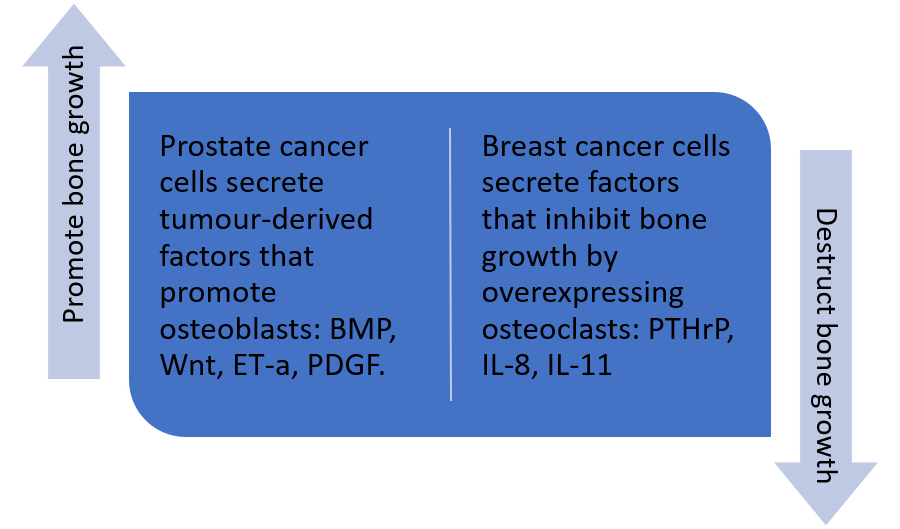
The role of RANK ligands in Bone Homeostasis
For instance,
1) Cancer cells produce the growth factor PTHrp
2) PTHrp upregulates the RANK ligands.
3) The RANK ligands bind to osteoclasts
4) Proliferation increases.
5) Bone resorption releases growth factors that promote tumour growth, e.g, ccalciumand tumour growth factor Beta (TGF-β)
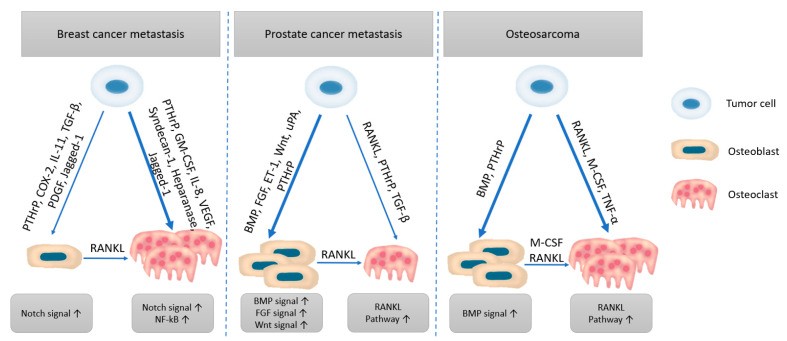
Recommended reading for Bone Derived Factors
Bone Metastasis
Skeletal sarcoma and metastasis have the same tissue microenvironment. Cancer cells remain inactive (dormant) for many years in the metastatic niche before proliferation. However, they cannot destroy bone directly but stimulate osteoclasts to degrade the matrix.
Metastatic neuroblastoma or eosinophilic granuloma are more common in children under 5 years.
Chondrosarcoma is more common in older patients.
Therapeutic targets can be developed by understanding the bone microenvironment in tumour cells.
A typical microenvironment of the bone consists of interactions between cells and non-cellular components.

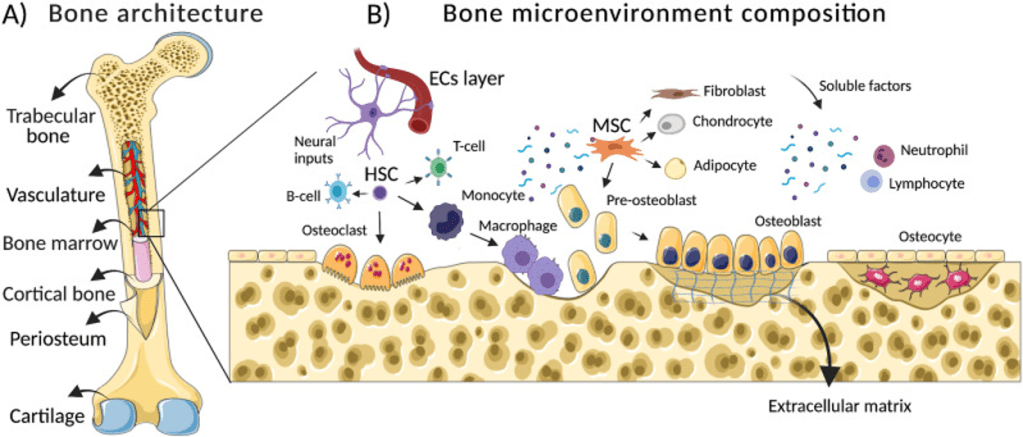
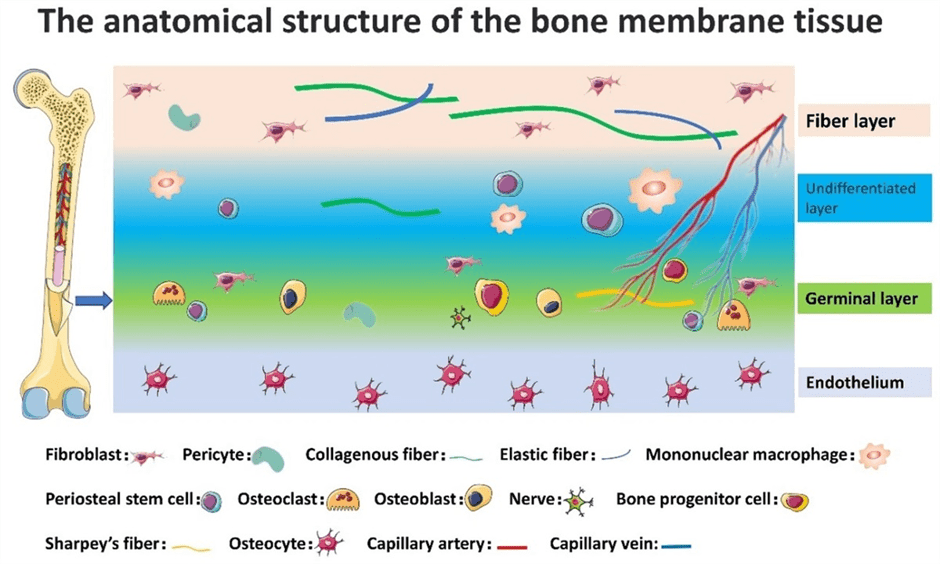
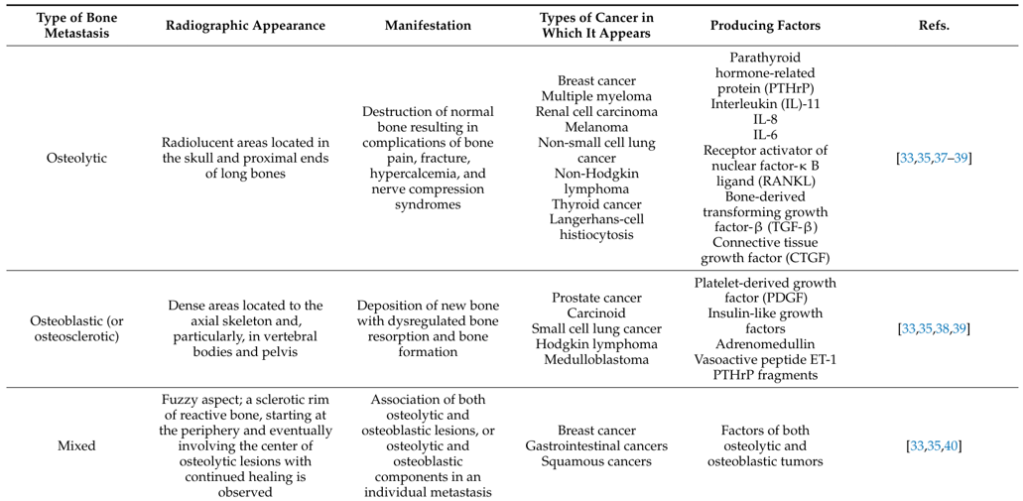
Bone metastases—types and characteristics (Bădilă et al. 2021)
References
Bădilă, A.E., Rădulescu, D.M., Niculescu, A.-G., Grumezescu, A.M., Rădulescu, M. and Rădulescu, A.R. (2021). Recent Advances in the Treatment of Bone Metastases and Primary Bone Tumors: An Up-to-Date Review. Cancers, [online] 13(16), p.4229. DOI: https://doi.org/10.3390/cancers13164229.
Oliveira, C.S., Leeuwenburgh, S. and Mano, J.F. (2021) New insights into the biomimetic design and biomedical applications of bioengineered bone microenvironments. APL Bioengineering, 5(4):041507
Updated July 2026 Next Review July 2028

